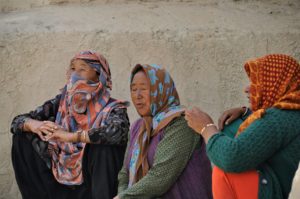
 In the Himalayan Mountains of India during the early 2000s, community members worked passionately in small groups to cultivate community health and humanitarian programs. Some of their efforts were successful, but there was a problem: the groups usually worked in isolation. After noticing the need for a solution to boost the effectiveness of organizations through partnerships, Dr. Ted Lankester co-founded Arukah Network in 2004.
The Arukah Network Model
Arukah Network aims to help establish and nurture independent local groups or “Clusters” that collaborate to serve their communities by improving health and well-being. Clusters are teams of people with diverse skills and backgrounds from a common geographical or themed interest. Arukah Network’s broader organization creates and supports Clusters by connecting with, supporting, mentoring, training and encouraging local community leaders to equip them with tools to be advocates for their communities.
In effect, Cluster leaders educate and support local members by building relationships, mobilizing resources, developing support networks, conducting training and hosting events. Some groups have improved sanitation and maternal health, provided emergency aid, reduced sexual violence, increased disability inclusion and promoted community reconciliation.
A Different Kind of Aid
When nongovernmental organizations (NGOs) come into communities, they often decide what the people need and fund those projects, said Brian Wainana, Arukah Network’s Communications & Network Engagement Lead, in an interview with The Borgen Project. Because that approach rarely leads to sustainable solutions, Arukah Network chose a different method.
The organization believes communities know more about their needs and possible solutions than most outsiders. Therefore, Arukah’s aid model emphasizes the need for people to identify their challenges and devise solutions as a community. Due to this framework, Clusters can be self-sufficient and sustain operations through entrepreneurship, fundraising and sourcing grants. For instance, after the Ekari Cluster in Malawi created a farmer co-operative to restore community confidence and cultivate resources, the Cluster received $85,000 from a U.S. government grant in 2024.
The Arukah Network uses the Support and Stimulate, Appreciate, Learn and Transfer (SALT) approach to help transformative community conversations occur. SALT visits, where a team of people visit a community to speak with local people about their experiences, lead to discussions about ways to address relevant challenges in that region. “So, it’s much more than a way of working: it’s a way of thinking and being that values the strengths hidden within a neighborhood,” said Wainana.
A benefit of this model is that it allows civilians to collaborate with local governments, Wainana said. Arukah believes that the government’s primary responsibility is to support its citizenry’s health systems and public health priorities, along with preventative and curative care. In resource-poor areas, where government services are under strain, Clusters have worked to cultivate partnerships with their governments to amplify social safety institutions.
Arukah Network’s Multinational Operations
Arukah Network has 15 Cluster organizations throughout Tanzania, Zambia, Kenya, Rwanda, Malawi, the Democratic Republic of Congo (DRC) and India. Each Cluster works in response to the health and humanitarian needs unique to that area.
Clusters in India work mainly to improve access to health care and advocate for disability inclusion. In contrast, the Cluster in Tanzania prioritizes human rights. Clusters in Kenya, Zambia, Malawi and Rwanda focus primarily on agriculture. Wainana said additional areas of interest to most Clusters include entrepreneurship, mental health, women’s empowerment and creative arts.
Arukah Network’s Crisis Response
A clear example of a Cluster group offering effective humanitarian support during times of need is the one operating in Goma, DRC. Although the Cluster in Goma was disempowered after the M23 rebel group captured the city in early 2025, Arukah Network members still stepped up. They supported 47 unaccompanied children in refugee camps each week and ran conflict awareness campaigns.
The Cluster in Goma is supporting child-led families who lost their parents in the war, training other groups on “the Arukah model of collaboration” and continuing a chicken-raising project that helps sustain the group, Wainana said. The group also raised funds to provide school supplies for orphans and food for older people. At one point, communication lines were cut and rebels were committing violence against civilians. “Despite safety concerns, the Cluster has kept going, seeking to help those around them,” said Wainana.
The Future of Arukah
After the Goma Cluster proved the impact of its training and community engagement, a new Cluster was launched more than 300 kilometers away in Uvira, DRC. The Uvira Cluster aims to support survivors of gender-based violence in the region. Arukah Network receives funding from yearly trust grants and monthly donations. However, due to decreased funding, Arukah Network’s ability to provide quick emergency relief funds to needy Clusters, such as the Goma Cluster, is affected.
“We think global priorities are shifting, hence the decrease in funding,” Wainana said. In addition, worldwide inflation results in higher bills and decreased people’s likelihood to donate to charity.
USAID officially ceased operations in July 2025, while the U.K. is reducing its aid output to focus on defense spending. These cuts are beginning to harm nonprofit humanitarian organizations like Arukah Network. Increased investments in global public health are necessary to sustain groups like Arukah Network and their ability to provide support to communities in need.
– Erin Hellhake
Erin is based in Old Bridge, NJ, USA and focuses on Global Health and Politics for The Borgen Project.
Photo: Unsplash

Reasons For Venezuela’s Displacement Crisis
Around 8 million people have left Venezuela, making it the world’s second-largest displacement crisis. Of these, about 6.7 million migrants and refugees remain in Latin American and Caribbean countries, with Colombia hosting the largest share at 2.8 million.
Economic Collapse
Venezuela’s displacement crisis is fundamentally rooted in a devastating economic collapse. Triggered by a perfect storm of plummeting oil prices, mismanaged state policies and weakening sanctions. With oil accounting for 95% of Venezuela’s export earnings, the 2014 collapse in global oil prices wiped out the country’s main revenue stream.
As inflation soared to hyperinflationary heights, with annual rates exceeding 344,510%, Venezuela lost access to essential services. Around 90% of the population cannot afford food, which has led to widespread breakdowns in health and nutrition.
Analysts have described Venezuela’s economy as “free fall,” with GDP shrinking by roughly one-third between 2013 and the mid-2010s. Adding to these pressures, U.S.-led sanctions, described by Tricontinental as “Unilateral Coercive Measures,” have deepened Venezuela’s economic collapse. Between 2017 and December 2024, they wiped out oil revenues equal to 213% of GDP, a staggering loss of more than $200 billion.
This economic failure has forced millions into poverty and desperation. Unable to meet basic needs at home, Venezuelans were compelled to flee in search of security and subsistence, which makes the country’s economic collapse one of the main drivers of its displacement crisis.
Political Instability
Political instability in Venezuela has become a powerful catalyst for Venezuela’s displacement crisis, propelled by authoritarian repression, democratic erosion and systematic violence. Since the July 2024 election, state forces and pro-government colectivos have carried out pervasive abuses and killings. They have enforced disappearances, arbitrary detentions and torture specifically targeting protesters, opposition members and innocent bystanders.
In 2025, Freedom House classified Venezuela as “not free,” citing the collapse of democratic structures and the elimination of dissent, while a recent U.N. Fact-Finding Mission confirmed ongoing crimes against humanity involving political persecution. This political violence has stripped Venezuelans of safety and legal recourse. When peaceful protest leads to detention or disappearance, families see exile as the only option.
The International Organization for Migration’s (IOM) 2025 crisis response cites political persecution alongside all the violence as core drivers of migration. Together, systematic repression and institutional collapse have made political instability a central force behind Venezuela’s displacement crisis.
Human Rights Violations
Human rights violations are another major force behind Venezuela’s displacement crisis, with thousands of people facing violence, mistreatment and fear for their safety. Reports from Amnesty International describe widespread arbitrary arrests, in which individuals are detained without explanation or access to legal support. Many detainees are held in overcrowded, unsanitary conditions, facing beatings, denial of medical care and psychological abuse.
The U.N. Fact-Finding Mission and other human rights groups have also documented enforced disappearances where individuals vanish, being taken away by security forces. This leaves families in a state of uncertainty for weeks or months. The U.K.’s June 2025 Statement to the U.N. Human Rights Council reports more than 900 individuals arbitrarily detained or forced to disappear. Legal safeguards have been gutted, with civil society stifled under “Anti-NGO” legislation.
Moreover, enforced disappearances have continued into mid-2025. Amnesty International reports at least 15 cases of forced disappearances, of which eight remain unsolved. Victims include children, Journalists and everyday citizens who have simply spoken out about shortages, poor services or safety concerns.
These abuses have caused deep emotional trauma, family disruption and a constant climate of fear. For many, the risk of being targeted is so high that leaving Venezuela becomes the only way to protect themselves and their loved ones.
What’s Being Done To Help?
A combination of international agencies, humanitarian organizations and regional governments is leading efforts to address Venezuela’s displacement crisis. Indeed, the U.N. Refugee Agency and IOM coordinate large-scale assistance through regional refugee and migrant response plans. These organizations deliver emergency shelter, food, health care and documentation support to Venezuelans across Latin America and the Caribbean.
Nongovernmental organizations like World Vision and Amnesty International are working to protect vulnerable groups, provide psychological support and ensure displaced children can continue their education. Additionally, the Quito Process, a regional initiative involving more than a dozen countries, is helping harmonize policies on temporary protection status, enabling migrants to work legally and access public services.
With sustained global attention, coordinated aid and fair treatment for those displaced, there is hope to ease the suffering and help millions rebuild their lives beyond the borders of Venezuela.
– Charlie Wood
Photo: Pixabay
How Violating Women’s Rights in Afghanistan Worsens Life for All
The Taliban takeover of Afghanistan, coined “The Fall of Kabul,” was a far more hastened onslaught of events than American intelligence and even the Taliban themselves anticipated. The United States military completed its withdrawal by August 30, 2021. It took the Taliban just 10 days to retake Afghanistan. The only thing to change as impetuously in Afghanistan as the system of government change was the constitutional rights of Afghan women.
Impact of Women’s Rights Restrictions
The current restriction of women’s rights in Afghanistan represents a significant regression in what the United Nations (U.N.) defines as “Equality and Nondiscrimination.” It statistically correlates with broader socioeconomic decline affecting all Afghan demographics, including men.
Afghan Taliban policies include bans on women’s education, female employment in the private sector, women’s suffrage, female representation in government, female access to trial rights, medical training for women and women’s right to speak in public. These practices have been documented to impact the broader population through decreased access to services, reduced household incomes and legal system imbalances.
Additionally, women face restricted rights in divorce and marriage, including an increased incidence of forced marriages, as well as a rise in femicide cases since 2021. International justice organizations have reported these as systemic issues enabled by the current legal environment.
Economic Effects of Banning Female Employment
Under Taliban governance, Afghan women have been banned from working with NGOs and other sectors. Women comprised approximately 17% of the workforce in 2021, a number that declined to 5.1% by 2024. The United Nations Development Program (UNDP) projects this exclusion could result in annual economic losses of $1 billion.
The U.N. notes Afghanistan’s gross domestic product (GDP) has contracted by 27% from 2021 to 2023. Research from the IMF and World Bank demonstrates that equal labor participation improves GDP per capita and increases national wealth. These economic impacts are mirrored in reported wage declines affecting 80% of Afghan households since 2021.
Socioeconomic Effects of Banning Female Education
The Taliban has banned education for girls after the age of 12. Evidence indicates that adolescent female education directly supports GDP growth, with a 10% increase in girls’ school attendance associated with a 3% increase in GDP. Each additional year of girls’ secondary education raises future earnings by 10–20%.
The World Bank has found that education improves outcomes in health, marriage age, fertility and child well-being, all of which contribute to a more resilient economy and society. The ban on women’s medical training further exacerbates deficits in health services and public health knowledge dissemination.
The Cost of Silencing Women in Politics
The Taliban has revoked Afghan women of their political and legal rights. Elections have been suspended, women are barred from holding office and the Ministry of Women’s Affairs has been dismantled, removing all avenues for female political participation. Academic studies have found that expanding women’s voting rights increases the passage of socially beneficial policies and contributes to broader economic growth.
According to the World Economic Forum and U.N. Women, countries with high female political participation show stronger wage equality, labor protections and economic performance outcomes. Furthermore, denying trial rights to women undermines due process protections and may incentivize exploitation by removing legal accountability mechanisms. The rise in femicide and forced marriages has been documented as a direct consequence of these legal imbalances.
The Taliban’s prohibition on women speaking in public continues to reduce their civic visibility and participation. Indeed, this gender-based exclusion contributes to widespread psychological strain, with 80% of Afghan women reporting symptoms of clinical depression.
Organizations Fighting for Women’s Rights in Afghanistan
The curtailment of women’s rights in Afghanistan is not going unchallenged. Many organizations are actively on the ground trying to restore the constitutional rights of Afghan men. The Malala Fund offers digital learning programs that provide access to education to more than two million girls in Afghanistan. The organization also assists Afghan women activists advocating to make gender apartheid a crime under international law.
Women for Afghan Women (WAW) is a pro bono organization that offers mental health treatment to 13,455 women and 3,515 girls in 14 provinces across Afghanistan. WAW also provides safe shelters to Afghan women-led households, an impactful cause because 80% of the citizens in need of humanitarian aid in Afghanistan are women.
Razia’s Ray Ray of Hope Foundation is a nonprofit organization that works to expand female educational enrollment. It also runs nutritional programs that distribute school lunches to female students. The organization’s Menstrual Health and Hygiene Program provides more than 2,000 girls and women with essential items, including menstrual products, laundry and body soap, shampoo and new underwear.
Conclusion
According to development studies, a return to the constitutional rights Afghan women held before 2021 is believed to ameliorate the standard of living across Afghan society. Implementing inclusive gender reforms could provide Afghanistan with a similar trajectory toward sustainable development.
– Danial Osmani
Photo: Flickr
Arukah Network: Uplifting Communities Through Collaboration
The Arukah Network Model
Arukah Network aims to help establish and nurture independent local groups or “Clusters” that collaborate to serve their communities by improving health and well-being. Clusters are teams of people with diverse skills and backgrounds from a common geographical or themed interest. Arukah Network’s broader organization creates and supports Clusters by connecting with, supporting, mentoring, training and encouraging local community leaders to equip them with tools to be advocates for their communities.
In effect, Cluster leaders educate and support local members by building relationships, mobilizing resources, developing support networks, conducting training and hosting events. Some groups have improved sanitation and maternal health, provided emergency aid, reduced sexual violence, increased disability inclusion and promoted community reconciliation.
A Different Kind of Aid
When nongovernmental organizations (NGOs) come into communities, they often decide what the people need and fund those projects, said Brian Wainana, Arukah Network’s Communications & Network Engagement Lead, in an interview with The Borgen Project. Because that approach rarely leads to sustainable solutions, Arukah Network chose a different method.
The organization believes communities know more about their needs and possible solutions than most outsiders. Therefore, Arukah’s aid model emphasizes the need for people to identify their challenges and devise solutions as a community. Due to this framework, Clusters can be self-sufficient and sustain operations through entrepreneurship, fundraising and sourcing grants. For instance, after the Ekari Cluster in Malawi created a farmer co-operative to restore community confidence and cultivate resources, the Cluster received $85,000 from a U.S. government grant in 2024.
The Arukah Network uses the Support and Stimulate, Appreciate, Learn and Transfer (SALT) approach to help transformative community conversations occur. SALT visits, where a team of people visit a community to speak with local people about their experiences, lead to discussions about ways to address relevant challenges in that region. “So, it’s much more than a way of working: it’s a way of thinking and being that values the strengths hidden within a neighborhood,” said Wainana.
A benefit of this model is that it allows civilians to collaborate with local governments, Wainana said. Arukah believes that the government’s primary responsibility is to support its citizenry’s health systems and public health priorities, along with preventative and curative care. In resource-poor areas, where government services are under strain, Clusters have worked to cultivate partnerships with their governments to amplify social safety institutions.
Arukah Network’s Multinational Operations
Arukah Network has 15 Cluster organizations throughout Tanzania, Zambia, Kenya, Rwanda, Malawi, the Democratic Republic of Congo (DRC) and India. Each Cluster works in response to the health and humanitarian needs unique to that area.
Clusters in India work mainly to improve access to health care and advocate for disability inclusion. In contrast, the Cluster in Tanzania prioritizes human rights. Clusters in Kenya, Zambia, Malawi and Rwanda focus primarily on agriculture. Wainana said additional areas of interest to most Clusters include entrepreneurship, mental health, women’s empowerment and creative arts.
Arukah Network’s Crisis Response
A clear example of a Cluster group offering effective humanitarian support during times of need is the one operating in Goma, DRC. Although the Cluster in Goma was disempowered after the M23 rebel group captured the city in early 2025, Arukah Network members still stepped up. They supported 47 unaccompanied children in refugee camps each week and ran conflict awareness campaigns.
The Cluster in Goma is supporting child-led families who lost their parents in the war, training other groups on “the Arukah model of collaboration” and continuing a chicken-raising project that helps sustain the group, Wainana said. The group also raised funds to provide school supplies for orphans and food for older people. At one point, communication lines were cut and rebels were committing violence against civilians. “Despite safety concerns, the Cluster has kept going, seeking to help those around them,” said Wainana.
The Future of Arukah
After the Goma Cluster proved the impact of its training and community engagement, a new Cluster was launched more than 300 kilometers away in Uvira, DRC. The Uvira Cluster aims to support survivors of gender-based violence in the region. Arukah Network receives funding from yearly trust grants and monthly donations. However, due to decreased funding, Arukah Network’s ability to provide quick emergency relief funds to needy Clusters, such as the Goma Cluster, is affected.
“We think global priorities are shifting, hence the decrease in funding,” Wainana said. In addition, worldwide inflation results in higher bills and decreased people’s likelihood to donate to charity.
USAID officially ceased operations in July 2025, while the U.K. is reducing its aid output to focus on defense spending. These cuts are beginning to harm nonprofit humanitarian organizations like Arukah Network. Increased investments in global public health are necessary to sustain groups like Arukah Network and their ability to provide support to communities in need.
– Erin Hellhake
Photo: Unsplash
Tourism and Wealth Inequality in Costa Rica
Wealth Inequality in Costa Rica
Costa Rica is a small Central American nation with many impressive development indicators. It ranks 62nd (globally) on the Human Development Index and its people live longer on average than those in the U.S. and Saudi Arabia. Costa Rica’s welcoming image is shaped by the government’s decision to dissolve its military in 1948 and its reputation as a global leader in rewilding and ecotourism. It contrasts sharply with many of its Latin American neighbors, especially its troubled border nation, Nicaragua.
Yet, as well as those living in extreme poverty, 25% of Costa Ricans live below the poverty line. The country’s GINI Coefficient, a measure of wealth inequality, increased more than any other country between 2010 and 2021. This makes Costa Rica one of the most unequal countries in Latin America.
Wealth inequality in Costa Rica disproportionately affects those with African heritage, indigenous peoples, single mothers and Nicaraguan immigrants. Following the COVID-19 pandemic, the rate of Nicaraguan migrants living in poverty became 50% higher than that of any migrant group in Costa Rica, such that they are considered to live with a “structurally higher poverty rate.”
Tourism in Costa Rica
Costa Rican tourism has flourished since the ’90s, with popular sites such as the Monteverde cloud forest and Manuel Antonio National Park attracting millions of visitors yearly. Tourists from the U.S., Canada and Europe bring vast amounts of money into the country.
Around 8% of Costa Rica’s total GDP is attributed to tourism, making it one of the country’s largest economic sectors besides foreign investment. The industry employs about 550,000 people, more than 10% of the population and has lifted many out of poverty. Costa Rica also attracts large numbers of expatriates, many of whom stay longer to work remotely.
Impacts on Locals
Tourism in Costa Rica is presenting serious challenges. The emergence of the so-called “Gringo Market” highlights the sharp rise in food and rental prices in popular tourist areas. In these places, the cost of living reflects the purchasing power of tourists rather than residents. These prices overspill into the rest of the country, compounded by the sheer volume of Costa Rica’s land area on the tourist circuit.
Locals are often priced out of their homes and only 16% of the population can financially access the typical living costs of a short-term tourist, reflecting a stark divide. While many benefit from being employed in tourism, many lose out on the distorted living costs that tourism generates.
Visitor numbers declined in the last year, owing to the rising strength of the Costa Rican colon against the dollar and the consequently lower exchange rates afforded to visitors. This foreshadows a long-term tourism climate where only the wealthiest visitors can afford to come. As a result, food and rental inflation will continue, driving out middle-class tourists on whom Costa Rica’s tourism industry and thousands of affiliated jobs depend.
Wealth inequality in Costa Rica is exacerbated by many factors other than tourism. These include import taxes on basic foods, clothing and electronics and governmental bureaucracy slowing economic growth. Yet the overarching concern surrounding Costa Rica’s tourism dependence is that its government and businesses continue to prioritise the needs of tourists ahead of its people. Opposition to tourism in Costa Rica is feared by stakeholders who are cautious of discouraging foreign investors.
Taking Action: The World Bank
The World Bank supports several aid programs in Costa Rica, with a combined value of more than $1.6 million, mainly through U.S. funding. Its 2024 Country Partnership Framework (CPF), administered in cooperation with the Costa Rican government, focuses on pursuing inclusive economic growth to address the country’s rising wealth inequality.
Acknowledging the rising wealth inequality created by Costa Rica’s foreign investment and tourism-driven economy, the CPF has introduced several initiatives. These include diversifying the economy and strengthening the country’s social protection systems. These measures will directly benefit disadvantaged groups such as Nicaraguan migrants, indigenous peoples, single mothers and Afro-descendants.
By 2026, the scheme anticipates reducing Costa Rica’s poverty rate from 25% to 19.5% and its GINI coefficient from 0.509 to 0.493.
Conclusion
Tourism is vital yet challenging for Costa Rica, creating many job opportunities while also deepening wealth inequality. However, initiatives such as those supported by the World Bank offer a chance to address some of this dominant industry’s drawbacks and provide disadvantaged groups with a more inclusive economic outlook.
– Joseph Webb
Photo: Flickr
Health Improvements in Malawi: A Revised Health Care Budget
Why Did the Budget Increase Now?
Several organizations focused on financial assistance and health financing supported the Ministry of Finance and Economic Affairs in drafting Malawi’s 2025/2026 health budget. Their involvement extended beyond health and contributed to shaping the entire national budget. Key organizations included the Partners in Population and Development Africa Regional Office (PPD-ARO), the Advancing Domestic Health Financing (ADHF) project, well-equipped civil society organizations (CSOs) and the African Institute for Development Policy (AFIDEP).
Another factor behind Malawi’s increased health budget is the Lusaka Agenda, launched on Universal Health Coverage Day, after a 14-month global consultative process. It outlines five strategic shifts to better align external support with a single national plan, budget and monitoring framework. Indeed, as the foundation of Malawi’s new budget, it is expected to drive sustainable health improvements nationwide.
The Scale of the Health Budget Increase
The overall health care budget for Malawi for 2025 and 2026 has risen by 8.5%, from $421 million to $456 million. Funding for family planning commodities rose by 10%, increasing from about $404,000 to $445,000. Direct Facility Financing saw a sharp 150% rise, from around $115,000 to $288,000.
The government also pledged roughly $11.5 million to build 55 new health posts. Meanwhile, the national drug budget expanded by 25%, reaching nearly $40.4 million and the vaccine budget grew substantially by 150%, climbing from about $577,000 to $1.44 million.
What New Programs Will Be Added?
According to the AFIDEP, the newly improved budget will focus on sexual and reproductive wellness, family planning and strengthening things on the administrative side. However, these improvements are not the only steps being taken; general health care in Malawi will also improve. These efforts will assist people wanting to start families and keep themselves safe.
Other Ways the Increased Budget Will Help
The increase in Malawi’s health budget is expected to improve health care nationwide. Young people are mobilizing to learn more about health issues, equipping themselves to make informed decisions and influence how the system serves them.
Furthermore, through the READY Movement, an organization focused on youth empowerment, young people are being educated about HIV prevention and the funding gaps in this area of the new budget. They are better positioned to influence their communities and advocate for stronger health care responses by raising awareness.
– Zoe Felder
Photo: Flickr
Ending Extreme Poverty by 2050
Some experts contend that broadening the horizon to end extreme poverty by 2050 could provide a more feasible pathway forward to overcome structural inequalities, climate pressures and economic impediments. Similarly, 2050 provides countries additional time to enact systemic changes that include enhancing health care access to education, increasing infrastructure development and improving climate adaptation, all of which are important steps toward sustainable poverty reduction.
Global Poverty
According to the World Bank’s Poverty and Shared Prosperity 2022 report, almost 700 million people still live on less than $2.15 a day. This is even after a historic low since 1990, which has lifted more than one billion people out of extreme poverty. Climate instability is one of the biggest threats to people and livelihoods while also impacting economies, especially in low-income countries.
Weather disasters such as extreme weather, flooding and droughts primarily affect low-income countries. Environmental disruptions can easily push economic growth in countries where communities have shown economic growth back into extreme poverty. Income inequality is another complex challenge to global, regional and local progress.
As the wealthy in a region benefit from growth, the vulnerable become further entrenched in poverty. Public health systems and preventive care remain weak, even as income levels rise. Meanwhile, billions of people still lack access to clean water and sanitation.
Issues such as high energy prices, the war in Ukraine, global conflicts and rising inflation can stall poverty reduction and strain both public and private resources. This underscores the need for leaders to consider how national strategies can be supported and extended into long-term sustainable initiatives.
Organizations Driving the Fight Against Poverty
Many organizations are working to address these challenges. The United Nations (U.N.) continues to lead global efforts through its 17 SDGs. The World Bank provides funding, technical assistance and progress measurement. UNICEF works to expand access to education, health care and clean water for children in developing countries. Meanwhile, the World Food Programme (WFP) delivers food assistance to more than 150 million people each year, targeting hunger as one of the root causes of poverty.
Regional development banks, NGOs and private foundations also contribute funding, expertise and innovation to programs that support livelihoods and foster inclusive economic growth. Yet it is concrete collective action, from these actors and others, that has made it clear that ending extreme poverty is not only a moral necessity but also a global economic and political priority.
Final Remarks
Investments in renewable energy, climate-resilient development, infrastructure and universal education will all be integral to establishing systems that permanently move people out of poverty.
The benefits of achieving this goal would be global: stronger economies, larger markets, greater social stability from a better-educated citizenry and improved health for all.
– Sophia Scelza
Photo: Flickr
Elderly Poverty in the Marshall Islands
Elderly poverty in the Marshall Islands also has links to food insecurity. Droughts and increased storms impact the RMI, with both causing a decrease in natural food and water supplies, as well as limiting imports of food and triggering disease outbreaks. Those living in elderly poverty may also experience inadequate housing or loss of coastal homes due to the sea levels rising and storm patterns.
The main cause of elderly poverty in the Republic of the Marshall Islands (RMI) is due to the dependence on the United States for jobs. Due to the Compact of Free Association between the United States and the Republic of the Marshall Islands, the citizens of the Marshall Islands can live and work in the U.S. without visas.
This dependence on the U.S. to provide jobs creates no gainful employment opportunities for Marshallese citizens on-island. Some citizens rely on those migrating out for jobs to send out goods as their support.
Changing Weather Patterns
Major natural hazards due to changing weather patterns in the Marshall islands are sea level rise, droughts and tropical storms and typhoons. Threats from droughts and saltwater intrusion make freshwater scarce throughout the islands. This lack of water undermines food security, which increases reliance on imports to supplement nutrients. The imported food can often be unhealthy and are a risk for those already living with certain health risks such as diabetes, obesity or other infectious diseases.
Limited Health Care Access
The RMI population is strewn across the various islands, making it difficult to provide the citizens with proper health care. Stigmas surrounding illnesses and a trust in traditional healing also encourages the Marshallese to delay seeking proper care.
The Marshallese hold certain cultural values that prevent them from receiving proper medical aid as they may not seek treatment until symptoms become severe. Illnesses such as leprosy, HIV and tuberculosis can cause the afflicted Marshallese to experience discrimination due to the severe stigmas surrounding the illnesses. This also causes the afflicted to avoid seeking proper care.
Lack of Formal Social Security
While the Marshall Islands has a social insurance system providing old-age benefits, it is not the same as the universal old-age benefit system. The key difference is the availability to all residents regardless of contribution. The old-age pension benefit system within the Marshall Islands outlines a qualifying age of 61, each qualifier would receive a three-month period of coverage earned by a certain amount of work under social security.
Solutions
The Senior Citizens Act of 2018 in the RMI establishes a government policy of supporting senior citizens and promoting elderly well-being as well as societal participation.
Developing formal social security as a solution can help elderly poverty in the Marshall Islands, as eligible retirees receive regular payments that will supply a crucial source of income. Along with this, benefits can extend to a wider range of people in vulnerable groups such as older women, those with lower income and those with less access to private retirement savings or pensions.
A wider availability of benefits will also provide more freedom when it comes to retirement choices. A formal social security system will also incorporate life insurance and disability insurance components. This system would also extend to the younger population, as well as to individuals with severe disabilities.
– Eva Wakelin
Photo: Unsplash
Addressing the Cholera Outbreak in Kenya
Cholera Outbreak in Kenya
The first cholera outbreak in Kenya started in 1971, with current challenges such as displacement and poor infrastructure in rural and flood-affected areas intensifying the issue. Cholera outbreaks mainly stem from two significant factors: changes in climate and inadequate access to sanitation and clean water.
Changing climatic conditions have been connected to cholera outbreaks, including rainfall variations, temperature and extreme weather events. Some Kenyans living in areas impacted by severe weather, such as floods or drought, experience displacement, leaving many without access to clean water and sanitation. Due to the complexity of these cross-border influences, it is increasingly challenging to manage cholera outbreaks.
Cholera remains a serious concern, with the most recent long-term outbreak in Kenya lasting from October 2022 to September 2024. During this period, more than 12,000 cases were reported, resulting in more than 200 deaths. With the fatality rate exceeding the global expectation of 1%, coordinated actions are essential to preventing the spread of cholera and to reducing the severity of future outbreaks.
Solution
To combat the cholera outbreak in Kenya, volunteers at the Kenya Red Cross Society (KRCS) are leading emergency response efforts addressing flooding. Flood response teams focus on search and rescue operations and providing relief to those affected.
In addition, the KRCS partnered with the Ministry of Health to engage community members in tackling the issue. Initiatives include programs that improve knowledge and access, such as Infection Prevention and Control (IPC), Risk Communication and Community Engagement (RCCE) and Water, Sanitation and Hygiene (WASH) interventions.
The World Health Organization (WHO) deployed rapid response teams to three counties in Kenya to support local health care workers. Their work includes managing active cases through contact tracing, laboratory diagnosis and water testing. WHO also supplies cholera kits to affected areas, containing testing materials, medical equipment and essential medications. In Nairobi County alone, these kits treated an estimated 1,100 mild and severe cases.
To reduce the burden on health officials ahead of potential future outbreaks, the WHO and the Ministry of Health in 2024 trained and deployed 120 workers to high-risk counties, equipping them with the tools to treat cholera cases.
Conclusion
With recent history showing prolonged outbreaks and devastating weather events, the ongoing cholera outbreak in Kenya highlights the need for urgent and sustained action. Displacement, lack of access to sanitation and clean water, along with insufficient infrastructure, continue to drive the spread of cholera, particularly in rural and underserved areas. However, coordinated efforts from organizations like the KRCS and the WHO offer hope.
Kenya is taking meaningful steps toward managing this crisis through emergency response and long-term efforts. These include community engagement, training health workers and improving water and sanitation systems. Continued support and investment can help Kenya and surrounding countries break the cycle of recurring outbreaks to build resilience against future public health threats.
– Grace Johnson
Photo: Wikimedia Commons
Diseases Impacting Barbados
Noncommunicable Diseases in Barbados
Noncommunicable diseases (NCDs) are the leading cause of death in Barbados. According to the Global Food Research Program, NCDs accounted for 83% of all deaths in 2016. The primary reason for this is the high consumption rate of sugary drinks. Diseases such as obesity are rising in Barbados.
However, the country is taking steps to fight against the prevalence of NCDs. In 2015, the country implemented a 10% tax on sugary drinks, which increased to 20% in 2022. The country also passed the National School Nutrition Policy, which improved the food quality in Barbadian schools, added measures relating to proper physical activity for students and promoted community health.
In 2023, an estimated 6.9% of Barbadians aged 15 and older used tobacco and 67.2% of people in this age group were either overweight or obese. Nearly 43% of the population reported insufficient physical activity. About 34.6% of Barbadian women and 17.1% of Barbadian men were overweight or obese.
Additionally, 24.4% of the population aged 18 and older reported high blood pressure in 2015. And in 2014, 12.2% of the population 18 and older reported having diabetes mellitus.
Infectious Diseases in Barbados
Barbados also deals with infectious diseases such as dengue and chikungunya. The Centers for Disease Control (CDC) lists Barbados as a country with a frequent or continuous risk of dengue. There was a dengue outbreak in the country in 2023-2024, with 3,303 cases. There were also eight confirmed cases of chikungunya in 2024. Diseases caused by mosquito bites (such as dengue and chikungunya) are prevalent across the Caribbean.
Since Barbados is a small island nation, outbreaks of infectious diseases such as dengue, chikungunya and Zika can have particularly big impacts on the country’s health care system and its economic productivity.
Barbados’ economy relies on tourism. An outbreak of infectious diseases might discourage tourists from visiting, causing economic loss for the country and its locals. Diseases impacting Barbados impact not just the country’s public health, but also its economy.
The Ministry of Health and Wellness of Barbados has taken steps to combat these infectious diseases. The ministry engages in public mosquito control and active disease surveillance to prevent/manage outbreaks.
Conclusion
Barbados is currently dealing with both communicable diseases and NCDs. A significant percentage of Barbadians are dealing with obesity. In addition, the country periodically experiences outbreaks of infectious (primarily mosquito-borne) diseases such as dengue, chikungunya and Zika. These diseases impacting Barbados might adversely affect the country’s health care, economy and quality of life.
However, the government has programs to fight these diseases. The government has instituted a 20% tax on sugary drinks and implemented school programs promoting proper nutrition and physical activity. It also engages in programs such as mosquito control and disease surveillance to fight infectious diseases.
– Samriddha Aryal
Photo: Flickr
Solving South Sudan’s Water Crisis
However, significant progress is being made with South Sudan’s water crisis. With cooperation with the United Nations (U.N.) and UNICEF, the South Sudanese government is working to meet this challenge by working with private on-the-ground organizations to create real change for South Sudanese people.
South Sudan’s Water Crisis
The roots of the issue lie in the civil war that followed South Sudan’s independence, which resulted in most of its water infrastructure being destroyed. Due to this destruction, South Sudan’s water crisis started to spiral. Around 59% of South Sudanese lack access to clean water and only 11% have access to basic sanitation. The lack of a reliable water resource management system has forced most South Sudanese to rely on unsanitary practices.
South Sudan relies heavily on the Nile River basin for its water supply. Poor management, combined with climate variability, has intensified water scarcity and contributed to alternating cycles of drought and flooding. This forces people to move from their homes, worsening the country’s already tense security situation. Additionally, this worsens food insecurity, creating another potential flash point for civil conflict, as more than 70% of the population depends on agriculture for their livelihood.
Government Efforts and Organizations Helping
In August 2024, the South Sudanese government announced plans to join the U.N. Water Convention. This step aims to help the country develop a cohesive strategy for stabilizing and managing its water systems. South Sudan’s Minister of Water Resources and Irrigation, Pal Mai Deng, stated that “being part of this global convention will open for us huge opportunities beyond measure.” The Convention would strengthen national water institutions and foster cooperation with neighboring countries to improve regional water management.
However, South Sudan’s water crisis isn’t just being solved by governmental organizations. Private groups like Water for South Sudan (WFSS) are helping local communities to tackle the ongoing emergency. WFSS trains local community members to create water committees to ensure these resources are sustainably managed. In 2023 alone, WFSS drilled 47 new wells and repaired 91 preexisting wells, benefiting more than 42,000 people.
In villages like Nyoric, water sources were once extremely far away. One resident, Nyibol, explained that reaching a working well could take up to three hours. Thanks to WFSS and its partners, the village has direct access to clean water.
Final Remarks
Much work remains to solve South Sudan’s water crisis. However, the country is a strong example of how a nation can begin recovering from the brink with support from private aid and the international community.
– Joseph Laughon
Photo: Flickr