Arukah Network: Uplifting Communities Through Collaboration
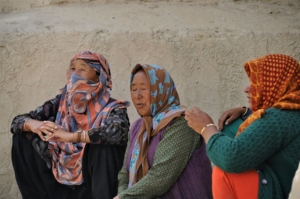 In the Himalayan Mountains of India during the early 2000s, community members worked passionately in small groups to cultivate community health and humanitarian programs. Some of their efforts were successful, but there was a problem: the groups usually worked in isolation. After noticing the need for a solution to boost the effectiveness of organizations through partnerships, Dr. Ted Lankester co-founded Arukah Network in 2004.
The Arukah Network Model
Arukah Network aims to help establish and nurture independent local groups or “Clusters” that collaborate to serve their communities by improving health and well-being. Clusters are teams of people with diverse skills and backgrounds from a common geographical or themed interest. Arukah Network’s broader organization creates and supports Clusters by connecting with, supporting, mentoring, training and encouraging local community leaders to equip them with tools to be advocates for their communities.
In effect, Cluster leaders educate and support local members by building relationships, mobilizing resources, developing support networks, conducting training and hosting events. Some groups have improved sanitation and maternal health, provided emergency aid, reduced sexual violence, increased disability inclusion and promoted community reconciliation.
A Different Kind of Aid
When nongovernmental organizations (NGOs) come into communities, they often decide what the people need and fund those projects, said Brian Wainana, Arukah Network’s Communications & Network Engagement Lead, in an interview with The Borgen Project. Because that approach rarely leads to sustainable solutions, Arukah Network chose a different method.
The organization believes communities know more about their needs and possible solutions than most outsiders. Therefore, Arukah’s aid model emphasizes the need for people to identify their challenges and devise solutions as a community. Due to this framework, Clusters can be self-sufficient and sustain operations through entrepreneurship, fundraising and sourcing grants. For instance, after the Ekari Cluster in Malawi created a farmer co-operative to restore community confidence and cultivate resources, the Cluster received $85,000 from a U.S. government grant in 2024.
The Arukah Network uses the Support and Stimulate, Appreciate, Learn and Transfer (SALT) approach to help transformative community conversations occur. SALT visits, where a team of people visit a community to speak with local people about their experiences, lead to discussions about ways to address relevant challenges in that region. “So, it’s much more than a way of working: it’s a way of thinking and being that values the strengths hidden within a neighborhood,” said Wainana.
A benefit of this model is that it allows civilians to collaborate with local governments, Wainana said. Arukah believes that the government’s primary responsibility is to support its citizenry’s health systems and public health priorities, along with preventative and curative care. In resource-poor areas, where government services are under strain, Clusters have worked to cultivate partnerships with their governments to amplify social safety institutions.
Arukah Network’s Multinational Operations
Arukah Network has 15 Cluster organizations throughout Tanzania, Zambia, Kenya, Rwanda, Malawi, the Democratic Republic of Congo (DRC) and India. Each Cluster works in response to the health and humanitarian needs unique to that area.
Clusters in India work mainly to improve access to health care and advocate for disability inclusion. In contrast, the Cluster in Tanzania prioritizes human rights. Clusters in Kenya, Zambia, Malawi and Rwanda focus primarily on agriculture. Wainana said additional areas of interest to most Clusters include entrepreneurship, mental health, women’s empowerment and creative arts.
Arukah Network’s Crisis Response
A clear example of a Cluster group offering effective humanitarian support during times of need is the one operating in Goma, DRC. Although the Cluster in Goma was disempowered after the M23 rebel group captured the city in early 2025, Arukah Network members still stepped up. They supported 47 unaccompanied children in refugee camps each week and ran conflict awareness campaigns.
The Cluster in Goma is supporting child-led families who lost their parents in the war, training other groups on “the Arukah model of collaboration” and continuing a chicken-raising project that helps sustain the group, Wainana said. The group also raised funds to provide school supplies for orphans and food for older people. At one point, communication lines were cut and rebels were committing violence against civilians. “Despite safety concerns, the Cluster has kept going, seeking to help those around them,” said Wainana.
The Future of Arukah
After the Goma Cluster proved the impact of its training and community engagement, a new Cluster was launched more than 300 kilometers away in Uvira, DRC. The Uvira Cluster aims to support survivors of gender-based violence in the region. Arukah Network receives funding from yearly trust grants and monthly donations. However, due to decreased funding, Arukah Network’s ability to provide quick emergency relief funds to needy Clusters, such as the Goma Cluster, is affected.
“We think global priorities are shifting, hence the decrease in funding,” Wainana said. In addition, worldwide inflation results in higher bills and decreased people’s likelihood to donate to charity.
USAID officially ceased operations in July 2025, while the U.K. is reducing its aid output to focus on defense spending. These cuts are beginning to harm nonprofit humanitarian organizations like Arukah Network. Increased investments in global public health are necessary to sustain groups like Arukah Network and their ability to provide support to communities in need.
– Erin Hellhake
Erin is based in Old Bridge, NJ, USA and focuses on Global Health and Politics for The Borgen Project.
Photo: Unsplash
