How Violating Women’s Rights in Afghanistan Worsens Life for All
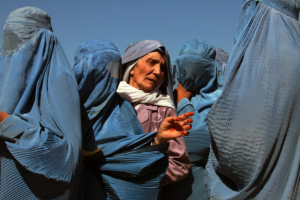 On August 15, 2021, the lives of the Afghan people underwent a stochastic lifestyle shift. It marked the establishment of a Taliban-governed Afghan state for the first time since 2001. This theocratic regime has been characterized by humanitarian organizations such as Amnesty International and Human Rights Watch as oppressive toward women, with documented restrictions on their rights to work, education, freedom of movement and public participation. Additional documented human rights concerns include religious intolerance, persecution of minorities, suppression of press and speech freedoms, extrajudicial killings and denial of due process.
The Taliban takeover of Afghanistan, coined “The Fall of Kabul,” was a far more hastened onslaught of events than American intelligence and even the Taliban themselves anticipated. The United States military completed its withdrawal by August 30, 2021. It took the Taliban just 10 days to retake Afghanistan. The only thing to change as impetuously in Afghanistan as the system of government change was the constitutional rights of Afghan women.
Impact of Women’s Rights Restrictions
The current restriction of women’s rights in Afghanistan represents a significant regression in what the United Nations (U.N.) defines as “Equality and Nondiscrimination.” It statistically correlates with broader socioeconomic decline affecting all Afghan demographics, including men.
Afghan Taliban policies include bans on women’s education, female employment in the private sector, women’s suffrage, female representation in government, female access to trial rights, medical training for women and women’s right to speak in public. These practices have been documented to impact the broader population through decreased access to services, reduced household incomes and legal system imbalances.
Additionally, women face restricted rights in divorce and marriage, including an increased incidence of forced marriages, as well as a rise in femicide cases since 2021. International justice organizations have reported these as systemic issues enabled by the current legal environment.
Economic Effects of Banning Female Employment
Under Taliban governance, Afghan women have been banned from working with NGOs and other sectors. Women comprised approximately 17% of the workforce in 2021, a number that declined to 5.1% by 2024. The United Nations Development Program (UNDP) projects this exclusion could result in annual economic losses of $1 billion.
The U.N. notes Afghanistan’s gross domestic product (GDP) has contracted by 27% from 2021 to 2023. Research from the IMF and World Bank demonstrates that equal labor participation improves GDP per capita and increases national wealth. These economic impacts are mirrored in reported wage declines affecting 80% of Afghan households since 2021.
Socioeconomic Effects of Banning Female Education
The Taliban has banned education for girls after the age of 12. Evidence indicates that adolescent female education directly supports GDP growth, with a 10% increase in girls’ school attendance associated with a 3% increase in GDP. Each additional year of girls’ secondary education raises future earnings by 10–20%.
The World Bank has found that education improves outcomes in health, marriage age, fertility and child well-being, all of which contribute to a more resilient economy and society. The ban on women’s medical training further exacerbates deficits in health services and public health knowledge dissemination.
The Cost of Silencing Women in Politics
The Taliban has revoked Afghan women of their political and legal rights. Elections have been suspended, women are barred from holding office and the Ministry of Women’s Affairs has been dismantled, removing all avenues for female political participation. Academic studies have found that expanding women’s voting rights increases the passage of socially beneficial policies and contributes to broader economic growth.
According to the World Economic Forum and U.N. Women, countries with high female political participation show stronger wage equality, labor protections and economic performance outcomes. Furthermore, denying trial rights to women undermines due process protections and may incentivize exploitation by removing legal accountability mechanisms. The rise in femicide and forced marriages has been documented as a direct consequence of these legal imbalances.
The Taliban’s prohibition on women speaking in public continues to reduce their civic visibility and participation. Indeed, this gender-based exclusion contributes to widespread psychological strain, with 80% of Afghan women reporting symptoms of clinical depression.
Organizations Fighting for Women’s Rights in Afghanistan
The curtailment of women’s rights in Afghanistan is not going unchallenged. Many organizations are actively on the ground trying to restore the constitutional rights of Afghan men. The Malala Fund offers digital learning programs that provide access to education to more than two million girls in Afghanistan. The organization also assists Afghan women activists advocating to make gender apartheid a crime under international law.
Women for Afghan Women (WAW) is a pro bono organization that offers mental health treatment to 13,455 women and 3,515 girls in 14 provinces across Afghanistan. WAW also provides safe shelters to Afghan women-led households, an impactful cause because 80% of the citizens in need of humanitarian aid in Afghanistan are women.
Razia’s Ray Ray of Hope Foundation is a nonprofit organization that works to expand female educational enrollment. It also runs nutritional programs that distribute school lunches to female students. The organization’s Menstrual Health and Hygiene Program provides more than 2,000 girls and women with essential items, including menstrual products, laundry and body soap, shampoo and new underwear.
Conclusion
According to development studies, a return to the constitutional rights Afghan women held before 2021 is believed to ameliorate the standard of living across Afghan society. Implementing inclusive gender reforms could provide Afghanistan with a similar trajectory toward sustainable development.
– Danial Osmani
Danial focuses on Politics for The Borgen Project.
Photo: Flickr
