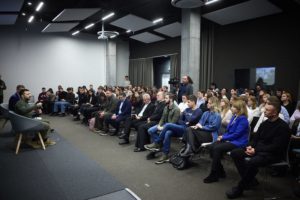
 Poverty has risen in Ukraine as the nation continues to face war, despite earlier policies that had created positive outcomes for its population. One way Ukraine can combat poverty now is by investing in education.
Higher Education in Ukraine
According to the Ministry of Education and Science of Ukraine, the country supports educational access to all people, including those who have been displaced from Ukrainian territories due to Russia’s illegal invasion. In addition, citizens who meet certain requirements and qualifications can earn free tuition from existing educational categories of funds and budgets.
As stated by Boston College’s International Higher Education, roughly 16% of the total number of students in Ukraine have left Ukrainian territory since the start of the expanded war in 2022. Russia’s constant bombardment of cities and non-military targets has led to millions of Ukrainians fleeing their homes for safety and shelter in other parts of Ukraine and the world.
Russia has also attacked higher education institutions, which has increased the displacement of students and staff. On August 18, 2025, Sumy State University was struck by a missile and drone attack on Sumy conducted by Russia, damaging multiple university and residential buildings in the city.
In response to the current war, Ukraine’s universities have utilized remote learning, relocation, scholarships and other methods to enhance students’ educational skills, continue education and reduce poverty in Ukraine. As seen in different nations, education can produce a strong working class, contributing to the national economy and supporting current and future generations.
Programs and Initiatives Supporting Ukrainian Students
One international program created after the 2022 invasion is the Program for Hosting the Ukrainian Scientists. This program was also supported and backed by the Government of Paraná in Brazil, as stated by the Araucária Foundation. The foundation, aimed at supporting sustainable development in the state and working with many businesses across sectors, supported the relocation of Ukrainians in Ukraine to Paraná, which had a large existing Ukrainian population.
This program aimed to receive and aid refugees from the war by connecting them with fellow Ukrainians. It also gave Ukrainian researchers and professionals, the majority of whom are women, the ability to support initiatives that help Paraná’s economy. Additionally, these initiatives supplied research grants and served as a starting base for these Ukrainians to gain and expand skills related to improving Ukraine’s economy and reducing poverty in Ukraine after the war.
Another initiative that supports Ukrainian students studying abroad is the University of Tartu’s scholarship fund. According to its website, the University of Tartu in Estonia has enabled Ukrainian students to receive financial and social support. This support ensures that Ukrainian students can access education, ultimately supporting the devastated economy and reducing poverty in Ukraine, while positively contributing to themselves, their future and their host nation’s economy.
Ukrainian Catholic University’s Support
Higher education institutions in Ukraine have continued learning instruction for students despite being targeted in attacks and having to resort to other methods for teaching. Halyna Kurochka, head of the Center for Modern Foreign Languages and Anastasiia Kryzhanivska, an English and Polish lecturer at Ukrainian Catholic University (UCU), spoke with The Borgen Project about UCU’s support for students during the war.
Kurochka and Kryzhanivska said, “The university quickly transitioned to online learning and later to hybrid formats, maintaining academic continuity despite the ongoing challenges. Now, we have returned to offline learning.” The ability to pivot quickly and effectively is key for Ukrainian universities in their fight to ensure educational access to all, including those who are in territories near the frontlines as well as those who are in protective shelters during missile and drone attacks.
As a result of these new locations and methods, the university “upgraded its digital infrastructure to better support both students and staff.” In addition to tailored educational methods, the “university integrated themes of civic responsibility, ethics, resilience and leadership into its curriculum,” promoting civic participation for students and future generations, declared Kurochka and Kryzhanivska.
The university also ensures financial support for students in need, especially those vulnerable and in the minority, with available scholarships and interest-free loans, expanding higher education access to more students. Kurochka and Kryzhanivska also said, “In 2024, 52% of applicants received some form of financial assistance, reflecting UCU’s commitment to supporting students during this difficult time.”
The university is also currently pursuing a project called the Intercultural Interaction and Cooperation through Transnational Education with Latin America, allowing students to learn together while connecting people and ideas from across the world.
Final Remarks
Higher education in any nation is important for younger generations to improve their futures. However, it is also key in reducing cyclical poverty and building and strengthening society. For Ukraine, higher education builds a sense of national pride while reducing poverty in Ukraine by creating a skilled and competitive workforce.
Kurochka and Kryzhanivska said, “The university has become a second home for many young people, where they not only receive an education but also take their first steps in building their careers.”
– Avery Kachmarsky
Avery is based in Los Angeles, CA, USA and focuses on Business and Politics for The Borgen Project.
Photo: Flickr

Helping Others Helps Us: The Domestic Case for UK Aid
This has led to a severely warped public perception of how the government was spending their money and its knock-on effects. The rise of political voices calling for reductions in U.K. aid, framed as an effortless money-saving measure, ignores the substantial economic returns that said aid generates for Britain.
The Moral Case for Aid
Before considering the domestic benefits, it is important to remember that aid exists first and foremost to save lives and offer hope in communities where prosperity is scarce and scarcity is the norm. Estimates that the U.K. Department for International Development suggest that U.K. funding has helped to immunize 76 million children globally and thus saved about 1.4 million lives.
Between 2010 and 2015, U.K. aid supported 11 million children in primary and secondary education, 62.9 million people saw better sanitation and access to clean water and emergency food assistance reached more than 13 million people.
One may view these figures as just numbers but it is key to recognize the lived realities they represent. U.K. aid has transformed millions of lives across the globe. The scale of this impact is hard to ignore and should be central to the case for U.K. aid.
Impact on Trade
Aid can be viewed as a zero-sum game. However, trade is a key area that can grow domestically when aid supports and grows the economy of low-income countries. On an individual level, aid can improve people’s purchasing power, opening up communities as new markets for British products and services. More broadly, aid can stabilize national economies and promote competent economic governance.
Economic and political stability creates stronger trading partners and fosters long-term partnerships that can lead to trade agreements. The Aid for Trade initiative specifically promotes commerce between donor and recipient countries while supporting economic growth and development.
A report from the National Institute of Economic and Social Research has reinforced such benefits. It found that cuts that the Johnson Ministry made to the Official Development Assistance budget cost between £322 million and £423 million in lost U.K. exports. This indicates that, rather than providing savings to the treasury, cuts to U.K. aid actually come at a cost to the U.K. economy.
The Independent Commission for Aid impact found that between 2015 and 2021, the U.K. spent more than $638 million on trade focused programs, with 44% directed to African countries and 20% to Asian countries. This funding has significant potential to open new markets for U.K. businesses. In the U.K., such exports also support around 6.5 million jobs which a government report found to be 21% more productive and 7% better paid than the national average. So, not only does international aid open new markets for businesses, it also provides better paying, more productive jobs that drive innovation, efficiency and long-term economic growth.
Aid Keeps Us Safer
The use of aid as part of interventions to ensure political and economic stability abroad have much more nuanced outcomes and remain highly controversial. Such interventions usually consist of two components: capacity building, which involves building up the capabilities of a state so it can fulfill its primary functions and legitimacy building, which focuses more on ensuring the people view said government as a legitimate actor.
Such practices can form in the aftermath of military interventions or can be more effectively utilized before such a state failure can occur. The World Bank estimates that for every $1 invested in prevention, about $16 is saved in potential long-term costs. Investing aid before conflict arises can prevent costly military interventions and heavy-handed state-building that often ignores local sociopolitical dynamics. Strengthening pre-existing state structures saves donor countries money and helps prevent conflict, creating a safer, more stable world.
Final Thoughts
Before judging aid based on political convenience, it is important to consider the moral implications and assess where this money can do the most good. The case for increasing international aid must always be framed in these terms. Existing research highlights the inaccuracy of framing such issues in terms of an “us versus them” divide.
When the U.K. government gives aid, it is not wasting money, nor is that money lost to the U.K. forever; it has tangible economic and security benefits that too often go ignored. This reality is key to any political dialogue moving forward to ensure cutting aid is not used as a money-saving political football.
– Adam Walsh
Photo: Pixabay
The Hidden Landscape of Disability and Poverty in Oman
Oman’s Nexus of Poverty and Disability
Oman still has some (relative) poverty. Despite no one in Oman living below the international poverty line of $1.25/day anymore, a regionally tailored metric shows that 10.1% of Omani nationals can still be considered “poor” in some capacity. This is one of the highest relative poverty rates in the Persian Gulf region. Poverty is even more severe among foreign workers in Oman, who number 1.8 million of the country’s residents but have experienced exclusion from most poverty-related programs and statistics.
Some of Oman’s poorest citizens have disabilities as well. There are 44,513 total Omani citizens living with disabilities. This translates to nearly 1% of the total population. The most common types of disabilities in Oman are hearing disabilities (34%) and physical disabilities (23.7%). Such disabilities reduce the likelihood of having a stable income. In 2003, only 15.7% of disabled Omanis were economically active, and 65% were unable to work at all. Thus, disability has a high correlation with poverty in Oman.
Implications of Disability and Poverty for Oman
Poverty is more acute in rural areas in Oman. A dearth of state services in agricultural and remote communities likely renders poorer and disabled Omanis in those communities vulnerable to educational neglect and health issues.
Another vulnerable group that disability and poverty disproportionately impact in Oman is children. Nearly one in 10 Omani children is stunted – a phenomenon often associated with poverty. Moreover, 16,000 Omani children are disabled.
Interventions
Despite the hardships that disability and poverty in Oman has triggered, the country has made significant strides in alleviating conditions for poor and disabled Omanis. Through its massive oil wealth, Oman has greatly solidified its current social safety net, known as the “Social Protection Fund.” The fund allows impoverished Omanis to receive unemployment benefits, monthly allowances and job recruitment opportunities when necessary. The Social Protection Fund partly explains how Oman was able to eliminate its absolute poverty rate (the proportion of people living below $1.25/day) in 2025.
For disabled citizens, the Social Protection Fund offers a tailored “disability benefit,” providing 130 rials ($338 USD) each month. This money allows Omanis with special needs to secure necessities like food, water and shelter, while reducing the likelihood of them falling into poverty.
Looking Forward
Overall, despite Oman’s international reputation for affluence, some of the country’s citizens still suffer from the interconnected issues of poverty and disability-induced hardship. These issues debilitate the lives of those who are already the most vulnerable in Omani society—foreign workers, rural residents and children. Yet, the Omani government has implemented a Social Protection Fund that has partially succeeded in alleviating the hardship induced by poverty and disability in Oman.
– Pranav Kanmadikar
Photo: Flickr
Innovations in Poverty Eradication in Moldova
Moldova’s Financial and Social Challenges
Moldova, considered Europe’s poorest country, faces deep economic fragility and rising poverty. In 2024, 33.6 % of its people lived in absolute poverty and 15.4% in extreme poverty. Rural areas suffer disproportionately with inflation worsening inequality, energy price shocks and spillover from the war in Ukraine. Reliance on remittances and outdated welfare mechanisms leaves many without timely support. Fragmented, paper-based assistance systems struggle to protect vulnerable families. Strengthening and unifying social protection is essential—not only to reduce poverty but to improve resilience against economic shocks, safeguard children and ensure inclusive growth.
From a Fragmented System to Integrated Support
Until recently, the Moldovan government distributed social assistance programs across more than 60 disconnected initiatives. For citizens, especially those in low-income or remote areas, these systems were largely inaccessible. Meanwhile, social workers on the frontline were also constrained by these circumstances, relying upon manual processes to track cases.
To address these systemic issues, in 2025, Moldova, through the Ministry of Labor and Social protection and with the support of UNDP, launched eSocial. This new digital system is a unified digital platform which aims to centralize access to welfare benefits, child protection, disability support and other critical services. Alongside this rollout, the country established the Digital Centre for Social Innovation, a hub which supports system design, piloting and workforce training.
Unifying Services onto One Platform
The digital innovations in poverty eradication currently underway in Moldova spans multiple agencies, with the Ministry of Labor and Social Protection spearheading changes across social services (RESTART), the National Employment Agency, the State Labor Inspectorate and the National Council for Determination of Disability and Work Capacity.
The Digital Transformation of Social Protection Project, supported by UNDP, is the binding force. It ensures that digital tools improve efficiency and coordination across all reforms, linking social benefits, employment programs and energy subsidies into a single accessible framework.
To complete the digital shift, the project also plans to redesign up to two regional social offices, creating physical one-stop-shops to mirror the streamlined experience online. Together, these changes aim to make Moldova’s welfare system not only modern, but also more human-focused and integrated.
Empowering Workers, Supporting Families
One of the most visible changes has been in the day-to-day lives of Moldova’s social workers. In 2024, UNICEF distributed more than 1,900 digital devices among staff, enabling them to manage cases in real time, coordinate services across agencies and spend more time working directly with families.
Beyond equipment, the reform focuses on system-wide functionality, such as digital referrals, case tracking and early warning indications. This allows social workers to shift from reactive crisis response to preventive, individually-focused care.
UNICEF’s design approach emphasizes the need for simplicity, accessibility and inclusion. Families with children, those with disabilities and elderly individuals now face fewer bureaucratic hurdles when seeking access to social protection and care. The program and its developers are creating and implementing digital tools for users, ensuring that even those with low digital literacy can participate.
Inclusion at its Core
The decision to digitize social protection is as much about values as it is about infrastructure. UNICEF and UNDP are embedding human rights principles into every facet of the system: ensuring service equity, targeting rural-urban disparities and focusing on those whom the system previously excluded, especially children in institutional care and families living within extreme poverty.
The shift toward proactive service delivery means identifying vulnerable groups and responding prior to escalation. This not only improves outcomes but also reduces long-term costs for the state.
As UNICEF stated in a press release from 2024, its decision to digitize is an effort to strengthen the social protection system, not only empowering the frontline workers, but also preventing and addressing urgent risks faced by children in a more efficient way.
A Blueprint for Welfare in the Digital Age
The innovations in poverty eradication in Moldova, a move toward a digitized social protection system, signals a quiet yet profound shift in how the state supports its people. What began as a technical reform is quickly becoming a reimagining of care, one rooted in access, accountability and modern infrastructure. As the country continues to roll out new systems and strengthen its frontline services, its experience could serve as a blueprint for other nations navigating similar challenges. For now, Moldova is still progressing the digital welfare reformation, however, the path forward is clearer and more unified than ever before.
– Elizabeth Occleston
Photo: Unsplash
Tackling the Gender Wage Gap in San Marino
The gender wage gap in San Marino forms part of a larger trend of gender discrimination in the country. In the past, these issues have arisen from violence towards women and an educational curriculum that did not place enough emphasis on gender equality and human rights. Furthermore, men make up 73% of management positions in San Marino. This statistic reinforces how the female workforce is underrepresented in positions of authority – a narrative the country is striving to change.
Engulfed by the Italian mainland, the tightly knit community of San Marino have experienced a wave of changes in relation to gender legislation. Policies which range from education to a revised government office have positively impacted the lives of female citizens working in their country of origin. Here are three ways in which the contributions of both government and international organizations have helped to reduce the gender wage gap in San Marino.
Bolstering and Empowering the Female Workforce
In order to balance the female labor force, the government of San Marino has actively provided incentives to employers with regards to their hiring policy. The government significantly reduced taxation costs on female workers to increase the number of women in full time employment.
Employers also made provisions to accommodate female needs in the workplace. These hinge around the conditions surrounding maternity leave. If a female worker had given birth to a child, she now has the option to accept a part time contract in order to balance family responsibilities. This choice has provided female employees with a degree of economic stability.
Furthermore, there are developed plans for a new Office of the Ombudsman to be implemented in 2026. This office provides an outlet where workers can raise issues which have arisen at the workplace including ‘combatting discrimination.’ This political initiative grants women an opportunity to question matters regarding their wage and all aspects of their working environment.
Long-Term Financial Transparency and Security
With data scarcely published on the gender wage gap in San Marino, recent developments to showcase financial transparency statistics ensure that international organizations can monitor the progress being made. In 2002, the Organization for Economic Co-operation and Development (OECD) placed San Marino on the ‘grey list’ for not publicly sharing data collated on tax information. Fast forward to 2025, San Marino is successfully complying with the demands that the OECD expects and is no longer on the list. These measures ensure that San Marino regularly and publicly shares its financial information, which changes its previous connotations with an unwillingness to cooperate.
Denouncing Gender Based Discrimination
The wider narrative of government gender based policy importantly highlights a shift towards improving the working environment for women in San Marino. The government is currently processing a bill which provides women under the age of 35 with the guidance to start their own e-business. These legislative measures aim to provide women with the appropriate support previously received by their male counterparts.
On an institutional level, educational reforms have also contributed to a broader notion of gender equality in San Marino. An open exhibition, which featured the works of primary and secondary school children, was made accessible to the general public on the ‘fight against violence against women’ in 2025. In addition to this showcase, the University of San Marino has introduced higher educational modules addressing gender based issues and patterns of discrimination. These public initiatives highlight a government priority placed on promoting gender equality.
Looking Ahead
Despite the nation attracting little attention from global media outlets, it is important to recognize the measures that are occurring to improve the gender wage gap in San Marino. Regular discussions with international organizations have ensured that women working in San Marino have received financial support in relation to maternity. Widespread reforms in both the educational and employment sectors highlight the nation’s efforts to combat unequal pay and wider discriminatory practices. San Marino’s recent commitments to gender based policy reinforces how tackling the gender pay gap is a global issue no matter the size of a country’s population.
– Ash Fowkes-Gajan
Photo: Unsplash
Health Care for Non-Communicable Diseases Impacting Ghana
CNCDs in Ghana
Chronic non-communicable diseases impacting Ghana have hit epidemic proportions, accounting for nearly half of all deaths, and calls to reduce their growing health and economic burden have become increasingly urgent. The drivers of CNCDs are systemic within society and typically linked to behaviors in adolescence, with unhealthy food environments and limited access to physical health infrastructure being two pillars of the increase.
While there has been an attempt to control the rapid swell of these diseases, the August 2012 policy aimed at reducing cases of CNCDs was largely ineffective. With this policy, Ghana strove to prevent and control non-communicable diseases, and focused on strategies such as primary prevention, clinical care and strengthening the health system. However, there were many interconnected challenges which limited its efficacy. On a national level, poor awareness, inadequate coordination and a lack of funding inhibited the policy’s functioning. There was also limited attention afforded to the management of patients who already have CNCDs. In addition, on a sub-national level, inadequate clarity on translating the policy into action rendered ground-level operationalizing ineffective. What the 2012 CNCD policy made evident was the need for comprehensive structural and strategy development which focused on both preventive and curative care.
Recent Progress in CNCD Policy
Despite this, there have been fruitful strides towards constructing an overarching and effective policy to combat chronic non-communicable diseases impacting Ghana. Earlier this year, the Ministry of Health in Ghana, with support from the World Health Organization (WHO), convened a stakeholder agreement with more than 50 people from government ministries, regulatory agencies, academia, civil society and United Nations partners to galvanize support for legal reform which promoted healthier diets and physical activity – the two pillars of prevention. This was part of Phase II of the Global Regulatory and Fiscal Capacity Building Programme (Global RECAP), a program seeking to implement measures to reduce the occurrence of NCDs by creating healthier environments.
In addition, Ghana is preparing to roll out the 2025 Global School Health Survey, a nationally representative survey aimed at gathering critical data on the personal health behaviors of school-aged adolescents. To ensure the successful implementation of the survey, a national training program has been held in Kusami for collectors and administrators, equipping them with technical knowledge, ethical guidance and practical tools for survey administration. The questionnaire includes modules on nutrition, physical activity, mental health, alcohol and drug use and the role of familial support, as well as measuring height and weight. Illustrating the importance of this initiative, Dr Pascal Mwin, Technical Officer for Non-Communicable Diseases at the WHO Country Office, emphasized the “critical investment in building a stronger foundation for adolescent health in Ghana,” which will ultimately aid the effectiveness of the policies it will inform.
Looking Ahead
With continued aid from the WHO, there is cause for hope for encompassing and productive legislation to tackle the rising tide of chronic non-communicable diseases impacting Ghana, foster healthier school environments and increase access to adequate health care for those living in poverty.
– Libby Foxwell
Photo: Unsplash
Diseases Impacting French Polynesia and Efforts to Combat them
The Health Crisis at Hand
Dengue fever, a flu-like disease, has been a consistent issue in the region. During the 2023 outbreak, the Dengue Visual Atlas estimated there were 306 reported cases. Aedes aegypti mosquitoes, which thrive in warm tropical environments, spread the disease. Spiking during the rainy season because stagnant water becomes a breeding ground for the mosquitos.
Leptospirosis, a bacterial disease that spreads via contaminated water or soil, has also caused concern. In 2023, health authorities reported 117 cases. This was substantially higher than the 12 during the same time period in 2022. Officials linked the increase to heavy flooding and rain in areas like Tahiti. Leptospirosis can have severe complications such as kidney damage, liver failure or even death if untreated.
Poverty in the country affects a lot of the outcome of disease spread. A study that the French Development Agency did in 2010 found that around 28% of the country lives in poverty, surviving on around $1,000 USD a month. A small elite population of the country also controls a disproportionate share of resources, placing even greater strain on lower income families. Many of the islands in the nation are also isolated and underdeveloped, lacking even basic health care. This causes many to travel just to receive simple treatment.
Community-Based Solutions
To combat diseases impacting French Polynesia, the nation’s government has implemented proactive and science based policies. According to the World Health Organization (WHO), scientists in Tahiti are initiating a Sterile Insect Technique project of releasing sterilized male mosquitoes to combat dengue transmission. This method targets the mosquitos directly instead of using chemical pesticides, resulting in a more positive effect on the environment.
NGOs
The Institut Louis Malardé (ILM) established itself in 1949 in Tahiti, the nation’s largest island. It is a public research institute dedicated to progressing public health in French Polynesia. It initially focused on combating lymphatic filariasis. Since then, it has expanded its focus to address a spectrum of health challenges.
The ILM is a leader in research on dengue fever. Using more than 35-years of data, its researchers have developed models to analyze dengue surveillance, providing insights into immunity and transmission dynamics. The ILM has also conducted serosurveys, contributing to a larger understanding of viral circulation in the region.
Looking Ahead
French Polynesia continues to face the risks of viral infections and waterborne diseases, but its strategies are beginning to show results. Collaborative, community-based health solutions backed by data and research are helping residents stay informed and remain safe. With continued and consistent funding, ongoing education and continued cooperation, French Polynesia’s public health system will build resilience, not only with today’s epidemics and illnesses, but for future ones as well. In an isolated region with a tropical climate, health care can be challenging. The efforts are proving that prevention, rapid response and local leadership can form effective control on the diseases impacting French Polynesia.
– Brody L. Gates
Photo: Wikimedia Commons
Reducing Poverty in Ukraine through Education
Higher Education in Ukraine
According to the Ministry of Education and Science of Ukraine, the country supports educational access to all people, including those who have been displaced from Ukrainian territories due to Russia’s illegal invasion. In addition, citizens who meet certain requirements and qualifications can earn free tuition from existing educational categories of funds and budgets.
As stated by Boston College’s International Higher Education, roughly 16% of the total number of students in Ukraine have left Ukrainian territory since the start of the expanded war in 2022. Russia’s constant bombardment of cities and non-military targets has led to millions of Ukrainians fleeing their homes for safety and shelter in other parts of Ukraine and the world.
Russia has also attacked higher education institutions, which has increased the displacement of students and staff. On August 18, 2025, Sumy State University was struck by a missile and drone attack on Sumy conducted by Russia, damaging multiple university and residential buildings in the city.
In response to the current war, Ukraine’s universities have utilized remote learning, relocation, scholarships and other methods to enhance students’ educational skills, continue education and reduce poverty in Ukraine. As seen in different nations, education can produce a strong working class, contributing to the national economy and supporting current and future generations.
Programs and Initiatives Supporting Ukrainian Students
One international program created after the 2022 invasion is the Program for Hosting the Ukrainian Scientists. This program was also supported and backed by the Government of Paraná in Brazil, as stated by the Araucária Foundation. The foundation, aimed at supporting sustainable development in the state and working with many businesses across sectors, supported the relocation of Ukrainians in Ukraine to Paraná, which had a large existing Ukrainian population.
This program aimed to receive and aid refugees from the war by connecting them with fellow Ukrainians. It also gave Ukrainian researchers and professionals, the majority of whom are women, the ability to support initiatives that help Paraná’s economy. Additionally, these initiatives supplied research grants and served as a starting base for these Ukrainians to gain and expand skills related to improving Ukraine’s economy and reducing poverty in Ukraine after the war.
Another initiative that supports Ukrainian students studying abroad is the University of Tartu’s scholarship fund. According to its website, the University of Tartu in Estonia has enabled Ukrainian students to receive financial and social support. This support ensures that Ukrainian students can access education, ultimately supporting the devastated economy and reducing poverty in Ukraine, while positively contributing to themselves, their future and their host nation’s economy.
Ukrainian Catholic University’s Support
Higher education institutions in Ukraine have continued learning instruction for students despite being targeted in attacks and having to resort to other methods for teaching. Halyna Kurochka, head of the Center for Modern Foreign Languages and Anastasiia Kryzhanivska, an English and Polish lecturer at Ukrainian Catholic University (UCU), spoke with The Borgen Project about UCU’s support for students during the war.
Kurochka and Kryzhanivska said, “The university quickly transitioned to online learning and later to hybrid formats, maintaining academic continuity despite the ongoing challenges. Now, we have returned to offline learning.” The ability to pivot quickly and effectively is key for Ukrainian universities in their fight to ensure educational access to all, including those who are in territories near the frontlines as well as those who are in protective shelters during missile and drone attacks.
As a result of these new locations and methods, the university “upgraded its digital infrastructure to better support both students and staff.” In addition to tailored educational methods, the “university integrated themes of civic responsibility, ethics, resilience and leadership into its curriculum,” promoting civic participation for students and future generations, declared Kurochka and Kryzhanivska.
The university also ensures financial support for students in need, especially those vulnerable and in the minority, with available scholarships and interest-free loans, expanding higher education access to more students. Kurochka and Kryzhanivska also said, “In 2024, 52% of applicants received some form of financial assistance, reflecting UCU’s commitment to supporting students during this difficult time.”
The university is also currently pursuing a project called the Intercultural Interaction and Cooperation through Transnational Education with Latin America, allowing students to learn together while connecting people and ideas from across the world.
Final Remarks
Higher education in any nation is important for younger generations to improve their futures. However, it is also key in reducing cyclical poverty and building and strengthening society. For Ukraine, higher education builds a sense of national pride while reducing poverty in Ukraine by creating a skilled and competitive workforce.
Kurochka and Kryzhanivska said, “The university has become a second home for many young people, where they not only receive an education but also take their first steps in building their careers.”
– Avery Kachmarsky
Photo: Flickr
Conflict and Addressing Poverty in the DRC
Decades of Conflict and Instability
Since the mid-1990s, the DRC has experienced near-continuous violence. The First Congo War began in 1996, followed by the Second Congo War in 1998, which involved multiple neighboring countries. While formal hostilities ended in 2003, armed groups continue to operate in eastern provinces such as North Kivu, Ituri and South Kivu.
Recent updates from the International Crisis Group highlight a resurgence in violence by the M23 rebel group and other militias. According to the United Nations Office for the Coordination of Humanitarian Affairs (OCHA), more than 20 million people are in need of humanitarian aid in the DRC, with many in this situation for multiple years. Human Rights Watch reported in June 2025 that the M23 has forcibly transferred civilians and targeted local populations, worsening instability in North Kivu.
Poverty Deepens as Communities Are Displaced
Displacement due to violence has had severe economic consequences. The World Bank notes that instability has made it difficult for people to maintain steady incomes or access critical services such as education, health care and clean water. In rural areas, insecurity prevents farmers from cultivating land, disrupting food production and increasing hunger. The World Food Programme (WFP) estimates that around 28 million people in the DRC currently face crisis or emergency levels of food insecurity.
In areas like North Kivu, attacks on communities have forced families to abandon farms, livestock and livelihoods. The United Nations Children’s Fund (UNICEF) reports that more than 1 million people have been displaced. Conflict also weakens infrastructure and governance. In its latest country overview, the World Bank stated that public investments are limited, with many road networks and hospitals either damaged or inaccessible. Corruption and lack of coordination further slow efforts to rebuild after conflicts.
Organizations Working Toward Solutions
Despite immense challenges, several humanitarian and development organizations are making progress in addressing poverty in the DRC. These initiatives focus on long-term recovery, livelihood development and local empowerment. Concern Worldwide has been operating in the DRC since 1994.
In recent years, it has implemented community-based programs in Tanganyika and North Kivu provinces. These efforts combine emergency nutrition support with clean water access, agricultural training and local peacebuilding. According to Concern Worldwide, its 2023 program has supported more than 100,000 people, helping communities recover from displacement and return to farming.
Looking Ahead
Although the challenges are substantial, progress is underway. Local communities are increasingly involved in shaping solutions. Cash-transfer programs led by UNICEF in 2024 reached 14,000 vulnerable children and their families, allowing them to access food, clothing and shelter during emergencies. These interventions not only meet urgent needs but also build trust and agency within communities.
Addressing poverty in the DRC requires both humanitarian aid and long-term development strategies. By combining financial access, local governance support and community-driven recovery, organizations are helping the Congolese population rebuild from decades of disruption. As these programs expand and receive sustained support, more families will gain access to income, education and stability, which are vital tools for escaping the cycle of poverty.
– Charlie Wood
Photo: Flickr
Improving Food Security with Solar Cold Storage in Cambodia
Cambodia has experienced significant economic growth since the Khmer Rouge era. From 2007 to 2014, Cambodia’s poverty rate dropped from 47.8% to 13.7%. Although the COVID-19 pandemic caused an uptick in poverty, not all gains have been lost. Despite significant progress in Cambodia, rural communities still struggle. Of the five million people currently living in poverty, an estimated 90% live in rural areas.
Issues With Food Spoilage
Food scarcity remains a major driver of poverty, with about 16% of Cambodian households unable to afford adequate nutrition. Rural communities, which depend heavily on fishing and agriculture, face challenges from geographic isolation.
The problem is not a lack of arable land or resources, but insufficient infrastructure for storage and transportation. Solar-powered cold storage offers the most viable solution to preserving food quality in rural Cambodia.
Solar-Powered Cold Storage and Its Champions
Solar-powered cold storage offers an off-grid, sustainable solution for maintaining the freshness of perishables. This helps farmers and fishermen increase their profits and lowers food costs through reduced spoilage. Private and charitable organizations are leading initiatives, demonstrating solar-powered cold storage’s ethical and commercial viability.
EGE Energy Solution is a tech startup focused on transitioning Cambodia’s agrarian economy from fossil fuels and hydropower to solar solutions. The company is currently developing a solar-powered cold storage system and seeking investment. EGE believes that while solar energy requires a significant upfront investment, it is the right solution because it is reliable and has low long-term expenses.
Similarly, the United Nations Development Programme (UNDP) partnered with Korea’s Ministry of Agriculture, Food and Rural Affairs to bring solar-based technology, including solar-powered cold storage, to Cambodia and Myanmar. Their goal is to advance solar-powered technology among 7,000 farms in Cambodia.
At the nexus of market and charitable solutions is the Aggrinovation Fund in ASEAN (AIF). Recently, AIF partnered with the Kasekor Akphiwat Thmei Agricultural Cooperative (KATAC), which proposed adding solar-powered cold storage units in their province. The goal was to reduce dependence on crop harvesters and protect against low yields.
Final Remarks
While not as groundbreaking as crop rotation or seed drill, solar-powered cold storage is an innovative technology for rural farmers. By cutting spoilage, boosting farmer income and making nutritious food more accessible, it addresses both poverty and food insecurity at their roots. With continued investment and collaboration, this sustainable solution can help transform Cambodia’s rural economy for the long term.
– Patrick Feeney
Photo: Flickr
The 1995 Global Summit Became a Blueprint for Ending Poverty
Copenhagen Declaration on Social Development
The Copenhagen Declaration on Social Development was the main political declaration that summit participants adopted in 1995. It outlines the global commitment to social development, focusing on reducing poverty.
The Copenhagen Declaration outlines ten key commitments. A summary of these commitments includes:
Declaration and Program of Action
Many governments adopted a “Declaration and Program of Action” in conjunction with the Copenhagen Declaration. This meant that they agreed to put people at the center of development, to advance social development by improving 10 core areas mentioned in the Copenhagen declaration. In the declaration of action, member states made a practical implementation plan to improve and promote social development and accelerate development in Africa and other developing countries across the world.
Furthermore, this declaration aimed to achieve its goals by addressing several key issues. These included debt elimination, reorientation of agricultural policies and increased Official Development Assistance (ODA). It also addressed collective bargaining rights, poverty vulnerability indicators, traditional rights to resources and health care access for low-income families.
How Did It Become a Blueprint for Ending Poverty?
30-Year Anniversary of the WSSD
In 2025, 30 years after the 1995 Global Summit, the United Nations (U.N.) will meet for the second WSSD, this time in Doha, Qatar, in November 2025. This summit will give global leaders the opportunity to rethink their position on social development and realign poverty as a political priority. The 2025 summit will also create an opening to discuss crucial issues that weren’t a priority 30 years ago, while also rebuilding trust between institutions and multilateralism.
– Emma Dornan
Photo: Flickr