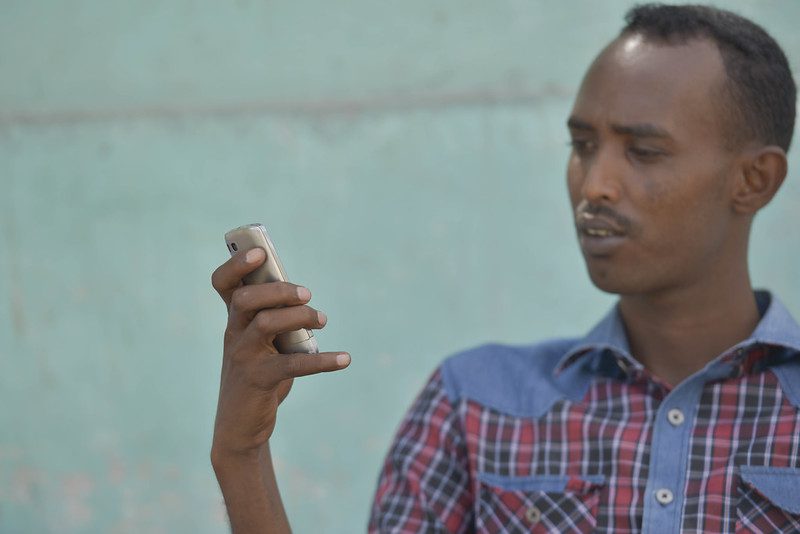
 In February 2025, a grandmother in Bua, Fiji, received a single text message: “Evacuate to higher ground.” She gathered her grandchildren and left just hours before a flash flood consumed the riverbanks. That text saved five lives. Fiji secured a grant of FJ$29 million ($12.9 million) from the Green Climate Fund in support of the Early Warnings for All initiative (EW4All), bringing life-saving alerts within reach of the most vulnerable
What is Early Warnings for All
Launched by U.N. Secretary-General António Guterres in 2022, the EW4All seeks to ensure that every person on Earth is safe thanks to a life-saving multi-hazard early warning system by the end of 2027.
The effort is a direct response to the growing frequency and severity of climate-related disasters. Indeed, from cyclones in the Pacific to droughts in East Africa, communities on the frontlines of natural disasters often have little or no time to prepare. By combining meteorological science, technology, and local preparedness, EW4All aims to close this protection gap worldwide.
A Comprehensive, Multi-Pillar Approach
The initiative is co-led by the World Meteorological Organization (WMO) and the United Nations Office for Disaster Risk Reduction (UNDRR), with support from the International Telecommunication Union (ITU) and the International Federation of Red Cross and Red Crescent Societies (IFRC)
Together, these organizations oversee four essential, end-to-end pillars:
- Disaster risk knowledge (UNDRR) — mapping hazards and vulnerabilities so communities understand their risk.
- Detection, observation, monitoring, analysis, and forecasting (WMO) — ensuring accurate, timely climate and weather predictions.
- Warning dissemination and communication (ITU) — ensuring alerts reach people through mobile networks, radio, and other channels.
- Preparedness and response capabilities (IFRC) — enabling communities to take action before a hazard strikes.
These pillars work together. Without accurate data, forecasts lose precision. Without effective communication, warnings go unheard. And without preparedness, even the best warnings cannot save lives.
Tangible Progress: Funding and Country-Level Action
In February 2025, the Green Climate Fund (GCF) approved a groundbreaking $103.2 million in grant financing to bolster EW4All systems in seven climate-vulnerable countries—Antigua and Barbuda, Cambodia, Chad, Ecuador, Ethiopia, Fiji, and Somalia—benefiting more than 26 million people.
This project, led by the United Nations Development Programme (UNDP), carries a total investment of $114.6 million, including $11.3 million in co-financing from IFRC, ITU, WMO, and national governments
In Fiji, the FJ$29 million ($12.9 million) grant focuses on expanding early warning coverage in remote areas, integrating hazard monitoring with local communication systems and providing training for
Why Early Warnings Matter and Deliver Impact
Early warning systems are among the most cost-effective tools in disaster risk reduction. The Global Status Report (2022) shows that countries with substantive-to-comprehensive early warning coverage experience eight times lower disaster mortality than countries with limited coverage.
Providing just 24 hours’ notice before a hazardous event can reduce damage by about 30% and investing $800 million in early warning systems in developing countries could avoid losses of $3–16 billion annually
Scaling Impact Through Partnerships
The EW4All initiative not only coordinates funding but also drives technical assistance and national policy support. The EW4All Advisory Panel, co-chaired by the heads of WMO and UNDRR, meets twice a year to assess progress, address gaps, and align resources.
On the technology front, ITU has mobilized partnerships with mobile operators such as GSMA, Safaricom and Telefónica to deploy cell-broadcast and location-based SMS in at-risk countries, ensuring alerts are not dependent on internet access.
In parallel, the IFRC works directly with communities to run evacuation drills, distribute preparedness kits, and ensure that warnings lead to action.
A Positive Forward Outlook
As natural disaster risks intensify, EW4All out as a global solution that saves lives while protecting livelihoods. By preventing deaths, reducing asset loss and maintaining community stability, EW4All indirectly supports poverty reduction. Disasters often push vulnerable households deeper into poverty; effective early warning systems break that cycle by enabling people to protect their homes, crops and sources of income.
With two years remaining until the 2027 deadline, progress is accelerating. From the Pacific Islands to the Horn of Africa, EW4All is laying the groundwork for a safer, more resilient future—where no one faces disaster without warning.
– Prayosha Patel
Prayosha is based in Gujarat, India and focuses on Technology and Solutions for The Borgen Project.
Photo: Flickr

Solar-Powered Cinema in Zambia’s Rural Communities
Origins in Zambia
The concept began in 2013, when filmmakers Sydelle Willow Smith and Rowan Pybus screened their documentary Amazing Grace, which profiled Zambian conservationist Lloyd Maanyina. Despite being the central figure in the film, Maanyina’s own village could not watch it due to a lack of internet, cinemas or affordable streaming options. That moment sparked the creation of the SunBox, a solar-powered “cinema in a box” containing a projector, speakers, and a battery system.
From the start, the goal was simple but ambitious: to bring relevant films directly to communities, using technology that could operate off-grid. By 2017, Sunshine Cinema had evolved into a nonprofit organization operating in Zambia, South Africa, Zimbabwe, Malawi, and Kenya.
The organization trains SunBox Ambassadors—young people from underserved communities—to run screenings, facilitate discussions, and earn income as media entrepreneurs. This solar-powered mobile cinema model brings clean energy, new job opportunities and access to life-changing information to regions where these resources are scarce.
Poverty Reduction Through Storytelling and Jobs
At its core, the solar-powered cinema in Zambia is a poverty-fighting initiative. Ambassadors learn about event facilitation, digital marketing and community engagement, allowing them to transform screenings into reliable income sources. In rural areas that lack infrastructure and formal jobs are rare, this work not only supports individuals but also strengthens the local economy.
Co-founder Rowan Pybus explained: “We train youth in digital marketing and impact facilitation… we run outdoor screening events, celebrating African film and run media training workshops promoting active citizenry.”
This approach makes the solar cinema project more than just a film delivery system—it is a sustainable small-business model that equips participants with transferable skills for other industries.
Each screening is carefully curated to include both engaging entertainment and practical knowledge. In Zambia, screenings of “I Am Not a Witch” were a topic of community discussions about women’s rights and the balance between tradition and progress. These dialogues give residents the chance to share perspectives, ask questions, and propose solutions to pressing local issues.
The mobile cinema could also act as a renewable energy classroom. By demonstrating how the SunBox operates entirely on solar power, audiences see first-hand the potential of clean energy to reduce fuel costs, cut pollution and improve quality of life.
Conclusion
Co-founder Sydelle Willow Smith summed up the mission: “Our model is a hybrid of storytelling, sustainability, and youth entrepreneurship… By using solar power and training young changemakers, we’ve created a platform that reduces carbon emissions, fosters grassroots dialogue, and creates meaningful work in the informal and green economies,” Lioness of Africa reports.
In rural Zambia, where access to electricity and formal education resources is often limited, the solar-powered cinema in Zambia offers more than just light on a screen—it provides livelihoods, vital knowledge, and inspiration. By combining renewable energy with cultural storytelling, this solar cinema project is reducing poverty, strengthening communities, and sparking a new generation’s curiosity about technology, filmmaking and clean energy.
– Mamie Hirsh
Photo: Flickr
Empowering Rural Girls in India To Complete Their Education
Approximately 29% of children drop out before completing elementary school. As for secondary education, around 50% of adolescents do not complete secondary education. Nearly half of primary school children fail to achieve sufficient grade-level learning levels. Initiatives and efforts aim to address gender equity and poverty reduction holistically.
Challenges Facing Rural Girls’ Education
Despite progress in enrollment, education in India for many rural girls is harsh. Social expectations often prioritize early marriage and household duties over schooling. Girls are often seen as economic burdens and early marriage (before 18 years old) is seen as a way to secure a stable financial future.
The study “Students and Brides: A Qualitative Analysis of the Relationship Between Girls’ Education and Early Marriage in Ethiopia and India” is crucial for understanding the link between education and early marriage in rural India, particularly in Jharkhand, where early marriage persists despite increasing awareness of education’s benefits.
The study found that while girls often viewed education as a way to gain confidence and life skills, its perceived value was frequently tied to improving their marriage prospects or household management, rather than fostering independence and knowledge. For instance, one participant remarked that an educated girl “will be able to manage her house and family well and chances of conflicts with husband and in-laws will reduce substantially,” highlighting how strongly gender roles shape expectations.
The study also documented how poverty and social pressure continue to push girls out of receiving an education in India. Some girls were withdrawn due to financial constraints, while others were married off to avoid gossip about their character. In contrast, girls who were able to delay marriage, such as the girl who canceled her engagement with the help of Project RISHTA peer educators, often had strong personal motivation and support from parents or teachers.
These specific examples underscore why education alone is not enough; tackling early marriage requires interventions that address social norms, offer economic support and provide continued education pathways even after marriage.
Safety Concerns
In March 2025, the Luena Foundation collaborated with the Women Development Welfare Society (WDWS) to help 46 girls in Choppadandi village, Telangana, stay in school by providing bicycles for transportation. Many of these girls previously walked up to six kilometers to school each day, facing safety risks and long travel times that often led to dropout or early marriage. With a $4,000 investment, the project supplied bicycles and ran awareness campaigns to encourage families to support girls’ education.
The impact was significant because the girls now get to arrive at school on time, feel safer and have more time and energy for studies and sports. Families save money on transportation, which they can use for essentials or future education costs. The project also shifted attitudes as parents became more supportive and some began saving for their daughters’ futures rather than planning early marriages. The initiative improved safety, access to education and community mindsets around girls’ schooling through a simple yet effective solution.
A Brighter Tomorrow
Although education in India has made considerable progress in boosting enrollment, many rural girls continue to face major barriers that prevent them from completing secondary school. Social norms, financial hardship, early marriage and safety concerns limit their educational opportunities. However, there are promising efforts underway. Programs like Project RISHTA provide safe spaces and peer-led education that help delay early marriages and promote healthier adolescent decision-making.
Additionally, initiatives such as the Luena Foundation’s bicycle distribution project in Telangana offer practical solutions with immediate impact. By addressing safety and transportation challenges, this project enabled girls to attend school regularly and on time. Despite the ongoing challenges, these targeted interventions show that change is possible!
– LaRayee Lee
Photo: Wikimedia Commons
Colombia’s Pension Reform is Fighting Poverty
Elderly Poverty in Colombia
The South American country of Colombia has a population of approximately 50 million people, of which more than 7 million (14%) are above the age of 60. According to a study conducted by the Institute of Aging at Colombia’s Javeriana University, 28.4% of this population (or 1.8 million) are living below the poverty line. The study also found that more than one million people in this age demographic are “victims of Colombia’s armed conflict,” which has been going on for decades
Inflation during and after the COVID-19 pandemic has significantly impacted many countries, including Colombia. Since 2021, the inflation rate has grown exponentially, peaking at 13.34% in March 2023. While the current rate is much lower, the effects of inflation are still widely present. These effects are especially difficult for elderly people, who often rely on fixed incomes and have limited opportunities to increase their earnings.
In 2023, Colombia’s pension plan only covered 25.5% of the elderly population, according to Bloomberg Linea. This situation leads many older Colombians to extend their working lives, often taking on informal and poorly paid jobs. This is an issue that is more noticeable in rural areas
This is an issue that will continue to become more palpable over time. In 2015, only 10.8% of Colombia’s population was over 60. By 2050, that number will increase to 27.5%
Passage of the Law
While Colombia’s pension reform was a significant issue for years, it became the forefront of Colombian politics in 2022 with the electoral success of Gustavo Petro to the presidency. During the campaign, he promised many social reforms, including pension reform.
His promise came to fruition when the Colombian Congress passed the pension reform bill in June 2024, which came into effect in July 2025. Specifically, this new law aims to strengthen the state pension fund, Colpensiones, by requiring individuals who earn less than $800 per month to contribute to the public fund. It also guarantees payments for older adults who have insufficient retirement savings or none at all. The government estimates that approximately 2.6 million older Colombians will benefit from these expanded payments, providing long-overdue financial security to a vulnerable segment of the population
New Pillar System
The reform also establishes a new “pillar system” that focuses on increasing coverage and efficiency. It divides pension contributions into different pillars based on income levels, thereby encouraging higher-income earners to contribute to private savings while ensuring lower-income workers receive support from the public system. This structure aims to make the overall pension system more inclusive and reduce inequality among retirees.
Additionally, one of the primary objectives of Colombia’s Pension Reform is to combat elderly poverty by offering a guaranteed minimum monthly payment to retirees who did not meet the required weeks of contributions under the old system. This helps ensure that aging citizens who worked informally or intermittently have support in their later years.
While implementation will require significant coordination and public education, the reform is a step toward creating a more equitable retirement system in Colombia.
– William Brentani
Photo: Flickr
Education in Estonia: From ‘Tiger Leap’ to an AI Future
Estonia is an Eastern European country between Latvia and Russia, bordering the Baltic Sea and the Gulf of Finland. It is a high-income country of approximately 1.2 million people.
Estonia had been under centuries of Danish, Swedish, German and Russian rule when it gained independence in 1918, only to be forced into the USSR in 1940. The country regained its current independence in 1991.
Estonian Education System
Education in Estonia is comprehensive and compulsory through grade 9, although a reform is being prepared to extend compulsory education to the age of 18, to be implemented from the school year 2025-26, which will bring the country in line with other OECD countries. Preschool begins at 18 months and basic education at age 7. Students with special needs are mainstreamed in regular classes. School is free, including lunch, textbooks, transportation and necessary support services.
After completing their primary education, students can continue to general secondary education or to secondary vocational school. Completion of secondary education allows students to pursue a preprofessional higher educational institution or vocational education, although students who have completed a vocational secondary school can only advance to vocational education.
PISA 2022 (Program for International Student Assessment) ranked Estonian students at the top in Europe and in the top eight in the world. Among European countries, Estonia was 1st-2nd in math with Switzerland, 1st in science, and 1st-2nd in reading with Ireland.
Estonia’s Educational Leap into Technology
Tiger Leap: After returning to independence in 1991, Estonia initiated the modernization of its education system. Underlying this move was the belief that information technology should be used for the benefit of social development. Tiger Leap was launched in 1996 by three key people: Lennart Meri, President of Estonia; Jaak Aaviksoo, Minister of Education; and Toomas Hendrik Ilves, then ambassador to the U.S. and later president of Estonia. Tiger Leap stood on three pillars: (1) computers and the internet, (2) basic teacher training and (3) native-language electronic courseware for general education institutions. By 2000, all Estonian schools had computers and by 2001, all were connected to the internet. Local funds supported this leap, matched by the Tiger Leap Foundation. In the initial year of 1997, 4,000 teachers received training, followed by thousands more in subsequent years.
Later programs included Tiger Leap Plus, ProgeTiger and IT Academy. Tiger Leap Plus focused on competencies needed for information and communications technologies. The ProgeTiger and IT Academy programs launched in 2012. ProgeTiger focused on the technological literacy and digital competence of teachers and students. IT Academy was a cooperation and development program among the state, ICT sector companies and universities, to increase the number of ICT professionals.
AI Leap 2025: AI Leap 2025 is Estonia’s move to incorporate cutting-edge artificial intelligence applications into its education system. Estonia believes it is the first, or one of the first countries to introduce AI into the entire nationwide education system at one time, rather than piecemeal, in specific schools or regions, as has been done elsewhere. The long-term goal of the AI leap is more efficient, personalized, diverse and inclusive teaching. Says Slim Sikkut, a member of Estonian President Alar Karis’s Digital Council and former Government CIO of Estonia, “We also want to reduce the digital technology divide and prevent a new divide between those who are AI savvy and those who are not.”
Initially, 20,000 10th and 11th grade high school students will get access to AI apps, and 3,000 teachers will receive training on how best to use them. The goal is for students to build a skillset that will allow them to remain competitive at personal, company, and national levels. President Karis initiated AI Leap 2025, with the participation of various entrepreneurs and the Ministry of Education and is funded jointly by the government and the private sector. Teacher training is scheduled to begin in fall 2025. Teachers, students, academics, businesses and community members have formed working groups to define target competencies, curricula, tools and training programs.
A Strategy for the Future
Estonia’s technology education programs are one aspect of Estonia’s Education Development Plan 2021-2035, to enhance the “digital and entrepreneurial competencies of learners and educators.” Combined with the plan’s goals of high-quality and inclusive education for all, lifelong learning and innovation, the technology leaps should support the ultimate goal of the well-being and development of learners and educators.
– Staff Reports
Photo: Flickr
Auxílio Emergencial: Brazil’s Solution To Poverty
Other recent statistics highlight ongoing challenges for the country. In 2022, 8% of people lived below the poverty line. Of those workers, two out of every five were not officially employed by the places where they worked. This leaves families vulnerable, as they do not receive employee benefits and protections such as retirement savings, paid time off or family leave that formal jobs offer. There is also a lack of food supplies in the average household. As of 2023, nearly 60% of households led by women suffer from food insecurity and similar cases are prevalent across the country.
Bolsa Família and Social Support
With so many people suffering from poor living conditions and below the poverty line, intervention from those in positions of power appears to be necessary. Ongoing incentives are already in place to support the people of Brazil. In 2003, the Bolsa Família program took off, providing aid to families living in poverty and quickly became popular. By 2023, 19% of all registered homes in Brazil were on the Bolsa Família program.
Emergency Aid During COVID-19
Every country felt the impact of COVID-19, and Brazil was no exception, as those living in poverty had little defense against deadly diseases. In March 2020, the government launched the Auxílio Emergencial program to address the sharp decline in jobs and the loss of income that followed. The program was available only to people in poverty who were unemployed, informal workers or self-employed while living at or under 50% of the national minimum wage. Because much of the population’s data was already stored by the government, officials were able to swiftly and effectively distribute resources to those who needed them most. The program continues to support the Brazilian people.
Looking Ahead
The Auxílio Emergencial program was highly effective. After its launch, poverty in Brazil dropped by 23.7% from pre-pandemic levels, lifting 15 million people out of poverty. The efforts to address poverty do not stop there; the Brazilian government is continuing to create new social programs and update both the Bolsa Família and Auxílio Emergencial initiatives to ensure that even more people can rise out of poverty.
– John Menechino
Photo: Flickr
Guam Fights Maternal Mortality Through Guahan Doula Project
Lack of Access to Hospitals Restricts Medical Care
Guam has only three hospitals, one of which is located on the Guam Naval Base, which exclusively provides care to those serving and their families. The Guam Regional Medical City, located in Dededo, is a private hospital. This leaves only one public hospital, Guam Memorial Hospital in Tamuning, where most people in Guam can obtain medical care. It is also the only hospital with a labor and delivery wing.
Those residing in the southernmost parts of the island face up to an hour-long drive to the Guam Memorial Hospital. If there are any complications during labor and delivery, the distance may increase the odds of fatality for the mother or baby.
Due to the difficulties accessing health care, the Health Resources and Services Administration deems Guam a Medically Underserved Area. Specialized care, such as obstetrics, is even harder to access. More than half of maternity-related deaths are due to hemorrhage and pregnancy-induced high blood pressure. Both are less likely to be fatal with routine, preventative doctor visits.
Provider Shortages
According to OBGYN Dr. Tom Shieh, there are only 6.5 OBGYNs left to handle the delivery of the roughly 250 babies born monthly. This shortage of medical professionals, coupled with the lack of hospitals, undoubtedly increases maternal mortality in Guam.
Guam, with a population of 167,777, has only 6.5 practicing OB-GYNs—far too few to adequately meet the needs of expecting and delivering mothers.
Guahan Doula Project
Bill 318-47 seeks to address the maternal mortality in Guam through certifying doulas. The bill proposes allocating $400,000 to the Bureau of Women’s Affairs’ Guahan Doula Project. Doulas can provide pregnancy care to help fill the gap that the lack of OBGYNs and gynecologists leaves. There are 13 doulas in Guam as of February 2025, but that number would surely increase if the bill passes.
Doulas are not licensed medical professionals in the same way that doctors are. However, they provide support and knowledge of the birthing process that has been proven to reduce maternal mortality rates, shorten labor times and reduce emergency cesarean sections.
More doulas would offer more possibilities of access to care than the Guam Memorial Hospital does alone. Practices can be set up anywhere and don’t need to be based in a hospital. This allows more women the opportunity to receive some pregnancy care before, during and after birth.
Doulas Supplement Maternal Care
Increasing access to prenatal and postnatal care will decrease the rates of maternal mortality in Guam. Medical problems that may prove fatal are more likely to be caught and treated if the expectant woman can be seen by a provider regularly.
– Sydney Uhl
Photo: Pixabay
USAID in Myanmar
Renewed Military Control and Civil War
The protests ended with a coup d’état, resulting in the military junta ousting Ne Win and ruling the nation. The military junta later held a general election in 1990, where national icon Aung San Suu Kyi and her party dominated, partly due to their pro-democracy agenda. However, the military leadership would not recognize Kyi’s party’s win and continued to rule the government. Kyi was put under house arrest and, in 2021, when the Tatmadaw military organization came to power following another coup d’état, they imprisoned her. Kyi was a prominent leader in advocating for Myanmar’s democracy in the 2010s, where the Burmese nation seemed to bend toward justice with the democratic elections of Htin Kyaw and Win Myint.
It was only until the coup d’état in 2021 that the population lost all hope of continuous liberation, as the Tatmadaw seized Nay Pyi Taw. From there, a full-on civil war broke out between the National Unity Government (NUG)–the democratic house which was ousted–and the State Administrative Council–the ruling military junta as of 2025, who ousted the NUG. The war is still ongoing, having recorded more than 75,000 deaths.
USAID in Myanmar
The United States Agency for International Development (USAID) was a strong proponent in helping alleviate social, economic and political turmoil in Myanmar, amid the numerous insurgencies and coups. USAID gave Myanmar approximately $2 million in 2001, a number that grew to more than $175 million annually by 2016. Following the 2021 coup, USAID, under the Biden administration, increased spending by more than 30%. A significant portion of the donations funded food, assistance and humanitarian aid. In 2025, that aid abruptly stopped.
Widespread Damage Across Myanmar
In March of 2025, a magnitude 7.7 earthquake rattled Myanmar and neighboring Thailand and Vietnam. The earthquake affected 15 million Burmese people and estimates suggest that between 4,500 to 5,500 people have died, and more than 11,000 were injured, making it the deadliest earthquake in the country’s history. Power outages and interruptions to phone service and internet access affected more than half the population across the country. At least 120,000 homes were damaged, and numerous mosques and government buildings collapsed.
To help with relief efforts, countries such as Canada, the United Kingdom, South Korea, China and Italy sent aid worth millions of dollars—China alone sent more than $150 million. The United States, which had just pulled out its USAID employees, sent only $2 million.
The Way Forward
It could take a while for Myanmar to recover from the impact of the earthquake. However, there are many organizations stationed in Myanmar aiming to shorten the gender gap, expand food security and housing affordability and divert the economy away from reliance and this offers hope for the future.
– Jackson Mailer
Photo: Flickr
Social Relief of Distress Providing Resources in South Africa
The country made efforts to assist those living in poverty by providing clean water, schooling and stable households, but it is not enough; in 2014, non-monetary poverty had reached 22%. Recently, as of 2023, water deprivations reached 26%, lack of sanitation reached 39%, and removal of refuse and other waste reached a staggering 46%. The lack of resources that people in South Africa have is a massive hurdle towards fixing poverty.
Social Relief of Distress Program
To curb these numbers and the lack of resources people in South Africa have, the government created various policies to help bring more people out of poverty. Chief among them is the Social Relief of Distress program, which aims to help those in poverty who cannot meet the basic needs for survival by providing resources to them.
This program is free to apply to and those who qualify for it will receive either funding or food vouchers for up to three months. And while everyone can apply to this program, they must meet certain factors to be eligible for the program, such as having lost one’s own house, the family breadwinner, or being physically unable to work. People in these positions are usually living in poverty, so this program gives those impacted by it a large leg up and helps them get back on their feet. And the program is very popular; more than 10 million people are on the Social Relief of Distress program.
The Aid of the Government
Aside from these programs, the government addresses poverty and lack of resources in South Africa through its proposals and the way it spends its budget. In its 2025/26 budget, the government allocated 28.9 billion rands to the country’s health sector. The funding would go to various health care services, such as HIV testing and properly paying those who work in medical fields. The funding will also make health care services more accessible and less costly, which are some of the biggest hurdles for those living in poverty.
The South African government recently decided to extend the Social Relief of Distress grants until March 2026, when it was originally stated to end in March 2025. The government plans to keep the program intact until it implements something more sustainable, protecting current South Africans needing the program to stay afloat while preparing better options for the long term.
These programs and many other humanitarian efforts are instrumental in helping uplift many people living in South Africa out of poverty and into stable living situations.
– John Menechino
Photo: Flickr
Latet and Aiding Holocaust Survivors in Poverty
Efforts by Latet
As of April 2025, more than 220,000 Holocaust survivors worldwide are living below the poverty line and rely on outside aid or pension programs. Holocaust survivors reportedly face much worse living conditions than their fellow citizens of Israel. Lack of awareness regarding their plight leaves these individuals struggling for resources and help.
Fortunately, one organization committed to protecting and serving Holocaust survivors and elderly Israeli citizens is Latet. Latet is a nonprofit that provides aid to more than 100,000 families and about 1,600 Holocaust survivors living in poverty. Its services include food banks and educational programs for those in need. Latet stated that one out of every three Holocaust survivors lives in poverty and that 30,000 Holocaust survivors in Israel live near the poverty line.
The Jewish United Fund
The Jewish United Fund, based in Chicago, is another organization supporting Holocaust survivors living in poverty. It provides funding and resources to Israel to assist those who need them most. This aid allows Holocaust survivors to meet their day-to-day living expenses, including medical bills. The Jewish United Fund also provides home furnishings for Holocaust survivors, helping improve their well-being and quality of life.
Looking Ahead
Organizations such as Latet and the Jewish United Fund play an important role in supporting vulnerable populations and Holocaust survivors in Israel. Continued funding, support and recognition from the media and public can potentially help these organizations expand their reach and effectiveness. Helping Holocaust survivors acknowledges their resilience and contributes to providing them with greater stability and opportunities. By supporting these initiatives, donors and advocates contribute to efforts aimed at improving the well-being of some of Israel’s most vulnerable citizens.
– John Menechino
Photo: Flickr
Early Warnings for All (EW4All): Global Alert Systems
What is Early Warnings for All
Launched by U.N. Secretary-General António Guterres in 2022, the EW4All seeks to ensure that every person on Earth is safe thanks to a life-saving multi-hazard early warning system by the end of 2027.
The effort is a direct response to the growing frequency and severity of climate-related disasters. Indeed, from cyclones in the Pacific to droughts in East Africa, communities on the frontlines of natural disasters often have little or no time to prepare. By combining meteorological science, technology, and local preparedness, EW4All aims to close this protection gap worldwide.
A Comprehensive, Multi-Pillar Approach
The initiative is co-led by the World Meteorological Organization (WMO) and the United Nations Office for Disaster Risk Reduction (UNDRR), with support from the International Telecommunication Union (ITU) and the International Federation of Red Cross and Red Crescent Societies (IFRC)
Together, these organizations oversee four essential, end-to-end pillars:
These pillars work together. Without accurate data, forecasts lose precision. Without effective communication, warnings go unheard. And without preparedness, even the best warnings cannot save lives.
Tangible Progress: Funding and Country-Level Action
In February 2025, the Green Climate Fund (GCF) approved a groundbreaking $103.2 million in grant financing to bolster EW4All systems in seven climate-vulnerable countries—Antigua and Barbuda, Cambodia, Chad, Ecuador, Ethiopia, Fiji, and Somalia—benefiting more than 26 million people.
This project, led by the United Nations Development Programme (UNDP), carries a total investment of $114.6 million, including $11.3 million in co-financing from IFRC, ITU, WMO, and national governments
In Fiji, the FJ$29 million ($12.9 million) grant focuses on expanding early warning coverage in remote areas, integrating hazard monitoring with local communication systems and providing training for
Why Early Warnings Matter and Deliver Impact
Early warning systems are among the most cost-effective tools in disaster risk reduction. The Global Status Report (2022) shows that countries with substantive-to-comprehensive early warning coverage experience eight times lower disaster mortality than countries with limited coverage.
Providing just 24 hours’ notice before a hazardous event can reduce damage by about 30% and investing $800 million in early warning systems in developing countries could avoid losses of $3–16 billion annually
Scaling Impact Through Partnerships
The EW4All initiative not only coordinates funding but also drives technical assistance and national policy support. The EW4All Advisory Panel, co-chaired by the heads of WMO and UNDRR, meets twice a year to assess progress, address gaps, and align resources.
On the technology front, ITU has mobilized partnerships with mobile operators such as GSMA, Safaricom and Telefónica to deploy cell-broadcast and location-based SMS in at-risk countries, ensuring alerts are not dependent on internet access.
In parallel, the IFRC works directly with communities to run evacuation drills, distribute preparedness kits, and ensure that warnings lead to action.
A Positive Forward Outlook
As natural disaster risks intensify, EW4All out as a global solution that saves lives while protecting livelihoods. By preventing deaths, reducing asset loss and maintaining community stability, EW4All indirectly supports poverty reduction. Disasters often push vulnerable households deeper into poverty; effective early warning systems break that cycle by enabling people to protect their homes, crops and sources of income.
With two years remaining until the 2027 deadline, progress is accelerating. From the Pacific Islands to the Horn of Africa, EW4All is laying the groundwork for a safer, more resilient future—where no one faces disaster without warning.
– Prayosha Patel
Photo: Flickr