Reasons For Venezuela’s Displacement Crisis
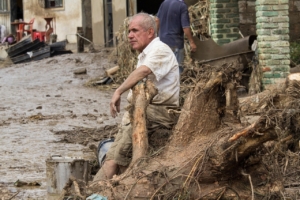 Since 2014, Venezuela has faced a major displacement crisis. With limited access to basic rights, food, medicine and other essentials, many Venezuelans have turned to extreme survival strategies, the most common being to flee the country.
Around 8 million people have left Venezuela, making it the world’s second-largest displacement crisis. Of these, about 6.7 million migrants and refugees remain in Latin American and Caribbean countries, with Colombia hosting the largest share at 2.8 million.
Economic Collapse
Venezuela’s displacement crisis is fundamentally rooted in a devastating economic collapse. Triggered by a perfect storm of plummeting oil prices, mismanaged state policies and weakening sanctions. With oil accounting for 95% of Venezuela’s export earnings, the 2014 collapse in global oil prices wiped out the country’s main revenue stream.
As inflation soared to hyperinflationary heights, with annual rates exceeding 344,510%, Venezuela lost access to essential services. Around 90% of the population cannot afford food, which has led to widespread breakdowns in health and nutrition.
Analysts have described Venezuela’s economy as “free fall,” with GDP shrinking by roughly one-third between 2013 and the mid-2010s. Adding to these pressures, U.S.-led sanctions, described by Tricontinental as “Unilateral Coercive Measures,” have deepened Venezuela’s economic collapse. Between 2017 and December 2024, they wiped out oil revenues equal to 213% of GDP, a staggering loss of more than $200 billion.
This economic failure has forced millions into poverty and desperation. Unable to meet basic needs at home, Venezuelans were compelled to flee in search of security and subsistence, which makes the country’s economic collapse one of the main drivers of its displacement crisis.
Political Instability
Political instability in Venezuela has become a powerful catalyst for Venezuela’s displacement crisis, propelled by authoritarian repression, democratic erosion and systematic violence. Since the July 2024 election, state forces and pro-government colectivos have carried out pervasive abuses and killings. They have enforced disappearances, arbitrary detentions and torture specifically targeting protesters, opposition members and innocent bystanders.
In 2025, Freedom House classified Venezuela as “not free,” citing the collapse of democratic structures and the elimination of dissent, while a recent U.N. Fact-Finding Mission confirmed ongoing crimes against humanity involving political persecution. This political violence has stripped Venezuelans of safety and legal recourse. When peaceful protest leads to detention or disappearance, families see exile as the only option.
The International Organization for Migration’s (IOM) 2025 crisis response cites political persecution alongside all the violence as core drivers of migration. Together, systematic repression and institutional collapse have made political instability a central force behind Venezuela’s displacement crisis.
Human Rights Violations
Human rights violations are another major force behind Venezuela’s displacement crisis, with thousands of people facing violence, mistreatment and fear for their safety. Reports from Amnesty International describe widespread arbitrary arrests, in which individuals are detained without explanation or access to legal support. Many detainees are held in overcrowded, unsanitary conditions, facing beatings, denial of medical care and psychological abuse.
The U.N. Fact-Finding Mission and other human rights groups have also documented enforced disappearances where individuals vanish, being taken away by security forces. This leaves families in a state of uncertainty for weeks or months. The U.K.’s June 2025 Statement to the U.N. Human Rights Council reports more than 900 individuals arbitrarily detained or forced to disappear. Legal safeguards have been gutted, with civil society stifled under “Anti-NGO” legislation.
Moreover, enforced disappearances have continued into mid-2025. Amnesty International reports at least 15 cases of forced disappearances, of which eight remain unsolved. Victims include children, Journalists and everyday citizens who have simply spoken out about shortages, poor services or safety concerns.
These abuses have caused deep emotional trauma, family disruption and a constant climate of fear. For many, the risk of being targeted is so high that leaving Venezuela becomes the only way to protect themselves and their loved ones.
What’s Being Done To Help?
A combination of international agencies, humanitarian organizations and regional governments is leading efforts to address Venezuela’s displacement crisis. Indeed, the U.N. Refugee Agency and IOM coordinate large-scale assistance through regional refugee and migrant response plans. These organizations deliver emergency shelter, food, health care and documentation support to Venezuelans across Latin America and the Caribbean.
Nongovernmental organizations like World Vision and Amnesty International are working to protect vulnerable groups, provide psychological support and ensure displaced children can continue their education. Additionally, the Quito Process, a regional initiative involving more than a dozen countries, is helping harmonize policies on temporary protection status, enabling migrants to work legally and access public services.
With sustained global attention, coordinated aid and fair treatment for those displaced, there is hope to ease the suffering and help millions rebuild their lives beyond the borders of Venezuela.
– Charlie Wood
Charlie is based in West Yorkshire, UK and focuses on Global Health for The Borgen Project.
Photo: Pixabay
