Homelessness in the Marshall Islands
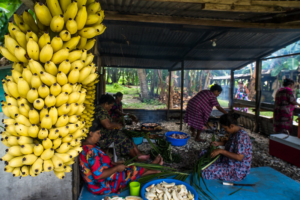 Situated in the Pacific Ocean, the Republic of the Marshall Islands is a nation that encompasses five islands and 29 atolls. A former U.S. territory, the Republic of the Marshall Islands has faced many challenges with the financial security and homelessness levels of its citizens since gaining independence in 1986. After gaining its independence from the United States, citizens of the Marshall Islands, and other Micronesian nations, signed the Project Compact of Free Association (COFA) agreement giving their citizens the right to live and work in the U.S. without a visa. Many people from these COFA nations have immigrated to Hawai’i since the treaty’s signing decades ago.
Population
From 2012 to 2024, the Republic of the Marshall Islands’ population dropped from 53,000 to just 42,000, about a 20% decrease according to the Marshall Islands Journal. The Federated States of Micronesia also reported a similar loss of 30% in its population, from 102,000 to 71,000.
Many Marshallese who can secure public housing in the state of Hawai’i are often unable to keep up with rent costs and high living expenses. This forces many people from the Republic of the Marshall Islands and other COFA nations to end up homeless. In 2015, the city of Honolulu, the capital of Hawai’i, said that homelessness had risen to 4,903 and 7,620 throughout the entire state.
ABC News reported that 18,000 people from Microsnian islands live in Hawai’i at any time. PBS estimated in 2018 that nearly 40% of the Republic of the Marshall Islands’ workforce was unemployed. PBS also reported that the islands’ largest employer, a construction and development company, has found it difficult to find and retain local, skilled workers in recent years. Many workers leave the nation to find better work opportunities in the United States.
Natural Disasters
Natural disasters such as flooding, rising water levels and droughts have caused further issues with homelessness. In 2014, a tide flooded the capital and displaced more than 1,000 people from their homes. The threat of losing habitability on islands that over 40,000 Marshallese call home drove the nation to introduce new legislation to push back against changing weather patterns.
In addition to environmental and economic issues, a small number of Marshallese citizens faced displacement during the 1940s and subsequent decades due to frequent nuclear tests by the United States Government and its military. All 167 citizens of Bikini Atoll were relocated from the island in 1946 with the promise of being able to return in the future. The locals attempted to move back in 1969, but the radiation was too high and unsafe to remain, forcing them to relocate once again, continuing the problems of homelessness in the Marshall Islands.
Resilience Program
The Pacific Resilience Program II (PREP II) is an initiative to modernize the small country’s emergency communication systems. The program also seeks to introduce new legislation that would improve disaster risk management, including national plans for rising sea levels. Another key part of the plan includes building coastal barriers and defences to hold back any rising water in the nation’s most populous islands. PREP II is part of a wider regional effort to ensure Pacific island nations can adapt to the stresses of climate change. The program focuses on early detection of rising sea levels and flooding in addition to water barriers.
The country adopted the program on October 20, 2023, and it will play a huge role in supporting the nation’s National Adaptation Plan (NAP). The plan hopes to unite all of the nation’s communities through inclusion against one problem; changing weather patterns. The project’s Ebeye Seawall aims to reduce the impact of rising tides and damage from severe waves for long-term protection from these new weather patterns.
The Future
Although the Republic of the Marshall Islands has not released any official numbers on the homelessness levels amongst its population, it is clear that many citizens are being displaced from their homes for opportunities overseas and due to damage caused to homes due to environmental problems. But, the nation hopes to overcome these challenges that threaten the continued existence of the small island republic. With efforts like PREP II and other projects, the Marshall Islands hopes to mitigate some of these issues in the coming years.
– Kaleb Boyer
Kaleb is based in Flint, MI, USA and focuses on Global Health and Politics for The Borgen Project.
Photo: Flickr
