• Link to X
  • Link to Facebook
  • Link to Instagram
  • Link to TikTok
  • Link to Youtube
  • About
    • About Us
      • President
      • Board of Directors
      • Board of Advisors
      • Financials
      • Our Methodology
      • Success Tracker
      • Contact
  • Act Now
    • 30 Ways to Help
      • Email Congress
      • Call Congress
      • Volunteer
      • Courses & Certificates
      • Be a Donor
    • Internships
      • In-Office Internships
      • Remote Internships
    • Legislation
      • Politics 101
  • The Blog
  • The Podcast
  • Magazine
  • Donate
  • Click to open the search input field Click to open the search input field Search
  • Menu Menu
Global Poverty

Mental Health in South Africa: The Good News

Mental Health in South AfricaThe South African Depression and Anxiety Group (SADAG) conducted a study that revealed the shocking state of mental health in the country. In fact, one-third of South Africans have a mental illness. However, 75 percent of them will not get any kind of help.

This is where SADAG comes in. SADAG is Africa’s largest mental health support and advocacy group. It is made up of experts who take calls from South Africans about their mental health questions and concerns. The group has a 16-line “counseling-and-referral” call center and work in “urban, peri-urban and the most rural communities across South Africa.”

SADAG is comprised of a network of over 200 mental health treatment facilities and support groups throughout the country. Its focus is on areas lacking widespread community health resources. The organization believes access to this type of treatment is fundamental to improving mental health in South Africa. Additionally, SADAG believes it can improve the overall quality of life while simultaneously influencing socio-economic issues in a positive way.

SADAG and Language

Since South Africa has 11 different official languages, SADAG offers workshops and training programs tailored to these languages for individual members. In fact, the programs also are tailored to corporate businesses, healers, doctors, care workers, correctional facilities, schools and churches.

Workshops and Campaigns

These workshops focus on how to openly and productively talk about illnesses such as depression, panic disorders, bipolar disorder, PTSD and suicide prevention. Furthermore, the workshop explores healthy ways to deal with stress in an attempt to reduce the stigma surrounding mental health.

SADAG is also working to disseminate mental health awareness beyond just those member organizations within the group. They have created media campaigns with a message of de-stigmatization of mental illness that runs on TV and radio. Additionally, the campaign runs via print and electronic press releases.

Finally, SADAG has been working especially hard with HIV and AIDS patients on coping skills to conquer depression and other mental illnesses that accompany a diagnosis. This is pivotal in the country where the leading cause of death is HIV/AIDS.

There are several other organizations located in the nine different provinces doing important work to improve mental health in South Africa.

  1. Care Haven Psychiatric Centre: This center provides residential accommodation and an arts and crafts area. The main purpose is to provide therapeutic care for those with mental illnesses who have been discharged from psychiatric hospitals, and who struggle to function independently in society.
  2. Port Elizabeth Mental Health: Located in Port Elizabeth, this organization provides social work intervention services, skills training and prevention towards better mental health. It also promotes neighborhood unities for children with disabilities who cannot access special daycare centers. Finally, the organization offers youth skills development centers.
  3. Bloemcare Psychiatric Hospital: This is a private psychiatric hospital in Bloemfontein in the Free State. It offers psychiatric programs and nursing care. Its programs help develop coping skills and group therapy environments to connect with others. Furthermore, the hospital has recreational facilities and dietitians to help promote the balance between physical and mental health.
  4. SA Federation for Mental Health: This is the largest mental health organization in South Africa located in Randburg, South Africa. They work to implement national awareness campaigns, empower mental health care users and organizations, advocate for human rights of mental health care users and conduct mental health research.
  5. Ekupholeni Mental Health and Trauma Centre: Located in Katlehong, South Africa, this center provides HIV/AIDS support and a bereavement program to counsel infected children, youth and adults.
  6. PsySSA: The Psychological Society of South Africa works to negotiate with the government and other legislative bodies to create programs that focus on mental health awareness development. Specifically, these programs focus on the unique circumstances of a post-Apartheid society.
  7. Durban & Coastal Mental Health Society: In addition to standard psychiatric care, this organization offers protective training workshops that promote self-worth, dignity and self-reliance for those with mental illnesses. The organization does this through job creation initiatives that encourage block making projects, gardening projects and supported employment.
  8. NICRO: This organization focuses on social crime prevention, juvenile justice and the reintegration of criminals into society during a tough transition.
  9. Mpumalanga Mental Health Society: Located in Secunda, South Africa, this organization advocates for the rights of the disabled, trains caregivers and provides social work services to those dealing with substance abuse.
  10. Careline Clinic: The goal of this clinic is to provide care while upholding human dignity. It provides psychotherapy and crisis resolution skills to encourage empathy for patients going through emotional trauma.
  11. MSF Rustenburg: This international NGO provides medical services and support, initiated by Doctors Without Borders. It focuses on providing support to domestic violence and sexual assault survivors. It is located in Rustenburg, South Africa.
  12. Bendiga House: Bendiga House is a facility helping those in recovery from trauma and those suffering from mental illness. It teaches independent living through lessons. For example, lessons are offered on budgeting, shopping and chores. It also provides group and music therapy, life skills training, exercise programs and supervised leisure and entertainment.

These great initiatives are tackling inter-sectional and systemic barriers that prevent adequate care for many marginalized communities. Overall, mental health in South Africa is improving via these organizations and initiatives.

– Meredith Breda
Photo: Flickr

July 17, 2019
https://borgenproject.org/wp-content/uploads/borgen-project-logo.svg 0 0 Kim Thelwell https://borgenproject.org/wp-content/uploads/borgen-project-logo.svg Kim Thelwell2019-07-17 01:30:462024-06-06 00:15:33Mental Health in South Africa: The Good News
Aid, Global Poverty

Hunger and Uncertainty in The Horn of Africa Drought

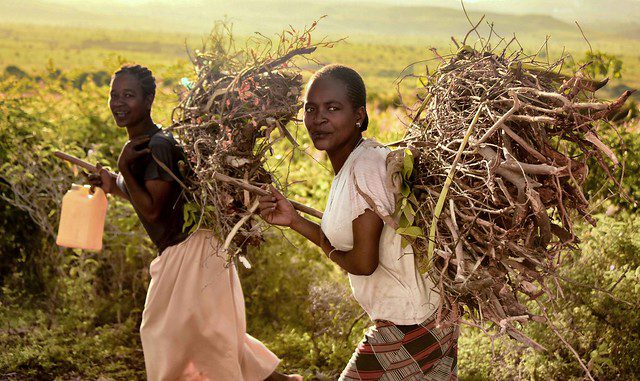
drought in AfricaThe Horn of Africa, a region where nearly 80 percent of the population relies on farming for survival, has been hit with a prolonged and harmful drought. Periods of dry weather are not uncommon in the area. However, such a significant timespan without any rainfall spells disaster for those who require healthy crops to make a living. The Horn of Africa drought is even more dangerous considering climate change and the United States’ reduced foreign aid budget.

The Drought

The Horn of Africa is well acquainted with droughts. The region has faced several in recent years. However, the current dry spell is severely affecting the ability of families to obtain food, making it one of the harshest droughts the region has seen.

The Food and Agriculture Organization of the United Nations (FAO) reports that the ongoing Horn of Africa drought has triggered widespread food insecurity, especially among families raising livestock. Expecting the drought to cause increased hunger, the FAO issued a pre-famine alert for Ethiopia, Kenya and Somalia. The governments of Kenya and Somalia have already declared a national disaster.

The FAO also reports that families are malnourished due to scarce food and a lack of proper nutrients. Since the onset of the drought in 2017, the number of people grappling with food insecurity has increased dramatically. For example, 2.7 million people in Kenya, 2.9 million people in Somalia and 5.6 million people in Ethiopia are suffering from food insecurit.

Climate Change: Another Hurdle

Climate change is a major factor influencing the impact of the African Horn drought. According to the State of Food Security and Nutrition in the World Report 2018, the number of disasters related to climate change have doubled since 1990. These events include flooding, droughts and fires caused by extreme dry heat.

The people who live in the region have remarked on the disastrous consequences of climate change. Birhan, an Ethiopian mother of four, commented, “We have not seen an improvement in the climate situation… The drought is becoming recurrent. But if there is rain, it is excessive and destroys the crops.” Birhan and 1.5 million other people are able to receive emergency rations during the drought thanks to the USAID food program. However, the aid is not enough to quell the rising need for food, livestock and water.

Cutting Back Foreign Aid

In March, the White House proposed the 2020 fiscal budget. This budget aims to cut U.S. foreign food and financial assistance by 24 percent. This funding reduction will exacerbate the adverse impacts of the Horn of Africa drought. Without assistance from developed nations such as the U.S., access to food and clean water will become more difficult for those inhabiting the affected regions.

Matt Davis is the East Africa regional director for Catholic Relief Services, an organization overseeing a U.S.-funded food program in the area. Davis commented on the federal budget’s impact on struggling populations: “We’re very concerned by the deteriorating conditions in the region where we are seeing families–whose lives rely on the land–unable to cope,” he said. “We are concerned the administration’s budget could abandon millions of families around the world just when they need help the most.”

Relief Efforts

Climate hazards and reduced U.S. assistance have worsened the impact of the Horn of Africa drought. Several organizations are working to help families with food and financial aid to combat these issues. In 2017, the European Union decided to further aid the people of Somalia, Kenya and Ethiopia during the recurring drought by offering nearly €260 million in financial assistance.

The Horn of Africa drought is cyclical in nature. The countries most affected by the drought are seeking localized solutions to surviving climate-related issues. Kenya appears to be moving forward in this area, with the government investing in community water sources independent of rain-fueled agriculture.

Ethiopia has also made strides in building a defense against the drought by implementing The Productive Safety Net Programme. This program helps food-insecure communities build stockpiles of food to prepare for drought and ultimately become food self-sufficient.

Coordination between the affected countries and more developed nations is necessary to build resistance to drought and other disastrous climate-related issues. Global financial and food assistance programs, a U.S. budget that does not drastically reduce foreign aid and localized efforts to build resistance against drought are effective approaches. These strategies will help the Horn of Africa move closer to a truly thriving expanse of subsistence farming.

– Holli Flanagan
Photo: Flickr

July 17, 2019
https://borgenproject.org/wp-content/uploads/borgen-project-logo.svg 0 0 Kim Thelwell https://borgenproject.org/wp-content/uploads/borgen-project-logo.svg Kim Thelwell2019-07-17 01:30:442024-05-29 22:59:30Hunger and Uncertainty in The Horn of Africa Drought
Advocacy, Global Poverty

Top 10 Interesting Facts About Thomas Jefferson

Top 10 Interesting Facts About Thomas JeffersonWho was Thomas Jefferson? Most people would answer that he is the author of the Declaration of Independence, a former president or a founding father. All of these answers would be correct, however, there are more interesting facts about Thomas Jefferson that many people are unaware of. Aside from earning an array of political titles, Jefferson did work trying to improve poverty, education and diplomacy both in and outside of the United States of America, yet these actions are frequently unheard of. It’s time to unearth Jefferson’s efforts in these areas by taking a look at the top 10 interesting facts about Thomas Jefferson.

Top 10 Interesting Facts About Thomas Jefferson

  1. He served as a U.S. Minister to France. Jefferson had a vast appreciation for the French culture. He was enamored with its cuisine, art and architecture. However, he also developed a distaste for France’s aristocracy and was dissatisfied with the state of poverty in France. Jefferson was disheartened with the mass amounts of poverty in France and is quoted saying, “I find the general fate of humanity here, most deplorable.”
  2. Jefferson supported poorhouses. Poorhouses were institutions that tended to members of the lower class. Jefferson strongly believed that poorhouses were underfunded and had failed in achieving their mission. Throughout his political career, Jefferson endorsed and sought to reform poorhouses.
  3. He wanted all children to have access to education. In his Notes on the State of Virginia, Jefferson states that all children should learn some sort of “some art, trade or business”, but first, they should attend public school for a minimum of three years. He wished to ensure education for all children, specifically those who could not afford it, even if it came at public expense.
  4. Jefferson wrote his personal views on poverty into the Declaration of Independence. Jefferson spent much of his political career trying to save ordinary citizens from oppressive aristocrats. Jefferson touches on his personal views in the Declaration of Independence when he wrote that all men are born with the right to “life, liberty and the pursuit of happiness.” In Jefferson’s eyes, all men were born equal.
  5. He believed in self-reliance. Jefferson believed the government should assume responsibility for the poor, but he also wished to go beyond this. Jefferson wanted to make the poor self-reliant so they could prosper. Many of his poverty proposals were geared towards urgent needs and were meant to be used as a temporary solution until a person could get back on their feet.
  6. Jefferson believed in health care. Jefferson believed in the importance of leading a healthy lifestyle. Jefferson thought that “without health, there is no happiness.” Throughout his life, Jefferson made numerous attempts to improve health care. While he was in Paris, Jefferson worked alongside health care reformers to try to revise the French health care system. He carried his passion for health back with him to the United States and fought to reduce disparities in health amongst Americans.
  7. He supported the French Revolution. From one revolution to another, Thomas Jefferson believed that all people should have liberty, and he was a vigorous advocate of the French Revolution. During the revolution, Jefferson allowed Marquis de Lafayette and his fellow rebels to host meetings in his private residence. He also assisted Lafayette in drafting the Declaration of the Rights of Man.
  8. Jefferson wanted slaves to receive an education. In a letter that Jefferson wrote to Robert Pleasants, he advocated that Virginia’s educational system should provide education for slaves to prepare them for freedom. Jefferson pushed Peasants to introduce this legislation. Jefferson saw education as a means of empowering the powerless to empower themselves.
  9. Jefferson was a diplomat. Jefferson made numerous contributions to U.S. foreign policy. While the Minister in France, he negotiated a highly successful commercial treaty with Prussia. As President, he solved longstanding quarrels with France over navigation rights in the Mississippi River when he purchased the Louisiana Territory from Napoleon Bonaparte.
  10. He was George Washington’s Secretary of State. Thomas Jefferson was the first Secretary of State. He was appointed in 1790 and served until 1793. During his time as Secretary of State, Jefferson successfully enacted a policy of neutrality in the war between England and France.

These top 10 interesting facts about Thomas Jefferson illustrate how even more than 200 years ago, founding fathers were working to address issues that the world still faces today. As for Jefferson, if being the author of the Declaration of Independence and President of the United States wasn’t already enough, these top 10 interesting facts about Thomas Jefferson reveal his efforts to improve poverty, education and hostile foreign relations.

– Gabriella Gonzalez
Photo: Flickr

July 17, 2019
https://borgenproject.org/wp-content/uploads/borgen-project-logo.svg 0 0 Kim Thelwell https://borgenproject.org/wp-content/uploads/borgen-project-logo.svg Kim Thelwell2019-07-17 01:30:372024-05-29 23:00:47Top 10 Interesting Facts About Thomas Jefferson
Advocacy, Education, Global Poverty

Michelle Obama Quotes on Girls’ Education

Michelle Obama Quotes

Former First Lady Michelle Obama has dedicated her life to her own education and the education of others. From growing up in the slums of Chicago, to going to Princeton University, Obama’s hardwork and determination is truly inspiring.

After her time at Princeton, Obama traveled back to Chicago to work with the mayor as an assistant. Then, in 1993, she became the exclusive director for the Chicago office of Public Allies, a non-profit organization that helps young people develop leadership skills. Her resume is extensive and includes many different titles, but Obama has kept one thing consistent: her desire to better the lives of children.

Whenever she is giving a speech, Obama makes a point to speak about education and giving back to the community. These Michelle Obama Quotes demonstrate her commitment to focusing attention on the issue of girls’ education around the world.

Michelle Obama Quotes Girls Education

  1. Obama’s initiative Global Girls Alliance, which helps women around the world receive an education, was inspired by a conference she attended in the U.K. in 2009 to speak to a group of schoolgirls about education. In the Penguin Talks U.K., an interview series with Penguin Publishings’ most influential authors, Obama answered questions about her life and her work in bettering girls’ education around the world.

    “The visit (in 2009) set my course in one of my initiatives: to work on girls education,” Obama said. “It was after that visit that I went back and said ‘we have to find a way to have these conversations around the world’ because meeting with the girls here and the girls at Mulberry just reminded me of how much talent and how much courage and how much hope there is in our girls who are struggling to do everything right, when they have so much working against them.”

  2. In an interview with The Chicago Tribune, Obama was asked about the initiative she announced on the Today Show. The initiative is a clear indication of the type of platform the former First Lady wishes to take: girls’ education worldwide.

    “We want to lift up the grassroots leaders in communities all over the world who are clearing away the hurdles that too many girls face,” Obama said. “Because the evidence is clear: educating girls isn’t just good for the girls, it’s good for all of us.”

  3. In 2014, Obama gave a speech at the Brookings Institution, an institution that has been helping girl around the world receive an education. Obama not only discusses the importance of girls’ education, but the external forces that prevent girls from participating in education.

    “We really can’t take up the issue of girls education unless we are also willing to confront all of the complex issues that keep so many girls out-of-school. Issues like early and forced marriage, genital cutting,” Obama said.

  4. “A few years ago, when I had the honor of meeting Malala Yousafzai, who was shot in the head just for trying to go to school, this issue got really personal for me… That’s why I decided to work on global girls’ education as first lady: because right now, there are tens of millions of girls like Malala in every corner of the globe who are not in school- girls who are so bright, hardworking and hungry to learn. And that’s really the mission of the Let Girls Learn initiative.”
  5. At a conference held by Glamour entitled “The Power of Educated Girls” Obama, actress and activist Charlize Theron and Australian Prime Minister Julia Gillard discussed the importance of girls’ education globally.

    “If we want to end poverty, educating girls is key to all of that. You were able to leave and shine and to learn and to teach,” Obama said.

  6. Michelle Obama delivered a powerful keynote speech at the Wise 2015 World’s Innovation Summit For Girls’ Education. In her speech, she discussed the importance of girls’ education and the importance of their protection. She explained that getting girls into school is a great stride, but it’s keeping girls in schools and supplying them with resources that poses a challenge.

    “We cannot address our girls’ education crisis until we address the cultural norms and practices that devalue women’s intelligence, that silence their voices and limit their ambitions,” Obama said.

These Michelle Obama quotes encapsulate who she is, before and after being in the White House. Her work to better the education of girls all around the world is ambitious but doable. Obama gives everyone hope that making education available to girls everywhere is achievable. By using her platform and her personal story to promote girls education worldwide, Obama continues to uplift and drive girls and women all over the world.

– Andrew Valdovinos
Photo: Flickr

July 17, 2019
https://borgenproject.org/wp-content/uploads/borgen-project-logo.svg 0 0 Kim Thelwell https://borgenproject.org/wp-content/uploads/borgen-project-logo.svg Kim Thelwell2019-07-17 01:30:362024-12-13 18:01:48Michelle Obama Quotes on Girls’ Education
Education, Global Poverty

7 Facts About Girls’ Education in Paraguay

Seven Facts About Girls' Education in Paraguay
The Republic of Paraguay, one of the smaller South American countries, is in the center of the continent, landlocked by Brazil, Argentina and Bolivia. Although the country’s economy has improved in recent years, the poverty rate in Paraguay was 28.8 percent as of 2017. In rural areas, the figure increased to nearly 40 percent. The U.N. states that educating girls, helping them become empowered, enabling them to work and become community leaders are powerful ways to fight poverty. While girls’ access to education in Paraguay is better than in many other countries, the country still displays disparities in opportunity between male and female Paraguayans. These seven facts about girls’ education demonstrate the barriers to education access that girls in Paraguay face and some efforts to remove these barriers.

Seven Facts about Girls’ Education in Paraguay

  1. Girls’ and women’s literacy rates are rising. According to UNESCO, the literacy rate among the female population aged 15 years and older has risen from 75.85 percent in 1982 to 93.84 percent in 2016. The female literacy rate remains below the male rate, which was 81.83 percent in 2016, but the gap between them has narrowed over the past decade.
  2. Illiteracy rates are higher in rural areas than in urban areas. According to the Pan American Health Organization, the illiteracy rate in Paraguay differs between men and women as well as between people living in urban and rural areas. As of 2010, the illiteracy rate was three percent for urban men, 6.8 percent for rural men, 3.9 percent for urban women and 9.5 percent for rural women. While women’s illiteracy rates are higher than men’s in both areas, rural women are at a particular disadvantage.
  3. As of 2012, 42,490 school-aged girls did not attend school. Girls’ school attendance drops sharply from primary school to secondary school. For both male and female students, the percentage of eligible people who attend school is significantly lower for secondary school than for primary school. Based on survey data collected from 2008 to 2012, UNICEF reports that 83.9 percent of eligible girls enrolled in primary school compared with only 63.4 percent enrolled in secondary school.
  4. More girls than boys enrolled in secondary school. Despite the drop off in female school enrollment from primary to secondary school, a slightly larger percentage of eligible girls enroll in secondary school than eligible boys of the same age.
  5. Many girls stop attending school due to marriage and having children. According to UNICEF data from 2017, 18 percent of girls in Paraguay married by the age of 18 and two percent married by the age of 15. This is a particularly prevalent issue for girls living in poverty. According to Girls Not Brides, a global organization with the goal of ending child marriage, rural girls in Paraguay married before age 18 more than 35 percent of the time in 2017. In addition to high marriage rates for girls, UNICEF data from 2006 to 2010 show the adolescent birth rate to have been 63 births per 1,000 adolescent women and girls. In 2002, 12 percent of girls aged 15 to 19 were mothers.
  6. Despite girls having some access to education, Paraguay still has a long way to go in reaching equality for women. In 2018, only 10.4 percent of elected mayors in the country and 15 percent of legislators were women.
  7. The Paraguayan government has presented a plan to advance the cause of gender equality. The plan, called the National Equality Plan, calls for more women in government and a fight against gendered violence. Specifics of the plan include the elimination of gender discrimination in law and the establishment of a governmental body with the intention of preventing and monitoring gendered violence. The plan, which will be supervised by U.N. Women, aims to achieve its goals by 2030.

While these seven facts about girls’ education in Paraguay indicate that gender equality has advanced significantly, girls and women in the country do not yet have opportunities equal to those afforded to boys and men. Some people, however, have worked hard to put a plan in place to work toward a solution. These facts about girls’ education emphasize the work that will be necessary to make further strides toward gender equality in Paraguay.

– Meredith Charney
Photo: Unsplash

July 17, 2019
https://borgenproject.org/wp-content/uploads/borgen-project-logo.svg 0 0 Kim Thelwell https://borgenproject.org/wp-content/uploads/borgen-project-logo.svg Kim Thelwell2019-07-17 01:30:102024-05-29 23:00:377 Facts About Girls’ Education in Paraguay
Global Poverty, Women's Empowerment

The Women Entrepreneurship Development Project In Ethiopia

The Women Entrepreneurship Development ProjectThe Women Entrepreneurship Development Project (WEDP) aims to provide more opportunities for female entrepreneurs. The International Development Association (IDA) of the World Bank is continually funding more than $2 million to women in Ethiopia looking to start or improve their businesses.

The program’s contributions are improving the Ethiopian economy and the empowerment of women. It is one of the only women-focused lines of credit operations in the world and has been the most effective.

Signs of Progress

To date, more than 12,000 female entrepreneurs have received loans from the IDA. Of this, 66 percent are first-time borrowers; yet, 99.1 percent of the loans have been repaid.

Additionally, 16,000 women have participated in business training thus far. On the other hand, firms participating in the WEDP are experiencing growing incomes. In comparison to those not working with the program, income has increased by 40.77 percent. With increasing profit, these firms are able to expand employment by 55.73 percent.

Giving Women Entrepreneurs a Feasible Option

The Women Entrepreneurship Development Project’s success can largely be accredited to having “missing middle” loans. In many instances, banks require a minimum of a $50,000 loan and microfinance options are at most $5,000. These requirements make it nearly impossible for female entrepreneurs to get a loan suitable for their business.

The WEDP provides an average loan of $12,500 and has successfully reduced the collateral from 200 percent to 125 percent. The IDA saw an untapped market and is now profiting off of the potential for these entrepreneurs to expand their businesses.

Project Initiatives

Another reason why the Women Entrepreneurship Development Project is succeeding is due to the specific and goal-oriented plan of the World Bank. The objective in Ethiopia is to improve both earnings and employment of female-owned Micro and Small Enterprise’s (MSE).

The most common obstacle businesses face in Ethiopia is access to finance. In fact, only 40.4 percent of these owners have access. As a result, the project focuses on ensuring easy finance options and offering unique financial instruments that fit the needs of each business.

It is also useful that the project offers programs to teach entrepreneurial and technical skills. The World Bank aims for access to microfinance and a dedicated line of credit, development of entrepreneurial skills, technology and cluster development and, project management, advocacy and outreach, monitoring and impact evaluation.

Partnerships and Impacts

Without partnerships with the Department for International Development (DFID), the Canadian International Development Agency (CIDA), the U.K., Italy and Japan, the success of the WEDP would not be possible. Many countries and agencies have offered financing or other assistance contributing to the rise of female-owned business in Ethiopia.

Not only has the Women Entrepreneurship Development Project been hugely successful in Ethiopia, but it is also inspiring initiatives to finance female-owned companies in countries like Nigeria, Zimbabwe, Madagascar, Turkey, Mexico and Indonesia. Should these countries follow suit, the impact could be unprecedented.

Even though the project has a few more months until its completion, it is providing an opportunity for the government of Ethiopia to support the Small and Medium Enterprises (SME) of women entrepreneurs.

– Jessica Haidet
Photo: Flickr

July 17, 2019
https://borgenproject.org/wp-content/uploads/borgen-project-logo.svg 0 0 Kim Thelwell https://borgenproject.org/wp-content/uploads/borgen-project-logo.svg Kim Thelwell2019-07-17 01:30:022020-01-26 19:50:08The Women Entrepreneurship Development Project In Ethiopia
Global Poverty

Preparation for Natural Disasters in Bangladesh

Natural Disasters in Bangladesh

The people of Bangladesh face great risks from natural disasters. Given the country’s geographical position, cyclones, earthquakes and floods are not uncommon. Natural disasters in Bangladesh are more prominent because of the country’s entirely low-lying, flat landscape. This topography puts more than 80 percent of the inhabitants at higher risk of “floods, earthquakes and droughts, and more than 70 percent to cyclones.” This is why it is so important to have a preemptive system in place for the preparation of natural disasters.

The Impact of Climate Change

The Asian continent accounts for more than half of the cities at risk of experiencing the effects of a changing climate. Among the impacts of a changing climate are frequent droughts, fierce heat waves, intense cyclones and severe flooding. The “World Bank predicts climate change could force tens of millions of people to migrate within their own countries by 2050, including some 13 million in densely populated Bangladesh alone.” Nnatural disasters in Bangladesh leave the people of suffering on a large scale on an annual basis.

An article posted by The New Humanitarian delves into the torrential rainfall that came down on Bangladesh in 2017. It had a severe and negative impact on the fertility of the land and damaged the crops, which is what Bangladeshi people rely on to grow and sell every year. The warm winters and dry summers have brought tremendous flooding.

Even worse, farmers are continuing to move away from their homes and farms, migrating to Bangladesh’s cities. Many families have relied on farming as a sustainable way of life for generations; however, due to weather extremes, they are migrating within their countries by the thousands. Not only does the migration create a sort of refugee crisis as well as overcrowding in the urban areas within the nation but the destruction of crops may ultimately lead to a food security issue.

Moving Forward

It is imperative that the government create better systems of preparation for natural disasters in Bangladesh in order to prevent more issues. In a stride toward environmental public health, efforts to adapt and minimize damages due to the changing climate are underway. Bangladesh has allocated more than $400 million into its Climate Change Trust, which is a “state body that finances adaptation and mitigation projects by government agencies.” Hopefully, some of the projects that come out of this organization will show improved disaster preparation techniques.

The Haor Infrastructure and Livelihood Improvement Project within the Rural Development sector has set a goal to “improve road infrastructure, build local capacity and expand access to natural resources, technology and markets.” The five targeted districts of this poverty-reducing project are Sunamganj, Kishorganj, Brahmanbaria, Habiganj and Netrakona.

Among many projects is the Coastal Embankment Improvement Project (CEIP), which was approved by the World Bank in 2013. This project has helped Bangladesh improve emergency response to the impact of cyclones and flooding in the coastal areas.

Natural disasters in Bangladesh are both inevitable and a public health emergency for a host of reasons. However, the preparations and emergency response protocols already underway signal a more stable future for the promising developing country.

– Karina Bhakta
Photo: Flikr

July 17, 2019
https://borgenproject.org/wp-content/uploads/borgen-project-logo.svg 0 0 Kim Thelwell https://borgenproject.org/wp-content/uploads/borgen-project-logo.svg Kim Thelwell2019-07-17 01:30:002024-05-29 22:59:34Preparation for Natural Disasters in Bangladesh
Education, Global Poverty

Top 10 Facts About Girls Education in Turkey

Girls Education in Turkey
The Turkish education system is not much different from that of the U.S; the state governs education, which is mandatory for 12 years and is free. Students may choose to pursue further education at university with more than 70 universities in Turkey to choose from. However, despite how similar it may appear on the surface, girls education in Turkey is still unequal to their male counterparts.

10 Facts About Girls Education in Turkey

  1. Education is currently the biggest item on Turkey’s government budget. The Turkish Statistical Agency reports that direct and indirect expenses on education have increased by 54 percent between 2011 and 2014 sitting at 113.6 billion liras ($31.4 billion). Of note, education spending as part of Turkey’s overall budget increased by one-third from 8.5 percent to 12.4 percent.
  2. While the female literacy rate has risen to 93.56 percent and the male literacy rate is 98.78 percent, it is not an accurate percentage of the girls throughout Turkey. About 45 percent of girls 15 and under remain illiterate in the country’s eastern and southeastern regions and women account for two-thirds of adults without basic literacy skills.
  3. Sixteen million girls in Turkey will never set foot in a classroom for a multitude of reasons such as poverty, geographical information, pregnancy, gender-based violence and traditional attitudes of the role of a woman.
  4. The lack of a push for girls’ education in Turkey has led to a consistent number of only 39 percent of women being in the labor force for almost three decades. Girls’ families consistently discourage them from continuing school and the girls receive pressure to become homemakers. With little support in their home life, girls follow the life that their parents lead and do not choose to further their education.
  5. Turkey ranks 130 out of 149 on the gender gap index. The gender gap index reports on the gender gap in the economy, education, health and politics. The large gap that Turkey holds in the global index continues to show that women in Turkey face some of the biggest inequalities in the world based on a multitude of measurements.
  6. Since 2009, the male to female enrollment ratio for universities in Turkey increased from 12 percent to 14 percent, and since 2005, graduation rates for college students have increased by 170 percent. While attainment levels remain low, only 18 percent of 25 to 64-year-olds have any higher education so the increase in girls’ higher level education in Turkey remains hopeful.
  7. Fifteen percent of girls under the age of 18 in Turkey enter into forced marriages. Child marriage can be driven by gender inequality, gender norms, poor birth registrations, displacement and violence. When girls become child brides, they are less likely to continue with school and more likely to stay at home and become homemakers.
  8. With the Syrian crisis, the longer refugees are living in poverty, the more likely they are to marry off their daughters to Turkish men. This then leads to girls in Turkey not being able to further their education.
  9. With goal 5 of the U.N.’s 2030 Agenda for Sustainable Development, Turkey has committed to eliminating child, early and forced marriages in the next decade. During the 2015 Universal Periodic Review, the government-supported policy recommendations to criminalize child marriage and take legislative and political action to bring an end to this archaic practice. This enhancement in eliminating forced childhood marriages allows for more girls to further their education and have more choices in their life as they go into adulthood.
  10. Turkey’s involvement in the 2030 Agenda for Sustainable Development also includes its aim to “ensure inclusive and equitable quality education and promote lifelong learning opportunities for all.” Goal 4 of the agenda includes seven targets including universal primary and secondary education, universal youth literacy and gender equality and inclusion. Turkey’s participation in the agenda is a step forward in the fight to develop girls education in Turkey.

There is a multitude of initiatives in Turkey other than the Turkish government that intends to reduce inequality in the education system. CYDD, a nonprofit fighting for girls’ education in Turkey, has awarded over 100,000 scholarships and created over 50 schools. These 10 facts about girls’ education in Turkey show the issues that are prevalent, but also the ways in which Turkey is addressing them. The initiatives of nonprofits and the government have bettered girls education in Turkey, but Turkey needs other improvements to further bridge the gap.

– Alexia Carvajalino
Photo: Unsplash

July 16, 2019
https://borgenproject.org/wp-content/uploads/borgen-project-logo.svg 0 0 Kim Thelwell https://borgenproject.org/wp-content/uploads/borgen-project-logo.svg Kim Thelwell2019-07-16 14:56:172020-01-26 19:50:58Top 10 Facts About Girls Education in Turkey
Sanitation

5 Facts About Menstrual Hygiene in South Asia

Menstrual Hygiene in South Asia
Globally, access to clean water, sanitation and hygiene (WASH) is on the rise, especially in South Asia. According to UNICEF, in India, Bangladesh, Nepal and Pakistan, the percentage of people practicing open defecation—a leading cause of child malnutrition, disease and death—fell from 65 percent to 34 percent. While these WASH initiatives have seen success, they often neglect one important aspect of hygiene that pertains to women, menstruation. The ability for women to menstruate hygienically and with dignity is vital to their empowerment. Here are five facts about menstrual hygiene in South Asia.

5 Facts About Menstrual Hygiene in South Asia

  1. There is a culture of silence around menstruation; discussing it is often treated as taboo. Females on their periods are often excluded from society because they are seen as impure. One study in Nepal found that 89 percent of respondents practiced some form of exclusion or restriction during a menstrual cycle. However, organizations such as WaterAid are working to break the silence through female-led self-help groups. When just a few women came forward to speak, it inspired others to share their experiences and start breaking the taboo.
  2. Many girls do not understand their periods. Because the topic is taboo, it is often ignored in schools. As such, 10 percent of girls in India thought menstruation was a disease, and 66 percent of girls in South Asia do not know anything about periods before their first menstruation. A study of 160 girls in West Bengal found that, though 67.5 percent knew what a period was before their first, 97.5 percent did not know where menstrual bleeding comes from. While schools often neglect to teach about reproductive health, this is beginning to change. UK Aid is creating audiobooks for girls dispelling myths and teaching them about their periods, and non-government organizations are creating extracurricular activities that teach about menstrual hygiene in South Asia.
  3. Menstrual hygiene in South Asia is vital for keeping girls in schools. According to WaterAid, a study done in South India found half the girls in school were pulled out at the time of their first period, often to be married. The girls who stayed in school beyond their first period reported poor performance due to anxiety that the boys in the class would find out they were menstruating.
  4. Access to feminine hygiene products is expensive. According to WaterAid, in a West Bengal study, only 11.25 percent of girls used disposable feminine hygiene products. The most common obstacles to obtaining them are a lack of awareness about them, the high cost, the lack of availability and the need for disposal facilities. Focus group discussions indicated that girls would prefer sanitary pads because they were more comfortable, discreet, and easier to use and carry. WaterAid is working to make low cost disposable sanitary pads as well as facilities to dispose of them. In the meantime, most women and girls rely on reusable cloth, which comes with its own problems.
  5. Maintaining menstrual hygiene in South Asia requires improved sanitation. One of the biggest obstacles to menstrual health is a lack of sanitation practices and infrastructure. Most South Asian women and girls rely on reusable cloth. To sanitize them though, they need to wash them in clean water and dry them in sunlight. However, cultural taboos around menstruation often pressure women and girls to try to dry them in dark places, potentially leading to infection. For those who might have access to disposable sanitary pads, they often lack the facilities to get rid of them. This is especially a problem for girls in schools. However, WaterAid and its partners are working on implementing WASH facilities that are lockable and gender-separated, with at least one toilet or washroom with an opening leading to an incinerator or dustbin for feminine hygiene products.

While countries in the region are making great strides in sanitation, there is still much to be done to improve menstrual hygiene in South Asia. It is vital they do so because the ability for women and girls to menstruate with privacy and dignity empowers them to pursue work, education and gives them the opportunity to have a voice in society.

– Katharine Hanifen
Photo: Flickr

July 16, 2019
https://borgenproject.org/wp-content/uploads/borgen-project-logo.svg 0 0 Kim Thelwell https://borgenproject.org/wp-content/uploads/borgen-project-logo.svg Kim Thelwell2019-07-16 11:17:142024-05-29 23:00:555 Facts About Menstrual Hygiene in South Asia
Education, Global Poverty

8 Facts About Education In Turkmenistan

Eight Facts About Education in Turkmenistan
As a post-Soviet nation, Turkmenistan has taken strides over the last few decades in building autonomy and developing its social service sectors like public education. Here are eight facts about education in Turkmenistan today.

8 Facts About Education in Turkmenistan

  1. Turkmenistan has an impressively high literacy rate. Within the last few years, UNICEF has tallied Turkmenistan’s literacy rate at about 99.8 percent for both males and females ages 15-24.
  2. Public school is only compulsory through 10th grade in Turkmenistan. At this point, students take tests to determine whether they should go to a trade school or enter the workforce immediately. Well-scoring students may continue on for further schooling that is paid for by the state.
  3. Turkmenistan faces a severe shortage of qualified teachers, especially at the higher education level. This is a result of inadequate educational resources and unrealistic expectations like double shifts and Saturday classes. Of course, as poor conditions drive teachers away from the field, the issue only compounds. The lack of educated teachers is probably the largest threat to Turkmenistan’s education system right now. The government is cognizant of this issue and the last two Presidents have made significant efforts to absolve it with relatively little success. In 2007, President Berdimuhamedow reformed teacher working conditions by raising salaries by 40 percent, reducing class sizes and decreasing number of hours worked. The state also introduced competitions for Teacher of the Year and Educator of the Year to promote quality teaching. Unfortunately, the increase in incentives has found little success. Berdimuhamedow claimed in 2009 that the country would continue to rely on sending graduates to foreign universities until “the country gets fully staffed with specialists with high qualifications.”
  4. The process for admission into higher education institutions is extremely difficult. With a severe shortage of teachers, universities have room for less than 10 percent of high school graduates. Not only do students need remarkably high scores on entrance exams, but bribery on acceptance decisions is commonplace, which crowds out spots for deserving, lower-income students.
  5. Turkmenistan now requires that Turkmen be the standard language of instruction in all of its schools although at least four primary languages are spoken across the country. This has led to increased challenges for schools in regions where the traditional language is Russian or a local dialect. Many adults are also pursuing further education to become fluent in the national language, which takes up valuable teacher time.
  6. Women experience social pressure to start families instead of pursuing higher education. Many girls have become discouraged from finishing higher education due to the cultural expectation that they marry by their 20th or 21st birthday. The percentage of female students in higher education has actually gone down in the last decade, despite rises in female enrollment nearly everywhere else in the world. In 2009, the proportion of higher education students that were female was only 35 percent, a two percent decrease from the prior year.
  7. There are no private universities in Turkmenistan; all higher education is state-run and strictly monitored. Researchers Victoria Clement, from the Woodrow Wilson Center for International Scholars, and Zumrad Kataeva, from the Higher School of Economics in Moscow, posit that this may be an attempt to control the information nationals acquire as a form of protecting the current political regime.
  8. There is an unequal regional distribution of higher education with all but three institutions located in the country’s capital city. This contributes to cyclical lower income levels for those living in the more rural regions, who have fewer opportunities to attend a higher education institute due to a long commute.

These eight facts about education in Turkmenistan reveal that while access to quality education in Turkmenistan is significantly better than in other areas of the world, it is not free of flaws. Opening up higher education to more people through increasing admissions, encouraging women to stay in school longer and providing more opportunities to those living in rural parts of Turkmenistan are goals to move toward in the future. Moreover, the addition of private schools would inspire more free thinking within the country that could result in citizens pushing for a more democratic society.

– Olivia Heale
Photo: Flickr

July 16, 2019
https://borgenproject.org/wp-content/uploads/borgen-project-logo.svg 0 0 Kim Thelwell https://borgenproject.org/wp-content/uploads/borgen-project-logo.svg Kim Thelwell2019-07-16 10:54:162024-05-29 23:00:398 Facts About Education In Turkmenistan
Page 1326 of 2463«‹13241325132613271328›»

Get Smarter

  • Global Poverty 101
  • Global Poverty… The Good News
  • Global Poverty & U.S. Jobs
  • Global Poverty and National Security
  • Innovative Solutions to Poverty
  • Global Poverty & Aid FAQ’s
Search Search

Take Action

  • Call Congress
  • Email Congress
  • Donate
  • 30 Ways to Help
  • Volunteer Ops
  • Internships
  • Courses & Certificates
  • The Podcast
Borgen Project

“The Borgen Project is an incredible nonprofit organization that is addressing poverty and hunger and working towards ending them.”

-The Huffington Post

Inside The Borgen Project

  • Contact
  • About
  • Financials
  • President
  • Board of Directors
  • Board of Advisors

International Links

  • UK Email Parliament
  • UK Donate
  • Canada Email Parliament

Get Smarter

  • Global Poverty 101
  • Global Poverty… The Good News
  • Global Poverty & U.S. Jobs
  • Global Poverty and National Security
  • Innovative Solutions to Poverty
  • Global Poverty & Aid FAQ’s

Ways to Help

  • Call Congress
  • Email Congress
  • Donate
  • 30 Ways to Help
  • Volunteer Ops
  • Internships
  • Courses & Certificates
  • The Podcast
Scroll to top Scroll to top Scroll to top