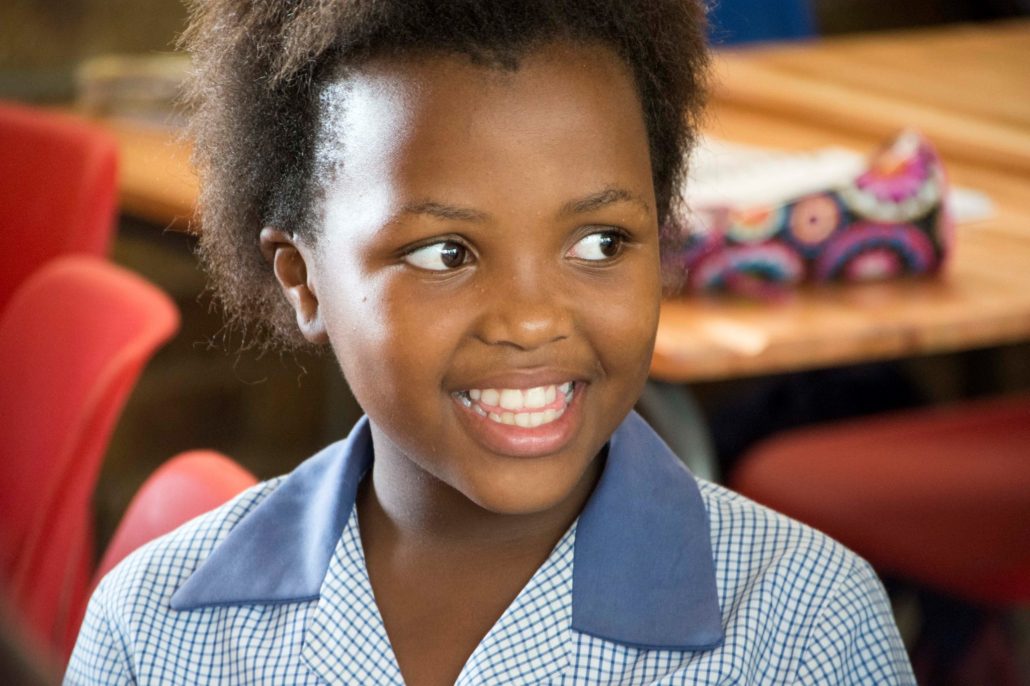
The importance of participation in sports for South African girls is pivotal to the long-term success of not only the individual lives of young women but for the country as a whole. South Africa produces talented Olympic athletes, such as Caster Semenya and Wayde van Niekerk, and has a love of soccer, rugby and cricket in addition to track and field, cycling and many others. Irrespective of this continued investment of time, energy and money into national sports, women continue to be underrepresented and receive the least amount of support as athletes. For example, at professional levels, the nation’s three most popular sports – soccer, rugby and cricket – have yet to establish high-profile professional leagues for women.
According to the most recent study conducted by the South African Sports Confederation and Olympic Committee, of the Olympic athletes receiving support, only nine out of 30 are women. Out of the 20 coaches who are working with these Olympic athletes, only three are women.
South Africa was one of the first countries to adopt The Brighton Declaration on Women and Sport, a set of laws passed to increase women’s participation in sports. In addition, the country passed the National Sport and Recreation Amendment Act to remedy inequalities in sport and recreation in South Africa by requiring federations to make necessities available for women and disabled people to participate at the top levels of sports. Despite these efforts, sports and gender equality in South Africa has not yet been achieved.
Why It Matters
For young women, equal representation of female athletes is important because it can positively influence their desire to compete in sports and seek the benefits which they provide. People can only believe what they see, so more work needs to be done surrounding media coverage and daily exemplification. Sports not only promote physical health and wellness, but they also teach discipline, dedication, determination and teamwork. These learned skills are important for application in life beyond sports and help create future female leaders.
Participation in sports provides students with the opportunity to socialize with their peers, promotes students’ health, improves physical fitness, increases academic performance and provides a sense of relaxation. In spite of these benefits, participation in sports for South African girls peaks between the ages of 10 to 13 years but then declines until the age of 18.
A study done in the rural province of Limpopo, South Africa found that 101 female students from 17 to 24 years old did not participate in sports because of five common barriers. These included: “I don’t like the dress code,” “lack of energy,” “lack of family support,” “family commitments” and “not in my culture.” Dress code remains a major barrier to participation in sports among girls in rural areas. In particular, Xhosa and Tsonga women will not wear sports attire like pants or shorts because they do not consider it culturally unacceptable.
Several factors influence the level of participation. One can break these factors down into structural, intrapersonal and interpersonal constraints. Structural factors refer to a lack of facilities, time constraints or financial resources. Intrapersonal constraints refer to the psychological states of individuals. Interpersonal constraints include a lack of partners or friends.
A Lack of energy was also a barrier which could be caused by the reduction of physical activity participation in physical education in schools, but exercise can actually increase energy levels. Lack of family support revealed that females without encouragement or support from their families to participate in school sports are less likely to participate in them moving forward.
U.N. Women and the Promotion of Female Empowerment
Systematically ingrained cultural beliefs, like dress code, are some of the reasons for a lack of female participation in sports. If these beliefs can be dismantled on a small, everyday level there is an ability to create more widespread acceptance across South Africa.
That is where organizations such as U.N. Women and Grassroot Soccer come in. The U.N. Women’s goal is to promote gender equality and the empowerment of women in developing countries. These organizations aim to set global standards for achieving gender equality and work with governments and civil society to design laws, policies and programs that ensure the standards are not only beneficial to women and girls worldwide, but effectively implemented as well. One of their many goals includes increasing female participation in sports as a means to fulfill four pillars.
- Women lead, participate in and benefit equally from governance systems.
- Women have income security, decent work and economic autonomy.
- All women and girls live a life free from all forms of violence.
- Women and girls contribute to and have greater influence in building sustainable peace and resilience, and benefit equally from the prevention of natural disasters and conflicts and humanitarian action.
Grassroot Soccer
Grassroot Soccer is just one example of the work U.N. Women is investing in. This program is a grantee of the United Nations Trust Fund to End Violence against Women. Grassroot Soccer uses the power of soccer to encourage young people to stop the spread of HIV and AIDS and to prevent violence against women and girls.
In 2009, it created the SKILLZ Street program in South Africa to specifically target and address the needs of adolescent girls who are at a higher risk of contracting HIV and AIDS than males. Fast forward to 2014 and 2015, almost 3,000 girls from the ages of 10 to 14 years old graduated from the program.
Many of these girls are from townships, a term used to refer to the underdeveloped and racially segregated urban areas reserved for nonwhites in the Apartheid era. Township residents have a lack of access to basic sewerage, adequate roads, electricity, clean water, education and overexposure to gangs and gang violence. The young women participating in the SKILLZ Street Program range from Soweto and Alexandra townships in Johannesburg and Khayelitsha township in Cape Town.
Grassroot Soccer’s Managing Director, James Donald, explains the importance for South African female participation in sports saying, “For us, sport…means we can build relationships with children in a safe space that they are proud of participating in.” He goes on to explain that “[it] also provides a plethora of ready images, metaphors and analogies that children can relate to. Soccer, in particular, is a powerful way to challenge norms and stereotypes around gender.”
The knowledge surrounding the importance of participation in sports for South African girls needs to be more widespread in order to improve the long-term success of impressionable young women in this still developing country. An investment in organizations such as Grassroot Soccer is pivotal to aid women to go on to become confident future leaders who can set good examples for generations of South African girls to come.
– Meredith Breda
Photo: Flickr

8 Facts About Education in Togo
The Togolese Republic (Togo) is a small West African country on the Gulf of New Guinea that borders Ghana and Benin. With a GDP of $4.75 billion and a GNI per capita of $610, Togo is one of the poorest countries in the world. Togo’s education system has faced development setbacks due to various political, monetary and societal reasons yet it remains one of the stronger education systems in Sub-Saharan Africa. These eight facts about education in Togo demonstrate the progress made in certain areas and the need for progress in others.
8 Facts About Education in Togo
These eight facts about education in Togo show that there is still much to improve in terms of greater educational equality, the availability of key educational resources, gender equality and creating a system of quality education levels. Progress, however, is still occurring as school enrollment and literacy rates increase substantially. The combined efforts of the Togo government and outside organizations are helping accomplish Togo’s education goals.
– Camryn Lemke
Photo: Flickr
10 Facts About Girls’ Education in Brazil
In Brazil, the fight for women’s rights is still a developing movement that has not become a priority of the nation. When it comes to education, the reasons why many girls do not enroll in or stay in school goes hand in hand with the government’s slow progress in providing a sustainable foundation for the opportunity of education for all. The following 10 facts about girls’ education in Brazil show some of the triumphs and setbacks in seeking higher enrollment of girls in Brazil’s educational system.
10 Facts About Girls’ Education in Brazil
Like many countries facing difficulties and barriers in advocating for its young girls, the origin of the problem lies in the continuation of cycles of poverty in families. Girls are often too afraid to break away from this cycle and pursue a life of their own. These 10 facts about girls’ education in Brazil show what has been possible and what more can come to fruition. Instilling the idea of education and literacy in girls at a young age has the potential to give girls the push to seek their rights to that education.
– Melina Benjamin
Photo: Flickr
Organizations Fighting for Children’s Health
There is a clear link between poverty and health. Often, unreasonable health care costs can send people spiraling into poverty. On the other hand, those already living in impoverished conditions are less likely to have access to sufficient medical treatment, increasing the probability of disease. Children, being particularly vulnerable to disease, illness and malnutrition, require sufficient medical and nutritional resources. Annually, nearly six million children die before their fifth birthday due to malnutrition and an additional two million children die from preventable diseases because of an inability to afford treatment. These organizations fighting for children’s health are working to combat those eight million preventable child deaths.
Organizations Fighting for Children’s Health
Children International
Children International has fought for children’s health since 1936 and is working towards meeting the United Nations’ Sustainable Development Goal number three for 2030. Children International focuses on impoverished children with the belief that breaking the cycle of poverty at an early age will “impact generations to come” and end global poverty. By working with the Pacific Institute for Research and Evaluation (PIRE) to measure the results of its programs, Children’s International is finding that its work is making health services both more affordable and available as well as improving children’s health knowledge and confidence in their health habits. Children’s Health has made progress by:
Save the Children
Focusing on well-researched, evidence-based solutions for children’s health, Save the Children aims to make big, lasting changes to global poverty by working for better funding at the national, regional and global levels for children’s health and well-being. Its Every Last Child campaign seeks to provide all 15 million of the excluded impoverished children with health care and quality education by 2030. By recognizing the link between mothers’ and children’s health, Save the Children has identified that maternal actions such as breastfeeding for the first six months, appropriate birth care and sufficient newborn care avert anywhere from 13 percent to 40 percent of preventable deaths. Save the Children has accomplished these in regard to children’s health:
These organizations fighting for children’s health are focusing efforts on the ground to give direct support to the impoverished. Better distribution of wealth and resources to ultimately create power structures focused on a system of true equality will have the most lasting results. About 2.4 billion people (a third of the population) still lack access to a medical facility. Without this crucial access to quality health treatments, it becomes increasingly difficult to eliminate global poverty. Proper health care is foundational to lifting children and their families out of poverty.
– Amy Dickens
Photo: Flickr
The US Cuts Aid to the Palestinians Amid Opposition from Israel
A school abandoned and torn down. A sewage system shut off and covered in asphalt. These are just two of the projects that the U.S. is in the process of shutting down as it cuts almost all foreign aid to the Palestinians. Previously, the U.S. was a top donor to the Palestinians, giving $5 billion since 1993. However, the government announced an intention to cut off aid last year, 2018, in order to put pressure on Palestinian leaders to accept the administration’s peace plan, which it is set to announce after Ramadan ends in early June. USAID has laid off all but 14 of its employees in the Palestinian territories, an 85 percent reduction in staff. Aid that funded anti-terrorism programs has also been cut.
Concerns Over Aid Cuts
Many people in the Israeli government supported these aid programs, both for humanitarian reasons and for the benefits they provided to Israeli national security. Dana Stroul, a senior fellow at the Washington Institute for Near East Policy, and Daniel Shapiro, a former U.S. ambassador to Israel, wrote in an article for NPR that “Israeli authorities understood that a breakdown in security, an economic collapse or a humanitarian crisis in the West Bank would place an enormous burden on Israel…The Israeli national security establishment remains painfully aware that it will face the burden – financial, security, and otherwise – of addressing a full-scale collapse in the West Bank or Gaza if the U.S. steps away or loses all influence and credibility with the Palestinians.”
The Israeli government opposes cutting aid, calling on the U.S. government to amend the law that resulted in the cuts. One Israeli security official said that “[i]f the law doesn’t change and no solution is found…[t]his will harm a top priority Israeli national security interest.”
Others Provide Aid
In the U.S.’s absence, others have stepped up. A week ago, the European Union announced that it would be giving an additional 22 million euro ($24.6 million) in aid to the Palestinians. The new aid package will focus on health care, food security and safety for vulnerable families.
In addition, the government of Qatar pledged to give $480 million in aid to the Palestinians. While the U.S. and Qatar have allied historically, these countries have had a strained relationship recently, with Qatar defying U.S. sanctions to provide aid to Turkey. The Qatari government has frequently come under fire for human rights abuses.
The good news is that there are ways to restore these programs. In addition to following the Israeli government’s recommendation to amend the law cutting aid, Stroul and Shapiro have several more solutions. The U.S. could specifically allocate money to complete currently unfinished aid projects, such as the school and sewage system mentioned above. Congress could also pass current bills aiming to improve aid to the Palestinians. One of these is the Palestinian Partnership Fund Act, which aims to connect Palestinian entrepreneurs with potential business partners in the U.S., Israel and elsewhere in the Middle East.
Moreover, the U.S. is considering renewing aid. Last month, six senators proposed a bill to restore aid to the Palestinians. “[R]efusal to provide humanitarian aid to the Palestinian people is a strategic mistake,” said Sen. Dianne Feinstein (D-CA), one of the bill’s sponsors. “Denying funding for clean water, health care and schools in the West Bank and Gaza won’t make us safer. Instead it only emboldens extremist groups like Hamas and pushes peace further out of reach.”
– Sean Ericson
Photo: Flickr
Testing of the First Malaria Vaccine Begins in Malawi
Malaria is a parasitic virus transmitted through mosquito bites, and those infected with the disease often experience grave fevers, chills and flu-like symptoms. Although malaria can potentially end in death, physical precautions such as safety nets in malaria-dense environments and prompt treatment can usually prevent it. Unfortunately, because malaria largely affects poorer nations, it can be a great strain on national economies and impoverished populations. The World Health Organization is enlisting pilot testing for the first malaria vaccine.
The Problem
Malaria reportedly infects tens of millions, killing over 400,000 people worldwide every year and mostly children; Sub-Saharan African countries are the primary nations in which malaria thrives—the World Health Organization estimates that over 250,000 African children die every year from the virus.
The malaria-carrying parasite is able to evade victims’ immune systems by constantly changing its surface, which is why developing a vaccine against the virus has been so difficult. With today’s modern technology and scientific insight, that is beginning to change.
Testing the First Malaria Vaccine
In April of 2019, a large-scale pilot test of what many are dubbing the world’s first malaria vaccine to give partial protection to children began in Malawi. Scientists from the drug company GSK first created the RTS,S vaccine in 1987 and has been refining it ever since. Organizations like Path Malaria Vaccine Initiative have been instrumental in supporting this initiative.
The new RTS,S vaccine is attempting to teach the immune system how to attack the malaria parasite. A patient needs to receive the vaccine four times—once a month for three months, followed by a fourth and final dose 18 months later. In 2009, Kenya held smaller trials of the vaccine and concluded with a 40 percent protection rate of the five to-17 month-olds who received the vaccination. Since then, malaria rates have plateaued rather than decreased, which is another reason the new pilot test is so vital in the modern-day.
Now testing is taking place in Malawi, Kenya and Ghana with aims to immunize 120,000 children aged two-years-old and younger. These three countries are ideal for two reasons: one, these nations already have large anti-malaria programs in place; and two, in spite of this, they still have high numbers of malaria cases. As Dr. Matshidiso Moeti (World Health Organization Regional Director for Africa) stated, “Malaria is a constant threat to the African communities where this vaccine will be given” and explains that the vaccine is needed because “we know the power of vaccines to prevent killer diseases and [hope to] reach children, including those who may not have immediate access to the doctors, nurses and health facilities they need to save them when severe illness comes.”
Looking Towards the Future
The purpose of the pilot tests is to build up evidence that can be reliably considered while WHO policy is debating its recommendations on the broader use of the RTS,S vaccine. The experiment will examine the reductions (if any) in child deaths, vaccine uptake rates (including how many children receive all four vaccinations) and the overall safety of the vaccine in routine use.
If the testing goes well, not only will the World Health Organization aid the vaccine to its core package of recommended measures for malaria prevention and treatment, but hopefully, it will begin a chain reaction that again sparks a decrease in malaria cases around the world.
– Haley Hiday
Photo: Flickr
An Update on Girls’ Education in Zimbabwe
Various organizations have made it a priority to increase access to girls’ education in Zimbabwe. Previously, many girls did not have the opportunity to pursue an education. However, initiatives dedicated to increasing girls’ education, particularly in Zimbabwe, are working to change that.
Zimbabwe and Education
Zimbabwe has been a progressive country in terms of providing educational opportunities for its children which shows by the significant rise in the number of children enrolled in school over the years. However, in recent decades, an increase in enrollment is becoming less common as poverty rates continue to plague the country’s rural population. The result is that girls’ education is declining in Zimbabwe, as parents are more likely to opt to send their young boys to school if given the opportunity.
While high poverty rates have led to a decrease in both male and female students, young girls are especially at risk of losing their access to education. This is because families can use girls as a source of income if they choose to marry them off.
Basic Education Assistance Module (BEAM) Program
Zimbabwe’s government has a program to aid poor families in funding education, though the program is often lacking in funds. This program is called the Basic Education Assistance Module (BEAM) program.
Zimbabwe’s constitution has required that children have access to free elementary and basic education as of 2013. While enrollment increased, a report states that more than 1.2 million children between the ages of three and 16 are not enrolled in school. Additionally, a 2017 report found that at least 63 percent of children were unable to pay for their schooling and that the school subsequently sent them home.
The DREAMS Partnership
In an effort to reduce the number of children without access to school, USAID has created an initiative known as the DREAMS partnership. DREAMS stands for determined, resilient, empowered, AIDS-free, mentored and safe, and strives to keep children healthy and decrease new outbreaks of HIV/AIDS. Through this initiative, schools in rural parts of Zimbabwe have seen changes that ignite hope. One school in a rural area previously had a 40 percent enrollment from girls, but with the implementation of the DREAMS program, it has increased to a 51 percent enrollment rate.
Introducing educational family programs is a significant first step towards increasing girls’ enrollments in school. While a portion of Zimbabwe’s budget goes toward education, it largely focuses on human resources instead.
UNICEF and Girls Speak Out (GSO)
In 2016 alone, UNICEF and many of its partners took an initiative to combat the obstacles preventing many from the chance to be educated. Ninety-eight percent of the schools that UNICEF set out to help improve ended up receiving funding, meaning that more than 750,000 children received an enhanced education opportunity. More children were able to access education through improved learning materials and decreased costs for poorer students.
Anoziva Marindire, founder of the Girls Speak Out (GSO) movement, has taken a unique approach to enable girl’s education in Zimbabwe by teaching them to code. Searching for girls ranging from 14 to 24 years of age, Marindire says that computer and technology skills are more useful than one may think. The GSO program has reached over 160 girls in various cities and regions of Zimbabwe, and it is looking to expand further.
The goal of this coding initiative is to take young girls from underdeveloped communities and teach them how to create apps and use technology to their full advantage. Not only does this directly benefit these girls, but their communities as well. Because of the exploding job market in science and technology, giving girls the opportunity to learn how to code in a hands-on approach will prove to be highly beneficial to them.
Zimbabwe has and continues to make strides in the name of education for children, particularly the opportunities that are opening up for young girls throughout the country. Through multiple organization’s continued efforts, many hope that the 1.2 million children out of school will one day become zero.
– Emily Cormier
Photo: Flickr
Top 10 Facts About Living Conditions in Turkmenistan
Central Asia displays memories of ancient ruins and powerful empires. Turkmenistan is no exception due to its most recent invasion by the Russian Empire (1881-1998) which is what shapes most of its modern history. Today, the world knows the country for its natural resources, dictatorial leader and marble cities. Here are the top 10 facts about living conditions in Turkmenistan.
Top 10 Facts About Living Conditions in Turkmenistan
The close eye of Presiden Gurbanguly Berdimuhamedow administers daily life in Turkmenistan. The government oversees all media outlets to determine what can and cannot be published. Only 17.9 percent of the population uses the internet due to the high expense. People have access to little online information as authorities ban websites against the government. Since 2006, the government imprisoned two journalists (Sapardurdy Khadjiyev and Annakurban Amanklychev) for not complying with government media regulations.
Turkmenistan was the poorest nation during the USSR. Today, the country’s GDP per capita is $6,587 and 10 percent of 5.8 million Turkmen live in extreme poverty. However, this is a massive stride for the nation. In 1990, more than a third of the country lived in extreme poverty (less than $1.90 per day) making 10 percent the lowest poverty rate the nation has ever seen.
Nearly 100 percent of Turkmenistan people are literate. The country has a 12-year educational system, however, the average student drops out of school after 10 or 11 years. The government has partnered with UNICEF to continue the development of its education through the Child Friendly Schools (CFS) model. This framework aims to help children not only in terms of education but also in terms of their well being.
Only 40 percent of women in Turkmenistan will attend tertiary school. Women often marry by the ages of 20 or 21 and will thus have few opportunities to obtain a higher education or career. Luckily, the United Nations has aided in the recent 2017 presidential decree of Turkmenistan’s first national action plan on gender equality. This plan includes improved legislation, equal access to health services and data collection to monitor progress.
The state does not widely fund health care. Turkmen are likely to spend more money on health care than the government. In 2017, the average citizen spent $2,052 on health care in comparison to the government which only spent $741. The lack of accessible public health care leads to an average life expectancy of just 67.8 years, with the highest cause of death being lower respiratory infections.
There are 5.8 million people living in Turkmenistan and 49.2 percent of that population living in urban areas. The sale of cotton, silk, Karakul sheep and homemade carpets and rugs are essential to rural development. Ashgabat remains the capital city and is the center point for business and government officials. Cars and railways connect the cities and towns within the country.
Prisoners within Turkmenistan and political prisoners especially are often abused. The exact number of political prisoners held by the government is not public knowledge, however, Prove They are Alive, an international organization fighting to reduce disappearances within Turkmenistan, states that 121 people remain forcibly disappeared. Ovadandepe is the most infamous jail and was the point of death for former government official Begmurad Otuzov. Mr. Otuzov’s body was returned to his family weighing just 99 pounds after having been missing for 15 years.
Turkmenistan’s economy is largely dependent upon hydrocarbon resources. The country leads as the world’s fourth-largest natural gas distributor and had 265 trillion cubic feet of natural gas reserves in 2016. Its largest customers include China, Russia and Iran. Petrofac is one of the largest energy producers in the country and employs 1,700 people across the nation.
Turkmenistan has no renewable energy sources and 13.9 percent of the population does not have access to clean water. However, UNICEF developed a strategy in 2017 to help the country promote sustainable practices. The project aims to raise awareness around environmental sustainability through education in schools.
In 2015, the government evicted 50,000 people from their homes in the capital. The government forcibly removed people from their houses so they could build new buildings for the Asian Indoor and Martial Arts Games. Forced evictions are a common and recurring issue within Turkmenistan. Amnesty International is combating this housing crisis by publicizing homes that continue to be demolished.
Last on the list of the top 10 facts about living conditions in Turkmenistan is employment. The country maintains a low GDP and a minimum wage of just 535 Turkmenistani ($152.55) per month. However, it also maintains a rather low unemployment rate. Only 3.8 percent of the country was unemployed in 2018, even lower than the United States’ unemployment rate of 4 percent.
Turkmenistan, like any country, has its challenges. As displayed in these top 10 facts about living conditions in Turkmenistan, the government’s high levels of surveillance and poor infrastructure can make life challenging at times. On the other hand, several NGOs such as the U.N. and Amnesty International are fighting to create a more equal society. Overall, the country has seen progress and today it maintains an improved education system as well as higher employment rates.
Photo: Flickr
U.N. Women and Sports for South African Girls
The importance of participation in sports for South African girls is pivotal to the long-term success of not only the individual lives of young women but for the country as a whole. South Africa produces talented Olympic athletes, such as Caster Semenya and Wayde van Niekerk, and has a love of soccer, rugby and cricket in addition to track and field, cycling and many others. Irrespective of this continued investment of time, energy and money into national sports, women continue to be underrepresented and receive the least amount of support as athletes. For example, at professional levels, the nation’s three most popular sports – soccer, rugby and cricket – have yet to establish high-profile professional leagues for women.
According to the most recent study conducted by the South African Sports Confederation and Olympic Committee, of the Olympic athletes receiving support, only nine out of 30 are women. Out of the 20 coaches who are working with these Olympic athletes, only three are women.
South Africa was one of the first countries to adopt The Brighton Declaration on Women and Sport, a set of laws passed to increase women’s participation in sports. In addition, the country passed the National Sport and Recreation Amendment Act to remedy inequalities in sport and recreation in South Africa by requiring federations to make necessities available for women and disabled people to participate at the top levels of sports. Despite these efforts, sports and gender equality in South Africa has not yet been achieved.
Why It Matters
For young women, equal representation of female athletes is important because it can positively influence their desire to compete in sports and seek the benefits which they provide. People can only believe what they see, so more work needs to be done surrounding media coverage and daily exemplification. Sports not only promote physical health and wellness, but they also teach discipline, dedication, determination and teamwork. These learned skills are important for application in life beyond sports and help create future female leaders.
Participation in sports provides students with the opportunity to socialize with their peers, promotes students’ health, improves physical fitness, increases academic performance and provides a sense of relaxation. In spite of these benefits, participation in sports for South African girls peaks between the ages of 10 to 13 years but then declines until the age of 18.
A study done in the rural province of Limpopo, South Africa found that 101 female students from 17 to 24 years old did not participate in sports because of five common barriers. These included: “I don’t like the dress code,” “lack of energy,” “lack of family support,” “family commitments” and “not in my culture.” Dress code remains a major barrier to participation in sports among girls in rural areas. In particular, Xhosa and Tsonga women will not wear sports attire like pants or shorts because they do not consider it culturally unacceptable.
Several factors influence the level of participation. One can break these factors down into structural, intrapersonal and interpersonal constraints. Structural factors refer to a lack of facilities, time constraints or financial resources. Intrapersonal constraints refer to the psychological states of individuals. Interpersonal constraints include a lack of partners or friends.
A Lack of energy was also a barrier which could be caused by the reduction of physical activity participation in physical education in schools, but exercise can actually increase energy levels. Lack of family support revealed that females without encouragement or support from their families to participate in school sports are less likely to participate in them moving forward.
U.N. Women and the Promotion of Female Empowerment
Systematically ingrained cultural beliefs, like dress code, are some of the reasons for a lack of female participation in sports. If these beliefs can be dismantled on a small, everyday level there is an ability to create more widespread acceptance across South Africa.
That is where organizations such as U.N. Women and Grassroot Soccer come in. The U.N. Women’s goal is to promote gender equality and the empowerment of women in developing countries. These organizations aim to set global standards for achieving gender equality and work with governments and civil society to design laws, policies and programs that ensure the standards are not only beneficial to women and girls worldwide, but effectively implemented as well. One of their many goals includes increasing female participation in sports as a means to fulfill four pillars.
Grassroot Soccer
Grassroot Soccer is just one example of the work U.N. Women is investing in. This program is a grantee of the United Nations Trust Fund to End Violence against Women. Grassroot Soccer uses the power of soccer to encourage young people to stop the spread of HIV and AIDS and to prevent violence against women and girls.
In 2009, it created the SKILLZ Street program in South Africa to specifically target and address the needs of adolescent girls who are at a higher risk of contracting HIV and AIDS than males. Fast forward to 2014 and 2015, almost 3,000 girls from the ages of 10 to 14 years old graduated from the program.
Many of these girls are from townships, a term used to refer to the underdeveloped and racially segregated urban areas reserved for nonwhites in the Apartheid era. Township residents have a lack of access to basic sewerage, adequate roads, electricity, clean water, education and overexposure to gangs and gang violence. The young women participating in the SKILLZ Street Program range from Soweto and Alexandra townships in Johannesburg and Khayelitsha township in Cape Town.
Grassroot Soccer’s Managing Director, James Donald, explains the importance for South African female participation in sports saying, “For us, sport…means we can build relationships with children in a safe space that they are proud of participating in.” He goes on to explain that “[it] also provides a plethora of ready images, metaphors and analogies that children can relate to. Soccer, in particular, is a powerful way to challenge norms and stereotypes around gender.”
The knowledge surrounding the importance of participation in sports for South African girls needs to be more widespread in order to improve the long-term success of impressionable young women in this still developing country. An investment in organizations such as Grassroot Soccer is pivotal to aid women to go on to become confident future leaders who can set good examples for generations of South African girls to come.
– Meredith Breda
Photo: Flickr
Epilepsy Treatment in Developing Countries
While the physical toll of epilepsy is difficult to manage, the emotional toll is equivalently burdensome. In many countries, a large stigma surrounds patients as people perceive those with the disease as insane, untreatable and contagious. As a result, epilepsy affects people’s education, marriage and employment opportunities. The exclusion of epilepsy patients from society can even lead to increased mental health issues and delay access to proper healthcare treatments.
Epilepsy is a treatable condition if people have access to anti-seizure medication. However, roughly 80 percent of all cases are found in low or middle-income countries. Three-quarters of epilepsy patients living in low-income countries do not have access to life-saving treatment. This fact has sparked a movement in global organizations to raise more awareness about the issue of epilepsy treatment in developing countries.
Three Organizations Raising Awareness about Epilepsy Globally:
World Health Organization (WHO)
Up to 70 percent of people living with epilepsy could become seizure-free with access to treatment that costs 5 dollars per person. In order to address this treatment gap, epilepsy awareness must be prioritized in many countries. The WHO suggests that by labeling epilepsy as a public health priority the stigma surrounding the disease can be reduced. The organization believes that preventing acquired forms of epilepsy and investing in better health and social care systems can truly make a difference in alleviating millions.
Since 2012, the WHO has led a program centered around reducing the epilepsy treatment gap. The projects were implemented in Ghana, Mozambique, Myanmar and Vietnam, and utilized a community-based model to bring early detection and treatment closer to patients. Over time, the program yielded some major results in each of the countries it assisted.
Within four years, coverage for epilepsy increased from 15 to 38 percent in Ghana. The treatment gap for 460,000 people living with epilepsy in Vietnam decreased by 38 percent in certain regions. In Myanmar, over 2,000 health care providers were trained to diagnose and treat epilepsy, and around 5,000 community stigma awareness sessions were held. Continued efforts like the ones found in these countries can help spread treatment to regions of the world that need it most.
International League Against Epilepsy (ILAE)
The ILAE is another organization raising awareness around epilepsy treatment. The organization consists of health care professionals and scientists who help fund global research for treatment and potential cures to epilepsy. The major goals of the League are to spread knowledge about epilepsy, promote research, and improve services for patients globally.
With six different regions, the ILAE finds various ways to reach its goals of promoting epilepsy awareness, research and access to care globally. For example, the African region will conduct the 4th African Epilepsy Congress in Uganda to share new developments in epilepsy research in August 2019. These types of Congresses are held once a year in certain regions to continue spreading new information effectively.
The ILAE regularly publishes journals to show research findings and breakthroughs in epilepsy treatments and cures. The organization also provides information to patients themselves on topics such as psychological treatments, diet therapies and information for caretakers. With so many resources available, the ILAE has done a major service by spreading information about epilepsy treatment in developing countries.
International Bureau for Epilepsy (IBE)
The IBE focuses primarily on improving the social conditions and quality of life for people living with epilepsy. By addressing issues such as education, employment and driver’s license restrictions, this organization helps create environments free of detrimental stigmas. The IBE’s social improvement programs, designed for people with epilepsy and their families, are some of the main ways this organization impacts epilepsy awareness.
International Epilepsy Day is an example of an initiative created by this organization to promote awareness in over 120 countries. On that day, many global events are held to increase public understanding of epilepsy and new research developments that are available. In addition, the Promising Strategies program also funds initiatives improving the quality of life for people living with epilepsy. The program supports 81 projects in 37 countries and provides $300,000 in support of the projects. For example, Mongolia: Quality of Life was a program designed to improve public knowledge and reduce stigma in Mongolia after the number of epilepsy cases increased by 10 percent in 2004. Soon after the program started in 2008, the quality of life in Mongolia for people with epilepsy increased and better services were given to those in need.
These three organizations often collaborate to create new programs to spread information about epilepsy treatment in developing countries. By raising awareness of the condition and providing better healthcare services, the efforts of these organizations have created a more inclusive and helpful environment for those living with epilepsy in countries around the world.
– Sydney Blakeney
Photo: Flickr
Chefs Aiding in the Fight Against Global Poverty
When one thinks about what it means to be a chef, whether celebrity or not, aiding in the fight against global poverty does not usually seem to be a prerequisite. However, as foodie culture is in its heyday in the United States, chefs are becoming more publicized in the fight against hunger, as well as bringing unfamiliar cultures to Americans via food. In addition, they often play custodians of the world via sustainability.
The history of chefs in the fight against global poverty within the U.S. and abroad is brief but significant. The creativity and innovation that chefs use to aid the less fortunate and encourage sustainability are inspiring and motivating, encouraging people to think outside the box.
Chefs and Other Cultures
The essence of a chef is that they are there to serve or at least there to create a dish for guests to enjoy. Though chefs all over the world prepare creative, exquisite and unimaginable meals, the thought that they can serve something other than food is overlooked. However, when one digs more into the existentially philosophical explanation of what chefs do in the modern era, it becomes apparent that chefs are not just serving food to their guests; they are also familiarizing guests with recipes from other cultures.
For example, when debating the best foodie destinations, many people start by naming the classics like Paris, Rome or Naples. However, when chefs serve dishes inspired by other cultures around the world, they shift the paradigm by making people familiar with places often overlooked. Anthony Bourdain’s show, “Part’s Unknown”, is an example of bringing people’s attention to different cultures; Bourdain used his reputation as a world-renowned chef to showcase the food and cultures of places that food critics do not usually discuss. He brought viewers to Tanzania, Trinidad and numerous other destinations that Americans forget as cultural destinations. Bourdain did this not by visiting the most elite restaurants in these places, but by eating the food of local street vendors and home cooked meals with the locals.
Nicholas Verdisco and No Kid Hungry
Portland chef, Nicholas Verdisco, a Jean-Georges alumni, spoke about the accessibility of other cultures in an interview with The Borgen Project, but speaking about the similarities between cultures: “Most cultures have a stuffed dough whether it be fried or steamed, think ravioli, dumplings or empanadas… [Simply] Flour and water.” Essentially, cultures have much more in common than one may think. People should not stray from various foods because they are different but enjoy them because of their similarities to more familiar foods. This is an important lesson when discussing how to familiarize different cultures to mainstream America.
Verdisco also talked about how he and other chefs fight against global poverty and poor living conditions. Verdisco focuses on feeding children that are hungry by working with multiple charity organizations, such as No Kid Hungry, a charitable organization that is working to end child hunger in the United States by providing children with access to food. Verdisco says that chefs feel that there is still a chance for children to not worry about where their next meal may come from. He also envisions that food may be their way out of poverty and its symptoms.
Other Chef Endeavours and Sustainability
Along these lines, many other chefs have worked with organizations that battle tough issues like hunger and child poverty; chefs have even created their own organizations. Notably, Jose Andres created Think Food Group which is an organization that attempts to bring food to those in need via education and innovation. Massimmo Botura created Food for Soul, which fights “food waste through social inclusion.”
Upon the lines of food waste, sustainability is also an important area of focus for many chefs around the world. Chef Verdiso told The Borgen Project, “I was raised to eat sustainable… Italians shop a couple of times a week. As a kid growing up I seemed to be at the grocery store all the time… It was definitely not a one stop and get all the shopping done… Now as a chef I write menus with the seasons and with the location of where I am cooking, try[ing] to buy from local farms.”
In terms of food waste, Chef Verdisco notes that chefs’ hands are tied behind their backs with the regulation of food disposal. Food redistribution is difficult without an organization like Think Food Group and most food redistribution organizations are understaffed, to begin with.
Never before have chefs had such an important role in reducing poverty and hunger. Advocacy groups and charitable organizations, sometimes created by chefs, allow chefs to reduce hunger and childhood poverty. With sustainability as a focal point, chefs are also, now more than ever, creating less food waste and a more educated citizenry through serving local and fresh foods. What people must keep in mind, though, is that many organizations that chefs work with suffer understaffing. Also, red tape makes it difficult for chefs to send food to various organizations after restaurants no longer need it.
– Kurt Thiele
Photo: Flickr