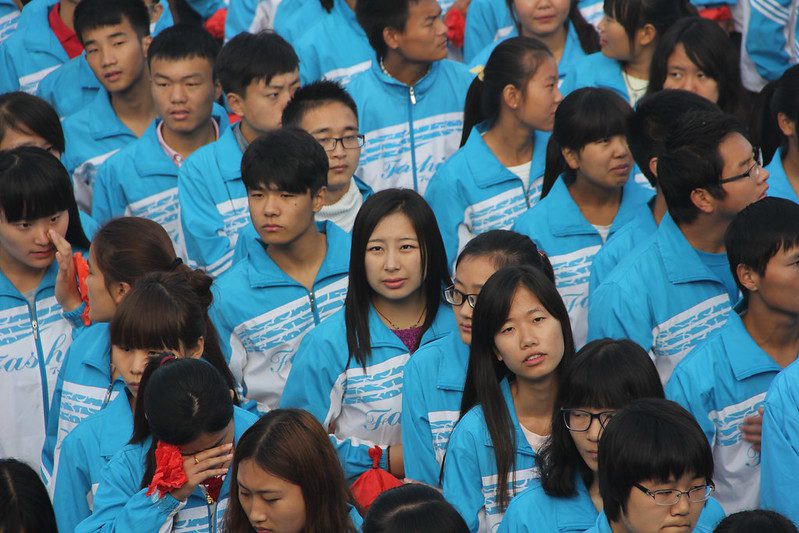
 With a population of roughly 1.4 billion, China is the world’s second most populous country, just behind India. Boasting the oldest formal education system in the world, China’s approach to schooling is often regarded as unconventional by the rest of the world. It has frequently been criticized for its intensity and pressure on students, unequal access to opportunities, and heavy emphasis on rote memorization rather than deep understanding. These concerns have made education reform in China one of the nation’s pressing priorities.
The Current Education System
China’s current education system is split into four distinct sections. From ages 3 to 6, Chinese students attend preschool. Though not compulsory, enrollment rate in 2022 hovered at almost 90%. Education from grades one to nine is compulsory; in 2022, the completion rate of China’s nine-year compulsory education program was 95.5%.
Upper secondary education in China, though not mandatory, reached a gross enrollment rate of 91.6%. It further has two main tracks: regular senior high schools and vocational senior high schools. Regular senior high schools focus on preparing students to take the Gaokao, or China’s highly difficult university entrance exam.
In 2022, there were 15,000 regular senior high schools and around nine million new entrants. Vocational senior high schools, on the other hand, aim to prepare students for technical careers through vocational colleges. There were 7,201 vocational high schools in 2022, with around 4 million new entrants, the Ministry of Education reports.
In 2022, gross enrollment in higher education following senior high school hovered around 60%. This percentage includes both regular and vocational high schools. The students in regular senior high schools take the Gaokao, also known as the National College Entrance Examination, at the end of their final year to determine their eligibility for university.
Gaokao Models
Though models of the Gaokao differ from region to region, the test always consists of three required subject tests (Chinese, math and English) and three additional subject tests that students choose (in the more common three+one+two model, either a physics or history exam and an additional two subjects). In 2024, more than 13.4 million students registered for the exam.
The primary criticism of the Gaokao is the immense pressure it places on students. Because a singular exam effectively determines a student’s entire future and professional trajectory, many students devote nearly all of their time to preparing for the test. The test is often also faulted for its emphasis on rote learning and memorization rather than critical thinking and creativity, according to the Center for International Higher Education.
Additionally, the Gaokao is often the only pathway for students from underserved backgrounds to move up. However, students in urban areas with greater financial means are at a significant advantage. Families spend more than $120 billion annually on tutoring, preparation courses, and supplemental schooling. Without access to similarly costly support, many low-income students are at a disadvantage. As a result, the exam is often receives critics for reinforcing existing inequalities. Education reform in China have largely focused on the Gaokao.
Ongoing Reforms
Education reform in China has taken two main forms when it comes to the Gaokao. The first reform, implemented initially in 2014 but not quite covering the entirety of the nation, changes the required subjects to the current model (three required and three chosen), according to the Center for International Higher Education.
Under the previous model, students chose either the liberal arts track (politics, history, and geography) or the sciences track (physics, chemistry, and biology) in addition to the three required subjects. The reformed system requires that students still take the three required subject tests but allows students to choose any three additional subjects, offering them greater flexibility.
The second reform would enforce a new university admission framework, also known as “two bases + one reference,” according to the Center for International Higher Education. Under this system, the Gaokao will no longer be the only component in university admissions, though it will remain the primary factor. In addition to the Gaokao, university admissions will also look at proficiency subject exams taken by students throughout high school and a reference, which is an evaluation system that analyzes a high school student’s academic performance, physical and mental health, ethical behavior, and artistic ability.
Two-Phased Plan
In addition to Gaokao-specific changes, the State Council introduced a two-phased plan earlier this year for education reform in China. The new initiative emphasizes a more holistic approach to education that departs from traditional Gaokao exam preparation and ensures physical and aesthetic education. For one, the program would mandate that students receive at least two hours of physical activities per day. The plan would also limit off-campus academic tutoring and repetitive homework, allowing students to foster adaptability and creativity while decreasing educational inequalities.
By shifting focus away from the Gaokao and standardized testing while promoting other areas of growth, this new system would reduce stress on students, strengthen both mental and physical health, and cultivate essential creative and critical thinking.
Looking Ahead
Though this education reform in China would greatly improve the current Gaokao system, harsh exam culture remains deeply ingrained and continues to make the shift away challenging. Although gradual shifts are underway, it will take time for students, parents, and teachers to fully embrace a more holistic approach to learning. Until then, ongoing adjustments remain the best steps forward.
– Ariana Wang
Ariana is based in Dallas, TX, USA and focuses on Technology and Solutions for The Borgen Project.
Photo: Flickr

Health Care in Rural India
Background
According to the country’s Ministry of Finance, approximately 65% of Indians live in rural areas. As with many other countries, India also faces a divide between urban and rural areas. People living in rural areas face significant obstacles that hinder their access to proper health care. Rural areas face a lack of qualified medical professionals, inadequate medical supplies and limited awareness regarding diseases. There is a need to improve health care access in rural India. Proper health care is a right that all humans have. Access to quality health care in rural India needs to be reformed and expanded.
The National Health Mission (NHM)
The Indian government has implemented measures to improve access to proper health care. In 2013, New Delhi launched the National Health Mission (NHM). The purpose of this mission is to improve health care access in rural and underserved areas. The NHM encompasses two sub-missions: the National Rural Health Mission (NRHM) and the National Urban Health Mission (NUHM).
The mission aims to expand proper health care access to underserved areas in India. Additionally, the government has also launched a health insurance program (Ayushman Bharat) in 2018. This program provides free health care access to poorer Indians who cannot afford private health care services. Under Ayushman Bharat, the government established Health and Wellness Centers (HWCs) throughout the country. These centers aim to bring health care access closer to the people.
First-Hand Problems
The Borgen Project spoke with Arjun Singh, an immigrant from India, on the topic of health care in rural India. Mr. Singh has witnessed first hand the problems that rural areas face in accessing health care. Mr. Singh grew up in a small village in northwestern India. Specifically, he grew up in Rajasthan, a large state situated in western India. Rajasthan is located in the desert. It is a mostly rural state.
Around 75% of people in Rajasthan live in rural areas. Mr. Singh states how difficult it was for him and his family to get access to proper health care. He states that village clinics have inadequate medical infrastructure and they’re routinely understaffed. There is a shortage of qualified medical personnel. One study stated that around 45% of personnel are absent from subcenters and aid posts.
However, Mr. Singh has clarified that things may be different now than they were during his time in India. In the decades since he left India, health care access in rural areas has improved. He stated how government initiatives such as the National Health Mission and Ayushman Bharat have made significant strides in improving rural access to proper and quality health care.
– Samriddha Aryal
Photo: Flickr
IRFF UK: Combating Period Poverty in Africa
However, many organizations are committed to ending this issue, such as International Relief Friendship Foundation (IRFF) U.K., a charity focused on combating period poverty in Africa.
Period Poverty in Africa
Although period poverty affects girls and women around the world, it is particularly prevalent in Africa. One in 10 African girls misses school due to their periods and 10% of families are unable to afford safe and hygienic menstrual products. However, affordability is not the only cause of period poverty.
According to the U.N. Women, stigma and the subsequent lack of education around menstrual health are also significant drivers of period poverty. This is not only because, in some countries, the stigma around periods is so severe that those who are menstruating are restricted from certain places and isolated. It is also because many girls are unprepared and uneducated about menstruation. For example, in Egypt, 66% of girls had not been informed of menstruation before they got their first period.
IRFF UK
IRFF U.K., a charity established in 1980 to provide “education, relief and improved health support to disadvantaged people,” is now more firmly focused on improving education and combating period poverty in Africa. The charity works by providing assistance and funding to programs already working in Africa to eradicate period poverty and improve access to education for its 1,600 beneficiaries.
Since IRFF U.K. shifted its focus to period poverty in 2023, it has started supporting and establishing projects in three African countries: Ghana, Uganda and South Africa.
Looking Forward
IRFF U.K. has developed a sustainable and effective model for combating period poverty in Africa, allowing more girls to stay in school, breaking the cycle of inequality and poverty.
– Victoria Adrados
Photo: Flickr
Education Reform in China
The Current Education System
China’s current education system is split into four distinct sections. From ages 3 to 6, Chinese students attend preschool. Though not compulsory, enrollment rate in 2022 hovered at almost 90%. Education from grades one to nine is compulsory; in 2022, the completion rate of China’s nine-year compulsory education program was 95.5%.
Upper secondary education in China, though not mandatory, reached a gross enrollment rate of 91.6%. It further has two main tracks: regular senior high schools and vocational senior high schools. Regular senior high schools focus on preparing students to take the Gaokao, or China’s highly difficult university entrance exam.
In 2022, there were 15,000 regular senior high schools and around nine million new entrants. Vocational senior high schools, on the other hand, aim to prepare students for technical careers through vocational colleges. There were 7,201 vocational high schools in 2022, with around 4 million new entrants, the Ministry of Education reports.
In 2022, gross enrollment in higher education following senior high school hovered around 60%. This percentage includes both regular and vocational high schools. The students in regular senior high schools take the Gaokao, also known as the National College Entrance Examination, at the end of their final year to determine their eligibility for university.
Gaokao Models
Though models of the Gaokao differ from region to region, the test always consists of three required subject tests (Chinese, math and English) and three additional subject tests that students choose (in the more common three+one+two model, either a physics or history exam and an additional two subjects). In 2024, more than 13.4 million students registered for the exam.
The primary criticism of the Gaokao is the immense pressure it places on students. Because a singular exam effectively determines a student’s entire future and professional trajectory, many students devote nearly all of their time to preparing for the test. The test is often also faulted for its emphasis on rote learning and memorization rather than critical thinking and creativity, according to the Center for International Higher Education.
Additionally, the Gaokao is often the only pathway for students from underserved backgrounds to move up. However, students in urban areas with greater financial means are at a significant advantage. Families spend more than $120 billion annually on tutoring, preparation courses, and supplemental schooling. Without access to similarly costly support, many low-income students are at a disadvantage. As a result, the exam is often receives critics for reinforcing existing inequalities. Education reform in China have largely focused on the Gaokao.
Ongoing Reforms
Education reform in China has taken two main forms when it comes to the Gaokao. The first reform, implemented initially in 2014 but not quite covering the entirety of the nation, changes the required subjects to the current model (three required and three chosen), according to the Center for International Higher Education.
Under the previous model, students chose either the liberal arts track (politics, history, and geography) or the sciences track (physics, chemistry, and biology) in addition to the three required subjects. The reformed system requires that students still take the three required subject tests but allows students to choose any three additional subjects, offering them greater flexibility.
The second reform would enforce a new university admission framework, also known as “two bases + one reference,” according to the Center for International Higher Education. Under this system, the Gaokao will no longer be the only component in university admissions, though it will remain the primary factor. In addition to the Gaokao, university admissions will also look at proficiency subject exams taken by students throughout high school and a reference, which is an evaluation system that analyzes a high school student’s academic performance, physical and mental health, ethical behavior, and artistic ability.
Two-Phased Plan
In addition to Gaokao-specific changes, the State Council introduced a two-phased plan earlier this year for education reform in China. The new initiative emphasizes a more holistic approach to education that departs from traditional Gaokao exam preparation and ensures physical and aesthetic education. For one, the program would mandate that students receive at least two hours of physical activities per day. The plan would also limit off-campus academic tutoring and repetitive homework, allowing students to foster adaptability and creativity while decreasing educational inequalities.
By shifting focus away from the Gaokao and standardized testing while promoting other areas of growth, this new system would reduce stress on students, strengthen both mental and physical health, and cultivate essential creative and critical thinking.
Looking Ahead
Though this education reform in China would greatly improve the current Gaokao system, harsh exam culture remains deeply ingrained and continues to make the shift away challenging. Although gradual shifts are underway, it will take time for students, parents, and teachers to fully embrace a more holistic approach to learning. Until then, ongoing adjustments remain the best steps forward.
– Ariana Wang
Photo: Flickr
Sudan Water Crisis and a Rapper’s Voice
The limited water available to civilians is often surface water carrying diseases and bacteria, such as cholera, dysentery, typhoid and schistosomiasis. The use of bombs, rockets and other explosive weapons has damaged water treatment plants. It has affected both urban and rural areas, where populations of displaced individuals are extremely reliant on the few functional systems. An estimated 829,000 deaths per year are attributed to diarrheal diseases caused by unsafe water, poor sanitation and inadequate hygiene.
The Water Crisis in Sudan
Sudan is unable to meet the basic needs of its people. UNICEF has confirmed that more than 17.3 million civilians cannot access clean water. The ongoing conflict between SAF and RSF has devastated all aspects of life, including infrastructure, health care, education and displaced millions, reinforcing both nationwide and household poverty.
In larger cities such as Omdurman, Khartoum, Darfur, and Kordofan, key destinations for the displaced, most water treatment plants have been damaged or rendered completely unusable. As a result, more than 40% of rural households have no access to clean water. This scarcity has deepened food insecurity, as 60–80% of Sudan’s population depends on agriculture for income.
Since the conflict began in 2023, the water crisis in Sudan has undermined agricultural productivity and reinforced both national and household poverty. Many Sudanese now rely on humanitarian organizations’ emergency water trucking and purification kits. However, International aid has been limited, with some foreign governments, including the U.S. and European states, reducing their aid.
A Rapper’s Voice
On October 24, 2023, Sudanese-American musician Abbas Hamad (Bas) released his song “Khartoum.” He used his public media platform in the music industry to bring awareness to the conflict and its effects on civilians. Through emotional imagery, he sought to spark awareness and empathy among audiences who may not be aware of the ongoing devastation in Sudan.
Artists like Bas help close the awareness gap through cultural activism, reminding us that lasting solutions to global poverty must ensure access to clean water and peace.
UN’s Sustainable Development Goals at Risk
With 2030 approaching, achieving the U.N.’s poverty goals depends on policy and persistent attention, wherever it may come from. If countries like Sudan continue to lack access to safe and clean water, the world will struggle to meet the targets of reducing global poverty and ensuring basic services for all.
This challenge is especially critical under the U.N.’s Sustainable Development Goals: SDGs 1 (No Poverty) and 6 (Clean Water and Sanitation). The shift from long-term development to emergency relief reinforces cycles of poverty. Without sustained investment in essential services like quality water, any effort to reduce global poverty is impossible.
Relief Efforts, Global Policy and Cultural Advocacy
The crisis highlights ongoing efforts to combat global poverty through immediate and long-term relief. Humanitarian organizations continue to provide emergency water, health services and food assistance in conflict zones. Similarly, global initiatives under the U.N. SDGs push for systemic change. At the same time, artists like Bas use their platforms to keep marginalized crises in the public eye.
These efforts reflect a diverse approach to addressing global poverty, combining funding, infrastructure, public awareness, cultural engagement and international cooperation.
– Zenub Khan
Photo: Flickr
Increasing Access to Electricity in Ethiopia
The ELEAP Program
The Ethiopia Electrification Program (ELEAP) is under the leadership of the World Bank Group. Its main goal is to reach complete electrification in Ethiopia by the end of 2025 and to support the rollout of new electrification systems. The plan is to expand electricity through solar mini-grids, with some grid (65%) and some off-grid (35%) energy systems.
So far, the results have been positive. As of 2025, the program has made strong progress. From March 1, 2018, to June 4, 2024, 6.3 million people gained access to on-grid electricity sources. Solar energy is the most viable option for renewable energy and the most reliable source, as it has already been a major part of Ethiopia’s electrical landscape. The implementation of solar energy fits easily with the systems already in place, which allows them to work together effectively. Because of these systems, more than 19,000 public facilities have gained access to electricity, including health clinics and schools. Forecasts suggest that by 2026, 10 million more people in Ethiopia will have access to electricity.
The Burden of Limited Electricity Access
Ethiopia is one of the most populous countries in sub-Saharan Africa, with more than 100 million people. The country is experiencing rapid population growth, which has contributed to challenges such as food insecurity, environmental strain and low electricity access. Even though Ethiopia has substantial renewable energy resources, most of the population still relies on traditional biomass energy such as firewood and coal.
Even when households have access to power, financial constraints often prevent them from using it. Most electricity needs are for cooking, but the existing systems are not large-scale enough to provide the energy required for all Ethiopians to prepare their meals. As electricity reaches more areas, household chores have become easier since many families can now use electric stoves instead of fire-burning stoves, saving time and benefiting the environment. Solar-powered water pumps have also been introduced to provide clean water to rural communities.
Before the introduction of new energy systems, women and children had to go outside and search for wood to use as fuel and poor households had to devote all their income to energy. With expanded access, energy is now reaching both large infrastructure projects and poor urban communities.
Looking Ahead
Access to electricity in Ethiopia has risen to 55.4% and continues to grow rapidly. ELEAP has made significant progress in electrifying the country within just a few years. The outlook for Ethiopia and ELEAP remains positive, with sustainable energy sources supporting growth and improving the lives of many.
– Bowie Aldrich
Photo: Flickr
How Political Turmoil Deepens Poverty in Thailand
Poverty on the Rise
The World Bank has cut Thailand’s 2025 growth forecast from 2.9% to just 1.8%, citing instability as a key reason behind slowing investment and policy delays. This translates into fewer jobs, weaker income growth and rising debt for poorer households. Thailand’s household debt already stands at nearly 91% of GDP, one of the highest rates in Asia, leaving families little room to absorb economic shocks.
Tourism, once a major employer of low-wage workers, has suffered repeated disruptions from political unrest. Manufacturing, another crucial source of jobs for people experiencing poverty, has also slowed as investors grow wary of instability and tariff disputes.
Informal workers who comprise more than half of Thailand’s labor force are especially vulnerable, as they lack access to unemployment benefits or other protections. As political turmoil deepens poverty in Thailand, many of these workers are forced to rely on debt to meet daily expenses.
Welfare and Budget Delays
The fallout from the political crisis is most visible in stalled welfare programs. The budget of more than $117 billion in 2026, which funds subsidies, social assistance and infrastructure projects, has been delayed by parliamentary gridlock. Without these funds, government schemes designed to ease living costs for low-income people, such as transport subsidies and cash transfers, are left in limbo.
This uncertainty is particularly damaging for Thailand’s rural and urban poor, who depend on these subsidies to cope with inflation and high debt. Political turmoil deepens poverty in Thailand, not only by driving up living costs but also by undermining the very policies meant to protect the vulnerable.
Relief Efforts Amid Crisis
While national politics stall, other actors have stepped in to provide support. The Bank of Thailand has cut interest rates to 1.50%, seeking to reduce debt burdens and encourage borrowing. However, economists warn that this measure alone is insufficient.
Civil society groups are playing a vital role in bridging the gap. Tearfund works with rural communities to improve incomes and build resilience. At the same time, CARE International focuses on food security and women’s livelihoods programs, which have become more urgent as families face mounting hardship.
In Bangkok, grassroots groups like the Bangkok Community Help Foundation run food banks and the “Center of Dreams” initiative. It offers education and skills training to children from low-income families. These efforts ensure that vulnerable communities still receive some support even when the state falters.
Housing insecurity has also been partially addressed through the Baan Mankong program, run by Thailand’s Community Organizations Development Institute (CODI). The initiative helps low-income families improve housing and living conditions through collective financing. While not a cure-all, such community-led projects provide stability in uncertain times.
Conclusion
Thailand’s ongoing crisis shows how deeply politics and poverty are intertwined. The removal of a prime minister, the delay of a national budget and the weakening of investor confidence may sound like abstract political issues. However, they carry direct consequences for ordinary people.
As political turmoil deepens poverty in Thailand, the needy face higher prices, rising debt and fewer opportunities. Relief efforts by NGOs, local organizations and some government institutions are helping to soften the blow.
Yet these measures remain small compared to the scale of the problem. Until political stability is restored, Thailand’s most impoverished citizens will remain caught in a cycle of uncertainty, bearing the heaviest burden of a crisis far beyond their control.
– Charlie Wood
Photo: Pixabay
ISAS in Turkey
Such poverty rates also affect education, with 24.7% of people in the country who do not have any sort of university degree living in poverty, and 13.6% of people who do not have a high school diploma. It is a downward spiral; those in poverty typically lack education, which in turn prevents those same people from obtaining jobs and opportunities that would allow them to rise out of poverty and rebuild their lives.
The Integrated Social Assistance System
Fortunately for those in poverty, the government in Turkey established systems to try and help them receive the help that they need. The chief program among the others is the Integrated Social Assistance System (ISAS), which provides a flush of resources to those who apply for it.
Established in 2010, the main purpose of the program is to help citizens of Turkey register for social programs and other assistance programs. When someone registers for the Integrated Social Assistance System, the government databases collect their data to determine their eligibility for programs. Since 2010, more than 30 million citizens have been able to secure applications for various programs.
The ISAS and the resources that come with it are both very easy to use and widely helpful in getting those in poverty access to programs that can help them get back on their feet.
Local Communities
The Borgen Project spoke with a pastor of a local community church who wishes to remain anonymous. The church assists those who are on the Integrated Social Assistance system by distributing packages to them and assisting in the rent payments, alongside helping people sign up for the program.
The pastor spoke about “Since ISAS was introduced in Turkey, we have helped parishioners navigate the application process. Many older people or refugees don’t always know how to deal with digital platforms or the paperwork.” When interviewed about the effectiveness of the ISAS, the pastor explained, “In some ways, it has helped. Before, assistance was fragmented. Now everything is coordinated, and some families receive help more quickly. But the needs keep growing. The underlying issues like unemployment and low wages, are not going away. Sometimes, despite the social assistance, people do not have enough.” There is always something that can be done to improve the lives of those in poverty every single day.
The Process
An inspection officer checks applicants’ residences to verify and assess the applicants’ status. Should someone pass the assessments, they will receive either a social assistance card, direct cash sent to the residence, or a transfer to the beneficiary’s bank account, depending on which option the person chooses. The holders of a social assistant card can use it to make purchases directly, as the cards are prepaid. Only those who are living in poverty can pass the inspections and use these resources, and they are very popular. More than 2 million people in Turkey have a social assistance card.
The Borgen Project spoke with a single mother living in Turkey, benefitting from the ISAS and its resources, who wishes to remain anonymous. When asked about her experience with the program, she said, “I lost my job during the pandemic, and my husband left a year later. With two children, it was terrifying. I have no family support, so I applied for social assistance through the ISAS portal. It was confusing at first but eventually, a social worker helped me. I now receive regular support for food and heating, which is a lifesaver.”
And talking about what would help her the most going forward, her reply was “More job opportunities—especially flexible ones for mothers. Childcare support, too. Social assistance is essential, but I want to stand on my own feet and provide for my children.”
The Future
With ISAS and other programs in place, those in Turkey who are living in poverty have a chance to get the resources and aid they need so they can make it through each day and eventually rise out of poverty for good.
The Borgen Project spoke with a local high school teacher in Turkey about the effects of the ISAS on those who need it most: the children in poverty. She explained, “Yes, students whose families get regular support from the program tend to perform better in the classroom. But the stigma around government handouts still exists; some children feel embarrassed to admit their families need help, and it can affect their self-esteem around their peers. But when families know they can rely on support, even if it’s small, children can focus on learning. Expanding school-based aid and after-school programs would make a huge difference.” If they receive proper help, then the lives of people living in Turkey, young and old, will be able to flourish.
– John Menechino
Photo: Flickr
The Seville Commitment: Goals, Challenges and the Future
The Background
In 2000, leaders endorsed the Millennium Declaration, which focused on poverty reduction and development as major priorities. They highlighted the challenges developing countries faced in securing sufficient financial resources. In response, they called for a high-level conference to tackle this issue. In 2002, the First International Conference on Financing for Development took place in Monterrey, Mexico. Leaders adopted eight Millennium Development Goals, emphasizing the imperative need for mobilizing financial resources to eradicate poverty and improve living conditions.
In 2008, the second conference held in Doha, Qatar. Leaders adopted an expanded list that includes boosting foreign investment, increasing international cooperation and providing developing nations with debt relief. In 2015, the third conference took place in Addis Ababa, Ethiopia. Leaders produced the Addis Ababa Action Agenda, a new global roadmap for financing development. This new global framework includes protecting the environment, promoting peaceful societies, employment, public services, hunger, sustainable industrialization and infrastructure. In this event, leaders pointed out the gap in financing required to fulfill the development goals. After that, the United Nations (U.N.) substituted the eight Millennium Development Goals with a more demanding 17 SDGs.
In 2025, the fourth conference was held in Seville, Spain. Leaders discussed the issues for financing development that emerge in a challenging time as countries face increasing debt levels, ongoing conflicts and a decelerating economy. In response, they adopted the Seville Commitment that focuses on solutions to bridge the annual $4 trillion gap in financing development and 130 initiatives were introduced by a coalition of countries, international organizations and other partners.
The Seville Commitment Goals
The Seville Commitment aims to bridge the annual $4 trillion gap required to achieve the SDGs through several actions, including:
Ongoing Challenges
Despite the international cooperation in financing global development, challenges persist. The challenges are as follows:
Looking Ahead
Reductions in official foreign assistance remain a concern, as they widen the financing gap and slow progress on development efforts. Nonetheless, the Seville Commitment is a major milestone that illustrates the significance of global cooperation in fulfilling the global development goals.
– Eiman Elsawy
Photo: Flickr
Addressing Child Marriage in Libya
A Profile of Libya
Libya has been enduring a civil war for over a decade, and child marriages in Libya are increasing because of the continued deprivation that the civil war has brought upon the population. Libya has faced ongoing social and political upheaval since the Arab Spring uprising in 2011. The uprising ousted Colonel Muammar Gaddafi, ending his regime after 42 years in power. Since 2014, Libya has been divided between United Nations-backed western Libya and eastern Libya under military rule from the Libyan National Army, known as the LNA.
To unify Libya, the United Nations and the Libyan Political Dialogue Forum created the interim Government of National Unity (GNU) in 2021. Based in Libya’s capital city of Tripoli, the GNU has received international recognition as Libya’s central government. Opposing the GNU is the Government of National Stability, known as the GNS, is a civilian-led administration that the Libyan House of Representatives established in 2022. The GNS is situated in eastern Libya and has limited control.
The LNA commander, Kalifa Haftar holds real power within eastern Libya. The GNS and Haftar have received support from Egypt and the United Arab Emirates. The ongoing struggle between the GNU, the GNS and the LNA has fueled political unrest and widespread violence has further worsened the economic situation, which is increasing rates of child marriage in Libya. International human rights organizations are intensifying their scrutiny of the GNU and GNS for allowing the exploitation of children to continue, violating the UN Convention on the Rights of the Child.
The Prevalence of Child Marriage in Libya
Data on child marriage in Libya is limited due to restricted access to judicial records amid the ongoing unrest and violence. Between 2021- 2024, Libya registered more than 1,000 underage marriages. Child marriage, which Libyan law defines as the union of persons under the age of 18, is prohibited unless specific exceptions are granted. Libyan law requires individuals to be of sound mind and at least 18-years-old to marry. However, family court judges have the legislative right to authorize underage marriage if the guardian of the minor has given permission and the judge deems the marriage essential. Judges are necessary to meet the minor once, with no social or psychological evaluation necessary for the approval of the marriage.
Between 2011-2017, a Tripoli courthouse recorded more than 100 underage marriages of children as young as 14 years old, with the largest age gap between spouses being 38 years. Child marriages are more prevalent in southern and rural areas where religious extremism is on the rise.
In 2021, the GNU launched a marriage facilitation fund offering grants of 40,000 LYD ($8,770 USD) split equally between the two spouses. Given the state of economic instability in Libya, some families are arranging child marriages for economic relief. Internally displaced persons are among the most vulnerable groups and are able to use the fund as a lifeline. In 2021, the youngest recipient of this fund was a 12-year-old girl.
The Consequences of Child Marriage
Child marriages have severe psychological and physical consequences for minors, particularly girls. Reports from Libya contain testimonies of doctors performing caesarean sections on girls as young as 14. Girls face heightened risks of miscarriage, premature delivery and infant-mother mortality due to their physical immaturity and lack of adequate health care infrastructure in Libya. Child marriage disproportionately affects girls and they are more likely to experience sexual and domestic violence, limited education and economic dependence on their spouse, which renders them unable to leave their situation. Mental health data shows that girls in underage marriages have higher rates of anxiety, depression and post-traumatic stress disorder.
Libya’s Strategy to End Child Marriages
Local women’s rights organizations in Libya have launched the “Not Before 18” campaign to combat child marriages. The campaign includes school-based sessions led by social workers for young girls and their parents to raise awareness about the consequences of underage marriage. The campaign also features women speakers to encourage social development, particularly in rural areas where child marriage is more prevalent.
The Ra’idat program, which the United Nations created, is a year-long leadership and advocacy training initiative for young Libyan women. It equips women with skills in communication, media and civic engagement along with opportunities for further training through the European Union and the African Union. Education is a key strategy for breaking the cycle of poverty and for preventing child marriage in Libya.
– Liberty Whitford Webb
Photo: Flickr
Casa Cornelia Law Center: Legal Representation to US Immigrants
However, many people cannot afford private attorney fees. For instance, a deportation defense can cost anywhere from $2,000 to $15,000. This creates a problematic situation for vulnerable individuals and their families, as many immigrants do not have the economic means to pay for needed legal services and are forced to forego the opportunity to have an attorney defend them.
Casa Cornelia Law Center helps mitigate this challenge by providing legal support free of charge. The Borgen Project spoke with Casa Cornelia Communications Manager Pedro Anaya to gain further insight into the organization’s work.
Casa Cornelia’s Story
Located in San Diego, Casa Cornelia Law Center was founded in 1993 by Sister Ann M. Durst, a member of the Society of the Holy Child Jesus. Durst envisioned providing free legal services to victims of human and civil rights violations. Over time, the law center grew into an established nonprofit public interest law firm serving Southern California.
Casa Cornelia Law Center believes “justice with compassion is a human right—not a privilege.” Too often, justice becomes a privilege because of the high cost of legal representation. Casa Cornelia bridges this justice gap by providing all its services at no cost to clients.
The organization sustains its free services through donations from individuals and institutional grants. To further its impact, in addition to its dedicated staff, Casa Cornelia recruits, trains and mentors volunteer attorneys from the private bar and volunteer interpreters and translators from the community to expand its mission reach and maximize its limited resources.
Services and Impact
Casa Cornelia offers its services to help unaccompanied children, asylum seekers and victims of serious crimes. As an extension of its services and to further support its clients, the organization coordinates access through referrals to needed social services, such as psychological and medical resources, via a network of trusted agency connections.
In 2024, Casa Cornelia responded to nearly 3,000 diverse cases, helping people from 79 countries and in 55 languages. Around 48% of the cases were asylum seekers, 35% were unaccompanied children and 17% were survivors of violent crimes. It also has the support of 500 volunteers.
The center also supports volunteer training, trauma-informed aid for clients and the maintenance of legal staff.
Looking Ahead
Casa Cornelia Law Center has helped the indigent immigrant community in Southern California for more than 30 years. Through a free legal process, the charity makes justice more accessible for those who do not have the means to hire private counsel. As the needs increase, the law center will continue to pivot to meet the needs in the community.
– Andrea Roji
Photo: Flickr