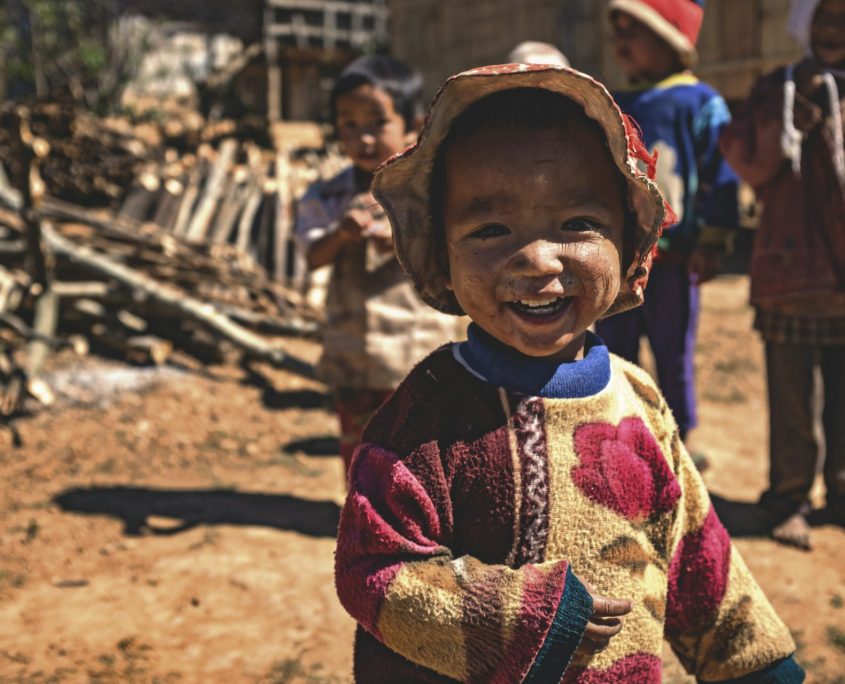
 For nearly three decades, the Free Burma Rangers have gone where few would ever dare to go, working in some of the world’s most dangerous conflict zones to provide humanitarian and spiritual aid to hundreds of thousands of people caught in the midst of active conflict. “We exist in the humanitarian gap that always exists in war, from the very front line, where bullets are smacking next to your head, back to the major relief organizations,” said founder and leader David Eubank, in an interview with The Borgen Project.
Humble Beginnings
Eubank, who grew up as the son of missionaries in Thailand and later attended Texas A&M, was commissioned as a United States (U.S.) Army officer after graduating and spending a decade serving in the Infantry, Ranger Battalion and Special Forces. After leaving the military in 1992, he enrolled in Fuller Theological Seminary to further his spiritual training. It was during his time there that leaders from the Karen people of Burma (also known as Myanmar) reached out to Eubank through his father, calling on him to assist in relief efforts amidst their – and many other groups’ – decades-long conflict with the junta.
Building the Mission
Marrying his wife, Karen Eubank, in 1993 – the couple, without skipping a beat, set forth on a mission to Burma, which Eubank later called their “honeymoon” in the 2020 documentary film, Free Burma Rangers. “When we first started, I just went to the fighting with three backpacks [of medical supplies] and Ilya – a Karen medic – goes up and says, ‘Can I help you?’” recalled Eubank, discussing his first mission in Burma. He also emphasized his early commitment to respecting local autonomy, “we started helping people who wanted to be helped, [but] we never went anywhere we weren’t invited.”
The experiences of these early missions laid the groundwork for the formal creation of the Free Burma Rangers in 1997, founded by Eubank after graduating from seminary two years earlier. The group’s approach took shape in these formative years, focusing its missions on close collaboration with local communities, moving quickly and quietly in active combat zones and delivering both physical and spiritual aid where it was most needed.
This approach also emphasized the documentation of abuses and human rights violations to ensure preservation of the evidence of these crimes. Footage recorded by the group has, for decades, made international headlines and served as a reliable source on a conflict which few others have had the ability to consistently report on.
Frontline Relief in Burma
At the heart of the Rangers’ mission is frontline relief. The organization trains and equips small, mobile teams drawn from Burma’s many ethnic groups, providing them with the skills and supplies needed to carry out relief missions in some of the harshest conditions in the world. This decentralized strategy allows the group to respond to the specific needs of each community. In many cases, Ranger volunteers receive training and then go on to serve their own communities, forming locally-rooted teams with the capacity to strengthen resilience and respond to crises from within.
While the group’s work has centered on Burma’s ever-shifting conflict, its reach currently extends into some of the world’s other brutal war zones. “We have 150 committed teams in Burma from 18 different ethnic groups and we have a team in Syria and Iraq,” said Eubank. “We have a partnership in Afghanistan and Tajikistan, working from the Tajik side. And we have a rotation into Ukraine and the Nuba Mountains of Sudan.”
Ranger teams consist of a team leader, medic, child support counselor and a photographer and videographer. “They can combine their roles, but that’s the main structure,” Eubank explained. While some Rangers who operate in Burma carry arms, Eubank clarified that this was only done in self-defense and that the group itself never supplies weapons to their volunteers.
Documenting Human Rights Abuses
Documenting human rights abuses and reporting on week-to-week developments are central to the Rangers’ mission of keeping the world informed, Eubank noting that in the organization’s efforts, “getting the news out is of very high importance, second only to helping people.” Its website also provides a “Weekly Dispatch” on the group’s activities, as well as regular situation reports, which offer updates on the conflict zones within which they operate.
Capacity Training
Before any of the Ranger teams see the front lines, they pass through a rigorous “capacity training” to ensure that they are prepared for their missions, often returning home to help their own communities in deployments that can last up to three months. “The ethnic groups choose their own team members, send them to us and we train them and send them back to the ethnic groups – our job is to train, equip, inspire and support these teams,” said Eubank, describing the Rangers’ training and operational approach.
Speaking on the scope of the training, he added, “We start with spiritual and relational questions and training and then we go to the physical, frontline first aid, dental work, reporting, reconnaissance and we practice dangerous things, swimming in rivers, rappelling, climbing, clearing landmines.” This training also includes security instruction, preparing volunteers to operate in active combat situations.
The Jungle School of Medicine
The Jungle School of Medicine of Kawthoolei, started in 2011, trains dozens of medics each year. These medics are then assigned to their area-specific Ranger teams and some have even helped to staff the Karen Department of Health and Welfare.
Once training is complete, teams receive enough supplies to treat 2,000 Internally Displaced Persons (IDPs). They are also outfitted with any other gear that they require for their efforts, such as hiking and camera equipment, as well as educational materials for children. Outlining the order of loyalty within the group, Eubank explained, “If you come and join the Rangers and let’s say you’re Karen. First of all, you’re a child of God. Second of all, your Karen. Third of all, you are your loyalty [to a community]. Fourth and last, you’re a Free Burma Ranger.”
He stressed that the organization was not a political force, but rather a resource to train people to serve their own communities. While acknowledging that not everyone in Burma welcomed the Rangers, he recalled a fellow Ranger noting, “You can go almost anywhere and people trust that you’re (A) sincere, (B) loving, (C) loyal in your support of them, (D) competent, (E) brave and that you’re on their side, no matter where you come from.”
Away from the Front
Though the Rangers are most renowned for their frontline relief efforts, their aid to embattled communities extends far beyond the front line. Karen Eubank, who has accompanied her husband in conflict areas since their marriage in 1993, started the Good Life Club program in 1999. The program trains counselors who accompany each Ranger team and provide a wide range of services to assist both children and educators in embattled communities. They provide children with clothes and school supplies, conduct “education assessments” and work to generally foster emotional and spiritual resilience within the communities they serve.
The Rangers have also developed an aviation wing, known as Free Burma Rangers Aviation. Members of the Rangers began to undergo parachute training in 2012 and in 2016, the Rangers received a donated Cessna 172 from the Kingdom Air Corps, where a young Karen Ranger had undergone flight training. In 2018, their first operation used the donated aircraft to fly a three-day-old boy from the Thai border to a hospital deeper inside Thailand for life-saving surgery.
Looking Ahead
For nearly 30 years, the Free Burma Rangers have shown that even in the world’s most dangerous places, communities can find hope through courage, service and solidarity. By training local volunteers, documenting abuses and delivering aid directly to those in need, the Rangers have created a model of resilience that continues to inspire. As their work expands across Burma and beyond, the Free Burma Rangers demonstrate how grassroots action can save lives and strengthen communities in the face of overwhelming hardship.
– Alex Degterev
Alex is based in Boston, MA, USA and focuses on Good News and Global Health for The Borgen Project.
Photo: Unsplash

Novissi: AI Fighting Global Poverty
Newborns in Malawi
Malawi has long struggled with one of the world’s highest neonatal mortality rates. Between 2000 and 2015, the rate hovered around 27 deaths per 1,000 live births, far above the global average of 17. Conventional monitoring often missed early signs of distress, especially in overcrowded maternity wards with limited staff.
At Lilongwe’s Area 25 Health Centre, an AI-powered fetal monitoring system now tracks heart rate and oxygen levels continuously. It acts like a second pair of eyes, sounding the alarm before midwives can detect trouble. A six-month before-and-after study found that intrapartum stillbirths and early neonatal deaths dropped sharply once the system was introduced. At this single clinic, stillbirths and neonatal deaths have fallen by more than 82%.
For midwives, AI has become the colleague that never leaves the room; for mothers, it is the difference between heartbreak and hope. In Malawi, AI has stepped into the role of caregiver as a new angel for humanity, watching over the smallest lives.
Novissi Predicting Poverty
Before COVID-19, many poor households in Togo were invisible to social registries. Informal workers lacked paperwork or census records, so cash transfers often took months to arrange and often missed those most in need.
During the pandemic, the government built Novissi, a digital program that used satellite imagery and mobile-phone metadata to predict poverty at the household level. Families then received mobile-money transfers within days. Registration was simple, verification used voter IDs, and payments scaled quickly to hundreds of thousands of people. Independent evaluations found the AI-assisted targeting was both faster and more accurate than older methods.
Offering Dignity in India
Rural India is home to millions who live on less than $2 a day, with unemployment and underemployment leaving families stuck in poverty. Even when work is available, it is often seasonal farm labor or insecure low-wage jobs.
The social enterprise Karya, backed by Microsoft and the Gates Foundation, is tackling this challenge by using AI to create dignified digital work. Villagers are paid to record speech and text in their own languages, building datasets that train global AI tools. Unlike most digital piecework, Karya guarantees above-minimum wages and shares royalties whenever the data is reused.
For workers, it means food on the table, children staying in school, and recognition that their voices matter.
Carrying Water and Shining the Light in Africa
Across sub-Saharan Africa, more than 400 million people lack clean water and 600 million live without electricity. Even when solar pumps or mini-grids are installed, they often fail within months, leaving families hauling water long distances or studying by candlelight until repairs are made.
Organizations like Innovation: Africa, now fit solar-powered systems with remote monitoring sensors. These track water flow and electricity output, transmitting data over mobile networks. When a system falters, technicians receive alerts and can repair the problem within 48 hours instead of months. In one Ugandan village, a broken pump that once left families without water for weeks was repaired in two days after the system flagged the failure.
For families, it means reliable water and steady light to study at night, turning fragile systems into dependable lifelines.
– Diane Dunlop
Photo: Wikimedia Commons
Positive Steps in Reducing Cancer in the UAE
The UAE has an estimated poverty rate of 19.5%, driven in part by rising living costs and low wages that fail to ensure sustainable conditions for workers. The leading causes of death in the UAE are COVID-19, ischemic heart disease, stroke and breast cancer (in the case of women).
Cancer in the UAE
Diseases and cancers are prominent in the UAE in part because health care is not free for expatriates and foreign residents, who make up 10.04% of the country’s 11.35 million people. This creates barriers to early detection, as many residents cannot afford regular checkups. When cancers are detected, they are often at advanced stages, making treatment more difficult.
Environmental factors also play a role. The UAE’s reliance on oil production and shipments increases the risk of air pollution, with higher levels of carbon in the atmosphere. Prolonged exposure to polluted air can cause labored breathing, skin irritation and, over time, elevate cancer risks.
The leading cancers in the UAE are breast, thyroid, colorectal, skin and leukemia. While cancers such as breast cancer and leukemia are not directly tied to environmental causes, conditions like skin and thyroid cancer may be linked to pollution and environmental exposure.
Expanding Access to Affordable Cancer Care
In response, hospitals in Abu Dhabi have expanded access to cancer care. Cleveland Clinic Abu Dhabi, located in the nation’s capital, houses 15 specialized institutes, including one focused on cancer treatment. The clinic is diverse, staffed with doctors from Western countries and operates in Arabic and English.
As a semi-government hospital, Cleveland Clinic Abu Dhabi offers care at significantly lower costs than private facilities. Government-owned hospitals typically charge between AED 250–400 ($60–$109), while privately owned hospitals cost around AED 600–800 ($163–$218).
Private treatment expenses are often unaffordable for individuals earning less than AED 80 ($22) a day. In contrast, government hospitals provide a more accessible option, particularly for costly treatments like cancer care.
What Does This Mean for People in Poverty?
Cleveland Clinic Abu Dhabi provides financial assistance for patients unable to afford treatment. Individuals whose annual family income is at or below 250% of the Federal Poverty Guideline (FPG) may qualify for free or discounted care. The clinic also collaborates with insurance providers, accepts multiple payment methods and allows for government assistance in covering medical expenses.
Through combined government and hospital support, people living in poverty can access necessary medical care without the overwhelming burden of bills. Early detection of cancers such as breast and skin cancer can ensure that low-income patients receive timely treatment, allowing them to live healthier, more fulfilling lives.
Final Remarks
Government-affiliated clinics like the Cleveland Clinic Abu Dhabi provide greater access to cancer screenings for impoverished people. Early detection not only reduces cancer-related mortality but also gives individuals in low-income communities the chance to pursue healthier, more productive lives, including improved career opportunities.
– Erin Lee
Photo: Wikimedia Commons
Solutions to Rapid Urbanization in Wetlands
Lagos, Nigeria and Kinshasa in the Democratic Republic of Congo (DRC) experience some of these issues. However, they’ve developed sustainable solutions that help control and maintain livelihoods and infrastructures.
Lagos
Lagos, Nigeria, is a wetland area heavily affected by rapid urbanization. Housing and informal settlements, transportation infrastructures, solid waste management, environmental pollution and unemployment are all problems throughout the city.
Nigeria’s Federal Ministry of Housing and Urban Development has previously stated that it is committed to constructing more than 10,000 housing units nationwide, including Lagos, with the Renewed Hope Cities and Estates Program. This opportunity also created 252,800 jobs for Nigerians, contributing to the country’s economic landscape. The workers also received wages significantly above the national minimum wage.
Waste-to-energy plants offer sustainable solutions to water disposal and energy generation, many of which can be seen in Lagos. Harvest Waste Consortium has formalized a partnership with Lagos to construct a waste-to-energy plant using advanced technology to create clean energy from the state’s solid, commercial and industrial waste. Around 40,000 homes will be taken off the national electricity grid due to clean energy.
Kinshasa
Kinshasa, Democratic Republic of the Congo, is another wetland area that is impacted by rapid urbanization. Increased risk of flooding continues throughout the city due to population growth and improper drainage systems. Informal settlements also affect the quality of life in Kinshasa, making strategic urban planning essential to manage the city’s growth and transformation.
A Participatory Slum Upgrading Program works in Kinshasa to improve slum conditions while preventing the possibility of creating new slums. The program aims to ensure access to safe, adequate, affordable housing and basic services to upgrade the slums.
As rapid urbanization in wetlands continues, Kinshasa has developed nature-based solutions. These solutions help to build urban climate resilience, lower carbon emissions and provide socioeconomic benefits. Proper drainage systems that can handle channel runoff from heavy rains were developed and restoring soil fertility, creating jobs and providing food for locals are also possible because of these solutions.
Conclusion
Rapid urbanization in wetlands presents serious challenges for cities like Lagos and Kinshasa. Yet, both cities demonstrate that these impacts can be managed with strategic planning and sustainable solutions, such as housing initiatives, waste-to-energy projects and nature-based approaches.
Addressing rapid wetland urbanization requires long-term investment, innovative policies and community participation to balance urban growth with environmental protection and improved quality of life.
– Eva Wakelin
Photo: Unsplash
The New Deployment of the Malaria Vaccine in Mali
The Malaria Vaccine in Mali
Mali has joined the growing list of African countries that have introduced the malaria vaccine to their people. Before joining, it accounted for approximately 3.1% of global malaria cases, highlighting the country’s urgent need for innovative health interventions and stronger immunization programs.
The new initiatives on supporting the hybrid approach to the malaria vaccine in Mali began on April 25, coinciding with World Malaria Day. The Ministry of Health is leading the initiative with support from UNICEF, the World Health Organization (WHO) and Gavi, the Vaccine Alliance.
Malaria has been a massive issue for sub-Saharan African countries for years. However, recent Gavi studies have shown that a hybrid vaccination approach is practical. Mali is now applying this strategy to protect its population.
What is the New Approach?
Instead of administering the malaria vaccine two doses over a few months, the new approach in Mali provides children ages 3 to 5 with three doses spread across the year, followed by a fourth and fifth dose administered in May or June.
Children are among the most at-risk groups for contracting malaria, which is why they are the primary focus of the new vaccine initiative. Lacking years of exposure, children have not developed natural immunity as many adults have, leaving them dangerously vulnerable.
As a result, malaria remains one of the leading causes of child mortality in sub-Saharan Africa, making widespread vaccination efforts essential to saving lives and reducing future transmission.
The seasonal doses will help ensure children are as protected as possible from malaria. May and June mark the beginning of the highest transmissions of malaria in the year. Indeed, having additional vaccine doses around these times every year can help ensure that the spread doesn’t begin at all.
Has the New Approach Been Successful?
The new approach to administering the malaria vaccine in Mali has been successful, showing strong potential for long-term impact. According to the WHO, “both [doses] of vaccine reduce malaria cases by about 75% when given seasonally in areas of highly seasonal transmission where seasonal malaria chemoprevention is provided.”
With the number of childhood deaths caused by malaria trending downward, the people of Mali are becoming more optimistic about improving their children’s lives. The new vaccine initiative, coupled with more traditional methods of malaria protection, mosquito nets and repellent, ensures that the number of malaria cases continues to drop.
– Zoe Felder
Photo: Flickr
Expanded Care for Endometriosis in Poland
However, Poland is making much-needed improvements in care and support for women with endometriosis by launching a new national program.
Flaws in Endometriosis Care in Poland
Endometriosis requires an early diagnosis in order to receive the best care possible. However, the diagnostic process is often long, invasive and exhausting for patients. This process includes a gynecological exam, a transvaginal and transrectal exam, a magnetic resonance imaging (MRI), a computed tomography (CT), a laparoscopy and a histopathological exam. It is also important that these exams be done by a gynecologist specializing in treating endometriosis, which can be hard to find.
Overall, health care in Poland has many flaws. Though Polish citizens have access to a free public health care system, the sector is riddled with organizational problems, outdated technology, underfunded medical centers and a lack of physicians and specialists nationwide.
In Poland, wealth strongly influences health outcomes. About 71% of high-income citizens report being in good health, compared to just 53% of low-income citizens. The country’s life expectancy is around 77 years, ranking 24th in the European Union (EU).
New Care Program for Endometriosis in Poland
On July 1, 2025, Poland initiated its new national system for endometriosis care, including diagnostics and treatment. This program established eight new specialized medical centers throughout Poland where women can access care free of cost.
This program includes free consultations with various specialists and medical professionals, such as gynecologists, surgeons, psychologists, dietitians and physiotherapists. Women can now also easily access ultrasound and MRI diagnostics and pharmaceutical and surgical treatments. The newly established centers will provide surgeries, post-operative care and post-procedural health monitoring.
This wave of reform was set into motion after years of advocacy efforts from the organization Pokonać Endometriozę” (Conquer Endometriosis). The Polish Minister of Health, Izabela Leszczyna, credits Polish citizens and their efforts: “No regulation or law changes reality – it is we, the people, who change it,” she stated.
This new system will benefit lower-income Polish citizens by providing free specialized care. Opening eight new centers throughout the country means more women will have access to endometriosis care and will not have to travel extensive distances to receive medical advice.
Final Remarks
Poland’s new program for endometriosis is a breakthrough in women’s health. With eight specialized centers offering free diagnostics, treatments, and multidisciplinary support, thousands, especially low-income women, will finally access timely care. This reform marks a vital step toward equity. It sets a model for compassionate public health.
– Hannah Fruehstorfer
Photo: Unsplash
A Voice for Gender Equity: Spotlighting Dr Murabit
Background
Unfortunately, the North African country of Libya is not excluded from its involvement in gender disparities and violence. The U.N. reports that the most prominent obstacles to gender equality are:
Transforming Communities
With the knowledge of the harm so many girls and women encounter daily purely because of their gender and where they come from, activists have invested in transformative work focused on giving gender equity the platform it deserves, showcasing it as necessary to the protection and livelihood of women globally. Global Strategist and activist, Dr Alaa Murabit, has done just this.
As a Canadian-born woman of Libyan descent, Murabit, from a young age, has been focused on social justice. Her work now stems from organizations, programs, and initiatives worldwide centered on health, innovation, equity, security and peace. Indeed, as the founder of Voice for Libyan Women, Murabit has first-hand experience in global policy and programs invested in gender equity, sustainable development, and more.
A Voice to be Heard
Dr Murabit founded the Voice of Libyan Women (VLW) in 2011, when she was 21. Having established the organization in response to the Libyan Revolt of 2011, Murabit described the VLW as a women’s rights organization that focuses on peace and security.
With this vision, the youth-led group invited girls and women of all backgrounds to radically imagine a different Libya where they were a part of political participation. These women envisioned gender equity by increasing political participation, economic empowerment and speaking out against gender-based violence.
In an article she wrote for New America Weekly and Yes! Solutions Journalism, Dr Murabit shared why it was so imperative to adopt a dialogue-driven approach for VLW. She writes, “It hands the community words and tools to fight against violence, poverty, fear, and corruption—weapons of strength and self-actualization. It offers youth weapons of peace against an enemy that wants to drag them into war.” This approach not only empowers girls and women, allowing them agency and the opportunity to use their voices towards social change, but also prioritizes dialogue as integral to international peace.
Supporting Rising Leaders
In addition to the Voice of Libyan Women, Dr Murabit is one of the founding leaders of The NewNow. Similar to the VLW, through collective action, The NewNow “tackles the world’s toughest challenges by amplifying, supporting, and developing” rising leaders. With a vested focus on the Global South, the mission of the organization includes:
As much of Murabit’s work illustrates, the perspective and methodology of The NewNow interrogates the systems of power that make up our society and cultures. Furthermore, by analyzing the disparities that emerge from these structures, leaders are better able to understand how the obstacles and challenges that foster poverty, climate change, racial discrimination, gender inequality, etc., are interlocking and interconnected.
Through a grassroots approach, the nonprofit empowers and supports young people in their mission to cultivate a sustainable, equitable future.
There is No Future Without Women
In a 2023 keynote speech for One Young World Manchester, Dr Murabit stresses the expansive effect and reach of devaluing women and girls. She says, “We cannot resolve poverty if women cannot access a bank account. […] And, we cannot build beyond COVID-19 or build back from it if women and girls don’t have access to health care.”
This exclusion and devaluing of women extends far beyond a so-called “single issue” or “women’s issue.” Gender inequality permeates all facets of life, shaping our socio-cultural, political, and environmental landscape. It is a matter of human rights and survivability.
The Future
Through her work, Dr Murabit asks of herself and of us, “Are you leveraging your sphere of power to create justice and opportunity and space for others?” Dr. Murabit is not the only one in this work. Indeed, worldwide, every day, people are taking action and speaking out to fill the gaps of disparity. Every day, human rights and our collective survival are at stake. And, voices speaking out against injustice have the power to make a lasting impact.
– McKenzie Rentie
Photo: Wikimedia Commons
How Telemedicine in Sudan is Supporting Health care Workers
The Forgotten War
Following a legacy of colonialism, deep fragmentation and internal conflict, numerous disasters and political insecurities have ravaged Sudan’s public health infrastructures.
Despite being the second-largest producer of gold in Africa, the systemic leveling of homes, schools and hospitals, alongside climate shocks and desertification, are creating a complex crisis where 30.4 million Sudanese civilians are now in dire need of aid.
Here, overseas arms flows perpetuate networks of geopolitical competition and the extraction of natural resources at the cost of innocent human lives, all while Sudan’s health care system is on the verge of collapse.
In the shadows of ethnic cleansing in Darfur and the fall of Al-Bashir’s 30-year dictatorship, the conflict between the Sudanese Armed Forces (SAF) and the Rapid Support Forces (RSF) emerged as a fatal and multi-dimensional struggle.
Reports estimate that up to 150,000 civilians may have died directly or indirectly due to the conflict. As famine spreads, 12 million people had to flee their homes resulting in the largest displacement emergency of the 21st century.
A Health care System in Disarray
At a time when RSF allegedly targets doctors and medical workers for providing care for opposition soldiers, around 80% of health care facilities are out of service in the areas most impacted by the war.
According to Doctors Without Borders (MSF), a child died of hunger or malnutrition every two hours in the Zamzam refugee camp in North Darfur last year. These immense challenges have left a struggling health care system overburdened by the conflict, with patients in need of assistance.
Further restrictions and bureaucratic impediments imposed on Sudanese hospitals also highlight the need for rapid interventions and more robust long-term solutions, particularly due to the dramatic increase in reports of sexual and gender-based violence since the conflict began.
In the face of these intersecting challenges, Telemedicine initiatives are helping to support Sudan’s health care systems at a time of growing struggle.
Educast and Telemedicine Initiatives in Sudan
Today, telemedicine offers a wide range of practices such as consultations, triaging, prescriptions, counselling and other referrals. Initiatives like Educast facilitate virtual consultations through hotlines that are accessible to people living across the country.
During the COVID-19 pandemic, a network of remote doctors provided consultations for displaced populations, as well as disease surveillance support for clinics in war-affected areas. They also use WhatsApp to help provide information on patient health and well-being through the exchange of medical reports and analysis.
According to the World Health Organization (WHO), the Sudanese government focuses on expanding its telemedicine capabilities, while recognizing its growing potential to revolutionise and sustain healthcare delivery, particularly during moments of crisis.
The Future of Telemedicine
While there is still an existential need for aid intervention from the international community, the Sudanese government has taken proactive measures to implement programmes like the Gezira Family Medicine Project (GFMP).
The GFMP project trained qualified family physicians to provide accessible health care services by utilising E-Learning platforms. A two-year curriculum aims to train students to provide service provision within their communities.
Despite the progress of Telemedicine programmes, the people of Sudan are still facing untold challenges. Greater attention now goes to address the inequalities that inhibit access to online services, narrowing the digital divide in a nation with one of the lowest rates of mobile access on the planet.
In spite of these obstacles, the early implementation of telemedicine in Sudan is laying foundations for future initiatives, showing promising signs that it can assist health care professionals, facilitate future training and digital campaigns that can support Sudan’s struggling health care system at a time of great need.
Conclusion
While the survival of a nation hangs in the balance, telemedicine initiatives in Sudan offer a small step towards the integration of new and innovative health developments that can improve its emergency response mechanisms, while fostering a more resilient public health system for a people ravaged by war, instability and corruption.
– Gabriel John Gunn
Photo: Flickr
Beyond the Blueprint: The Uzbekistan 2030 Strategy
Between 2022 and 2024, Uzbekistan reduced its poverty rate from 17% to 8.9%, based on the upper-middle income poverty line of $6.85 per day per person, according to the World Bank and Human Progress. These improvements bring Uzbekistan within one percentage point of the 8% average poverty rate among upper-middle-income countries in Europe and Asia as of 2022. Although the Uzbek government has facilitated consistent economic growth, poverty reduction and overall improvements in personal wellbeing, it remains committed to furthering this progress. One way it has demonstrated this commitment is through the implementation of the Uzbekistan 2030 strategy in 2023.
The Uzbekistan 2030 strategy includes comprehensive reforms and goals aimed at strengthening education and health care systems, increasing economic opportunity and enhancing existing social services, while continuing to reduce poverty rates. Together, these measures aim to create an environment where all Uzbeks can reach their individual potential, according to The Asia Today.
Improving Higher Education
As part of the groundwork for the Uzbekistan 2030 strategy, the government has placed an emphasis on improving the country’s higher education system. In 2023, more than $5 billion was invested to improve higher education services and expand access across the nation. At the collegiate level, these investments have led to an increase in specialized course offerings, creating more opportunities for Uzbek citizens in fields such as artificial intelligence and data science, while also boosting scholarship opportunities—particularly for women, according to Euronews.
Uzbekistan is well-positioned to reach its goal of a 50% higher education enrollment rate by 2030, with the current rate sitting above 40% and continuing to increase. These efforts highlight the country’s commitment to long-term educational development and desire to be a well-educated nation, according to Euronews.
Strengthening Social Protection Systems
Under the Uzbekistan 2030 strategy, the Uzbek government has committed to bettering its social assistance programs. A key tool in this effort has been the Social Protection Single Registry (SPSR), which has helped improve the accuracy and transparency of the circulation of social services and assistance among those in need. Because of the implementation of the SPSR, the number of families receiving social assistance jumped from 595,000 in 2019 to 2.2 million in 2022.
The Uzbek government plans to continue increasing the capacity of its social services and protection systems, with a focus on supporting vulnerable populations. As part of the Uzbekistan 2030 strategy, the aim is to ensure eventually meeting the needs of all citizens through an inclusive and holistic social protection design. Key initiatives include subsidized childcare, enhanced disaster relief, improved access to inclusive education and increased investment in community engagement. The strategy also offers support services for women who are survivors of violence.
Prioritizing Economic Advancement and Innovation
Another key pillar of the Uzbekistan 2030 strategy is to increase the country’s Gross Domestic Product (GDP) to $160 billion and raise per capita income to $4,000 by 2030. To foster this economic growth, the government has focused on diversifying employment opportunities by prioritizing innovation and entrepreneurship. Along with creating an economic environment that empowers start-ups, innovations and business acceleration, the Uzbekistan 2030 strategy emphasizes empowering women-led and youth-owned business pursuits. To achieve this, the Uzbekistan government has been working alongside the United Nations (U.N.) to offer financing, mentorship and capacity building programs, helping to support young and female entrepreneurs.
Looking Ahead
The comprehensive Uzbekistan 2030 strategy has been paramount in sustaining the country’s economic and social development. Although some of the strategy’s goals seemed ambitious at the time of its incorporation in 2023, Uzbekistan is on track to achieve most of them. As governments in other low- and middle-income countries strive for national development, the Uzbekistan 2030 strategy serves as a tested blueprint, illustrating how strategically implemented reforms and initiatives can significantly improve citizens’ quality of life.
– Jordan Venell
Photo: Flickr
Ethiopia’s Health Workforce Shortage: Strategies To Train & Retain
Ethiopia’s Health Care Workforce Shortage
Ethiopia has one of the lowest health care worker-to-patient ratios in sub-Saharan Africa, with only one physician per 5,843 people. Many rural clinics operate with just one or two nurses and sometimes, no trained doctors. Programs like the Health Extension Program improve access to basic services.
However, a lack of trained health professionals continues to limit the success of health programming and the overall quality of health care for the population. Key factors contributing to the workforce shortage include a lack of medical training and vocational programs, low salaries, poor working conditions and limited opportunities for advancement. Together, these challenges drive many trained professionals to leave Ethiopia in search of work elsewhere.
Increasing Educational Opportunities
Increasing educational opportunities is an essential component to tackle Ethiopia’s workforce challenges. Ethiopia has made major strides in expanding medical schools and allied health programs nationwide. There has been some success in establishing higher outputs of trained doctors and nurses in a short time.
However, the need continues to grow for trained doctors, nurses and specialists. This requires investments in teaching hospitals, training facilities and qualified faculty. It also calls for partnerships with international universities and health institutions to create opportunities for knowledge transfer, skill development and student exposure to professional exchange programs in global health settings.
Such measures would strengthen medical education in Ethiopia and provide students with valuable pathways to gain experience.
Ethiopia’s Health Care Workers Retention Challenge
Retaining health care personnel is another significant challenge. Many health workers and other health care professionals are often under extreme stress due to a high patient load, old equipment and fluctuating salaries. Such conditions can lead to burnout and increase the likelihood of trained workers leaving their country to work elsewhere for relatively better conditions.
There are many solutions to these retention issues, such as improved standards of care, better health care systems, consistent supply chains for medical equipment and medicines and salaries that are compliant or more than the salaries in the region. Financial incentives such as bonuses for performance or relocation expenses for trained health professionals returning to work in Ethiopia can also boost recruitment and retention of trained health care professionals currently working abroad.
Ethiopia can build a healthier and more robust workforce if it can start to solve retention challenges.
Efforts To Boost the Health Workforce
Technology-based solutions exist to relieve tensions related to the health care workforce shortage in Ethiopia. Programs like the International Virtual e-Hospital Foundation’s (IVeH) telemedicine initiative aim to enhance health care access and education in Ethiopia.
Telemedicine cannot wholly substitute in-person care; however, it is a vital tool to deal with the burden of having limited staff to meet the health care needs of individuals in remote areas for timely consultations.
Public engagement and awareness are also important to create a sustainable health care workforce. Campaigns highlighting the benefits and importance of health care careers can motivate young Ethiopians to pursue medical training and lay a strong foundation for a commitment to service in their communities.
Schools, community settings and social media can all encourage students to consider health care professions. Indeed, by promoting health care as a respectable and impactful career, graduates will be more likely to remain in Ethiopia and support the development of the national health system.
Conclusion
Tackling Ethiopia’s health care workforce shortage has ramifications beyond public health, extending into national development. A stronger and more equitable workforce could expand access to care, prevent avoidable deaths and restore public confidence in the health system.
Training and retaining health care personnel is a health investment and an economic one, as improved health fosters a more productive population capable of advancing national development goals. Furthermore, by aligning efforts in medical education, workforce retention, technological innovation and public engagement, Ethiopia can build a sustainable health care system that meets the needs of its growing population.
– Sophia Scelza
Photo: Flickr
The Free Burma Rangers Deliver Aid on their Own Terms
Humble Beginnings
Eubank, who grew up as the son of missionaries in Thailand and later attended Texas A&M, was commissioned as a United States (U.S.) Army officer after graduating and spending a decade serving in the Infantry, Ranger Battalion and Special Forces. After leaving the military in 1992, he enrolled in Fuller Theological Seminary to further his spiritual training. It was during his time there that leaders from the Karen people of Burma (also known as Myanmar) reached out to Eubank through his father, calling on him to assist in relief efforts amidst their – and many other groups’ – decades-long conflict with the junta.
Building the Mission
Marrying his wife, Karen Eubank, in 1993 – the couple, without skipping a beat, set forth on a mission to Burma, which Eubank later called their “honeymoon” in the 2020 documentary film, Free Burma Rangers. “When we first started, I just went to the fighting with three backpacks [of medical supplies] and Ilya – a Karen medic – goes up and says, ‘Can I help you?’” recalled Eubank, discussing his first mission in Burma. He also emphasized his early commitment to respecting local autonomy, “we started helping people who wanted to be helped, [but] we never went anywhere we weren’t invited.”
The experiences of these early missions laid the groundwork for the formal creation of the Free Burma Rangers in 1997, founded by Eubank after graduating from seminary two years earlier. The group’s approach took shape in these formative years, focusing its missions on close collaboration with local communities, moving quickly and quietly in active combat zones and delivering both physical and spiritual aid where it was most needed.
This approach also emphasized the documentation of abuses and human rights violations to ensure preservation of the evidence of these crimes. Footage recorded by the group has, for decades, made international headlines and served as a reliable source on a conflict which few others have had the ability to consistently report on.
Frontline Relief in Burma
At the heart of the Rangers’ mission is frontline relief. The organization trains and equips small, mobile teams drawn from Burma’s many ethnic groups, providing them with the skills and supplies needed to carry out relief missions in some of the harshest conditions in the world. This decentralized strategy allows the group to respond to the specific needs of each community. In many cases, Ranger volunteers receive training and then go on to serve their own communities, forming locally-rooted teams with the capacity to strengthen resilience and respond to crises from within.
While the group’s work has centered on Burma’s ever-shifting conflict, its reach currently extends into some of the world’s other brutal war zones. “We have 150 committed teams in Burma from 18 different ethnic groups and we have a team in Syria and Iraq,” said Eubank. “We have a partnership in Afghanistan and Tajikistan, working from the Tajik side. And we have a rotation into Ukraine and the Nuba Mountains of Sudan.”
Ranger teams consist of a team leader, medic, child support counselor and a photographer and videographer. “They can combine their roles, but that’s the main structure,” Eubank explained. While some Rangers who operate in Burma carry arms, Eubank clarified that this was only done in self-defense and that the group itself never supplies weapons to their volunteers.
Documenting Human Rights Abuses
Documenting human rights abuses and reporting on week-to-week developments are central to the Rangers’ mission of keeping the world informed, Eubank noting that in the organization’s efforts, “getting the news out is of very high importance, second only to helping people.” Its website also provides a “Weekly Dispatch” on the group’s activities, as well as regular situation reports, which offer updates on the conflict zones within which they operate.
Capacity Training
Before any of the Ranger teams see the front lines, they pass through a rigorous “capacity training” to ensure that they are prepared for their missions, often returning home to help their own communities in deployments that can last up to three months. “The ethnic groups choose their own team members, send them to us and we train them and send them back to the ethnic groups – our job is to train, equip, inspire and support these teams,” said Eubank, describing the Rangers’ training and operational approach.
Speaking on the scope of the training, he added, “We start with spiritual and relational questions and training and then we go to the physical, frontline first aid, dental work, reporting, reconnaissance and we practice dangerous things, swimming in rivers, rappelling, climbing, clearing landmines.” This training also includes security instruction, preparing volunteers to operate in active combat situations.
The Jungle School of Medicine
The Jungle School of Medicine of Kawthoolei, started in 2011, trains dozens of medics each year. These medics are then assigned to their area-specific Ranger teams and some have even helped to staff the Karen Department of Health and Welfare.
Once training is complete, teams receive enough supplies to treat 2,000 Internally Displaced Persons (IDPs). They are also outfitted with any other gear that they require for their efforts, such as hiking and camera equipment, as well as educational materials for children. Outlining the order of loyalty within the group, Eubank explained, “If you come and join the Rangers and let’s say you’re Karen. First of all, you’re a child of God. Second of all, your Karen. Third of all, you are your loyalty [to a community]. Fourth and last, you’re a Free Burma Ranger.”
He stressed that the organization was not a political force, but rather a resource to train people to serve their own communities. While acknowledging that not everyone in Burma welcomed the Rangers, he recalled a fellow Ranger noting, “You can go almost anywhere and people trust that you’re (A) sincere, (B) loving, (C) loyal in your support of them, (D) competent, (E) brave and that you’re on their side, no matter where you come from.”
Away from the Front
Though the Rangers are most renowned for their frontline relief efforts, their aid to embattled communities extends far beyond the front line. Karen Eubank, who has accompanied her husband in conflict areas since their marriage in 1993, started the Good Life Club program in 1999. The program trains counselors who accompany each Ranger team and provide a wide range of services to assist both children and educators in embattled communities. They provide children with clothes and school supplies, conduct “education assessments” and work to generally foster emotional and spiritual resilience within the communities they serve.
The Rangers have also developed an aviation wing, known as Free Burma Rangers Aviation. Members of the Rangers began to undergo parachute training in 2012 and in 2016, the Rangers received a donated Cessna 172 from the Kingdom Air Corps, where a young Karen Ranger had undergone flight training. In 2018, their first operation used the donated aircraft to fly a three-day-old boy from the Thai border to a hospital deeper inside Thailand for life-saving surgery.
Looking Ahead
For nearly 30 years, the Free Burma Rangers have shown that even in the world’s most dangerous places, communities can find hope through courage, service and solidarity. By training local volunteers, documenting abuses and delivering aid directly to those in need, the Rangers have created a model of resilience that continues to inspire. As their work expands across Burma and beyond, the Free Burma Rangers demonstrate how grassroots action can save lives and strengthen communities in the face of overwhelming hardship.
– Alex Degterev
Photo: Unsplash