Sudan Water Crisis and a Rapper’s Voice
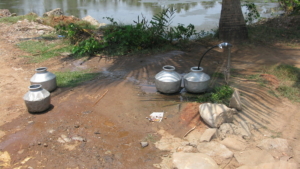 Since April 15, 2023, an armed military conflict between Sudan’s two rival political-military forces, the Sudanese Armed Forces (SAF) and the Rapid Support Forces (RSF), has caused widespread infrastructure damage across the country. The conflict has particularly affected water systems, leaving many civilians reliant on unsafe surface water amid ongoing instability. Before the conflict, approximately 11 million people lacked access to basic water services and 26% of the water supply systems were not operational.
The limited water available to civilians is often surface water carrying diseases and bacteria, such as cholera, dysentery, typhoid and schistosomiasis. The use of bombs, rockets and other explosive weapons has damaged water treatment plants. It has affected both urban and rural areas, where populations of displaced individuals are extremely reliant on the few functional systems. An estimated 829,000 deaths per year are attributed to diarrheal diseases caused by unsafe water, poor sanitation and inadequate hygiene.
The Water Crisis in Sudan
Sudan is unable to meet the basic needs of its people. UNICEF has confirmed that more than 17.3 million civilians cannot access clean water. The ongoing conflict between SAF and RSF has devastated all aspects of life, including infrastructure, health care, education and displaced millions, reinforcing both nationwide and household poverty.
In larger cities such as Omdurman, Khartoum, Darfur, and Kordofan, key destinations for the displaced, most water treatment plants have been damaged or rendered completely unusable. As a result, more than 40% of rural households have no access to clean water. This scarcity has deepened food insecurity, as 60–80% of Sudan’s population depends on agriculture for income.
Since the conflict began in 2023, the water crisis in Sudan has undermined agricultural productivity and reinforced both national and household poverty. Many Sudanese now rely on humanitarian organizations’ emergency water trucking and purification kits. However, International aid has been limited, with some foreign governments, including the U.S. and European states, reducing their aid.
A Rapper’s Voice
On October 24, 2023, Sudanese-American musician Abbas Hamad (Bas) released his song “Khartoum.” He used his public media platform in the music industry to bring awareness to the conflict and its effects on civilians. Through emotional imagery, he sought to spark awareness and empathy among audiences who may not be aware of the ongoing devastation in Sudan.
Artists like Bas help close the awareness gap through cultural activism, reminding us that lasting solutions to global poverty must ensure access to clean water and peace.
UN’s Sustainable Development Goals at Risk
With 2030 approaching, achieving the U.N.’s poverty goals depends on policy and persistent attention, wherever it may come from. If countries like Sudan continue to lack access to safe and clean water, the world will struggle to meet the targets of reducing global poverty and ensuring basic services for all.
This challenge is especially critical under the U.N.’s Sustainable Development Goals: SDGs 1 (No Poverty) and 6 (Clean Water and Sanitation). The shift from long-term development to emergency relief reinforces cycles of poverty. Without sustained investment in essential services like quality water, any effort to reduce global poverty is impossible.
Relief Efforts, Global Policy and Cultural Advocacy
The crisis highlights ongoing efforts to combat global poverty through immediate and long-term relief. Humanitarian organizations continue to provide emergency water, health services and food assistance in conflict zones. Similarly, global initiatives under the U.N. SDGs push for systemic change. At the same time, artists like Bas use their platforms to keep marginalized crises in the public eye.
These efforts reflect a diverse approach to addressing global poverty, combining funding, infrastructure, public awareness, cultural engagement and international cooperation.
– Zenub Khan
Zenub is based in Ontario, Canada and focuses on Global Health and Celebs for The Borgen Project.
Photo: Flickr
