How Political Turmoil Deepens Poverty in Thailand
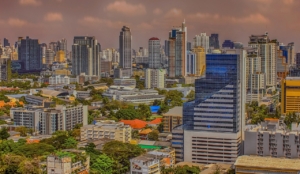 Thailand is facing one of its toughest years in recent memory, as political crisis and economic stagnation combine to hurt the most vulnerable. The dismissal of Prime Minister Paetongtarn Shinawatra in August 2025 has left the country in political limbo, disrupting budget plans and stalling welfare programs. As political turmoil deepens poverty in Thailand, low-income households are being forced to shoulder the brunt of rising costs, job insecurity and weakened safety nets.
Poverty on the Rise
The World Bank has cut Thailand’s 2025 growth forecast from 2.9% to just 1.8%, citing instability as a key reason behind slowing investment and policy delays. This translates into fewer jobs, weaker income growth and rising debt for poorer households. Thailand’s household debt already stands at nearly 91% of GDP, one of the highest rates in Asia, leaving families little room to absorb economic shocks.
Tourism, once a major employer of low-wage workers, has suffered repeated disruptions from political unrest. Manufacturing, another crucial source of jobs for people experiencing poverty, has also slowed as investors grow wary of instability and tariff disputes.
Informal workers who comprise more than half of Thailand’s labor force are especially vulnerable, as they lack access to unemployment benefits or other protections. As political turmoil deepens poverty in Thailand, many of these workers are forced to rely on debt to meet daily expenses.
Welfare and Budget Delays
The fallout from the political crisis is most visible in stalled welfare programs. The budget of more than $117 billion in 2026, which funds subsidies, social assistance and infrastructure projects, has been delayed by parliamentary gridlock. Without these funds, government schemes designed to ease living costs for low-income people, such as transport subsidies and cash transfers, are left in limbo.
This uncertainty is particularly damaging for Thailand’s rural and urban poor, who depend on these subsidies to cope with inflation and high debt. Political turmoil deepens poverty in Thailand, not only by driving up living costs but also by undermining the very policies meant to protect the vulnerable.
Relief Efforts Amid Crisis
While national politics stall, other actors have stepped in to provide support. The Bank of Thailand has cut interest rates to 1.50%, seeking to reduce debt burdens and encourage borrowing. However, economists warn that this measure alone is insufficient.
Civil society groups are playing a vital role in bridging the gap. Tearfund works with rural communities to improve incomes and build resilience. At the same time, CARE International focuses on food security and women’s livelihoods programs, which have become more urgent as families face mounting hardship.
In Bangkok, grassroots groups like the Bangkok Community Help Foundation run food banks and the “Center of Dreams” initiative. It offers education and skills training to children from low-income families. These efforts ensure that vulnerable communities still receive some support even when the state falters.
Housing insecurity has also been partially addressed through the Baan Mankong program, run by Thailand’s Community Organizations Development Institute (CODI). The initiative helps low-income families improve housing and living conditions through collective financing. While not a cure-all, such community-led projects provide stability in uncertain times.
Conclusion
Thailand’s ongoing crisis shows how deeply politics and poverty are intertwined. The removal of a prime minister, the delay of a national budget and the weakening of investor confidence may sound like abstract political issues. However, they carry direct consequences for ordinary people.
As political turmoil deepens poverty in Thailand, the needy face higher prices, rising debt and fewer opportunities. Relief efforts by NGOs, local organizations and some government institutions are helping to soften the blow.
Yet these measures remain small compared to the scale of the problem. Until political stability is restored, Thailand’s most impoverished citizens will remain caught in a cycle of uncertainty, bearing the heaviest burden of a crisis far beyond their control.
– Charlie Wood
Charlie is based in West Yorkshire, UK and focuses on Global Health and Politics for The Borgen Project.
Photo: Pixabay
