Education Reform in China
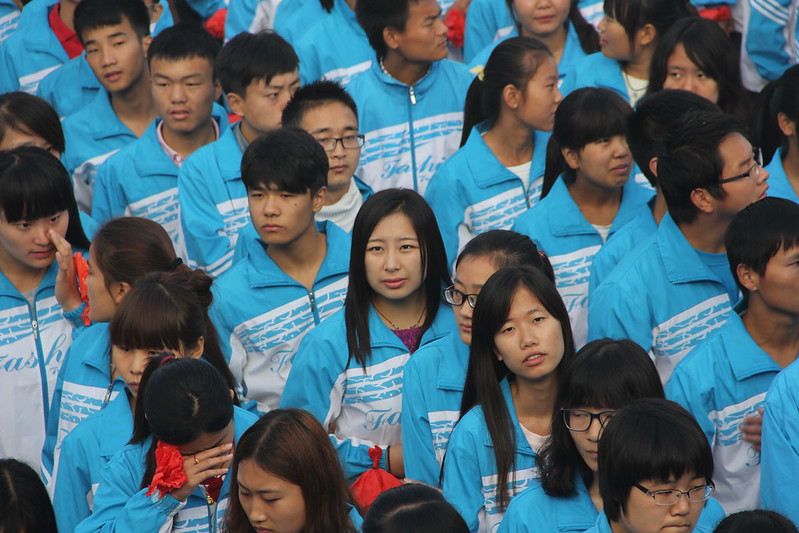 With a population of roughly 1.4 billion, China is the world’s second most populous country, just behind India. Boasting the oldest formal education system in the world, China’s approach to schooling is often regarded as unconventional by the rest of the world. It has frequently been criticized for its intensity and pressure on students, unequal access to opportunities, and heavy emphasis on rote memorization rather than deep understanding. These concerns have made education reform in China one of the nation’s pressing priorities.
The Current Education System
China’s current education system is split into four distinct sections. From ages 3 to 6, Chinese students attend preschool. Though not compulsory, enrollment rate in 2022 hovered at almost 90%. Education from grades one to nine is compulsory; in 2022, the completion rate of China’s nine-year compulsory education program was 95.5%.
Upper secondary education in China, though not mandatory, reached a gross enrollment rate of 91.6%. It further has two main tracks: regular senior high schools and vocational senior high schools. Regular senior high schools focus on preparing students to take the Gaokao, or China’s highly difficult university entrance exam.
In 2022, there were 15,000 regular senior high schools and around nine million new entrants. Vocational senior high schools, on the other hand, aim to prepare students for technical careers through vocational colleges. There were 7,201 vocational high schools in 2022, with around 4 million new entrants, the Ministry of Education reports.
In 2022, gross enrollment in higher education following senior high school hovered around 60%. This percentage includes both regular and vocational high schools. The students in regular senior high schools take the Gaokao, also known as the National College Entrance Examination, at the end of their final year to determine their eligibility for university.
Gaokao Models
Though models of the Gaokao differ from region to region, the test always consists of three required subject tests (Chinese, math and English) and three additional subject tests that students choose (in the more common three+one+two model, either a physics or history exam and an additional two subjects). In 2024, more than 13.4 million students registered for the exam.
The primary criticism of the Gaokao is the immense pressure it places on students. Because a singular exam effectively determines a student’s entire future and professional trajectory, many students devote nearly all of their time to preparing for the test. The test is often also faulted for its emphasis on rote learning and memorization rather than critical thinking and creativity, according to the Center for International Higher Education.
Additionally, the Gaokao is often the only pathway for students from underserved backgrounds to move up. However, students in urban areas with greater financial means are at a significant advantage. Families spend more than $120 billion annually on tutoring, preparation courses, and supplemental schooling. Without access to similarly costly support, many low-income students are at a disadvantage. As a result, the exam is often receives critics for reinforcing existing inequalities. Education reform in China have largely focused on the Gaokao.
Ongoing Reforms
Education reform in China has taken two main forms when it comes to the Gaokao. The first reform, implemented initially in 2014 but not quite covering the entirety of the nation, changes the required subjects to the current model (three required and three chosen), according to the Center for International Higher Education.
Under the previous model, students chose either the liberal arts track (politics, history, and geography) or the sciences track (physics, chemistry, and biology) in addition to the three required subjects. The reformed system requires that students still take the three required subject tests but allows students to choose any three additional subjects, offering them greater flexibility.
The second reform would enforce a new university admission framework, also known as “two bases + one reference,” according to the Center for International Higher Education. Under this system, the Gaokao will no longer be the only component in university admissions, though it will remain the primary factor. In addition to the Gaokao, university admissions will also look at proficiency subject exams taken by students throughout high school and a reference, which is an evaluation system that analyzes a high school student’s academic performance, physical and mental health, ethical behavior, and artistic ability.
Two-Phased Plan
In addition to Gaokao-specific changes, the State Council introduced a two-phased plan earlier this year for education reform in China. The new initiative emphasizes a more holistic approach to education that departs from traditional Gaokao exam preparation and ensures physical and aesthetic education. For one, the program would mandate that students receive at least two hours of physical activities per day. The plan would also limit off-campus academic tutoring and repetitive homework, allowing students to foster adaptability and creativity while decreasing educational inequalities.
By shifting focus away from the Gaokao and standardized testing while promoting other areas of growth, this new system would reduce stress on students, strengthen both mental and physical health, and cultivate essential creative and critical thinking.
Looking Ahead
Though this education reform in China would greatly improve the current Gaokao system, harsh exam culture remains deeply ingrained and continues to make the shift away challenging. Although gradual shifts are underway, it will take time for students, parents, and teachers to fully embrace a more holistic approach to learning. Until then, ongoing adjustments remain the best steps forward.
– Ariana Wang
Ariana is based in Dallas, TX, USA and focuses on Technology and Solutions for The Borgen Project.
Photo: Flickr
