Improving Access to Electricity in Eswatini
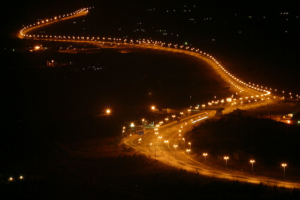 Eswatini, formerly called Swaziland, is a small, mountainous, landlocked country surrounded on all sides by South Africa and in close proximity to Mozambique. While Eswatini is classified as a lower-middle-income country, severe poverty and high unemployment rates still plague the nation. One demonstration of this poverty manifests in a lack of access to electricity. According to World Bank data, about 36.6% of Eswatini’s population lacked access to electricity in 2016. This is in large part due to the fact that Eswatini does not produce much of its own electricity. Rather, it obtains much of it, along with many other imports, from South Africa. In recent years, organizations like the World Bank have been working to improve access to electricity in Eswatini, but there is still much work to do.
Governmental Efforts
In Eswatini, the Eswatini Energy Regulatory Authority (ESERA) regulates the country’s electric supply industry, while the Eswatini Electricity Company (EEC) acts as the national utility. The Eswatini Electricity Company is state-owned and controls hydropower stations in Maguga, Ezulwini, Edwaleni and Maguduza. Despite this, Eswatini is a net importer of electricity due to the fact that its domestic electricity generation is insufficient to meet national demand. This can be attributed in large part to a lack of water storage, which has led to severe variations in annual domestic generation output over the years. However, the Eswatini Government is looking to become more energy independent in the near future and has implemented the Rural Electrification Program (REP), which has increased the percentage of Eswatini residents with access to proper electricity to almost 75% in 2017.
The World Bank’s Role in Eswatini’s Electrical Supply
In conjunction with the REP, the World Bank has also aided in improving Eswatini’s electricity supply. One of the World Bank’s most notable projects in Eswatini is the four-part Network Reinforcement and Access Project. The first two components focus on strengthening the transmission and distribution network in Shiselweni and building upon the REP program to finance additional household connections. The third component provides analytical support by financing technical aid and the fourth component is designed to improve Eswatini’s ability to respond to major economic or social emergencies. These efforts by the World Bank have proved to be extraordinarily helpful in Eswatini’s efforts to become a nation that produces its own energy.
Final Steps
Eswatini has taken major steps forward to address its electricity dependence issues. However, the country is still struggling overall in this regard and more work is necessary in order for the nation to become energy independent. Funding from the World Bank, as well as from organizations like the United Nations, will be of great help to Eswatini as the government seeks to improve access to electricity for residents.
– Jade Thompson
Photo: Flickr
