• Link to X
  • Link to Facebook
  • Link to Instagram
  • Link to TikTok
  • Link to Youtube
  • About
    • About Us
      • President
      • Board of Directors
      • Board of Advisors
      • Financials
      • Our Methodology
      • Success Tracker
      • Contact
  • Act Now
    • 30 Ways to Help
      • Email Congress
      • Call Congress
      • Volunteer
      • Courses & Certificates
      • Be a Donor
    • Internships
      • In-Office Internships
      • Remote Internships
    • Legislation
      • Politics 101
  • The Blog
  • The Podcast
  • Magazine
  • Donate
  • Click to open the search input field Click to open the search input field Search
  • Menu Menu

Tag Archive for: United Nations

Posts

Children, United Nations

International Youth Day 2014

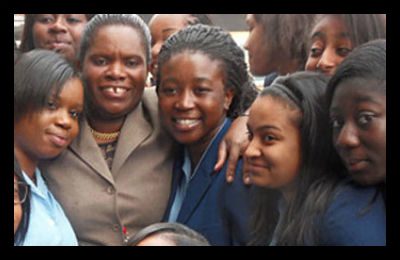
On Aug. 12,  the U.N. hosted an International Youth Day event at its headquarters in New York City. The event focused on the importance of addressing the mental health concerns of youth around the world, thus making them less susceptible to homelessness, crime and conflict situations.

The theme of this year’s International Youth Day was “Mental Health Matters.” The half-day event in New York City brought together young people, youth organizations, U.N. Member State representatives, civil society and U.N. entities for a series of presentations including panelists and young artist performances.

This event marked the official launch of the U.N. Department of Economic and Social Affairs publication, Social Inclusion of Youth with Mental Health Conditions.

The report reveals “one-fifth of the young people around the world experience a mental health condition, with risks especially great during the transition from childhood to adulthood.”

The U.N. seeks to banish the stigma that plagues those suffering from mental illness. U.N. Secretary-General Ban Ki-moon warned in his opening remarks that failing to address access to mental health services makes affected youth “more vulnerable to poverty, violence, and social exclusion, and negatively impacting society as a whole.”

International Youth Day was marked overseas at a U.N. peacekeeping mission in Somalia, where the mental health of the young is of particular concern. Somali youth face violence and crime on a daily basis, and many are forced to join military groups or survive on the streets.

A traumatic childhood, like that experienced by youth in Somalia, breeds mental illness. According to Philippe Lazzarini, the U.N. Resident and Humanitarian Coordinator in Somalia, “We must be clear that what we need is nothing less than a paradigm shift in policies and attitudes towards the role of youth in order to empower and place them at the core of the development agenda.”

The population of those 25 years of age or younger is growing in countries like the Democratic Republic of Congo, where young people are 70 percent of the civilian body. It is especially important for countries like the DRC to focus on mental health because the youth “are not only the Congo of tomorrow, but also the Congo of today,” said a U.N. representative from the country.

The World Health Organization recommends a range of specific actions that should be integrated into national development plans in order to break the cycle of debilitating mental illness. These strategies include supporting access to school for children with mental disabilities, integrating mental health issues into broader health policies and creating employment for those suffering from mental illness.

Assembly President John Ashe summed up the objective of this year’s International Youth Day, urging, “We should be especially focused on addressing the needs of youth with mental health conditions, many of whom experience discrimination on a daily basis. We must work together to ensure that young people with mental health conditions can lead full and healthy lives.”

– Grace Flaherty

Sources: World Health Organization, United Nations, UN DESA
Photo: Idealist Careers
August 22, 2014
https://borgenproject.org/wp-content/uploads/borgen-project-logo.svg 0 0 Borgen Project https://borgenproject.org/wp-content/uploads/borgen-project-logo.svg Borgen Project2014-08-22 11:50:002024-06-05 01:58:06International Youth Day 2014
Global Poverty

Extreme Poverty Has Been Halved

Back in 2000, countries around the world convened to discuss the United Nations Millennium Development Goals – goals to make the world a safer, healthier place and to ultimately eradicate global poverty. Countries pledged that by 2015, they would halve the number of people living in poverty, cut maternal mortality by three-quarters and cut child mortality by two-thirds. Though there are considerable strides to make toward the latter two objectives, the former goal of halving extreme poverty has been achieved even earlier than expected.

In 1990, 1.9 billion people in developing nations were living in extreme poverty, or 43 percent of the world’s population. By 2000, that number was down by one-third. By 2010, the number was 1.2 billion – or 21 percent of the Earth’s population. This indicates that in a short 20 years, the global poverty rate was cut in half.

The quick, yet drastic improvements that were made in just two decades raise the question: what is stopping world leaders from reaching 1 percent in the near future?

According to Martin Ravallion, the World Bank’s head of research, growth alone does not ensure less poverty in a nation. Based on Ravallion’s research and surveys, he found that two-thirds of the poverty decrease was the result of growth and one third came from greater income equality. His surveys reveal that a one percent increase in incomes cut poverty by 0.6 percent in the most unequal countries and by 4.3 percent in the most equal ones.

China is responsible for three-quarters of the world’s total decline in extreme poverty over the past twenty years. Back in 1980, the country was home to the greatest poverty-ridden population in the world. In just two decades, China lifted 600 million citizens out of extreme poverty.

It is not the only nation, however, that has experienced accelerated economic growth. In Brazil, new poverty reduction policies – including equality through minimum wages, cash transfer programs for the poor and better public services – have largely contributed to the nation’s economic development. Not only has poverty been considerably reduced, but deforestation of the Amazon has also been cut by 80 percent.

World leaders argue that today’s developed nations have the resources and technology to eventually eradicate extreme poverty. It is the small factors, however, that will be most important. Not only is it essential for a nation to experience economic growth and income equality, but it must also foster a healthy and stable population.

This means that education and health are at the forefront of the United Nations’ agenda. Though 17,000 more children are alive per day compared with the situation twenty years ago and mosquito nets have saved 3.3 million lives from malaria, there are still large obstacles to overcome. Taking small initiatives, while tackling large issues with the proper resources, will be the key to seeing the end of extreme poverty by the year 2030.

– Samantha Scheetz

Sources: The Economist, UN, Devex
Photo: My Modern Met

August 22, 2014
https://borgenproject.org/wp-content/uploads/borgen-project-logo.svg 0 0 Borgen Project https://borgenproject.org/wp-content/uploads/borgen-project-logo.svg Borgen Project2014-08-22 11:35:022024-06-05 01:58:05Extreme Poverty Has Been Halved
Activism, Advocacy

Humans of New York: UN Millennium Project

Supported by the Millennium Development Goals Advocacy Group, photographer and founder of Humans of New York Brandon Stanton has taken his portrait project to a global scale.

Stanton will be photographing people in ten different countries and says that, “It would be rather foolish to claim that these portraits and stories somehow represent ‘the world’ or humanity as a whole. The point of the trip is not to ‘say’ anything about the world. But rather to visit some far away places, and listen to as many people as possible.”

Stanton explains that one of the main objectives of the tour is to raise awareness and prompt action to complete the Millennium Development Goals, to be accomplished by 2015. The Millennium Development Goals include the following:

1.

To eradicate extreme hunger and poverty

2.

To achieve universal primary education

3.

To promote gender equality and empower women

4.

To reduce child mortality

5.

To improve maternal health

6.

To combat HIV/AIDS, malaria and other diseases

7.

To ensure environmental sustainability

8.

To enhance and increase global partnership for development

Stanton began his journey in Iraq and has since traveled to Jordan. He will venture next to the Democratic Republic of Congo, then travel to Kenya and then his trip will lead him to Uganda. His only stop in Europe will be in Ukraine. He will then go to India, following which he will be in Vietnam, and then he will photograph in Ecuador. His last stop as of now is in the Amazon – but at the end of the tour, if he has the time and resources, he will go to photograph in El Salvador.

Stanton remarked on the Humans of New York website that on his trip, “In addition to telling stories of individuals, we hope this trip may in some way help to inspire a global perspective, while bringing awareness to the challenges that we all need to tackle together.”

-Jordyn Horowitz

Sources: United Nations, Humans of New York, ABC
Photo: The Epoch Times

August 18, 2014
https://borgenproject.org/wp-content/uploads/borgen-project-logo.svg 0 0 Borgen Project https://borgenproject.org/wp-content/uploads/borgen-project-logo.svg Borgen Project2014-08-18 11:10:512024-05-27 09:21:12Humans of New York: UN Millennium Project
Activism, Education, Human Rights, United Nations

Understanding the UN: Peacekeeping

The United Nations has been deploying peacekeeping missions since the U.N. Truce and Supervision Organization mission in 1948 which monitored the Armistice Agreement between Israel and neighboring Arab countries. Since 1948, U.N. peacekeeping has evolved to better respond to the world’s ever-changing and increasingly complex conflicts. What started off as a peace monitoring mechanism has become a major international actor in stabilization and development efforts in some of the world’s most volatile and protracted conflicts.

U.N. peacekeeping is managed through the Department of Peacekeeping Operations, which was established to succeed the U.N. Office of Special Political Affairs in 1992 under Secretary General Boutros Boutros-Ghali. The DPKO may only deploy a peacekeeping mission after receiving the mandate through Security Council resolutions and missions may only be updated or changed through Security Council resolutions. There are three types of peacekeeping personnel that make up mission teams: uniformed personnel including military troops, police and military observers, civilian personnel both local and international and U.N. Volunteers.

Currently, there are 17 different peacekeeping missions around the world ranging in size depending on the nature and scale of the conflict. The largest is the U.N. Organization Stabilization Mission in the Democratic Republic of the Congo, which employs over 20,000 personnel and has been operating in various forms since 1999. The mission in Congo also represents a departure from the normal rules and procedures of peacekeeping. Due to necessity and the nature of the Congolese conflict, the first ever “offensive” peacekeeping mission called the Intervention Brigade was launched in 2013 in order to more effectively address instability in the eastern region caused by various rebel groups and militias.

There are three rules to all traditional peacekeeping missions: (1) all parties of the conflict must consent to the deployment of peacekeepers in the area, (2) peacekeepers must remain neutral at all times and take neither side in the conflict, they serve merely as a buffer zone, and (3) peacekeepers may use force only in instances of self-defense or in defense of the Security Council mandate. All uniformed personnel are affiliated with the U.N. Member States. There is no U.N. standing army, so the U.N. depends on the contributions and donations of its Member States to carry out its missions, particularly in the form of uniformed personnel.

Today, U.N. peacekeeping missions are much more than just a buffer zone between two warring parties, peacekeepers are a central part of the stabilization and early reconstruction efforts of the areas where they are deployed. Peacekeepers are actively engaged in rebuilding the rule of law, justice and corrections systems, strengthening social and civil conditions, assisting with elections, aiding security sector reforms, carrying out demining activities and education programs about the dangers of landmines, promoting gender equality and the empowerment of women, protecting civilians, protecting children in conflict areas, assisting with Disarmament, Demobilization, and Reintegration activities and fostering and maintaining respect for human rights.

Peacekeeping missions are a crucial part of the immediate post-war reconstruction phase in countries which are frequently prone to conflict. They are a valuable asset to development efforts in areas that are home to some of the most vulnerable populations on earth.

– Erin Sullivan

Sources: NY Times, United Nations, United Nations 2, United Nations 3, United Nations 4, United Nations 5, United Nations 6
Photo: NY Times

August 18, 2014
https://borgenproject.org/wp-content/uploads/borgen-project-logo.svg 0 0 Borgen Project https://borgenproject.org/wp-content/uploads/borgen-project-logo.svg Borgen Project2014-08-18 11:07:082024-05-27 09:21:10Understanding the UN: Peacekeeping
Refugees and Displaced Persons, United Nations

UN Concerned About Refugees in Libya

As the security situation quickly deteriorates in Libya, the United Nations says it is very concerned about the safety of asylum-seekers and refugees in Libya who are stranded in areas under heavy fighting.

U.N. Refugee Agency spokesperson Ariane Rummery said UNHCR is receiving calls from the mostly Palestinian and Syrian refugees in Libya who need assistance. About 37,000 people are recorded with UNHCR in Tripoli and Benghazi, areas of heavy violence between the military and insurgents.

“In Tripoli alone, more than 150 people from Eritrea, Somalia and other countries have phoned our protection hotline seeking help with medicines or a safer place to stay.”

UNHCR is especially concerned about one Palestinian and three Syrians who are trapped in between Libya and Egypt. They are asking Egyptian authorities to give the group access to food and water.

Rummery also said refugees in Libya see leaving as their only option. Many Libyan refugees are trying to leave the country by sea. The airport in Tripoli has been unavailable for days. Tunisia and Egypt are inaccessible for refugees, so the sea is the only way out. Smugglers are making use of the situation as these desperate people risk their lives to leave Libya and take the dangerous journey across the Mediterranean to Europe.

“We recently heard of a group of 500 Syrians who left in about three boats toward Italy from Benghazi, and this is a new and much more dangerous journey because it takes longer to reach Italy. Over 1,000 people have died in the Mediterranean this year and the latest casualties drowned last week off Al-Khums, which is about 100 kilometers (62 miles) east of Tripoli.”

UNHCR is advising Libyan authorities to lessen exit visa restrictions to let people leave Libya. They are also calling for Egypt and Tunisia to open their borders to the people trying to escape violence.

While the fighting continues in Libya, a newly elected parliament has met in hopes that they can bring peace. Libya has experience violent conflict since the 2011 uprising that overthrew Muammar al-Qadhafi.

– Colleen Moore

Sources: United Nations, UPI, Voice of America
Photo: United Nations

August 18, 2014
https://borgenproject.org/wp-content/uploads/borgen-project-logo.svg 0 0 Borgen Project https://borgenproject.org/wp-content/uploads/borgen-project-logo.svg Borgen Project2014-08-18 11:01:102024-06-05 01:58:00UN Concerned About Refugees in Libya
Advocacy, Aid Effectiveness & Reform, Global Poverty, United Nations

Girl Child Network Changes Attitudes in Zimbabwe

Girl Child Network
In Zimbabwe, it’s hard to be a girl. With a population of mostly youth, the country and its economy have been decimated by the AIDS epidemic. Up to 80 percent of the population in rural villages is unemployed and women are subordinated with gender violence and rape.

The Girl Child Network (GCN) is trying to change things. Founded by Betty Makoni, the network is designed to help change the policy and acceptability of rape. The program has grown to assist girls with education and housing.

Featured in the documentary Tapestries of Hope, Girl Child Network is trailblazing the way rape survivors are treated: with dignity and with agency. One of the easiest ways to explain GCN is through its use of the color blue. In Zimbabwe, blue is a color mainly for boys; GCN uses it everywhere.

While health and support are provided, Makoni emphasizes that access to education is among her priorities. A donation as little as $50 could provide a girl with tuition for a year.

Expanding upon the original goal of getting justice for survivors, GCN allows girls to envision futures for themselves. Many of these girls are orphans and some are even mothers themselves, but GCN empowers them. Girls are encouraged to dream and pursue education and careers.

While GCN’s staff advocates for the girls, the girls themselves have emerged as advocates. Some have publicly spoken out against violence against women at the United Nations. Others courageously shared their stories on the documentary.

The solution to the poverty they face isn’t simple. Will achieving a degree make a difference? Will they be able to get a job with the extraordinary high unemployment rate? The answers are unclear. The philosophy of GCN, however, is to maximize the potential and resources for these girls.

– Kristin Ronzi

Sources: Tapestries of Hope
Photo: TeachAids

August 18, 2014
https://borgenproject.org/wp-content/uploads/borgen-project-logo.svg 0 0 Borgen Project https://borgenproject.org/wp-content/uploads/borgen-project-logo.svg Borgen Project2014-08-18 08:18:122017-11-28 11:06:29Girl Child Network Changes Attitudes in Zimbabwe
Human Rights, Women, Women and Female Empowerment

The Beijing Declaration and Platform for Action

In an effort to increase gender equality in China, at the Fourth World Conference on Women in 1995, the Beijing Declaration and Platform for Action was created. The platform sought, and still seeks to enact serious change to 12 areas of daily life. According to U.N. Women, the commitment to change spans the following 12 categories:

1. Women and the Environment
2. Women in Power and Decision-Making
3. The Girl Child
4. Women and the Economy
5. Women and Poverty
6. Violence Against Women
7. Human Rights of Women
8. Education and Training of Women
9. Institutional Mechanisms of the Advancement of Women
10. Women and Health
11. Women and the Media
12. Media and Armed Conflict”

Since the conference and the implementation of the Beijing Declaration and Platform for Action, there have been major steps toward the advancement of women’s rights. Laws protecting gender-based violence, in general, have become stricter and more women are now serving as political officials.

As the Beijing Declaration and Platform for Action is coming up on its 20th anniversary, the United Nations Entity for Gender Equality and the Empowerment of Women is taking a closer look at how some of these changes are being implemented and working to enhance efforts where commitment appears to be lacking.

U.N. Women has discovered that “while today, equal number of boys and girls are receiving primary education in most of the world, few countries have achieved that target at all levels of education.” Moreover, the Millennium Development Goals Report found that worldwide, 126 million children and 781 million adults do not have basic reading and writing skills. Women make up over 60 percent of each statistic, indicating a problem in education distribution between the sexes and the need for greater dedication to the problems surrounding “the girl child.”

At this 20 year mark, in order to promote women’s rights in Beijing, it is crucial to reexamine the declaration and reignite the fire that sparked the dedication to enhancing women’s rights.

– Jordyn Horowitz

Sources: United Nations, UN Women, WNC
Photo: Reuters

August 10, 2014
https://borgenproject.org/wp-content/uploads/borgen-project-logo.svg 0 0 Borgen Project https://borgenproject.org/wp-content/uploads/borgen-project-logo.svg Borgen Project2014-08-10 08:00:452024-06-05 01:57:56The Beijing Declaration and Platform for Action
Food & Hunger, Health

Inadequate Aid for South Sudan

South Sudanese children are suffering the effects of mass malnutrition, and foreign aid agencies are struggling to keep up. On July 14, Medecins Sans Frontieres (MSF) announced “shocking” levels of child starvation in South Sudan, reporting that at least 13,500 children have been admitted to the organization’s feeding programs.

South Sudan’s mounting civil crises have erupted into violence in recent months, which interferes with farmers’ ability to grow crops and provide food for communities. Agricultural infrastructure has been destroyed and crop planting has been widely disrupted or halted. These factors exacerbate the already-present food shortages and force displaced residents to share scarce resources.

Yet even in this time of dire need, seven major international food aid organizations–all of which focus primarily on South Sudan–are at risk of shutting down due to lack of funding. And the UN’s most recent request for food aid in South Sudan is less than half-funded. The UN requires at least $1.8 billion to make an impact on the malnutrition epidemic, but the seven agencies are short in funds by $89 million. If funding and food aid for South Sudan doesn’t increase soon, the UN warns that as many as 50,000 children could die by the year’s end.

“We will be staring into the abyss and failing to avert famine if funds do not start arriving soon,” said Mark Goldring, chief executive of Oxfam, in a report conducted by CARE International. “This is not a crisis caused by drought or flood. It is a political crisis turned violent… Mainly we are calling on governments to fund the aid effort before it is too late.”

The malnutrition crisis in South Sudan is a product of civil strife and contentious domestic politics. Since fighting began, 1.5 million South Sudanese have been displaced from their homes, thereby interfering with dependable access to food and water. Both of the parties fighting have also refused to respect a ceasefire agreement signed in January, leading authorities to report that nearly four million South Sudanese remain at risk of famine this year.

But while solving South Sudan’s political problems will help avert further violence, the most pressing priority for aid workers is now the nutritional needs of South Sudanese children. Many of these children are starving, and travel for days to reach MSF facilities. Others remain hiding in the bush, surviving off swamp water and roots.

Malnutrition is of course a threat in itself. But the three leading causes of death in South Sudan–malaria, diarrhea and respiratory infections–are also much more easily contracted by malnourished people. This compounds the dangers of the massive shortage of aid in the region.

“The United States’ monetary aid to the region is complicated because they don’t trust the South Sudanese government,” said Dr. Jenny Bell, a medical worker with a focus on South Sudan. “Because of this, they’ve shifted everything to humanitarian aid, and all the development efforts have been wiped out.”

Although humanitarian aid is always welcome, monetary aid is crucial to obtaining necessary medicines and nutritional requirements for malnourished children. Hopefully the global community will be able to meet the UN’s funding appeals before the situation in South Sudan plummets any further.

– Mari LeGagnoux

Sources: IPS News, All Africa
Photo: Unocha

August 3, 2014
https://borgenproject.org/wp-content/uploads/borgen-project-logo.svg 0 0 Borgen Project https://borgenproject.org/wp-content/uploads/borgen-project-logo.svg Borgen Project2014-08-03 04:00:162024-06-04 01:08:07Inadequate Aid for South Sudan
Economy, Education, Global Poverty

Three Influences of Poverty

Poverty has many causes. While some factors exacerbate poverty, there are five predominant causes of poverty: social inequality, conflict and political instabilities, education, debt and environmental conditions. Here is a closer examination of three of these causes.

Social Inequality

The United Nations Social Policy and Development Division reports that “inequalities in income distribution and access to productive resources, basic social services, opportunities, markets, and information have been on the rise worldwide, often causing and exacerbating poverty.” Countries where inequality is rampant display poor social indicators for human development, insecurity and anxiety. Inequality keeps the poor from moving out of their socioeconomic status.

Inequality limits access to opportunities that can provide the means to escape poverty. In a speech by Dominique Strauss-Kahn, Managing Director of the International Monetary Fund, Kahn explains that Adam Smith, often considered the founder of modern economics, “recognized clearly that a poor distribution of wealth could undermine the free market system.” An example of this is the former apartheid government in South Africa.

Apartheid laws assign rights and space to individuals on the basis of race. In South Africa this meant that while one group was persecuted and forced into poverty, the other group was given access to opportunities that allowed them to advance economically. This increased the gap between economic classes and the amount of people in poverty.

Environmental Conditions

Environmental degradation is the decline in the quality of the natural environment through its atmosphere, land, oceans and lakes. Indigenous groups are among the worsetaffected by such degradation. These groups often depend on the environment to survive and easily fall into poverty when that environment is harmed. A major cause of environmental degradation is climate change.

One of the outcomes of climate change is hunger. The changing climate is responsible for the destruction of harvests and other resources critical to survival. Michael Oppenheimer, professor of geosciences and international affairs at Princeton University explains, “crop yields have detectably changed. As time goes on the poor countries that are in the warmer and drier parts of the planet will feel the crop yield decreases early.” In Oxfam’s report Suffering The Science: Climate Change, People, and Poverty, the organization warns that “Without immediate action 50 years of development gains in poor countries will be permanently lost.”

Recent U.N. reports on climate change noted that “for the first time” that climate change is a threat to human security. The UN notes that the increased migration and the decrease in food are conditions that lead to conflict. The reports warn also that unless the issue is addressed, “nobody would be immune to climate change.” The report reads, “Climate change can indirectly increase risks of violent conflicts in the form of civil war and inter-group violence.” Environmental degradation can not only result in poverty, but can also lead to war.

Lack of Education

Education has lifted people out of poverty and empowered communities to grow economically. A lack of education could maintain or create poverty. Senior Fellow of the Center on Budget and Policy Priorities Jared Bernstein explains, “economists may disagree a lot on policy, but we all agree on the ‘education premium’—the earnings boost associated with more education.”

According to the Network for international policies and cooperation in education and training, a main priority for poverty reduction is primary education. In developed countries almost all children have access to primary education, while in regions such as sub-Saharan Africa approximately 40 percent of children do not attend primary school due to poverty and a lack of access to education. Many people living in poverty in undeveloped countries must give up an education in order to make “a minimal living.” Furthermore, many families cannot afford school fees to send their children to school. This limits skill development and opportunities to escape poverty and create generational poverty.

There are many situations that lead to poverty. As we understand the causes of poverty, we can eradicate it more strategically. These are only three of many causes that must be understood to successfully meet the goal of eradicating extreme poverty by 2030. We created poverty, so we can eliminate it as well.

– Christopher Kolezynski

Sources: Poverty at Large, The Borgen Project, Oxfam, The American Prospect, The Guardian, NORRAG
Photo: The Daily Star

July 30, 2014
https://borgenproject.org/wp-content/uploads/borgen-project-logo.svg 0 0 Borgen Project https://borgenproject.org/wp-content/uploads/borgen-project-logo.svg Borgen Project2014-07-30 15:43:402024-06-05 01:57:57Three Influences of Poverty
Global Poverty, Health

Cholera Outbreak in Haiti: The UN Responds

cholera in HaitiUnited Nations Secretary, General Ban Ki-moon, arrived in Hispaniola this past week, with renewed promises to the Haitian people burdened with an ongoing cholera epidemic. During his stay, the Secretary-General called for increased commitment to the $2.2 billion plan he first proposed at the end of 2012 — to help fight the cholera outbreak in Haiti, a plan for which donors have been scarce.

He also introduced the “Total Sanitation Campaign” that will attempt to lessen the impact of future cholera outbreaks in Haiti by addressing the absence of proper sanitation in rural areas. “As secretary-general of the United Nations, I want to assure you that the United Nations and its partners are strongly committed to ending the epidemic as quickly as possible,” said the Secretary-General.

Before the current epidemic, which has killed over 8,500 and infected 700,000 since 2010, Haitians had not seen a recorded case of bacterial infection within their borders for a century. Evidence suggests that U.N. peacekeepers from Nepal first brought the disease to Haiti in response to the 2010 earthquake that affected 3 million in the area.

Despite its claim of legal immunity, the UN must now defend itself against three lawsuits brought forth on behalf of the victims. Critics denounced the Secretary-General’s visit, stating that the UN must accept legal responsibility for the outbreak and compensate the Haitian people.

Cholera quickly spread throughout Haiti due to inadequate sewage systems and polluted water sources. While extreme poverty fell by seven percent from 2000 to 2012 nationally, poverty rates remained largely the same in rural areas where half of all households lack adequate sanitation and where more than half of the total population resides.

Of the rural population, 40 percent uses unprotected water sources, which lead to increased risk of contracting cholera. The economic gap between rural and urban populations in Haiti has grown, with 70 percent of rural households classified as chronically poor compared to those of urban areas at 20 percent.

The World Health Organization defines cholera as “an acute intestinal infection caused by ingestion of food or water contaminated with the bacterium Vibrio cholerae.” Symptoms include watery diarrhea that if untreated, can dehydrate and kill a patient. Yet the 75 percent of those infected who do not develop symptoms, can still infect others. Those with low immunity to disease, such as malnourished children and people with HIV, have an increased likelihood of infection.

Almost all families displaced by the earthquake four and a half years ago have since left temporary camps — a sign of increased progress in a burdened nation. As families continue to reestablish normalcy, the UN’s campaign plans to initially aid three million citizens over the next five years. According to the Secretary-General, “Cholera rates are declining and the battle is slowly being won. We must, however, intensify these efforts. And we must focus on the wider quest to ensure access to safe drinking water and adequate sanitation.” For now, anxious Haitians await both new donors and and initiative from the U.N. to take legal responsibility.

– Erica Lignell

Sources: UN, World Bank, BBC, ABC News, WHO, CBS News
Photo: Unsplash

July 28, 2014
https://borgenproject.org/wp-content/uploads/borgen-project-logo.svg 0 0 Borgen Project https://borgenproject.org/wp-content/uploads/borgen-project-logo.svg Borgen Project2014-07-28 10:32:042024-06-05 01:57:50Cholera Outbreak in Haiti: The UN Responds
Page 35 of 44«‹3334353637›»

Get Smarter

  • Global Poverty 101
  • Global Poverty… The Good News
  • Global Poverty & U.S. Jobs
  • Global Poverty and National Security
  • Innovative Solutions to Poverty
  • Global Poverty & Aid FAQ’s
Search Search

Take Action

  • Call Congress
  • Email Congress
  • Donate
  • 30 Ways to Help
  • Volunteer Ops
  • Internships
  • Courses & Certificates
  • The Podcast
Borgen Project

“The Borgen Project is an incredible nonprofit organization that is addressing poverty and hunger and working towards ending them.”

-The Huffington Post

Inside The Borgen Project

  • Contact
  • About
  • Financials
  • President
  • Board of Directors
  • Board of Advisors

International Links

  • UK Email Parliament
  • UK Donate
  • Canada Email Parliament

Get Smarter

  • Global Poverty 101
  • Global Poverty… The Good News
  • Global Poverty & U.S. Jobs
  • Global Poverty and National Security
  • Innovative Solutions to Poverty
  • Global Poverty & Aid FAQ’s

Ways to Help

  • Call Congress
  • Email Congress
  • Donate
  • 30 Ways to Help
  • Volunteer Ops
  • Internships
  • Courses & Certificates
  • The Podcast
Scroll to top Scroll to top Scroll to top