• Link to X
  • Link to Facebook
  • Link to Instagram
  • Link to TikTok
  • Link to Youtube
  • About
    • About Us
      • President
      • Board of Directors
      • Board of Advisors
      • Financials
      • Our Methodology
      • Success Tracker
      • Contact
  • Act Now
    • 30 Ways to Help
      • Email Congress
      • Call Congress
      • Volunteer
      • Courses & Certificates
      • Be a Donor
    • Internships
      • In-Office Internships
      • Remote Internships
    • Legislation
      • Politics 101
  • The Blog
  • The Podcast
  • Magazine
  • Donate
  • Click to open the search input field Click to open the search input field Search
  • Menu Menu

Tag Archive for: Technology

Posts

Global Poverty, Human Rights

Instagram Provides a View of Gaza Few Outsiders See

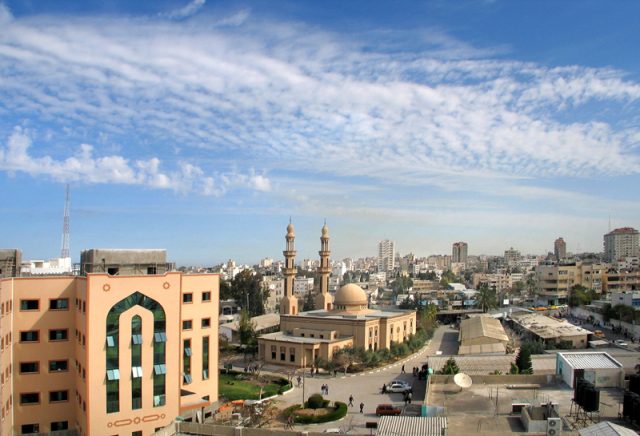
Instagram Provides a View of GazaIn June 2007, Israel began a strict land, sea and air blockade of Gaza. Nearly two million people live locked inside, the borders rigorously controlled. The movement of goods and humans are harshly restricted, and for as much as 72 percent of the population, food supplies are uncertain. 41 percent are unemployed. Hospitals must rely on generators to maintain life-saving equipment, and their stock of medicine dwindles dangerously. Drinking water is in danger of running out if the highly-taxed desalinization plants break down.

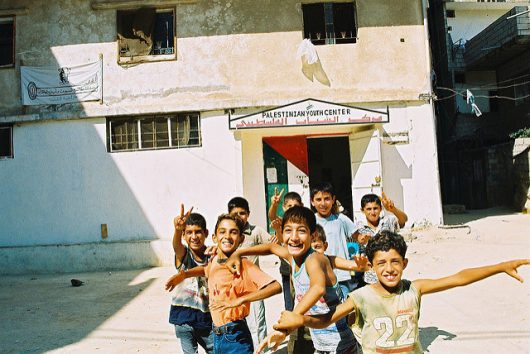
Through the camera lenses of two Palestinian women, Instagram provides a view of Gaza that few outsiders are allowed to see. Though forbidden to leave Gaza, Kholoud Nassar and Fatma Mosabah are Instagram celebrities by showing the world there is more to Gaza than the war. Each woman has over 100,000 Instagram followers. Through images captured by Nassar and Mosabah on their cell phones, Instagram provides a view of Gaza to those who live outside its restrictive borders. The people of Gaza, locked inside a land mass the approximate size of Philadelphia, recognize Nassar and Mosabah several times a day,

Israel guards Gaza’s borders to the east and north by Israel, Egypt to the south and the Mediterranean Sea to the west. Gazans must obtain permission to leave the area. Neither Nassar nor Mosabah has left Gaza in over 10 years. Also, Israel denies tourists permission to visit Gaza. The rest of the world can only imagine what life is like inside the heavily guarded strip. Since 2008, three wars have played out between Hamas and Israel. For most, the mention of Gaza conjures visions of devastation, poverty and suffering.

Although Gazans receive just a short period of electricity each day, social media sites are remarkably popular. Palestinian Social Media Club president Ali Bkheet calculates that approximately 50 percent of Gazans have Facebook accounts. The number utilizing Twitter and Instagram are significantly smaller.

According to Bkheet, the decade-long Israeli blockade makes Gazans particularly enthusiastic to use social media to express themselves and narrate the story of Gaza.

Rather than using text to educate outsiders about life in Gaza, Kholoud Nassar and Fatma Mosabah depict the people and the beauty of their homeland through pictures. Instagram’s focus on photos over text and political debates enables the two women to show a different side of Gaza that exists behind the Israeli-built steel mesh fence.

– Heather Hopkins

Photo: Google
November 9, 2017
https://borgenproject.org/wp-content/uploads/borgen-project-logo.svg 0 0 Borgen Project https://borgenproject.org/wp-content/uploads/borgen-project-logo.svg Borgen Project2017-11-09 07:30:102024-05-29 22:29:09Instagram Provides a View of Gaza Few Outsiders See
Developing Countries, Development, Global Poverty, Technology

Smart Developments Network: Innovations Against Poverty

Innovations Against PovertyEven with active funding partners, some development agencies may fall short if lacking internal infrastructure. While funding is certainly an important aspect of achieving sustainable development goals, it may be just as important to ensure that the strategists and support for development projects are up to date and relevant. SNV: Smart Development Works is a nonprofit that works toward providing such resources through an expansive network of professionals in a variety of different sectors. SNV works with policy experts, local governments, private business and institutes of higher learning to provide lasting differences in extremely poor communities.
SNV was founded in the Netherlands in the mid-’60s and has since established itself in Asia, Africa and Latin America. Expertise in sectors relating to agriculture, energy, water, sanitation and health have helped solve problems locally and provide sustainable solutions to poverty. SNV is funded by the Swedish International Development Agency and managed in partnership with BoP Innovation Center and Inclusive Business Sweden.

SNV has several projects on the ground and one in particular worth noting. Innovations Against Poverty is working in the private sector to develop products and services that can aid in fighting global poverty. This particular mission has focused its efforts on younger demographics as well as women in order to empower groups to shift gender and age paradigms. Companies can apply for the Innovations Against Poverty program to get funding that incentivizes innovation, entrepreneurship and consumption of goods and services in their communities.

Innovations Against Poverty was created with the idea that the private sector is a powerful mechanism for creating jobs and increasing incomes while also providing necessary goods and services to a community. Low-income markets in impoverished communities contain business opportunities that can be sustainably exploited with adequate startup funds and resources. Innovations Against Poverty exists to stimulate development where it otherwise would not exist, with financial support ranging from $60,000 to $200,000. Innovations Against Poverty gains a non-reimbursable capital return and provides advisory support for its investors. This support includes training and coaching from international experts. The program also narrows its support to cases that are not seen as “risk free”, thereby investing in businesses that may not receive support in most cases.

Innovations Against Poverty has registered over 1300 companies since its inception and is expected to grow. These innovative solution investments have primarily been made in Cambodia, Ethiopia, Uganda, and Zambia, with a focus in the agriculture and energy sectors. With continued success, Innovations Against Poverty can foster development in more countries all over the world.

– Casey Hess

Photo: Flickr

November 3, 2017
https://borgenproject.org/wp-content/uploads/borgen-project-logo.svg 0 0 Borgen Project https://borgenproject.org/wp-content/uploads/borgen-project-logo.svg Borgen Project2017-11-03 01:30:292024-05-29 22:28:03Smart Developments Network: Innovations Against Poverty
Global Poverty

Reducing the Poverty Rate in the Solomon Islands

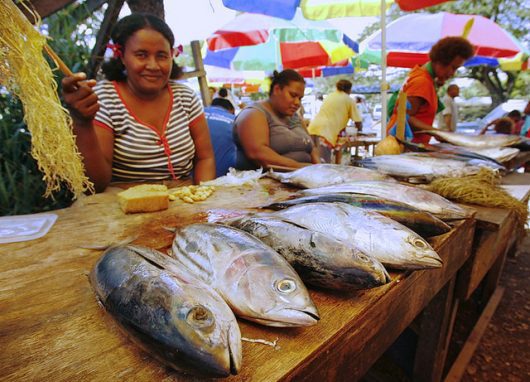
Poverty Rate in the Solomon IslandsIn 1568, Spanish explorer Álvaro de Mendaña became the first European to visit the 992-island archipelago known today as the Solomon Islands. He named the islands after the wealthy and wise biblical king of Israel, inspired, as legend goes, by a belief that their cerulean seas and white-sand shores guarded untold riches. That assumption was largely mistaken, as seen in the poverty rate in the Solomon Islands today.
 

Exploring the Poverty Rate in the Solomon Islands


Although modern tourism has added to the Islands’ economic portfolio, these profits are still few and far between and unevenly distributed. The vast majority of wealth is concentrated in the capital city, Honiara, in which 85 percent of the population is in the Islands’ highest wealth quintile.

According to the Asian Development Bank, in 2013, 12.7 percent of Solomon Islanders lived below the national poverty line. Nutrition-wise, they fared better: only 4.4 percent lived below the food poverty line. However, a mere 35.1 percent had access to electricity.

Technological developments and investment continue to play a vital role in reducing poverty in the Solomon Islands. In April 2017, the World Bank reported that the Green Climate Fund has approved $86 million toward the Tina River Hydropower Project, an effort to reduce reliance on imported fuel for electricity generation. This investment accompanies the $15 million provided by the International Renewable Energy Agency/Abu Dhabi Fund for Development (IRENA/ADFD).

The Solomon Islands’ electricity retail tariffs are currently among the highest in the world, at $0.65 per kilowatt-hour. Given that the Islands generate 97 percent of their electricity from diesel fuel and only 12 percent of homes are currently connected to grid power, this project stands to reduce the burden on working families and illuminate the islands like never before.

And, with electricity, the Islands should see an economic boost. The Asian Development Bank notes that tourism is a largely untapped market with great potential for development. Cheaper and more abundant energy is good for more than just powering residential areas: it can also lay groundwork for the sort of 24-hour “City of Light” that modern tourism creates and feeds on. With a stronger, cheaper energy grid in place, private investment will follow.

New technology and investments like these, guided by sound and prescient public policy, will be crucial to reducing the poverty rate in the Solomon Islands and materializing those mythical riches dreamed of since the days of de Mendaña.

– Chuck Hasenauer

Photo: Flickr

September 26, 2017
https://borgenproject.org/wp-content/uploads/borgen-project-logo.svg 0 0 Borgen Project https://borgenproject.org/wp-content/uploads/borgen-project-logo.svg Borgen Project2017-09-26 07:30:332024-05-29 22:26:50Reducing the Poverty Rate in the Solomon Islands
Technology, United Nations

How Poverty Is Reduced Through Basic Technology

How Is Poverty ReducedMost modern technology is marketed towards the world’s wealthy, but that should not inhibit its potential to help the world’s poor. As prices fall and production increases, affordable and basic technology may be the solution for eradicating global poverty.

How is poverty reduced through basic technology? First and foremost, by understanding the realistic and productive uses for technology in a community and ensuring that it is relevant.

Too often there are stories of computers collecting dust in African classrooms, or new smartphone apps that can help impoverished people find work — in places where smartphones are unattainable. Despite the vast amount of information on the internet, it is hardly relevant to a rural family in a developing country and will rarely help them escape poverty. In reality, the technology that will help end poverty is more basic.

The United Nations is at the forefront of this vision, with the International Institute for Communication and Development (IICD) working towards the global spreading of information and communications technology (ICT). Founded in 1996, the IICD has come a long way in understanding the pragmatic strategy needed for implementing modern technology in developing countries. The IICD has learned that “it is not the technology itself that makes the difference but rather the people who own it and apply it.” Therefore, helping people get the most out of ICT is now as equally important to the organization’s mission as introducing it.

The IICD works to apply ICT to health, economic and education sectors in different communities around the world. It’s main focus is in the context of helping the U.N. meet its Millennium Development Goals — an effort that the IICD has been at the center of. In short, the IICD works to instigate large-scale social change through low-tech, relevant technology.

Other organizations, such as Kopernik, work on a smaller scale to improve the lives of many through simple technology. Kopernik connects poor, rural families with basic, life-altering technologies that not only save lives, but also save money and time. These simple technologies include water filters, fuel-efficient stoves and solar lights.

Technologies such as solar lights are affordable and sustainable, and their usage is linked to positive behavioral changes and higher household productivity. Investing and distributing this basic technology should be a major priority, for it is fundamental to increasing human development and reducing poverty.

It is not to say that computers and the internet are not infinitely useful and powerful, but we should keep in mind that the internet won’t help a child if they only have access to contaminated water. So, perhaps the question of how to eliminate poverty has a simple answer: distribute relevant, basic technology.

– Catherine Fredette

Photo: Google

September 26, 2017
https://borgenproject.org/wp-content/uploads/borgen-project-logo.svg 0 0 Kim Thelwell https://borgenproject.org/wp-content/uploads/borgen-project-logo.svg Kim Thelwell2017-09-26 07:30:082020-07-16 21:08:34How Poverty Is Reduced Through Basic Technology
Global Poverty, Technology

Smart Cities in Nigeria to Help the Country Stay Connected

Smart Cities in NigeriaThe presence of cell phones with “smart” technology is something citizens of the United States and other developed countries often take for granted. This is easy to do in some places because it has become so incorporated into the economy. A new push for smart cities in Nigeria aims to do the same for the developing world.
Recently, the Federal Government of Nigeria decided to embrace the idea of smart technology and incorporate it into Nigeria’s cities, hence the smart cities initiative. This initiative aims to implement technology with internet capability throughout as much of Nigerian city life as possible, in order to connect everyone’s devices to the extent similar to a country like the United States.

This will be accomplished through a partnership with Huawei, a global technology company with over 180,000 employees.  The company’s goal is stated to be to build a “better-connected world.”

In 2016, there were 75 million smart phone users in Africa, but this number is expected to reach 512 million by 2018.  Therefore, the Ministry of Communications in Nigeria has decided to launch the Smart City initiative in order to involve state and local governments in the push for smart cities.

Mr. Tank Li, the managing director of Huawei Technologies Nigeria Limited, states that the “Nigerian government has realized the potential of its digital economy.  Unlocking the dividends of digital economy becomes imperative in the face of dwindling oil revenue…infrastructural deficit, high unemployment rate, harsh business environment and corruption amongst others.”

The idea of a digital economy is growing in importance in today’s world, and it is something Nigeria seeks to embrace with its smart cities initiative. Smart cities in Nigeria will hopefully turn Nigeria’s economy in a sustainable positive direction, creating opportunity and efficiency in the next ten years, potentially adding up to $88 billion to the GDP in Nigeria and more than three million jobs.

Germany has stated a willingness to assist and partner with Nigeria as the smart cities initiative develops.  The German ambassador to Nigeria stated that Germany is ready to partner with Nigeria from the debate stage to the implementation level.

“We project in the near future a digital economy that will bring about enormous changes in society,” said Li.  “This fourth industrial revolution is going to impact people’s lives in unimaginable ways and this will happen through the convergence of the cyber and physical worlds.  The implementation of smart cities in Nigeria is a way for Nigeria to keep up with the ever-changing digital world.”

– Ellen Ray

Photo: Google

September 6, 2017
https://borgenproject.org/wp-content/uploads/borgen-project-logo.svg 0 0 Borgen Project https://borgenproject.org/wp-content/uploads/borgen-project-logo.svg Borgen Project2017-09-06 01:30:452024-05-28 00:16:08Smart Cities in Nigeria to Help the Country Stay Connected
Development, Global Poverty, Technology

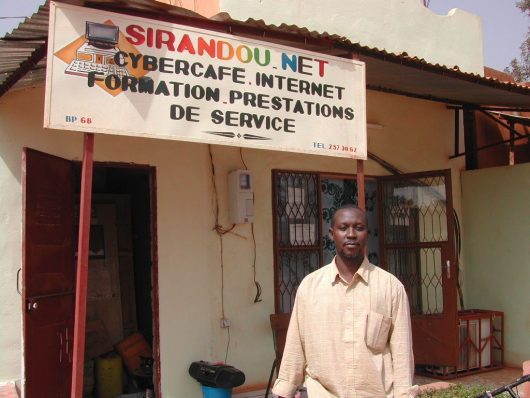
The Use of Technology in Africa

Use of Technology in AfricaTechnology is developed to make life easier and more efficient. The use of technology in Africa has proliferated inside the classroom and throughout rural villages for developmental purposes. However, large corporations have started to view Africa as an open market, and now new technological devices are being used throughout the continent to solve some of the world’s greatest obstacles, such as world hunger.
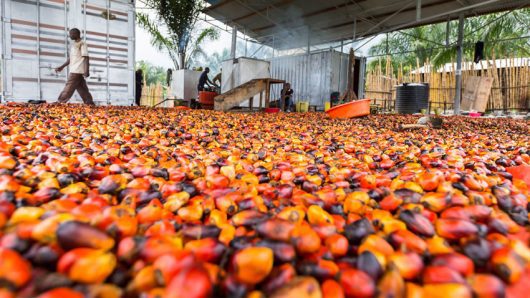
Previously, the majority of African farmers used traditional farming styles to produce crops each season. Each farmer’s products were traded between local tribes or at regional markets, so expensive tools or a large farm was unnecessary. As a small percentage of farms grew, some took advantage of the technology available. African entrepreneurs are now interested in how farmers work and how they can help improve yields.

According to the Food and Agriculture Organization of the United Nations, the world’s population will grow to 9.1 billion by 2050. In order to feed that amount of people, global food production must increase by 70 percent.

Africa is projected to house approximately two billion people by 2050, so farm productivity must accelerate at an even faster rate than the global average to avoid continued mass hunger. Africa has suffered from continued famine and drought for decades at current population rates. With more mouths to feed, the consequences will be dire.

Farming technology will become increasingly important not only to Africa, but to the world and humanity itself.

Aerial images from satellites or drones, soil sensors, weather forecasts and cameras make it possible to manage and monitor crop growth. Automated systems provide early warnings if there are deviations from normal growth or other factors, giving the farmer time to plan and adjust.

Zenvus, a Nigerian precision farming startup, measures and analyzes soil data. Soil data includes temperature, nutrients and vegetative health. These aspects help farmers apply the right fertilizer and the perfect amount of irrigation to their farms.

The three largest tech companies on the ground that are increasing the use of technology in Africa are IBM, Microsoft and SalesForce. IBM realizes financial inclusion is the largest challenge within Africa, since approximately 80 percent of the population has no access to financial services. Microsoft developed 4Afrika, which focuses on instilling the knowledge of technology into the people, increasing access, building skills and creating the ability to eventually develop technology within Africa. SalesForce focuses on micro-financing for social enterprises and small rural farmers, among other projects.

Whether used as a tool for learning, a window to knowledge or a portal to share thoughts, the use of technology in Africa has drastically risen in the last decade. Precision farming methods have improved farm productivity and reduced input waste by using analytics to facilitate data-driven farming practices for small-scale farmers. However, much technology, investment, creative thinking and science is needed to feed the population of 2050. Technology, knowledge and innovation should be praised and rewarded in any country.

– Danielle Preskitt

September 5, 2017
https://borgenproject.org/wp-content/uploads/borgen-project-logo.svg 0 0 Borgen Project https://borgenproject.org/wp-content/uploads/borgen-project-logo.svg Borgen Project2017-09-05 07:30:262020-07-02 11:25:56The Use of Technology in Africa
Global Poverty, Technology

Using Technology to Collect Poverty Data

Collect Poverty DataIn order to provide an impoverished area with the necessary aid, extensive and detailed data needs to be collected. Data can identify specific regions in poverty along with the types and causes of poverty in those vicinities. Yet, traditional pen and paper data collection is time consuming and error prone. Using technologies such as mobile phones and tablets as well as developing new information-collecting technology is a way to collect poverty data that can solve the glitches data collection has suffered in the past.
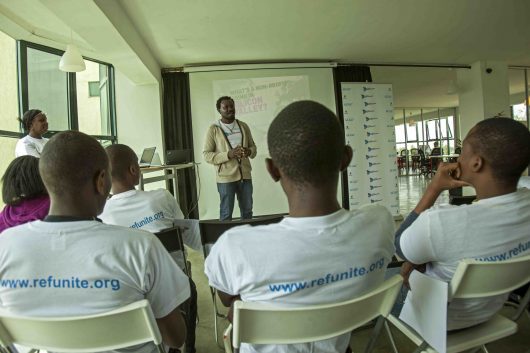
In the past, enumerators, or data collectors, would travel house to house and conduct paper surveys in order to acquire information on those living in poverty. These answers would then be manually transferred onto a computer.

Now, enumerators are using tablets that send survey answers to a centralized system. The tablets also have a GPS system that tracks the enumerators’ processes and makes sure they are in the right area. The tablets also allows for enumerators to record video interviews. This provides a visual context for the living conditions in certain impoverished areas.

Mobile phones are another great resource for data collecting. The World Bank’s Listening to Africa initiative uses cellphones to send out surveys as well as to monitor crises. The initiative plans to pass out phones and solar chargers to all respondents who don’t already own them. Mobile surveys provide a cheap way to gather frequent data from a large amount of people. Crises such as famines and natural disasters can be reported and monitored in real time as well by calling those in affected areas.

New information gathering technology is also being developed to make data collecting easier. Satellite imagery is being used to measure how many people live in poverty in certain areas and assess living conditions of these populations. Likewise, Smart Survey Boxes are being installed in households to automatically monitor power outages and energy quality in areas like Tajikistan.

With extensive data that’s up to date, the causes of and solutions to poverty can be better understood. Using technology to collect poverty data may be the solution to providing better aid to the world’s poor.

– Hannah Kaiser

Photo: Flickr

August 23, 2017
https://borgenproject.org/wp-content/uploads/borgen-project-logo.svg 0 0 Borgen Project https://borgenproject.org/wp-content/uploads/borgen-project-logo.svg Borgen Project2017-08-23 07:30:532020-06-18 11:24:31Using Technology to Collect Poverty Data
Aid, Developing Countries, Global Poverty, Technology

3-D-Printed Prosthetic Limbs

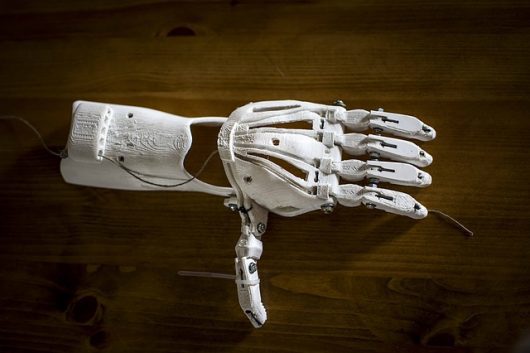
3-D-Printed Prosthetic LimbsCompanies have started using 3-D printing technologies to create prosthetic limbs for amputees in developing and war-torn countries. The loss or congenital absence of limbs is prevalent in many third-world nations. Reasons for this, according to The Guardian, include war, disease and random accidents.
Amputations are an especially heavy burden in cultures based around agriculture. An inability to farm leads to causes families to provide support for amputees, a heavy burden for those already poverty-stricken.

Typical prosthetics are incredibly expensive for citizens. Many of them can run up to thousands of pounds, according to The Guardian. 3-D-printed prosthetic limbs, however, are much cheaper. In fact, the cost of acquiring one is sometimes as little as 40 pounds.

Regular prosthetics also take a significant amount of time to make. The Guardian estimates that the process of measuring a prosthetic for the right fit, building a mold and getting amputees used to prosthetic can take up to a week.

However, turnaround times for the 3-D-printed prosthetic limbs streamlines this process. TRT World explains how scanners can take an amputee’s measurements in minutes, reducing the construction of 3-D limbs to several hours.

3-D-printed prosthetic limbs are also convenient for child amputees because they are still growing. According to TRT World, prosthetic limbs have to accommodate for children getting taller and gaining and losing weight. 3-D models can be sized and adjusted for the patients’ particular necessities.

Another appeal specifically towards children is the variety of appearances that 3-D-printed limbs can take. The limbs often come in many different colors and designs. For example, the Cyborg Beast prosthetic hand designed by Jorge Zuniga is created specifically to look like a robot for the enjoyment of children.

However, 3-D-printed prosthetic limbs are not without their faults. According to The Guardian, the prosthetics are often too heavy to maneuver, and they can melt in high temperatures.

Regardless, 3-D printing technology is improving. Companies Po and Thalmic Labs, for example, have created the MyPo, which uses 3-D-printed prosthetic limbs and muscle and nerve-reading technology to simulate the movement of natural limbs.

In spite of their shortcomings, the technological advances show that 3-D-printed prosthetic limbs are worth the investment of time and resources.

– Cortney Rowe

Photo: Pixabay

August 22, 2017
https://borgenproject.org/wp-content/uploads/borgen-project-logo.svg 0 0 Borgen Project https://borgenproject.org/wp-content/uploads/borgen-project-logo.svg Borgen Project2017-08-22 07:30:502024-06-07 05:07:433-D-Printed Prosthetic Limbs
Aid, Global Poverty, Refugees, Technology

New Apps That Are Helping Refugees

Helping RefugeesToday, web and cellphone apps are being used by billions of people around the world. With so many applications being free there is an increased number of people who can access them. Today new apps are being created in order to help those who are in distress, such as refugees. Here is a list of just three new apps of this year that are helping refugees translate, gain access to information and connect with their families.
Tarjimly is a new translator app that connects volunteer translators to people, such as refugees or immigrants, who need translations in real-time for medical or legal purposes. Tarjimly acts as a Facebook messenger bot connecting an immigrant or refugee to a translator in an anonymous conversation. This app just recently launched in February of this year and already has more than 2,000 translators signed up.

Arrived is another app that is helping refugees gain quick access to information. Called “the hub of immigrant information,” this app is free and is available on Apple and Android phones. One of the things the app provides is the latest news about immigration. This news section also provides analysis of legislative proposals and actions in Washington. Arrived also provides information about deportation processes, English lessons and a study guide for citizenship tests. There is a section of answered questions that are most common that have been researched and a map to show law clinics and sanctuary cities in the U.S.

RedadAlertas is a web app that has not been released yet but will be arriving soon. Created by Celso Mireles who was previously an undocumented immigrant, this app delivers alerts about what is happening in different areas. Notifications about areas that have ICE raids, checkpoints or any type of confrontation will be sent out to its users. The app will work through crowdsourcing, which relies on people at scenes of an area to verify and provide details about what is happening. RedadAlertas hopes to help vulnerable immigrants in risk areas while also allowing legal aid groups, community organizations or activists to help immigrants.

These apps are helping refugees and immigrants around the world. These apps are versatile and all free so that they can be accessible to all users. By providing access to information, translators and up to date notifications these apps are allowing refugees and immigrants to get the help they may need.

– Deanna Wetmore
Photo: Flickr

August 21, 2017
https://borgenproject.org/wp-content/uploads/borgen-project-logo.svg 0 0 Borgen Project https://borgenproject.org/wp-content/uploads/borgen-project-logo.svg Borgen Project2017-08-21 07:30:182024-12-13 17:58:26New Apps That Are Helping Refugees
Developing Countries, Development, Education, Global Poverty

Developing Countries Are Changing Education

Changing EducationThere are many organizations and companies that are investing in developing countries to better the lives of people that live in them and to also decrease the global rates of poverty and hunger. With all of the focus on helping developing countries, new advancements in these nations often slip under the radar.

One such achievement is the way developing countries are changing education. Experts are now looking at developing countries’ new initiatives and technology and investigating how these advancements can be applied to schools in developed countries.

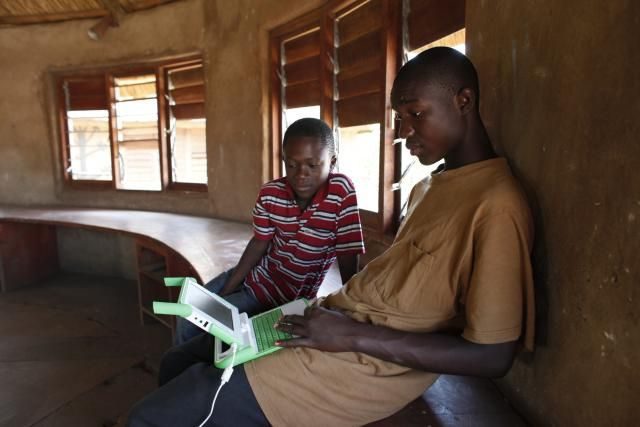
There are several ways schools in developing countries are changing education. One way is the use of technology in classrooms. With tech companies such as Dell, which has recently created the initiative Youth Learning that gives students access to laptops for their studies, students in developing countries are learning and using more technology.

William Altman, who is a tech industry analyst at CB insights, says that schools in developing countries are more likely to use online tools in order to stay up to date. Schools in developed countries tend to continue to use traditional techniques because they have enough funding to do so.

For students in developing countries, technology is creating new ways to learn while also providing more opportunities. Jamil Salmi, an education economist and coordinator of higher education professionals at World Bank, discusses the importance of technology for developing countries in an interview for Voices.

He says, “Today, technological innovations are revolutionizing again the capacity to store, transmit, access and use information.” Salmi goes on to say that low cost for technology access is another reason why using technology is beneficial for students.

Another difference in schools from developing countries compared to those in developed countries is the teaching techniques themselves. Since there are such large student populations, some schools in developing countries had to develop ways to teach larger class sizes.

In 2015, the United Nations’ World Population Prospects reported that African countries such as Niger, Uganda and Chad account for all top 10 positions in world’s youngest populations. The result of a large number of students is to find solutions by trying new things and thus finding new ways to teach students.

Educators are now looking at how developing countries are changing education to see what is next for schools. Schools in developed countries are seeing what ways technology can be used in schools and what techniques work to teach the most students. It seems that the more new techniques that schools in developing countries try, the more advanced school systems get.

– Deanna Wetmore

Photo: Flickr

August 16, 2017
https://borgenproject.org/wp-content/uploads/borgen-project-logo.svg 0 0 Borgen Project https://borgenproject.org/wp-content/uploads/borgen-project-logo.svg Borgen Project2017-08-16 01:30:312024-06-05 04:52:28Developing Countries Are Changing Education
Page 17 of 29«‹1516171819›»

Get Smarter

  • Global Poverty 101
  • Global Poverty… The Good News
  • Global Poverty & U.S. Jobs
  • Global Poverty and National Security
  • Innovative Solutions to Poverty
  • Global Poverty & Aid FAQ’s
Search Search

Take Action

  • Call Congress
  • Email Congress
  • Donate
  • 30 Ways to Help
  • Volunteer Ops
  • Internships
  • Courses & Certificates
  • The Podcast
Borgen Project

“The Borgen Project is an incredible nonprofit organization that is addressing poverty and hunger and working towards ending them.”

-The Huffington Post

Inside The Borgen Project

  • Contact
  • About
  • Financials
  • President
  • Board of Directors
  • Board of Advisors

International Links

  • UK Email Parliament
  • UK Donate
  • Canada Email Parliament

Get Smarter

  • Global Poverty 101
  • Global Poverty… The Good News
  • Global Poverty & U.S. Jobs
  • Global Poverty and National Security
  • Innovative Solutions to Poverty
  • Global Poverty & Aid FAQ’s

Ways to Help

  • Call Congress
  • Email Congress
  • Donate
  • 30 Ways to Help
  • Volunteer Ops
  • Internships
  • Courses & Certificates
  • The Podcast
Scroll to top Scroll to top Scroll to top