• Link to X
  • Link to Facebook
  • Link to Instagram
  • Link to TikTok
  • Link to Youtube
  • About
    • About Us
      • President
      • Board of Directors
      • Board of Advisors
      • Financials
      • Our Methodology
      • Success Tracker
      • Contact
  • Act Now
    • 30 Ways to Help
      • Email Congress
      • Call Congress
      • Volunteer
      • Courses & Certificates
      • Be a Donor
    • Internships
      • In-Office Internships
      • Remote Internships
    • Legislation
      • Politics 101
  • The Blog
  • The Podcast
  • Magazine
  • Donate
  • Click to open the search input field Click to open the search input field Search
  • Menu Menu

Tag Archive for: Technology

Posts

Development, Global Poverty, Technology

Internet in Africa: More Than One-Quarter Now Connected

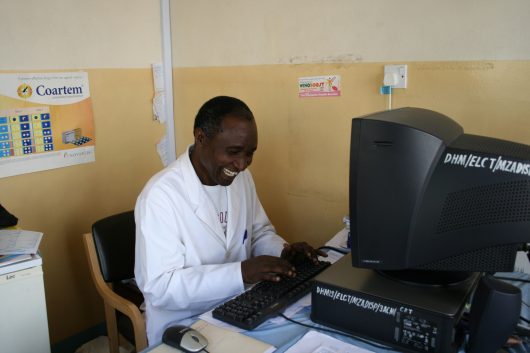
Africa computer
More than one-quarter of Africa’s population, in excess of 341 million people, had access to the internet in 2016. This amazing advancement highlights and outlines the support for Africa’s industrialization, including improving its economy, education and attempt to decrease poverty.

A report released by the Internet Society (ISOC) during the Africa Regional Internet and Development Dialogue stated that African nations have been given the privilege to connect their people to incredibly useful resources, such as educational opportunities and healthcare.

ISOC is dedicated to ensuring development, evolution and use of the internet. It collaborates with other global community chapters and members to help promote technologies and keep the internet safe and secure.

The report entitled “The Internet for Education in Africa — Helping Policymakers to Meet the Global Education Goals” explains the significance of this improvement and how policymakers should consider the advancement in their educational systems.

“This represents a significant opportunity to use the Internet to provide education and learning opportunities,” the report said. The internet in Africa has begun to grow, and this report shows no signs of it slowing down.

On average, 49.6 percent of the world is connected to the internet. Now, 27.7 percent of Africa is on the internet, showing that the continent is taking the right steps to help connect with the rest of the world.

What helped this increase? Besides the international interest in Africa, mobile broadband and developments of submarine cables have allowed connectivity to expand and provide educational opportunities for thousands of children living in impoverished nations.

This advancement would not only advance education in Africa but also allow for a more competitive edge in Africa’s global economy.

“A skilled workforce that can use Information and Communications Technologies (ICT) effectively to solve Africa’s problems will also determine Africa’s competitiveness in the global economy,” explains Dawit Bekele, Africa Regional Bureau Director for the Internet Society. “And policymakers have a critical role to play in creating the necessary ecosystem for integrating ICT in education.”

The report gives a framework of the advantages of the internet in Africa, such as getting rid of certain economic and social barriers to education (geography, race, gender and disabilities) and reaching a broader audience to educate students. This report highlights the possibilities that the internet in Africa can have on the continent and the world.

– Mary Waller

Photo: Flickr
May 27, 2017
https://borgenproject.org/wp-content/uploads/borgen-project-logo.svg 0 0 Borgen Project https://borgenproject.org/wp-content/uploads/borgen-project-logo.svg Borgen Project2017-05-27 01:30:592024-12-13 17:58:01Internet in Africa: More Than One-Quarter Now Connected
Developing Countries, Global Poverty, Technology

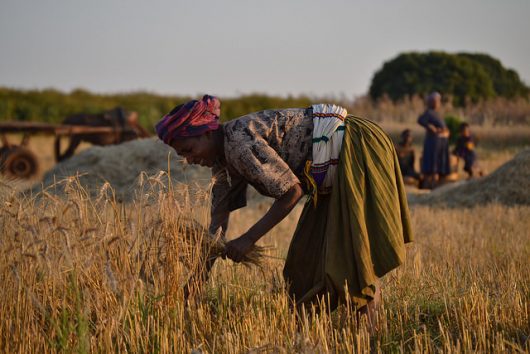
New Tech Improves Crop Yields for Farmers in Developing Countries


In the last century, worldwide water utilization, most of which is used in agriculture, has surpassed population growth, and many developing countries are facing severe water scarcity. While water usage goes up, climate change brings more droughts and extreme weather, reducing the water available for agriculture. That’s why the Food and Agriculture Organization of the United Nations (FAO) has turned to water accounting, a process that measures the efficiency of water use in agriculture and helps farmers in developing countries improve their crop yields.

FAO recently launched WaPOR, which stands for Water Productivity Open-access portal. WaPOR, as its name suggests, is an open-access database that uses satellite data to track water usage. Part of a $10 million project funded by the government of the Netherlands, WaPOR will evaluate water usage in Africa and the Near East, focusing on countries facing water scarcity.

WaPOR measures evapotranspiration, a phase in the water cycle which consists partly of water that evaporates into the atmosphere via plants and foliage. Evapotranspiration provides a measure of the water that plants and crops consume during a growing season and helps farmers understand the efficiency of their water use based on their crop yields. In brief, WaPOR monitors how effective current irrigation schemes are and offers cost-effective solutions for farmers in developing countries.

The program uses satellite data show how many crops farmers produce per cubic meter of water used. Using WaPOR’s data, agricultural extension agents help farmers in developing countries create sustainable ways to grow more reliable crop yields. FAO updates WaPOR’s water maps every one to 10 days.

The International Water Management Institute, a nonprofit that focuses on sustainable uses of water in agriculture, and the IHE Deft Institute for water Education, the largest international school for water education in the world, will help developing countries use WaPOR by boosting capacity in those areas.

WaPOR allows smallholder farmers to have access to critical information that they didn’t have before. This new technology will help farmers improve water availability and protect them from climate change.

– Rachel Cooper

Photo: Flickr

May 12, 2017
https://borgenproject.org/wp-content/uploads/borgen-project-logo.svg 0 0 Borgen Project https://borgenproject.org/wp-content/uploads/borgen-project-logo.svg Borgen Project2017-05-12 01:30:562024-05-28 00:00:13New Tech Improves Crop Yields for Farmers in Developing Countries
Education, Global Poverty, Technology

Global Education and Skills Forum: Technology in Global Education

Technology in Global Education
The fifth annual Global Education and Skills Forum (GESF) 2017 held in Dubai on March 18 and 19 addressed the question of how to create ‘real’ global citizens. The forum is a Varkey Foundation initiative where leading figures from public, private and social sectors around the world convene to discuss the future of education.

A number of discussions centered around educational advancements in the digital age and how technology in global education could affect students.

In his speech on March 18, the Organization for Economic Co-operation and Development (OECD) education and skills director, Andreas Schleicher, emphasized the need for new and creative ways to prepare future generations to become global citizens.

“The more diverse our children’s interests and experiences, the more they are encouraged to work with their peers to address problems in new ways, the better prepared they will be for the new digital age,” he explained.

Schleicher listed the most pertinent areas for growth as student inclusion, curriculum, teacher quality, school organization and accountability.

“We are very good at ranking human talent but not very good at developing it,” he said. “We need to focus on all students, all the time and move away from constantly testing to find the best. We should be developing everyone, not looking for those already doing well.”

Schleicher went on to say that while today’s digital age can be prosperous for those who know how to capitalize on it, those without the right education are more susceptible to vulnerable working situations.

Speaking at the GESF to Xinhua in an exclusive interview, Ms. Yang Boya, a former fellow at Harvard SEED for Social Innovation, headed multiple master classes at the forum.

She asserted that the spread of computer devices among children globally bears both positive and negative consequences. While promotion of technology in global education allows students to recognize technological progress, Yang emphasized the need for human interactions within the classroom.

“An IT device can never replace the human teacher, but support his work,” she declared in an interview with Xinhua.

GESF concluded with what is regarded as the Nobel Prize for teaching, the third annual Global Teacher Prize 2017. Maggie MacDonnell, an educator residing and teaching in Salluit, an Inuit village deep in the Canadian Arctic, was awarded the title and one million dollars.

– Casie Wilson


April 20, 2017
https://borgenproject.org/wp-content/uploads/borgen-project-logo.svg 0 0 Borgen Project https://borgenproject.org/wp-content/uploads/borgen-project-logo.svg Borgen Project2017-04-20 01:30:482024-12-13 17:57:43Global Education and Skills Forum: Technology in Global Education
Development, Global Poverty, Technology

Top 5 Anti-Poverty Tech Solutions


The latest technological innovations have the ability to make a powerful impact on reducing poverty across the globe. However, finding a way to support and develop the most promising ideas remains a challenge. To that end, The Tech Museum of Innovation in San Jose, California holds an annual awards program to spread the word about the best ideas in anti-poverty tech solutions. Here are five of last year’s Tech Awards Laureates:

Top 5 Anti-Poverty Tech Solutions

    1.  Equal Access International: This organization founded and run by CEO Ronni Goldfarb uses the power of the media to tell human stories about those in poverty, raising awareness and shining a light on those who would otherwise be ignored. Last year, this organization partnered with Nepal’s United Nations International Children’s Emergency Fund (UNICEF) to produce the radio show “Chatting with My Best Friend.” This show combines entertainment with education, teaching young people how to prevent becoming infected with HIV/AIDS. “Our programs help people believe in themselves and gain the confidence and skills they need to improve their lives no matter what their circumstances,” Goldfarb said.
    2.  International Development Enterprises-India (IDEI): IDEI designed a brilliant solution to tackle India’s lack of access to underground water. By creating an easy-to-use and cheap man-powered water pump resembling a tiered treadmill, farmers in India are able to extend their annual growing season with their own two feet. “We take what we call the logjam approach,” Shveta Bakshki, IDEI Vice President stated. “We identify that one, critical obstruction to remove so that good things start happening.”
    3.  Design Revolution (D-Rev): Krista Donaldson’s organization is saving the lives of infants using the power of light. Her groundbreaking blueprint for an enduring yet inexpensive lamp, called Brilliance, cures jaundice in babies by bathing them in a strong blue light. One of the most accomplished anti-poverty tech solutions to date, D-Rev’s phototherapy breakthrough has saved more than 175,000 infant lives across 41 countries. “We believe that regardless of your income, you deserve access to high-quality medical devices,” Donaldson stated.
    4.  Souktel: Hundreds of smartphone apps have been designed to serve smartphone users, but Souktel found a way to make older flip phones just as smart. Jacob Korenblum’s startup uses basic text messaging to link employers with candidates in regions where traditional communication is difficult, leading to job growth and greater economic gains. Derived from the Arabic words for market and telephone, Souktel turns text messages into miniature online job boards. “People might be from different backgrounds, but they are united in a common purpose for things like creating better healthcare and education,” Korenblum said.
    5.  Angaza: Lesley Marincola’s idea to bring solar energy to those who cannot afford electricity was revolutionary for its outside-the-box thinking. Instead of forcing people to pay up front for solar lamps, Angaza accepts micro-payments over time for energy while offering immediate access, similar to purchasing minutes on a cell phone. Once the purchase price of the device is reached, the lamp becomes the property of the user. Angaza’s tech not only improves individual lives, it bolsters the local economy as well. As Marincola told The Tech Awards, “It gets super exciting when you think about putting all of these low-income consumers on the map. We have big plans.”

    As Tech Awards Laureates, each of the above designers of anti-poverty tech solutions has been awarded $50,000 from PATH, a nonprofit for global health, to further develop their life-changing innovative ideas.

    – Dan Krajewski

    Photo: Flickr

April 20, 2017
https://borgenproject.org/wp-content/uploads/borgen-project-logo.svg 0 0 Borgen Project https://borgenproject.org/wp-content/uploads/borgen-project-logo.svg Borgen Project2017-04-20 01:30:092024-12-13 17:57:53Top 5 Anti-Poverty Tech Solutions
Global Poverty, Malaria, Technology

Malaria in Zanzibar: Conquering Disease with Technology


Among other diseases endemic to the region, malaria presents a constant danger in sub-Saharan Africa. While the disease continues to spread, new methods and technology are utilized to contain and treat it. Habiba Suleiman Sefu, a malaria surveillance officer, stands on the front lines of this fight on the archipelago of Zanzibar, off the coast of Tanzania.

Malaria is by far the deadliest disease known to mankind, killing more than 1,000 children a year. Most victims of the disease live in sub-Saharan Africa, in moist, humid regions where disease-carrying mosquitoes thrive. While the disease is not contagious, it is blood-borne and can spread quickly in areas with poor sanitation and standing water.

Historically, malaria in Zanzibar has been a constant danger, as it is the leading cause of death in mainland Africa. In 2000, malaria accounted for 30 to 50 percent of all hospital admissions and approximately half of all hospital deaths.

Sefu, 29, is an environmental science graduate and works as a malaria surveillance officer in the village of Shikani, in the southwest region of Zanzibar. Habiba tracks and treats malaria on the archipelago using her tablet, mobile phone and motorcycle, all supplied to her by the U.S. President’s Malaria Initiative (PMI).

When a case of malaria is reported at the local clinic in Shikani, Sefu receives an SMS message on her mobile phone. She then visits the family of the patient and tests them for the disease. If it is detected, she distributes medication and encourages affected individuals to go to the hospital.

In addition to treating malaria, Sefu educates families on the disease and makes certain that they are aware of contributing risk factors. She makes sure that families understand the importance of intact mosquito nets, insecticide, and the elimination of standing water, which provides a breeding ground for mosquitoes.

Sefu represents a new generation of disease control, utilizing new methods and technology to target malaria at its source and stop outbreaks before they begin. These new methods of malaria identification and treatment have yielded unprecedented results in fighting the disease. In fact, the prevalence of malaria in Zanzibar was reduced from 40 percent in 2005 to less than one percent in 2012. In addition, hospital admissions for malaria decreased to less than five percent in 2012, and no malaria-related deaths have been reported in Zanzibar since 2009.

While malaria has historically been a problem in sub-Saharan Africa, places like Zanzibar are making great strides towards eradicating the disease through the use of new technology and tracking methods. These methods have effectively eliminated malaria in Zanzibar, and with the use of surveillance officers like Sefu, malaria can be similarly eradicated on the African mainland.

– Chasen Turk

Photo: Flickr

April 9, 2017
https://borgenproject.org/wp-content/uploads/borgen-project-logo.svg 0 0 Borgen Project https://borgenproject.org/wp-content/uploads/borgen-project-logo.svg Borgen Project2017-04-09 01:30:082024-12-13 17:57:35Malaria in Zanzibar: Conquering Disease with Technology
Development, Global Poverty, Technology

How Big Thinkers Use Technology to Fight Poverty


Technology has long been considered one of the most useful tools in combating global poverty. New developments continue to show even more promise in this regard. Two prominent thinkers have made recent strides toward finding dramatic new breakthroughs in using technology to fight poverty.

Rob Nail is the CEO and co-founder of Singularity University, a global community created to take on the greatest challenges facing the world today with the use of exponential technologies. Having already worked directly with the government of Uruguay to provide 100 percent of young students with interconnected laptops and tablets, Nail is now looking to the future of education by applying those technologies.

“Imagine five and six-year-old kids learning coding and robotics. What will Uruguay look like 15 years from now?” Nail told Forbes in a January interview. “That can translate into us creating a world of abundance, as we like to call it.” Nail has also worked with existing industrial giants such as Lowe’s and GE in creating technological programs to fight poverty.

Nail is not alone in his quest for using technology to fight poverty. In December, Stanford University launched a dedicated Poverty and Technology Lab. The lab seeks innovative technological solutions to the problem of ongoing global inequality.

The Poverty and Technology lab was announced during December’s Summit on Poverty and Opportunity, a two-day event held on Stanford University’s campus. Attendees included tech juggernauts, such as Facebook founder Mark Zuckerberg and ex-Microsoft CEO Steve Ballmer.

The lab’s founding director Elisabeth Mason told Buzzfeed news that the lab will develop an entirely new field of academic study “that applies the premises and tools of technology to the policies and processes of fighting poverty.” Mason holds extensive experience in fighting poverty as the Senior Advisor at the Stanford Center on Poverty and Inequality. She was awarded the New Yorker of the Year honor by NY1 in 2015.

The Fourth Industrial Revolution, more commonly referred to online as 4IR, is the name for the radical globalization of cyber networks poised to revolutionize the way businesses operate today. It is comprised of three main components: the Industrial Internet of Things, which are machines that collect and act on information, Big Data, which is the mass capturing of data itself, and Digital Infrastructure, which securely connects all the devices.

With their passion for social justice and vision of a future where poverty is nothing more than a historical memory, both Nail and Mason are primed to be major figures in 4IR by using technology to fight poverty.

– Dan Krajewski

Photo: Flickr

March 29, 2017
https://borgenproject.org/wp-content/uploads/borgen-project-logo.svg 0 0 Borgen Project https://borgenproject.org/wp-content/uploads/borgen-project-logo.svg Borgen Project2017-03-29 01:30:302024-12-13 17:56:45How Big Thinkers Use Technology to Fight Poverty
Global Poverty, Technology

IBM Investment to Train African Youth in Technology

IBM is investing $70 million in building digital, cloud, and cognitive IT skills among youth in Africa in order to support a 21st-century workforce. The initiative, “IBM Digital – Nation Africa,” will provide a cloud-based learning platform offering free skills development programs for up to 25 million African youth over the next five years. The IBM investment is part of their global push to equip the next generation with the skills needed for “New Collar” careers, a term used by IBM to describe non-traditional careers that require sought-after skills in cybersecurity, artificial intelligence, data science, cloud and more, rather than a traditional four-year college degree.

The IBM investment will offer programs ranging from basic IT literacy to advanced IT skills development to enable digital competence and sprout innovation in Africa. The platform is geared to raise overall digital literacy, increase the number of developers able to tap into cognitive engines and enable entrepreneurs to grow businesses around new digital solutions.

The program will run through a free, cloud-based online learning environment delivered on IBM Bluemix and will allow users to learn a wide range of skills, from basic IT literacy to highly sought-after advanced IT skills. Users will even have access to career-oriented topics including programming, cybersecurity and data science. The initiative aims to empower African citizens by giving them the educational tools to design, develop and launch their own digital solutions. The program will run in English and is completely free of charge.

In Africa, just 25% of people have a bank account, but 75% have access to a mobile phone. There is no doubt that technology plays a huge part in Africa’s future development, and that with this much-needed technological revolution will come an influx of job opportunities. Programs such as that from the IBM investment will ensure that the youth of Africa are equipped for such opportunities that are quickly arising.

– Mayan Derhy

Photo: Flickr

March 8, 2017
https://borgenproject.org/wp-content/uploads/borgen-project-logo.svg 0 0 Borgen Project https://borgenproject.org/wp-content/uploads/borgen-project-logo.svg Borgen Project2017-03-08 01:30:382024-12-13 17:56:41IBM Investment to Train African Youth in Technology
Developing Countries, Global Poverty, Nonprofit Organizations and NGOs, Technology

Kopernik: Using Technology to Improve the Developing World

Kopernik: Using Technology to Improve the Developing World

Billions of people all over the world lack the technology allowing them access to light, fuel-friendly cooking and clean drinking water. This is why Kopernik, a nonprofit technology company, is working to distribute simple, life-improving technologies to the world’s poorest communities.

The company provides these communities with items such as water filters, solar power lights and cooking stoves. Nicolaus Copernicus is the organization’s namesake since Kopernik is meant to be a catalyst for change and new ways of seeing the world. Kopernik distributes the best technology for the developing world through sourcing, connecting and reinvesting.

Sourcing

Kopernik uses its website to spread awareness about its technology. In response, countries submit proposals for the items they need the most. Then Kopernik publishes projects on the website in order to raise funds.

Connecting

Once the projects are fully funded — usually by donors — Kopernik ships the technology to its local partners. People then buy that technology at an affordable price through those local partners.

Reinvesting

Next, the local partners repay the money from technology sales to Kopernik. This money is then reinvested into new technology. Kopernik also works with local partners to assess the technology’s impact and share feedback with technology producers.

Funding

Kopernik is a nonprofit organization with a for-profit arm. The for-profit part of the organization is a consulting firm that works with technology companies in product development. The profits from the consulting business are then channeled toward the nonprofit operations.

Kopernik receives funding from companies, government development programs and individuals. Its partners also provide in-kind support such as free or discounted services. This keeps the organization’s operating costs low.

Technology

Kopernik is helping women access clean birth supplies and information about safe birthing practices. For example, in the Chittagong district of Bangladesh as well as Laos, the nonprofit provides JANMA clean birth kits to women. These birth kits contain sterile tools to reduce the risk of infection during childbirth.

In Vietnam, the organization has also connected 90 families with hearing-impaired children with affordable hearing aid technology. This makes it possible for children to learn to speak and form a better bond with their families and communities.

Impact

So far, Kopernik has served 396,325 people and distributed 90,359 technologies. It has funded 170 projects and reached 26 countries, among them Japan, Vietnam, Indonesia, Ghana and Nigeria.

According to Patrick Vinck of the Harvard Humanitarian Initiative, “New applications of technologies to humanitarian action may be the most important factor influencing humanitarian effectiveness over the next decade.” In this regard, Kopernik’s emphasis on technology distribution represents great gains for the world’s anti-poverty organizations with only more progress to come.

– Liliana Rehorn

Photo: Flickr

January 31, 2017
https://borgenproject.org/wp-content/uploads/borgen-project-logo.svg 0 0 Borgen Project https://borgenproject.org/wp-content/uploads/borgen-project-logo.svg Borgen Project2017-01-31 01:30:052024-12-13 17:56:34Kopernik: Using Technology to Improve the Developing World
Developing Countries, Global Poverty, Technology, Water

SE200 Community Chlorine Maker: Clean Water in Five Minutes

SE200 Community Chlorine Maker: Clean Water in 5 MinutesClean water is unavailable to many people around the world. According to Water.org, 663 million people do not have access to safe drinking water.

To help remedy this issue, the SE200 Community Chlorine Maker is using electricity and salt to provide clean drinking water to people in need. By producing accurate amounts of chlorine, the battery powered device is able to clean 200 liters of water in five minutes. Chlorine kills an array of microbes and sanitizes water thoroughly. However, chlorine is not always available in remote and impoverished areas.

The Chlorine Maker is simple to use. Water is mixed with salt and poured into a brine bottle. Then the solution is added to the chlorine maker. The device is attached to either a 12V battery or wall plug. After the start button is pushed the liquid begins to bubble. This indicates that electrolysis is occurring. The chemical reaction creates bleach.

Originally this technology was developed by the military but the Mountain Safety Research (MSR) in collaboration with PATH, an international health organization, modified it so anyone can easily use it directly at water sources.

Compared to other chlorine generators, the SE200 Community Chlorine Maker is relatively inexpensive and easy to use. Most importantly, it is able to calculate the correct amount of chlorine needed each time it is used. The SE200 Community Chlorine Maker has been tested in different countries such as Kenya and Ghana. It was officially put on the market in May of this year. It currently costs $200.

MSR and PATH in partnership with World Vision and Operation Blessing want to bring the Chlorine Maker to communities in need of clean water at no cost to them. MSR launched an Indiegogo campaign to raise $50,000 in order to send a minimum of 2,500 devices to communities around the world by the end of 2017. These devices will provide safe drinking water for approximately 500,000 people.

In late November, MSR reached their $50,000 goal and now hopes to reach $60,000. They are currently at $59,500 with 645 backers. With their goals met, the SE200 Community Chlorine Maker will improve the lives of many.

– Karla Umanzor

Photo: Flickr

December 21, 2016
https://borgenproject.org/wp-content/uploads/borgen-project-logo.svg 0 0 Borgen Project https://borgenproject.org/wp-content/uploads/borgen-project-logo.svg Borgen Project2016-12-21 01:30:142024-12-13 17:56:22SE200 Community Chlorine Maker: Clean Water in Five Minutes
Food & Hunger, Food Security, Technology

Evaptainer: How the Science of Sweating Can Increase Food Security

Evaptainer: How the Science of Sweating Can Increase Food SecurityThe founders of Evaptainers have harnessed the science of sweating into a device that could help the 7 million people in the world who have no access to refrigeration. While the typical fridge requires electricity for vapor compression refrigeration, the Evaptainer uses evaporative cooling to keep food cold and extend its shelf life without any electricity.

The Evaptainer brings modern-day technology to an idea that has been around for several millennia. At its most basic level, a refrigerating device that uses evaporative cooling contains an inner chamber that holds food. The outer chamber contains an evaporative medium, such as sand, between the outer and inner containers. Water is poured over the evaporative medium, which cools as it evaporates.

The science is simple. To evaporate, water must absorb heat energy from the environment in order to become hot enough to change its state, either from solid to liquid or liquid to gas. The heat the water draws from its environment, called latent heat, cools the environment from which it draws heat.

In the case of the Evaptainer, this process cools the inner container that holds the food. Evaptainers can cool the 60-liter inner container by up to 35 degrees Fahrenheit, extending the shelf-life of food from around two days to two weeks, in hot weather.

Bishop Sanyal, a MIT professor not affiliated with Evaptainer, told MIT Technology Review that Evaptainers could help increase food security. However, he sees the $25 unit price as posing a possible problem for families’ ability to access the devices. For example, the average family in Morocco makes $60-$100 per month as explained by Sanyal, so paying $25 upfront could be a challenge. Nonetheless, if families are able to make the investment, having an Evaptainer could save them money in the long run.

Another challenge Evaptainer faces is that humid air can evaporate less moisture than dry air. As a result, in past 40 percent humidity, the device cools significantly less than it would in its optimal environment of 30 percent humidity or less.

For now, at least in optimal environments, Evaptainers have the potential to improve the quality of life of those who have no access to electricity or refrigeration and reduce the amount of spoiled food waste. According to the U.N. Food and Agriculture Organization, such progress represents about $310 billion annually in developing countries alone.

– Laura Isaza

Photo: Flickr

November 9, 2016
https://borgenproject.org/wp-content/uploads/borgen-project-logo.svg 0 0 Borgen Project https://borgenproject.org/wp-content/uploads/borgen-project-logo.svg Borgen Project2016-11-09 01:30:072024-12-13 17:55:48Evaptainer: How the Science of Sweating Can Increase Food Security
Page 19 of 29«‹1718192021›»

Get Smarter

  • Global Poverty 101
  • Global Poverty… The Good News
  • Global Poverty & U.S. Jobs
  • Global Poverty and National Security
  • Innovative Solutions to Poverty
  • Global Poverty & Aid FAQ’s
Search Search

Take Action

  • Call Congress
  • Email Congress
  • Donate
  • 30 Ways to Help
  • Volunteer Ops
  • Internships
  • Courses & Certificates
  • The Podcast
Borgen Project

“The Borgen Project is an incredible nonprofit organization that is addressing poverty and hunger and working towards ending them.”

-The Huffington Post

Inside The Borgen Project

  • Contact
  • About
  • Financials
  • President
  • Board of Directors
  • Board of Advisors

International Links

  • UK Email Parliament
  • UK Donate
  • Canada Email Parliament

Get Smarter

  • Global Poverty 101
  • Global Poverty… The Good News
  • Global Poverty & U.S. Jobs
  • Global Poverty and National Security
  • Innovative Solutions to Poverty
  • Global Poverty & Aid FAQ’s

Ways to Help

  • Call Congress
  • Email Congress
  • Donate
  • 30 Ways to Help
  • Volunteer Ops
  • Internships
  • Courses & Certificates
  • The Podcast
Scroll to top Scroll to top Scroll to top