• Link to X
  • Link to Facebook
  • Link to Instagram
  • Link to TikTok
  • Link to Youtube
  • About
    • About Us
      • President
      • Board of Directors
      • Board of Advisors
      • Financials
      • Our Methodology
      • Success Tracker
      • Contact
  • Act Now
    • 30 Ways to Help
      • Email Congress
      • Call Congress
      • Volunteer
      • Courses & Certificates
      • Be a Donor
    • Internships
      • In-Office Internships
      • Remote Internships
    • Legislation
      • Politics 101
  • The Blog
  • The Podcast
  • Magazine
  • Donate
  • Click to open the search input field Click to open the search input field Search
  • Menu Menu

Tag Archive for: Technology

Posts

Development, Education, Global Poverty, Technology

STEM Programs in Kazakhstan Invest in Young Engineers

STEM Programs in Kazakhstan
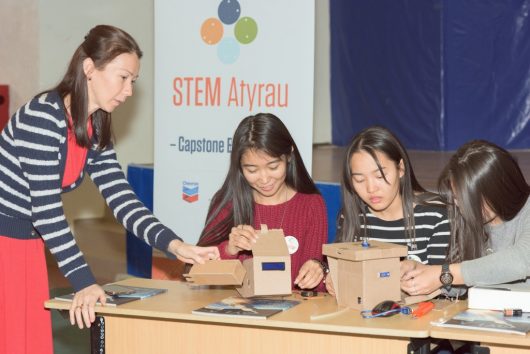
Robot battles, solar trackers and a laser that shoots for the moon — these are the inventions of western Kazakhstan’s youngest engineers. As part of their experience with the Zangar Initiative, which runs several STEM programs in Kazakhstan, these students combined the math and science they learn in school with the technological skills and hands-on experience that the initiative provides. The results seem almost like science fiction.

The results seem almost like science fiction. Although supported by Chevron and the International Youth Foundation, the community propels the initiative. The young people and their families chose the name “Zanger,” which is Kazakh for “mighty.”
The participating students are taught to use the engineering design process, a step-by-step guide for how to turn a brilliant idea into a concrete model. The process gives students a straightforward way to address a problem. They also learn skills like C programming and 3D design, which are not in the school curriculum, and have access to high-tech equipment.

The teens who participate in the STEM Capstone after-school clubs learn more than just technical skills. They often work in groups and learn both teamwork and stress management. One of the key tasks of a teammate, besides helping with design, is to steer his or her fellow engineers away from the temptation to give up should the early prototypes fail.

Perseverance is always rewarded. Many of these students go on to win regional and even national competitions. One student who created a laser designed to beam Helium-3, a potential clean energy source, from the moon to the earth, received a scholarship to the university of her choice in Kazakhstan.

The students of these STEM programs in Kazakhstan gain confidence in themselves and have high motivation to continue learning. Many of them gain the courage to become entrepreneurs. The program also opens their eyes to the needs of the community, inspiring service work and volunteering.

In December 2016, the city of Atyrau hosted its first STEM and English fair, featuring games and activities provided by the Zangar Initiative. Government officials hope that STEM programs in Kazakhstan will inspire a new generation of scientists and entrepreneurs, promoting economic and technological development within the country.

– Emilia Otte
August 9, 2017
https://borgenproject.org/wp-content/uploads/borgen-project-logo.svg 0 0 Borgen Project https://borgenproject.org/wp-content/uploads/borgen-project-logo.svg Borgen Project2017-08-09 01:30:242020-07-20 10:09:16STEM Programs in Kazakhstan Invest in Young Engineers
Global Poverty, Technology

On Board With India’s First Solar-Powered Train

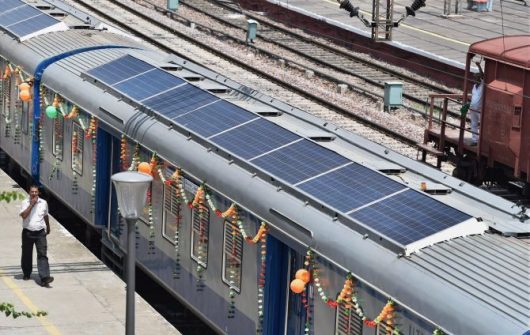
Solar Power in IndiaWhile cars may not be able to fly, solar energy can now power trains and this might be the next best thing. On July 14, 2017, India’s first solar-powered train hits the railroad as the country looks to move toward more renewable energy sources.

As a nation, India has long relied on railroad transport to get from one place to another. With 68,000 kilometers of railroad, India is the country with the fifth-greatest capacity for rail transportation. These rails play a critical role in transporting both passengers and cargo around the country.

Railroads account for 85 percent of India’s passenger traffic and 60 percent of its freight capacity. However, railways in India emit a significant amount of carbon dioxide. As a nation, India contributes four percent of the world’s fossil fuel emissions, posing serious environmental challenges.

The DEMU (diesel electric multiple train) that was launched out of the Safdarjung train station in New Delhi is expected to offset these emissions. The DEMU train is significantly more environmentally friendly than previous train models and counteracts carbon emissions by nine tons per coach per year, with a total of six coaches.

The design for the DEMU train was completed by Jakson engineers after they were awarded this project by Indian Railways Organization for Alternate Fuels, a unit of Indian Railways focused on promoting biodiesel and other alternative fuels for India’s railways.

The solar panels on India’s first solar-powered train have the capacity to power its internal lights, fans, and other electrical systems within the train, generating a total of 7,200 kilowatts per system per year. Additional energy generated during peak hours will be stored in a battery.

Regardless, with India’s expanding economy, it is necessary to address the limitations of current methods of transportation. While a commitment to renewable energy sources like solar power curbs carbon dioxide emissions, India’s current transportation methods pose certain limitations.

Transportation infrastructure is strained and unable to support future economic growth that could help alleviate poverty for many. Trains in India do reach most of the population, but rural areas are often under-served and many of the poor are not connected to India’s main economic centers by road or railway.

While India’s current dependence on rail transportation poses economic and poverty-related problems, the shift toward more environmentally sustainable practices alleviates some of these issues and India’s first solar-powered train is a good step towards this.

– Jennifer Faulkner

August 7, 2017
https://borgenproject.org/wp-content/uploads/borgen-project-logo.svg 0 0 Borgen Project https://borgenproject.org/wp-content/uploads/borgen-project-logo.svg Borgen Project2017-08-07 07:30:062024-05-28 00:15:08On Board With India’s First Solar-Powered Train
Development, Global Poverty, Technology

Technology Developed in Asia

Technology Developed in Asia
Asia is the largest and most populous continent in the world. The continent has vastly different economies from Japan, Korea and China to Indonesia and India, and habitually brightens the world with its latest innovations, which are about to cultivate promising changes in global poverty fight. It’s widely thought that the most interesting digital market in Asia is actually not the likes of Korea and Japan, but is more China, Indonesia, and India. These are the markets that are really pushing the boundary and innovating the most.

Here are a few examples of new technology developed in Asia that will assist the world of poor:

  1. Life Saving Dot
    According to the World Health Organization, iron deficiency anemia is one of the most widespread nutritional disorders in the world. Millions of women across rural India suffer from breast cancer, fibrocystic breast disease and complications during pregnancy and most of these cases are linked to iodine deficiency.In order to fight one of the most common causes of breast cancer, Talwar Bandi in association with Grey Singapore developed Life Saving Dot. A little iodine patch, meant to replace a bindi — a traditional red dot worn on the center of the forehead, commonly by Hindu and Jain women as a celebration of femininity and beauty — and consists of 150-220 micrograms of iodine. This amount is a daily norm for women that dramatically increases chances to prevent breast cancer.


  2. Eco Cooler
    Eco Cooler is another revolutionary technology developed in Asia, namely in Bangladesh. It is a cheap and environmentally-friendly zero electricity air cooler developed by Grey Dhaka. The technology uses re-purposed plastic bottles cut in half and put into a grid, in accordance with available window sizes. Depending on wind direction and airflow pressure, the Eco Cooler is decreasing the temperature inside the house. The invention is critical for the country, where the temperature often rises up to 113 degrees Fahrenheit during the summer period. 
  3. Vodafone
    About 47% of the labor force in India is involved in agriculture. In April 2016, the Indian government revealed that about 330 million people across the country were affected by drought.Vodafone is rolling out rainwater-harvesting billboards, invented in India and meant to help drought-affected farmers by harvesting rainwater. The billboards store up to 2,000 liters of water in U-curved aluminum sheets that can be distributed to farmers. Water sensor technology alerts collection teams who transport the rainwater to rural farms when tanks are full.
  4. 30-minute Ebola Tests
    Researchers from Nagasaki University in Japan are collaborating with colleagues from Eiken Chemical to develop a 30-minute Ebola virus detection kit. The technology developed in Asia uses short DNA sequences called primers to amplify DNA unique to Ebola. Samples become cloudy if the patient has the Ebola virus. The team is currently working out ways to make its technology available in countries stricken by Ebola. 
  5. RainSprout
    Grey Group Malaysia has developed innovative protection against Dengue fever, a mosquito-borne tropical disease. The RainSprout locates on a top of an umbrella and uses rainfall to distribute larvicide into the very puddles where mosquitoes can breed. The technology developed in Asia was distributed for free in central Malaysia.The RainSprout works via a replicable patch at the base which is impregnated with a non-toxic larvicide. When rain hits the patch, it mixes with the larvicide and runs off the umbrella into the puddles. Harmless to all other living organisms, the larvicide starves the mosquito larvae before they develop.
  6. Flo
    Mariko Higaki Iwai has designed an affordable solution to improve the lives of adolescent girls living in poverty. She designed a kit that allows girls to wash, dry and carry reusable sanitary pads.Flo will allow girls from Asia and Africa to go to school during their periods, where females often drop out of school due to the absence of sanitary pads and tampons. The innovation promises to improve the situation by helping girls to avoid embarrassment, attend school during the period and prevent reproductive infections and illnesses in the countries where young women were.

Asia varies greatly across and within its regions with regard to ethnic groups, cultures, environments, economics, historical ties and governments. There is much significant progress coming out of this continent to help the world’s poor with new technology developed in Asia.

– Yana Emets

Photo: Flickr

August 2, 2017
https://borgenproject.org/wp-content/uploads/borgen-project-logo.svg 0 0 Borgen Project https://borgenproject.org/wp-content/uploads/borgen-project-logo.svg Borgen Project2017-08-02 01:30:582024-05-28 00:02:35Technology Developed in Asia
Aid, Global Poverty, Hunger

Three Apps That Feed the Hungry

Apps That Feed the Hungry
Nowadays people can do almost anything with a smartphone: order groceries, plan a vacation or pay for mass transit. There are even apps that feed the hungry around the world. About one in nine people do not have enough to eat, but the following smartphone apps are changing that, one meal at a time.

Here are three apps that feed the hungry:

  1. Chowberry
    Nigerian entrepreneur Oscar Ekponimo developed this mobile app to put discounted, expiring food in the hands of people who desperately need it. The organization currently operates in four locations in recession-stricken Nigeria, with the help of 20 supermarket partners. Here is how it works: Families on tight budgets sign up for a free account; they search for products set to expire in as little as a week to more than a few months. Users choose whatever cereals, grains, drinks, cans and packaged goods they want. Then they pay online and pick up their goods at participating stores. Some products are as much as 70% off original prices, which makes it easier for impoverished people to feed themselves and their families. Exact numbers of the app’s impact are unavailable at this point, as the site has yet to go public. But, in a three-month pilot, the company had 3,000 daily hits.
  2. Pocket Rice
    With this free mobile app, users earn virtual grains of rice each time they answer a trivia question correctly. The virtual rice accumulates like a point system. But unlike regular trivia games, Pocket Rice’s points become a valuable food source for people in need. When users “donate” their earned rice, co-founder James Downing buys real rice. In-app advertising pays for the rice, so users can play trivia while helping solve world hunger — all for free. The rice goes to targeted areas through the company’s partners, agencies like the United Nations World Food Programme, World Vision and now The Lasallian Foundation. According to in-app text, Pocket Rice’s current project focuses on children in Sri Lanka. The goal is to reduce child mortality and increase babies’ birth weights. Trivia users have earned more than 324 million grains of rice and fed 16,000 people since Pocket Rice’s start in 2013. Users of the app allowed Downing to purchase around 3,500 pounds of rice in 2016 alone.
  3. Share the Meal
    The World Food Programme spearheaded Share the Meal, which lets any smartphone owner feed a child with spare change. People all over the world can download the app for free and start saving lives with donations as small as 50 cents. More than just throwing money at a cause, the app has a tool that lets people track their donations. Users can choose where they want to share a meal, learn about the children the Programme helps and follow their donation’s impact. Users have provided for more than 14 million meals since Share the Meal’s launch in 2015. The meals feed school children and refugees in places such as Haiti, Yemen and Lebanon.

Whether it is the invention of the telegram or the use of cell phone apps, technology has always made the world seem smaller. Today, three apps that feed the hungry are continuing that tradition. Chowberry is bridging the gap between Nigerians in need and retailers willing to help, Pocket Rice is turning phone users’ love of trivia into life-saving food and Share the Meal is making it easy for charitable people to feed children around the world.

– Kristen Reesor

Photo: Flickr

July 25, 2017
https://borgenproject.org/wp-content/uploads/borgen-project-logo.svg 0 0 Borgen Project https://borgenproject.org/wp-content/uploads/borgen-project-logo.svg Borgen Project2017-07-25 01:30:452024-12-13 17:58:19Three Apps That Feed the Hungry
Global Poverty, Technology

A Brief Guide to Activism on YouTube

Activism on YouTube
Most of the millennial generation might remember the splash that “Kony 2012” made on the Internet, a video about Joseph Kony forcing child soldiers to fight his wars for him in Uganda. Regardless of the resulting conduct of the filmmaker, the film was a digital phenomenon, shared from every social media platform known at the time. There’s no mistaking the amount of awareness that the video generated. Kony 2012 was one of the first and most viral examples of activism on YouTube.

While bingeing on Netflix or finding the latest funny videos on YouTube can waste the day away, platforms such as YouTube also provide a unique space for creativity, art and passion that can easily be tied to activism and global issues. Whether it is a specific person or an organization, a YouTube channel can be the means to a movement. Below are some channels to get started with bineging on activism on YouTube:

  • Jacksgap: While this channel isn’t currently active, all of Jack and Finn Harries’ previous videos remain online, detailing their work and travel to support different charities and issues. Their videos showcase a blend of art and activism that is very well done. Jack Harries is currently traveling in Somalia to study the effects of climate change on the impoverished country.
  • The Uncultured Project: Now a charity, this is a channel run by Shawn Ahmed, designed to raise awareness about global poverty, initially while traveling around Bangladesh. He focuses his videos on a problem as well as a solution. Ahmed sends pictures to donors so they can see the direct impact of their donations.
  • Vlogbrothers: Brothers Hank and John Green, the latter being a famous young adult author, achieved their YouTube success with the idea of Nerdfighteria, which fights the stigma of “the nerd.” However, they also created the Project for Awesome, a way for their subscribers to advocate for charities by making their own videos.
  • Engage by Uplift: This channel advocates against sexual violence in all of its different forms. It seeks to educate and raise awareness for the various aspects of the issue and calls its viewers to action in every video. In terms of activism on YouTube, this channel is upfront and consistent.
  • Tyler Oakley: Oakley focuses on LGBTQ activism by working with The Trevor Project, a nonprofit focused on suicide prevention. Besides its activism on YouTube, his channel includes plenty of fun and light videos as well as collaborations with other users to keep viewers entertained.

While this is certainly not a comprehensive list, this list provides a basic starting point for seeing what activism on YouTube has to offer. Social media is a major part of life in modern society, and these channels have used it to make a change.

– Ellie Ray

Photo: Flickr

July 20, 2017
https://borgenproject.org/wp-content/uploads/borgen-project-logo.svg 0 0 Borgen Project https://borgenproject.org/wp-content/uploads/borgen-project-logo.svg Borgen Project2017-07-20 07:30:512024-05-28 00:03:09A Brief Guide to Activism on YouTube
Global Poverty, Technology

Six Technological Innovations in Healthcare Helping the World’s Poor

Technological Innovations in Healthcare
In today’s fast-paced world, it’s easy to get caught up in the new big technology or startup that’s coming out of Silicon Valley. But these innovations happening close to home can often obscure the work that’s happening abroad: work that is very often life-saving. Here are 6 technological innovations in healthcare that are helping the world’s poor:

1. TotoHealth

An innovative way to use technology for healthcare, TotoHealth is a way of providing maternal education via text message. The texts remind parents about vaccinations, give advice on family planning and detect warning signs in the pregnancy to alert the parents.

Currently, they have nearly 38,000 enrollees in 6 counties across Kenya. This is an essential technological innovations in healthcare, given that currently in Kenya, 510 mothers out of every 100,000 die in childbirth. TotoHealth is committed to bringing that number down.

2. Gozee

Founded by access.mobile International, a digital health company, Gozee is a sleek, friendly website that connects people in Uganda and Kenya with doctors near them. The website also collects a trove of data, that allows doctors to make quicker, easier, and more accurate diagnoses.

This service is vital in developing countries, where healthcare infrastructure is often severely lacking. Gozee puts the power in the hands of the patient and allows them to take ownership of their care.

3. Vula

In 2014, Dr. Mapham got tired of driving up to eight hours to diagnose patients in rural Swaziland. So he created Vula, a mobile app that streamlines the diagnostic process by connecting primary health care workers, who live in more rural areas, with specialists, who can easily diagnose problems like cataracts.

All the primary healthcare worker needs is a phone with a camera—by snapping a couple of pictures of the patient, the specialist can diagnose the problem and give advice on treatment options. Since 2014, Vula has expanded its diagnostic capabilities to cardiology, orthopedics, burns, HIV, and dermatology. Like many other technological innovations in healthcare, Vula takes commonplace tech most people have and harnesses its power for life-changing results.

4. Project Khuluma

It’s hard navigating life when you’re a teenager. It’s even harder if you’re HIV positive. Project Khuluma, a South African based service set up by the SHM Foundation, is a text-messaging based support group that gives South African HIV-positive teens a safe space to anonymously share concerns, listen to advice, and make lasting friendships.

The project has tangible results, showing decreased levels of anxiety, depression, and internalized stigma in the participants. It also increased knowledge about HIV and the resources available to them.

5. Ambulance Taxi

The maternal mortality rates in Tanzania are among the highest in the world. Vodafone, partnering with Pathfinder International, Touch Foundation and USAID, is working to change that. By setting up a toll-free emergency line similar to 911, Vodafone gives pregnant women suffering medical complications access to quick and potentially lifesaving medical care.

The taxi service is projected to save at least 2,700 lives per year in Tanzania alone. Technological innovations in healthcare such as this one are desperately needed, as they broadly expand access to healthcare for the rural poor.

6. Khushi Baby

India has one of the lowest child vaccination rates in the world, in large part because there is no viable infrastructure to track when babies have been immunized. Richit Nagar and Leen van Besien, two students at Yale, noticed this and discovered an innovative solution. They crafted a necklace similar to the pendant babies are given to protect them from the evil eye, but this necklace records and stores immunization data for the baby.

Health care workers can scan the necklace to view and update the baby’s medical records. Khushi Baby hopes to expand to serve over 300 villages in India, and their necklaces are a prime example of the good that comes when technological innovation in healthcare works within a culture.

It is these kinds of technological innovations in healthcare that empower the global poor and lift them out of poverty. Access to healthcare is a fundamental human right and a foundation for living a safe and secure life. These pioneering technological innovations might not be as flashy as the latest iPhone, but they are drastically more important, and they’re doing vital work.

– Adesuwa Agbonile

Photo: Flickr

July 17, 2017
https://borgenproject.org/wp-content/uploads/borgen-project-logo.svg 0 0 Borgen Project https://borgenproject.org/wp-content/uploads/borgen-project-logo.svg Borgen Project2017-07-17 07:30:382024-05-28 00:03:02Six Technological Innovations in Healthcare Helping the World’s Poor
Development, Education, Global Poverty, Technology

10 Noteworthy Ways Technology Changes Education


The biggest change in technological development happened in the 21st century with the invention of the internet, and, ever since, mobile technologies and computer hardware have become more widely available for leisure and to improve lives. Here are ten examples of ways technology changes education.

10 Noteworthy Ways Technology Changes Education

  1. Accessibility: The most notable use of technology is that it no longer limits lesson time to the traditional four walls of the classroom. Technology creates a true learning continuum between home and school. Schools are encouraging teachers and students to take more control over their learning and to harness the potential of new learning experiences. Technology also encourages learning in other venues such as libraries and museums. Students can use technology to meet, collaborate and create content virtually.
  2. Communication and collaboration: Technology serves as a key building block in facilitating collaborative learning. Laptops and mobile devices are pivotal for remote collaboration and online learning outside of the classroom. Supported by technology, students are generating new approaches to problem-solving and learning how to work alongside their peers, a great attribute for their future careers.
  3. Expanded audience: Internet technology helps more people than ever before to access libraries, research subjects, share ideas and learn specific skills through sources such as Coursera, YouTube, and Lynda.com.
  4. eBooks and online textbooks: With all kinds of devices in the classroom, eBooks and online texts are becoming more popular. Online texts are less costly, adjustable, more up-to-date, quickly accessed and more interactive. They also save time, space and the environment. This technology doesn’t only change education, but many other industries as well.
  5. Web-based research: This is one of the most-needed skills in modern society, and learning such opens many possibilities to students. Having a broad understanding of the types of web-based data collection applications available allows for the selection of the best product for the project. This skill is highly appreciated on the employment market.
  6. Classrooms: Tech classrooms aren’t big news in many countries. Technologically equipped classrooms don’t undermine the role of a teacher, but rather enhance their role as a source of knowledge.
  7. Communication: Platforms such as Glogster help in three-way communication between teachers, students and parents. It also allows the generation of students’ own individualized courses.
  8. Simplifying class preparation: Lesson preparation is an area which technology can provide a substantial level of support. Software, such as Promethean’s ClassFlow, allows teachers to plan interactive, multimedia-rich lessons, as well as create assessments and assignments that can be delivered across a range of technologies.
  9. Changes in student and teacher roles: With technology in the classroom, the traditional student and teacher roles have shifted. The student has become more active and engaged. The teacher has become more of a facilitator than just a dispenser of information.
  10. Personalized learning: Lessons can be customized according to the student’s progress and learning style. Through technological learning tools, educators can provide opportunities for students to be able to work and excel at their own level and pace.

These are just a few examples of how technology changes education–the list goes on and continues to grow. Technology allows learning resources to be accessed from anywhere in the world, making the entire globe a classroom. The nature of classrooms changes and improves every day, preparing students for a future deeply rooted in technology.

– Yana Emets

Photo: Flickr

June 11, 2017
https://borgenproject.org/wp-content/uploads/borgen-project-logo.svg 0 0 Borgen Project https://borgenproject.org/wp-content/uploads/borgen-project-logo.svg Borgen Project2017-06-11 07:30:332024-05-28 00:02:0510 Noteworthy Ways Technology Changes Education
Global Poverty, Technology

9 Technological Innovations from Africa

Africa Technology: 10 Technological Innovations from AfricaIn recent years, the African Union has concentrated on better ways that to solve local problems. Facing a lot of challenges, the continent is raising a generation of innovators who are making a big investment in Africa technology development taking a creative approach and non-standard thinking. Here are 10 examples of technological innovations coming out of African countries.

9 Technological Innovations from Africa

  1. Mellowcabs: Mellowcab is a fully electric vehicle that provides public transportation in urban areas. Developed in South Africa, Mellowcabs are eco-friendly and carbon-neutral. The cabs use kinetic energy to power the vehicle, on-board tablet computers, use hydrogen fuel cell technology, and are made out of recycled materials. The rides are free; the company relies on an advertisement placed in the cab. Mellowcabs developers helped to reduce traffic in urban areas and successfully tied into the transport infrastructure.
  2. Jumia: Jumia launched in Nigeria in 2012. The largest e-commerce retailer in the country works with 16 African countries and sells anything from electronics to clothes and home goods. Initially starting with three employees, Jumia presently has a staff of 1,000 young and entrepreneurial Nigerians. Jumia set-up the first e-commerce academy in Nigeria, the Jumia Academy, building young entrepreneurs pioneering various aspects of business in Nigeria.
  3. Sterio.me: Sterio.me is a critical education startup in Africa, utilising the recent development of mobile industry, SMS-based programs are a good way to engages learners outside the classroom, to reinforce in-classroom learning. The process is easy: teachers record a lecture or quiz, upload it to the site where pupils can access the information with a code. First launched in Zimbabwe, Sterio.me opens up an opportunity for everyone who wants to learn.
  4. Obami: Obami is a South Africa-based social learning platform, where students can get news from schools and groups and submit school work. Launched in 2007, the technology is currently used by about 400 organizations across Africa. The cloud-hosted platform is easily accessible from the web or, importantly, from mobile. The mobile app, Obami Tutor, focuses on private tutoring. Barbara Mallinson, Obami’s founder, is one of the leading female entrepreneurs in South Africa.
  5. M-PESA: M-PESA is a mobile-based money transfer application, which allows users to store money on mobile accounts and make simple transfers via SMS messaging. Customers can deposit and withdraw money from a large network of agents, charging its users a small fee for sending and withdrawing transactions. Since its creation in 2007, M-PESA expanded as far as Afghanistan, India and Albania. This app moves an entire third of the Kenyan GDP among its 15 million mostly rural users.
  6. Charging Shoes: One extraordinary method to charge a mobile phone while walking is to use ultra-thin chips of crystal inserted into the sole of a shoe. Invented by Anthony Mutua from Kenya, technology generates electricity through the pressure exerted when it is stepped on.
  7. Sleep Out: Sleep Out is a website for adventurers and travelers who are looking for accommodation in Africa. Launched in 2011 in Kenya, the online portal became popular very quick. Today it covers hotels, hostels, B&Bs and private hosts from all over the continent. It allows users to pay directly to the host via mobile, cash, card or transfer.
  8. The Kenya Open Data Initiative: A portal to fuel new enterprises and apps. Most important, it makes government data freely available to the Kenyan public. The technological initiative was claimed to improve governance and constitutional groundwork on information access.
  9. Ushahidi: This app was developed after 2008 post-election violence outbreak to create a map reflecting data of violent acts in the country. Ushahidi offers products that enable local observers to submit reports using their mobile phones or the internet, while simultaneously creating a temporary geospatial archive of events.

Right now the continent’s technological development is going through a creative phase. This evolution will continue to empower Africa’s technology markets, people and potential in meaningful ways, taking the continent into the digitized era.

– Yana Emets

Photo: Flickr

June 7, 2017
https://borgenproject.org/wp-content/uploads/borgen-project-logo.svg 0 0 Borgen Project https://borgenproject.org/wp-content/uploads/borgen-project-logo.svg Borgen Project2017-06-07 01:30:592024-05-28 00:00:209 Technological Innovations from Africa
Developing Countries, Food & Hunger, Global Poverty, Technology

5 Ways Technology Reduces Food Waste in Developing Countries


A third of all food produced globally is wasted. Up to 40 percent of that food waste is produced by developing countries. Great quantities of food are lost for various reasons such as inadequate harvest techniques, poor post-harvest management and lack of suitable infrastructure and marketing. However, the waste is mainly due to inadequate cooling facilities as well as lack of efficient transportation equipment. Modern technology has allowed solutions to fix these problems and decrease the amount of food being wasted. Listed below are five ways technology reduces food waste in developing countries.

5 Ways Technology Reduces Food Waste in Developing Countries

  1. The lack of access to cold chain technology is one of the reasons food waste is abundant in tropical areas. For example, even though India is the top leading producer of bananas, it only holds 0.3 percent of the world’s market. Some of this gap can be attributed to lack of refrigeration and reliable energy sources. By providing a better system of refrigeration, the food loss would be cut by 25 percent.
  2. Improving packaging to maintain freshness of products during transportation and decreasing the number of insects found would also greatly reduce food waste. An example of such technology is the Modified Atmosphere Packaging. This technology increases freshness by substituting the atmosphere within the packaging system with a protective gas mix, usually consisting of oxygen, carbon dioxide and nitrogen.
  3. Technologies have been created to convert food waste into renewable sources of energy. This is done through the use of anaerobic digesters that break down the waste into large amounts of carbon which can then be converted into biogases or organic fertilizers. This process preserves the nutrients from the food and recycles the nutrients back into the farming system as a clean energy source.
  4. Increasing communication during the transport chain increases overall product awareness. For example, Israel has developed the Xsense system, which uses wireless sensors to monitor storage conditions second by second. The technology is able to identify problems in the transportation process and allows for supply-chain management to improve any problems sensed.
  5. Microfinancing initiatives that invest in small-scale farmers can greatly alleviate the waste load. Through education of how food waste occurs and what is being done to prevent it, small farmers can gain a better grasp on the solutions being implemented. Educated farmers can greatly benefit from increased access to waste-reducing technology and equipment.

There are many ways technology reduces food waste in developing countries. Implementing such technologies can not only reduce waste but give developing countries an opportunity to flourish and thrive.

– Taylor Elgarten

Photo: Flickr

June 5, 2017
https://borgenproject.org/wp-content/uploads/borgen-project-logo.svg 0 0 Borgen Project https://borgenproject.org/wp-content/uploads/borgen-project-logo.svg Borgen Project2017-06-05 01:30:102024-12-13 17:57:465 Ways Technology Reduces Food Waste in Developing Countries
Developing Countries, Global Poverty

10 Facts About the Internet in Emerging Markets


One sign of growing wealth in merging markets of developing nations is the increase in use of the internet and digital devices. To provide a picture of the size and scope of this change, here are 10 facts about the internet in emerging markets.

  1. Between 2000 and 2017, internet use in Africa grew by 7,500 percent. In the Middle East, the increase was 4,200 percent, and in Latin America, 2,000 percent.
  2. By the end of last year, 47 percent of the world’s population had internet access; by the end of next year, 51 percent will be internet users, for a total of 3.82 billion people going online.
  3. The number of people going online through use of their mobile phone is increasing. More than 72 percent of internet users last year connected through a mobile phone, up 11.9 percent from 2015. Emerging markets in the Middle East, Africa and Latin America are driving the growth of smartphone internet usage.
  4. The countries experiencing the most rapid growth in smartphone ownership are Turkey (at 42 percent) and Malaysia (34 percent), followed by Chile and Brazil, both at 26 percent.
  5. At the end of 2015, 54 percent of adults in emerging economies were on the internet, an increase of nine percent from 2013. That same year, 21 percent accessed the web through a smartphone. That percentage rose to 37 by the end of 2015.
  6. Internet penetration is especially strong in large emerging countries. At least 72 percent of adults in Russia and Turkey are online. The percentage dips slightly to 68 percent in Malaysia, then again to 65 percent in China and 60 percent in Brazil.
  7. The growth rate for the internet in emerging markets is particularly rapid in these large developing countries. Internet use in Turkey increased by 31 percent between 2013 and 2015. In that same period, Jordan experienced a 20 percent bump. Malaysia followed with a 19 percent increase. Chile, Brazil and China all experienced growth of 10 to 12 percent.
  8. Once online, internet users in emerging markets are more likely to use social networks than internet users from the U.S. and Europe. In the Middle East, 86 percent of internet users visit social networks; in Latin America it is 82 percent. By contrast, 71 percent of Americans online use social networks. The percentage drops to 65 in Europe.
  9. Social networking in emerging countries is especially strong in Jordan (90 percent of adult internet users), Indonesia (89 percent), the Philippines (88 percent), Venezuela (88 percent) and Turkey (87 percent).
  10. The rise in social networking as the use of the internet in emerging markets grows has been particularly swift in China. There, 63 percent of internet users in 2015 reported being social networkers, up 15 percentage points from 48 percent just two years earlier.

Increasing wealth in developing countries, especially large developing countries such as Russia, China and Turkey, is making it possible for more and more of their people to be connected. Continued growth will result in continuing communication and internet use around the world.

– Robert Cornet

Photo: Flickr

June 1, 2017
https://borgenproject.org/wp-content/uploads/borgen-project-logo.svg 0 0 Borgen Project https://borgenproject.org/wp-content/uploads/borgen-project-logo.svg Borgen Project2017-06-01 07:30:252024-05-28 00:02:0010 Facts About the Internet in Emerging Markets
Page 18 of 29«‹1617181920›»

Get Smarter

  • Global Poverty 101
  • Global Poverty… The Good News
  • Global Poverty & U.S. Jobs
  • Global Poverty and National Security
  • Innovative Solutions to Poverty
  • Global Poverty & Aid FAQ’s
Search Search

Take Action

  • Call Congress
  • Email Congress
  • Donate
  • 30 Ways to Help
  • Volunteer Ops
  • Internships
  • Courses & Certificates
  • The Podcast
Borgen Project

“The Borgen Project is an incredible nonprofit organization that is addressing poverty and hunger and working towards ending them.”

-The Huffington Post

Inside The Borgen Project

  • Contact
  • About
  • Financials
  • President
  • Board of Directors
  • Board of Advisors

International Links

  • UK Email Parliament
  • UK Donate
  • Canada Email Parliament

Get Smarter

  • Global Poverty 101
  • Global Poverty… The Good News
  • Global Poverty & U.S. Jobs
  • Global Poverty and National Security
  • Innovative Solutions to Poverty
  • Global Poverty & Aid FAQ’s

Ways to Help

  • Call Congress
  • Email Congress
  • Donate
  • 30 Ways to Help
  • Volunteer Ops
  • Internships
  • Courses & Certificates
  • The Podcast
Scroll to top Scroll to top Scroll to top