• Link to X
  • Link to Facebook
  • Link to Instagram
  • Link to TikTok
  • Link to Youtube
  • About
    • About Us
      • President
      • Board of Directors
      • Board of Advisors
      • Financials
      • Our Methodology
      • Success Tracker
      • Contact
  • Act Now
    • 30 Ways to Help
      • Email Congress
      • Call Congress
      • Volunteer
      • Courses & Certificates
      • Be a Donor
    • Internships
      • In-Office Internships
      • Remote Internships
    • Legislation
      • Politics 101
  • The Blog
  • The Podcast
  • Magazine
  • Donate
  • Click to open the search input field Click to open the search input field Search
  • Menu Menu

Tag Archive for: Sustainable Development Goals

Posts

Aid Effectiveness & Reform, Global Poverty, Sustainable Development Goals

Top Problems in the World That Can Be Solved

problems in the world that can be solvedWith all the multifaceted problems in the world today, it is difficult to say which are more important than others. However, it is imperative to prioritize certain issues in order to dedicate enough resources to combat the top problems in the world that can be solved.

Top Problems that can be Solved

The Copenhagen Consensus Center, a think tank that researches the smartest solutions to global issues, organized a panel of five distinguished economists in 2012 to set priorities for fighting the 10 top problems in the world that can be solved:

  1. Armed Conflict
  2. Chronic Disease
  3. Education
  4. Infectious Disease
  5. Population Growth
  6. Biodiversity
  7. Climate Change
  8. Hunger and Malnutrition
  9. Natural Disasters
  10. Water and Sanitation

The panel was asked to describe the best ways to advance global welfare, specifically that of developing countries. The experts then assembled a prioritized list of thirty solutions.

Solutions to the World’s Issues

The number one solution was “bundled interventions to reduce undernutrition in pre-schoolers” and addressed the challenge of hunger and education. Some other proposals high on the list were subsidies for malaria combination treatment and expanding childhood immunization coverage.

The group of experts covered topics besides health, with solutions ranging from investing in early warning systems for natural disasters to increased funding for green energy.

With this list in mind, world leaders at the U.N. Sustainable Development Summit adopted the 2030 Agenda for Sustainable Development in Sept. 2015. On Jan. 1, 2016, the 17 Sustainable Development Goals (SDGs) replaced the eight Millennium Development Goals of 2015.

The new 17 SDGs were to:

  1. End poverty
  2. End hunger and improve nutrition and sustainable agriculture
  3. Promote well being for all ages
  4. Ensure equitable and quality education
  5. Achieve gender equality
  6. Ensure water and sanitation for all
  7. Ensure access to modern energy for all
  8. Promote sustainable economic growth and productive employment
  9. Build resilient and innovative infrastructure
  10. Reduce inequality
  11. Make settlements safe, resilient and sustainable
  12. Ensure sustainable consumption and production patterns
  13. Take urgent action to combat climate change
  14. Conserve and sustainably use Earth’s water
  15. Promote sustainable use of terrestrial ecosystems and forests, and halt and reverse land degradation and biodiversity loss
  16. Promote peaceful societies, provide access to justice and build effective, accountable institutions
  17. Implement and revitalize the Global Partnership for Sustainable Development

A New Set of Problems

80,000 Hours, an independent nonprofit organization that researches how graduates can make the biggest difference possible with their careers, came up with another list defining problems in the world that can be solved. Drawing from research from groups such as the University of Oxford’s Future of Humanity Institute and the Copenhagen Consensus Center, 80,000 Hours created a framework to rate global issues.

The organization based its scoring on how solving the problem would reduce the risk of extinction, raise the global economic output, increase the income among the world’s poorest 2 billion people and save years of healthy life. It also used factors like the amount of good done compared to the percent of the problem solved and the number of resources required.

Risks from artificial intelligence topped 80,000 Hours’ list out of 11. Also on the list were biosecurity, developing world health and climate change. Other issues 80,000 Hours has yet to rate include science policy and infrastructure, cheap green energy and promoting human rights. The group indicates that improving health would be more beneficial than topics like empowering the poor and education.

Due to how differently each solution overlaps with others there are various ways to rank a list of top problems in the world that can be solved. Thankfully, experts are doing their best to target issues to focus on and world leaders are taking calculated steps to implement solutions to such issues.

– Connie Loo

Photo: Flickr
May 21, 2018
https://borgenproject.org/wp-content/uploads/borgen-project-logo.svg 0 0 Borgen Project https://borgenproject.org/wp-content/uploads/borgen-project-logo.svg Borgen Project2018-05-21 07:30:542024-12-13 17:58:46Top Problems in the World That Can Be Solved
Global Poverty, Health

Poverty and Tobacco Use Are Linked Within a Vicious Cycle

Tobacco
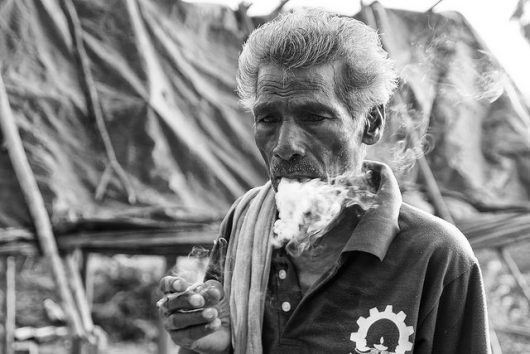
Studies have shown that poor households in low-income countries can spend an upward of 10 percent of household budgets on tobacco products. Poverty and tobacco use are a highly linked global phenomenon. This disproportionate relation has several outlining side effects.

Households with less disposable income that use tobacco have fewer means of survival when it comes to health and basic living costs. The choice to buy tobacco-based products deprives families of the income needed for proper diet and nutrition. In this respect, outside of the health risks typically associated with tobacco usage, poor diet and malnutrition are within the realm of side effects.

The World Health Organization (WHO) has also reported that tobacco leads to higher illiteracy rates when money is used on tobacco products over education. One 1997 study in Chennai, India, found this to be true. “Among illiterate men, the smoking prevalence was 64 percent, whereas it was only 21 percent among those with more than 12 years of schooling,” reports the WHO.

The vicious cycle of poverty and tobacco use is prevalent throughout the world. Due to the prevalence of poverty in certain countries, farmers will accept a line of credit from tobacco companies. This credit is set in the form of seeds, fertilizer and other essentials for growing tobacco. The problem with this business transaction is that farmers must then sell all of their product. However, the profit for selling the tobacco leaves often ends up being less than that of the line of credit, leaving the farmers indebted to the tobacco companies and continuing the cycle even further.

Luckily, in 2015 the United Nations General Assembly adopted a new plan in order to combat the socioeconomic side effects of poverty and tobacco use. The Sustainable Development Goals (SDGs) formally recognize, on a global scale, the negative impact of tobacco consumption on health, wealth and development. Under the SDGs, the WHO Framework Convention on Tobacco Control (FCTC) was set to “protect present and future generations from the devastating health, social, environmental and economic consequences of tobacco consumption and exposure to tobacco smoke.”

One key difference included in the Sustainable Development Goals is that, unlike previous implementations, the SDGs apply to all U.N. members. High-income countries, especially the United States, are no exception. Though the United States has one of the highest standards of living, poverty and tobacco use still afflict lower socioeconomic groups. The Center for Disease Control and Prevention found in 2014 that, in the population of people having only a GED certificate, smoking prevalence is more than 40 percent.

Fighting poverty is essential to the fight against tobacco use. Tobacco use is a habit that is so detrimental to human life that it should be of high focus for eradication, especially when global health is at risk.

– Richard Zarrilli, Jr

Photo: Flickr

March 31, 2018
https://borgenproject.org/wp-content/uploads/borgen-project-logo.svg 0 0 Borgen Project https://borgenproject.org/wp-content/uploads/borgen-project-logo.svg Borgen Project2018-03-31 01:30:572024-05-29 22:40:00Poverty and Tobacco Use Are Linked Within a Vicious Cycle
Foreign Aid, Global Health, Global Poverty, Sustainable Development Goals, United Nations

Three Global Healthcare Initiatives of the Global Health Council

18. Three Global Healthcare Initiatives of the Global Health Council
The Global Health Council fights for U.S. and international policies and resources that advance global health programs and goals through several global healthcare initiatives. 
Three major global healthcare initiatives of the Global Health Council are Global Financing Facility (GFF), the Sustainable Development Goals (SDGs) and Global Health Security.


1. Global Financing Facility

The development of the Global Financing Facility was announced at the 69th U.N. General Assembly in 2014 by the World Bank and the Governments of Canada, Norway and the United States.

The GFF developments was for supporting reproductive, maternal, newborn, child and adolescent health (RMNCAH) through Every Women Every Child, to reduce preventable maternal, newborn, child and adolescent deaths, as well as improving health overall.

Part of GFF’s strategy to channel international and domestic resources towards RMNCAH includes continuing the work with the Millennium Development Goals (MDGs) and focusing on sustainable development and business plans.

Through domestic and international, private and public funding, $12 billion has already been aligned to country-led, five-year investment plans in four initial countries: the Democratic Republic of the Congo, Ethiopia, Kenya and Tanzania.

New commitments were made by the Bill and Melinda Gates Foundation and the governments of Canada, Japan and the United States; in addition, eight additional countries were announced to benefit from the GFF: Bangladesh, Cameroon, India, Liberia, Mozambique, Nigeria, Senegal and Uganda.


2. The Sustainable Development Goals

The Sustainable Development Goals (SDGs) are 17 global goals that aim to end poverty, protect the planet and ensure prosperity with each goal having specific targets to be reached by 2030.

The 17 goals are:

  1. No Poverty
  2. Zero Hunger
  3. Good health and well-being
  4. Quality Education
  5. Gender Equality
  6. Clean Water and Sanitation
  7. Affordable and Clean Energy
  8. Decent Work and Economic Growth
  9. Industry, Innovation and Infrastructure
  10. Reduced Inequalities
  11. Sustainable Cities and Communities
  12. Responsible Consumption and Production
  13. Climate Action
  14. Life Below Water
  15. Life on Land
  16. Peace, Justice and Strong Institutions
  17. Partnerships for the Goals

The globe reached an agreement to strive to implement these goals, and the entity of the Global Health Council is no exception.


3. The Global Health Security

The Global Health Security serves to prepare for and respond to public health threats and reduce or prevent its spread across borders. The effort accomplishes this by implementing strong health systems with resources and personnel that identify threats and prevent the spread of infectious diseases.

The IHR, International Health Regulations purpose is to enable the international community to prevent and respond to public health risks that will potentially cross borders and threaten populations worldwide.

To ensure countries are able to meet the IHR, the U.S. is committed to the Global Health Security Agenda (GHSA) — a partnership with other governments, international agencies and other stakeholders that seeks to prevent, detect and respond to global health threats.

These three global healthcare initiatives, as well as others, are making significant and meaningful impacts in countries all over the world.

– Julia Lee

Photo: Flickr

February 17, 2018
https://borgenproject.org/wp-content/uploads/borgen-project-logo.svg 0 0 Borgen Project https://borgenproject.org/wp-content/uploads/borgen-project-logo.svg Borgen Project2018-02-17 01:30:332024-05-29 22:39:22Three Global Healthcare Initiatives of the Global Health Council
Global Poverty

Solar Energy in Zambia Will Help Bring People Out of Poverty

solar energy in ZambiaThe Republic of Zambia is a landlocked country in southern Africa with a population of over 16.5 million. A shocking 54.4 percent of this population lives below the World Bank’s standardized poverty line. Currently, Zambia is unable to effectively meet the energy needs of its citizens. As a result, the Zambian government, USAID, independent investors and NGOs throughout the U.S. and Europe are investing in solar energy in Zambia, as they believe it has the potential to greatly reduce poverty and contribute to meeting the country’s 2030 Sustainable Development Goals.
 

Problems with Current Zambian Energy Infrastructure

A majority of Zambia’s nationalized energy production is created using hydroelectric dams; however, the dams face many problems in terms of their reach and reliability. Dams in the country only provide power to 10 percent of the Zambian population. Furthermore, the dams become unreliable as drought conditions increase throughout southern Africa. Zambia’s climate pattern works around a wet and dry season. As the rainy seasons become shorter and less intense, the dams are not filled to capacity. Less water in dam spillways inherently results in less energy production and more frequent blackouts.

Consequently, a majority of Zambians rely on charcoal to meet their energy and heat needs. The need for charcoal results in widespread deforestation of the savannah woodlands that make up a majority of the Zambian natural ecosystem. As a result, habitat destruction decreases biodiversity, degrades the natural ecosystem services and damages what could be a lucrative Zambian ecotourism industry. Because of these problems, the Zambian government and outside investors are looking toward solar alternatives, recognizing the benefits of solar energy in Zambia.


The Solution:  Solar Energy in Zambia

Director of the Zambian Development Agency (ZDA) Patrick Chisanga and other branches of the Zambian government are teaming up with investors throughout the United States and Europe to provide funding toward solar energy in Zambia. The ZDA is currently negotiating a $500 million solar investment deal from an unnamed German company hoping to provide projects and products to the growing market.

In 2015, USAID Zambia and Power Africa provided $2 million of funding to the International Finance Corporation’s (IFC) Scaling Solar project, which has contributed $4 billion in global solar investments, to further develop smaller-scale commercial and utility solar energy in Zambia. NGOs like the U.K.-based Solar Aid are currently working in conjunction with a group called Sunny Munny to develop solar projects and provide resources to the very eager Zambian communities.

Moving Toward the Future

Solar energy development in Zambia continues what is already a growing trend of technological leapfrogging throughout the African continent. Zambians understand that they may never be a part of the nationalized power grid and therefore readily accept solar energy infrastructure as a solution to this problem. In a report conducted by BBC in Jan. 2018, reporters describe buzzing excitement in villages after they set up their solar technologies and finally had access to their own non-biofuel energy source.

With the help of Zambian government action, USAID investment, private investment and nonprofits like SolarAid, solar energy in Zambia will help the country approach several of its 2030 Sustainable Development Goals: providing citizen access to reliable modern energy resources, building resilient infrastructure and protecting and restoring natural ecosystems within the country.

– Daniel Levy

Photo: Flickr

February 11, 2018
https://borgenproject.org/wp-content/uploads/borgen-project-logo.svg 0 0 Borgen Project https://borgenproject.org/wp-content/uploads/borgen-project-logo.svg Borgen Project2018-02-11 01:30:202024-05-29 22:39:13Solar Energy in Zambia Will Help Bring People Out of Poverty
Developing Countries, Education, Global Poverty

Why Education Matters, Especially in Times of Crisis

When a developing country is in crisis or conflict, education is an area that suffers immensely. Education is a transitional platform that propels students in developing nations out of the cycle of poverty if implemented consistently. However, the relationship between education and conflict is negatively correlated: though education helps prevent conflict and crisis, once conflict and crises arise, education suffers.

Today, one in six children ages three to 15 are directly affected when a country experiences conflict and crisis. This number in itself explains why education matters, especially for these primary and secondary school-aged children.

According to the U.N.’s tracking of Millennium Development Goals (MDGs), “in countries affected by conflict, the proportion of out-of-school children increased from 30 percent in 1999 to 36 percent in 2012.” In 2015, in succession to the MDGs, the U.N. established the Sustainable Development Goals (SDGs). The new SDGs pledge to “ensure inclusive and quality education for all.” This objective exemplifies the international importance of the universal human right to education.

So, if all people have the right to education, why are children in conflict left out?

The World Economic Forum found a recent OECD report that details why education matters economically. According to the report, “providing every child with access to education and the skills needed to participate fully in society would boost GDP by an average 28 percent per year in lower-income countries.” Conflict and crises have an expensive effect on the economy of the affected country. From 2011 to 2016, for example, the war in Syria exacerbated cumulative losses of $226 billion to the country’s GDP. The correlation between conflict and the economy is buffered when access to education persists. 

The World Economic Forum points out that there are 37 million out-of-school children and youth in countries affected by conflict and crisis. This translates to about 33 percent of out-of-school students across the globe. The Global Partnership for Education (GPE) estimates that it will only cost $74 annually to educate each child affected by conflict and crisis. If these students remained in school during times of crisis, the economic consequences, like in Syria, might not be so drastic. 

An infographic published by the GPE looks at the relationship between education and conflict or crisis. When a conflict or protracted crisis arises, no matter what the cause, schools are commonly destroyed or used for strategic purposes. In Yemen, BBC reports, “more than 1,700 schools are currently unfit for use due to conflict-related damage, the hosting of displaced people or occupation by armed groups.” During violence and rebellion, children and teachers are targeted and forced to flee. Education suffers immensely as a result of conflict and crisis and is difficult to reestablish. 

The GPE infographic contrasts the detrimental effects of conflict and crisis to education with the promising relief education can bring in these situations. For each year of education, the risk of conflict reduces by 20 percent. And, if the average secondary school enrollment rate increases by only 10 percent, the risk of war will reduce by three percent.

Education not only reduces the risk of conflict and crisis, it provides opportunities for citizens to stimulate the economy and support democratic processes. The GPE further points out that, “across 18 Sub-Saharan African countries, people with a primary school education are 1.5 times more likely to support democratic processes.”

When nations experience tension like conflict or protracted crisis, education empirically suffers. However, if education can become a developmental focus, as in the U.N. SDGs plan, the risk of conflict and crisis in developing countries can correspondingly decrease. From encouraging future growth to maintaining socioeconomic homeostasis, it is easy to see why education matters, especially in times of crises and conflict.

– Eliza Gresh

Photo: Flickr

January 16, 2018
https://borgenproject.org/wp-content/uploads/borgen-project-logo.svg 0 0 Borgen Project https://borgenproject.org/wp-content/uploads/borgen-project-logo.svg Borgen Project2018-01-16 07:30:052024-05-29 22:30:11Why Education Matters, Especially in Times of Crisis
Education, Global Poverty

Why African Countries Have Fallen Behind in Education

African Countries Are Behind in EducationThe U.N. has created 17 Sustainable Development Goals (SDGs) for developing countries in order to mobilize efforts to improve the quality of life for people living in poverty. The fourth goal of the SDGs is to have access to quality education. In the SDG 2017 report, research showed that enrollment in primary education is going up, but some countries, such as African countries, are behind in education.
A Global Education Monitoring (GEM) report done by UNESCO found that in sub-Saharan Africa, 41 percent of students in primary education don’t complete basic education. The report also said that 87 percent of students don’t reach the minimum proficiency level in reading. This equates to more than one in four young people in the region that can not read or write proficiently.

There are many factors as to why African countries are behind in education, one of them being poverty. But other factors for this issue have to do with the organization of the education system. The GEM report found that less than half of the developing countries had created standards for primary education. Additionally, education systems did not have the means to monitor how students develop or teachers progress. The lack of organization of an educational system causes classrooms to be overcrowded and poorly resourced with teachers that are not qualified.

There are some programs that are addressing these issues. For example, UNESCO is working to improve the quality of teachers’ abilities and to develop a curriculum to improve the learning experience for students. The program also focuses on teaching students skills that are relevant while also providing gender-inclusive literacy programs.

Another way to improve education in African countries is to invest in technology in schools. Internet access is common for people in developed countries but is not distributed equally around the world. Students that live in African countries could benefit from Internet access because of the access to information and connection to resources.

SDGs are obtainable for all developing countries, including countries in Africa. Further investment in the educational systems, the creation of plans and providing a curriculum that is beneficial for students will help provide children with quality education. Investing in technology will also help students learn and help teachers teach, providing a better future for young people in developing countries.

– Deanna Wetmore

Photo: Flickr

November 10, 2017
https://borgenproject.org/wp-content/uploads/borgen-project-logo.svg 0 0 Borgen Project https://borgenproject.org/wp-content/uploads/borgen-project-logo.svg Borgen Project2017-11-10 01:30:412024-06-07 05:07:49Why African Countries Have Fallen Behind in Education
Education, Global Poverty, Government, Sustainable Development Goals

A Look at Education in Guyana

Read more
October 27, 2017
https://borgenproject.org/wp-content/uploads/borgen-project-logo.svg 0 0 Kim Thelwell https://borgenproject.org/wp-content/uploads/borgen-project-logo.svg Kim Thelwell2017-10-27 07:30:402025-11-13 16:17:48A Look at Education in Guyana
Education, Global Poverty

ASEAN My World Survey Shows Shift in Global Governance

 Indonesia

September 23 marked the 50 year anniversary of the formation of ASEAN, the Association of Southeast Asian Nations. ASEAN was created in 1967 by the leaders of Indonesia, Thailand, Malaysia, Singapore and the Philippines in order to promote cooperation in economic, social, technical and educational growth. While ASEAN has expanded to include more than just these five Southeast Asian states, the coalition has been very successful in its efforts to reduce poverty.

According to Adam Steiner, the United Nations Development Programme administrator, the combined poverty rate of ASEAN countries dropped from 47% in 1970 to 14% in 2015. This was well beyond the ASEAN Millennium Development Goals for 2015, and the 2030 goal is now to completely eradicate poverty from ASEAN nations.

One thing that is noteworthy about the way ASEAN countries are working to reach the Sustainable Development Goals is the unprecedented participation from the citizens of these nations. The governments of these countries are working very hard to involve the people in the processes of poverty reduction, mainly with the launch of the ASEAN My World survey by the U.N. Member States. The My World Survey asked for the opinions of over 10 million individuals worldwide regarding their hopes for the future. There were a quarter of a million participants from the ASEAN region, and the survey results were used to shape the 2030 Sustainable Development Goals.

The My World survey asked subjects to choose which goals were most important to them, with the options ranging from “freedom from discrimination and persecution” to “a good education.” The data was also split up by demographics such as gender, age, level of education and HDI. The data is quite comprehensive and will allow for more impactful policymaking.

The development of ASEAN countries is already becoming much more inclusive of citizens, and this is a great step towards more sustainable governance and development in any nation. The survey was launched in 2015, and the results have already been used to create the ASEAN Community Vision 2025 and the Agenda for 2030, which shows the dedication of ASEAN nations to a more people-centered future. Additionally, the My World survey is the largest survey the United Nations has attempted in over 70 years, showing a potentially significant shift in the future of global governance.

While the eradication of poverty, among the other 2030 goals, is very ambitious to attempt in 15 years, ASEAN, as well as the U.N. Member States, has shown a commitment to achieving the goals that citizens consider important. The ASEAN My World survey has presented a new attitude towards access and participation in government and policy in the Southeast Asian region.

– Liyanga De Silva

Photo: Flickr

October 19, 2017
https://borgenproject.org/wp-content/uploads/borgen-project-logo.svg 0 0 Kim Thelwell https://borgenproject.org/wp-content/uploads/borgen-project-logo.svg Kim Thelwell2017-10-19 07:30:532024-06-11 02:48:34ASEAN My World Survey Shows Shift in Global Governance
Global Poverty

Hope: Decreasing Child Mortality Rates in India

Child Mortality Rates in India

India has successfully reduced child mortality rates by 62 percent since 1990, according to a recent study published in the medical journal The Lancet. These results indicate that India has a high probability of meeting Sustainable Development Goal 3.2, aimed at decreasing global child mortality rates.

The Registrar General of India conducted the Million Death Study in 1.3 million homes to obtain these results. The study looked at 52,252 deaths in neonates and 42,057 deaths at 1-59 months. The child mortality rate fell from 125 deaths per 1,000 live births in 1990 to 47 deaths per 1,000 live births in 2015.

These statistics are an accomplishment for India. In the 1990s, child mortality rates in India were the highest in the world. Significant malnutrition in the country exacerbated the problem, as many expectant mothers did not have access to proper nutrition. Similarly, nearly half of all the under-five deaths resulted from malnutrition. Other common causes include prematurity, pneumonia, diarrhea, sepsis, malaria and complications during delivery.

Beginning in 1997, the Indian government implemented several initiatives to address this crisis. One important project is the National Health Mission. The organization emphasizes improved health facilities and quality healthcare providers. It also has installed National Rehabilitation Centers and the Universal Immunisation Programme to combat malnutrition and life-threatening diseases in children.

One problematic aspect of Indian child mortality rates currently is the disparity in rates between the poorest and richest communities. Currently, in India, children from the poorest regions are three times more likely to die before age five than those from high-income communities.

One reason for this difference is that many international programs focus on children in more privileged areas. However, the organization Save the Children is working to improve healthcare and raise awareness to combat high child mortality rates in the most remote parts of India.

All of these organizations and initiatives have succeeded in reducing Indian child mortality rates. The Lancet study concluded that if India maintains its current trajectory of under-five mortality rate decline, it will be able to achieve the Sustainable Development Goals 3.2 standard by 2030.

Once a country stricken by devastatingly high child mortality rates, now, India has drastically improved conditions, saving millions of lives. With Indians child mortality rates so much lower, there is hope that the country can make significant health advances in other important areas as well.

– Lauren McBride

Photo: Flickr

October 14, 2017
https://borgenproject.org/wp-content/uploads/borgen-project-logo.svg 0 0 Kim Thelwell https://borgenproject.org/wp-content/uploads/borgen-project-logo.svg Kim Thelwell2017-10-14 01:30:042020-06-19 10:14:46Hope: Decreasing Child Mortality Rates in India
Global Poverty

EU and UN Initiative End Violence Against Women

End Violence Against WomenThe United Nations has partnered with the European Union to create a program called Spotlight Initiative to end violence against women. Spotlight Initiative has received €500 million from the EU, an amount that U.N. Secretary-General António Guterres referred to as “unprecedented in scale.” The program is part of the U.N.’s 2030 Agenda for Sustainable Development, which pursues 17 facets of global development, including the elimination of global poverty and hunger.

The Spotlight Initiative’s main focus is on ending domestic violence, sexual violence, femicide, female circumcision, child and forced marriage, human trafficking and the exploitation of women. These problems are widespread throughout the world. 35 percent of women worldwide have experienced domestic and/or sexual abuse. 700 million women have undergone child marriage and 200 million have experienced genital mutilation. These acts come at a tremendous cost to the physical and mental well-being of women.

Violence against women also comes at a great cost to society at large. When societies suppress women with acts of violence and both institutional and de jure inequalities, they are deprived of the many contributions women bring to the world. Women’s contributions are so valuable that McKinsey Global Institute found that the world economy would be $12 trillion richer if every nation moved towards gender equality at a rate equal to its fastest-improving neighbor. Ending violence against women is not just in the best interest of humanity, it is also crucial for advancing global development.

Ending violence against women is a highly ambitious goal, but this is not the first time that the EU and the U.N. have made efforts to end forms of gender violence. The U.N. manages the Trust Fund to End Violence Against Women, which has granted $116 million to 426 initiatives across the globe. The EU has been working with UNICEF and UNFPA to end female circumcision and child marriage in 16 African countries. Their efforts have put Senegal on track to become the first nation to completely abandon female genital mutilation, and Egypt and Sudan are seeing significant improvements as well.

The U.N. has touched on a few core areas of action for the Spotlight Initiative to end violence against women. In order to create long-term, sustainable developments in equality for women, social and political mobilization is essential, according to the U.N. When women are more politically active, nations are more likely to pass laws protecting the rights of women. Educational programs, community-organized events and awareness campaigns are also needed to shift cultural norms surrounding violence against women. Policies directed at empowering the financial independence of women will be significant in enabling women to leave physically and sexually abusive relationships as well.

Though the issue of ending violence against women is a daunting one, the amount of funding the Spotlight Initiative has drawn in and the wide scope of the initiative brings hope that the world will see major advancements in the global rights of women by 2030.

– Carson Hughes

Photo: Flickr

October 11, 2017
https://borgenproject.org/wp-content/uploads/borgen-project-logo.svg 0 0 Kim Thelwell https://borgenproject.org/wp-content/uploads/borgen-project-logo.svg Kim Thelwell2017-10-11 07:30:132024-06-11 02:48:33EU and UN Initiative End Violence Against Women
Page 6 of 12«‹45678›»

Get Smarter

  • Global Poverty 101
  • Global Poverty… The Good News
  • Global Poverty & U.S. Jobs
  • Global Poverty and National Security
  • Innovative Solutions to Poverty
  • Global Poverty & Aid FAQ’s
Search Search

Take Action

  • Call Congress
  • Email Congress
  • Donate
  • 30 Ways to Help
  • Volunteer Ops
  • Internships
  • Courses & Certificates
  • The Podcast
Borgen Project

“The Borgen Project is an incredible nonprofit organization that is addressing poverty and hunger and working towards ending them.”

-The Huffington Post

Inside The Borgen Project

  • Contact
  • About
  • Financials
  • President
  • Board of Directors
  • Board of Advisors

International Links

  • UK Email Parliament
  • UK Donate
  • Canada Email Parliament

Get Smarter

  • Global Poverty 101
  • Global Poverty… The Good News
  • Global Poverty & U.S. Jobs
  • Global Poverty and National Security
  • Innovative Solutions to Poverty
  • Global Poverty & Aid FAQ’s

Ways to Help

  • Call Congress
  • Email Congress
  • Donate
  • 30 Ways to Help
  • Volunteer Ops
  • Internships
  • Courses & Certificates
  • The Podcast
Scroll to top Scroll to top Scroll to top