• Link to X
  • Link to Facebook
  • Link to Instagram
  • Link to TikTok
  • Link to Youtube
  • About
    • About Us
      • President
      • Board of Directors
      • Board of Advisors
      • Financials
      • Our Methodology
      • Success Tracker
      • Contact
  • Act Now
    • 30 Ways to Help
      • Email Congress
      • Call Congress
      • Volunteer
      • Courses & Certificates
      • Be a Donor
    • Internships
      • In-Office Internships
      • Remote Internships
    • Legislation
      • Politics 101
  • The Blog
  • The Podcast
  • Magazine
  • Donate
  • Click to open the search input field Click to open the search input field Search
  • Menu Menu

Tag Archive for: Sustainable Development Goals

Posts

Global Poverty

Reducing Poverty in Nepal

Poverty in Nepal
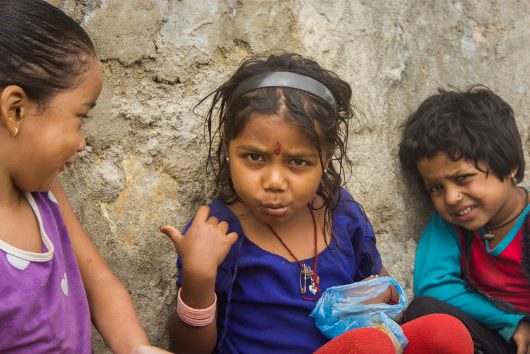
Poverty in Nepal has experienced a steady decline since the 1990s. The country’s efforts to further reduce poverty will build off existing success, population growth control and using sustainable development goals to promote development.

Between 1995 and 2015, Nepal’s poverty rate declined by an estimated 2.2-3.2 percentage points each year. The national poverty rate in 1995 was 41.8%, a figure that was reduced to 21.2% in 2015. The main drivers of Nepal’s poverty decline are remittances from migration, more diverse labor income and slowed population growth.

Migration remittances increased from less than 1% to 29% of Nepal’s GDP between the late 1990s and 2014. Remittances have caused wage increases within Nepal and driven demand for non-food items and services, generating employment in more diverse industries.

Population growth control has been a main fixture of the government as a means to combat poverty in Nepal. The country’s population doubled between 1960 and 1990 and was expected to double again between 1990 and 2015. However, beginning in the 1990s, the average number of births for a Nepali woman dropped from six in the 1970s to two in 2014, slowing population growth.

Population growth still hinders progress in Nepal’s more rural regions, where the number of births has not declined. In Nepal’s mountains, hills and Terai plains regions, there is insufficient land to accommodate the livelihoods for an increasing number of people. The Nepali government is continuing to make population growth control a central tenant of its poverty reduction plans by promoting a two-child family as the norm.

While progress is underway, natural disaster hinders Nepal’s growth. The 2015 earthquake pushed 700,000 Nepalis under the poverty line. Recovery is ongoing and can appear slow. Distribution of aid is often uneven and cash grants needed for reconstruction have been distributed slowly and in small increments.

While there are areas of recovery in need of improvement, international support programs show hope for regrowth. The U.N. Development Program has implemented cash-for-work programs and supported the restoration of micro-enterprises, both of which build individual recovery and community resilience. Sustained commitment to the SDGs will facilitate earthquake recovery and continued poverty reduction in Nepal. Two main objectives of earthquake recovery are poverty eradication and gender equality, both of which align with the SDGs.

In order to promote sustained growth, Nepal must frame its commitment to the SDGs in a national context. “What works for Bolivia might not work for Nepal,” says UNDP resident representative in Nepal, Valerie Julliand. Identifying the precise ways in which the SDGs can benefit Nepali citizens will facilitate their implementation and enable further poverty reduction.

Between the Nepali government’s plans and programs enacted by international organizations, Nepal is progressing towards sustained economic growth and poverty reduction. Poverty in Nepal has experienced a steady decline in recent decades and continued commitment to earthquake recovery and the SDGs proves promising for the country’s development.

– McKenna Lux

Photo: Flickr
November 19, 2016
https://borgenproject.org/wp-content/uploads/borgen-project-logo.svg 0 0 Borgen Project https://borgenproject.org/wp-content/uploads/borgen-project-logo.svg Borgen Project2016-11-19 01:30:022024-12-13 17:56:08Reducing Poverty in Nepal
Global Poverty, Sanitation, Water

Sanitation and Water for All: A Global Partnership

Sanitation and Water for All: A Global Partnership
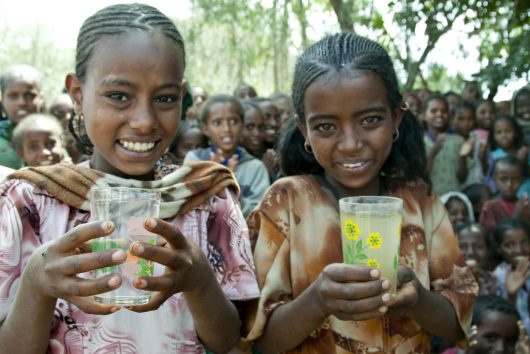
Access to clean water is a basic human right. Sanitation and Water for All (SWA) is a partnership made up of over 150 country governments, research and learning institutions, external support agencies and civil society and private sector organizations that aims to drive political action that will contribute to accountability and the effective use of resources.

The organization aims to universally and permanently provide safe water and sanitation services across the globe. By fighting for secure and equitable access to clean water, SWA is motivating governments to prioritize this issue and strengthening legislative presences relating to clean water and sanitation.

SWA recognizes the failings of the global community in providing the world’s people with adequate sanitation facilities and access to clean water as well as the implications of these failings. Approximately 2.4 billion people live today without access to quality sanitation means, and 663 million still lack improved water sources.

Both children and adults die every day from diseases caused by unsafe water or lack of appropriate sanitation and hygiene. These diseases strain already ineffective health systems in vulnerable communities and take away from economic productivity. When women and girls are required to walk dozens of miles each week to obtain clean water, they effectively miss out on educational opportunities or chances to become involved in civil society.

The SWA was initially founded with the purpose of addressing water-related millennium development goals and aiding countries that were struggling to reach these goals. Now the partnership focuses on the sustainable development goals (SGDs) related to the WASH sector and is committed to playing a crucial role in reaching SDG targets.

The SWA identifies and outlines the issues involved with the inability to address the WASH (water, sanitation and hygiene) sector of policy. Investment in WASH often competes with the financial need to support health, education, infrastructure and other aspects of society.

Another issue is that while many countries have decided upon comprehensive plans relating to water and sanitation, they often lack the capacity to implement these plans in an influential way. This inability to successfully put plans into action can defer investors and political leaders from further contributing to the WASH-related legislature. On the other hand, many countries still lack the information and aid to even construct a plan to protect and improve water, sanitation and hygiene.

Through the alignment of donors behind transparent and accountable means of national planning, the harmonization of countries and organizations, mutual accountability and management of results, the SWA hopes to continuously advocate both domestically and internationally for people who lack clean water or sanitation.

Sanitation and Water for All aims to “turn the current situation around by creating a virtuous cycle of robust planning, institutional strengthening, better resources utilization and higher investment” that has the likelihood of creating an environment where everyone has access to clean water and effective sanitation measures.

– Peyton Jacobsen

Photo: Flickr

November 11, 2016
https://borgenproject.org/wp-content/uploads/borgen-project-logo.svg 0 0 Borgen Project https://borgenproject.org/wp-content/uploads/borgen-project-logo.svg Borgen Project2016-11-11 01:30:212024-05-27 23:54:13Sanitation and Water for All: A Global Partnership
Global Poverty

8 Facts About Tuberculosis

Eight Facts about Tuberculosis
Tuberculosis (TB) is a widespread bacterial disease that has been around for much of recorded human history. The following are some key facts about TB to learn more about what is going on with the disease.

  1. Symptoms of TB include persistent coughing, chest pain, fever, fatigue and chills. TB most often infects the lungs. It is a contagious disease and is transported through the air.
  2. In 2014, there were 9.6 million cases of TB and 1.5 million deaths as a result. According to these findings, TB was the most deadly infectious disease in the world that year.
  3. Ninety-five percent of deaths caused by TB occur in low- and middle-income countries. Not only does TB disproportionately affect people in these countries, but also people living in developed countries are often unaware of the prevalence and danger of TB.
  4. TB is particularly dangerous to those who are HIV positive. Those with HIV are 26 to 31 times more likely to develop TB than those without HIV. One-third of HIV-related deaths in 2015 were a result of a TB infection.
  5. Latent TB actually infects about one-third of the world’s population. In its latent form, the TB bacteria are not active, meaning they do not cause symptoms and are not contagious. However, those with latent TB have a 10 percent chance of contracting active TB in their lifetime.
  6. TB is a treatable disease. Typically, a properly prescribed program of antibiotics can cure the disease. However, multidrug-resistant TB, which arises due to improper treatment can pose an obstacle. When a treatment of antibiotics fails to eradicate all the bacteria, drug resistant strains can develop.
  7. Much progress has been made against TB. From 2000 to 2015, the incidence rate of TB dropped by 18 percent, and from 1990 to 2015, the death rate dropped by 47 percent. Another way to look at TB reduction is to realize that from 2000 to 2014, 43 million lives were saved as a result of efforts to combat TB.
  8. An anti-TB drug specifically for children’s use was developed early this year. In the past, children had to use adult medication, which meant manually cutting down the dosage to meet the children’s needs. The new child-specific drug comes in appropriate doses, is dissolvable in water for ease of consumption, and even tastes better.

These facts illustrate how dangerous TB is and also the progress that is being made against it as well. With additional developments, the world can hope that the U.N.’s sustainable development goal of ending the TB epidemic by 2030 will become a reality.

– Edmond Kim

Photo: Flickr

November 10, 2016
https://borgenproject.org/wp-content/uploads/borgen-project-logo.svg 0 0 Borgen Project https://borgenproject.org/wp-content/uploads/borgen-project-logo.svg Borgen Project2016-11-10 08:15:132024-12-13 17:55:498 Facts About Tuberculosis
Global Poverty, Sustainable Development Goals, United Nations

Power to The People: Reaching Sustainable Development Goals

Power to The People: Reaching Sustainable Development GoalsSustainable development goals, also known as Transforming Our World: the 2030 Agenda for Sustainable Development, is comprised of 17 global goals that elucidates 169 targets. The goals were founded by the U.N., and are listed as follows:
  1. End global poverty
  2. Achieve food security, thereby ending world hunger
  3. Ensure healthcare for everyone
  4. Make education accessible to all
  5. Achieve gender equality
  6. Ensure availability to sanitary water for all
  7. Provide jobs and sustainable economic growth
  8. Build resilient infrastructure and foster innovation
  9. Make cities and other dense human settlements inclusive and safe
  10. Ensure sustainable consumption and production patterns
  11. Take urgent action to combat climate change by regulating emissions
  12. Conserve and use marine resources sustainably
  13. Switch to affordable and clean energy
  14. Reduce income inequalities
  15. Protect and conserve the biodiversity of terrestrial ecosystems
  16. Provide access to justice for all
  17. Strengthen global partnership

While it is important for the global community to focus on the macro-cosmic picture of tackling these issues, having local governments and citizens face these issues is equally vital. Beneficiaries are often the last group to be consulted about the efforts that are being implemented to help their lives. Problem solving that addresses the specific needs of different communities is so beneficial because it does not focus on one overarching idea, but rather the specific needs of the people within the community.

With the global community and local communities working simultaneously, there is a greater chance for more widespread empathetic progress being made in terms of achieving sustainable development goals worldwide. One of the largest problems is that those who have political power are not impoverished and those who are impoverished do not have political power.

Thus, poverty is often overlooked by those in seats of power. This starts with education. If education is made available to those people who are impoverished, then they are being given an effective say in their communities, and therefore some degree of power.

Eradication of global poverty will not happen unless we are able to give power over to the people who are impoverished and thereby have a more nuanced understanding of the situations that they themselves face. This empowers people in lower income communities to receive an education, making it possible for them to impart the change they want to see in their communities.

However, this is still a tandem effort. By supporting the Education for All Act, a bipartisan initiative that would advance basic education worldwide while protecting U.S. security interests, even those who are citizens of developed nations can help to empower individuals to reach sustainable development goals in developing nations to help themselves and their communities.

– Kayla Provencher

Photo: Flickr

November 10, 2016
https://borgenproject.org/wp-content/uploads/borgen-project-logo.svg 0 0 Borgen Project https://borgenproject.org/wp-content/uploads/borgen-project-logo.svg Borgen Project2016-11-10 07:53:112024-12-13 17:55:58Power to The People: Reaching Sustainable Development Goals
Global Poverty, United Nations

Montreal Protocol Amendment Implemented in 2016

Montreal Protocol Amendment Implemented in 2016
The Montreal Protocol, ratified by the United States in 1988, is an international treaty and aims to provide security and the foundations to eradicate the use of ozone-depleting substances. The initiative is also the only universal treaty to be ratified by all member states of the U.N. An amendment brought by all member states of the U.N. in October agreed to new plans to decrease the use of greenhouse gasses found in air conditioning and refrigeration technology.

Collaboration on plans to develop the Montreal Protocol Amendment to phase out hydrofluorocarbons (HFCs) began a year prior to its passage by world leaders. HFC emissions are most prevalent in refrigeration and air conditioning technologies and have the vast potential to drastically increase global temperatures, as warned by Environmental Protection Agency Administrator (EPA), Gina McCarthy.

The United States has already taken action to eliminate the use of HFCs, as demonstrated by the Clean Air Act (CAA) and President Obama’s Climate Action Plan (CAP). The EPA reports that the president’s CAP initiative also calls for investment in more energy-efficient and environmentally safe alternatives to decrease amounts of greenhouse gas.

The EPA predicts HFC gas emissions to increase 20 times the current level over the decades in the near future. Timely attention to the phasing out of HFC emissions, due to the extremely high potency of the gas in ozone-depleting processes, is imperative to the success of environmental protection and sustainability. Sustaining current emissions of HFCs into the environment also has the potential to counterbalance existing efforts to phase out other ozone-depleting substances, as reported by the EPA.

However, in a press release from the president’s Office of the Press Secretary, results of the plans set forth to cut HFC and other greenhouse gas emissions in the private sector equate to, “taking 210 million passenger vehicles off the road for a year.” The World Bank also states, “consequences of climate change could cause an additional 100 million people into poverty by 2030.”

U.N. Sustainable Development Goals outline universal climate action as pivotal to ensuring beneficial development for countries in both the global north and south. The World Bank’s Climate Change Action Plan also provides a framework for global regions, recognizing variations in challenges and needs, to administer support and action plans should challenges arise due to the declining state of nature.

– Amber Bailey

Photo: Flickr

November 1, 2016
https://borgenproject.org/wp-content/uploads/borgen-project-logo.svg 0 0 Borgen Project https://borgenproject.org/wp-content/uploads/borgen-project-logo.svg Borgen Project2016-11-01 01:30:322024-12-13 17:56:04Montreal Protocol Amendment Implemented in 2016
Global Poverty, Sanitation, Sustainable Development Goals, Water

Water For People: Ending Water Scarcity Through Infrastructure

Ending Water ScarcityAn international organization believes in ending water scarcity in developing countries. Water For People is a non-profit that focuses on establishing proper infrastructure and sanitation to remedy the lack of clean water around the globe.

They are especially concerned with the impact water scarcity has on women and girls, who often bear the burden for water collection.

They work at the ground level to build trust within the community and by tailoring their solutions to the issues at hand. Local governments, community members and business owners are all required to co-invest, ensuring that all partners have an equal stake in the results. This collaboration allows for a better understanding of the abilities of a community to finance and maintain the projects for the future.

The U.N. states that more than 2 billion people are affected by water scarcity. That figure is expected to rise due to climate change. This is especially problematic for developing countries struggling with poverty.

According to Jim Yong Kim, president of the World Bank Group, “Economic growth in some regions could be cut by as much as six percent because of water scarcity alone.”

That is why one of the U.N.’s Sustainable Development Goals for 2030 includes improved access to clean water and sanitation. There are several targets for doing so, including moves to:

  1. End open defecation, which can threaten the viability of water resources;
  2. Improve water quality by reducing pollution, dumping and the release of hazardous materials;
  3. Protect and restore water-related ecosystems;
  4. Support the participation of local communities in improving water management;

This last target is where Water For People comes in. The organization, which was established by the American Water Works Association (AWWA) in 1991, has provided access to clean water in nine developing countries: Honduras, Guatemala, Nicaragua, Bolivia, Peru, Malawi, Rwanda, Uganda and India.

Sanjay Wijesekera, UNICEF’s global head of water, sanitation and hygiene put it simply: “No matter where you look, access to clean drinking water makes a difference in the lives of people.”

The fight for ending water scarcity is ongoing but there continues to be an increase in access to clean water thanks to Water For People.

– Sabrina Santos
Photo: Flickr

October 31, 2016
https://borgenproject.org/wp-content/uploads/borgen-project-logo.svg 0 0 Borgen Project https://borgenproject.org/wp-content/uploads/borgen-project-logo.svg Borgen Project2016-10-31 01:30:252024-12-13 17:55:51Water For People: Ending Water Scarcity Through Infrastructure
Education, Global Poverty

How the UN Plans to Achieve Global Education Goals

How the UN Plans to Achieve Global Education Goals?
In 2015, the international community came together to set new goals for development. These consisted of 17 main goals to be achieved by the year 2030. These goals are built to transform the world and lead it faster towards further development. Goal Four of the Sustainable Development Goals is to ensure inclusiveness and quality education for all and promote life-long learning.

The United Nations believes that global education goals are important to improving the lives of individuals, particularly in developing countries. This is essential as it would lead to sustainable development for future generations.

A lot of progress was made in terms of enrollment rates, particularly for girls. Basic literacy rates are on the rise and there is a general desire toward achieving universal education goals. The 2030 goals will further work on providing free, accessible and equitable education while removing disparities based on poverty, gender and skills.

At the World Education Forum in 2015, UNESCO adopted the Incheon Declaration. This declaration affirms the global community’s dedication to achieving global education goals. UNESCO is mandated to work and supervise the goals. This includes country level and partnerships with governments by involving multi-stakeholders into the process.

On the other hand, a study by the UNESCO discussed the student-teacher gap in different communities. The study found out that on the global level the gap was the worst in Sub-Saharan Africa and South Asia. To fill this ratio gap between students and instructors, 69 million teachers need to be recruited globally by 2030. Both regions mentioned above will need 32 million teachers alone.

This is the necessary number to meet global education goals. Currently, low pay is a challenge. However, an increase in pay is known to improve student performance. Thus, there are hopes in the international community to fund such an initiative.

– Noman Ahmed

Photo: Flickr

October 13, 2016
https://borgenproject.org/wp-content/uploads/borgen-project-logo.svg 0 0 Borgen Project https://borgenproject.org/wp-content/uploads/borgen-project-logo.svg Borgen Project2016-10-13 01:30:442024-12-13 17:56:00How the UN Plans to Achieve Global Education Goals
Development, Global Poverty

New World Bank Chief Economist: Bold Ideas to Reduce Poverty

World Bank Chief Economist Poverty Reduction
The World Bank Group (WBG) announced on July 18 that it had appointed Paul Romer as the next World Bank Chief Economist.

WBG President Jim Yong Kim has high hopes for Romer. “We’re most excited about his deep commitment to tackling poverty and inequality and finding innovative solutions that we can take to scale,” Kim said. Romer replaces Indian economist Kaushik Basu, who retired on July 31.

Romer is a professor of economics at the Stern School of Business at New York University (NYU). He also serves as Director of NYU’s Marron Institute of Urban Management and is a research associate at the National Bureau of Economic Research.

Several new organizations praised the pick for the new World Bank Chief Economist and predicted that Romer would bring about real change at the 72-year-old international financial institution.

The Economist described Romer as a formidable and often contrarian figure in the field of economics. He has criticized his profession for its obsession with obscure models and equations, which he terms “mathiness.”

“For me, the most exciting part about economics is going beyond knowledge that is only potentially useful to knowledge that is actually useful, and doing so on a scale that touches millions or billions of lives,” Romer explained in the World Bank press release.

Romer has also done impressive work both as an academic and an entrepreneur, according to Noah Smith of Bloomberg View. In the 1980s, he was one of the first economists to champion the endogenous growth theory. Technological change, according to his model, occurs as a result of investment in research and development, which creates growth within the economy at large (hence the term “endogenous growth”).

It is important to spend money on innovation because ideas, once created, are disseminated at little or no cost. Romer led by example through his education-technology start-up Aplia, which he founded in 2000.

Among one of Romer’s more unorthodox ideas is the concept of “charter cities.” In line with the endogenous growth theory, he believes developing countries should spend money to build new cities as sites for policy and economic experimentation. He cited Hong Kong and Shenzhen in China’s Pearl River Delta as success stories and a model for these charter cities to follow.

As World Bank Chief Economist, Romer will provide intellectual guidance to the President and the senior management. His staunch support for financing innovation and testing new approaches in order to reduce poverty brings new life to the World Bank’s development goals.

– Philip Katz

Photo: Flickr

September 27, 2016
https://borgenproject.org/wp-content/uploads/borgen-project-logo.svg 0 0 Borgen Project https://borgenproject.org/wp-content/uploads/borgen-project-logo.svg Borgen Project2016-09-27 01:30:352024-06-07 05:07:37New World Bank Chief Economist: Bold Ideas to Reduce Poverty
Foreign Policy, Global Poverty, Government

How Statelessness Affects Global Poverty

Statelessness

Statelessness is as much of an economic burden as it is a social and political one. According to a recent Foreign Policy article, statelessness results in “chronic economic instability” because it is often accompanied by joblessness and poverty.

According to the U.S. Department of State, a stateless person is someone who does not “enjoy” the rights of  “citizenship – the legal bond between a government and an individual – in any country.” In other words, these individuals do not have the same rights and opportunities as people who are recognized as citizens by the nations in which they live.

Although the U.N. High Commissioner for Refugees counted 3.5 million stateless people in 2011, they estimated that the number could be as high as 12 million people. Foreign Policy reports that as many as 15 million people might be stateless today.

The Department of State notes that the causes of statelessness are diverse. They include failure to register newborns properly, birth to stateless parents, discrimination against minorities and traditional attitudes towards registration, to name a few.

Not only are stateless people denied government-issued identification, preventing them from acquiring formal labor jobs, but they are also subjects of social discrimination. These realities exclude them from even more employment opportunities, leads to fewer chances of regular employment and leaves stateless persons even more destitute.

Foreign Policy also reports that very little research exists about the effects of statelessness on economies. Some existing studies suggest that stateless persons have a negative economic impact on smaller nations in which they may make up a more significant percentage of the population. In this case, granting citizenship to stateless persons might actually improve these nations’ gross domestic product output.

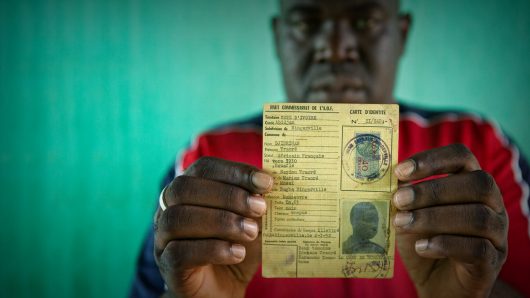
Although stateless individuals can obtain cards which signify their status, only a few thousand people have been able to take advantage of this opportunity. One of the Sustainable Development Goals of the United Nations aims to provide everyone with legal identity by 2030, which will give people access to formal job markets and increase economic opportunities for individuals and nations.

The U.S. State Department suggests that universal birth registration and increasing access to naturalization and citizenship will help solve statelessness. As Foreign Policy points out, nations must want to increase inclusiveness with stateless persons and cease the use of political reasoning for ostracizing them before changes can occur.

Policies and prejudices might take many years to change, but the economic, social and humanitarian advantages of granting citizenship to stateless people are worth the fight.

– Addie Pazzynski

Photo: UNHCR

July 24, 2016
https://borgenproject.org/wp-content/uploads/borgen-project-logo.svg 0 0 Borgen Project https://borgenproject.org/wp-content/uploads/borgen-project-logo.svg Borgen Project2016-07-24 01:30:372024-12-13 17:54:51How Statelessness Affects Global Poverty
Food Security, Global Poverty

Olam International Pledges to Help End Global Poverty

Poverty_Agriculture Olam International
Agri-business firm Olam International has pledged to help eradicate global poverty and mitigate climate change impacts that threaten food security.

Olam International is a world-leading firm operating in 70 countries, supplying food and raw materials to over 16,200 customers worldwide. Its business model is based on ensuring that profitable growth is achieved in an ethical, socially responsible and environmentally sustainable way.

The agri-business knows its responsibility to the earth, as changing weather patterns are affecting crops and communities. The organization realizes that climate change will threaten food security by creating less than ideal conditions for optimal food production, thus threatening the world’s chances to end global poverty.

According to Olam, “Ensuring we and our 4 million farmer suppliers, the vast majority of whom are smallholders in emerging markets, are implementing mitigation and adaptation measures to achieve the 2°C goal is therefore integral to our strategy.” In addition, the company has adopted four of the 17 Sustainable Development Goals set out by the United Nations.

“Based on our configuration of assets and our capabilities across the 70 countries that we operate in, we have chosen four of the SDG Goals where we believe we can create a real impact,” said Sunny Verghese, the chief executive of Olam, at the U.N.’s High Level Thematic Debate on Achieving the Sustainable Development Goals.

Olam is prioritizing mitigating climate change through multiple goals: reducing GHG emissions from their farming and processing operations, adapting their own farming operations to build in climate resilience, encouraging farmer suppliers and logistics providers to improve their GHG emissions intensity and collaborating at a sector level to speed up implementation of climate-smart practices.

Olam will accomplish these goals through public, private and plural society partnership. Verghese said at the debate that a U.N.-to-private-sector partnership is key to successfully implementing the SDGs.

Verghese went on to say, “If after all of this hard work and overwhelming effort, if we are not going to be leaving a better place for our children, what is the point of it all?”

– Kerri Whelan

Photo: Flickr

June 28, 2016
https://borgenproject.org/wp-content/uploads/borgen-project-logo.svg 0 0 Borgen Project https://borgenproject.org/wp-content/uploads/borgen-project-logo.svg Borgen Project2016-06-28 01:30:482024-12-13 17:54:24Olam International Pledges to Help End Global Poverty
Page 8 of 12«‹678910›»

Get Smarter

  • Global Poverty 101
  • Global Poverty… The Good News
  • Global Poverty & U.S. Jobs
  • Global Poverty and National Security
  • Innovative Solutions to Poverty
  • Global Poverty & Aid FAQ’s
Search Search

Take Action

  • Call Congress
  • Email Congress
  • Donate
  • 30 Ways to Help
  • Volunteer Ops
  • Internships
  • Courses & Certificates
  • The Podcast
Borgen Project

“The Borgen Project is an incredible nonprofit organization that is addressing poverty and hunger and working towards ending them.”

-The Huffington Post

Inside The Borgen Project

  • Contact
  • About
  • Financials
  • President
  • Board of Directors
  • Board of Advisors

International Links

  • UK Email Parliament
  • UK Donate
  • Canada Email Parliament

Get Smarter

  • Global Poverty 101
  • Global Poverty… The Good News
  • Global Poverty & U.S. Jobs
  • Global Poverty and National Security
  • Innovative Solutions to Poverty
  • Global Poverty & Aid FAQ’s

Ways to Help

  • Call Congress
  • Email Congress
  • Donate
  • 30 Ways to Help
  • Volunteer Ops
  • Internships
  • Courses & Certificates
  • The Podcast
Scroll to top Scroll to top Scroll to top