• Link to X
  • Link to Facebook
  • Link to Instagram
  • Link to TikTok
  • Link to Youtube
  • About
    • About Us
      • President
      • Board of Directors
      • Board of Advisors
      • Financials
      • Our Methodology
      • Success Tracker
      • Contact
  • Act Now
    • 30 Ways to Help
      • Email Congress
      • Call Congress
      • Volunteer
      • Courses & Certificates
      • Be a Donor
    • Internships
      • In-Office Internships
      • Remote Internships
    • Legislation
      • Politics 101
  • The Blog
  • The Podcast
  • Magazine
  • Donate
  • Click to open the search input field Click to open the search input field Search
  • Menu Menu

Tag Archive for: Sustainable Development Goals

Posts

Global Poverty, Human Rights

3 Organizations Fighting Global Illiteracy

Global Illiteracy
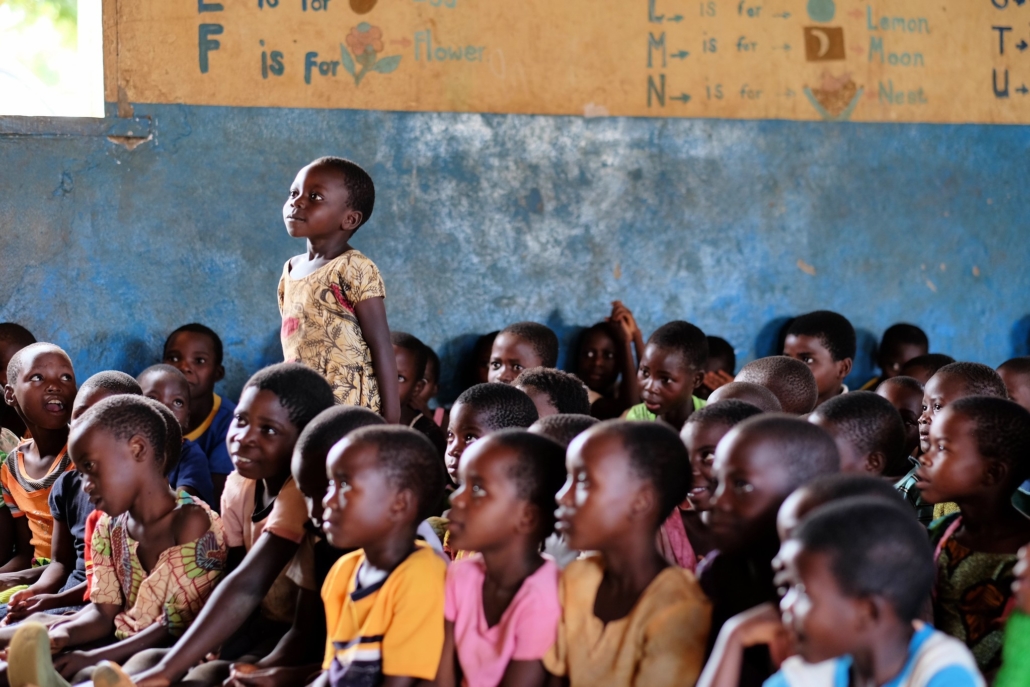
The ability to read and write is one of the few skills with the power to completely change a person’s life. Literacy is vital to education and employment, as well as being incredibly beneficial in everyday life. Global illiteracy is extensive. As of 2018, 750 million people were illiterate, two-thirds of whom were women. 

In 2015, the United Nations set 17 goals for sustainable development, one of which included the aim to “ensure that all youth and a substantial proportion of adults, both men and women, achieve literacy and numeracy” by 2030. Though this is an admirable goal, current progress suggests that global illiteracy will remain a substantial problem in 2030 and beyond, due to challenges such as poverty and a lack of trained teachers in some areas. While eliminating global illiteracy by the 2030 deadline seems out of reach, companies and organizations around the world are taking steps toward improving literacy rates, often with the help of technological innovations.

  3 Organizations Fighting Global Illiteracy

  1. The Partnership-Afghanistan and Canada (PAC), World Vision and the University of British Columbia have collaborated to create a phone-based program aimed at improving literacy rates among rural women in Afghanistan. Women in remote areas who lack local educational resources learn from daily pre-recorded cell phone calls, which teach them how to read and write in Dari, a Persian dialect widely spoken in Afghanistan.  The lessons require only paper, a writing utensil and cell phone service, which are widely available throughout the country.

  2. The World Literacy Foundation operates many literacy-boosting programs, one of which is its SunBooks project. The project provides solar-powered devices through which students can access digital content and e-books while offline. The SunBooks initiative, intended to boost literacy rates in sub-Saharan Africa, helps young people overcome barriers to literacy such as limited access to books, a lack of electricity and limited internet access. Only 35 percent of schools in sub-Saharan Africa have access to electricity, so traditional e-books are not a viable solution to a lack of books. SunBooks’ content is available in local languages and in English.

  3. A collaboration between Pearson Education’s Project Literacy Campaign, the World Bank and All Children Reading: A Grand Challenge for Development has resulted in a project called EVOKE: Leaders for Literacy. EVOKE is a series of lessons on problem-solving, leadership and the importance of literacy, styled as a video game in which the student plays a superhero. EVOKE aims to empower young people to be literacy advocates in their own communities, and more than 100,000 people have participated in the program.  The project has shown promise in getting young people excited about reading and writing.

People generally understand literacy as a necessary part of education and the Universal Declaration of Human Rights established it a human right in 1948. Yet still, hundreds of thousands of people cannot read or write. Literacy rates are improving, but not quickly enough to meet U.N. targets. These organizations are making valuable contributions toward fighting global illiteracy so that every person can be empowered.

– Meredith Charney
Photo: Pixabay
August 3, 2019
https://borgenproject.org/wp-content/uploads/borgen-project-logo.svg 0 0 Jennifer Philipp https://borgenproject.org/wp-content/uploads/borgen-project-logo.svg Jennifer Philipp2019-08-03 09:47:452024-06-06 00:26:213 Organizations Fighting Global Illiteracy
Activism, Global Poverty

5 Ways Anyone Can Help Fight Global Poverty

Help Fight Global Poverty
Poverty is an issue that does not always have a single, clear-cut solution. This leads to a myriad of action plans across the world that seek to address the root causes of poverty. The average person usually experiences these measures through the filters of government officials and media, which makes poverty reduction seem inaccessible to the everyday citizen. However, anyone can help alleviate poverty, not just politicians or public figures. Here are four ways to help fight global poverty.

Use Passions and Education

Poverty is a daunting topic and one cannot learn all its facets in one sitting. The easiest way to begin expanding one’s knowledge about poverty is to start somewhere familiar. Consider any relevant interests or hobbies. For example, sports lovers could type “sports and poverty” into a favorite search engine and learn about issues that impact their interests. Starting off with a topic that is familiar makes it easier to digest new information and keep one’s interest before diving into more specific topics as the individual gains more knowledge.

Finding poverty-related information relevant to one’s interests by discovering articles, videos and social media pages is a great way to educate oneself. Knowledge is a powerful tool to help fight global poverty.

Support Ethical Brands

Fashion lovers will find that the fashion industry is a significant contributor to poverty around the world. In particular, companies produce fast fashion in hazardous sweatshops. Companies make articles so that they wear out within a few wears and harmful chemicals, such as lead, often contaminates them.

Fast fashion companies like Zara and H&M design clothing so that it is outdated within one week thanks to the rise of micro-seasons. Rather than releasing designs corresponding to the traditional seasons, these companies put out 52 clothing collections each year. Some companies get new clothing shipments in their stores twice a week, while others list upwards of 400 items on their websites per week.

Companies can produce this clothing quickly and cheaply due to the usage of low-quality materials and not paying workers a living wage. Estimates determine that informal workers, often women and children, sew 20 to 60 percent of fast fashion garments in their own homes. Globally, 40 million people are garment workers, and 85 percent of those are women. Children usually add details like sequins and beading, which machines can apply easily, in order to cut equipment costs.

To stop supporting fast fashion brands and help fight global poverty, there are a few steps everyone can take. Websites and apps like Ecoture and Good On You provide ratings of brands’ ethics and practices, while also providing a one-stop-shop for ethical brands. Ethical brands like Organic Basics, Kowtow, People Tree and HARA are just a few of the highly ranked clothing companies out there. Thrifting is also a great way to stop creating a demand for fast fashion while not breaking the bank.

Support the Sustainable Development Goals

The Sustainable Development Goals are a set of 17 goals set forth by the United Nations in 2015. They aim to support economic growth and to resolve global issues such as poverty, hunger, lack of access to water and inequality by 2030. These goals are for countries and governments, but individuals can support progress toward the Sustainable Development Goals as well.

In June 2019, Forbes indicated that millennials, unlike older generations, have distinct consumption habits and preferences that are conducive to achieving various Sustainable Development Goals. Millennials are more likely to be conscious of ethical brands, are more ethnically diverse and are financially, socially and health-conscious. Others often think of them as more educated and technology-based than previous generations as well. Other generations can advance Sustainable Development Goals by adopting similar habits, like becoming more financially conscious through impact investing which allows individuals to put their money into socially responsible investments (SRIs).

Get Involved

Individuals can maximize their efforts by involving themselves with a larger group. A great way to help fight poverty is by finding a cause or nonprofit to support. Many organizations help fight global poverty even if that is not their main goal. Organizations dedicated to women’s empowerment, providing access to clean water, child welfare or improving access to education are all causes that decrease poverty rates. Pick a favorite organization and donate some time or money to them on a regular basis. Great resources to start with are The Borgen Project, Days for Girls and Equality Now.

Mobilize

Another way to help fight global poverty is to multiply efforts by contacting local leaders and encouraging others to do the same. People know this as mobilizing and it is a great way to create change. Congressional leaders and their staff receive letters, emails and calls from constituents every week and the more they see a particular issue or piece of legislation come up, the more likely they are to support it. The Borgen Project details more ways to get involved and connect with Congressional leaders.

These five points are a great way for anyone to help fight global poverty and encourage others to join the cause. Together everyone can make the difference that eliminates poverty for good.

– Shania Kennedy
Photo: Pixabay

July 20, 2019
https://borgenproject.org/wp-content/uploads/borgen-project-logo.svg 0 0 Kim Thelwell https://borgenproject.org/wp-content/uploads/borgen-project-logo.svg Kim Thelwell2019-07-20 15:08:172024-06-06 00:26:235 Ways Anyone Can Help Fight Global Poverty
Education, Global Poverty

Erna Solberg and Her Fight for Female Education

Erna Solberg
Erna Solberg is a Norwegian politician who was born and raised in Bergen, Norway and has held many different positions of power during her career. Since 2004, she has been the leader of the Conservative Party of Norway (EPP, IDU) and has been Prime Minister of Norway since the General Election in 2013. Norway re-elected her as Prime Minister in September 2017 and she has leveraged her position as the leader of a wealthy and influential country to fight for female education and children’s rights in developing countries. The Prime Minister has a long track record of international educational aid especially for women and children, and these are just three examples of the important strides Ms. Solberg has taken.

Three Initiatives in the Fight for Female Education

1. Starting in 2016, the Prime Minister co-chaired the U.N. Secretary General’s Advocacy group for the Sustainable Development Goals. During her residency as co-chair, she committed herself to increasing equitable access to education for girls and children in conflict areas. In fact, in 2018, Norway promised to increase its contribution to The Global Partnership for Education (an organization that works to improve education in developing countries) to $255 million.

2. In 2015, under the direction of Ms. Solberg, Norway committed to providing at least $6 million to improve sanitation for the estimated two billion people lacking it. This commitment may seem unrelated to education but many developing nations lack adequate sanitation, which often keeps girls from attending school regularly. Cultural stereotypes and taboos around female hygiene, especially in regards to menstruation, often keep girls out of class. The $6 million Norway pledged can make a huge difference in closing the gender gap in classrooms. For example, a UNICEF study showed that girl’s attendance improved by 12 percent in Tanzania when the girls had access to clean water. Norway’s support for proper sanitation, in tandem with education, will give girls a better opportunity to obtain a quality education.

3. In 2014, Erna Solberg launched a $12.3 million initiative in Malawi to improve the access and quality of girl’s education. On a trip to Malawi in July 2014, Ms. Solberg announced the initiative and stated that it would strengthen the education system, particularly for girls, and improve aid effectiveness. With Norway’s money and cooperation, Malawi has launched a number of programs including promoting secondary school for girls, further integrating minorities and children with disabilities into the education system and providing new technologies to enhance learning. The program has been successful so far and under Ms. Solberg’s guidance, the initiative will continue until 2020.

It is clear that since her appointment as Prime Minister of Norway in 2013, Erna Solberg has focused the plentiful resources of her nation to uplift girls in the most underprivileged countries. In an op-ed she co-wrote in 2014, she said, “if you invest in a girl, she feeds herself, educates future children, lifts up her community and propels her nation forward – charting a path that offers dignity for all in the process.” The Prime Minister openly continues to hold this belief and has launched and supported many initiatives that prove it.

– Isabel Fernandez
Photo: Flickr

June 22, 2019
https://borgenproject.org/wp-content/uploads/borgen-project-logo.svg 0 0 Kim Thelwell https://borgenproject.org/wp-content/uploads/borgen-project-logo.svg Kim Thelwell2019-06-22 11:22:272019-10-29 13:50:40Erna Solberg and Her Fight for Female Education
Global Poverty

Australia’s Program to Eradicate Poverty in Sub-Saharan Africa

Poverty in Sub-Saharan AfricaIn accordance with the 2030 Sustainable Development Goals (SDGs), Australia will spend $121 million in 2018-2019 in Official Development Assistance (ODA) to poverty-stricken areas including sub-Saharan Africa (SSA). The amount of assistance includes investment priorities in areas such as health, building resilience, education, infrastructure and trade. Australia sees economic benefits in investing in SSA, such as future potential trade with Africa. Through the help of many nongovernment organizations, Australia seeks to eradicate poverty in sub-Saharan Africa.

Agricultural Productivity

Two major areas of investment in SSA include agricultural productivity and food security. There is a spillover effect from achieving these two goals; as health improves from improving farming productivity, income increases as well. Due to a higher income, those in extreme poverty would be able to afford education, better food, clean drinking water and sanitation.

The livelihood of Africans would increase and that is one reason Australia has its focus on agribusiness. From 2009, Australia has awarded at least $31 million to small- and medium-sized agribusiness companies, the technology and renewable energy sector and the financial service sector. The $31 million is part of the Africa Enterprise Challenge Fund, which is promoting resilient rural communities, helping eradicate poverty in Sub-Saharan Africa and creating jobs through the private sector.

Humanitarian Assistance

Australia’s humanitarian program in Africa focuses on economic downfalls, natural disasters and conflict, all of which contribute to food scarcity and poverty. Australia’s goal is to alleviate suffering from these shocks, save lives and bring stability and dignity to those affected. In the last few years, Australia focused on the crises in South Sudan and Somalia. In line with the Foreign Policy White Paper, its focus is on working with the United Nations High Commissioner for Refugees (UNHCR) in supporting refugees.

Australia Awards

Australia’s method of improving Sub-Saharan Africa’s livelihood is through the Australia Awards Scholarship Program. Wealth generation and job creation are two areas that have developed from recipients of this award. Courses teaching hydroponic farming, macroeconomic development and professional development give awardees the knowledge and skills needed to drive economic growth and sustainable development. Awardees also learn leadership, negotiation, project management, public speaking and other soft skills.

One such awardee, Edmore Masendeke from Zimbabwe, works as an economist at the Reserve Bank of Zimbabwe. In 2018, Masendeke began an accessible housing project for people with disabilities. He helped the bank start a loan facility for Zimbabweans with disabilities. He is only one awardee that has accomplished positive change in underrepresented individuals.

Success

  • Over 12 million Africans have better healthcare, improved access to food security and better water and sanitation thanks to the collective work of 27 nongovernmental organizations funded by the Australian NGO Cooperation Program in 2017-18.
  • Through its humanitarian effort, Australia helped over 1 million vulnerable women, men and children in 12 countries by giving life-saving assistance.
  • Australia increased crop production by improving agricultural productivity that resulted in advanced farming techniques and better food security.
  • There were 479 Australia Awards Scholarship awardees in 2018.

Future

The Department of Foreign Affairs and Trade stated that its strategic direction aligns with the Foreign Policy White Paper. Its main focus areas in the future include the following: agricultural productivity, humanitarian assistance, leadership and human capacity development and gender equality and women’s empowerment. Australia will continue to support the initiative to eradicate poverty in sub-Saharan Africa and collaborate with nongovernment organizations, the United Nations and its subsidiaries to improve agriculture, food security, water and sanitation and hygiene programs in order to achieve the 2030 Sustainable Development Goals.

– Lucas Schmidt
Photo: Flickr

May 4, 2019
https://borgenproject.org/wp-content/uploads/borgen-project-logo.svg 0 0 Kim Thelwell https://borgenproject.org/wp-content/uploads/borgen-project-logo.svg Kim Thelwell2019-05-04 14:19:132019-05-14 13:15:23Australia’s Program to Eradicate Poverty in Sub-Saharan Africa
Global Poverty

Remembering Kofi Annan: A Leader in the Fight Against Global Poverty

Remembering Kofi Annan: A Leader in the Fight Against Global Poverty
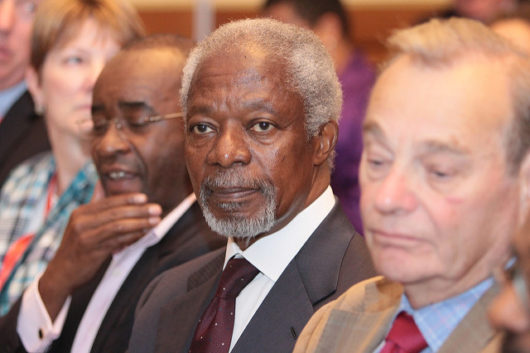
In his ten years as the Secretary-General of the United Nations, Kofi Annan was a beacon for diplomacy, peace and unity in the international community. Annan held this already highly scrutinized position in a time when global terrorism and political instability were occurring in almost every corner of the world.

As head of a United Nations’ peacekeeping operation that failed to prevent genocides in Bosnia and Rwanda, Annan erroneously received personal blame and scrutiny throughout tumultuous times in his career. Yet, the manner in which he carried himself and pushed forward to fix his shortcomings, mold the institutional legitimacy of the U.N.

His work on curtailing the global poverty and human rights abuses earned him unprecedented praise from world leaders and representatives of poor and rich nations, as well as a Nobel Peace Prize in 2001.

Remembering Kofi Annan’s fight against global poverty is very important since it serves as a model of the amount of commitment, patience and humanity that are needed to make a difference.

Early Years: The Birth of an Advocate

Annan was born in what is now Kumasi, Ghana, in 1938. Being that he was the grandson and nephew of Asante chiefs, rulers of his home nation of Ghana at the time, Annan’s exposure to the world of politics came at an early age. His formal education also coincided with the Ghanaian independence movement that saw the nation become the first nation in Africa to gain independence from Britain.

The independence movement left many people in Ghana feeling that anything is possible. His vision of what the world could be, but most importantly, his pursuit of that vision demonstrates that he bought into this idea as well.

Millennium Development Goals

During his tenure at the United Nations, Annan was responsible for instituting some of the most pivotal developmental reforms priming the organization for the role it now holds in international affairs. Annan changed the United Nations from an institution that was once passive into the one that now promotes the norm of humanitarian intervention and advocacy. His advocacy and reforms often manifested themselves to protect those facing extreme poverty.

One of the most notable projects in Annan’s fight against global poverty was the Millennium Development Goals, at the forefront of which was the goal of halving extreme poverty, defined as people living on income less than $1.25, by the year 2015.

“For many countries, it will be necessary to take concrete steps to ensure that faster and more pro-poor economic growth is achieved between now and 2015 if they are to have a real chance of meeting the 2015 target,” Annan said back in 2001.

But he did not simply urge member countries to solve the problem. Rather, he presented a framework that would allow states to embed poverty reduction strategies into their plans for national development and policy. He also used his political prowess to bargain and incentivize richer nations to increase spending on development aid to 0.7 percent of their national incomes, a portion that can be described as low even today.

Annan’s United Nations also pushed for innovative ways to reduce poverty, including increasing access to renewable energy. Ultimately, the Millennium Development Goals would be dubbed as the most successful anti-poverty movement in history, just barely missing out on a goal of reducing extreme poverty levels by half.

Remembering Kofi Annan’s Impact on the Fight Against Poverty

Annan was a champion of world development and poverty reduction, particularly in his native continent of Africa. He was a chairman of the Africa Progress Panel after his second and final term as United Nations Secretary-General. The Panel, now subsumed by the Africa Progress Group, advocates for the equitable and sustainable development of African nations through international collaboration and engagement in global politics.

Annan helped to establish the annual Africa Progress Report that, among many things, analyzed and reported on the progress that African nations were making toward the Sustainable Development Goals.

He also founded the Kofi Annan Foundation that served as a catalyst for lasting peace and inclusive governance by anticipating looming threats security, development and human rights.

Kofi Annan’s commitment to the world’s poor never faltered throughout the duration of his career. As Secretary-General of the United Nations Annan faced many difficult and discouraging moments. But the spirit that emboldened Annan’s vision of a more effective United Nations and a more equitable world allowed him to carry on.

Annan’s fight against global poverty was immense. He showed the world what it means to be a dedicated advocate. But most importantly, he showed us that no vision is too big to be attained. Remembering Kofi Annan and his efforts in eradicating the world’s poverty are very important to cherish. Annan’s legacy lives on through his family, The Kofi Annan Foundation, the Africa Progress Group and the United Nations.

But it also lives on through the people that continue to dedicate themselves and their lives to the fight against global poverty.

– Isha Kakar
Photo: Flickr

December 2, 2018
https://borgenproject.org/wp-content/uploads/borgen-project-logo.svg 0 0 Borgen Project https://borgenproject.org/wp-content/uploads/borgen-project-logo.svg Borgen Project2018-12-02 07:30:422019-05-21 11:56:26Remembering Kofi Annan: A Leader in the Fight Against Global Poverty
Global Poverty

The Global Findex: Financial Inclusion for Developing Countries

Bill and Melinda Gates Foundation
The importance of financial inclusion for developing countries has become much more evident in recent years. Financial inclusion, the process of making financial services accessible and affordable, connects people to a formal financial system. This allows them to make better investment decisions, build assets and savings and make general daily living easier.

Often times, poor people around the world rely on cash to facilitate transactions, which can be unsafe and difficult to manage. Financial services, such as bank accounts and digital payments, can help people escape poverty by helping them to make investments in education, business and healthcare.

In fact, financial inclusion for developing countries is part of seven of the seventeen U.N. Sustainable Development Goals, including zero poverty, reduced inequality, and decent work and economic growth. Studies by the World Bank show that mobile money services that allow users to store and transfer funds on their phones lead to higher income earning potential, thereby reducing poverty.

Providing Financial Inclusion for Developing Countries

In 2011, The World Bank Group launched the Global Findex Database, funded by The Bill and Melinda Gates Foundation. The Global Findex increases financial inclusion by tracing financial inclusion efforts globally. By putting a quantitative measure to global financial inclusion efforts, The World Bank Group and other large organizations are able to track and record progress as it relates to increasing financial inclusion and its role in reducing poverty.

The World Bank recently published a report called The Global Findex Database 2017: Measuring Financial Inclusion and the Fintech Revolution. The report demonstrated that the 69 percent of adults owned a bank account in 2017, which is an 18 percent increase from the 2011 report. This translates to over 1.2 billion adults receiving access to financial tools.

Overall, the rise of financial technology (fintech for short) alongside the greater use of mobile phones and the internet have bolstered financial inclusion efforts over the past decade. Additionally, the data underscores the idea that not only are financial services expanding to more adults across the world but also the increase in financial technology is promoting greater services for those who already have bank accounts.

Financial Inclusion at Work Around the World

A recent study in Kenya found that access to mobile money reduced extreme poverty by 22 percent in households headed by women. Because mobile money allowed users to increase their savings by over 20 percent, 185,000 women in Kenya were able to leave the farming industry and move on to business development and retail, increasing their incomes and overall development.

These women were able to save at higher rates and, therefore, invested an average of 60 percent more in their businesses. Similarly, in Nepal, women who received free savings accounts spent 15 percent more on nutritious food and 20 percent more on education.

The intersection of information and technology is changing how we perceive poverty and financial access around the world. The Global Findex increases financial inclusion by allowing researchers, scholars, technology founders, development practitioners and banks across the globe to have access to data that can help navigate where financial inclusion needs to be more accessible.

The Global Findex increases financial inclusion for developing countries by creating accountability. With The Global Findex, The World Bank will be much closer to its goal of achieving Universal Financial Access by 2020. Furthermore, more people living in poverty will have the means to better allocate, save and eventually invest money in their futures.

– Shefali Kumar

Photo: Flickr

September 28, 2018
https://borgenproject.org/wp-content/uploads/borgen-project-logo.svg 0 0 Borgen Project https://borgenproject.org/wp-content/uploads/borgen-project-logo.svg Borgen Project2018-09-28 01:30:462019-07-19 08:18:30The Global Findex: Financial Inclusion for Developing Countries
Global Poverty

The World Celebrates International Day of Peace

International Day of PeaceSeptember 21 marks an important day worldwide. It is International Day of Peace, also known as Peace Day. The United Nations created the day in 1981 to celebrate a globally shared commitment: honoring and practicing peace.
The U.N. has been making tremendous efforts to achieve world peace. One such effort is the creation of the Universal Declaration of Human Rights. The document is considered a milestone in achieving a common standard of life for all people. It was initially adopted by the United Nations General Assembly in Paris in December 1948. The declaration celebrates its 70th anniversary in 2018. As a tribute to this declaration, the theme for the International Day of Peace 2018 is the ‘Right to Peace’.

In addition to the Universal Declaration of Human Rights, the U.N. has also established a university in Costa Rica called the University for Peace to propagate the importance of peace.

The University for Peace

The University for Peace is an institution that provides an opportunity for people around the world to learn effective ways to facilitate peace.

The university has a diverse student body of more than 110 students from 60 plus countries. The faculty of the university is as diverse as its student population, with only 10 percent from Costa Rica. The remaining 90 percent are from different places across the globe.

Every year, the university celebrates the International Day of Peace and regards it as an opportunity to acknowledge its role in promoting peace.

This year, The Borgen Project attended the International Day of Peace celebration. The University revealed a new installment in their atrium: a hanging mobile of a thousand origami cranes. Each crane was handcrafted by a member of the institution, both faculty, and student.

At the reveal of this piece, students from around the University met together in the atrium to listen to the powerful words of the faculty and fellow students. The dialogue switched from English to Spanish as the stories and ideas of peace promotion were explained.

The instillation was inspired by the work of Sadako Sasaki. In the devastating aftermath of Hiroshima, twelve year old Sasaki was diagnosed with leukemia. Her father told her the legend of folding 1,000 cranes, and how the reward is a wish granted. To keep her hope, Sasaki dedicated the remainder of her life to folding cranes. Her legacy and the practice now are considered a symbol for peace.

The words of  the U.N. Secretary General António Guterres were repeated throughout the speeches. One of the most important sentiments in his brief message for 2018 being, “peace takes roots when people are free from hunger, poverty and oppression, and can thrive and prosper.”

Peace relies on multiple factors such as economic and political as well as the availability of food, water and security. Peace can be achieved only when all these basic needs are met.

Sustainable Development Goals

In addition to pursuing peace, the United Nations established the sustainable development goals to ensure a certain level of progress is made in every country around the world. From 2015 to 2030, there is a list of 17 goals. Two out of the seventeen goals are to “promote just, peaceful and inclusive societies” and “no poverty”.

By 2030, the goal is to halve the population living in poverty. This would mean only three percent of the population would live in extreme poverty by 2030.

The World Bank reports in September 2018, that extreme poverty is at its all-time lowest in history. The current projection for 2018 is 8.6 percent. From 1990 to 2015, the rate dropped by one percent every year and went from 36 percent to 10 percent. Since the rate of decline has slowed down, the goal of reducing extreme poverty to 3 percent by 2030 looks like a tough one to achieve.

Pathways for Peace

The United Nations and the World Bank are currently working together to develop a series of steps for achieving peace and sustainable development. The new focus will be prevention. This new action would save between $5 billion to $70 billion each year on reactionary projects. This money will then be fed back into the system to reduce poverty.

This new preventative action aims to take into consideration all levels of society and its impact on the life of an individual. For preventative action to be effective, the group must identify the specific cultural factors that lead to extreme stress among people. Factors such as malnourishment, extreme poverty and oppression.

Future of Peace

The International Day of Peace gives everyone a chance to reflect on their life and the lives of those around them. Everyone dedicates one day a year to act locally and think globally. As Guterres said, “Do your part at school, at work, at home. Every step counts.”

– Taylor Jennings
Photo: Flickr

September 15, 2018
https://borgenproject.org/wp-content/uploads/borgen-project-logo.svg 0 0 Kim Thelwell https://borgenproject.org/wp-content/uploads/borgen-project-logo.svg Kim Thelwell2018-09-15 18:19:052024-05-29 22:57:20The World Celebrates International Day of Peace
Global Poverty, Sustainable Development Goals

Leaves of Green? Environmental Degradation and Poverty

environmental degradation and poverty
At a historic United Nations Summit in New York in September 2015, countries from all over the world adopted the 2030 Agenda for Sustainable Development. This agenda aims to end poverty and inequality while protecting the environment and ensuring sustainable development. To do this, the agenda established 17 Sustainable Development Goals (SDGs) to be accomplished by 2030. These SDGs emphasize the relationship between environmental degradation and poverty and how sustainable development is critical to achieving these goals.

Sustainable Solutions

Sustainable development is defined by the U.N. as “development that meets the needs of the present without compromising the ability of future generations to meet their own needs.” Such a practice involves using natural resources in a way that will leave future generations with a healthy planet and enough resources for survival.

Earth has only a limited amount of natural resources, and how people and countries currently use these are unsustainable. Current consumption patterns and national policies of developed and developing nations alike are severely damaging the environment and jeopardizing the future of the planet.

Inefficient use of resources, wasteful consumption, pollution and waste are all key factors in environmental degradation. These practices also contribute to global poverty; poverty, in turn, then damages the environment. This vicious cycle will not end unless countries and individuals change their practices.

How Countries and People Harm the Environment

Natural resources are currently allocated to meet the wants of the few instead of the needs of the many. Developed countries account for 24 percent of Earth’s population but consume 70 percent of the world’s energy and 60 percent of its food.

Though developed nations are more energy-efficient than developing nations, consumption is so high that they still contribute a great amount to pollution. The extremely high demand of these countries leads to extensive deforestation so more land can be used for agriculture.

Developing nations further contribute to environmental degradation through inefficient energy use and environmentally-harmful practices like resource stripping. Countries resort to these harmful practices for a variety of reasons. Natural resources account for a majority of many developing countries’ exports. In an attempt to grow their economies, countries overexploit these natural resources.

In addition, a large part of many developing countries’ budgets is used to repay their debt, leaving little money to fund sustainable development programs. Many nations “believe they cannot afford the luxury of environmental protection” and feel forced to accept long-term environmental damage to meet their immediate needs.

Many poorer individuals in developing countries feel the same. They depend on natural resources for their livelihoods, which leads many to deplete these resources in order to survive.

How Harming the Environment Harms People

This environmental degradation disproportionately affects the poor, particularly those in developing nations. Overconsumption in wealthy countries means many people in poor countries don’t have enough food. One billion people worldwide are hungry, yet 1.2 billion are obese.

Air and water pollution are health hazards. Lack of clean water and air and poor sanitation and nutrition leaves people vulnerable to diseases and causes extremely high rates of death among children.

Poor people are also more susceptible to natural disasters, as they are more likely than wealthier individuals to live in areas where earthquakes, hurricanes, floods, fires and other disasters are common. These disasters destroy people’s livelihoods and homes, often forcing people to move to other areas. These environmental refugees can cause overcrowding and environmental stress in the areas they move to, which worsens both environmental degradation and poverty.

Unless people and countries change their practices, both environmental degradation and poverty will worsen. Natural disasters are becoming both more extreme and more common because of industrialization and human actions. As the world population continues to grow, more and more people will be hungry, live in overcrowded conditions and ultimately, live in poverty. Promoting sustainable development is crucial to a better future.

How to Change

Governments, businesses, organizations and individuals: all have a role to play in the effort to protect the environment and end poverty.

Wealthy nations must change their policies that are detrimental to the environment. Expressing support for the U.N.’s Sustainable Development Goals and implementing policies that align with these goals provides an example for other nations and encourages them to behave the same.

Foreign aid to developing countries can stabilize their economies, make them more financially and technically capable of focusing on environmentally-friendly development and help them establish practices that are consistent with the SDGs.

Accountability and Responsibility

Governments should also encourage individuals to take more responsibility for living sustainably and educate people on how to do so: eat less meat, shop locally, reduce food waste, use less plastic, recycle, switch to alternative forms of energy — the list goes on and on. (See here for more ways you can live sustainably). Businesses can do many of these actions as well as change their practices to be more environmentally-friendly.

“Saving our planet, lifting people out of poverty, advancing economic growth… these are one and the same fight” said Ban Ki-moon, the previous U.N. Secretary-General. “Solutions to one problem must be solutions for all.” Environmental degradation and poverty are directly related; to end one, the world must address both.

– Laura Turner
Photo: Flickr

September 7, 2018
https://borgenproject.org/wp-content/uploads/borgen-project-logo.svg 0 0 Borgen Project https://borgenproject.org/wp-content/uploads/borgen-project-logo.svg Borgen Project2018-09-07 01:30:002019-08-04 15:34:29Leaves of Green? Environmental Degradation and Poverty
Development, Global Poverty

The Development of South Asia Through Integration

The Development of South Asia Through Integration
South Asia is considered one of the least integrated regions across the globe; yet in recent years, international organizations, such as the World Bank, are implementing strategies to unite the nations economically.

Understanding South Asia

South Asian countries consist of Afghanistan, Bangladesh, Bhutan, India, Maldives, Nepal, Pakistan and Sri Lanka. South Asia is considered one of the fasting growing regions within the world today, and the region is home to two very fast-growing economies.

According to the World Bank, the development of South Asia is projected to increase from 6.9 percent to 7.1 percent in the upcoming year.

Bhutan, alone, is currently the fastest growing economy — the nation reports that it will grow at a staggering annual rate of 11.1 percent. India is also one of the fastest growing economies as well, with a growth rate at about 7.73 percent from 2017-2019.

The World Bank emphasizes the importance of cooperation and trade among South Asia, and they believe that the growth rate is predicted to increase if these nations work together in harmony.

Path to Progress

Regional, economic entwinement is the way in which development of South Asia progresses — the World Bank recognizes such measures and has initiated plans in order to unify this region.

As one of the first steps, the World Bank brought approximately 100 students together at the Fourteenth South Asia Economics Students’ Meet (SAESM). Economic undergraduates discussed their academic and experimental research about regional integration and its advantages.

They also explained how to attain economic prosperity through cooperation and trade, and students developed long-lasting friendships that should unequivocally encourage future relations among South Asian countries.

‘One South Asia’

Not only has the World Bank encouraged millennials, but they also have a twofold program called “One South Asia,” which directly forms connections among South Asian countries. The first objective is technical assistance, which will offer economic opportunities to strengthen trade connections. The second goal is to increase conversation about regional integration and local investments.

They are also trying to work with both the public and private sectors. The development of South Asia begins at the engagement of all levels of the economy.

There has been many obstacles to achieve “One South Asia,” yet the World Bank is determined to merge these nations together so they are successful economically, politically and socially. The development of South Asia as a whole will be difficult, yet it is possible and can occur if the region continues on this trajectory.

The World Bank’s Influence and Steps to Development

The World Bank has many projects within South Asian nations — particularly Afghanistan, Bangladesh, Nepal, Sri Lanka and Pakistan — to improve their economies individually. Most of these initiatives create jobs and opportunities for their citizens.

Regional integration is also crucial to the development of South Asia. The only way to reach prosperity is for countries to form a union — if South Asia mirrored the European Union, the opportunities for growth within each nation are endless.

This is a challenge, yet if international organizations, governments and the citizens of South Asia work tirelessly, they will surely reach their Sustainable Development Goals.

– Diana Hallisey
Photo: Flickr

August 28, 2018
https://borgenproject.org/wp-content/uploads/borgen-project-logo.svg 0 0 Borgen Project https://borgenproject.org/wp-content/uploads/borgen-project-logo.svg Borgen Project2018-08-28 01:30:542024-05-29 22:52:54The Development of South Asia Through Integration
United Nations

How Voluntary National Reviews Are Propelling Us Towards our Goals

36. How Voluntary National Reviews Are Propelling Us Towards our Goals

The United Nations High-Level Political Forum met on July 18, 2018, to reaffirm its commitment to the 2030 Agenda for Sustainable Development, as well as to assess the progress that has been made towards achieving its goals thus far.

In an address to the Forum, Secretary-General António Guterres urged that “we need to embed the essence of the 2030 Agenda into everything we do.” This, he explained, will be vital to meeting the 2030 Sustainable Development Goals (SDGs). Statements like this have, to some extent, fallen on deaf ears in past years, as some countries failed to hold up their end of the bargain.

Voluntary National Reviews: Achieving Transparency and Accountability

In the past, the issues of accountability and transparency have been a focal point for the United Nations and the High-Level Political Forum. Most of the actions that the United Nations and its member states agreed to undertake are voluntary and SDGs are not an exception. For this reason, it is difficult to identify what exactly each country’s “end of the bargain” is. The institution and increased use of Voluntary National Reviews (VNRs), however, are addressing this issue.

Voluntary National Reviews have played a fundamental role in facilitating transparency in regards to the 2030 Sustainable Development Goals. VNRs are state-led analyses of each nation’s contributions to aforementioned Goals. The Reviews are conducted in collaboration with most, if not all, sectors of a nation’s government, making for a wholesome and accurate source of information to be shared and discussed at the High-Level Political Forum, as well as in other assemblies.

Voluntary National Reviews role and responsibility

VNRs allow member states to take note of and critique the ways in which other members of the global community are addressing important issues like poverty, education, environment, and more. The Reviews are not statistical analyses but rather collaborative policy and plan analyses which aim to ensure that each nation is working hard and efficiently to contribute in the best way possible to the goals of the Agenda. Conclusions about levels of commitment and strategies to embed the goals in the framework of each member state can be found in the annual VNR Synthesis Report.

Forty-six countries presented their VNRs at the High-Level Political Forum, adding to the 65 that have already presented in 2018. Participatory numbers have more than doubled each year since 2016, showing that member states are even more committed to upholding their individual goals in order to achieve the United Nation’s ultimate goals.

The virtue of VNRs today has been a vice for the United Nations throughout its history. Their voluntary nature allows them to act as an affirmation of a member’s commitment to the SDGs as well as to fighting poverty, opening access to education and addressing the global issues that have yet to be fully addressed. VNRs are proving and will continue to prove to be powerful catalysts for change and progress towards the United Nations 2030 Agenda.

– Julius Long
Photo: Flickr

August 26, 2018
https://borgenproject.org/wp-content/uploads/borgen-project-logo.svg 0 0 Borgen Project https://borgenproject.org/wp-content/uploads/borgen-project-logo.svg Borgen Project2018-08-26 16:00:202024-05-29 22:52:51How Voluntary National Reviews Are Propelling Us Towards our Goals
Page 5 of 12«‹34567›»

Get Smarter

  • Global Poverty 101
  • Global Poverty… The Good News
  • Global Poverty & U.S. Jobs
  • Global Poverty and National Security
  • Innovative Solutions to Poverty
  • Global Poverty & Aid FAQ’s
Search Search

Take Action

  • Call Congress
  • Email Congress
  • Donate
  • 30 Ways to Help
  • Volunteer Ops
  • Internships
  • Courses & Certificates
  • The Podcast
Borgen Project

“The Borgen Project is an incredible nonprofit organization that is addressing poverty and hunger and working towards ending them.”

-The Huffington Post

Inside The Borgen Project

  • Contact
  • About
  • Financials
  • President
  • Board of Directors
  • Board of Advisors

International Links

  • UK Email Parliament
  • UK Donate
  • Canada Email Parliament

Get Smarter

  • Global Poverty 101
  • Global Poverty… The Good News
  • Global Poverty & U.S. Jobs
  • Global Poverty and National Security
  • Innovative Solutions to Poverty
  • Global Poverty & Aid FAQ’s

Ways to Help

  • Call Congress
  • Email Congress
  • Donate
  • 30 Ways to Help
  • Volunteer Ops
  • Internships
  • Courses & Certificates
  • The Podcast
Scroll to top Scroll to top Scroll to top