• Link to X
  • Link to Facebook
  • Link to Instagram
  • Link to TikTok
  • Link to Youtube
  • About
    • About Us
      • President
      • Board of Directors
      • Board of Advisors
      • Financials
      • Our Methodology
      • Success Tracker
      • Contact
  • Act Now
    • 30 Ways to Help
      • Email Congress
      • Call Congress
      • Volunteer
      • Courses & Certificates
      • Be a Donor
    • Internships
      • In-Office Internships
      • Remote Internships
    • Legislation
      • Politics 101
  • The Blog
  • The Podcast
  • Magazine
  • Donate
  • Click to open the search input field Click to open the search input field Search
  • Menu Menu

Tag Archive for: Poverty in Chad

Posts

Global Poverty, Nonprofit Organizations and NGOs, Refugees

3 NGOs Helping Sudanese Refugees in Chad

Sudanese Refugees in ChadTensions within the military government of Sudan escalated into full-scale civil war in April 2023. The country, which had started recovering and rebuilding after earlier civil wars, now faces a deepening humanitarian crisis as a result of recent conflict. This conflict has triggered mass displacement across Sudan, forcing hundreds of thousands of people to flee their homes. Most of these displaced people have sought safety in neighboring countries, including Libya, South Sudan and Chad, where they reside in large refugee camps, according to the United Nations Refugee Agency.

Sudanese Refugees in Chad

Among Sudan’s neighboring countries, Chad has taken in the largest number of Sudanese refugees, by a notable margin. Since the outbreak of the Sudan civil war, more than 870,000 refugees have fled to Chad. Libya and South Sudan, the countries hosting the second and third highest number of Sudanese refugees, each host slightly above 300,000 refugees.

Sudanese refugees in Chad typically settle in camps along the country’s eastern border. There, they join thousands of others, some of whom have been living in these camps for nearly 20 years, according to the Hebrew Immigrant Aid Society. A significant majority of refugees living in these camps are women and children, populations especially vulnerable in a wartime environment.

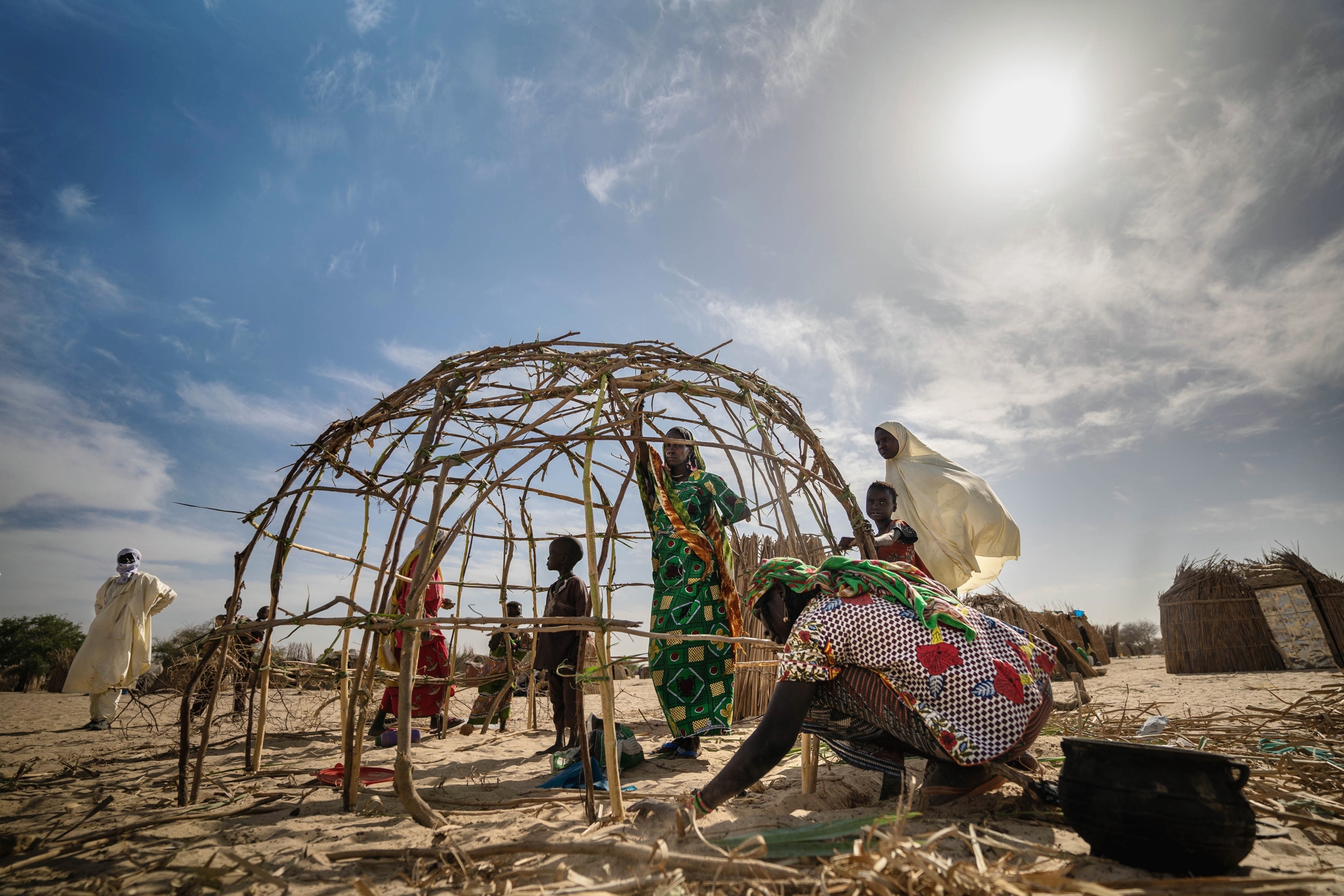
Refugee camps in Chad shield Sudanese refugees from warfare, yet living conditions within the camps are far from comfortable. Most refugees live in inadequate, makeshift shelters, which often lack necessities such as latrines, according to World Vision. Camps also lack necessary food supplies, meaning a significant number of children suffer from malnutrition.

Family separation is also an issue for many Sudanese refugees in Chad. This, paired with insufficient health care and education services within camps, takes a toll on refugees, especially children. However, multiple nongovernment organizations (NGOs) have committed to helping improve conditions within refugee camps in Chad, fostering hope for thousands of displaced persons. Below are three NGOs committed to helping Sudanese refugees in Chad:

International Medical Corps

The International Medical Corps (IMC) began its work in Chad after the 2004 Darfur genocide, a campaign marked by the indiscriminate killing of thousands of civilians by the Sudanese government and Janjaweed militia. Although operations in Chad were paused by the IMC in 2020, support recommenced in 2023 following the renewed outbreak of violence in Sudan.

IMC response teams now provide critical support to Sudanese refugees in Chad, focusing primarily on nutrition and health care. Nutrition services focus on supporting vulnerable groups, especially children aged less than 5 and pregnant women. In addition to basic health care, IMC programs include maternal and newborn health services, as well as mental health and psychosocial support. These mental health services are often overlooked in crisis settings, yet play an important role in the recovery of displaced persons.

Doctors Without Borders

Doctors Without Borders, also known as Médecins Sans Frontières (MSF), launched a major response to support Sudanese refugees in Chad after fighting resumed in April 2023. As the refugee population continues to grow, MSF has repeatedly scaled up its health care operations to meet increasing needs.

MSF currently provides medical services across several locations in Chad, including Adré, Goungour and Kourfoun. In June, due to an overwhelming amount of Sudanese refugees at the Adré hospital in need of surgical attention, MSF deployed a 200-bed inflatable hospital to help manage patient overflow.

In addition to surgical health care, MSF offers pediatric services, treatment for victims of sexual violence, mental health support and a range of vaccination programs. With the help of Chad’s Ministry of Health, the organizations recently conducted large-scale measles vaccination campaigns. It continued to work to improve routine vaccination programs for Sudanese refugees in Chad.

Jesuit Refugee Services

Due to harsh living conditions and the continuous influx of displaced people, access to quality education remains a major challenge for children in Chad’s refugee camps. Jesuit Refugee Service, the leading NGO in the education sector in these camps, works to make education more accessible for displaced children in Chad.

JRS offers a range of educational services, including preschools, nurseries and primary and secondary education. Thanks to its strong relationship with local authorities and the Minister of Education, JRS has also begun integrating camp-based schools into the Chadian public education system.

Collaborations between JRS and Chad’s University of Abéché have created opportunities for refugee students to earn national teacher certifications. This initiative not only provides refugees with access to higher education but also helps foster a new generation of educators to address the shortage of teachers within the camps.

Final Remarks

While conditions remain difficult for Sudanese refugees in Chad, the work of organizations like IMC, MSF and JRS offers critical support and hope. Increased international attention and aid may be essential to meet the growing needs of this vulnerable population.

– Jordan Venell

Jordan is based in Edina, MN, USA and focuses on Good News and Global Health for The Borgen Project.

Photo: Unsplash

August 9, 2025
https://borgenproject.org/wp-content/uploads/borgen-project-logo.svg 0 0 Lynsey 2 https://borgenproject.org/wp-content/uploads/borgen-project-logo.svg Lynsey 22025-08-09 01:30:372025-08-08 05:23:543 NGOs Helping Sudanese Refugees in Chad
elderly poverty, Global Poverty

Elderly Poverty in Chad

Elderly Poverty in ChadChad is a landlocked country located at the crossroads of North and Central Africa. An independent nation since 1960, Chad is home to approximately 19 million people, of whom more than one million live in its capital, N’Djamena.

Despite its size and important resources like oil, Chad remains one of the most impoverished countries in the world. Poverty stretches to every corner of the country. However, one of the most susceptible victims, older people, are often ignored. Here are some facts about what elderly poverty in Chad looks like and how foreign aid can help minimize it. 

Facts About Elderly Poverty in Chad

  1. Chad has one of the youngest populations in the world, with a life expectancy at birth of 59 years and a median age of 14-15 years. Older adults (65 and above) made up about 7.5% of the population in 1985 but now account for just 3%, making it the smallest age group in Chad. This change reflects the country’s high birth rates and lack of accessibility to food and medical care.
  2. Chad has one of the lowest rates of accessible health care in the world, with the elderly being some of the most susceptible to diseases. Only 31.4% of Chad’s population has regular access to medical care, including doctors, hospitals, treatments and vaccinations. According to the World Health Organization (WHO), as of October 2020, Chad had just 4.3 doctors and 23.2 nurses per 100,000 inhabitants, far below the recommended 23 doctors and 23 nurses per 10,000. Most of these health professionals are concentrated in urban areas, making health care largely inaccessible to rural populations, especially elderly individuals who often face the greatest barriers to medical access.
  3. Noncommunicable diseases, such as diabetes, remain the leading cause of death for older people in Chad. Other leading causes of death include malaria, lower respiratory illnesses like pneumonia and diarrhoeal diseases like cholera. Elderly patients with diabetes and chronic illnesses, along with children, are the most susceptible to diseases like malaria and pneumonia.
  4. With refugees coming in from neighboring countries like Sudan, Sierra Leone and the Democratic Republic of Congo, the conflicts in these regions have spilled over into Chad. This instability has made outside trade difficult, leading to a low supply and high demand for essential resources, including food and medical aid.
  5. Chad has the lowest access to clean water and sanitation in the world. Only 43% of the population has access to clean water and just 10% has access to basic sanitation services.
  6. Organizations such as the WHO, the World Food Programme (WFP) and other humanitarian actors are actively working to combat poverty in Chad. In mid‑2024, WFP delivered food, cash and nutrition assistance to approximately one million people across crisis-affected communities, including refugees and internally displaced Chadians. The 2023–24 Humanitarian Response Plan (HRP) for Chad sought approximately $921 million in funding and the Central Emergency Response Fund (CERF) allocated $15 million to address the most underfunded emergencies.

Conclusion

Elderly poverty in Chad remains a critical but often overlooked issue. Limited health care, food insecurity and poor sanitation leave older adults especially vulnerable. While humanitarian aid provides some relief, lasting change requires targeted support and stronger systems to protect Chad’s older population.

– Zoe Alatsas

Zoe is based in New York, NY, USA and focuses on Global Health and Politics for The Borgen Project.

Photo: Pickpik

August 5, 2025
https://borgenproject.org/wp-content/uploads/borgen-project-logo.svg 0 0 Lynsey 2 https://borgenproject.org/wp-content/uploads/borgen-project-logo.svg Lynsey 22025-08-05 07:30:002025-08-05 04:18:56Elderly Poverty in Chad
Global Poverty, Technology

How 2D Participatory Maps Are Fighting Poverty in Chad

2D Participatory MapsChad is a landlocked Central African nation that spans the tropical, semi-arid belt known as the Sahel. While rich in natural resources, Chad ranks among the world’s most challenged countries in the United Nations (U.N.) Human Development Index (HDI).

A Nation in Emergency

Measured by poor life expectancy, education and living standards, Chad’s slow pace of development since French colonial rule has created deep-rooted challenges for its people. About 42% of the population lives below the poverty line and food insecurity has increased by 240% since 2020.

Despite the discovery of oil in 2003, Chad has remained overwhelmingly focused on military security. This, combined with a legacy of political instability, corruption and poverty, has left its growing population trapped in cycles of poverty, unemployment and deepening regional conflict.

As scarcity rises, the war in Sudan is creating a new humanitarian crisis, impacting trade routes, with almost one million Sudanese refugees crossing into its borders. These challenges divert Chad’s already limited resources from other critical areas of the economy as fuel and food prices surge rapidly.

Rising Temperatures in Chad

As desertification advances at a rate of four kilometers per year, Lake Chad, once one of Africa’s largest freshwater bodies and a source of survival for around 30 million people, has shrunk by 90% since 1960. Today, fewer than half of all children have access to safe drinking water.

Further, mass flooding in 2023, particularly in the most populated areas, destroyed an estimated 259,000 hectares of farmland. This affected 1.5 million people, creating further regional insecurity and disruption.

Climate studies project that temperatures in Chad will rise throughout the 21st century. This will likely result in lower crop yields, leaving communities to fight for scraps of land ravaged by extreme weather conditions.

2D Digital Maps for the Future

In the face of these great challenges, Hindou Oumarou Ibrahim, a cartographer and climate activist, has become a voice of hope among indigenous populations. Ibrahim is creating 2D participatory maps designed to combat poverty in Chad by helping communities identify and share resources in areas of emerging conflict.

Transhumance routes empower local communities and enable cultural exchange across the Sahel. These routes aim to reduce violent conflict by making populations less vulnerable to rising temperatures through evolving 2D participatory maps.

Integrating indigenous and scientific knowledge, Ibrahim’s maps are constantly evolving. Using annotated satellite imagery, they bring together leaders from 116 communities to agree on fair and sustainable use of fertile land, materials and freshwater points across 1,728 square kilometers.

The Chad Digital Transformation Project

While Ibrahim’s work sparks regional interest, only 19% of the Chadian population can access the necessary digital tools or facilities. This presents challenges in scaling the project, especially during a time of political and ecological instability.

However, within five years, the Chad Digital Transformation Project aims to provide an additional 4.5 million people with broadband access. The project will enable people to engage more comprehensively with the project in the coming years.

Conclusion

Chad’s challenges are immense, but participatory maps offer a hopeful path forward. By combining indigenous knowledge with digital tools, communities can manage resources and reduce conflict. As digital access expands, this grassroots solution could help turn local resilience into lasting impact.

– Gabriel John Gunn

Gabriel is based in Paisley, Scotland and focuses on Technology and Global Health for The Borgen Project.

Photo: Flickr
August 5, 2025
https://borgenproject.org/wp-content/uploads/borgen-project-logo.svg 0 0 Lynsey 2 https://borgenproject.org/wp-content/uploads/borgen-project-logo.svg Lynsey 22025-08-05 01:30:222025-08-04 14:18:05How 2D Participatory Maps Are Fighting Poverty in Chad
Disability, Global Poverty, Refugees

The Connection Between Disability and Poverty in Chad

Disability and Poverty in ChadChad is the largest landlocked country in Africa, as well as being the fifth largest country on the continent. It gained independence from being a French colony in 1960, and post-independence faced conflicts, internal and external, resulting in an unstable nation. Chad boasts a rich history and some experts believe it is one of the original places where humans developed as a species. In the modern day, Chad has a population of around 21 million people and has become a place of refuge for disabled Sudanese people displaced by the Sudanese Civil War.  

Chad has seen a rise in refugees fleeing from the Sudanese Civil War, and notably, the population of disabled individuals has risen since the migration began. Here are some key facts about how the Sudanese Civil War affects disability and poverty in Chad.

Why They Flee

The most recent Sudanese Civil War began in 2023 as a result of conflict between two military forces within the country, forcing more than 15 million people from their homes. Between 10-15% of the Sudanese population is disabled due to the effects of living in a war zone and have common injuries and physical deficits such as amputated limbs, broken bones and severe burns that go on to affect the rest of people’s lives. Refugees from the war, particularly those with disabilities, have found themselves fleeing to the borders of Chad to escape the violence. Living in Chad allows some to find care for their impairments, whether these impairments be new onset or pre-existing.

The Marginalization of People With Disabilities  

As is the case in other countries around the world, disabled people living in Chad find themselves disempowered. In the social hierarchy of Chad, disabled people are often the lowest tier of society. This is due to long-held ideas of prejudice against those who are less able, which can eventually result in social isolation and exclusion. Disability and poverty in Chad are beacons for each other, each one making the other more possible.

The Increase in Refugees

Due to the Sudanese Civil War, around 1.1 million Sudanese people have fled their country to Chad. This has caused a population surge in the already severe living conditions, resulting in a stark lack of shelter, clean water and access to medical assistance. Health care is often a distance from refugee camps, and people with specific disabilities can find themselves without a mode of transportation to get treatment. This discrepancy often emphasizes the difficulties that people with disabilities in poverty face in Chad.

Disability and Poverty in Chad

With disabled people in Chad often facing issues of transportation to places such as health care facilities and job opportunities, the difficulties of escaping poverty increases. If people cannot travel to a health care clinic, then they cannot receive treatment for their disabilities and, in turn, are unable to work. Another factor influencing the difficulty in finding work for disabled people in Chad is discrimination. People with disabilities are much less likely to be hired and lose out on opportunities to make money and help them improve their financial status.

Key Takeaways

While the poverty levels in Chad are increasing due to refugees from the Sudanese Civil War, countless organizations are working to assist the people living there. These organizations work to bring awareness to the issues that Chadians face, as well as to bring relief to them directly. Disabled refugees fleeing the Sudanese Civil War receive more opportunities in Chad than in Sudan. This does not imply a perfect standard of living, but it does imply an improved one. One organization that is key in the fight against disability and poverty in Chad is UNICEF. UNICEF offers key aid to Chadian and Sudanese youth by improving living conditions, supplying clean water and adding mental health support to refugee camps. Its work centers around bringing aid to Chadians and Sudanese refugees as they fight for the return to normalcy.

– Zoe Felder

Zoe is based in Charlotte, NC, USA and focuses on Global Health for The Borgen Project.

Photo: Unsplash

July 7, 2025
https://borgenproject.org/wp-content/uploads/borgen-project-logo.svg 0 0 Jennifer Philipp https://borgenproject.org/wp-content/uploads/borgen-project-logo.svg Jennifer Philipp2025-07-07 03:00:372025-07-07 01:50:04The Connection Between Disability and Poverty in Chad
Children, Global Poverty, Health

Strengthening Systems: Reaching Zero-Dose Children in Chad

Zero-Dose Children in ChadAccording to global location-based data from 2019, approximately 10.37% of children in Chad had not received the first dose of the diphtheria, tetanus and pertussis (DTP1), routine vaccines. This placed Chad among those with the highest rates of zero-dose children aged less than 12 months.

Zero-Dose Children in Chad

In 2021, the United Nations Children’s Fund (UNICEF) identified Chad as one of the top 20 countries where more than half of the world’s zero-dose children reside, with a 27% prevalence rate. In 2022, health data estimated that 188,500 children in Chad remained unvaccinated. The highest concentrations were found in the rural north, areas affected by conflict and within nomadic communities.

Around 80% of the population lives more than five kilometers from the nearest health facility, making access to routine vaccination especially difficult. Unqualified personnel and poor supervision during immunization efforts further widen this gap. These issues are compounded by ongoing challenges related to supply chain disruptions. The overall demand for routine immunization remains low and awareness-raising measures utilizing communication methods have not been effective.

Coordinated Responses and Interventions 

WHO, UNICEF and Gavi, the Vaccine Alliance, developed the Reaching Every District (RED) strategy to support the activities and interventions. The plan consists of five operational components: planning and managing resources, engaging with communities, conducting supportive supervision, monitoring and using data for action and reaching all eligible populations.

Chad is a vast country with a low population density, which presents a significant challenge in delivering immunization services. To address this, partner organizations supplied 32 vehicles and 250 motorcycles to health centers, improving access to remote and hard-to-reach areas. Similarly, in collaboration with UNICEF, the Ministry of Health allocated an immunization strategy tailored for major urban centers. The Bill and Melinda Gates Foundation supported the preparation of communication plans in seven provinces, including training 5,000 village chiefs and community health volunteers in the Lake region.

Furthermore, supported by Gavi, 235 new nurses and paramedics were recruited throughout regional hospitals in nine provinces to expand access to healthcare. WHO trained health workers in 40 districts and health teams in 28 districts. In 2021, the PEV Manager smartphone app was introduced to strengthen service delivery, enable feedback and improve supervision.

Despite various challenges, Gavi’s collaboration with the Ministry of Health enhanced funding by establishing a restructured project management unit. Disbursements were accelerated by implementing streamlined procedures and utilizing mobile money systems wherever feasible while maintaining strong financial accountability. Effective financial management was a key driver of these achievements.

Cold Chain Equipment Optimization Platform

A major barrier in Chad’s immunization efforts was the lack of reliable cold chain infrastructure to preserve vaccines. This issue was addressed through the Cold Chain Equipment Optimization Platform (CCEOP), a collaborative initiative designed and funded by Gavi. UNICEF manages procurement and logistics, WHO provides technical guidance and the Ministry of Public Health leads implementation. With support from partners, the Ministry of Health expanded cold chain capacity nationwide, achieving coverage of more than 90%.

As part of this effort, a health facility map was developed to identify regions with high population density and limited infrastructure, helping prioritize locations for solar-powered cold chain equipment. By 2022, 1,506 health care facilities previously identified as lacking sufficient cold chain coverage were distributed 1,527 units of cold chain equipment, including freezers, refrigerators, coolers, generators and solar panels. With an approximate 70% increase in cold chain coverage since 2017, these efforts significantly improved access, reaching around 96% by 2022.

Triple Vaccine Launch

Chad’s Expanded Program on Immunization (EPI) marked a milestone by introducing three vital new malaria, pneumococcal and rotavirus diarrhea immunizations. Chad was one of the first countries to launch three essential vaccines simultaneously as part of its EPI. Chad took a comprehensive approach to roll out the new vaccines effectively. This included updating immunization policies, integrating vaccines into distribution plans and preparing detailed rollout strategies.

The country also trained health workers, strengthened cold chain infrastructure, engaged communities in raising awareness and established supervision and performance monitoring systems. Chad positioned itself as the 14th country to implement the malaria vaccine nationwide, aligning with the WHO’s goal of reducing malaria-related mortality by 90% by 2030.

Health experts estimate that the pneumococcal vaccine could prevent up to 5,000 deaths per year by safeguarding children from life-threatening bacterial diseases. Rotavirus caused more than 40% of pediatric diarrhea hospitalizations in Chad and contributed to infant mortality before its introduction. The rotavirus vaccine addresses this essential public health issue, advancing Chad’s national vaccination program to protect children from preventable and life-threatening diseases.

Between 2019 and 2022, coverage of the DTP1 dose increased from 89.63% to 98.84%. During the same period, completion of the full three-dose series (DTP3), a key indicator of immunization system performance, rose from 50% to 60%.

Conclusion

Chad is a compelling example of how effective collaboration and technical support through strong communication and coordination networks can drive meaningful change. These efforts significantly strengthened the Ministry of Health services at both national and local levels. As a result, many supervisors and health workers were revitalized and empowered to deliver more effective and responsive care to zero-dose children.

– Imge Tekniker

Imge is based in London, UK and focuses on Global Health for The Borgen Project.

Photo: Pexels

April 29, 2025
https://borgenproject.org/wp-content/uploads/borgen-project-logo.svg 0 0 Lynsey 2 https://borgenproject.org/wp-content/uploads/borgen-project-logo.svg Lynsey 22025-04-29 01:30:182025-04-30 03:13:17Strengthening Systems: Reaching Zero-Dose Children in Chad
Education, Global Poverty, Poverty

Addressing Learning Poverty and Expanding Education in Chad

Education in ChadChad is committed to enhancing primary, secondary and tertiary education. However, 44.8% of its 20 million citizens live in poverty and 94% experience learning poverty. According to the UNESCO Institute for Statistics, learning poverty—the inability to read age-appropriate text by age 10—contributes to low educational attainment. This widespread issue hinders individual progress, exacerbates the country’s human capital deficits and limits efforts to reduce poverty.

Education System in Chad

Chad’s education system consists of primary education (ages 6–11), lower secondary (ages 12–15), upper secondary (ages 16–18) and tertiary education, which includes trade schools, colleges and vocational schools. However, only about 3% of students complete the full program and just as few have access to tertiary education opportunities.

To address these challenges, Chad is committed to achieving Sustainable Development Goal 4 (SDG 4) to ensure inclusive and equitable quality education for primary and secondary students by 2030. With the support of local and international advocates, the country plans to increase government funding for education, improve teacher training, build more schools, prioritize education for girls and foster global partnerships to access additional resources and expertise.

Expanding Education Access in Chad

A standard vocational education program provides training for young adults who have completed formal education. Chad’s education system stands to benefit from such programs, but significant barriers remain. Nearly 49% of primary-aged children are out of school, with gender and socioeconomic status playing a major role in access to education. Additionally, Chad faced a deep educational crisis even before the COVID-19 pandemic and its current high rate of learning poverty requires immediate intervention rather than waiting for students to reach vocational training.

Chad is incorporating non-traditional programs into the education system to address these challenges. With support from various partners, Chad has developed initiatives that provide basic education to children and adults outside the formal system. These programs aim to close skill gaps, offer hands-on learning and accelerate job placement, helping to create more opportunities for those who might otherwise be left behind.

Nonformal Education Centers

The National Education and Civic Promotion program provides nonformal education to support socioeconomic integration across Chad. These centers offer out-of-school youth training in literacy, numeracy and vocational skills in their native languages, equipping them with essential competencies for better opportunities. Remarkably, more than 700 out-of-school children have been “reintegrated into the formal education sector” through nonformal education programs.

Additionally, more than 10,000 out-of-school women have received vocational training, improving their financial stability. Furthermore, more than 42,000 individuals aged 15 and older without formal education have completed literacy programs, underscoring Chad’s commitment to reducing illiteracy and expanding educational opportunities.

This effort aligns with the Global Partnership for Education (GPE) initiative, which awarded Chad a $50 million grant from 2018 to 2023 to address the country’s low literacy rates—where 60% of the population could not read. The grant aimed to expand educational access for both youth and adults while promoting social and gender equality. As a result, the Ministry of National Education and Civic Promotion introduced training programs that included nonformal basic education for adolescents aged 9 to 14, further strengthening Chad’s educational framework.

Other Projects Supporting Chad’s Education System

  1. Project Development Objective (PDOs): The PDOs initiative, established in Chad in 2019 by the World Bank and the International Development Association (IDA), further reinforces Chad’s educational efforts. Its mission is to enhance the skills of Chadian children and young adults, equipping them with the knowledge and competencies needed to contribute meaningfully to their communities. The initiative has provided employment support and improved entrepreneurship opportunities for youth, with more than 10,000 young people enrolled in various programs. Additionally, the project has placed 3,000 youth, 44% of whom are girls, in jobs in N’Djamena and 20 other provinces.
  2. The Center of Professional and Technical Training (CFPT): The CFPT is crucial in bridging the gap between education and employment. CFPT aims to expand opportunities for young people by offering professional and technical training. Its initiatives focus on upgrading existing colleges, providing first-work experiences and facilitating apprenticeships and internships—all designed to improve the transition from school to the workforce. The project has trained more than 1,000 students, equipping them with the essential skills and knowledge needed to succeed in the workforce.
  3. Chad Improving Learning Outcomes Project: In 2022, the IDA awarded Chad a $150 million grant to improve learning outcomes in its basic education programs. This initiative aims to provide students equitable access to quality learning environments. It provides learning opportunities to both in-school and out-of-school students by creating expanded learning spaces, addressing overcrowded classrooms and ensuring more inclusive educational opportunities.

Reflecting on Chad’s Educational Mission

The UNESCO Institute for Statistics emphasizes that schooling does not necessarily equate to learning, highlighting the need for improved education quality. According to UNESCO, poor schooling can lead to higher dropout rates, reinforcing the urgency for reform. In response, Chad’s educational programs focus on enhancing teacher instruction and offering basic skill training to address these challenges in nonformal settings. By refining the Chadian education plan, there is hope that the country’s high rate of learning poverty will gradually decline, creating better opportunities for future generations.

– Pamela A. Fenton

Pamela is based in Wall Township, NJ, USA and focuses on Good News for The Borgen Project.

Photo: Flickr

March 3, 2025
https://borgenproject.org/wp-content/uploads/borgen-project-logo.svg 0 0 Lynsey 2 https://borgenproject.org/wp-content/uploads/borgen-project-logo.svg Lynsey 22025-03-03 07:30:362025-03-03 01:05:02Addressing Learning Poverty and Expanding Education in Chad
Food Insecurity, Global Poverty, Nonprofit Organizations and NGOs

Organizations Tackling Food Insecurity in Chad

Food Insecurity in ChadChad, a landlocked country in central Africa, faces some of the highest levels of food insecurity and starvation globally. Approximately 42% of its population lives below the poverty line. With a score of roughly 35 on the 2023 Global Hunger Index, Chad has a severe hunger level. The ongoing conflict in Sudan has disrupted trade, driven up food prices and led to below-average market supplies, contributing significantly to the severe starvation in Chad. 

In addition to the extreme poverty faced by its residents, more than 600,000 refugees seeking shelter and security have entered Chad. Already hosting more than one million refugees, the country continues to grapple with widespread hunger and food insecurity despite the substantial refugee influx. However, several organizations are actively working to tackle food insecurity in Chad.

Action Against Hunger

This organization has already assisted more than 520,000 people, yet with a staggering 5.5 million people in need in Chad, many continue to struggle with food insecurity. While Action Against Hunger (AGA) provides food to vulnerable populations, the ready-made supplies are only a temporary solution. To address this issue more sustainably, AGA is teaching communities in Chad how to grow their own crops and manage limited rainfall to enhance local food production.

Concern Worldwide

Concern Worldwide has addressed food insecurity in Chad by implementing programs designed to enhance livelihoods. These initiatives provide participants the tools to achieve sustainable living, acquire new skills, improve crop yields and nutritional quality and generate income through small businesses.

Concern Worldwide’s efforts to build sustainable livelihoods in Chad have reached 62,000 people. The organization has also provided free health services, improved nutritional support and access to clean and safe drinking water to approximately 133,000 vulnerable individuals and people with disabilities.

Additionally, Concern Worldwide launched the Concerted and Inclusive Development in the Lake Province (DECILAC), a pioneering project supported by Facilité G5 Sahel. This project focuses on inclusively investing in food security, strengthening local value chains, enhancing education and mitigating food insecurity in the Lac province.

The World Food Programme

The World Food Programme (WFP) plans to assist 2.5 million people across Chad, including refugees, internally displaced persons (IDPs), returnees and other vulnerable groups. Between June and August 2024, WFP aims to reach more than one million individuals with food, cash and nutritional advice. The organization also focuses on pregnant and breastfeeding mothers facing food insecurity by providing malnutrition treatments and supporting school children with nutritious meals to help combat hunger and promote education.

Final Note

While hunger rates in Chad are high, the efforts of organizations like WFP and Concern Worldwide offer hope for a brighter future. With continued support and intervention, Chad can work toward overcoming these challenges, enabling its people to thrive within their communities and shift from merely surviving to truly living.

– Sadie Virgin

Sadie is based in Newport, Wales, UK and focuses on Good News for The Borgen Project.

Photo: Wikimedia Commons

August 29, 2024
https://borgenproject.org/wp-content/uploads/borgen-project-logo.svg 0 0 Lynsey 2 https://borgenproject.org/wp-content/uploads/borgen-project-logo.svg Lynsey 22024-08-29 01:30:252024-08-29 01:26:52Organizations Tackling Food Insecurity in Chad
Africa, Electricity and Power, Global Poverty

Using Renewable Energy in Chad to Combat Poverty 

Renewable Energy in ChadLocated in North Central Africa, Chad is an exceptionally diverse country, home to more than 200 ethnic groups and 100 different languages. However, with a cumulation of political instability and natural disasters, Chadians are suffering from rising food insecurity and poverty levels. In 2023, extreme poverty across the country was recorded at 35.4%. Energy is scarce and unreliable across Chad. Only 4% of the population has access to electricity. Currently, traditional wood fuel is the primary source of energy consumption across the country. Despite this, the country has optimistic targets to achieve nearly a 50% increase in electricity access by 2050.

The source of this increase derives substantially from the innovation and expansion into renewable energy. Utilizing Chad’s high levels of solar irradiation, The Djermaya Solar Project is paving the way for socio-economic prosperity that can combat the rising poverty levels. Here is information about renewable energy in Chad.

The Djermaya Solar Project

Initiated in 2015, the Djermaya Solar Project has two stages. Firstly, a 36 MWp solar photovoltaic (PV) plant in Djermaya will be constructed, 30km north of N’Djamena, Chad’s capital. Following this, there will be a 24 MWp phase. This will gradually integrate renewable power into Chad’s national grid, according to InfraCo Africa.

Chad’s first renewable energy project is jointly developed by InfraCo Africa and Denham Capital, as well as supported by government agencies, including the African Development Bank Group (ADB).

The European Investment Bank (EBI) described the solar PV plant as a “pioneering project” that “will help liberalise the energy sector, and mobile private investment in Chad.” It is calculated that the cost of electricity will be less than half the current cost of power following the project.

Catalyzing Chad’s Socio-Economic Prosperity

The Djermaya Solar Project will significantly improve Chad’s socio-economic prosperity. Not only will the project provide lower cost energy, increasing accessibility across the country, but it will also create 250 jobs during construction, as well as 12 permanent positions during the operational phase.

Once online, the Djermaya solar project could power 60,000 households and reduce the overall cost of electricity generation. USAID’S Power Africa has guided tariff approaches, indicating that the Djermaya plant will produce electricity at a cost that is 40% less than existing sources. Overall, Chadians will have an increased access to cleaner, sustainable energy.

In the long term, this project will provide a sustainable and reliable source of energy for the Chadian electricity distribution network. Subsequently, this increases high-speed internet access and improves the transport routes used for business.

People across Chad have to use conventional energy resources, such as biomass and charcoal in order to cook, light their house and other economic activities. In particular, it is women and children who spend a lot of time sourcing the biomass materials, which increases their risks of harmful respiratory diseases. Therefore, this creation of renewable energy in Chad offers a new alternative to the old conventional way of energy production. Women and children could then dedicate this time to income-generating activities instead.

A Pathway Out of Poverty

Investment director at Emerging Africa Infrastructure Fund, Paromita Chatterjee, emphasizes that The Djermaya project is the key to “unlock the country’s economic potential and to fly the flag for more green energy projects”.

The Djermaya Project will help alleviate poverty, as well as foster universal economic activity across Chad. This is because the solar project provides lower cost power to the grid, in comparison to the current fossil fuel-fired generation. This is a fundamental step in achieving Chad Vision 2030’s target of becoming an emerging country. 

Resultantly, this will enable the government to reduce its current subsidies to the energy sector, and instead, focus its limited resources on other essential services, such as education and health. 

In addition, the Djermaya Project is a pioneer in liberalizing Chad’s energy sector, encouraging independent power producers. This mobilizes private investment across Chad, spurring sustainable economic prosperity. Alongside this, this is a crucial development into renewable energy within Chad, adding to the sustainable eradication of poverty. 

Looking Ahead

Overall, the Djermaya Solar Project yields a significant role in the alleviation of poverty across Chad, on both a small and large scale. Not only does Chad’s renewable energy project maintain its climate commitments under the Paris Agreement, but, crucially, it offers a solution to the destitute poverty suffered by millions of Chadians. As development begins, this is an exciting and prosperous project for the long term socio-economic success of Chad.

– Sian Ameer-Beg

Sian is based in Durham, UK and focuses on Technology and Solutions for The Borgen Project.

Photo: Flickr
July 25, 2024
https://borgenproject.org/wp-content/uploads/borgen-project-logo.svg 0 0 Jennifer Philipp https://borgenproject.org/wp-content/uploads/borgen-project-logo.svg Jennifer Philipp2024-07-25 01:30:342024-07-25 01:10:45Using Renewable Energy in Chad to Combat Poverty 
Global Poverty, Health, Pollution

Improving Chad’s Air Quality

Chad's Air QualityThe Republic of Chad, an independent nation in Central Africa, is landlocked by Niger, Libya, Sudan, South Sudan, the Central African Republic, Cameroon and Nigeria. With a population of approximately 17.7 million, according to the World Bank, Chad suffers from some of the world’s worst air quality. Several factors contribute to the country’s poor air conditions, significantly impacting children with respiratory infections. Nevertheless, Chad is implementing measures to enhance its air quality and improve the lives of its citizens.

Factors Contributing to Air Pollution in Chad

Air pollution is when the air is contaminated by particles, gas and chemicals that are harmful when breathed in and cause respiratory illnesses. Chad is one of the worst in the world because according to the World Health Organization (WHO), it measured to be 17 times higher than the acceptable limit, making the country dangerous to breathe in. 

The factors contributing to Chad’s poor air pollution include indoor sources such as stoves but also uncontrolled waste burning, textile, oil, meatpacking industries and vehicle emissions.

The electricity in Chad is also generated from 90% fossil fuel, which is another cause of air pollution, as well as the Bodele Depression. Located south of the Sahara Desert in north-central Africa, it is one of the largest sources of airborne dust, which brings large dust clouds to the region.

Bad quality air affects everyone in Chad, but it is especially dangerous to those who live in urban cities such as N’Djamena, Chad’s capital. It affects those in poverty-stricken areas more often as they live closer to the factories and other pollution-causing sources and don’t have the means to protect themselves from the air. The most vulnerable groups affected by air pollution are the elderly, children and pregnant women.

Health Impacts of Poor Air Quality

Air pollution can not only lead to respiratory disease, but it can also cause strokes, lung cancer and heart disease. In the worst cases, it can even cause death. In 2017, an estimated 13,329 Chadians died with association from air pollution, with more than 7,000 of those deaths being young children with respiratory infections.

According to the State of Global Air, air pollution is the third-leading risk of death or disability in Chad as of 2017, trailing behind sanitation and malnutrition. Additionally, Chadians lose 2 years and 11 months in life expectancy at birth due to air pollution. 

Initiatives to Improve Air Quality

There are some initiatives in place to combat this rampant air pollution in Chad. According to a study by UNEP in 2015, it found that the government lacks policies in place to combat pollution. However, this is changing, as Chad is beginning to promote cleaner cooking fuel to reduce indoor air pollution and grid electrification.

The National Poverty Reduction Strategy is also working to make power generation more widespread and cost-efficient, reducing air pollution, as well as other methods of energy like solar and wind. With the United Nations’ support, it implemented waste management in refugee camps and communities such as Sila, Wadi Fira and Salamat, which granted 74% of households proper services. 

The Interactive Country Fiches also includes opportunities to implement new policies such as waste management to improve public health rather than burning it. Different factories and industries also require more regulation to better improve the health of all Chadians and beyond. 

Looking Ahead

Chad is on a promising path to significantly enhance air quality and public health through targeted environmental initiatives and cleaner energy solutions. By focusing on sustainable practices and improved regulatory frameworks, the nation aims to reduce the burden of air pollution on its most vulnerable citizens. Continued collaboration with international organizations and a commitment to innovative policies could be crucial for improving Chad’s air quality and securing a healthier future for all Chadians.

– Sabrina Betterly

Sabrina Betterly is based in Drums, PA, USA and focuses on Good News and Global Health for The Borgen Project.

Photo: Unsplash

June 9, 2024
https://borgenproject.org/wp-content/uploads/borgen-project-logo.svg 0 0 Precious Sheidu https://borgenproject.org/wp-content/uploads/borgen-project-logo.svg Precious Sheidu2024-06-09 01:30:002024-06-08 13:29:22Improving Chad’s Air Quality
Africa, Global Poverty, USAID

USAID Programs in Chad

USAID Programs in ChadChad, “the fifth largest country in Africa,” is also “one of the world’s poorest countries.” Once a colony of the French Empire, Chad declared its independence in 1960, but troubles did not end there. Starting in 1966, Chad entered into a civil war that would prove to be one of Africa’s longest. Forward to the 21st century and political instability continues to manifest in rebel attacks and pre-election violence. Besides civil unrest, Chad has recently endured severe flooding in its Lac Province, where approximately 381,000 domestic refugees took shelter as of 2022. In 2024, an additional 54,000 people were displaced. Chad takes the most refugees per capita within the African continent, particularly those from Sudan due to ongoing conflict and economic factors further worsening Chad’s crises, according to the Norwegian Refugee Council (NRC).

The country’s primary export is oil, but other financial sectors have seen minimal development and coupled with high levels of debt, its economy struggles to cope with the crises it faces. Chad currently ranks 190th on the Human Development Index (HDI) out of the 191 countries listed, according to the German Federal Ministry for Economic Cooperation and Development (BMZ). As such, foreign aid is incremental to Chad’s development, and the rest of this article will demonstrate the role of the U.S. Agency for International Development, particularly USAID programs in Chad.

Reducing Poverty and Food Insecurity

According to the World Food Program (WFP), approximately 2.1 million people in Chad are acutely food insecure as of 2023, while 1.36 million of its children struggle with malnourishment and 42% of its population lives below the poverty line. The USAID recognizes this in its foreign aid commitments, seeking to address the immediate need for humanitarian aid. USAID’s 2022 Chad Assistance Overview highlights contributions of $54.9 million in funds for food assistance. This includes food vouchers, cash transfers for food, nutrition assistance and malnutrition treatments.

As of January 2024, Chad hosted more than 1.1 million refugees, of which 934,000 came from Sudan. USAID has supported the Chad Rapid Response Mechanism, supplying nearly 7,800 internally displaced people with hygiene and kitchen supplies and constructing nearly 70 emergency shelters for refugees, according to its 2024 Chad Assistance Overview. These commitments are but a symptom of USAID’s continued efforts to increase food and national security.

Success Stories in the Villages

Since 2008, USAID has partnered with Africare to provide villages with better-quality water and alleviate some of their hygiene and food security crises. Abdelmadjid Ali, member of Mourdaba’s water management committee and father of five notes that before USAID programs in Chad, there was no organization within the community to deal with water management, and as a result “villagers consumed dirty and unclean water and this exposed them to all kinds of diseases including diarrhea and cholera.” Since then, USAID helped construct 113 water wells, which now benefit nearly 35,000 people.

Another success story comes from USAID’s cultural efforts. Seeking to address the political instability that is the cause of so many of Chad’s other crises, USAID funds the Peace Through Development II program. The program supports radio shows that broadcast sensitive and educational topics through sketches and mini-dramas. In this way, USAID hopes to counter the extremism that has plagued Chad and contributed to its citizens’ poor living conditions. Besides this, the program provides community and creative expression to Chad’s impoverished populations.

Ending Note

The total emergency funding provided by USAID programs in Chad in the fiscal years 2022 to 2024 stands at $166,360,752, according to the 2024 Assistance Overview. This sum has contributed to some great success stories, including increased food security, refugee relief and aid and cleaner water sources. Chad, however, remains the 9th poorest country in the world, according to Global Finance, and its stretched resources, the ongoing refugee crisis and periodic flood devastation further worsen this situation. While USAID programs in Chad have made some good strides toward improving living conditions within the country, increased foreign aid continues to be an absolute necessity to address the continuing humanitarian crisis.

– Kayleigh O’Brien
Photo: Flickr

March 9, 2024
https://borgenproject.org/wp-content/uploads/borgen-project-logo.svg 0 0 Jennifer Philipp https://borgenproject.org/wp-content/uploads/borgen-project-logo.svg Jennifer Philipp2024-03-09 01:30:162024-03-08 02:11:56USAID Programs in Chad
Page 2 of 3123

Get Smarter

  • Global Poverty 101
  • Global Poverty… The Good News
  • Global Poverty & U.S. Jobs
  • Global Poverty and National Security
  • Innovative Solutions to Poverty
  • Global Poverty & Aid FAQ’s
Search Search

Take Action

  • Call Congress
  • Email Congress
  • Donate
  • 30 Ways to Help
  • Volunteer Ops
  • Internships
  • Courses & Certificates
  • The Podcast
Borgen Project

“The Borgen Project is an incredible nonprofit organization that is addressing poverty and hunger and working towards ending them.”

-The Huffington Post

Inside The Borgen Project

  • Contact
  • About
  • Financials
  • President
  • Board of Directors
  • Board of Advisors

International Links

  • UK Email Parliament
  • UK Donate
  • Canada Email Parliament

Get Smarter

  • Global Poverty 101
  • Global Poverty… The Good News
  • Global Poverty & U.S. Jobs
  • Global Poverty and National Security
  • Innovative Solutions to Poverty
  • Global Poverty & Aid FAQ’s

Ways to Help

  • Call Congress
  • Email Congress
  • Donate
  • 30 Ways to Help
  • Volunteer Ops
  • Internships
  • Courses & Certificates
  • The Podcast
Scroll to top Scroll to top Scroll to top