3 NGOs Helping Sudanese Refugees in Chad
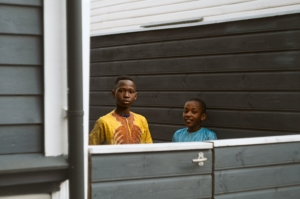 Tensions within the military government of Sudan escalated into full-scale civil war in April 2023. The country, which had started recovering and rebuilding after earlier civil wars, now faces a deepening humanitarian crisis as a result of recent conflict. This conflict has triggered mass displacement across Sudan, forcing hundreds of thousands of people to flee their homes. Most of these displaced people have sought safety in neighboring countries, including Libya, South Sudan and Chad, where they reside in large refugee camps, according to the United Nations Refugee Agency.
Sudanese Refugees in Chad
Among Sudan’s neighboring countries, Chad has taken in the largest number of Sudanese refugees, by a notable margin. Since the outbreak of the Sudan civil war, more than 870,000 refugees have fled to Chad. Libya and South Sudan, the countries hosting the second and third highest number of Sudanese refugees, each host slightly above 300,000 refugees.
Sudanese refugees in Chad typically settle in camps along the country’s eastern border. There, they join thousands of others, some of whom have been living in these camps for nearly 20 years, according to the Hebrew Immigrant Aid Society. A significant majority of refugees living in these camps are women and children, populations especially vulnerable in a wartime environment.
Refugee camps in Chad shield Sudanese refugees from warfare, yet living conditions within the camps are far from comfortable. Most refugees live in inadequate, makeshift shelters, which often lack necessities such as latrines, according to World Vision. Camps also lack necessary food supplies, meaning a significant number of children suffer from malnutrition.
Family separation is also an issue for many Sudanese refugees in Chad. This, paired with insufficient health care and education services within camps, takes a toll on refugees, especially children. However, multiple nongovernment organizations (NGOs) have committed to helping improve conditions within refugee camps in Chad, fostering hope for thousands of displaced persons. Below are three NGOs committed to helping Sudanese refugees in Chad:
International Medical Corps
The International Medical Corps (IMC) began its work in Chad after the 2004 Darfur genocide, a campaign marked by the indiscriminate killing of thousands of civilians by the Sudanese government and Janjaweed militia. Although operations in Chad were paused by the IMC in 2020, support recommenced in 2023 following the renewed outbreak of violence in Sudan.
IMC response teams now provide critical support to Sudanese refugees in Chad, focusing primarily on nutrition and health care. Nutrition services focus on supporting vulnerable groups, especially children aged less than 5 and pregnant women. In addition to basic health care, IMC programs include maternal and newborn health services, as well as mental health and psychosocial support. These mental health services are often overlooked in crisis settings, yet play an important role in the recovery of displaced persons.
Doctors Without Borders
Doctors Without Borders, also known as Médecins Sans Frontières (MSF), launched a major response to support Sudanese refugees in Chad after fighting resumed in April 2023. As the refugee population continues to grow, MSF has repeatedly scaled up its health care operations to meet increasing needs.
MSF currently provides medical services across several locations in Chad, including Adré, Goungour and Kourfoun. In June, due to an overwhelming amount of Sudanese refugees at the Adré hospital in need of surgical attention, MSF deployed a 200-bed inflatable hospital to help manage patient overflow.
In addition to surgical health care, MSF offers pediatric services, treatment for victims of sexual violence, mental health support and a range of vaccination programs. With the help of Chad’s Ministry of Health, the organizations recently conducted large-scale measles vaccination campaigns. It continued to work to improve routine vaccination programs for Sudanese refugees in Chad.
Jesuit Refugee Services
Due to harsh living conditions and the continuous influx of displaced people, access to quality education remains a major challenge for children in Chad’s refugee camps. Jesuit Refugee Service, the leading NGO in the education sector in these camps, works to make education more accessible for displaced children in Chad.
JRS offers a range of educational services, including preschools, nurseries and primary and secondary education. Thanks to its strong relationship with local authorities and the Minister of Education, JRS has also begun integrating camp-based schools into the Chadian public education system.
Collaborations between JRS and Chad’s University of Abéché have created opportunities for refugee students to earn national teacher certifications. This initiative not only provides refugees with access to higher education but also helps foster a new generation of educators to address the shortage of teachers within the camps.
Final Remarks
While conditions remain difficult for Sudanese refugees in Chad, the work of organizations like IMC, MSF and JRS offers critical support and hope. Increased international attention and aid may be essential to meet the growing needs of this vulnerable population.
– Jordan Venell
Jordan is based in Edina, MN, USA and focuses on Good News and Global Health for The Borgen Project.
Photo: Unsplash
