How 2D Participatory Maps Are Fighting Poverty in Chad
 Chad is a landlocked Central African nation that spans the tropical, semi-arid belt known as the Sahel. While rich in natural resources, Chad ranks among the world’s most challenged countries in the United Nations (U.N.) Human Development Index (HDI).
A Nation in Emergency
Measured by poor life expectancy, education and living standards, Chad’s slow pace of development since French colonial rule has created deep-rooted challenges for its people. About 42% of the population lives below the poverty line and food insecurity has increased by 240% since 2020.
Despite the discovery of oil in 2003, Chad has remained overwhelmingly focused on military security. This, combined with a legacy of political instability, corruption and poverty, has left its growing population trapped in cycles of poverty, unemployment and deepening regional conflict.
As scarcity rises, the war in Sudan is creating a new humanitarian crisis, impacting trade routes, with almost one million Sudanese refugees crossing into its borders. These challenges divert Chad’s already limited resources from other critical areas of the economy as fuel and food prices surge rapidly.
Rising Temperatures in Chad
As desertification advances at a rate of four kilometers per year, Lake Chad, once one of Africa’s largest freshwater bodies and a source of survival for around 30 million people, has shrunk by 90% since 1960. Today, fewer than half of all children have access to safe drinking water.
Further, mass flooding in 2023, particularly in the most populated areas, destroyed an estimated 259,000 hectares of farmland. This affected 1.5 million people, creating further regional insecurity and disruption.
Climate studies project that temperatures in Chad will rise throughout the 21st century. This will likely result in lower crop yields, leaving communities to fight for scraps of land ravaged by extreme weather conditions.
2D Digital Maps for the Future
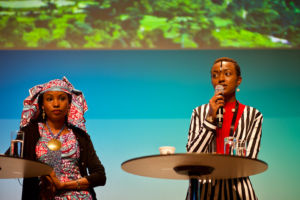
In the face of these great challenges, Hindou Oumarou Ibrahim, a cartographer and climate activist, has become a voice of hope among indigenous populations. Ibrahim is creating 2D participatory maps designed to combat poverty in Chad by helping communities identify and share resources in areas of emerging conflict.
Transhumance routes empower local communities and enable cultural exchange across the Sahel. These routes aim to reduce violent conflict by making populations less vulnerable to rising temperatures through evolving 2D participatory maps.
Integrating indigenous and scientific knowledge, Ibrahim’s maps are constantly evolving. Using annotated satellite imagery, they bring together leaders from 116 communities to agree on fair and sustainable use of fertile land, materials and freshwater points across 1,728 square kilometers.
The Chad Digital Transformation Project
While Ibrahim’s work sparks regional interest, only 19% of the Chadian population can access the necessary digital tools or facilities. This presents challenges in scaling the project, especially during a time of political and ecological instability.
However, within five years, the Chad Digital Transformation Project aims to provide an additional 4.5 million people with broadband access. The project will enable people to engage more comprehensively with the project in the coming years.
Conclusion
Chad’s challenges are immense, but participatory maps offer a hopeful path forward. By combining indigenous knowledge with digital tools, communities can manage resources and reduce conflict. As digital access expands, this grassroots solution could help turn local resilience into lasting impact.
– Gabriel John Gunn
Gabriel is based in Paisley, Scotland and focuses on Technology and Global Health for The Borgen Project.
Photo: Flickr
