• Link to X
  • Link to Facebook
  • Link to Instagram
  • Link to TikTok
  • Link to Youtube
  • About
    • About Us
      • President
      • Board of Directors
      • Board of Advisors
      • Financials
      • Our Methodology
      • Success Tracker
      • Contact
  • Act Now
    • 30 Ways to Help
      • Email Congress
      • Call Congress
      • Volunteer
      • Courses & Certificates
      • Be a Donor
    • Internships
      • In-Office Internships
      • Remote Internships
    • Legislation
      • Politics 101
  • The Blog
  • The Podcast
  • Magazine
  • Donate
  • Click to open the search input field Click to open the search input field Search
  • Menu Menu

Tag Archive for: Poverty In Brazil

Posts

Food & Hunger, Food Security, Global Poverty

Food Systems in Brazil: Key Challenges and Opportunities

Food Systems in BrazilFood systems in Brazil are diverse, complex and influenced by the country’s size, geography and rich cultural heritage. With 90% of its food domestically produced, the country is a leader in agribusiness and one of the world’s largest producers of agricultural products such as soybeans, coffee, sugarcane, beef and chicken. Yet, Brazil still faces a paradox—despite these impressive numbers, the nation struggles with hunger and inequality.

Sustainability and Environmental Impact

Brazil faces significant challenges in ensuring equitable food systems and access to healthy food, particularly for low-income populations. In 2021, 36% of Brazilians experienced food insecurity, according to research by FGV Social, a crisis exacerbated by changing weather patterns—one of the world’s most pressing concerns today. Droughts and extreme weather events have severely impacted food systems in Brazil, while industrial agriculture, particularly soybean and cattle farming, has contributed to deforestation and greenhouse gas emissions, further escalating environmental challenges.

Regions dependent on industrial agriculture are continually suffering from soil degradation and water pollution due to intensive farming practices, which affect food availability and increase the vulnerability of rural communities, especially in regions like the Northeast and Central-West, where the Amazon and Cerrado biomes are located and under threat.

Government subsidies often favor large agribusinesses over small-scale farmers, creating economic disparities and hindering the growth of sustainable local food systems.

Challenges and Opportunities

Brazil has strong food security and school feeding policies, but their effectiveness depends on political priorities. Changing weather patterns, global trade dynamics and social inequalities will continue to shape food systems in Brazil. The country’s current food system comes with significant hidden costs, estimated at about $500 billion annually, mainly due to unsustainable practices.

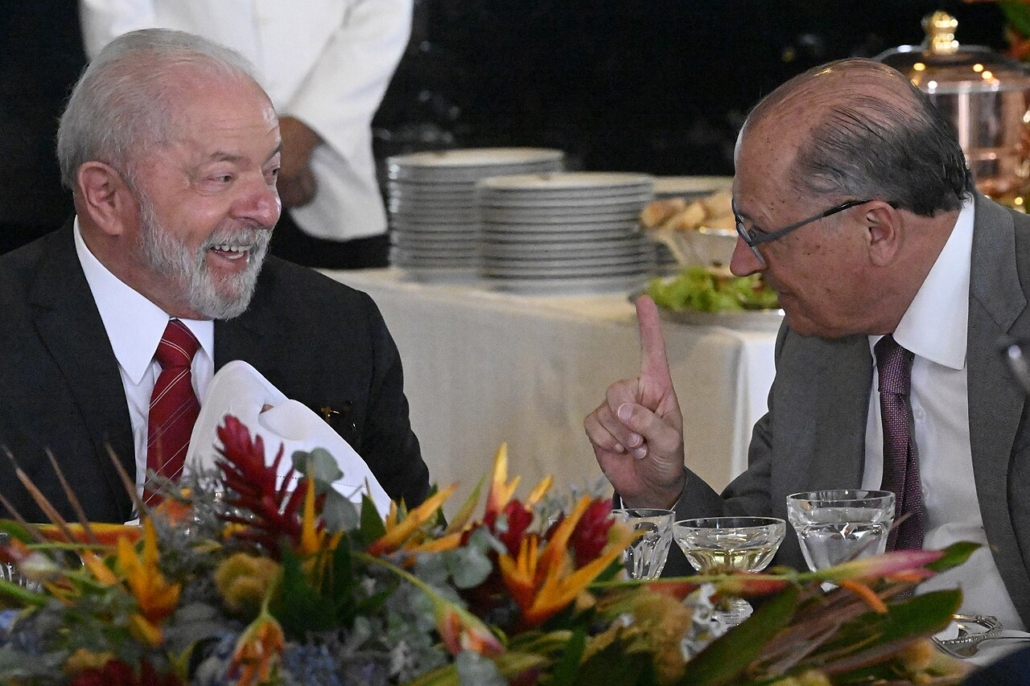
Brazilian President Luiz Inácio Lula da Silva emphasized this issue, stating: “Hunger is not the result of external factors. It is, above all, the result of political choices. Today, the world produces more than enough food to eradicate [hunger]. What is missing is creating the conditions for access to food.”

Addressing these challenges and adapting to these changes requires building resilient food systems, which will demand a multifaceted approach, including policy reforms, sustainable agricultural practices and initiatives to improve food access and equity. This was a key focus in the Webinar from the Sovereignty and Climate Center in partnership with the National Endowment for Democracy (NED), where experts analyzed the relationship between changing weather patterns and food security in Brazil.

PNAE & Bolsa Família

The Programa Nacional de Alimentação Escolar (PNAE) ensures that more than 40 million students in public schools receive free, nutritious meals daily. Established in 1955, PNAE prioritizes local food procurement, benefiting small-scale farmers while improving children’s access to healthy meals. The program has played a crucial role in reducing malnutrition and promoting food security in low-income communities.

As for the Bolsa Família Program, one of the most successful conditional cash transfer programs in the world, it benefits more than 21 million families. Launched in 2003, it provides financial aid to low-income families under the condition that children attend school and receive vaccinations. Through the program, extreme poverty reduced by 15% and significantly improved child nutrition and school enrollment rates across Brazil.

Strengthening these programs can help further advance sustainable food systems in Brazil, ensuring food security, supporting local farmers and reducing economic disparities.

Looking Ahead

There is a growing push toward more sustainable agricultural practices, such as agroecology and organic farming, driven by concerns over health and environmental sustainability. Transitioning to more sustainable food systems presents great potential for significant cost savings and ecological benefits.

One example is ProVeg Brazil, an organization promoting plant-based diets and sustainable food choices in a country where meat consumption and production are widespread. In 2024, 14% of Brazilians identified as vegetarian, reflecting a shift in dietary trends. While the vegan and organic markets are expanding, challenges remain, as organic and plant-based products are often more expensive than conventional options. Additionally, small-scale organic farmers face difficulties in distribution and certification, along with cultural preferences favoring traditional diets.

Despite these challenges, the growth of veganism and the organic food market signals a transformation in food systems in Brazil, offering promising opportunities for sustainability, health and economic innovation.

– Rhasna Albuquerque

Rhasna is based in Fortaleza, Ceara, Brazil and focuses on Good News and Celebs for The Borgen Project.

Photo: Pexels

March 19, 2025
https://borgenproject.org/wp-content/uploads/borgen-project-logo.svg 0 0 Jennifer Philipp https://borgenproject.org/wp-content/uploads/borgen-project-logo.svg Jennifer Philipp2025-03-19 01:30:312025-03-19 01:33:42Food Systems in Brazil: Key Challenges and Opportunities
Foreign Aid, Foreign Relations, Global Poverty

Impact of Foreign Aid on Brazil

Impact of Foreign Aid on BrazilIn 2022, Brazil received an estimated $577 million in foreign aid from countries such as the United States (U.S.) and international organizations like the United Nations (U.N.). Given that Brazil is home to two-thirds of the world’s largest rainforest, much of this aid is focused on environmental conservation, particularly in the Amazon rainforest. The SOS Amazônia Association has worked extensively on deforestation prevention through the Fundo Amazônia (Amazon Fund), a state fund supporting indigenous communities and conservation efforts.

Several countries, including Norway, Germany, the United Kingdom (U.K.), the U.S. and Switzerland, contribute to the fund. According to gov.br, these combined efforts led to a 30.6% decrease in deforestation. However, future funding remains uncertain. Since August 2024, the U.S. has donated $50 million and, in November, pledged another $50 million to further support foreign aid efforts in Brazil.

Infrastructure Development in Brazil

Brazil has attracted significant foreign investment to strengthen its infrastructure and boost economic growth. In November of 2024, Brazilian development bank BNDES negotiated a deal with the Asian Infrastructure Investment Bank (AIIB) for a 16.7 billion reais ($2.89 billion) investment to develop the country’s infrastructure. With this, Brazil looks to improve its economy while creating transport infrastructure to encourage trade between Asia and South America. Additionally, in September 2024, the World Bank Board of Directors approved a $150 million loan to improve road infrastructure in the state of Bahia. The project prioritizes road safety improvements, climate adaptation and reduced transport costs. If successful, this initiative will increase mobility, lower carbon emissions and stimulate economic growth in one of Brazil’s key regions.

Welcoming Migrants Through Foreign Aid

Brazil’s “Operação Acolhida” (Operation Welcome) is a humanitarian program providing housing, employment and resources to Venezuelan migrants resettling in the state of Roraima. The program has received substantial U.S. foreign aid, allowing thousands of migrants to integrate into Brazilian society. However, the uncertainty surrounding future U.S. funding has put the program at risk, prompting officials to seek alternative sources of financial support.

The United Nations High Commissioner for Refugees (UNHCR) has expressed a willingness to provide additional support to keep Operation Welcome running. The program is recognized as a model for managing migration crises in Latin America, highlighting the importance of continued international aid in maintaining humanitarian assistance.

From Recipient to Donor

Brazil, South America’s largest economy, has historically been a major recipient of foreign aid. However, recent economic growth has allowed Brazil to transition into a donor nation, assisting developing countries. The country now contributes aid to Haiti, Guatemala, Paraguay and Portuguese-speaking African nations such as Mozambique, Timor-Leste and Guinea-Bissau. The country’s annual foreign aid contributions total approximately $1 billion, positioning it alongside India and China as an emerging donor. While foreign aid to Brazil is expected to decrease in the coming years, the country remains one of the largest aid providers among developing nations, focusing on regional stability and economic cooperation.

Looking Ahead

Foreign aid has significantly contributed to Brazil’s environmental conservation, infrastructure development and humanitarian initiatives. Programs like Fundo Amazônia, Operation Welcome and infrastructure partnerships with international banks have demonstrated tangible benefits. However, the potential decline in funding poses challenges to maintaining progress. Strengthening domestic investments, leveraging private-sector partnerships and fostering regional collaborations could help bridge funding gaps. While foreign aid has been instrumental in Brazil’s economic and social advancements, the country aims to increase self-sufficiency, playing a greater role in global development efforts.

– Naseem Rahman

Naseem is based in Staten Island, NY, USA and focuses on Global Health for The Borgen Project.

Photo: Flickr

March 12, 2025
https://borgenproject.org/wp-content/uploads/borgen-project-logo.svg 0 0 Precious Sheidu https://borgenproject.org/wp-content/uploads/borgen-project-logo.svg Precious Sheidu2025-03-12 07:30:562025-03-12 01:12:01Impact of Foreign Aid on Brazil
Economy, Global Poverty, Migration

Migration to Brazil and Its Effects on the Economy

Migration to BrazilFrom 1870 to 1930, between two to three million immigrants resettled in Brazil. In the early days of migration to Brazil, most settlers were Europeans. However, toward the latter ’30s, Brazil saw a massive influx of Middle Eastern and Asian immigrants settle in various parts of the country. Due to the multiple types of settlers, Brazil has become known for its rich and diverse culture, which has spread across the country. With this, Brazil’s economy greatly benefited in the mid-2010s, seeing sizable economic growth. With fewer migrants coming in the 2020s, Brazil’s economy has dipped.

Economic Benefits

Immigration to Brazil has led to many economic benefits across the financial landscape. According to the Inter-American Development Bank (IADB), when Brazil sees an increase in immigration, it could see up to a 35% increase in total imports. The IADB concluded through a specialized study that an increase in the Haitian population led to a 6% increase in exports to Haiti.

Brazil has also been the relocation destination of more than 100,000 Venezuelan refugees. Through a government initiative, the country relocated them to the border of Roraima, where they received access to proper housing, food and jobs. A 2021 follow-up survey of 2,000 Venezuelans found they took advantage of education and housing opportunities during their relocation, with eight in 10 adults securing employment or starting businesses.

Migrant Challenges

While migration to Brazil has brought people from all over the world, many struggle not with reaching the country but building a sustainable life once they arrive. Due to inadequate asylum procedures and limited proficiency in Portuguese, many migrants face challenges in their early days in Brazil.

Recognizing the inequality of opportunity for migrants in the Brazilian workforce, foreign agencies such as the United Nations High Commissioner for Refugees (UNHCR) have looked to create initiatives in Brazil to immerse migrants into formal work.

Brazilians of Lebanese Descent

Home to the world’s largest Lebanese diaspora, Brazil is estimated to have between seven and 10 million people of descent, according to Brazil’s Ministry of Foreign Affairs. Migration from the Middle East, primarily Lebanon, began in 1870, deeply integrating Lebanese culture into Brazilian society. In August 2016, Michel Temer became Brazil’s first president of Lebanese ancestry. While many Lebanese migrants faced the same challenges and discrimination as today’s newcomers, at one point, 10% of the Brazilian Congress had Lebanese origins.

A Bright Future

Although migration to Brazil has been at a plateau in recent years, the previous and continued migration allows for the potential of a bright future for migrants and natives alike. Economic growth, along with migrants’ rights reform, opens the door for more migrants to enter Brazil. Despite challenges at the beginning of migrants’ journeys in Brazil, the work of government initiatives and foreign agencies gives hope for a bright future in Brazil.

– Naseem Rahman

Naseem is based in Staten Island, NY, USA and focuses on Business and Global Health for The Borgen Project.

Photo: Flickr

February 20, 2025
https://borgenproject.org/wp-content/uploads/borgen-project-logo.svg 0 0 Hemant Gupta https://borgenproject.org/wp-content/uploads/borgen-project-logo.svg Hemant Gupta2025-02-20 01:30:112025-02-20 00:57:36Migration to Brazil and Its Effects on the Economy
Electricity and Power, Global Poverty

5 Things to Know about Renewable Energy in Brazil

Renewable Energy in BrazilBrazil is one of the largest energy markets in the world, and the largest energy market in Latin America. There are over 88 million consumers of electricity in Brazil, including residential, commercial and industrial consumers. With Brazil producing and consuming that much energy, renewable energy sources such as hydroelectric, solar, and wind power are incredibly popular throughout the country.

Renewable Energy Efforts

  1. Brazil is a world leader in renewable energy. The global average for renewable energy sectors is 25%, whereas renewable energy accounts for more than 80% of Brazil’s energy network, according to the International Trade Administration (IDA). Brazil also has one of the cleanest energy matrices in the world, with the vast majority of its energy production being renewable. For the most part, Brazil also focuses on domestic energy production, instead of outsourcing or importing their energy.
  2. The most popular form of renewable energy in Brazil is hydropower. In 2020, hydroelectric power produced 66% of all electricity generated in Brazil, which is five times more than the amount of electricity that fossil fuels produced. Most hydroelectric power plants operate in the Amazon River Basin, which is in northern Brazil. Brazil has more than 150 active hydropower plants.
  3. Plastic water bottles are providing energy. Several areas in Brazil still do not have reliable access to electricity. Some organizations, like Litro de Luz, are working to provide access to electricity through the use of recyclable materials. The organization uses these materials, including plastic bottles and PVC pipes, to create solar panels that function as lanterns or lamp posts. Litro de Luz focuses on low-income families in impoverished regions. Their inventive solar energy methods have provided reliable renewable electricity to more than 20,000 people.
  4. While solar energy only accounted for less than 10% of energy produced in Brazil in 2020, it is rapidly becoming more popular as a renewable energy source, according to the U.S. Energy Information Administration (EIA). There has been a focus on providing solar energy in low-income areas due to the low cost of installation and upkeep. Organizations like ABSOLAR work with Brazilian solar companies and energy companies to promote the increased use of solar energy throughout the country. By 2030, Brazil hopes to have solar energy account for the majority of its power expansion.
  5. Wind turbines are another form of renewable energy in Brazil. The first wind turbine in Brazil began operations in 1992, and Brazilians have steadily increased the use of turbines since. The Brazilian Wind Power Association estimates that 16% of renewable energy in the country comes from wind power. There are also more than 1,100 wind farms in Brazil, both onshore and offshore. In addition to providing clean energy, wind power is also helping to provide jobs in Brazil. Each wind turbine installed creates roughly 11 jobs.

A Booming Industry

Renewable energy in Brazil is a booming industry. It provides thousands of jobs and access to clean, reliable energy to those in need. Brazil utilizes several renewable energy sources, including hydroelectric, solar and wind power. There are also many organizations working to make renewable energy available to everyone, such as ABSOLAR, Litro de Luz, and the Brazilian Wind Power Association. Renewable energy is helping to make electricity access affordable, reliable, and clean around the world. Brazil is steadily growing as a leader in this mission.

– Lizzie Mazzola

Lizzie is based in Raleigh, NC, USA and focuses on Technology and Solutions for The Borgen Project.

Photo: Flickr

February 5, 2025
https://borgenproject.org/wp-content/uploads/borgen-project-logo.svg 0 0 Naida Jahic https://borgenproject.org/wp-content/uploads/borgen-project-logo.svg Naida Jahic2025-02-05 01:30:512025-02-05 00:14:045 Things to Know about Renewable Energy in Brazil
Global Poverty, Natural Disaster

Floods in Brazil: Avoiding Another Disaster

floods in brazilThe 2024 floods in Brazil, specifically in Rio Grande do Sul were considered the worst natural disaster in the region’s history. Heavy rain started to pour in April 2024 and did not stop for 10 days, overwhelming the basins of the Taquari, Caí, Pardo, Jacuí, Sinos, and Gravataí rivers. The water eventually overflowed as it reached the cities and ravaged several municipalities in Porto Alegre.

Floods in Brazil

Several neighborhoods and communities in the Rio Grande do Sul had been completely submerged in two weeks. People lost their homes, jobs, possessions, and loved ones, having to find shelter in churches and stadiums or, in the case of more vulnerable communities, under boats and cars. Around 163 people died, almost 600,000 were displaced and more than 65,000 were in shelters.

A recent study by the Metropolis Observatory showed that poorer families were the most affected by the floods in Brazil as they were struggling to rebuild themselves. Neighborhoods like Humaitá, in which the majority of the population earned a minimum wage, suffered the most. Similarly, in the Delta do Jacuí islands, 200 people had to improvise shelter in tents, cars, and under bridges. Floods have always been common in the city and have always affected the low-income population the most.

Volunteers

Alexandre da Silva, who volunteered in Porto Alegre’s shelters, said that it looked like a “war scene.”

“There was a lot of water. There were many volunteers with boats and helicopters—the rescues were non-stop. Hospitals [were full of] with people suffering from hypothermia, fainting and [those] who had ingested a lot of water.”

Overnight, residents from Porto Alegre found themselves in poverty. The unemployment rate could rise from 5.3% to 6.1%, and the investment needed to rebuild the city could cost billions of dollars. Specialists state that, despite a trend of impoverishment in the region, the extent is uncertain.

“People lost their jobs and did not get any compensation. They lost their houses and had no place to stay; they left with just the clothes on their backs because the flood was very fast. Imagine you are in your house and suddenly it starts flooding. Within three hours, the water had taken over”, declared Alexandre.

People Helping

The disaster quickly reached social media as people detailed their stories and asked for any sort of help. What was expected to be a small movement mobilized the entire country. At the time, the most popular content creator was the make-up artist Camila Pudim. In response to the floods and her new-found success, she posted on TikTok to encourage people to donate to Rio Grande do Sul. The video amounted to more than 90 million views, and several other creators followed in her footsteps, promising to donate their content’s revenues to the cause.

The previous 70,000 people in shelters fell to 1,800 by November 2024 in a continuous decline, and efforts are still ongoing towards the complete restructuring of the cities. The Brazilian government has recently authorized the budget to reconstruct 7,500 houses and the regional authorities have allocated 212 temporary residences aimed at providing homes to those awaiting definite housing.

Solidarity Campaign

Additionally, System Fiep organized the Solidarity Campaign, which continues working towards supporting the flood’s victims. Since its beginning in May, it has raised more than 65 tons of donations among them water bottles, food, clothing, bedding, hygiene products, cleaning products and toys.

The state is now implementing a new strategy, “Plano Rio Grande”, for reconstruction, adaptation, and climate resilience – allocating around 2.2 billion reais to the project. The actions taken include the transfers from the Civil Defense to the affected municipalities (which amount to a total of R$148 million), resources for the reconstruction of roads (R$117.7 million), the Volta por Cima social program, which allocated R$251.2 million to homeless and displaced families, and a program for dredging small rivers and streams (R$300 million).

Corporations Involving

SLC Institute, an organization within the agricultural business, helped with equipment, logistics, fundraising, and by donating R$ 500,000 to the Food Bank, an aid campaign. Renner, one of the most popular fast-fashion companies in Brazil, funded boat rentals that, according to its own Public Relations team, made 900 rescues in Porto Alegre and surrounding metropolitan areas. CMPC, a major player in the forest sector, also used trucks, helicopters, and backhoe loaders to assist in rescuing people and animals.

In addition, when combining the efforts, donations from the former and latter organizations summed up to 80,000 pieces of clothing, 75,000 liters of water, 5,000 bedsheets and towels, 14,000 blankets, 14,000 hygiene items, 15 tons of food, 4,000 food bank parcels, dozens of chemical toilets, and 750 mattresses destined to shelters.

– Beatriz Cicci

Beatriz is based in London, UK and focuses on Good News and Politics for The Borgen Project.

Photo: Flickr

December 30, 2024
https://borgenproject.org/wp-content/uploads/borgen-project-logo.svg 0 0 Naida Jahic https://borgenproject.org/wp-content/uploads/borgen-project-logo.svg Naida Jahic2024-12-30 01:30:552024-12-29 03:23:24Floods in Brazil: Avoiding Another Disaster
Education, Global Poverty

Solving the Illiteracy Crisis in Brazil

Illiteracy in BrazilIn a study conducted by Anísio Teixeira National Institute for Educational Studies and Research (INEP), the results from 2021’s National Learning Assessment showed that about 56% of Brazilian students were not literate. Illiteracy in Brazil has become a concerning issue as literacy is a key skill that can facilitate higher education, higher-paying jobs and, in general, an escape from poverty. Nevertheless, there are areas of deprivation in Brazil where education is not as comprehensive as it could be. 

Furthermore, because of the pandemic, which started in 2020, schools in Brazil have been struggling to help their students get up to speed after some years of intermittent attendance. Brazilian schools sometimes suffer from resource scarcity, creating educational inequality. Pupils of schools that benefit from more wealth and allocation of funds generally receive better results than schools with fewer resources, often situated in more deprived areas. 

Though this is typically the case, educators also make do with what they have. All schools have the opportunity to get good results. However, inequality poses a challenge to achieving total literacy in Brazil. 

Adult Illiteracy in Brazil

One issue that is globally prevalent is functional illiteracy. This differs from “absolute” illiteracy in that, while someone may be able to read, they struggle to interpret the information or to read between the lines. The Brazilian Geographical and Statistics Institute (IBGE) states that not finishing 4th grade schooling is one of Brazil’s most significant indicators of adult functional illiteracy.

This means that those who complete at least the 4th grade or equivalent have a much better chance of being functionally literate, a key to being a productive citizen who can contribute even more to the greater society. Nevertheless, in one study, 8% of Brazilians aged 15-64 were not able to read or write, making them absolutely illiterate. Absolute illiteracy in Brazil is a significant factor that contributes to social exclusion and generally worse outcomes in life. Thus, this needs to be addressed urgently. 

The Brazilian Government’s Promise to Reduce Illiteracy

The Brazilian Ministry of Education (MEC) has begun to support the ongoing effort to increase children’s literacy using various approaches. These approaches range from funding scholarship programs to providing educators nationwide with additional resources to capacitate students to read and write entirely. The promise intends to get all children to be literate upon completing 2nd grade. 

The MEC can achieve its goal by working with a wide variety of professionals working in the educational sphere, from teachers to experts in universities and municipal representatives.

Lemann Foundation

Supporting the work done by the government to eradicate illiteracy in Brazil, the Lemann Foundation is a charity based in Brazil that aims to reduce the vast inequality by making sure all children can read by the 3rd grade. Its work includes supporting initiatives with partnerships in the third sector that strive for equality, especially for those with illiteracy in Brazil. 

According to the United Nations Educational, Scientific and Cultural Organization (UNESCO), there are 754 million illiterate adults worldwide, nearly 10% of the population. Despite this, reading is an essential skill in almost all the most desirable jobs. Literacy opens doors to better education, career and critical thinking. Therefore, it is equally vital that illiteracy is eradicated so that poverty can also be eliminated. With that said, illiteracy in Brazil is part of a worldwide cause for concern about literacy inequality.

– Callum Bennett

Callum is based in Colchester, Essex, UK and focuses on Global Health and Politics for The Borgen Project.

Photo: Flickr

December 25, 2024
https://borgenproject.org/wp-content/uploads/borgen-project-logo.svg 0 0 Hemant Gupta https://borgenproject.org/wp-content/uploads/borgen-project-logo.svg Hemant Gupta2024-12-25 01:30:192024-12-23 23:10:15Solving the Illiteracy Crisis in Brazil
Food Insecurity, Global Poverty, Government

Global Alliance Against Hunger and Poverty

Global Alliance Against Hunger and PovertyIn 2023, about 750 million people faced hunger globally and emergency levels of food insecurity reached a five-year high due to climate change, conflict and economic pressures. In 2024, the United Kingdom (U.K.) joined Brazil’s Global Alliance Against Hunger and Poverty, announcing new investments in global food security.

At the annual G20 Leaders’ Summit in Rio de Janeiro in November 2024, representatives from 19 countries gathered to address global challenges. While the summit originally focused on macroeconomic issues affecting their respective nations, its agenda has expanded to include sustainable development, health, trade, climate change and anti-corruption efforts.

Key Goals and Objectives of the Alliance

Brazil’s G20 presidency proposed the Global Alliance Against Hunger and Poverty, with its finalization and launch following the 2024 summit. The Alliance’s founding documents acknowledge previous efforts to address hunger and poverty but emphasize the multidimensional impact poverty has on children and adults, creating a cycle that requires effective intervention, with a focus on country-level policy action and knowledge sharing.

The Alliance identifies eradicating all forms of poverty as “the greatest global challenge” and reminds governments that social protection is a universal right and a key component of the Sustainable Development Goals (SDGs).

Its primary goals include increasing funding for household and government initiatives, raising awareness of poverty’s effects and solutions and integrating sustainable agricultural development into the fight against hunger and poverty. The push for countries to address these ongoing issues stems from slowing progress toward the 2030 targets.

The Alliance projects that 622 million people will still live in extreme poverty by 2030—nearly double the targeted number. To tackle this, it plans to match countries’ needs with donors and technical support, helping fund and implement solutions to hunger and poverty.

The UK’s role in the Alliance

The 2024 G20 Summit marked Prime Minister Keir Starmer’s first appearance, where he expressed admiration for Brazil, stating, “Your culture and your commitment to working people, more than just their right to be free from exploitation, but their right to be lifted, to enjoy greater opportunities and to enjoy life.” Aligning with the Alliance’s goals, the U.K. joined as a founding member and now serves on its Board of Champions to fight hunger and poverty.

The U.K. has announced a £70 million support package to tackle food insecurity and climate challenges. This includes up to £50 million for the new Resilience and Adaptation Fund, which will help food-insecure countries like Bangladesh, Ethiopia and Chad develop sustainable agriculture to strengthen food resources amid changing or extreme weather. An additional £25.5 million will support Commercial Agriculture for Smallholders and Agribusinesses, focusing on protecting rural communities and agriculture-dependent populations from the effects of climate change.

At the summit, Prime Minister Keir Starmer emphasized the U.K.’s commitment to “delivering practical support for communities to keep food on the table.” Indeed, these funds align with that promise as the U.K. and the Alliance advance proposals and projects to reduce global hunger and poverty.

Looking Ahead

The Global Alliance Against Hunger and Poverty seeks to drive meaningful progress in eradicating food insecurity and extreme poverty worldwide. Furthermore, by uniting nations, mobilizing funding and prioritizing sustainable agricultural solutions, the Alliance aims to support communities most affected by economic and climate pressures. With renewed commitments and collaborative efforts, the initiative offers a path toward building resilience and improving livelihoods for millions globally.

– Caitlin Mulholland

Caitlin is based in Lymington, UK and focuses on Good News for The Borgen Project.

Photo: Flickr

December 9, 2024
https://borgenproject.org/wp-content/uploads/borgen-project-logo.svg 0 0 Precious Sheidu https://borgenproject.org/wp-content/uploads/borgen-project-logo.svg Precious Sheidu2024-12-09 07:30:062024-12-09 01:43:42Global Alliance Against Hunger and Poverty
Global Poverty, Indigenous Women

Indigenous Poverty in Brazil: How Has it Improved?

indigenous poverty in brazilAccording to 2022 Statista data, Indigenous poverty in Brazil stands at a rate of 33.2%. This number has declined since 2005 when Indigenous poverty saw a rate of 48.8%. Much of this has to do with government action and cooperation.

Brazil and President Luiz Inácio Lula da Silva

According to 2022 data, Brazil is home to close to 1.7 million people of Indigenous descent, only making up 0.83% of the population. In recent years, the relationship between the government of Brazil and the Indigenous populations has become a topic of conversation. President Luiz Inácio Lula da Silva is the current president of Brazil. He is also a past president of Brazil; he was Brazil’s president from 2003 to 2011.

President Lula’s current administration has the same goals as his previous administration. In the past, much of the focus of his presidency was that of reforming social security, enhancing educational opportunities, particularly for poor individuals, pension, tax policies and combating hunger and poverty. In his time as president before, he would combat poverty in Brazil through three main motions: providing aid to farmers, improving labour and reform pensions, and providing cash-transfer programs to the poor. Much of the work he did back then has been maintained.

Aid for farmers is as much of an issue now as it was in the early 2000s. According to the World Bank, as of November 2024, the World Bank Board of Directors approved the Transforming Brazil’s Agrifood System program. It aims to improve the national agriculture system by supporting farmers and increasing productivity, along with expanding access to markets. With a total budget of $1.6 billion, it could benefit close to 421,000 farmers and over 1.2 million people living in rural Brazil.

Bolsa Familia

Cash transfer programs are still in place in the country. The Brazilian Cash Transfer Program, known as Bolsa Família, is “the largest conditional cash-transfer program in the world” as of 2020. The program has a goal of eradicating poverty and stabilizing food accessibility. It assists 13 million families, totalling about 50 million people.

The program requires families to commit to keeping their children in school and providing them adequate health care, like regular health checks, to obtain the funds. The funds are equal to about $35. About 94% of the funds go to the poorest 40% of the population, according to the World Bank. Evidence shows that people use money for food, clothes and school supplies.

Indigenous Relations with the Brazilian Government

Since the beginning of President Lula’s administration in his previous presidency and now, he has focused on reducing Indigenous poverty in Brazil.

Relations between Indigenous peoples and the government of Brazil have improved since Lula’s creation of the Ministry of Indigenous Peoples. Sônia Guajajara became the minister of the program. Guajajara is currently leading the fight over land rights for Indigenous peoples in the country of Brazil. She came from poverty, just as President Lula himself did.

Guajajara has done extensive work trying to make sure that Indigenous voices are heard within the government. She is a member of four different organizations aimed at uplifting the Indigenous population within the country. In 2018, she was a candidate for vice president. TIME magazine named her one of the most influential people in the world in 2022.

Indigenous poverty in Brazil is being targeted through sustainable projects in villages throughout Brazil. As of 2022, the country has invested around R$30 million in rural production, agricultural machinery, technical training and fishing. Internet accessibility has also improved in Indigenous communities through the WI-Fi Brazil Program. The program has led to the installation of 197 internet points in Indigenous communities throughout the country.

Decreasing Steadily

Since 2005, Indigenous poverty in Brazil has decreased steadily, with a short uptick due to the COVID-19 pandemic. In 2005, the poverty rate was at nearly 50%. Currently, the poverty rate for Indigenous communities stands at 33.2%. Due to President Lula and his fervour to eradicate poverty within the country, that number is where it is.

– Maya Renfro

Maya is based in Chicago, IL, USA and focuses on Good News for The Borgen Project.

Photo: Flickr

December 1, 2024
https://borgenproject.org/wp-content/uploads/borgen-project-logo.svg 0 0 Naida Jahic https://borgenproject.org/wp-content/uploads/borgen-project-logo.svg Naida Jahic2024-12-01 07:30:182024-11-30 23:55:38Indigenous Poverty in Brazil: How Has it Improved?
Advocacy, Development, Economy, Education, Global Poverty, Innovations, UNICEF

Strengthening Education in Brazil

Strengthening the Education System in BrazilBrazil, South America’s largest country with a population of 216.4 million, shows mixed results in education. Student performance declined in the latest Programme for International Student Assessment (PISA), conducted by the Organization for Economic Cooperation and Development (OECD). Despite this, illiteracy rates dropped from 6.1% in 2019 to 5.6% in 2022, indicating some improvement in basic education. The country is experiencing increased outbound student mobility, driven by rising tertiary enrollments. Projections suggest Brazil will rank among the top five nations globally for total tertiary enrollments by 2035 despite an aging population. To address these ongoing challenges, the OECD and other organizations are collaborating to enhance Brazil’s education system.

Brazil’s Education System and Socioeconomic Progress

Education in Brazil is a guaranteed social right under the Federal Constitution, providing free public access at all levels. The education system is divided into basic and higher education. Basic education encompasses early childhood, primary and lower secondary and upper secondary education. Compulsory education begins at age 4 with pre-school and continues for 14 years through the end of upper secondary education. Historically, Brazil’s economic growth has benefited from favorable demographics and robust commodity prices. This growth, coupled with specific policies, has significantly improved living standards. Between 2003 and 2014, these efforts lifted more than 29 million people out of poverty, reduced child mortality by 73% from 1990 to 2011 and broadened access to basic education.

OECD’s 5 Steps to Strengthen Brazil’s Education System

  1. Impact of COVID-19 on Brazil’s Educational Funding. COVID-19 significantly affected Brazil’s economy, resulting in reduced education spending. The OECD criticizes the rigidity of this funding, which merely satisfies spending requirements without addressing effectiveness. The organization recommends a more flexible, outcome-focused approach to funding. According to the OECD, increased investment in education would substantially improve the quality of education that students receive.
  2. Enhancing the Teaching Profession in Brazil. To enhance Brazil’s education system, the OECD recommends upgrading the teaching profession. This upgrade should include better salaries, career progression and working conditions for teachers. The organization also suggests that new teachers pass a licensing test and receive induction support during their early years to ensure they have adequate training.
  3. Improving Teacher Effectiveness and Student Outcomes. Boosting student outcomes involves enhancing teachers’ effectiveness in the classroom. This could include proper teacher training and skill improvements in areas such as classroom management. Providing incentives, such as promotions and performance-based payments, can also motivate teachers.
  4. Creating a Positive School Environment. There is a need for improvement in handling bullying and harassment on school grounds, with appropriate punishments for offenders. Schools should strive to create a positive environment for both students and teachers to improve well-being and learning outcomes, reducing the risk of dropouts.
  5. Supporting Disadvantaged Students and Preventing Dropouts. Disadvantaged students should receive continuous support from early childhood education until they complete their education. To address dropouts, teachers should focus on supporting the weakest and least motivated students, possibly through individual teaching and tutoring. Students at risk should also receive additional funding and support to remain in education.

Looking Ahead

Brazil’s commitment to advancing its education system reflects the country’s efforts to prepare for future socioeconomic challenges. Prioritizing innovation, equity and effective resource allocation can potentially address long-standing disparities in education. By fostering collaborative partnerships and emphasizing strategic improvements in education, Brazil aims to create opportunities for all students, supporting both national development and individual growth.

– Indira Smith

Indira is based in Manchester and focuses on Global Health for The Borgen Project.

Photo: Flickr

November 30, 2024
https://borgenproject.org/wp-content/uploads/borgen-project-logo.svg 0 0 Precious Sheidu https://borgenproject.org/wp-content/uploads/borgen-project-logo.svg Precious Sheidu2024-11-30 07:30:542024-11-30 03:21:22Strengthening Education in Brazil
Disease, Global Poverty, Health

Barriers to Cancer Treatment in Brazil

Cancer Treatment in BrazilAccess to health care in Brazil is fraught with challenges, particularly for cancer treatment, which remains difficult to obtain for many, especially the country’s most impoverished and marginalized populations. Millions of Brazilians live in favelas, where overcrowding and inadequate infrastructure complicate the delivery of health care and the maintenance of sanitary conditions. Similarly, those in remote areas often face lengthy and costly journeys to reach health care facilities for essential treatments. Although Brazilian law mandates that cancer treatment must begin within 60 days of diagnosis, research reveals a stark gap between policy and reality—60.11% of women living with breast cancer patients are still unable to start treatment within this time frame.

While various organizations are working to improve access to life-saving cancer care for all Brazilians, treatment centers remain concentrated primarily in the southern and northeastern regions of the country. This geographic disparity poses significant challenges for those living in more remote areas, particularly in the Northeast and Central-West regions, where health care infrastructure is less developed. As a result, many patients from these regions face the added burden of traveling outside their municipalities to attend appointments and receive necessary treatments.

Interregional Disparities

Significant disparities in cancer treatment access exist across Brazil’s regions and states, with treatment generally more accessible in the wealthier southern states than in the North or Northeast. This disparity aligns with regional economic conditions: the five richest states are located in the Southeast and West, while the five most impoverished are in the Northeast.

More than half of cancer patients in the Northeast and West regions have to travel outside of their home municipality to receive treatment. For patients in more vulnerable areas, this presents a formidable barrier; many lack personal transportation or funds for public transit, making access to care prohibitively difficult. These logistical and financial challenges can have dire consequences—when patients cannot reach treatment centers promptly, they risk worsening health outcomes or even death due to delayed care.

Poverty

Poverty, along with factors such as race and household position, significantly influences whether a woman with breast cancer in Brazil can access the necessary treatment. There is a clear need for broader access to breast cancer care across the country. Research has shown that factors like age, wealth, location and race all play a role in determining how quickly women receive treatment.

In particular, vulnerable, nonwhite women from the Northeast are disproportionately affected, facing greater barriers to care compared to their wealthier counterparts. These socioeconomic and racial disparities mean that poverty remains one of the primary obstacles preventing underprivileged Brazilian women from seeking or receiving timely treatment for breast cancer.

Geographic and Infrastructural Barriers

Indigenous Brazilians face numerous challenges that exacerbate their health outcomes, including living in remote areas with limited access to nearby health care facilities or educational institutions. These geographic and infrastructural barriers, coupled with their overrepresentation in poverty statistics, make it difficult for many Indigenous groups to access cancer treatment. This disparity is starkly reflected in health statistics. Indigenous men from Goiás in the Midwest, for example, are twice as likely to die from liver, stomach and colorectal cancers compared to the general population. Similarly, Indigenous women from the same region are 30% more likely to die from cervical, stomach or liver cancer.

Fundação Laço Rosa

In Brazil, numerous campaigns aim to raise awareness about cancer risks and advocate for patients’ rights, with organizations like Fundação Laço Rosa playing a crucial role. This nonprofit supports breast cancer patients through educational and empowering initiatives. It runs campaigns that educate underprivileged women about their rights as breast cancer patients, providing valuable information on navigating treatment and health care systems. 

Additionally, Fundação Laço Rosa offers support through acts of kindness, such as donating wigs to women undergoing chemotherapy, helping restore their dignity and confidence during a challenging time. Fundação do Câncer is also responsible for many educational campaigns that aim to educate people on preventing cancer. Some of these campaigns include showcasing the dangers of vaping and awareness of multiple types of cancer, such as skin and breast cancer.

Conclusion

Access to cancer treatment in Brazil remains a critical challenge, exacerbated by regional disparities, socioeconomic inequality and racial barriers. While efforts by organizations like Fundação Laço Rosa provide much-needed support, significant gaps persist, particularly for marginalized groups such as women in poverty and Indigenous communities. Greater investment in health care infrastructure, transportation and equitable policies is essential to ensure that all Brazilians, regardless of location or socioeconomic status, can access timely and life-saving cancer care.

– Callum Bennett

Callum is based in Colchester, Essex, UK and focuses on Global Health for The Borgen Project.

Photo: Flickr

November 20, 2024
https://borgenproject.org/wp-content/uploads/borgen-project-logo.svg 0 0 Hemant Gupta https://borgenproject.org/wp-content/uploads/borgen-project-logo.svg Hemant Gupta2024-11-20 01:30:472024-11-18 12:39:12Barriers to Cancer Treatment in Brazil
Page 4 of 7«‹23456›»

Get Smarter

  • Global Poverty 101
  • Global Poverty… The Good News
  • Global Poverty & U.S. Jobs
  • Global Poverty and National Security
  • Innovative Solutions to Poverty
  • Global Poverty & Aid FAQ’s
Search Search

Take Action

  • Call Congress
  • Email Congress
  • Donate
  • 30 Ways to Help
  • Volunteer Ops
  • Internships
  • Courses & Certificates
  • The Podcast
Borgen Project

“The Borgen Project is an incredible nonprofit organization that is addressing poverty and hunger and working towards ending them.”

-The Huffington Post

Inside The Borgen Project

  • Contact
  • About
  • Financials
  • President
  • Board of Directors
  • Board of Advisors

International Links

  • UK Email Parliament
  • UK Donate
  • Canada Email Parliament

Get Smarter

  • Global Poverty 101
  • Global Poverty… The Good News
  • Global Poverty & U.S. Jobs
  • Global Poverty and National Security
  • Innovative Solutions to Poverty
  • Global Poverty & Aid FAQ’s

Ways to Help

  • Call Congress
  • Email Congress
  • Donate
  • 30 Ways to Help
  • Volunteer Ops
  • Internships
  • Courses & Certificates
  • The Podcast
Scroll to top Scroll to top Scroll to top