• Link to X
  • Link to Facebook
  • Link to Instagram
  • Link to TikTok
  • Link to Youtube
  • About
    • About Us
      • President
      • Board of Directors
      • Board of Advisors
      • Financials
      • Our Methodology
      • Success Tracker
      • Contact
  • Act Now
    • 30 Ways to Help
      • Email Congress
      • Call Congress
      • Volunteer
      • Courses & Certificates
      • Be a Donor
    • Internships
      • In-Office Internships
      • Remote Internships
    • Legislation
      • Politics 101
  • The Blog
  • The Podcast
  • Magazine
  • Donate
  • Click to open the search input field Click to open the search input field Search
  • Menu Menu

Tag Archive for: Facts

Posts

Global Poverty, Refugees

Refugees in Norway: 10 Important Facts to Know

Norway RefugeesNorway is a country in Northern Europe that is home to about 5,196,000 people. It is not part of the European Union because of its strong economy. With the recent influx of refugees to Europe, Norway had to determine how to manage those coming into the country.

10 Facts About Refugees in Norway

  1. Out of all the countries that make up Scandinavia (Norway, Sweden, Denmark, Finland and Iceland), Norway has a stricter approach when it comes to accepting refugees. Norway attempted to pose limitations in several ways to thin the flow of refugees to the country.
  2. Some measures the government took to decrease the amount of refugees include deporting those who are deemed a threat to security, and building a steel fence to stop refugees from crossing the border.
  3. In 2015, Norway experienced a large increase in asylum-seekers. More than 30,000 refugees came to Norway, and more than half of them were Syrian. Norway refugees also consist of Iraqis, Afghans, Sudanese, Somalis and Eritreans. Currently, refugees represent 3.6 percent of the Norwegian population.
  4. Since 2016, Norway is building a steel fence at the Arctic border with Russia to keep out refugees. In 2015, 5,500 refugees used this border in order to cross over into Norway. The border fence will be 660 feet long and 11 feet high. The border fence was met with criticism from refugees’ rights groups, and it reflects the tension that exists between asylum-seekers and members of the Norwegian population.
  5. To get to Norway through the Arctic border, people seeking refuge used a legal loophole. Russian border police do not permit people to cross the border while walking, and Norwegian border police do not allow cars to come through unless the driver has proper paper identification. Therefore, refugees made the crossing by riding bicycles. Refugees who used this loophole are under threat of deportation.
  6. Norway refugees typically arrive through two methods: crossing the Mediterranean by boat or going through Russia.
  7. After the shocking amount of refugees that Norway received in 2015, it developed more stringent controls on their borders and ID checks. Norway also offered $2,300 to refugees who choose to return to their own countries. This made the number of asylum seekers in Norway drop by 95 percent.
  8. Refugees entering the country are required to take “culture coding classes.” If they do not attend these classes, their benefits are cut. These classes were set up after there were a number of rapes committed by refugees. The classes focus on topics like gender, consent, communicating with the opposite sex, boundaries, domestic violence and what to do if you witness a sexual assault. Although these classes were criticized for stigmatizing refugees, many refugees appear to react positively to the classes, seeing them as a way to ease their integration into Norwegian society and better understand the different cultural norms.
  9. Despite Norway’s restrictions on asylum seekers, the country is very generous with the aid it provides to the United Nations High Commissioner for Refugees (UNHCR). In fact, in 2016, it became the UNHCR’s largest donor per capita and the seventh largest donor among all countries. Norway also is the fourth largest donor of non-earmarked support.
  10. Norway strongly invests in UNHCR’s education programs for refugee children and in resettlement programs.

– Anna Gargiulo

Photo: Flickr

July 17, 2017
https://borgenproject.org/wp-content/uploads/borgen-project-logo.svg 0 0 Borgen Project https://borgenproject.org/wp-content/uploads/borgen-project-logo.svg Borgen Project2017-07-17 07:30:212020-06-19 10:18:58Refugees in Norway: 10 Important Facts to Know
Developing Countries, Global Poverty

Facts and Figures in India

Facts and Figures in IndiaWith more than 1.2 billion people, India has the second largest population in the world. In fact, it has 700 million more people than the European Union. At 1.19 percent, India’s population growth rate is also incredibly high. This number may not seem large, but considered next to the other top-populations of the world (The US is .81 percent, China .43), it is actually quite high. Here are more facts and figures in India:
  1. India’s economy is based largely on agriculture. The CIA World Factbook reports that around 50 percent of the population works in farming and other agriculturally based jobs.
  2. Another valuable area of India’s economy is its primary export: information technology services, software workers, and business outsourcing services. This part of India’s economy accounts for roughly 65 percent of the output, despite only employing one-third of the population.
  3. However, growth in the technology sector does not mirror the nation’s level of urbanization. Only about 32.7 percent of India’s population lives in urban areas. When compared with the world average of 54 percent, it is still plain that India’s agricultural base is still largely at the helm. Fortunately, India’s rate of urbanization is above the world average, indicating a slight shift towards the technological side of the economy.
  4. Unfortunately, India has one of the lowest life expectancy rates in the world. At 68.5 years, India ranks 164th among all nations. To give some scope to this number, China is ranked 101st at 75.5 years. Monaco ranked first, with a life expectancy of 89.5 years.
  5. The main contributors to low life expectancy are poor sanitation practices and extremely low health expenditures. The facts and figures in India collected in the CIA Factbook show that India spends 4.7 percent of its GDP on health. That ranks it between Madagascar and Fiji at 159th.

There is headway for an improvement to the Indian government’s tackling of health issues. The World Health Organization (WHO) Country Office for India and the Indian government worked together to create the WHO Country Cooperation Strategy— India (CCS).

The Country Cooperation Strategy’s goal is to help alleviate equity issues and improve health. It does so by using three different strategic priorities. Frst, it will support the Indian government’s involvement in global health through international health regulations and pharmaceutical improvements. Second, it will promote access to sustainable quality services for the entire population. Lastly, it will confront the spread of diseases. With a concrete plan in place, India’s quality of life will improve drastically in coming years.

— Stephen Praytor

Pixabay

July 17, 2017
https://borgenproject.org/wp-content/uploads/borgen-project-logo.svg 0 0 Borgen Project https://borgenproject.org/wp-content/uploads/borgen-project-logo.svg Borgen Project2017-07-17 01:30:002024-05-28 00:03:01Facts and Figures in India
Global Poverty, Refugees

10 Facts About Guinea Refugees

10 Facts About Guinea RefugeesGuinea is a West African country, located south of Guinea-Bissau. The nation has a long history of helping others escape persecution. For example, it has taken in thousands of refugees from Sierra Leone. However, Guinea refugees are both incoming and outgoing: the nation takes in thousands, but thousands are also leaving.
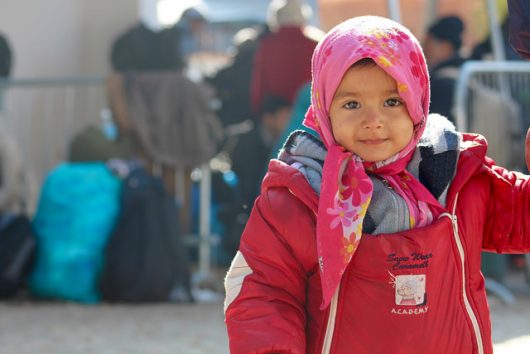
However, the inflow of people has burdened the economy. Poverty is a substantial reason for fleeing Guinea. The instability afflicting the country has consequently made life unbearable for many of their citizens. Here are 10 facts about Guinea refugees and an explanation of the relationship between refugees entering and leaving the country:

  1. During the 11-year civil war in Sierra Leone, Guinea hosted thousands of refugees. Approximately 300,000 asylum seekers from Sierra Leone entered Guinea. These refugees thus  put a strain on Guinea’s already struggling economy.
  2. Most of the refugees that flee to Guinea settle in the forest region. This created a decline in the region, and 40 percent of its inhabitants are now food-insecure. Consequently, with the influx of refugees and consequent depletion of resources, people are now starting to emigrate from Guinea.
  3. The total population of Guinea is 13,303,412. In 2016, 15,350 citizens fled. This number accounts for roughly 0.127 percent of the total population.
  4. Like many other African refugees, 81 percent of asylum applicants from Guinea were rejected.
  5. The most successful refugees were those going to the United States and Brazil.
  6. Germany is one of the more open European countries, and it is always at the top of the list for most accepted applicants. In fact, 3,458 Guinea refugees fled to Germany,  and 152 were accepted (22.75 percent).
  7. Experiments with socialism and a period under a junta government made life difficult for the people of Guinea. The junta forcefully took power in 2008, its leaders are responsible for mass murders and occurrences of rape.
  8. The instability in Guinea initiated violent ethnic tension. The different ethnicities entering Guinea from Sierra Leone and other war-torn countries made the possibility of a united, consolidated country difficult to achieve.
  9. Citizens of Guinea also endure poverty and high rates of malnutrition. In 1996, the poverty rate was 40 percent, and it rose to 49 percent in 2004. The share of the population living in extreme poverty grew from 18 percent to 27 percent.
  10. Consequently, poverty is a major reason for fleeing Guinea. In 2012, 35.3 percent of the population lived at or below $1.90 a day.

These 10 facts about Guinea refugees show that the country is struggling. However, improvements are happening. For example, food insecurity in the forest region has decreased. In 2007, 59.7 percent of the population was at or below the poverty line. In 2012, this was down to 35.3 percent.

Guinea’s population is growing, and the nation has made enormous strides in the past few years. If Guinea keeps moving in this direction, poverty will decline and the overall prosperity of the country will increase.

– Lucy Voegeli

Photo: Flickr

July 16, 2017
https://borgenproject.org/wp-content/uploads/borgen-project-logo.svg 0 0 Borgen Project https://borgenproject.org/wp-content/uploads/borgen-project-logo.svg Borgen Project2017-07-16 07:30:042020-06-03 08:46:0310 Facts About Guinea Refugees
Education, Global Poverty

Facts About the State of Education in Papua New Guinea

Read more
July 16, 2017
https://borgenproject.org/wp-content/uploads/borgen-project-logo.svg 0 0 Borgen Project https://borgenproject.org/wp-content/uploads/borgen-project-logo.svg Borgen Project2017-07-16 01:30:092025-12-09 11:38:49Facts About the State of Education in Papua New Guinea
Global Poverty, Hunger

10 Facts About Hunger in Serbia

The hunger and deprivation that plagued refugee camps during the Kosovo War inspired Clint Borgen to found The Borgen Project, and one of the countries that saw the largest influx of suffering refugees during that time was Serbia. Though conditions today are far better than they were in 1999, hunger in Serbia is still a problem. Here are 10 facts about the past and present conditions.

  1. In 1999, the U.N. World Food Program distributed 145,000 tons of food to Serbia, feeding approximately 890,000 undernourished people. At that time, the WFP compared conditions in Serbia, where 10 percent of the population faced a humanitarian crisis, to those in North Korea.
  2. In 2008, the Global Hunger Index (GHI) was 7.8 in Serbia and has since dropped to 7.1 in 2016. The GHI uses undernourishment, child wasting, child stunting and child mortality in their formula for determining hunger levels.
  3. The proportion of people experiencing hunger in Serbia, meaning they have insufficient caloric intake, was 6.9 percent in 2016, an improvement from 7.4 percent in 2008.
  4. The prevalence of wasting in children younger than five, which means their weight is low relative to their height, was 3.9 percent, down from four percent in 2008. Wasting is a measure of acute malnutrition.
  5. The prevalence of stunting in children younger than five, which means their height is low for their age, was six percent, down from 7.4 percent in 2008. Stunting is representative of chronic malnutrition.
  6. The mortality rate for children under the age of five is .7 percent, a small improvement from .8 percent in 2008.
  7. Of 113 index countries, the Global Food Security Index ranks Serbia 47th in affordability, 65th in availability and 52nd in quality and safety. Their overall rank for food security is 59.4, making them 52nd overall of the 113 countries.
  8. The Global Food Security Index also reports that hunger in Serbia leaves the average intensity of food deprivation at eight kilocalories per person per day. Each day, Serbia’s population lacks a total of 336,00,000 kilocalories.
  9. Because the nation has been a member of the U.N. since 2000, hunger in Serbia is a major factor in the 2030 Agenda for Sustainable Development. The agenda is comprised of 17 goals, the second of which is “zero hunger.”
  10. Because it is far cheaper, it was reported that Serbians ate three times more bread than the average EU citizen in 2014 (89 kilograms/year), and close to a third of the amount of meat, at 35 kilograms per year, compared to 90 in Germany, 91 in Italy and 102 in France.

Conditions have been steadily improving to help eliminate hunger in Serbia. Where the country faced a humanitarian crisis at the beginning of the century, it is now working with the U.N. to meet a goal of zero hunger by 2030. The statistics concerning Global Hunger and Global Food Security clearly illustrate the successes of aid programs and domestic growth in the country, while the presence of malnutrition and child mortality reiterates that until there is no hunger, there is always more to be done.

– Brooke Clayton

Photo: Flickr

July 15, 2017
https://borgenproject.org/wp-content/uploads/borgen-project-logo.svg 0 0 Borgen Project https://borgenproject.org/wp-content/uploads/borgen-project-logo.svg Borgen Project2017-07-15 07:30:282024-05-28 00:03:0010 Facts About Hunger in Serbia
Children, Education, Global Poverty

10 Facts About Children’s Education Worldwide


The Global Partnership for Education estimated that 264 million children were out of school during the 2015 school year. In low-to-middle-income countries around the world, one in four young people is illiterate. The quality of worldwide children’s education is not the only reason why 250 million kids either don’t make it past four years in school or have not learned basic math, reading or writing skills by grade four. So why aren’t children going to school?

  1. A country’s lack of funding for education contributes not only to the absence of actual schools and materials (400 million students worldwide do not have desks) but a low quantity and quality of teachers as well. Multiple education levels often make up one class, which impacts drop out rates and the overall quality of worldwide children’s education.
  2. Their families are poor. When a child’s parents are illiterate, unemployed or sick, all factors contributing to poverty, the risk of that child either dropping out of school or not going to school at all are doubled.
  3. Worldwide children’s education rates drop during times of war or conflict. According to UNICEF, about 48.5 million children do not attend school because they live in high conflict or war zones. In Syria, more than two million children are unable to attend school, with a quarter of schools no longer being used for educational purposes. About 50,000 education professionals have either fled the country or died in the fighting.
  4. Poor families often see no other option than to marry off their female children, a major cause of a lack of worldwide children’s education, particularly for girls. These victims of child marriage are restricted from education by immediate cultural obligations such as housework and pregnancy. A child with a literate mother is 50 percent more likely to live past five years old.
  5. School is too far away. Many children walk up to three hours to school each way. In an impoverished country where the children are hungry, disabled and responsible for working around the house, this is simply too much time to invest. Additionally, long and hazardous walks can be dangerous, especially for girls.
  6. There are 150 million disabled children around the world, with 80% in developing countries, and the rate is increasing. Nine out of 10 of these children are out of school. The reasons range from physical barriers to the negative attitudes of teachers to inadequate policies. ADD International based in the U.K. partners with and connects a network of disability activists around the world, providing tools, resources and support.
  7. They have to work. 11% of children are child-laborers, which comes to 168 million young people.
  8. They or their families are sick. Even in first-world countries, illness can be a huge barrier for worldwide children’s education. Developing countries have less accessible healthcare, making it more difficult to prevent and treat even the simplest conditions. When parents have access to healthcare, they have a higher chance of being able to work to provide for their families.
  9. They are female. Females account for 54% of the non-schooled population globally. This problem is particularly common in the Arab States and Asia, where cultural norms dictate a higher value in men than women. Especially for menstruating girls, a lack of bathroom privacy and sanitary supplies can lead to missing school. In Somalia, where 36% of girls go to school, the government implemented the Go To School initiative in order to give more girls access to education.
  10. They are hungry. According to the Global Citizen, “Being severely malnourished, to the point, it impacts on brain development, can be the same as losing four grades of schooling.” In developing countries, stunted children are 19% less likely to be able to read by age eight. This is a problem, as there are 171 million children stunted by age five in these countries.

From 2002 to 2014, the Global Partnership for Education helped 64 million children make it to primary school in its partner countries. The organization supports 65 developing countries to ensure that every child receives a quality basic education, prioritizing the poorest, most vulnerable and those living in countries affected by fragility and conflict.

The WE Movement partners with countries in Africa, Asia and Latin America to redesign villages that encourage sustainable community change. They build schools, educate teachers, deliver school supplies, build wells and water pumps, provide medical clinics and health training, assist with agriculture and food production and offer parents educational services.

Although there has been much progress in global education, the barriers holding children back from reaching their full potential through quality education still exist. When educated, young people are more likely to have the self-confidence and knowledge to better both their communities and their own livelihoods. Worldwide children’s education is an important tool in the overall reduction of global poverty.

– Katherine Gallagher

Photo: Flickr

July 15, 2017
https://borgenproject.org/wp-content/uploads/borgen-project-logo.svg 0 0 Borgen Project https://borgenproject.org/wp-content/uploads/borgen-project-logo.svg Borgen Project2017-07-15 01:30:042020-06-02 12:29:2410 Facts About Children’s Education Worldwide
Developing Countries, Global Poverty

Facts and Figures in Uganda


Poverty reduction efforts depend on data. To improve lives in Uganda, it is important to know the facts and figures in Uganda that affect the population every day.

Commonly referred to as “the Pearl of Africa,” Uganda has a population of approximately 39 million people and borders Kenya, South Sudan, the Democratic Republic of the Congo, Rwanda and Tanzania. The following are important facts and figures in Uganda:

  1. The average fertility rate is 5.8 children per woman and results from a lack of sex education, family planning services and contraception use as well as the cultural support for large families.
  2. There is a high maternal mortality rate of 343 deaths per 1,000 live births due to a high number of births per woman, short birth intervals and early pregnancy Uganda’s infant mortality rate ranks twenty-first in the world at 57.6 deaths per 1,000 live births.
  3. Uganda has a high population of children. Newborns to those aged 14 make up almost half of the country. About 14.1% of children under five years old are underweight.
  4. The primary education gross enrollment rate is 101.1% but, during secondary school, significantly drops to 26%.
  5. About 7.1% of the adult population (ages 15 to 49) have HIV. Uganda ranks tenth in the world for the highest prevalence rate, seventh for most people living with HIV/AIDS, and tenth for most HIV/AIDS-related deaths.
  6. About 52% of Ugandans have mobile phone subscriptions, and 19.2% have internet access.
  7. In the labor force, 71.9% participate in agriculture, 4.4% in industry and 23.7% in services. However, agriculture accounts for 24.5% of the GDP, industry accounts for 21%, and services account for 54.4%.
  8. The Lord’s Resistance Army, active since 1987, continues to terrorize the country and hold children captive as child soldiers.
  9. About 19.1% of the population lives with improved sanitation facilities, and 79% has access to improved water sources. The rates are typically better in urban settings as oppose to rural areas.
  10. The life expectancy at birth is 59 years of age.

Many of these facts and figures in Uganda have improved over the years as Uganda has worked to meet Millennium Development Goals. For example, the United Nations reported that the percent of the rural population with access to improved drinking water increased from 52 percent in 2001/02 to 72 percent in 2012/13 and most recently to 79 percent. In addition, the country has reduced income poverty by two-thirds, an accomplishment that was five years ahead of schedule. But, Uganda is not stopping there; the country still has the opportunity and plans to make many more strides to aid poverty-reduction efforts.

– Francesca Montalto

Photo: Flickr

July 14, 2017
https://borgenproject.org/wp-content/uploads/borgen-project-logo.svg 0 0 Borgen Project https://borgenproject.org/wp-content/uploads/borgen-project-logo.svg Borgen Project2017-07-14 01:30:562024-05-28 00:02:39Facts and Figures in Uganda
Global Poverty, Water

Eight Facts About Water Quality in Panama

Water Quality in Panama
As one of the most prosperous and developed countries in Central America, Panama is a leader in the area regarding sanitation and water quality. Current estimates say that 93% of Panamanians have access to an improved water source, while 69% have access to improved sanitation. Despite these numbers, there have been many challenges in recent years pertaining to water quality in Panama, especially in rural areas.

  1. Many of Panama’s improvements in water quality occurred in the 1990s after Ernesto Perez Balladares was elected president in 1994. The privatization of water and electric companies helped to improve conditions as the country continued to invest in urban areas.
  2. Data from the World Bank showed an increase in the percentage of those that have access to an improved water source from 83.8% up to 94.7% between 1990 and 2015.
  3. The Instituto de Acueductos y Alcantarillados Nacionales (IDAAN) has been responsible for water quality in Panama for more than 50 years. IDAAN recently set up a tariff system to help cover investment costs as their expenses increase.
  4. In 2013, 840,000 of the country’s population of 3.8 million did not have 24-hour access to water, while 600,000 lacked access to a potable supply, and 30,000 relied on tank trucks to deliver drinking water.
  5. A 15-day rainstorm in December of 2010 created a clog in purification equipment in a water treatment plant, resulting in a month-long shutdown that hindered more than a million residents’ access to water in Panama City.
  6. Recent studies about the effects of climate change have suggested that periods of flood and drought may threaten both Panama’s water quality and the water supply in the Panama Canal. This may pose a huge threat to Panama’s shipping industry, as it takes 52 million gallons of water to move just one ship through the canal.
  7. One recent threat toward water quality in Panama has been the agricultural runoffs in rural areas that may contain pesticides, animal feces and other contaminants. After facing pressure to confront this issue in 2015, Panama’s National Assembly created the Ministry of the Environment to focus on giving rural residents consistent access to clean water.
  8. If present trends continue, Panama hopes to increase drinking water coverage for both urban and rural areas above 90 percent by 2020.

While the country has made tremendous progress in the last few decades, water quality in Panama remains an issue due to poor response to problems such as drought and runoff. In the near future, Panama will have to respond to changes brought about by climate change and other factors to ensure the continued health and prosperity of their nation.

– Nick Dugan

Photo: Flickr

July 13, 2017
https://borgenproject.org/wp-content/uploads/borgen-project-logo.svg 0 0 Borgen Project https://borgenproject.org/wp-content/uploads/borgen-project-logo.svg Borgen Project2017-07-13 07:30:492020-06-04 10:20:04Eight Facts About Water Quality in Panama
Global Poverty, Human Rights, Slavery

Eight Facts About Chattel Slavery

Chattel Slavery
The definition of chattel slavery is a “civil relationship in which one person has absolute power over the life, fortune, and liberty of another.” According to a report issued by the Australia-based Walk Free Foundation, 29.8 million people still exist as slaves in the modern world. Among the enslaved, there are forced laborers, forced prostitutes, child soldiers, child brides in forced marriages and those in the servitude of absolute ownership (chattel slaves). Below are eight facts to illustrate the current state of chattel slavery around the world.

Top Chattel Slavery Facts to Know

  1. Countries with the most chattel slavery include the East African countries of Mauritania and Sudan. Within these countries, people can experience being bought and sold as if they were a commodity.
  2. The enslaved are often captured during raids of villages, with girls as young as ten often seen as easy targets. Branding with hot metal objects is a practice often used to prevent escape, while female genital mutilation and castration are frequently imposed punishments to those who try.
  3. Civil strife in Sudan has created a comeback for slavery within the country, as an increasing number of war prisoners face abduction. As government-armed Arab militias loot villages in the southern regions, they have been known to murder the men and take the women and children to be auctioned off and sold as property. According to James Aguir of Sudan’s Committee for the Eradication of the Abduction of Women and Children, “35,000 slaves remain in bondage in Northern Sudan.”
  4. While Mauritania’s government has continually banned slavery, there is little enforcement effort.  Current estimates claim that 20% of the population are slaves to North African Arabs. As slaves, their only purpose is for house and farm labor and sex.
  5. Children of chattel slaves are born the property of their parents master. As Fatma Mint Mamadou was born a slave in Mauritania, she knew of little else. When questioned if she and the other slave girls in her village were raped, she answered, “Of course they would come in the night when they needed to breed us. Is that what you mean by rape?”
  6. About one in ten Haitian children are sold to wealthier families to become “restaveks” or “stay withs” by poor parents who have few other choices. As these impoverished people normally have no other income source, their only chance of survival often comes from selling their children into forced labor conditions resembling those of chattel slavery.
  7. Rich, developed countries have the lowest rates of slavery. In reference to the Walk Free Global Slavery Index, the Washington Post’s Max Fisher wrote that “effective government policies, rule of law, political stability and development levels all make slavery less likely.”
  8. Slavery is driven by extreme poverty, corruption, and discrimination. As Fisher argues, “When society treats women, ethnic groups or religious minorities as less valuable or less worthy of protection, they are more likely to become slaves”.

While slavery continues throughout many developing nations, the need for strengthening those weakened by poverty is undeniable. As trends have shown, investing in the stability of poorer nations and their people will help enable citizens to stand up against the corruption in their own countries, as well as major human rights violations like chattel slavery.

– Kendra Richardson

Photo: Flickr

July 13, 2017
https://borgenproject.org/wp-content/uploads/borgen-project-logo.svg 0 0 Borgen Project https://borgenproject.org/wp-content/uploads/borgen-project-logo.svg Borgen Project2017-07-13 01:30:522020-06-04 10:53:20Eight Facts About Chattel Slavery
Global Poverty, Human Rights

Six Important Facts About Human Rights in Afghanistan

Human Rights in Afghanistan
Armed conflict continues between Taliban and government forces, leaving human rights in Afghanistan a ravaged victim to the ongoing violence. The crisis has escalated and become a significant recipient of foreign aid. From displacement, abuse and harsh punishments to humanitarian assistance and defenders of human rights, here are six important facts to know about human rights in Afghanistan.

  1. As of September 30, 2016, the U.N. had documented 8,397 civilian casualties as a result of the ongoing armed conflict. Terrorist groups in the region were responsible for 61% of these deaths, while both official and unofficial government forces were responsible for 23% of civilian casualties.
  2. There were 15 documented incidents of the compromisation of medical treatment facilities in the first half of 2016 alone. Government forces are known to conduct search operations in hospitals and clinics, delay or impede the provision of medical supplies and use health facilities for military purposes.
  3. As of August 2016, Afghan judiciaries had registered more than 3,700 cases of violence against women and girls. Under Shari’a law, the Taliban and other armed groups increased their public punishment of women for so-called “moral crimes.” Punishments included public lashings and executions.
  4. The U.N. Refugee Agency documented 2.6 million Afghan refugees living in the world as of 2016. Ninety-five percent of these refugees now live in Iran and Pakistan where they face discrimination, racial attacks, lack of basic amenities and mass deportation.
  5. Armed groups regularly target active defenders of human rights in Afghanistan. For example, in August 2016, unknown individuals kidnapped, tortured and killed the brother of a local women’s rights activist. They then used the brother’s phone to further threaten the sister into ceasing her human rights work.
  6. According to data from the U.N. Office for the Coordination of Humanitarian Affairs, humanitarian aid reached 1.3 million people in the first quarter of 2017.  The current Humanitarian Response Plan in Afghanistan calls for funding of $550.2 million. The program has received 27.2% of that funding so far.

Programs are in place to provide as many Afghan people as possible with the aid they require. However, while such foreign aid response systems are incredibly beneficial, the next crucial step is to take preventative measures against the recurring violations of human rights in Afghanistan.

– Sophie Nunnally

Photo: Flickr

July 12, 2017
https://borgenproject.org/wp-content/uploads/borgen-project-logo.svg 0 0 Borgen Project https://borgenproject.org/wp-content/uploads/borgen-project-logo.svg Borgen Project2017-07-12 07:30:452020-06-08 09:25:24Six Important Facts About Human Rights in Afghanistan
Page 9 of 25«‹7891011›»

Get Smarter

  • Global Poverty 101
  • Global Poverty… The Good News
  • Global Poverty & U.S. Jobs
  • Global Poverty and National Security
  • Innovative Solutions to Poverty
  • Global Poverty & Aid FAQ’s
Search Search

Take Action

  • Call Congress
  • Email Congress
  • Donate
  • 30 Ways to Help
  • Volunteer Ops
  • Internships
  • Courses & Certificates
  • The Podcast
Borgen Project

“The Borgen Project is an incredible nonprofit organization that is addressing poverty and hunger and working towards ending them.”

-The Huffington Post

Inside The Borgen Project

  • Contact
  • About
  • Financials
  • President
  • Board of Directors
  • Board of Advisors

International Links

  • UK Email Parliament
  • UK Donate
  • Canada Email Parliament

Get Smarter

  • Global Poverty 101
  • Global Poverty… The Good News
  • Global Poverty & U.S. Jobs
  • Global Poverty and National Security
  • Innovative Solutions to Poverty
  • Global Poverty & Aid FAQ’s

Ways to Help

  • Call Congress
  • Email Congress
  • Donate
  • 30 Ways to Help
  • Volunteer Ops
  • Internships
  • Courses & Certificates
  • The Podcast
Scroll to top Scroll to top Scroll to top