• Link to X
  • Link to Facebook
  • Link to Instagram
  • Link to TikTok
  • Link to Youtube
  • About
    • About Us
      • President
      • Board of Directors
      • Board of Advisors
      • Financials
      • Our Methodology
      • Success Tracker
      • Contact
  • Act Now
    • 30 Ways to Help
      • Email Congress
      • Call Congress
      • Volunteer
      • Courses & Certificates
      • Be a Donor
    • Internships
      • In-Office Internships
      • Remote Internships
    • Legislation
      • Politics 101
  • The Blog
  • The Podcast
  • Magazine
  • Donate
  • Click to open the search input field Click to open the search input field Search
  • Menu Menu

Tag Archive for: Facts

Posts

Global Poverty, Refugees

10 Facts About Refugees in Trinidad and Tobago

Refugees in Trinidad and Tobago
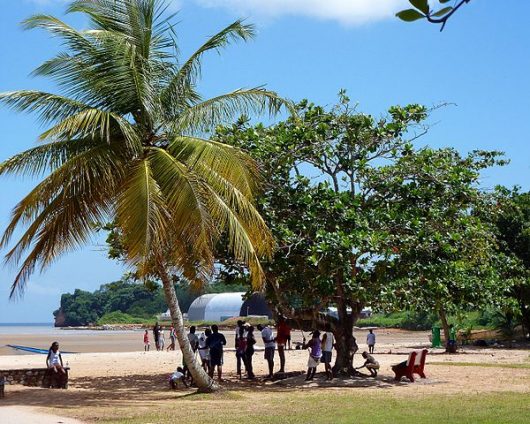
Due to foreign investment in tourism and an abundance of oil and natural gas resources, Trinidad and Tobago is one of the top destinations for Caribbean refugees. As a result, Trinidad and Tobago is facing a multitude of challenges. The country’s borders are vulnerable and human traffickers are active as the country struggles with being the active transit point for North American and European migration. Discussed below are leading facts about refugees in Trinidad and Tobago and the challenges they face.


Top 10 Facts about Refugees in Trinidad and Tobago


  1. Available data suggests that one-third of Caribbean refugees reside in Trinidad and Tobago.
  2. Before 2012, Trinidad and Tobago would only receive around 20 to 30 refugees from different countries annually.
  3. In January 2013, there was an easing of restrictions with Cuba and a change in migration laws, giving people more freedom of migration and movement. This is when Trinidad and Tobago began receiving an influx of Cuban refugees.
  4. By 2014, Trinidad and Tobago received 100 refugees, and, by 2016, that more than doubled to 209 refugees.
  5. In response to the growing number of asylum-seekers, the government adopted an official refugee policy in June 2014 and the U.N. Refugee Agency (UNHCR) established an office in January 2016.
  6. In 2016, about 50% of refugees in Trinidad and Tobago were from Syria, followed by Cuba with 36%.
  7. The UNHCR office in Trinidad and Tobago provides technical and capacity-building advice to authorities, supports the development of an effective asylum system that aligns with the government’s refugee policy, and provides direct assistance to refugees and asylum-seekers through and in coordination with its implementing partner Living Water Community.
  8. The adoption of specific legislation ensures that refugees enjoy all the rights given by the 1951 Refugee Convention. However, there are no current avenues for refugees to legally integrate into the country. This prevents them from positively contributing to the development and prosperity of the nation, including its ideas, culture and knowledge.
  9. In Trinidad and Tobago, more than 40% of the refugee population comes from outside the Americas.
  10. In 2017, the country expects to host more than 400 refugees from multiple countries.

These facts about refugees in Trinidad and Tobago provide awareness about their current situation. Trinidad and Tobago has gradually become a more popular destination for refugees as an active middle point between European and American migration.

– Tucker Hallowell

Photo: Google
July 21, 2017
https://borgenproject.org/wp-content/uploads/borgen-project-logo.svg 0 0 Borgen Project https://borgenproject.org/wp-content/uploads/borgen-project-logo.svg Borgen Project2017-07-21 07:30:392024-05-28 00:03:1010 Facts About Refugees in Trinidad and Tobago
Education, Global Poverty

10 Important Facts About Schools in Africa

schools in Africa
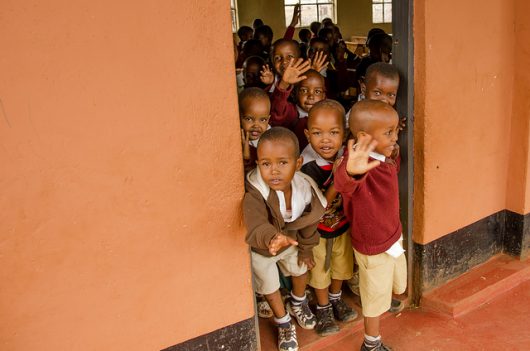
Africa, the second-largest and second most-populous continent, is also home to the youngest population in the world. These young men and women are the future of Africa, but their future is also uncertain. Due to major limitations in education and other mitigating factors, the students of Africa fight an uphill battle to obtain their education.

Here are 10 facts about schools in Africa:

  1. In 2010, there were still approximately 9 million children of primary school age unable to attend schools in Africa due to various reasons.
  2. Girls, nomadic peoples, orphans, children with disabilities, children affected by HIV/AIDS, children affected by armed conflict and children affected by natural disasters are at a particular risk of missing out on education. Young girls are in significant danger due to the threat of bodily injury and sexual abuse while traveling to and from school.
  3. For every two children who attend school in Africa, one will drop out before graduating.
  4. Approximately 8 of the 10 countries with the lowest primary enrollment rates are in Sub-Saharan Africa. Additionally, 33 million primary school-aged children in Africa do not go to school.
  5. Many schools are located far away from children’s homes. Only 7 in 10 children who live in rural areas will ever set foot in a school. Secondary schools can only accommodate 36% of students of age and qualification.
  6. Regional primary enrollment rates now stand at 89% for boys and 86% for girls.
  7. Rates for secondary school enrollment are significantly lower than primary schools. Regional enrollment averages 32% for boys and 29% for girls and many do not actually attend school. Approximately 28% of both boys and girls will attend secondary schools in Africa.
  8. Enrollment in percent education programs is expanding throughout Africa. It nearly doubled between 1999 and 2012.
  9. Primary school attendance has more than doubled between 1999 and 2012. Enrollment rose from 62 million to 149 million during this time.
  10. Parents often can’t afford the cost of education, including books, uniforms, and tuition fees for their children to attend schools in Africa. In response, 15 countries have abolished school fees since 2000, enabling more children to attend primary school.

Africa has made significant strides in promoting healthy growth in enrollment. However, there is still much work to be done to ensure that all children in Africa receive a quality education.

– Drew Hazzard

Photo: Flickr

July 21, 2017
https://borgenproject.org/wp-content/uploads/borgen-project-logo.svg 0 0 Borgen Project https://borgenproject.org/wp-content/uploads/borgen-project-logo.svg Borgen Project2017-07-21 07:30:052024-12-13 17:58:0010 Important Facts About Schools in Africa
Global Poverty

10 Revealing Facts About Poverty in Hungary

Poverty in Hungary
Hungary is a nation of 10 million people in Central Europe. Even though the country has a very high standard of living, many of its people live in poverty. Here are 10 facts about poverty in Hungary:

  1. According to a study by the Organisation for Economic Co-operation and Development (OECD), the portion of Hungarian children living in relative poverty has risen from seven percent in 2007 to 17% in 2012. As housing prices have increased, especially outside of cities, it has become increasingly difficult for families to find affordable housing.
  2. Fewer people live in poverty in Hungary than the EU average. While the average number of people living below the poverty line in the EU is 17%, this number in Hungary is 14.6%.
  3. Many young people feel like they have no future in the country. According to a report by the Hungarian Central Statistical Office, about half of people between the ages of 19 and 30 would like to work abroad.
  4. As housing prices have soared, more families are accumulating debt. Housing prices have increased by an average of 31% over the past three years. The only European country with quicker rising real estate prices is Sweden.
  5. Almost half of Hungarians–44%–can not afford basic resources. This compares with an average of 19% across the EU.
  6. The highest rates of poverty in Hungary are in the northeastern part of the country. The regions of Ezak-Magyarorzag and Eszak-Alfold have poverty rates above the EU average. The causes of this range from inadequate infrastructure to little economic activity to an insufficiently skilled workforce.
  7. For every 1,000 Hungarian children, 6.1 die before their fifth birthday, according to a report by the Save the Children Foundation. This is above the EU average as well as the rates in countries such as Libya, Bulgaria, Cuba and Macedonia. Since malnutrition is contributing significantly to this abnormally high statistic and hunger is a taboo subject in Hungary, the Save the Children Foundation has started an initiative to provide vitamins, baby formula and medicine to children and expecting mothers.
  8. Recently, more children have been taken from their families due to poverty. The government places children in orphanages and forbids them from returning home to see their parents.
  9. Hungarian Foreign Minister Peter Szijjarto believes that digitalization may be the key to reducing poverty. Szijjarto said in a U.N. address that Hungary wants to be a hub for digital innovation. The government plans to reduce the tax rate on internet services and bring broadband with speeds of 30Mbps to all Hungarians by 2018.
  10. The unemployment rate in Hungary was only 4.5% as of the fourth quarter of 2016. This is better than the OECD average and similar to the rate in the U.S.

While Hungarians face several poverty-related issues, from rising housing prices to malnourished children, there is reason to be hopeful as the country’s government and organizations like Feed the Children are aware of the situation and have ideas to solve the problem of poverty in Hungary.

– Brock Hall

Photo: Flickr

July 21, 2017
https://borgenproject.org/wp-content/uploads/borgen-project-logo.svg 0 0 Borgen Project https://borgenproject.org/wp-content/uploads/borgen-project-logo.svg Borgen Project2017-07-21 01:30:552024-05-28 00:03:1210 Revealing Facts About Poverty in Hungary
Disease, Global Poverty

10 Facts About SARS

SARS
SARS, or severe acute respiratory syndrome, comes from a coronavirus. Symptoms center around the respiratory system can lead to severe breathing problems if the patient goes without treatment. Here are ten facts about SARS:

  1. The first widespread case occurred in late 2002 in the Guangdong Province of the Republic of China. The delayed health response led to a global spread of the disease on par with the Ebola epidemic of 2014. The final statistic from WHO showed over 8,000 reported illnesses and more than 700 deaths.
  2. The disease was hard to diagnose due to its irregularity and similarity to pneumonia. Until 2000, cases of SARS were considered rare. Therefore, medical treatment of the virus was scarce, especially in developing countries where the spread happened fastest.
  3. Of the 194 countries that are the Member States of WHO, only 64 of them have efficient alert and response plans for unusual and rare disease outbreaks.
  4. The disease might have originated in animals. A report from the WHO Regional Office for the Western Pacific Region showed that “the palm civet in southern China may have played a crucial role in this respect and that the close relationship between animals and humans seems to have been a likely precondition for the virus to jump the species barrier.” A solution to preventing the initial infection of humans with SARS is to halt unhygienic veterinary and animal husbandry practices that are common in these areas.
  5. In Singapore, 76% of infections occurred in a healthcare facility. Additionally, SARS infected 42 percent of those were health care workers; 49 nurses, 13 physicians and 22 other specialists. Among the healthcare workers, there were no cases among laboratory workers or pathologists.
  6. The source of the Taiwanese outbreak was a 42-year-old laundry worker in a hospital who continued to work despite showing symptoms of SARS. It took 6 days for professionals to diagnose SARS.
  7. The epidemic in Taiwan was mainly due to the health care system’s poorly-executed response.
  8. In October 2012, the National Select Agent Registry added the SARS-associated CoV to its repertoire. The Registry handles the regulation and possession of bacteria, viruses and toxins that pose a potential threat to the public. The addition of the virus to this list ensures maintenance of a national database as well as inspections of objects that may possess, use or transfer SARS-CoV.
  9. SARS is no longer a large-scale threat, due to the global response and the willingness of countries to share their medical information with other countries to quickly control and eradicate the virus.
  10. Future outbreaks are still possible since the virus lives in wild bats and civets. Fortunately, since the end of the epidemics in 2004, there have been no reports of human cases.

SARS is no longer an imminent health concern, but reflecting on this outbreak can help prevent the spread of another viral outbreak like this. Training medical facilities in how to handle highly infectious diseases like SARS and open communication between health professionals around the globe is key to preventing the spread of such diseases.

– Taylor Elgarten

Photo: Google

July 21, 2017
https://borgenproject.org/wp-content/uploads/borgen-project-logo.svg 0 0 Borgen Project https://borgenproject.org/wp-content/uploads/borgen-project-logo.svg Borgen Project2017-07-21 01:30:452024-05-28 00:02:1110 Facts About SARS
Global Poverty, Refugees

10 Facts About Refugees in Singapore

Refugees in Singapore
In recent history, Singapore has had a complicated relationship with refugees. Having been burned once before, Singapore now routinely turns away refugees with the intention of turning the responsibility over to a third party. But should they be doing more to help? Here to help you decide are ten facts about refugees in Singapore:

  1. Following the Vietnam war, refugees known as “Vietnamese boat people” came flooding out of their country to Southeast Asia looking for a safe haven. With this refugee crisis in mind, the Singapore government and the Office of the United Nations High Commissioner for Refugees (UNHCR) agreed on a policy that would provide refugees with international protection. Singapore was to be a kind of limbo by temporarily housing refugees in a transit camp while the UNHCR planned for a more permanent resettlement.
  2. However, the number of refugees continuously arriving proved to be too great, and after a 1989 conference on Indochinese refugees in which committee members decided to enact a new policy called the Comprehensive Plan of Action, Singapore’s transit camp suffered greatly. With a new refugee screening policy in place, Singapore continued to accept new entrants, but the entrants were now not guaranteed resettlement, even temporarily.
  3. Singapore’s transit camp was now a place for rejected asylum seekers to gather, many of whom refused to leave voluntarily. The threat of repatriation caused many refugees to protest the UNHCR, go on hunger strike, or even attempt suicide. Singapore government officials, feeling betrayed by resettlement countries and embittered by the whole experience, closed the camp in 1996 and promised that refugees would no longer be allowed in Singapore, even if another country pledged to take them in.
  4. For many years, Singapore held firm to this policy, stopping refugees at coastlines and, instead of taking them in, providing them with food, water and fuel before sending them away.
  5. However, Singapore’s refugee policy has been slowly softening in recent years. In 2009, Singapore’s Prime Minister, Lee Hsien Loong, addressed the problem of Rohingyas searching for, and being unable to find, a haven after fleeing from Burma. A senior minister of state for foreign affairs clarified that Singapore could not accept asylum seekers, but would offer humanitarian aid so that they could depart for another country.
  6. Apart from Singapore’s unpleasant experience with refugees in the past, the government gives one other reason for refusing to accept new entrants into the country: space. Singapore is the second smallest country in Asia and also one of the most densely populated. Refugees would certainly put an extra strain on the country’s infrastructure.
  7. A lack of space cannot be reason alone to reject refugees, as Singapore actually plans to increase its population from approximately 5.5 million to up to 6.9 million by the year 2030. In 2013, Singapore’s Population White Paper projected this growth, arguing that the country’s land area has grown by 23 percent since 1965 and that increasingly stable investments into infrastructure facilities and land capacity make this population growth sustainable.
  8. As of right now, refugees in Singapore are completely unwelcome, joining one of many Southeast Asian countries that refuse to do so.
  9. It may be, though, that Singapore is finally healing from its past experiences with refugees. In 2016, the UNCHR launched a new campaign to appeal to governments around the world to join the fight to end statelessness, with a special chapter dedicated to Advocates for Refugees in Singapore (the AFR-SG).
  10. Singapore is still a long way away from changing its policy on accepting refugees, but with the continued efforts of the UNCHR, the AFR-SG and anybody who takes the time to help, it is possible to move toward finding a home for the millions of people still left stateless.

– Audrey Palzkill

Photo: Flickr

July 20, 2017
https://borgenproject.org/wp-content/uploads/borgen-project-logo.svg 0 0 Borgen Project https://borgenproject.org/wp-content/uploads/borgen-project-logo.svg Borgen Project2017-07-20 07:30:342024-12-13 17:58:2110 Facts About Refugees in Singapore
Global Poverty

7 Things to Know About Costa Rica’s Poverty Rate

Costa Rica’s Poverty Rate
In 2016, Costa Rica was named the happiest country in the world. But, while the country as a whole has enjoyed stability and a steadily growing economy in recent years, marginalized groups have been left behind. Discussed below are key facts about Costa Rica’s poverty rate that should not be overlooked.


7 Leading Facts About Costa Rica’s Poverty Rate


  1. Costa Rica’s inequality rate has increased since 2000, a division that disproportionately affects indigenous and minority groups. Today, the country’s richest 20 percent receive an income 19 times higher than that of the poorest 20 percent.
  2. While, overall, Costa Rica’s poverty rate has dropped from 22.4 percent to 21.7 percent from 2014 to 2015, the country’s extreme poverty rate rose from 5.8 percent to 7.2 percent, the highest recorded rate in the last 60 years.
  3. While 19 percent of urban households live in poverty and 5.2 percent live in extreme poverty, 30.3 percent of rural households live in poverty and 10.6 percent in extreme poverty.
  4. Poor Costa Ricans have, on average, three years less schooling than their economically stable peers.
  5. In Costa Rica, 43.5 percent of poor households are headed by women.
  6. Since an inflation crisis in the ’80s and ’90s, the Costa Rican government has managed to boost the economy through international tourism and exports. These sectors benefit qualified workers, while unskilled workers, over-represented by indigenous and minority groups, see no change or a decrease in their salaries.
  7. Public assistance to poor families increased by 9.3 percent per household and 6.9 percent per person from 2014 to 2015.

Costa Rica’s poverty rate seems to be sewed up neatly on the surface, but the growth of a country doesn’t always reflect the growth of its people. The disparity of incomes and opportunities between uneducated people in rural areas versus educated people in urban areas threatens to rob Costa Rica of its good economic reputation.

– Sophie Nunnally

Photo: Flickr

July 20, 2017
https://borgenproject.org/wp-content/uploads/borgen-project-logo.svg 0 0 Borgen Project https://borgenproject.org/wp-content/uploads/borgen-project-logo.svg Borgen Project2017-07-20 01:30:332020-06-21 12:06:027 Things to Know About Costa Rica’s Poverty Rate
Global Poverty

Facts and Figures About Greece

Facts and Figures About GreeceGreece is a country in southeastern Europe about the size of Alabama. Among other things, the nation is known fo­­­­­r its beautiful beaches and remarkable history. However, these wonderful features can easily be overlooked in recent years as the nation has faced and continues to face severe economic challenges.
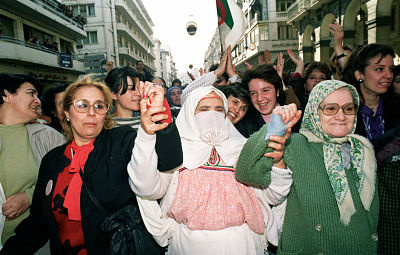
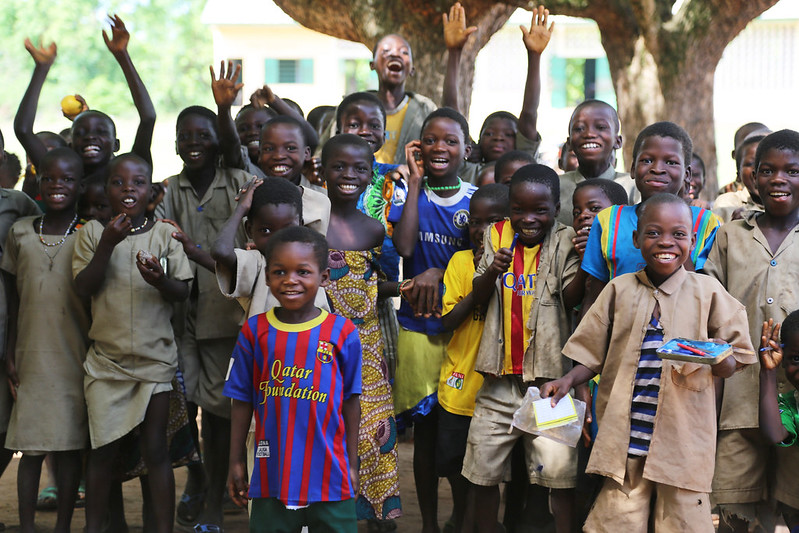
According to Trading Economics, as of April 2017, the nation’s unemployment rate sits at 21.7 percent. That means more than two million Greeks are out of work. This unemployment rate is a few points lower than that of the U.S. at the height of the Great Depression.

The harsh economic conditions that Greece is facing are nothing new. While there is no official start date, December 2009 was an early sign of what was to come. With concerns rising that the Greek government would fail to pay its large debt, the nation’s credit rating was downgraded by an influential rating agency.

In the summer of 2011, the leaders of the European Union decided to bail out Greece, but this did not solve the nation’s crippling economic problems. A few key facts and figures about Greece demonstrate that in the months and years following the €109 billion bailout, conditions continued their downward trajectory.

In April of 2013, youth unemployment was just under 60 percent. In February of 2014, overall unemployment had increased to 28 percent. These harsh economic realities have plagued the nation’s people. Material deprivation affects more than 22 percent of the population, according to Eurostat. In other words, more than one in five people in Greece simply cannot afford basic necessities.

As a result, organizations such as food banks are struggling to keep up with overwhelming demand. “We’re worried because we don’t know if we’ll be able to meet these people’s needs,” said Eleni Katsouli, a municipal offer at a food bank in Athens, to Reuters.

As the facts and figures about Greece indicate, the nation’s people are in need of help. Fortunately, people and organizations have stepped up. One organization making a particularly strong impact is Desmos.

According to its website, Desmos exists to respond to “the need to responsibly and effectively utilize the private initiative in addressing the humanitarian crisis” afflicting Greece. One program that the organization runs that demonstrates its impact is “Desmos for Schools.” This is the fourth year of the initiative. In 2017 alone it donated important items such as computers and sports equipment to 14 schools in Greece. More than 1,300 students will benefit from these efforts.

Charitable organizations such as Desmos are not the only reason for optimism in Greece. A sign of economic improvement showed in 2016 when the budget surplus exceeded expectations. This positive trajectory is predicted to continue as the nation’s GDP is projected to grow by more than 1 percent this year and more than 2 percent next year, according to the Organisation for Economic Co-operation and Development (OECD).

Positive facts and figures about Greece such as these are encouraging signs. If these projections hold true, Greece’s darkest days are likely behind it. However, a very large portion of the population is struggling with poverty right now and is in need of help.

– Adam Braunstein

Photo: Pixabay

July 20, 2017
https://borgenproject.org/wp-content/uploads/borgen-project-logo.svg 0 0 Borgen Project https://borgenproject.org/wp-content/uploads/borgen-project-logo.svg Borgen Project2017-07-20 01:30:192024-05-28 00:03:08Facts and Figures About Greece
Education, Global Poverty

Eight Facts About Education in Somalia

In the coastal African country of Somalia, a long history of famine and war has made it difficult for the school system to flourish. Civil conflict, an underdeveloped government and natural disasters have all served to stunt the growth of education in Somalia.

But hope is not lost—both government and nonprofit organizations are developing methods to increase access to quality schools. Below are eight facts about the country’s education system and current efforts to improve the landscape.

  1. Few children have the opportunity to attend school in Somalia, with a 30 percent average primary school enrollment rate that dips to 18 percent in secluded regions. Due to severe poverty and the nomadic culture that pervades more than half of the population, sending children to traditional schools is impractical and impossible for many families.
  2. Vast gender disparity also plagues the education system. Less than half of all Somali students are girls, and just one-quarter of women between 15 and 24 are literate, versus 37.8 percent of men.
  3. Ninety-eight percent of Somali girls undergo female genital mutilation (FGM) at some point in their lives, 80 percent between ages five and nine. Girls who attend school, though, are less likely to face the procedure.
  4. Recognizing this correlation, Somali activist Hawa Aden Mohamed established the Galkayo Education Centre for Peace and Development (GECPD) in the 1990s to create increased access to education in Somalia, especially for girls. The organization has since provided primary schooling to 800 girls and an “un-formal” education to 1,600 adolescent women.
  5. Education itself works as an agent to prevent girls from experiencing FGM. In addition, the GECPD teaches its students about the dangers of FGM and encourages them to break the cycle within their own families, as nearly two-thirds of Somali women and girls approve of the practice of FGM.
  6. Thanks to the GECPD’s work, the girls’ school enrollment rate has risen to 40 percent in the northeast region of the country, while the national average is just 24.6 percent.
  7. Raising these numbers is vital, as 70 percent of the population is under 30 years old. In addition, youth unemployment swells at 67 percent. With a better education system and ample opportunities for both boys and girls, Somalia stands a great chance of breaking the cycle of poverty and building a successful economy.
  8. Earlier this year, an education summit was held in Garowe, where The Ministry of Education in Puntland discussed education policy and curriculum with the federal government. Federal Minister of Education Abdirahman Dahir Osman announced that committees will begin working on issues within the education system and that Egypt has contributed funding to the cause. The involved organizations will soon release more information on the summit’s conclusions.

While the current circumstances may look bleak, the future holds a wealth of possibilities. With the continued support of the government and organizations such as the GECPD, education in Somalia is on track to turn around.

– Madeline Forwerck

Photo: Flickr

July 20, 2017
https://borgenproject.org/wp-content/uploads/borgen-project-logo.svg 0 0 Borgen Project https://borgenproject.org/wp-content/uploads/borgen-project-logo.svg Borgen Project2017-07-20 01:30:062024-05-28 00:03:09Eight Facts About Education in Somalia
Global Poverty

A Country Steadily Improving: Algeria’s Facts and Figures

Algeria’s Facts and Figures
Situated in the northernmost part of Africa on the south side of the Mediterranean Sea between Tunisia and Morocco, Algeria is the continent’s largest country—and for the past half-century, it has been plagued by violence. This country is ripe with history, and here’s some of the most important of Algeria’s facts and figures.

France first seized the People’s Democratic Republic of Algeria back in 1830, ending three centuries of Algeria as an autonomous province of the Ottoman Empire. By 1954, the Algerian War of Independence had broken out, which was largely motivated by the National Liberation Front (the FLN—the nation’s primary political party), and they successfully gained their autonomy from France in 1962.

The current President of Algeria is Abdelaziz Bouteflika, who won the presidency in the 1999 election and has held power ever since. In 1991, a civil war broke out with Muslims against the government; when Bouteflika was elected in 1999, he was able to restrain the conflict of a brutal civil war by introducing a national reconciliation policy, restoring economic stability within the country.

When regarding facts and figures on Algeria’s economy, it is largely dominated by hydrocarbons. These hydrocarbons account for 30 percent of the country’s GDP, 60 percent of budget revenues, and close to 95 percent of all export earnings, as Algeria holds the 10th-largest reserve of natural gas globally. Algeria’s economy also enjoys an extremely low debt, at just 2 percent of GDP.

When it comes to Algeria’s facts and figures regarding its climate, it is mainly arid to semi-arid, with wet winters and hot, dry summers along the coast—dusty, sand-laden wind is very common in the summertime. The average elevation is about 800m, contains 17.3 percent of usable agricultural land, and its main natural resources are petroleum, natural gas, iron ore, phosphates, uranium, lead and zinc.

Algeria’s environment is subject to biodiversity, climate change, desertification, endangered species, hazardous wastes and ship pollution, among others.

Some of the leading current issues involving Algeria’s environment include the Mediterranean Sea becoming polluted from factors such as oil wastes, soil erosion and fertilizer runoff.

According to the Central Intelligence Agency, as of July 2016, facts and figures regarding the population of Algeria were at 40,263,711 people, with 99 percent of the population being Muslim and predominantly Sunni. The most common of languages in the nation are Arabic, French and Berber.

When broadcasting to the population, the government exercises a strong hold over the media, and the radio sector of the media is entirely state-run.

A major issue within Algeria is human trafficking, with women being subjected to atrocities such as forced labor, sex trafficking, prostitution, domestic service and begging. As for men, they can be subject to forced labor, criminal networks and domestic servitude.

Fortunately, slight improvement has been made with Algeria moving from a category three to a category two in human trafficking.

– Sara Venusti

Photo: Google

July 19, 2017
https://borgenproject.org/wp-content/uploads/borgen-project-logo.svg 0 0 Borgen Project https://borgenproject.org/wp-content/uploads/borgen-project-logo.svg Borgen Project2017-07-19 07:30:302024-05-27 23:58:51A Country Steadily Improving: Algeria’s Facts and Figures
Global Poverty, Refugees

Togo Refugees: 10 Important Facts Everyone Should Know

There are ten facts about Togo refugees that are important to know. It is important to establish a timeline of events so that we can understand the Togo refugee crisis fully.

The first massive group of Togolese citizens to escape to refuge in neighboring countries were in 1993. Togo refugees relocated to Ghana and Benin because of the violent unrest in Togo. The violence that ensued during the fight for the new constitution, and its subsequent abolishment in 1993, led to enormous physical insecurities in Togo.

Here are ten facts about the conditions for Togo refugees since the flight for life in 1993:

  1. The fight between the government and opposition parties led to the displacement of over 15,000 people to neighboring countries in 1993. This number often included families that were separated, and children that were accompanied by strangers because their parents were either killed or lost during the scare to find more secure locations.
  2. The Volta region of Ghana hosts the most refugees from Togo. This region lies west of Togo’s capital Lomé. Citizens of Aflao, a district in the Volta region of Ghana, have welcomed the Togo refugees with an open embrace.
  3. The Volta region has been a major area of dispute between Togo and Ghana since British Togoland became a part of Ghana. It was a part of the split of British and French Togoland, after the defeat of Germany in 1918. After a U.N.-led referendum in 1956, British Togoland joined Ghana.
  4. The citizens of Togo who fled to Eastern Ghana are a part of the Ewe people of West Africa.
  5. Violent and indiscriminate killings after the 1998 elections caused more people to flee from Togo. Families were once again forced to run to safety in neighboring countries because of violent unrests and intimidation from supporters of both the winning and losing parties of the election.
  6. The military handed over power to Gnassingbe Eyadema’s son Faure Gnassingbe after Eyadema dies in 2005.
  7. There have been a series of violent protests and widespread killings, due to opposition to political corruption. This situation has worsened security concerns in Togo, as its citizens live in constant fear.
  8. Victims of the indiscriminate killings resulting from violent unrest are also foreign citizens accused of supporting the opposition or ruling party.
  9. Violent assaults and killings are committed by both supporters of the ruling party in efforts to suppress opposition and supporters of the opposition party in retribution to attacks from the ruling militia.
  10. In Ghana, the government made provisions by 2015 to integrate 2300 Togolese refugees into Ghanaian society. Under the Seeds for Solutions Project, efforts by the Ghanaian governments will be funded by the U.N. High Commission for Refugees (UNHCR). This provides social and economic aid to refugees for work-training and micro-finance loans to start businesses.

Togo refugees are hopeful that security conditions in Togo will improve so that they can return.

– Ebuka Okoye

Photo: Flickr

July 18, 2017
https://borgenproject.org/wp-content/uploads/borgen-project-logo.svg 0 0 Borgen Project https://borgenproject.org/wp-content/uploads/borgen-project-logo.svg Borgen Project2017-07-18 01:30:492020-06-04 09:10:52Togo Refugees: 10 Important Facts Everyone Should Know
Page 8 of 25«‹678910›»

Get Smarter

  • Global Poverty 101
  • Global Poverty… The Good News
  • Global Poverty & U.S. Jobs
  • Global Poverty and National Security
  • Innovative Solutions to Poverty
  • Global Poverty & Aid FAQ’s
Search Search

Take Action

  • Call Congress
  • Email Congress
  • Donate
  • 30 Ways to Help
  • Volunteer Ops
  • Internships
  • Courses & Certificates
  • The Podcast
Borgen Project

“The Borgen Project is an incredible nonprofit organization that is addressing poverty and hunger and working towards ending them.”

-The Huffington Post

Inside The Borgen Project

  • Contact
  • About
  • Financials
  • President
  • Board of Directors
  • Board of Advisors

International Links

  • UK Email Parliament
  • UK Donate
  • Canada Email Parliament

Get Smarter

  • Global Poverty 101
  • Global Poverty… The Good News
  • Global Poverty & U.S. Jobs
  • Global Poverty and National Security
  • Innovative Solutions to Poverty
  • Global Poverty & Aid FAQ’s

Ways to Help

  • Call Congress
  • Email Congress
  • Donate
  • 30 Ways to Help
  • Volunteer Ops
  • Internships
  • Courses & Certificates
  • The Podcast
Scroll to top Scroll to top Scroll to top