• Link to X
  • Link to Facebook
  • Link to Instagram
  • Link to TikTok
  • Link to Youtube
  • About
    • About Us
      • President
      • Board of Directors
      • Board of Advisors
      • Financials
      • Our Methodology
      • Success Tracker
      • Contact
  • Act Now
    • 30 Ways to Help
      • Email Congress
      • Call Congress
      • Volunteer
      • Courses & Certificates
      • Be a Donor
    • Internships
      • In-Office Internships
      • Remote Internships
    • Legislation
      • Politics 101
  • The Blog
  • The Podcast
  • Magazine
  • Donate
  • Click to open the search input field Click to open the search input field Search
  • Menu Menu

Tag Archive for: Europe

Posts

Global Poverty, Water

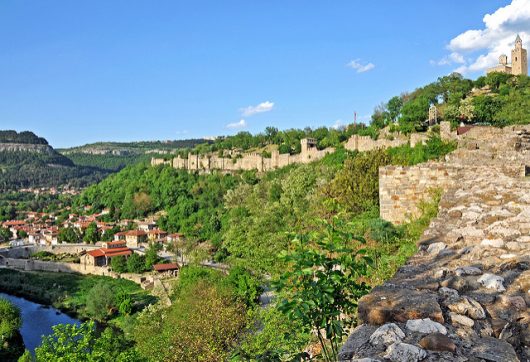
On Improving Water Quality in Bulgaria

Water Quality in Bulgaria
Bulgaria is a European country with a population of over 7.1 million. There is a history of unsafe drinking water throughout the country. Bulgaria has imposed heavy monitoring and various bans to help improve the situation. While the water quality in Bulgaria hasn’t always been up to par with other nations around the world, the nation has made some positive gains over the last few years.

Despite having 60 rivers flowing through the country, Bulgaria’s freshwater sources are scarce. The largest river is the massive Danube River, which travels through much of Europe, flows through 470 kilometers of Bulgaria. Rivers provide a potential source of clean water that could improve the water quality for Bulgaria’s citizens and in the near future.

On top of some of the problems already present, drought has ravaged the country, and the demand for drinkable water has increased. Scientists have forecasted additional droughts in the coming summer. Additionally, multiple heat waves continue to hit Bulgaria as the summer progresses.

Many districts in Bulgaria have had ongoing issues with low-quality drinking water. In 2012, 18 of the 28 Bulgarian districts reported contaminated drinking water. Water quality continues to be the worst in the southern districts of the country, most notably the district of Pazardzhik. The World Health Organization (WHO) reported in 2012 that the district was well over the set limit of multiple contaminants.

Since joining the European Union in 2007,  the nation has issued bans for four sources of drinking water in Bulgaria due to poor water quality.

The future of Bulgaria depends on cleaning up rivers and waterways, as well as improving water retention. In addition, Bulgaria is working towards developing water treatment facilities around the country.

Water quality in Bulgaria varies throughout the country, but with proper infrastructure and treatment, there is potential for all of Bulgaria to have access to clean drinking water.

– Brendin Axtman

Photo: Flickr
July 21, 2017
https://borgenproject.org/wp-content/uploads/borgen-project-logo.svg 0 0 Borgen Project https://borgenproject.org/wp-content/uploads/borgen-project-logo.svg Borgen Project2017-07-21 01:30:152020-06-24 07:50:10On Improving Water Quality in Bulgaria
Global Poverty, Water

Superb Water Quality in Italy Still Needs Improvements


Italians, the descendants of the water-savvy and water-loving Romans, still maintain a potable supply of drinking water today. Overall, the water quality in Italy is excellent. Italy’s drinking water is safe to drink and widely available, with public fountains running fresh drinking water throughout many major cities.

These fountains, called “nasoni,” which means “big noses” in Italian, provide high-quality and free drinking water in cities like Rome and Florence for locals and tourists alike. Florence regulates its water with a strict code of 61 parameters. Florentine officials examine the chemicals in the water and its microbiology using these parameters to ensure potability.

Both rural and urban populations in Italy have 100 percent access to improved water sources, making water quality in Italy superb, even better than the United States, which comes in at 99 percent access to improved water sources.

Although all Italians have access to improved water sources, the water quality in Italy does vary slightly by city. Naples, for example, has lower quality water than most other major Italian cities. The water in Naples “may be safe to drink” according to a tourist water safety website. However, strains of local E. coli are present within Naples’ tap water. Locals are accustomed to these strains of E. coli, but tourists and other visitors are not. Therefore, the water is safe for locals, but visitors require a transition period in order to drink the water without experiencing unpleasant after-effects, such as diarrhea.

The inferiority of Naples’ drinking water compared to other Italian cities could be due to the toxic waste and immense pollution in Naples. Some claim that the mafia dumped hazardous industrial waste on agricultural lands outside of Naples, creating pollution problems. More obvious pollutants are the immense piles of garbage lining the streets of Naples and the litter on its surrounding farmlands.

Although pollution threatens health and safety standards in Naples, the city fights against it by cleaning up dirtied areas and installing spaces for outdoor recreation. By 2014, the city of Naples created a larger beachfront for pedestrian use and a bicycle lane lining its coast. Additionally, large portions of Naples’ bay have been cleaned, allowing for swimmers to retake the water.

Decreasing pollution creates tangibly increased standards of health and safety, including better water quality in Italy. Additionally, reigning in pollution increases the quality of living for residents of a city, as it provides greener and more appealing outdoor spaces, encouraging physical activity for its residents.

– Mary Kate Luft

Photo: Flickr

July 20, 2017
https://borgenproject.org/wp-content/uploads/borgen-project-logo.svg 0 0 Borgen Project https://borgenproject.org/wp-content/uploads/borgen-project-logo.svg Borgen Project2017-07-20 07:30:222020-06-21 12:11:59Superb Water Quality in Italy Still Needs Improvements
Global Poverty, Water

The Current Problems with Water Quality in Hungary

Water Quality in Hungary
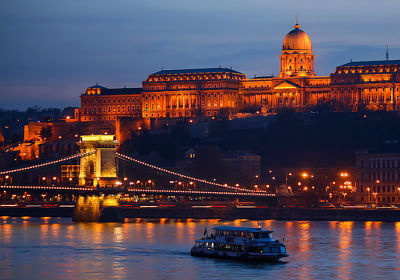
Hungary is a landlocked country located in the central Danube Basin. It is divided into The Great Plains, the Transdanube and the Northern Hills areas. Hungary is a fairly small country but is known for great biodiversity. This biodiversity is threatened by some of Hungary’s most serious problems: air and water pollution. Pollution disrupts the water quality in Hungary, especially the Danube River, quite significantly. These pollutants come from industrial and large-scale agriculture.

A recent reservoir failure flooded many towns in Hungary with red toxic mud. In October 2016, a dam holding waste products such as arsenic and mercury collapsed. It was said to have released about 184 million gallons of this red mud. The toxic mud negatively impacted the water quality in Hungary, polluting the Danube even further.

Another danger to the water quality in Hungary is caused by human alterations to the Danube for the purpose of navigation. Intentions to deepen the dam for easier boat passage have changed the way the traditional floodplain landscape and water flows into the deltas. This not only affects the water quality but also endangers the wildlife and habitats near those areas. Scientists worry that the improper mining of these dams could lead to something even worse than the toxic red mud scare. They say that, without the correct techniques or repairs, there could be catastrophic repercussions should they fail. More dangerous toxic chemicals such as cyanide could spill into the river and completely ruin the water quality in Hungary.

With more than 90 percent of Hungary relying solely on groundwater, and with 47 out of 108 groundwater bodies considered to be “possibly at risk,” the water quality in Hungary remains in jeopardy. Something must be done to reverse the rising levels of pollution and stop the harm to the environment.

One potential solution comes from a European Union-funded project that brings clean drinking water to those in Hungary affected by polluted groundwater. The National Water Management Administration is responsible for organizing 33 projects that have already brought clean water to 227 communities. They are currently working to complete these projects in time to qualify for 100 billion HUF in financing from the European Union. These projects are the greatest hope to improve water quality in Hungary at this time.

– Katelynn Kenworthy

Photo: Flickr

July 20, 2017
https://borgenproject.org/wp-content/uploads/borgen-project-logo.svg 0 0 Borgen Project https://borgenproject.org/wp-content/uploads/borgen-project-logo.svg Borgen Project2017-07-20 07:30:182024-05-28 00:03:09The Current Problems with Water Quality in Hungary
Developing Countries, Global Poverty, Refugees

10 Facts About Refugees in Romania

Romania Refugees
On the border of the Black Sea in southeastern Europe rests Romania, a country nestled between Ukraine and Bulgaria. With a population of roughly 21.6 million and one of the fastest-growing economies in the European Union, the nation has agreed to welcome refugees. The country has been willing to help refugees but is often left without the necessary resources to do so. Here are 10 facts about refugees in Romania:

  1. In November 2015, Romania agreed to welcome 6,205 refugees over the course of two years. Over 550 had entered the country by December 2016.
  2. In Romania, the government covers the expenses of individuals granted refugee status for six months to one year. After this period of time, those individuals are expected to be employed.
  3. Despite the six to 12 month grace period, refugees are required obtain an understanding of the Romanian language as well as some formal recognition of previous experience, academic degrees or other qualifications. Rarely are such documents easily available to refugees.
  4. Civil society organizations, rather than Romanian authorities, are often left with the task of offering refugees much-needed employment assistance.
  5. The Romanian Ministry of Labor does not assist refugees with their job searches; it only registers refugees in an unemployment database.
  6. Learning Romanian has been described by refugees as being a key factor to succeeding in the country. Unfortunately, Romania’s language courses have little structure and are often of low quality.
  7. Roughly 5,000 individuals have been granted Romanian refugee protection since 1991, yet only 2,584 individuals hold residency permits. Such numbers suggest that nearly half of Romania’s refugee population no longer reside in the country.
  8. Relocated persons in Romania can benefit from the Jesuit Refugee Service, which runs a project called “A New House.” The project aids refugees in finding affordable housing.
  9. Many refugees in Romania who arrived in 2016 were relocated by the European Union from Greece and Italy.
  10. Romania lacks resources for refugees, so the country is not receiving the waves of refugees that are entering other European countries. Therefore, Romania has relatively more time to plan exactly how to address the issue of refugee protection.

These facts about refugees in Romania may appear to be disheartening, but if the Romanian government can tackle the issue of resource allocation with thorough planning, the country may soon become a stable safe haven for refugees fleeing war-torn countries.

– Shannon Golden

Photo: Google

July 18, 2017
https://borgenproject.org/wp-content/uploads/borgen-project-logo.svg 0 0 Borgen Project https://borgenproject.org/wp-content/uploads/borgen-project-logo.svg Borgen Project2017-07-18 07:30:352024-05-28 00:03:0410 Facts About Refugees in Romania
Development, Global Poverty, Hunger

Fighting Starvation Since 2008: Poverty and Hunger in Latvia

Hunger in Latvia
Formerly a part of the USSR, Latvia is a member of the EU for the past 13 years. The country is home to over two million people, and it is slightly larger than West Virginia. The recession of 2008 deeply affected the Latvian economy, and as a result, the country has a massive income gap. Additionally, as of 2013, Latvia gave less aid to the poor than any other members of the EU. These conditions leave ample room for the number of those living in poverty to increase, which makes hunger in Latvia an important issue.

Historically, Latvia lacks an adequate food supply. Children suffer most from hunger in Latvia, and malnutrition steadily weakened the population since the end of World War I.

As of 2014, almost 20 percent of Latvians were living under the poverty line. It is the third-poorest country in the EU. Of those in poverty, the average family lives on an average of 215 euros or less, not enough to feed the whole family. In 2012, 100,000 citizens had a monthly income of less than 65 euros.

While hunger in Latvia is still an issue, the country greatly improved in the past decade. Since 2000, Latvia decreased their Global Health Index rating by 59 percent. The Global Health Index gives countries a score from zero to 100 based on undernourishment, child mortality and other factors. The lower the score, the healthier the country is.

Many organizations contributed to the decrease in poverty and hunger in Latvia. The American Relief Administration worked to feed the hungry, especially children. Carelinks Ministry, a religious outreach organization, worked in Riga, Latvia, serving food to the poor, especially in the colder months. With people partnering to reduce hunger in Latvia, the country will continue to decrease their GHI rating.

– Julia Mccartney

Photo: Flickr

July 17, 2017
https://borgenproject.org/wp-content/uploads/borgen-project-logo.svg 0 0 Borgen Project https://borgenproject.org/wp-content/uploads/borgen-project-logo.svg Borgen Project2017-07-17 07:30:342020-06-17 18:22:27Fighting Starvation Since 2008: Poverty and Hunger in Latvia
Global Poverty, Refugees, United Nations

A Foreseeable Future: The Asylum for Andorra Refugees

Andorra Refugees
Home to roughly 79,300 people, Andorra is a tiny principality located in the mountainous region between France and Spain. Although the principality joined the Council of Europe and the United Nations, it is not an official member of the European Union. Despite this, Andorra maintains a special relationship with the European Union, and, today, supports the common policy for refugees that the European Union has established. Here are 10 facts about Andorra refugees:

  1. The principality works directly with the European Union in matters of solidarity.
  2. Andorran Foreign Minister Gilbert Saboya has stated that the principality works with representatives from the European Union to create a screening and security process which will accommodate only 40 refugees.
  3. Andorra agreed to assist refugees for strictly humanitarian reasons. However, the municipality stated that it guarantees no official protections.
  4. A political asylum plan is not a priority of the local government, and is by no mean, an “action plan.” Instead, Andorra plans to support the common policy of the European Union.
  5. Currently, an individual must reside in Andorra for 15 years before they may apply for citizenship.
  6. Current opposition parties are working on legislation which would allow an individual to apply for citizenship before a period of 15 years.
  7. In order for anyone to obtain Andorran citizenship, an exam must be taken in the national language of Catalan. Geography and history questions are included on the exam.
  8. According to the most recent World Data information, the Andorran government received zero asylum applications.
  9. The United Nations High Commissioner for Refugees recommended that Andorra “accede to the 1951 Convention relating to the status of refugees and its 1976 Protocol,” and “establish a refugee status determination procedure which is fully gender and age sensitive.”
  10. The United Nations High Commissioner for Refugees also recommends that Andorra “accede to the 1954 Convention relating to the Status of Stateless Persons and the 1961 Convention on the Reduction of Statelessness.”

Although Andorra is quite small, the reality for Andorra refugees reveals that the principality is representative of a number of countries who have yet to commit to providing asylum. Should the Andorran government continue to work directly with the European Union on this matter, refugee asylum may be in the foreseeable future.

– Shannon Golden

Photo: Pixabay

July 17, 2017
https://borgenproject.org/wp-content/uploads/borgen-project-logo.svg 0 0 Borgen Project https://borgenproject.org/wp-content/uploads/borgen-project-logo.svg Borgen Project2017-07-17 07:30:342024-05-28 00:03:02A Foreseeable Future: The Asylum for Andorra Refugees
Global Poverty, Water

Water Quality in Austria

Water Quality in Austria
Austria is a large European country with a population of more than 8.5 million people. The water quality in Austria is quite good compared to other places around Europe. It is a developed country with infrastructure that allows the nation access to clean drinking water.

The annual precipitation in Austria is around 1,100 mm making it one of the most water-wealthy countries in Europe and around the world. About half of the drinking water in Austria comes from groundwater resources while the other half comes from springs. Water consumption amounts to approximately 135 liters a day per person.

Having clean drinking water is the most important thing a country can have, it is essential for citizens living a healthy lifestyle. Using it for purposes such as showering, washing laundry, sanitation and personal hygiene is essential for allowing a household to run smoothly. Austria has no shortage of that availability.

Austria does not just look toward always improving their water situation, they are looking to help out countries that are still developing and don’t have the access to clean water. The Austrian Development Agency has supported developing countries in their efforts in setting up a water supply that is sustainable and is able to produce clean water. Austria is a country that is powerful enough to help the countries around it and prioritizes giving access to clean water and sanitation to people in Albania, Moldova, Mozambique, Palestine and Uganda. Aid of this nature is something that all developed countries with clean water can do to help out the countries where most live in poverty with no access.

The water quality in Austria is one of the best in the world. Not only are they constantly improving their own water systems, but they are also looking to help out other countries.

– Brendin Axtman

Photo: Flickr
July 14, 2017
https://borgenproject.org/wp-content/uploads/borgen-project-logo.svg 0 0 Borgen Project https://borgenproject.org/wp-content/uploads/borgen-project-logo.svg Borgen Project2017-07-14 07:30:532024-05-28 00:02:18Water Quality in Austria
Global Poverty, Water

Top Water Quality in Switzerland

Water Quality in Switzerland
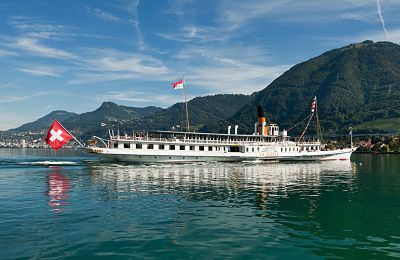
Switzerland is one of the more well-known countries in Europe that has a population of just over eight million people in 2015. There have been some issues in the past, but over the last 30 years, the water quality in Switzerland has improved big time. The chemical levels have fallen over the years and it has become some of the safest water to drink and interact with in Europe.

The water has been the subject of some very strict rules and standards over the years. There is a lot of water that is available and the water quality does change from region to region within the country. There is bottled water available to the citizens, yet the tap water is considered superior to the bottled water available. Around the world, it is rare for tap water to be considered better than bottled water.

The water quality in Switzerland has risen extensively over the years. With new wastewater treatments, as well as treatments across the board on all water quality, there have been massive reductions in the amount of water that is contaminated across the country. The lakes have been some of the most contaminated waters in the country with a lot of pollution and chemicals within the waters. It has now become very safe to drink from and swim in whereas in the past it was not.

Switzerland has a lot of reserves to fall back on, which differs from a lot of countries around Europe and around the world. Switzerland has about 100 different lakes within the country that provide a lot of reserves of water and the ever-improving water quality of these lakes has helped the overall quality in the country. Just 2% of the annual rainfall makes it back into the process of purifying and getting the water right to make it safe to drink.

The phosphorous levels in all of the major lakes and rivers in Switzerland have dropped off significantly from 1980. The majority of the bodies of water in 1980 were between 100 and 200. Today, they are all below 100. There are other contaminants finding their way into the waters that have officials more worried than what has been problematic over the years.

The water has become safer and safer over the years in Switzerland. They have become a country to look at and see how it has improved its situation with pollution and contaminants and overcame inadequate water.

– Brendin Axtman

Photo: Google

July 14, 2017
https://borgenproject.org/wp-content/uploads/borgen-project-logo.svg 0 0 Borgen Project https://borgenproject.org/wp-content/uploads/borgen-project-logo.svg Borgen Project2017-07-14 01:30:382024-05-28 00:02:37Top Water Quality in Switzerland
Global Poverty, Water

Water Quality in Kosovo an International Concern

Drinking Water in Kosovo
Heightened pollution in rivers, as well as a lack of wastewater treatment and disposal, is having drastic adverse effects on the water quality in Kosovo.

Located in southeast Europe, between Serbia and Macedonia, Kosovo is a small country with a population of fewer than two million. The armed conflict that took place during 1998 and 1999 has had lasting effects on the country’s economy and general welfare, leaving its citizens with the lowest per capita GDP in Europe.

Although there has been much progress, the war’s devastation remains visible in the country. Only 44% of the country’s population has access to drinking water, and in rural areas, that number drops to 8.4%. Water quality in Kosovo is almost solely reliant on the country’s many rivers, but as pollution increases in the nation, the water quality plummets.

In bacteria and chemical testing of the water, the Water and Waste Regulatory Office reports a 90% rate of purity, while the international standard is above 99%.

Although frequently used interchangeably, sewage and wastewater are not the same things.  Thus, it is important when looking at the issues Kosovo has to understand their differences. Sewage is simply a category of the broader term, wastewater.  This category includes all excess water from domestic and non-residential establishments. The non-residential waste requires lengthy procedures to purify properly, and in Kosovo, there is no established system.

Kosovans who regularly drink tap water become sick, as there is no wastewater treatment system. The largest threat to water quality in Kosovo, however, lies in the nation’s lack of a sewage system.  Beyond urban lines, only 28% of homes are connected to any type of sewage system. The rest is disposed into downstream rivers which then contaminates the groundwater as well.  Kosovo’s government has recognized these threats and is working to improve protection standards for the country’s rivers.

In September 2016, the World Bank’s Executive Board of Directors agreed to allocate $24.5 million to restore Kosovo’s main water source, the Ibër Canal. The project is scheduled to be completed in 2022 and will restore water access to 500,000 people who live in proximity to the canal.

– Emily Trosclair

Photo: Google

July 12, 2017
https://borgenproject.org/wp-content/uploads/borgen-project-logo.svg 0 0 Borgen Project https://borgenproject.org/wp-content/uploads/borgen-project-logo.svg Borgen Project2017-07-12 07:30:202024-05-28 00:02:53Water Quality in Kosovo an International Concern
Global Poverty, Refugees

10 Facts About Refugees in Latvia


As of right now, there are more than 65 million people in the world who have been forced to leave their homes. Humanity is facing its largest refugee crisis yet. There are many countries that are involved with this critical situation, and each responds to it in different ways. Some provide assistance to refugees and some neglect them. Here are 10 facts about refugees in Latvia to further one’s comprehension on this matter and how Latvia handles it.

10 Facts About Refugees in Latvia

  1. Latvia is currently building a fence along the Russian border to prevent people from entering the country illegally, ensuring that refugees only come in accordance with the law. The fence’s purpose is to protect the European Union borders. It should be complete by 2019.
  2. As a part of the European Commission’s refugee relocation plan, Latvia agreed to accept 531 refugees within two years. This plan is supposed to focus on accepting refugees who are mostly from Italy and Greece. However, 50 accepted refugees must be from third world countries. Thus far, Latvia has accepted 318 people.
  3. There have been multiple cases where refugees who arrive in Latvia tend to leave shortly after. According to the Red Cross, refugees leave due to the difficulty of finding a job there. Although there are supposedly many job offerings, refugees might have a hard time because of a language barrier and the challenge of becoming accustomed to a new culture. In September 2016, 21 out of 23 refugees that came to Latvia ended up leaving for Germany. A month later, it was confirmed that none of the 23 refugees remained in Latvia.
  4. As a result of many people being unhappy with the way Latvia regards its refugees, the “Our people” campaign was created. The purpose of the campaign is to serve as a reminder that, despite cultural differences, people of the world should support one another and come together. The “Our people” campaign promotes the acceptance of refugees who come to live in Latvia.
  5. There is one asylum-seeker center in Mucenieki. People stay there while waiting to find out if they have received refugee or alternative status. While they live there, they are given the opportunity to receive some education and the chance to learn Latvian.
  6. Migrants who arrive in Latvia typically wait three months to find out whether they have been given either refugee or alternative status.
  7. When one is given the status of a refugee, they are provided with a permanent residence permit. When one is given alternative status, they are provided with a residence permit that is valid for a year.
  8. The main difference between the status of a refugee and an alternative is that asylum seekers are mainly accepted as refugees because they fear persecution for their beliefs and race. Asylum seekers that receive alternative status are accepted because they were threatened with punishment and violence and are thus in dire need of protection.
  9. In 2016, there was a large controversy over a campaign introduced by the United Nations High Commissioner for Refugees (UNHCR). With the tagline “We would do the same,” the campaign’s purpose was to bring attention to the fact that refugees need help and that in a situation like theirs, many would flee their homes. However, Latvia’s Defense Ministry found it to be offensive to the Latvian National Armed Forces because it suggested that Latvians wouldn’t fight for their country.
  10. Sixty-nine percent of Latvians stated in a 2015 public opinion survey that they did not like the idea of welcoming refugees from Northern Africa and Middle Eastern countries.

While these 10 facts about refugees in Latvia provide a better understanding of Latvia’s role in the refugee crisis, they do not represent the different roles that different countries are taking in this situation. The way Latvia treats its refugees does not depict the treatment of refugees throughout the entire world. With a multitude of organizations and people that want to help, refugees do have a global support system.

– Raven Rentas

Photo: Flickr

July 10, 2017
https://borgenproject.org/wp-content/uploads/borgen-project-logo.svg 0 0 Borgen Project https://borgenproject.org/wp-content/uploads/borgen-project-logo.svg Borgen Project2017-07-10 01:30:592024-05-28 00:02:4510 Facts About Refugees in Latvia
Page 7 of 13«‹56789›»

Get Smarter

  • Global Poverty 101
  • Global Poverty… The Good News
  • Global Poverty & U.S. Jobs
  • Global Poverty and National Security
  • Innovative Solutions to Poverty
  • Global Poverty & Aid FAQ’s
Search Search

Take Action

  • Call Congress
  • Email Congress
  • Donate
  • 30 Ways to Help
  • Volunteer Ops
  • Internships
  • Courses & Certificates
  • The Podcast
Borgen Project

“The Borgen Project is an incredible nonprofit organization that is addressing poverty and hunger and working towards ending them.”

-The Huffington Post

Inside The Borgen Project

  • Contact
  • About
  • Financials
  • President
  • Board of Directors
  • Board of Advisors

International Links

  • UK Email Parliament
  • UK Donate
  • Canada Email Parliament

Get Smarter

  • Global Poverty 101
  • Global Poverty… The Good News
  • Global Poverty & U.S. Jobs
  • Global Poverty and National Security
  • Innovative Solutions to Poverty
  • Global Poverty & Aid FAQ’s

Ways to Help

  • Call Congress
  • Email Congress
  • Donate
  • 30 Ways to Help
  • Volunteer Ops
  • Internships
  • Courses & Certificates
  • The Podcast
Scroll to top Scroll to top Scroll to top