Infrastructure in Armenia
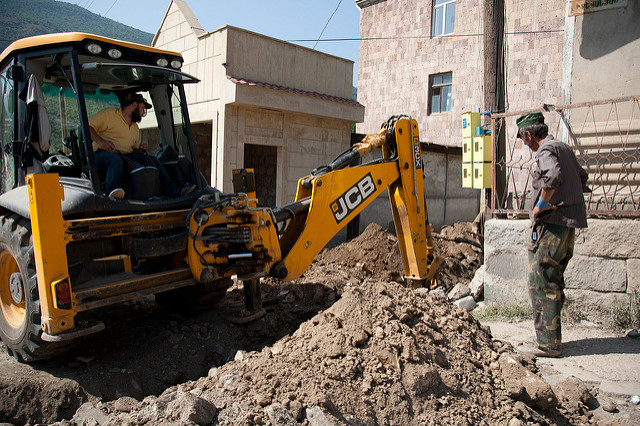 Ground transportation plays a critical role in Armenia’s economy, but the country’s roads and highway systems have needed an overhaul for several decades. The Lifeline Road Network Improvement Project sponsored by the World Bank will play a critical role in improving infrastructure in Armenia in the area where it’s most needed.
During ancient times, Armenia was located at the historic crossroads of Asia and Europe along The Great Silk Road, making it an important center of commerce and trade. Today, Armenia has closed borders with two of its neighboring states, Turkey and Azerbaijan, and no port access, meaning that the transportation of imports and exports is limited to ground transportation. With restricted access to the region and reliance on roads built in the Soviet Era, poor transportation infrastructure in Armenia has hurt the country’s overall economic growth and resulted in the economic isolation of rural areas.
Both of these factors have contributed to increased poverty levels in Armenia. The overall quality and reliability of a country’s infrastructure is a critical factor for businesses in all sectors. Thus, improving infrastructure in Armenia is one of the best ways to fuel its economic growth and thereby reduce poverty.
Statistics have illustrated Armenia’s need to improve infrastructure for some time. In 2014, Armenia ranked 107 in the world for infrastructure and 92 overall in the World Bank LPI Index. The Logistics Performance Index is a measure of each country’s performance across indicators including the quality of trade and transport-related infrastructure, the timeliness of shipments in reaching destination within the scheduled or expected delivery time, as well as competence and quality of logistics services.
Recognizing the significant need for improved infrastructure in Armenia, The World Bank committed to loaning the Armenian government the equivalent of $45 million US dollars in 2013 to fund the Lifeline Road Network Improvement Project for Armenia. This initiative seeks to improve infrastructure in Armenia in relation to its most critical sector, roads and ground transportation, by upgrading select lifeline roads that will allow rural areas to better access to markets and services.
Despite the Lifeline Road Network Improvement Project having been implemented for two years, Armenia’s overall LPI rank fell to 141 in 2016, with its infrastructure indicator falling to the position of 121. This has prompted an expansion of the initiative, complete with additional financing and the added goal of allocating funds to strengthen the capacity of the Ministry of Transport and Communication to manage the lifeline road network in the future. The redoubled efforts surrounding road improvement will continue through 2019, at which time the government is hoping to statistical evidence of significant improvement of transportation-related infrastructure.
The Armenian government hopes that improved infrastructure will mean fewer bumps in the road as the country seeks economic security, and The World Bank’s assistance has hopefully put them on the road to success.
– Savannah Bequeaith
Photo: Flickr
