• Link to X
  • Link to Facebook
  • Link to Instagram
  • Link to TikTok
  • Link to Youtube
  • About
    • About Us
      • President
      • Board of Directors
      • Board of Advisors
      • Financials
      • Our Methodology
      • Success Tracker
      • Contact
  • Act Now
    • 30 Ways to Help
      • Email Congress
      • Call Congress
      • Volunteer
      • Courses & Certificates
      • Be a Donor
    • Internships
      • In-Office Internships
      • Remote Internships
    • Legislation
      • Politics 101
  • The Blog
  • The Podcast
  • Magazine
  • Donate
  • Click to open the search input field Click to open the search input field Search
  • Menu Menu

Tag Archive for: Economic Growth

Information and news about economic growth

Posts

Global Poverty

Sustainable Agriculture in Sri Lanka Focused on Renewable Energy

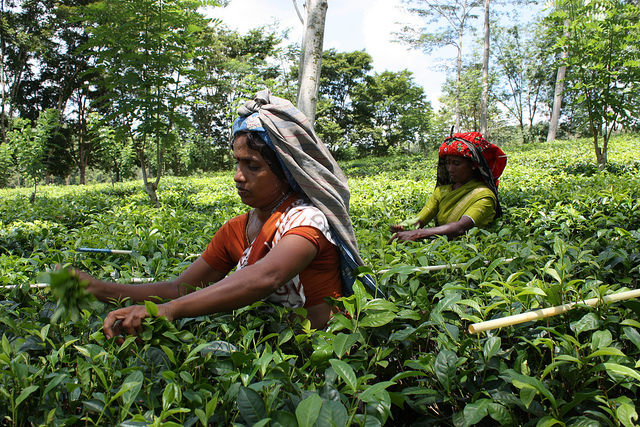
sustainable agriculture in Sri LankaSri Lanka is an island country in South Asia and home to many languages and ethnicities. This has, of course, been a cause of disputes for many years. A democratic republic, political unrest and ethnic divides have been a main source of disarray, as noted by its 30-year civil war which ended in 2009.

But other than political issues, Sri Lanka is an economically stable country, with a high Human Development Index rating and a per capita income that ranks the highest among South Asian countries. Its main sectors are tourism, textiles, rice products and tea, of which it is the second-largest exporter in the world.

With such importance placed on agriculture as a sector, sustainable agriculture in Sri Lanka is a necessity. However, historically, even with arable and fertile land, Sri Lanka did not implement sustainable practices in agriculture.

In 1998, the Sri Lanka Farmer Forum reported that current research was creating an ecosystem that focused on high input crops and reduced crop independence. Similarly, farmers used harmful toxins and pesticides that increased output but did not sustain output and they used fossil fuels in agricultural production. To increase sustainable agriculture in Sri Lanka, the nation needs to retrain farmers on the management of lands without toxins and heavy energy and rebuild soil fertility so natural productivity can return.

For example, a team of researchers from the University of Alberta in Canada has plans to use existing technological infrastructure to engage Sri Lankan farmers in methods that will improve their farming and quality of life. Sri Lankan farmers often do not have access to the internet, which makes it difficult for them to learn how to change their existing farming practices.

The connectivity of cell phones and computers could make it an easier task to implement sustainable agriculture in Sri Lanka and create nationwide change. This approach will allow farmers to create social networks and manage knowledge together.

Another project that hopes to create sustainable agriculture and nurture knowledge is the Sustainable Agriculture Water Management Project. Launched in 2005, it used 10,000 solar-powered drip irrigation units to bring water to farmers in dry areas of Sri Lanka. It reduced water use by 50 percent, increased yields two to threefold and decreased labor costs. In addition, these units cultivated a culture of sustainable growth without fossil fuels.

As a massive agricultural exporter, Sri Lanka needs to focus its resources on sustainable practices that do not dry out fertile soil and debilitate its economy. However, with the projects mentioned above and the innovation of its farmers, Sri Lankans can share knowledge and resources to create a sustainable nation in which its farmers can live stable lives.

– Nick McGuire

Photo: Flickr

February 3, 2018
https://borgenproject.org/wp-content/uploads/borgen-project-logo.svg 0 0 Borgen Project https://borgenproject.org/wp-content/uploads/borgen-project-logo.svg Borgen Project2018-02-03 01:30:592024-05-29 22:39:05Sustainable Agriculture in Sri Lanka Focused on Renewable Energy
Global Poverty

Getting Back to Basics: Sustainable Agriculture in Kazakhstan

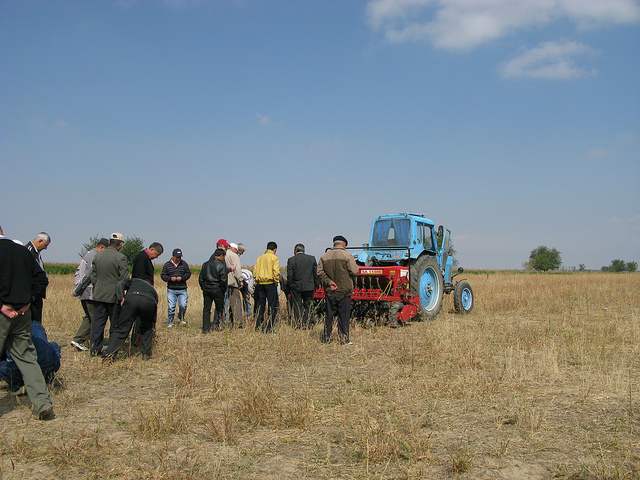
sustainable agriculture in KazakhstanSince the fall of the Soviet Union, Kazakhstan’s large agricultural sector has had several successes, but also some failures. The transition to a market economy was relatively organized compared to other post-Soviet economies such as Ukraine, but this does not mean it went smoothly. It was a major shock to the agricultural sector because it came with the consequence of leaving Kazakh farmers at the mercy of global markets when many of their enterprises were still in their infancies.

Like many other agricultural economies in Eastern Europe and Central Asia, the challenge now is becoming and staying internationally competitive without resorting to practices that are ecologically harmful or otherwise unsustainable. Kazakh leaders understand how imperative it is to embrace sustainable agriculture, and so the future of sustainable agriculture in Kazakhstan looks bright.

The OECD has noted several key objectives that must be met in order to ensure the wider practice of sustainable agriculture in Kazakhstan. The main obstacle that has been identified is the high costs of production faced by Kazakh farmers, especially for smaller enterprises and family farmers. Not only does this threaten people’s livelihoods, but it also leaves smaller farmers unable to compete in the global market.

The integration of small farmers and the reduction of cost barriers is imperative to the promotion of sustainable agriculture in Kazakhstan. Additionally, the OECD has noted that certain aspects of Kazakhstan’s agricultural policy are also creating unnecessary obstacles. Before sustainable agriculture in Kazakhstan can really take root, the OECD recommends that the country streamline its regulatory process and eliminate the excessive involvement of multiple interlinked agencies in order to end unnecessary confusion around agricultural regulations.

Despite these challenges, the Kazakh Ministry of Agriculture is making a point to promote sustainable agriculture in Kazakhstan, and the Minister of Agriculture is confident that these efforts will bring about long-term change. This is despite the fact that in recent years, Kazakh agriculture has trended toward very fossil fuel-dependent practices that are not appropriate for the climate and environment, primarily because these methods have tended to be cheaper.

In a country already struggling to stay competitive, the cheaper option was usually the one selected. However, this has created ongoing problems for Kazakhstan. Large parcels of formerly arable land are now unsuitable for farming because of contamination and pollution. However, the government is now starting to pay attention and focus on promoting sustainable agriculture in Kazakhstan.

The Ministry of Agriculture seems eager to secure public buy-in by framing this effort as a way to connect with Kazakhstan’s rich history and longstanding agricultural traditions, which were well-established in Kazakh society until less than a century ago. The Kazakh government seems hopeful that encouraging a revival of these practices will promote both sustainable agriculture and national pride.

Kazakhstan is an excellent example of a country that is working hard to correct course after years of environmentally harmful practices. While doing so will be an uphill battle, it is not impossible. If the current efforts are successful, sustainable agriculture in Kazakhstan should have a bright future.

– Michaela Downey

Photo: Flickr

February 3, 2018
https://borgenproject.org/wp-content/uploads/borgen-project-logo.svg 0 0 Borgen Project https://borgenproject.org/wp-content/uploads/borgen-project-logo.svg Borgen Project2018-02-03 01:30:472019-11-08 02:16:38Getting Back to Basics: Sustainable Agriculture in Kazakhstan
Global Poverty

Infrastructure in the Marshall Islands

Infrastructure in the Marshall Islands

The Marshall Islands are at risk of sinking, flooding and other natural disasters. The nation must develop better infrastructure to combat the approaching threats and has planned a number of projects for improving infrastructure in the Marshall Islands.

In 2014, a major project was completed on the island of Majuro, which is the nation’s most populated island. The Pacific Adaptation to Climate Change (PACC), which focuses on building resilience to climate change in Pacific communities, directed the project.

The project focused on providing water security to the islands’ inhabitants and renovating the island’s biggest reservoir. The capacity of the reservoir was increased by five million gallons. Improvements to the reservoir system were much needed as it had not been significantly updated to match population increases since its creation in the 1970s.

The country’s National Strategic Plan 2015-2017 outlined a number of other projects dealing with the improvement of infrastructure in the Marshall Islands. The infrastructure development sector comprised of five strategic areas:

    1. Energy
    2. Information Communications Technology
    3. Solid and Hazardous Waste Management
    4. Transportation
    5. Water and Sanitation

Transportation is a major concern for the government and citizens of Marshall Islands, as only one airline services the nation. Air and water transportation are also important for its tourist economy.

The plan’s call for a revision of the National Energy Plan promotes sustainable, clean, reliable and affordable energy for the residents of the islands. Having access to green electricity and energy is important for dealing with natural disasters. The National Strategic Plan outlines many more reforms to infrastructure in the Marshall Islands and other areas of governance, many of which are currently being carried out.

Infrastructure in the Marshall Islands is a priority. Disaster preparedness is important for the citizens of the nation, and improving infrastructures like energy production and transportation are crucial. The government has outlined comprehensive plans for reforming outdated systems and hopefully, it will continue to be diligent in the future.

– Liyanga de Silva

Photo: Flickr

February 3, 2018
https://borgenproject.org/wp-content/uploads/borgen-project-logo.svg 0 0 Borgen Project https://borgenproject.org/wp-content/uploads/borgen-project-logo.svg Borgen Project2018-02-03 01:30:112024-05-29 22:38:57Infrastructure in the Marshall Islands
Global Poverty

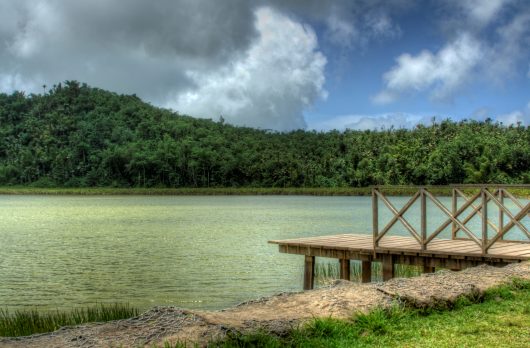
Improving Infrastructure in Mauritius

infrastructure in MauritiusWith a growing population in recent years, Mauritius’ M2 motorway from BioPark to Port Louis is frequently clogged by traffic. Employees who travel far from home struggle to find parking spaces and walk along unpaved roads. Mauritius’ traditional power supply methods have also played a role in hindering the country’s finances, costing $561 million in 2010 for imported fossil fuel. Improving infrastructure in Mauritius is now key to reducing the country’s annual costs and improving its economy.
In June 2014, the African Development Bank approved a $116.7 million loan to the Mauritius Central Electricity Board for a project intended to redevelop Port Louis’ power plant. The electricity produced by the project’s installations will be distributed to all the corners of Mauritius’ main island, where 97 percent of its population resides. Residents of residential areas, including workers of industrial zones, will benefit from reduced emissions and noises.

Mauritius also has a dwindling water supply due to old pipes and infrastructure. In February 2015, the country’s government revealed plans to renew and replace these pipes and ensure an annual water supply. A new dam will be built at Rivière des Anguilles, improving Mauritius’ water supply in the southern region as well. New water treatment plants will also be constructed at La Nicolière and Bagatelle.

Wastewater infrastructure in Mauritius is also in need of care. The Mauritian government promised to review a program that could ensure a competitive wastewater disposal technology for the environment. The program will also address sanitation problems in the former CHA housing estates and regions that are vulnerable to environmental hazards regarding water disposal.

In March 2016, plans were announced to develop Mauritius’ airport, meaning traffic could increase throughout the country’s roads as well. Construction for an access road to Sir Seewoosagur Ramgoolam International Airport began, marking the first major infrastructure project for Mauritius that year. The road would provide a bypass to reduce traffic congestion, enhance road safety in residential areas and offer an alternative route to the airport in case of emergencies.

Nandcoomar Bodha, the Minister of Public Infrastructure and Land Transport, highlighted three guiding principles for the construction work: no cost variations, no delays and high-quality work. Bodha commended the company Omnicane for providing 50 arpents of land to the road project as well. Jacques d’Unienville, Omnicane’s CEO, says the new road has to promote the country because it will be a gateway between Mauritius and visitors from abroad.

Mauritius’ Prime Minister Pravind Jugnauth realizes that traffic jams cost the country four billion rupees annually. In September 2017, Mauritius began a $560 million project for a new light rail system that could cut these traffic jams and the country’s business costs. The rail system will connect Curepipe, a central Mauritius town, to the Port Louis capital. Officials say the project’s first stage where Port Louis and Rose Hill are connected is expected to reach completion by September 2019.

Projects for the country’s power source methods, water supply and decreasing traffic will continue to improve infrastructure in Mauritius. The country’s economy will also benefit from reducing the costs of energy expenses and traffic jams. Mauritius’ infrastructure can continue improving so long as more projects are started to help the country’s restructuring process.

– Rhondjé Singh Tanwar

Photo: Flickr

February 2, 2018
https://borgenproject.org/wp-content/uploads/borgen-project-logo.svg 0 0 Borgen Project https://borgenproject.org/wp-content/uploads/borgen-project-logo.svg Borgen Project2018-02-02 07:30:552024-05-29 22:39:03Improving Infrastructure in Mauritius
Food & Hunger, Food Security, Global Poverty

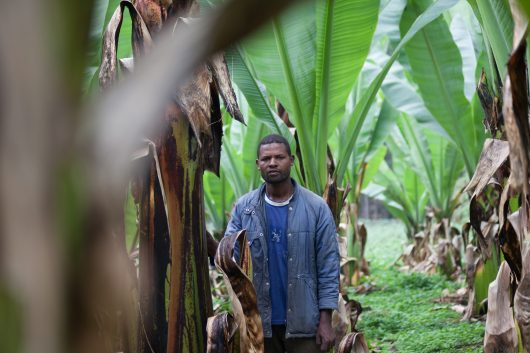
False Banana Brings Food Security in Ethiopia

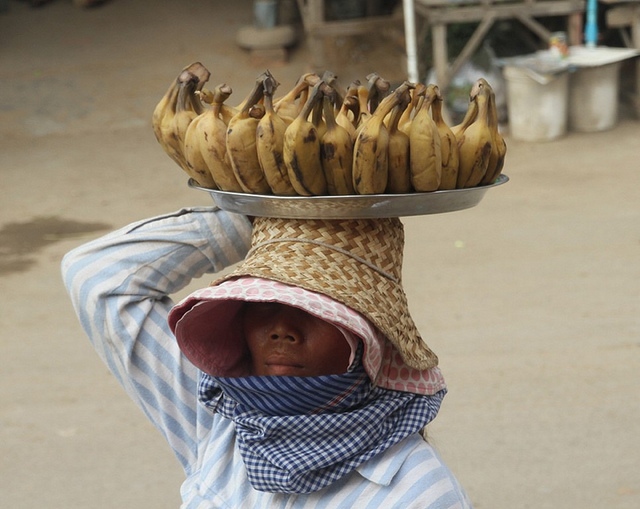
food security in EthiopiaAccording to USAID, Ethiopia’s economy is dependent on agriculture, which is 43 percent of the GDP and 90 percent of Ethiopia’s exports. With such a significant economic reliance on a single sector, the community must section a large amount of dedicated time and resources towards agriculture’s viability for food security in Ethiopia.
 

Barriers to Food Security in Ethiopia

Access to weather-resistant seeds, fertilizers and pesticides is limited in Ethiopia. On top of that, only a small percentage of the land is actually irrigated. All of these combine to threaten agricultural output. The livelihoods of farmers are at risk if they do not have high enough crop yields to support themselves and sell in the market.

Since its discovery in 1939, there is one crop that has continued to contribute towards food security in Ethiopia. It is a crop that farmers do not worry about and it is a source of nutritional value for all consumers. This crop is commonly referred to as the “false banana.”


The Importance of the “False Banana”

Its scientific name is Ensete ventricosum; it is a perennial crop indigenous to Ethiopia. Enset is called the “false banana” because of its similarity in appearance. However, it is usually taller and fatter, with no edible fruits.

Over time, it has ranked as the most important cultivated staple food crop in the highlands of central, south and southwestern Ethiopia. It has been discovered to be weather resistant, which earned enset another title: “the tree against hunger”.

This weather resistance happens because the bulk of this plant is composed of air, then water and then fiber. The cells in the leaves hold an incredible amount of water for years. Therefore, even if Ethiopia faces a drought, this incredible plant can survive up to seven years without rain.

The main product of enset is the starchy pit from its “pseudo-stem,” which is pulped and then fermented for a few months before producing kocho, which is a solid staple that is eaten with bread, milk, cheese, cabbage, meat or coffee. Its diversity in usage makes it an excellent crop to bring food security to Ethiopia. According to an article published by Kyoto University, over 15 million people depend on enset to supplement their diets.


Bacterial Wilt and Solutions

Recently, a bacterial wilt caused by Xanthomnas campestris has ravaged enset, putting many enset farming systems at risk. As of 2017, according to a publication on Agriculture and Life Security, “up to 80 percent of enset farms in Ethiopia are currently infected with enset Xanthomonas wilt.” This disease has forced many farmers to abandon their crop production and threatens their survival.

Control of this bacterial disease is challenging, but sanitation and reducing the bacteria’s transmission rates are key. The same study from Agriculture and Life Security wrote that “Management practices recommended for EXW and BXW include uprooting and discarding infected plants, planting healthy, disease-free plants from less susceptible varieties, disinfecting farm tools after every use, crop rotation, avoiding overflow of water from infected to uninfected fields, removing alternate hosts around plants…”

The government must focus on educational programs to teach farmers how to manage all of the above steps towards reducing bacterial wilt in their enset plants.

Another method is currently in process, led by the International Institute of Tropical Agriculture, which has partnered with the National Agricultural Research Organization and the African Agricultural Technology Foundation in order to develop transgenetic enset that are resistant to the bacterial wilt disease.

This project, if a success, will reduce the losses of small-scale farmers strongly relying on enset as a staple food. It would distribute the necessary resources and infrastructure to farmers to plant this new, bacterial-resistant enset. Thanks to dedication and scientific advancements, a project such as this one will help contribute to food security in Ethiopia.

– Caysi Simpson

Photo: Flickr

February 2, 2018
https://borgenproject.org/wp-content/uploads/borgen-project-logo.svg 0 0 Borgen Project https://borgenproject.org/wp-content/uploads/borgen-project-logo.svg Borgen Project2018-02-02 07:30:172024-05-29 22:39:04False Banana Brings Food Security in Ethiopia
Global Poverty

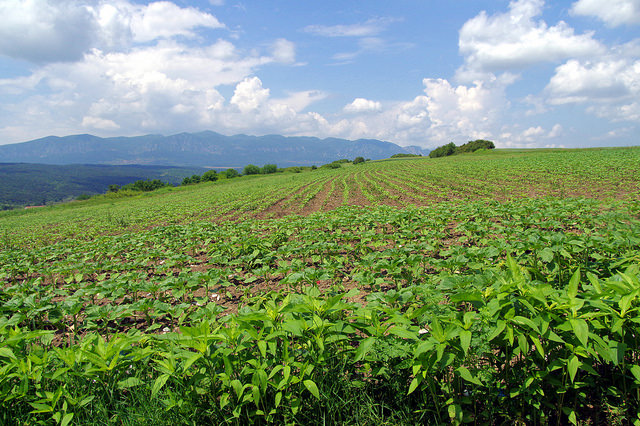
Developing Better and More Sustainable Agriculture in Bulgaria

Sustainable Agriculture in BulgariaBulgaria is a country in the Balkans and is known as one of the world’s main rose oil producers with fertile soil for crop production. That said, there have been many challenges regarding sustainable agriculture in Bulgaria.

The Food and Agriculture Organization of the United Nations (FAO) recently partnered with the nation in order to aid sustainable agriculture in Bulgaria. The partnership itself, advocating for small family farms in order to maintain the country’s food supply, has been helping to reduce food insecurity and produce nutrition research.

The partnership aligns with Bulgaria’s 2014-2020 National Development Strategy and the European Commission program to aid agriculture and rural development in countries such as Bulgaria. The FAO recently reported how invasive species may be to blame for Bulgaria’s food insecurity and unsustainable farming practices.

One officer on the FAO research team, Norbert Winkler-Ráthonyi, claimed in the report that Europe and Central Asia, in particular, are subject to these invasive species, saying, “Invasive insects, in particular, are damaging forests here.” Winkler-Ráthonyi continued to explain how invasive species usually began within a small region, but could easily intensify within a larger territory such as a forested area.

The FAO continues to monitor and research various insects within Bulgaria and its surrounding territories in order to identify the insects that are creating said damage. Furthermore, the FAO’s push to promote small family farms may aid sustainable agriculture in Bulgaria, as, in smaller regions, there is a smaller chance of invasive species damaging the area compared to larger regions.

On October 18, 2017, the Forest Invasive Species Network was established in order to aid in regulation and research the invasive species that are damaging sustainable agriculture in Bulgaria, Europe and areas within Central Asia. Winkler-Ráthonyi suggested that the creation of this network would “trigger region-wide cooperation on forest invasive species management.”

Organizations such as the FAO highlight the significance of looking into the problems of food scarcity like sustainability, rather than just population or economics. With the FAO and its networking, it remains a possibility that the issue of invasive species could be reduced in order to further nutritional and sustainable agriculture in Bulgaria and other countries around the world. Sustainability can no longer be just a goal but an expectation.

– Tatum Higginbotham

Photo: Flickr

February 1, 2018
https://borgenproject.org/wp-content/uploads/borgen-project-logo.svg 0 0 Borgen Project https://borgenproject.org/wp-content/uploads/borgen-project-logo.svg Borgen Project2018-02-01 07:30:242024-05-29 22:39:01Developing Better and More Sustainable Agriculture in Bulgaria
Development, Global Poverty

5 Current and Important Development Projects in Suriname

5 Development Projects in Suriname

There are several important development projects in Suriname that are currently taking place to help the country positively progress. The United Nations Development Programme, the Caribbean Development Bank and the Inter-American Bank all currently have active development projects in Suriname.

Suriname’s economy is dependent on mineral resources such as oil, gold and bauxite as well as natural resources, due to the fact that four-fifths of the country is covered by tropical rainforest. The country as a whole, however, still needs help to keep its economy from faltering and to improve climate control.


The UNDP’s Projects

The United Nations Development Programme (UNDP) is one of the organizations that has implemented different development projects in Suriname to assist in the country’s needs when it comes to climate change. The UNDP currently has three active development projects in Suriname called National REDD+ Strategy, Suriname Global Climate Change Alliance and Strengthening the National Assembly of Suriname.

The National REDD+ Strategy project’s purpose is “to ensure success in continuing to preserve Suriname’s natural capital, enhance the value of forest-related services and benefits for its peoples and contribute to the international fight against climate change and the preservation of healthy ecosystems.”

The Suriname Global Climate Change Alliance project’s purpose is to support Suriname in improving its current climate change adaptation and mitigation efforts by providing more knowledge on the effects of climate change and developing tools that target adaptation measures, as well as strengthen capacities for mangrove conservation.

The Strengthening the National Assembly of Suriname project’s purpose is to provide best practices in parliamentary development, good governance, policy guidance and initiate capacity building initiatives.


The CDB’s Projects

The Electricity System Upgrade and Expansion Project is another development project in Suriname that has been created by the Caribbean Development Bank (CDB) and the government of Suriname. The project’s objective is to deliver a more reliable, efficient and sustainable electricity supply in Suriname.

When discussing the importance of the project to Suriname, Vice President of Suriname Ashwin Adhin said, “Our government will leave no stones unturned to achieve the objectives necessary to improve the energy sector. We will do this together with CDB and other important people and institutions.”


The IDB’s Projects

Inter-American Development Bank (IDB), which is the largest source of development financing for Latin America and the Caribbean, has also partnered with Suriname to create a developmental project to assist the country’s needs. The IDB Group Country Strategy with Suriname 2016-2020 project’s objective is to support Suriname’s economic stabilization.

This project is complemented by a longer-term view on the modernization of the public and private sectors in the country. Reducing subsidies, lowering public spending while protecting the social safety net, strengthening public administration and strengthening human capital are all important parts of the project’s focus.

Development projects in Suriname like the ones these organizations are implementing will continue to help the country of Suriname in its goal to become a thriving country.

– Kennisha L. Crawford

Photo: Flickr

February 1, 2018
https://borgenproject.org/wp-content/uploads/borgen-project-logo.svg 0 0 Borgen Project https://borgenproject.org/wp-content/uploads/borgen-project-logo.svg Borgen Project2018-02-01 07:30:162024-05-29 22:39:045 Current and Important Development Projects in Suriname
Global Poverty

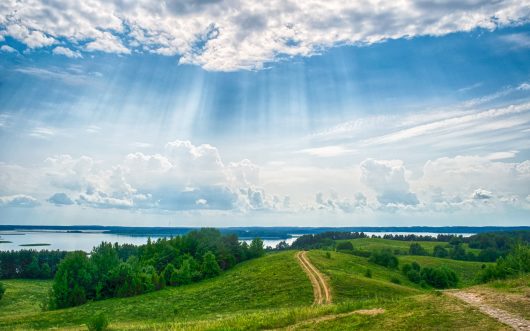
Three Major Efforts in Sustainable Agriculture in Belarus

Sustainable Agriculture in Belarus
Sustainable agriculture in Belarus may not be the first thing that comes to one’s mind when thinking about the region, but in reality the issue is of utmost importance. Although Belarus is a country with nearly 43 percent of the land being conducive to agriculture, it is also plagued by past nuclear fallout, and by a lack of resources for sustaining an agricultural economy.

Numerous nonprofits and government organizations are currently trying to make moves towards building up sustainable agriculture in Belarus, including the Food and Agriculture Organization of the United Nations, the REALS project and the Foundation of Realization group. These organizations are not only exploring organic farming, but are also working to clean up the land and make it habitable again.

1. The U.N. Food and Agriculture Organization

The Food and Agriculture Organization of the United Nations, or the FAO, recently signed a four-year cooperation agreement with Belarus to improve sustainable agriculture and development in the area. According to their website, they won’t solely be focusing on agricultural growth, but they will also be looking at how product from Belarus can be pushed in the international trade markets, effectively growing product and making a more competitive production market inside the country.

Some of their other foci include preventing climate change through the growth of resource conservation, and promoting jobs in the agriculture industry in the region.

2. The Resilient and Ecological Approaches for Living Sustainably Project

The Resilient and Ecological Approaches for Living Sustainably (REALS) project is a nonprofit organization focused on organic farming in the Belarus region, along with socio-economic development in eastern Europe. REALS concluded in August 2016, but according to the website, the group focused on growing local empowerment through bottom-up interactions, encouraging groups of existing local initiatives to increase agricultural development in their own towns.

The project also participated in regrowing ecosystems through regenerating fertile soil and ensuring that clean water is available to local communities. REALS had a large impact on the Belarus population, and encouraged ground-up participation in sustainable agriculture in Belarus.

3. The Foundation of Realization

The Foundation of Realization is an eco-group in Belarus that attempts to encourage and grow organic farming in the area. The Baltic region is still affected by the aftermath from the 1986 nuclear fallout at Chernobyl, and the Foundation of Realization is calling for the government of Belarus to be more accountable for the lack of organic farming resources actually being distributed in the region. In addition, the group does extensive research in the areas of regeneration of land and the effects of Chernobyl on the Belarusian community.

There are plenty of movements within Belarus, and there are also groups that are working to help provide for the many who are still affected by agriculture infertility in the area. Sustainable agriculture in Belarus is a long-term project, but it is one that is being thoroughly pursued.  

– Molly Atchison

Photo: Flickr

February 1, 2018
https://borgenproject.org/wp-content/uploads/borgen-project-logo.svg 0 0 Borgen Project https://borgenproject.org/wp-content/uploads/borgen-project-logo.svg Borgen Project2018-02-01 01:30:492024-05-29 22:38:58Three Major Efforts in Sustainable Agriculture in Belarus
Global Poverty

Energy Infrastructure in Tanzania Must Meet Growing Needs

Energy Infrastructure in Tanzania Must Meet Growing Needs
Tanzania, located just below the equator in East Africa, is rich in natural resources, has a vibrant, diverse culture, and is making positive leaps in economic development. The global consulting firm PricewaterhouseCooper published reports stating that if infrastructure in Tanzania improves, the nation has the potential to be a leader of development in East Africa.

The energy sector in Tanzania is currently under expansion, and aims to meet the growing power needs of its citizens. According to a World Bank report in 2011, only 15.5 percent of the 55.5 million people that make up Tanzania’s population had access to reliable power sources; since then, the country has made serious progress in developing its energy sector. Listed below are three of the growing sources of energy infrastructure in Tanzania.


1. Natural Gas

As of 2016, 49.8 percent of energy produced in Tanzania comes from natural gas infrastructure. The Tanzanian government continues to expand its natural gas projects in an attempt to ensure reliable power to its citizens. For instance, in 2016, repair of three gas turbine plants and construction of a new gas plant at the Songo Songo gas fields near the country’s largest city, Dar Es Salaam, contributed to a 30 percent growth of natural gas production in country.

Overall, natural gas expansion is increasing electricity access to urban civilian populations within the country.


2. Hydroelectric Power

Approximately 34.2 percent of power generated in Tanzania is created using hydropower. Multiple hydroelectric dam expansion projects were approved in 2017 by Tanzanian president Jon Magufuli to help provide power to Tanzanian communities in serious need.

These infrastructure projects also have a history of creating joint energy production throughout the East African community. In 2013, the World Bank approved a $340 million dam project in the Lake Victoria region that boosted the electrical power grids of Burundi, Rwanda and Tanzania.

While they do reduce greenhouse gas emissions, hydroelectric dams are at times extremely unreliable. During a drought year, major cities in Tanzania endure severe rolling blackouts, as the lack of water prevents the expected amount of electrical generation. For now, hydroelectric dams serve as a relatively effective way to provide Tanzanians’ power, while simultaneously capitalizing off of resources available in the country.


3. Solar Power

According to a Rural Energy Agency of Tanzania report in 2016, 65 percent of rural communities with access to electricity utilize some form of solar generation. One NGO in particular has been seriously successful in improving the solar energy infrastructure in Tanzania — Energy 4 Impact is a Sub-Saharan non-profit, that provides technological and financial solutions to improve solar infrastructure in rural parts of the country.

With the help of NGOs such as Energy 4 Impact, rural communities as well as some urban Tanzanians are becoming more energy independent over a shorter period of time, skipping the formal procedure of connecting to the nationalized power grids. This technological leapfrogging is not only connecting rural Tanzania to communities within the country, but also the rest of the world.


Electricity, Energy and Tanzania

Overall, electricity is vitally important to economic development and global access will continue to open up some of the last untapped markets on Earth. Energy infrastructure and access to reliable energy will benefit Tanzania greatly, as an estimated 28.2 percent of the country is “below basic poverty needs,” by the World Bank’s standard.

Given that status, researchers have determined that increased access to energy and technology will continue to bring economic growth and social hope to the continent. It is clear that Tanzania has infrastructural obstacles to overcome before it can reach its potential as the leader in East African development, but in spite of these obstacles, there are significant and interesting energy sector projects currently underway within the country.

– Danny Levy

Photo: Flickr

February 1, 2018
https://borgenproject.org/wp-content/uploads/borgen-project-logo.svg 0 0 Borgen Project https://borgenproject.org/wp-content/uploads/borgen-project-logo.svg Borgen Project2018-02-01 01:30:402024-05-29 22:39:06Energy Infrastructure in Tanzania Must Meet Growing Needs
Global Poverty

Development of Infrastructure in the Solomon Islands

Infrastructure in the Solomon Islands
Although the infrastructure in the Solomon Islands has improved with financial support gained from minor tourism and the help of other countries invested in the islands, there is still much more that can be done.

The country lies on the Pacific’s “Ring of Fire.” Frequent volcanic and tectonic activity produce earthquakes and tsunamis plague the islands, and destructive events like these mean that the infrastructure in the Solomon Islands often requires maintenance and rebuilding.


Boat and Road Networks

Since the country is composed of many islands, the main transportation used in the Solomon Islands is by boat, but there is a small road network throughout much of the islands as well. Much of this road system is unpaved and often requires maintenance and rebuilding due to both heavy rainfall and natural disasters. Although the building and maintenance of this road system are controlled by the government, much of its funding comes from foreign support.

As of 2012, the road network on the Solomon Islands is moving towards a more weatherproof system. Funded by the country’s government as well as foreign aid from countries such as Australia and New Zealand, some roads have been paved and bridges made from material that can better withstand the rainy climate and extreme weather conditions. In addition, the rebuilding of road infrastructure also provides the people of the Solomon Islands with many jobs.


Structural Instability

Much of the structures on the Solomon Islands are minimal and basic. Homes and buildings are also threatened by the frequent natural disasters that hit the island.The towns where these homes and structures reside often lack any form of electricity. Only major towns such as the capital, Honiara, have access to power; even then, electricity is minimal and mainly provided by diesel generators.

Lack of electricity also means that the many of the people living in the Solomon Islands do not have access to what other countries would consider necessities i.e. communication via telephone and cellphone, and the ability to use the internet, watch television or even listen to a radio.


Electrical Need

Having one of the lowest access rates to electricity in the world, power has been something the Solomon Islands has been trying to implement in their communities for many years. Often, the only way the Solomon Islands are able to improve access considerably is with the aid of other countries.

Many improvements to the small power grids in the country have been made through foreign investment. A notable instance of this occurred in 2014 when the U.S.-based organization, the World Bank, financed $13 million for electricity improvement in Honiara. This money was given to the Solomon Islands Sustainable Energy Project (SISEP) to help improve the efficiency and reliability of the already existing power grid, as well as expand its reach.


Essential and Impactful Foreign Aid

With the support and investment of other countries, the infrastructure in the Solomon Islands is slowly improving and persevering against harsh natural conditions. Not only does financing infrastructure on the islands help its people by improving their living conditions, but it also provides them with jobs and more stable incomes.

As the infrastructure of the islands improves, it also allows the country to become more open to tourism. Receiving profit from tourism means that the island can continue to grow and aid both its people and many other investor countries.

– Keegan Struble

Photo: Flickr

February 1, 2018
https://borgenproject.org/wp-content/uploads/borgen-project-logo.svg 0 0 Borgen Project https://borgenproject.org/wp-content/uploads/borgen-project-logo.svg Borgen Project2018-02-01 01:30:302024-05-29 22:39:00Development of Infrastructure in the Solomon Islands
Page 18 of 44«‹1617181920›»

Get Smarter

  • Global Poverty 101
  • Global Poverty… The Good News
  • Global Poverty & U.S. Jobs
  • Global Poverty and National Security
  • Innovative Solutions to Poverty
  • Global Poverty & Aid FAQ’s
Search Search

Take Action

  • Call Congress
  • Email Congress
  • Donate
  • 30 Ways to Help
  • Volunteer Ops
  • Internships
  • Courses & Certificates
  • The Podcast
Borgen Project

“The Borgen Project is an incredible nonprofit organization that is addressing poverty and hunger and working towards ending them.”

-The Huffington Post

Inside The Borgen Project

  • Contact
  • About
  • Financials
  • President
  • Board of Directors
  • Board of Advisors

International Links

  • UK Email Parliament
  • UK Donate
  • Canada Email Parliament

Get Smarter

  • Global Poverty 101
  • Global Poverty… The Good News
  • Global Poverty & U.S. Jobs
  • Global Poverty and National Security
  • Innovative Solutions to Poverty
  • Global Poverty & Aid FAQ’s

Ways to Help

  • Call Congress
  • Email Congress
  • Donate
  • 30 Ways to Help
  • Volunteer Ops
  • Internships
  • Courses & Certificates
  • The Podcast
Scroll to top Scroll to top Scroll to top