• Link to X
  • Link to Facebook
  • Link to Instagram
  • Link to TikTok
  • Link to Youtube
  • About
    • About Us
      • President
      • Board of Directors
      • Board of Advisors
      • Financials
      • Our Methodology
      • Success Tracker
      • Contact
  • Act Now
    • 30 Ways to Help
      • Email Congress
      • Call Congress
      • Volunteer
      • Courses & Certificates
      • Be a Donor
    • Internships
      • In-Office Internships
      • Remote Internships
    • Legislation
      • Politics 101
  • The Blog
  • The Podcast
  • Magazine
  • Donate
  • Click to open the search input field Click to open the search input field Search
  • Menu Menu

Archive for category: Women and Female Empowerment

information and Stories about woman and female empowerment.

Global Poverty, Women and Female Empowerment

Why Anoyara Khatun is a Hero for Indian Children

Anoyara Khatun Anoyara Khatun was the victim of a very real threat to many Indian children. At age 12, Khatun became one of the millions of children who are trafficked every year. An organization called Save the Children rescued her from her life of domestic slavery, and since then she has been determined to be a part of the solution.

Upon returning to her village at age 13, Khatun realized that the situation was not much better for girls in her home in West Bengal than for girls in slavery. Girls from her home were forced into child marriages, and still more were being trafficked to cities.

According to the International Center for Research on Women, 47 percent of girls are married before age 18 in India. Meanwhile, a staggering 135,000 children are estimated to be trafficked in India annually.

When forced into marriage or work at a young age, children are robbed of their childhood; Khatun hopes to restore the gift of a childhood to young people in India.

Khatun joined the Save the Children’s Multi-Activity Centre almost immediately after escaping domestic slavery. However, she wasn’t able to reach as many Indian children as she thought was necessary to make a real impact.

Consequently, Khatun formed children groups throughout her village to discuss solutions to the rampant child marriage and trafficking in India, raise awareness about these issues and educate people about the dangers.

Over time, by working with Save the Children as well as a growing number of adults in the community, Khatun was able to accomplish amazing feats.

So far, she has been instrumental to reuniting 180 victims of trafficking with their families and rescuing 85 children from trafficking. She has also prevented 35 child marriages and registered 200 children into schools.

Recently, Khatun has expanded her horizons and joined many superstars in the charity world. She is working alongside Bill and Melinda Gates to push the Every Woman, Every Child initiative.

This initiative was launched during the UN Millennium Development Goals Summit in September 2010. It includes a goal to “address the major health challenges facing women, children and adolescents around the world.”

Clearly, Anoyara Khatun has a unique perspective and fervor for child rights. She is changing the lives of Indian children every day.

– Sabrina Yates


July 27, 2016
https://borgenproject.org/wp-content/uploads/borgen-project-logo.svg 0 0 Borgen Project https://borgenproject.org/wp-content/uploads/borgen-project-logo.svg Borgen Project2016-07-27 01:30:212024-12-13 17:55:30Why Anoyara Khatun is a Hero for Indian Children
Gender Equality, Women and Female Empowerment

Gates Foundation: Closing the Global Gender Data Gap

Global gender data gapThe Bill and Melinda Gates Foundation announced in May that it will donate $80 million to reduce the global gender data gap. This donation will contribute to meeting the United Nations Sustainable Development Goals by 2030. Current data collection standards do not adequately record women’s economic and social information in developing countries.

According to a press release by the organization, “a lack of comprehensive, current information about women and girls, especially in developing countries, hinders efforts to advance gender equality.” In order to achieve the health, educational and social proposals of the United Nations Sustainable Development Goals, world entities need access to accurate information about women everywhere. Closing the global gender data gap would provide that information.

The New York Times reports that standards for collecting data are gender-biased. These standards also fail to account for the complexity of women’s global situations. For example, many traditional surveys do not count female-led households in the same way as male-led households. They do not fairly count women who are homemakers or caretakers. Surveyors might end an interview after documenting “homemaker” as a woman’s primary activity, even if she has other economic occupations.

According to the same New York Times article, surveyors only collect about 30 percent of women’s economic activity. On the other hand, surveyors collect 75 percent of men’s activity. Statistics like this compelled the Bill and Melinda Gates Foundation to improve data collection methods. Entities such as the United Nations Foundation and the U. S. Department of State have also joined them.

The funding will support the creation of effective training techniques and improved tools for people who work with data. Tools like the Population Council’s Girl Roster Toolkit can provide those who collect and analyze data with holistic perspectives about issues girls suffer from globally and how they must properly document them. The Girl Roster also connects the world’s neediest young women with services in their areas.

In order to keep governments and politicians accountable to use the new and improved data, organizations like Avenir Health’s Track20 will help governments connect with women worldwide in order to give women access to family planning services.

The good news is that data gaps are already closing for women. According to the New York Times, the number of mothers dying during childbirth has dropped more than 40 percent worldwide. Similar statistics show much progress, but others show the need for more work to completely close the global gender data gap.

With the help of sponsors like the Bill and Melinda Gates Foundation and the work of data analysts and cooperative governments, the world can continue to give women everywhere the chances they need to live whole and happy lives.

– Addie Pazzynski

Photo: Flickr

July 25, 2016
https://borgenproject.org/wp-content/uploads/borgen-project-logo.svg 0 0 Borgen Project https://borgenproject.org/wp-content/uploads/borgen-project-logo.svg Borgen Project2016-07-25 01:30:002024-12-13 17:54:37Gates Foundation: Closing the Global Gender Data Gap
Children, Gender Equality, Women and Female Empowerment

Afghanistan’s Sesame Street Debuts Female Muppet

Afghanistan's Sesame StreetAfghanistan’s Sesame Street is debuting its first Afghan Muppet character, who just happens to be a girl.

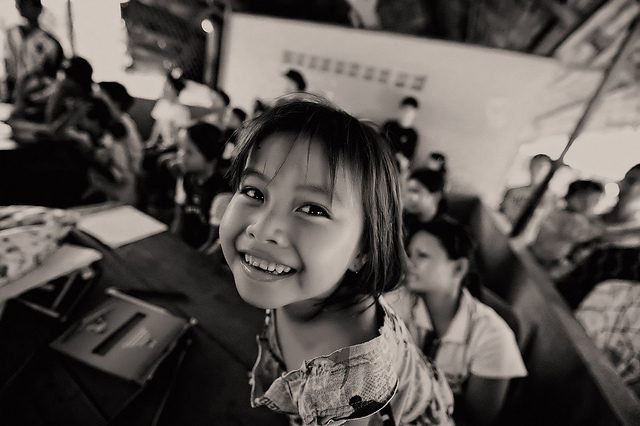
According to PBS Newshour, although Afghanistan’s Sesame Street has been running for about five years, it has mostly included international versions dubbed into local languages, with only short sequences filmed locally.

The character is a six-year-old with multi-colored hair, wearing a headscarf with her school uniform, reported the New York Times. The debut of a female character is noteworthy for Afghanistan, where women’s rights are strictly curtailed.

Also notable is the extremely low rates of both education and literacy for girls in Afghanistan, with 85 percent of girls receiving now formal schooling, and a literacy rate of 24 percent, reported Newshour.

Under these circumstances, having a bright and curious female character like Zari debut to audiences in Afghanistan is a positive step. The Huffington Post reports that Afghanistan’s Sesame Street is the most watched show by young children in the country. Sesame Workshop, the non-profit that produces Sesame Street, recorded that 81 percent of children aged three to seven have seen it.

Sherrie Westin, Sesame Workshop’s executive vice president of global impact and philanthropy, spoke to Reuters about her excitement in introducing a female character. She thinks she may just have the power to change some minds, including fathers’ attitudes about educating daughters.

Westin told Reuters, “The exciting part about Zari is that she is modeling for young girls that it is wonderful to go to school and that it’s ok to dream about having a career.”

Specifically, Zari will appear in segments about health, exercise and well-being, reported the Huffington Post. One segment will feature Zari visiting her doctor for a check-up, and asking how she can become a doctor herself. Zari will interview various kinds of professionals for the show.

She will also speak directly to viewers and interact with kids in person on the show, said the New York Times.

According to Huffington Post, Sesame Workshop is working with the Afghan education ministry to try to reduce any resistance to the notion of an empowered female character on a popular children’s show.

Sesame Street changed attitudes in the U.S. when it debuted almost 40 years ago. As Westin told Reuters, “Part of the power of the broadcast and Zari’s potential as a role model is to reach children and parents where they may not have access to other educational content.”

– Katherine Hamblen

Photo: Flickr

July 4, 2016
https://borgenproject.org/wp-content/uploads/borgen-project-logo.svg 0 0 Borgen Project https://borgenproject.org/wp-content/uploads/borgen-project-logo.svg Borgen Project2016-07-04 01:30:502024-12-13 17:54:28Afghanistan’s Sesame Street Debuts Female Muppet
Sustainable Development Goals, United Nations, Women

2016 Women Deliver Conference: Advocating for Health

Women_Education

The 4th annual Women Deliver Conference, the largest conference in the world discussing women’s rights and issues, was held on May 16-19 in Copenhagen, Denmark.

Women Deliver is an organization that advocates for women’s and girls’ health and well-being. The organization holds conferences and focuses on building partnerships, gaining new allies, and developing and sharing advocacy tools to help others participate in the cause.

Building on the success three previous Women Deliver Conferences, the Conference focuses this year on the Sustainable Development Goals (SDGs) laid out by the United Nations. Specifically, the focus will be on women’s health issues and women’s and girls’ education and economic empowerment.

5,700 policymakers, researchers and advocates participated in what is being called the largest convention to discuss female rights in a decade. People from 2,000 organizations and 169 countries all convened in an effort to bring women and girls to the forefront of the SDGs. Among the participants were journalists, young people and representatives from both the private sector and UN agencies.

This is an important time to bring attention to the SDGs and make progress towards those goals.

In a blog for the Council on Foreign Relations, Dr. Daniela Ligiero, Vice President of the Girls and Women Strategy at the United Nations Foundation, explains why now is such an important time to take a real look at female rights.

One of these reasons is that it is important to revitalize the community’s energy in addressing women’s rights. As Dr. Ligiero points out in her blog, the biggest threat to the SDGs is the loss of momentum driving the impetus to find real strategies and solutions for approaching the very real problem of gender inequality around the world.

Additionally, the discussion of women’s rights cannot be limited to Goal 5 of the SDGs, which pertains to gender equality alone. Other goals of the SDGs that focus on education and on health issues must be included in the big picture in order to make real advances for women and girls as a whole.

The Conference provides scholarships for participants to travel to the event and has inspired a lot of participation, with over 5,000 applicants.

The biggest hope for the Women Deliver conference is to take the ambitious goals set forth for improving women’s and girls’ rights and create concrete strategies for accomplishing them.

– Katherine Hamblen

Photo: Flickr

June 11, 2016
https://borgenproject.org/wp-content/uploads/borgen-project-logo.svg 0 0 Borgen Project https://borgenproject.org/wp-content/uploads/borgen-project-logo.svg Borgen Project2016-06-11 01:30:082024-12-13 17:54:302016 Women Deliver Conference: Advocating for Health
Global Poverty, United Nations, Women and Female Empowerment

UN: Helping Impoverished Women in Nepal

Women in Nepal

On April 25, 2015, an earthquake in Nepal pushed an estimated 1 million people below the poverty line. Before the disaster, the poverty prevalence in Nepal was already at 23.8 percent. The World Bank also predicted that by this year, up to 982,000 more people would be pushed into poverty, including many women in Nepal.

The U.N. Deputy Secretary-General Jan Eliasson recently visited the women in Nepal affected by the earthquakes at the Chautara U.N. multipurpose women’s center. The center provides counseling and trauma assistance, information dissemination and recovery-related activities.

“This is a very different experience for me,” Eliasson said during the visit, according to a U.N. Women article. “I met with women and young girls who despite all odds are getting on with their lives. This is a sign of resilience. It is important for them to be able to clear the rubble and rebuild their lives.”

The earthquake that hit Nepal affected agriculture, education, water and sanitation and health—crucial aspects of development. People were pushed into poverty because they lost their homes, income opportunities, personal items and livestock.

Worse, up to 70 percent of the people pushed into poverty from the earthquake live in rural hills and mountains that are already developmentally vulnerable.

During the visit, a young woman named Sita Shrestha shared her experience of a leadership training program offered by the women’s center. She told the Secretary-General that the program allowed her to fundraise, organize villagers and supply water to individual houses.

“The training and this project have changed my life,” Shrestha said at the visit, reports U.N. Women. “I want to join a humanitarian organization like the U.N. in the future.”

The U.N. multipurpose women’s center is focused on delivering sustainable services to women in Nepal. The center also now focuses on enhancing the capacity of local women’s groups to ensure equality with regard to disaster recovery, reconstruction and preparedness initiatives.

– Kerri Whelan

Photo: Flickr

June 3, 2016
https://borgenproject.org/wp-content/uploads/borgen-project-logo.svg 0 0 Borgen Project https://borgenproject.org/wp-content/uploads/borgen-project-logo.svg Borgen Project2016-06-03 01:30:472024-12-13 18:06:02UN: Helping Impoverished Women in Nepal
Global Poverty, Women and Female Empowerment

What the UN MDGs Have Achieved

UN Millenium Development MDGsThe United Nations Millennium Development Goals (MDGs) were adopted in September 2000. World leaders and members of the United Nations (UN) gathered at the Millennium Summit to set goals for eradicating world poverty focusing on eight specific aspects of poverty and how it affects people globally.

The campaign concluded in 2015 and at that time data was released to show the progress achieved. The eight UN MDGs are listed below, along with what was achieved in each category, per the results of the 2015 report:

    • Goal 1: Eradicate Extreme Hunger and Poverty. The target of this goal was to halve, between 1990 and 2015, both the number of people whose income falls below $1 per day and the number of people suffering from hunger. These goals were largely achieved. The number of people living in extreme poverty was reduced by more than half. The proportion of undernourished people in developing countries fell by nearly half.
    • Goal 2: Achieve Universal Primary Education. This goal began with the ambitious target of assuring that both boys and girls everywhere would have access to a full primary education by 2015. Significant strides have been made in this area. The number of out of school children of primary age, globally, dropped from 100 million to 57 million over the course of the MDG campaign.
    • Goal 3: Promote Gender Equality and Empower Women. The goal, specifically, was to achieve gender parity in both primary and secondary education no later than 2015. This was achieved in roughly two-thirds of developing countries.
    • Goal 4: Reduce Child Mortality. The goal was specifically to reduce the mortality rate of children under 5 by two-thirds between 1990 and 2015. The rate was not reduced by two-thirds by 2015 but it was more than halved. The 12.7 million deaths in 1990 were reduced to 6 million by 2015.
  • Goal 5: Improve Maternal Health. The target of this goal was to reduce maternal mortality by three-quarters between 1990 and 2015. The result was that maternal mortality declined by 45 percent, largely after the year 2000.
  • Goal 6: Combat HIV/AIDS, Malaria and other diseases. The primary target named for this goal was to have halted the spread of HIV/AIDS by 2015, and to have begun its reversal. Cases of new HIV infections fell by 40 percent between 2000 and 2013, and there was an immense increase in the number of people who had access to the drugs that combat HIV. Additionally, the mortality rate due to malaria dropped by 58 percent, and 900 million insecticide-treated mosquito nets were distributed in affected areas.
  • Goal 7: Ensure Environmental Stability. This goal was to “Integrate the principles of sustainable development into country policies and programs and reverse the loss of environmental resources.” Results included 1.9 billion people gaining access to piped drinking water between 1990 and 2015 and 90 percent of ozone-depleting materials being eliminated in countries included in the campaign.
  • Goal 8: Develop a Global Partnership for Development. Financial assistance by developed countries increased from $81 billion in 2000 to $135 billion in 2014. This is a 66 percent increase.

In many cases, the UN MDGs were achieved. Where they were not, great strides were still made towards achieving the goals. Some have criticized the campaign for falling short of its stated goals. But the data shows significant progress made for each one.

– Katherine Hamblen

Photo: Flickr

April 30, 2016
https://borgenproject.org/wp-content/uploads/borgen-project-logo.svg 0 0 Borgen Project https://borgenproject.org/wp-content/uploads/borgen-project-logo.svg Borgen Project2016-04-30 01:30:182024-12-13 17:54:16What the UN MDGs Have Achieved
Advocacy, Global Poverty, Women, Women and Female Empowerment

Takeaway from Reading “Half the Sky”

Half the sky

Reading a book like Half the Sky illuminates how unfair our world is. Though women make up about half of the world’s population, they are consistently discriminated against, overlooked and are in some cases, treated as second class citizens.

It is not surprising that the authors of Half the Sky, Nicholas D. Kristof and Sheryl WuDonn, are award winning writers for their work in raising awareness about the reality most women face in their countries in relation to discrimination.

Written as a series of essays, this book has two parts. The first part of the essay highlights the oppression and discrimination against women especially in developing countries and how this problem is often overlooked due to corruption, lack of strong justice systems and the patriarchal state of these nations.

The second part focuses on practical ways to create this “movement and effect the change needed” to address these situations.

From the beginning to the end of this enlightening book, it is obvious that the writers are very knowledgeable on their topic of discussion and their work shows extensive research in different areas of discrimination within different locations in developing countries.

From discussing issues such as women being promised work and ending up in sexual slavery and imprisonment, to illuminating health issues within developing countries such as women and girls ending up with fistulas after birth, women dying from HIV and AIDS, women and girls going through female genital mutilation as well as being overlooked in terms of getting an education, this book paints a sad reality of women’s lives in the developing world.

The most fascinating point that arises in the book is the fact that culture is the main catalyst for the way women are treated in their societies. In our dynamic world, culture in the developing countries seems unchangeable, especially in relation to its negative aspects. Another surprising fact in the book is the idea that older women in some of these societies are perpetrators of discrimination towards other younger women in the society.

Here, this is quite a deviation from what the “West” has portrayed in development; the idea that men are the main perpetrators of women’s oppression.

Half the Sky not only raises awareness about the injustices women faces but it also advocates for women to fight for their rights by speaking up and resisting the discrimination they face. Though the book points out a few strong and relentless women like Usha Narayane, Sunitha and Krishna who do exactly this and fight for justice, it highlights that most women in the developing world are vulnerable and are unable to get access to their rights.

Half the Sky is the voice of the vulnerable, uneducated and oppressed women in the developing world.

– Vanessa Awanyo

Photo: Google Images

April 21, 2016
https://borgenproject.org/wp-content/uploads/borgen-project-logo.svg 0 0 Borgen Project https://borgenproject.org/wp-content/uploads/borgen-project-logo.svg Borgen Project2016-04-21 01:30:212020-06-19 14:04:50Takeaway from Reading “Half the Sky”
Activism, Global Poverty, Technology, Women, Women and Female Empowerment

Why Every Woman in Africa Should Have Access to a Cell Phone

Cell PhoneAs technology continues to advance and grow more accessible, women around the world are increasingly gaining access to a cell phone for the first time. Though it is taken for granted in much of the developed world, cell phone use opens multiple doors that were not there before. According to Africa in Focus, technology can be thought of as a tool that creates opportunities for women. Specifically, technology has permitted women entry into the realms of finance, education and health and employment, thereby encouraging female empowerment and democratization in low-income countries.

Firstly, cell phone ownership gives women the ability to be financially independent, because they can open an online bank account separate from their husbands’. Impatient Optimists claims that “A private account gives women in developing nations control over their money as well as the ability to put food on the table.”

Currently, 1.7 million women in low-income countries don’t own a cell phone, according to the GSMA (an association representing mobile operators worldwide). Women are also 14 percent less likely to own a phone than men. Therefore, technology is a vital component of big-picture solutions to gender inequality and female disempowerment.

Secondly, cell phones are beneficial in the realm of women’s education and health. Impatient Optimists notes that “The East African nation has rolled out an ambitious program allowing parents to register their child’s birth via mobile phone. Under the program, midwives can request a child’s birth certificate by sending a text message.”

The East African program will save women time and money because they will not have to travel to the capital to acquire a birth certificate for their child. The Millennium project reported that most women live on less than 1 dollar per day. Under such conditions, the option of an online birth certificate can have a dramatic impact. Significantly, children in Africa need a recorded birth certificate in order to access schools, medical care, and, eventually, a bank account.

Thirdly, cell phone access can increase employment for women in Africa. Impatient Optimists points out that having a mobile phone allows women to open their own businesses in remote villages, as opposed to walking a great distance in order to register the business.

The New York Times recognizes that, “economically empowered women are one of the most important engines of growth in developing countries, and they play a central role in building prosperous communities.” That is why women in Africa must have their own phones, instead of sharing with family members.

When women have access to their own phones, bank accounts, and financial situations, they often invest in health-care, nutritious food and education. In fact, The New York Times reports that, “A child born in a household where the mother controls the family budget is 20 percent more likely to survive and much more likely to thrive.”

Women in Africa should be given the power and authority to make financial decisions for their family, given that they tend to prioritize moral and just causes. A mobile phone in the hands of a determined woman could benefit not only the economy, but the daily lives of families across Africa.

– Megan Hadley

Photo: Flickr

April 17, 2016
https://borgenproject.org/wp-content/uploads/borgen-project-logo.svg 0 0 Borgen Project https://borgenproject.org/wp-content/uploads/borgen-project-logo.svg Borgen Project2016-04-17 01:30:582020-06-19 14:05:23Why Every Woman in Africa Should Have Access to a Cell Phone
Global Poverty, Women

CARD MRI Empowers Women through Microfinance

CARD MRIThe Center for Agriculture and Rural Development’s Mutually Reinforcing Institution (CARD MRI) fights poverty in the Philippines. It does this through strategic microfinance programs aimed at helping women living in poverty.

The institution first started helping women with finances for activities on a small scale like education, farming and health. Now, the institute’s main goal is to help women evolve into businesspersons through years of training and education on how to manage loans.

These newly evolved businesswomen called for a new type of assistance. To accommodate, CARD created multiple banking institutions such as CARD Bank, Inc. and CARD SME Bank, Inc.

CARD MRI was founded unofficially in 1986, as CARD, an organization to help social development. It was founded by 15 development practitioners. They came together in December 1986 to assist underdeveloped communities in the Philippines.

The year 1988 marked the official start of CARD’s operations. They began assisting women who owned no land by creating a training-focused community and livelihood assistance program for coconut workers. The organization followed this model for some time. Then it initiated another program for landless women, called the Landless People’s program, in 1990.

It was in 1995 that CARD decided to extend its program to start the Mutually Reinforcing Institution. After receiving the proper licensing in 1997, CARD MRI began assisting landless men and women through their microfinance programs.

In addition to assisting with loan management development and livelihood expenses, CARD MRI also has a Microfinance Plus program that assists people with holistic needs. The program issues micro-insurance for pharmaceutical needs, strategic marketing services and life insurance.

CARD MRI routinely collaborates with other development programs to ensure everyone has fair access to their community development services. These services include health, education, resource mobilization and communication.

Most recently, CARD MRI acquired the Riza Rural Bank. This allowed them to expand their services even further throughout the Philippines. The creation of their Leasing and Finance Corporation was fulfilled in 2013, adding to their growing number of reinforcing institutions.

– Julia N. Hettiger

Sources: CARD-MRI, My Philanthropedia, PR News Wire
Photo: Flickr

April 9, 2016
https://borgenproject.org/wp-content/uploads/borgen-project-logo.svg 0 0 Borgen Project https://borgenproject.org/wp-content/uploads/borgen-project-logo.svg Borgen Project2016-04-09 01:30:122024-12-13 18:05:56CARD MRI Empowers Women through Microfinance
Education, Gender Equality, Global Poverty, Women, Women and Female Empowerment

The UN Unites Gender Equality and Global Education

Gender Equality
International Women’s Day 2016 rekindled awareness of the progress of the Sustainable Development Goals (SDGs), particularly the fifth goal to achieve gender equality.

While the number of impoverished women has decreased by 50 percent since 1995 and 90 percent of girls attend primary school, the lack of access to secondary school and the prevailing workplace gender gap beg the question: How will gender equality be achieved by 2030?

Fast Company reported that in North Africa and the Middle East, millennial women have as few employment opportunities as did their mothers and grandmothers and they are three times less likely to run a business than their male counterparts. Ellen Johnson Sirleaf, the first female president of the Republic of Liberia, estimated that full gender equality will require a minimum of 80 years.

One of the surest catalysts to accelerate gender equality is to give women and girls better access to education. Educated women lead healthier lives, provide for their families and better contribute to society. Consequently, in order for the world to complete the fifth SDG, it must achieve worldwide quality education as well.

“Education is key to opening up so many opportunities for girls. We can’t emphasize that enough,” Terri McCullough, director of No Ceilings: The Full Participation Project, told Bustle.

On March 8, the U.N. Statistical Commission met with the Economic and Social Council and the U.N. General Assembly to discuss electing gender equality as a global education indicator.

Indicators enable world leaders to monitor the progress of the SDGs within their countries to ensure the goals remain on track. Both gender equality and global education require reaching out to the 510 million women who remain illiterate.

If approved, the official statement would read, “Extent to which (i) global citizenship education and (ii) education for sustainable development, including gender equality and human rights, are mainstreamed at all levels in (a) national education policies, (b) curricula, (c) teacher education and (d) student assessment.”

Establishing gender equality as a global education indicator will help countries analyze each factor of global education and pinpoint where progress is lacking. One major barrier between women and education is negative cultural perception of educated females.

In order to help more girls receive an education, countries must change the public opinion of girls and education. The Global Education Monitoring (GEM) Report launched an Instagram campaign to investigate the pervasiveness of gender bias in textbooks worldwide. GEM Report will also host a side-event at the May 2016 Women Deliver Conference to improve training for female teachers.

The balance of gender equality and education benefits men as well as women. Mandisa Shields of The Daily Orange pointed out that when women are not qualified to work in the fields of their choice, men are required to fill the vacant positions, weakening the labor force. As a result, countries suffer both academically and economically.

The ultimate goal of each country is absolute eradication of global poverty, a goal that depends on the full completions of the other SDGs. At the announcement of the SDGs, Irish president Michael Higgins told the U.N., “We cannot achieve the new Sustainable Development Goals if we do not achieve gender equality.”

– Sarah Prellwitz

Sources: Daily Orange, EFA Report, Bustle, Fast Company, Irish Aid

April 3, 2016
https://borgenproject.org/wp-content/uploads/borgen-project-logo.svg 0 0 Borgen Project https://borgenproject.org/wp-content/uploads/borgen-project-logo.svg Borgen Project2016-04-03 01:30:192024-12-13 18:05:51The UN Unites Gender Equality and Global Education
Page 57 of 82«‹5556575859›»

Get Smarter

  • Global Poverty 101
  • Global Poverty… The Good News
  • Global Poverty & U.S. Jobs
  • Global Poverty and National Security
  • Innovative Solutions to Poverty
  • Global Poverty & Aid FAQ’s
Search Search

Take Action

  • Call Congress
  • Email Congress
  • Donate
  • 30 Ways to Help
  • Volunteer Ops
  • Internships
  • Courses & Certificates
  • The Podcast
Borgen Project

“The Borgen Project is an incredible nonprofit organization that is addressing poverty and hunger and working towards ending them.”

-The Huffington Post

Inside The Borgen Project

  • Contact
  • About
  • Financials
  • President
  • Board of Directors
  • Board of Advisors

International Links

  • UK Email Parliament
  • UK Donate
  • Canada Email Parliament

Get Smarter

  • Global Poverty 101
  • Global Poverty… The Good News
  • Global Poverty & U.S. Jobs
  • Global Poverty and National Security
  • Innovative Solutions to Poverty
  • Global Poverty & Aid FAQ’s

Ways to Help

  • Call Congress
  • Email Congress
  • Donate
  • 30 Ways to Help
  • Volunteer Ops
  • Internships
  • Courses & Certificates
  • The Podcast
Scroll to top Scroll to top Scroll to top