• Link to X
  • Link to Facebook
  • Link to Instagram
  • Link to TikTok
  • Link to Youtube
  • About
    • About Us
      • President
      • Board of Directors
      • Board of Advisors
      • Financials
      • Our Methodology
      • Success Tracker
      • Contact
  • Act Now
    • 30 Ways to Help
      • Email Congress
      • Call Congress
      • Volunteer
      • Courses & Certificates
      • Be a Donor
    • Internships
      • In-Office Internships
      • Remote Internships
    • Legislation
      • Politics 101
  • The Blog
  • The Podcast
  • Magazine
  • Donate
  • Click to open the search input field Click to open the search input field Search
  • Menu Menu

Archive for category: Women and Female Empowerment

information and Stories about woman and female empowerment.

Global Poverty, Hunger, Women and Female Empowerment

Female Farmers: The Key to End World Hunger?

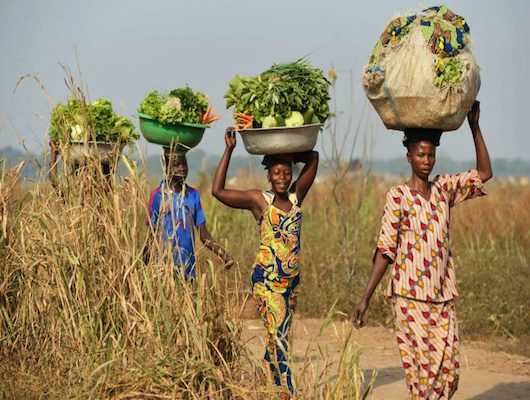
Female_FarmersMore women are involved in farming than with any other occupation. In developing countries, female farmers perform almost half of all agricultural labor and account for an estimated two-thirds of the world’s 600 million impoverished livestock keepers. However, women in many of the poorest regions of the world are denied equal rights to access, use, inheritance and control of the land they rely on to survive.

With unequal access to tools, training and land, female-run farms produce between 14 to 30 percent lower yields, according to a 2014 study by the World Bank.

The same report determined that if female farmers were treated equally in agriculture across Africa farm yields would increase by up to 30 percent.

According to the Food and Agriculture Organization of the United Nations, a percentage increase of that magnitude could feed an additional 150 million people every day, thereby reducing the number of undernourished people in the world by 12 to 17 percent.

Landesa is a rural development institute aimed at reforming laws and policy tools to help alleviate poverty, reduce hunger and ease land conflict. Their research illustrates the effects created when women are economically and socially empowered through secure legal rights to land.

According to Landesa, when women are given land rights they:

  • grow more on their land and their children are 33 percent less likely to be malnourished
  • are 8 times less likely to be victims of domestic violence
  • earn up to 4 times as much in income
  • are more likely to direct their wealth towards their children’s needs than men

U.N. Women, a United Nations entity for gender equality and female empowerment, describes gender equality and women’s rights as cross-cutting throughout the 2030 Agenda, with its 17 Sustainable Development Goals (SDGs).

The SDGs are fundamentally linked to the lives of women and girls globally, especially those of rural women. This is particularly true for the goal to universally end poverty in all its forms, the goal to end hunger, achieve food security and improved nutrition, promote sustainable agriculture as well as the goal to achieve gender equality and women’s empowerment.

U.N. Women describe rural women as key agents for achieving the economic, environmental and social changes required for sustainable development. Limited access to credit, health care and education are among the many challenges faced by women.

Land ownership and other means of women’s empowerment are crucial not only to the well-being of individuals, families and rural communities but also economic productivity, given women’s presence in the agricultural field.

– Kara Buckley

Sources: FAO, Landesa, Rockefeller Foundation, Take Part, UN Women
Photo: Google Images

January 5, 2016
https://borgenproject.org/wp-content/uploads/borgen-project-logo.svg 0 0 Borgen Project https://borgenproject.org/wp-content/uploads/borgen-project-logo.svg Borgen Project2016-01-05 06:11:352024-05-27 09:28:39Female Farmers: The Key to End World Hunger?
Development, Global Poverty, Women and Female Empowerment

Women’s World Banking Fights Poverty by Empowering Females

Women’s_World_Banking
Women’s World Banking raises money to provide women with the resources and tools needed to become successful entrepreneurs in their respective regions.

The organization operates primarily in Africa, Asia and Latin America, but has left footprints in other regions, such as the Middle East and Western Europe.

Women’s World Banking recognizes that although many women globally use their earnings to give back to their families and communities, the demographic continues to be underserved and underrepresented.

Once the group determines the tools needed to empower successful female entrepreneurs, they network with financial institutions to guide women through the business startup process.

Women’s World Banking consists of an executive team, staff members, fellows and a board of directors, all of whom help keep the organization afloat. These individuals have dedicated themselves to the development of innovated products, micro-insurance programs and enterprises.

The team helps women develop credit, savings and insurance programs that fit their needs. Through research and on-the-job experience, the organization also creates innovative methods that they share with hardworking women throughout the world.

This year, roughly 530,000 women have accessed tools and resources provided by Women’s World Banking, with the total participants each year totaling over one million. Eighty-five percent of people participating in their leadership programs each year are young women looking to make a living for themselves and their families.

For more than 35 years, Women’s World Banking has created and networked with more than 38 organizations dedicated to empowering women throughout these regions, leaving a worldwide impact on the state of poverty found within predominantly female areas.

– Julia Hettiger

Sources: Womens World Banking, Microfinance Gateway, Friends of Women`s World Banking
Photo: Flickr

December 13, 2015
https://borgenproject.org/wp-content/uploads/borgen-project-logo.svg 0 0 Borgen Project https://borgenproject.org/wp-content/uploads/borgen-project-logo.svg Borgen Project2015-12-13 01:30:442020-06-24 20:42:48Women’s World Banking Fights Poverty by Empowering Females
Global Poverty, Women and Female Empowerment

Empowering Female Entrepreneurs to Escape Poverty

female_entrepreneurs
The World Bank recently established a line of credit for female entrepreneurs in the world’s poorest nations. The program has already helped more than 3,000 female entrepreneurs in Ethiopia start their own businesses and escape poverty.

In poor communities, women are far less likely than men to own valuable assets to use as collateral to get a loan. Without these loans, many business ventures never make it off the ground.

An estimated 70 percent of women who own small or medium-sized businesses are unable to stabilize and improve them because of a lack of funding credit. This challenge creates a huge loss in potential income within a community.

According to World Bank economists Francesco Strobbe and Salman Alibhai, investing in female-owned businesses results in one of the “highest return opportunities available in emerging markets.”

The World Bank is helping to put an end to this opportunity loss and stagnation of female business opportunities by offering female entrepreneurs loans through the International Development Association and several international development organizations in Canada and the United Kingdom.

Between January 2014 and September 2015, Ethiopia’s Women’s Entrepreneurship Development Project disbursed 768 million birr (about $38 million) worth of credit to 3,227 female entrepreneurs. Currently, nearly $2 million in credit is being disbursed each month with an average individual loan size of approximately 219,605 birr (approximately $11,000).

Research shows that female entrepreneurs are more likely to hire other women to work in their businesses, opening up employment opportunities in communities where positions for women were scarce before.

Thus far, 76 percent of the women who have taken advantage of the program are first-time borrowers, unlocking untapped capital and opening up a new route to closing the gendered financial gap.

Despite the majority being first-time borrowers with little to no collateral, the repayment rate is 99.4 percent. Besides the success of the small loans, the program also offers entrepreneurship training to inspired women throughout the nation.

So far, more than 5,000 women have taken advantage of training and hope to enter into the exciting realm of business ownership. This trend is likely to drive down the overall rate of unemployment throughout Ethiopia, which currently stands at 17 percent.

– Claire Colby

Sources: CIA World Factbook, World Bank
Photo: Flickr

December 4, 2015
https://borgenproject.org/wp-content/uploads/borgen-project-logo.svg 0 0 Borgen Project https://borgenproject.org/wp-content/uploads/borgen-project-logo.svg Borgen Project2015-12-04 01:30:362024-05-27 09:21:33Empowering Female Entrepreneurs to Escape Poverty
Gender Equality, Women and Female Empowerment

Gender Equality in Rwanda Ranks in Top 10

gender_equality_in_Rwanda
When people think of gender equality they often do not associate it with Rwanda. But, according to the World Economic Forum’s (WEF) annual report, people should.

Gender equality in Rwanda outperformed many expectations, scoring high in the graded categories of economics, health, education and politics. Additionally, the country placed in the top ten for the second year in a row. They even improved their spot by one, coming in at sixth place.

As a continent, Africa has some of the worst performing countries in the world. Numerous African countries scoring in the bottom 20 supplement that fact. Chad, Mali and Guinea are some of the countries that have yet again found themselves in the bottom 20.

Impressively, Rwanda beat out many well-developed countries. They boast better scores than France (15th) Germany (11th) and even the United States (28th).

The country has continued to see success in bridging the gender equality gap. According to WEF’s Global Gender Gap Report, an impressive 88 percent of women in Rwanda hold jobs. Comparatively, the percentage of women in the United States who have jobs is only 66 percent.

While Rwanda’s placement on the index is certainly praiseworthy, the question remains – how did the country outperform 139 others?

Saadia Zahidi, a member of the WEF, explains: “There are quite a few theories for this and certainly one of them is that after the genocide there has been much lower numbers of men who are able and willing to be working. So, that has changed the dynamics.”

The genocide that Zahidi talks about occurred in 1994. It was aimed at the country’s minority group, the Tutsi’s, and claimed the lives of over one million civilians. Many women became widowed as a result.

After the genocide ended, women came together and demanded change. They successfully re-wrote parts of the constitution and ensured that 30 percent of political roles would be held by women. They also called for marriage equality and land ownership rights.

In terms of political opportunities, Rwanda has the highest percentage of women in Parliament, something that remains to be celebrated.

Of course, there is still much that needs to be done in order to continue to eliminate the gap between genders. However, Zahidi remains confident that the divide in gender equality in Rwanda will continue to close.

– Alyson Atondo

Sources: The World Economic Forum 1, Huffington Post, QZ.com, Washington Post, The World Economic Forum 2
Photo: Flickr

December 2, 2015
https://borgenproject.org/wp-content/uploads/borgen-project-logo.svg 0 0 Borgen Project https://borgenproject.org/wp-content/uploads/borgen-project-logo.svg Borgen Project2015-12-02 01:30:462024-12-13 18:05:28Gender Equality in Rwanda Ranks in Top 10
Family Planning and Contraception, Nonprofit Organizations and NGOs, Sustainable Development Goals, Women and Female Empowerment

Health Education for Women Improves in Southern Asia

health_education_for_women
Non-governmental organizations (NGOs) across southern Asia have developed programs in line with the new United Nations Sustainable Development Goals (SDGs) on health education for women.

SDG #3 aims to ensure healthy lives and promote well-being for all ages, and SDG #5 aims to achieve gender equality and empower all women and girls.

In Bangalore, India, mDhil, an online medical resource center, has developed social media campaigns that provide important health education for women. The organization has created a variety of videos that inform women about topics such as menstruation, pregnancy and hormones. mDhil content reaches over 2.5 million people each month.

These videos are available in many local languages, are easily accessible and can be viewed in private. In a survey, mDhil found that 60 percent of women prefer watching videos about intimate health issues rather than visiting a doctor.

Because most doctors offering healthcare for women were male, most women did not feel comfortable discussing family planning or reproductive health with them.

mDhil is empowering girls and women by giving them the information to better understand their bodies and make choices to better their health.

In Bangladesh, the HERHealth project aims to educate female factory workers on their health. Women employed in large factories tend to come from low-income backgrounds and work in unsafe, unhealthy conditions.

Using peer educators, HERHealth raises awareness on common diseases such as anemia and reproductive tract infections. Their health education for women even includes family members and communities of the female factory workers. Reportedly, this has resulted in decreasing cases of cholera.

The quality of work from factories involved with HERHealth has improved because the female workers are less likely to miss work due to injury or sickness. The impact of HERHealth is also met with factory managers asking for the same program for male workers.

In Ho Chi Minh City, Vietnam, the first Human Milk Human Babies Bank opened, allowing mothers to share their extra milk. The milk bank provides mothers the opportunity to give milk to other mothers who do not have enough milk to feed their own babies.

The founder of the bank, Trinh Tuan, also started a Youtube channel called the Journey of Breastmilk to allow women to share maternal and childcare knowledge.

NGOs in the global south are working towards the SDGs, particularly health education for women, and are making a difference using peer training, technology and sharing strategies and knowledge.

– Marie Helene Ngom

Sources: URB, Huffington Post, UN
Photo: Google Images

November 26, 2015
https://borgenproject.org/wp-content/uploads/borgen-project-logo.svg 0 0 Borgen Project https://borgenproject.org/wp-content/uploads/borgen-project-logo.svg Borgen Project2015-11-26 01:30:572024-06-04 01:17:42Health Education for Women Improves in Southern Asia
Children, Developing Countries, Education, Global Poverty, Women and Female Empowerment

Education for Girls in Developing Countries

supporting education for girls in developing countriesMichelle Obama recently spoke on the importance of education for girls in developing countries at the 2015 World Innovation Summit for Education in Qatar.
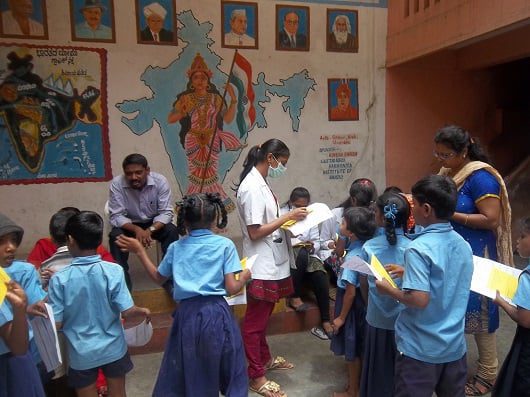
According to EFA Global Monitoring Report, there are 66 million girls out of school globally. There are 33 million fewer girls than boys in primary school.

Michelle Obama is traveling through the Middle East discussing the importance of education for girls in developing countries in order to promote “Let Girls Learn,” her girls’ education initiative. She encouraged men in developing countries to support the cause of educating girls in order to improve their societies.


Health Benefits of Supporting Education for Girls in Developing Countries


Education is one of the most significant ways that women can empower themselves, and educating women provides many benefits to developing countries.

Girls with eight years of education are four times less likely to be married as children. Women who are educated marry later and, therefore, have fewer children. Multiple studies show that an extra year of schooling for girls reduces fertility rate by five to 10 percent.

The children of an educated woman are more likely to survive. In addition, a child born to a literate mother is 50 percent more likely to survive past the age of five.

Educated women are better at understanding and managing health issues, which reduces infant and maternal mortality.


Economic Benefits of Supporting Education for Girls in Developing Countries


Educating women also benefits the economy. According to chief Japan strategist and co-head of Asia Economics, “educated women contribute to the quality, size and productivity of the workforce. They can get better paying jobs, allowing them to provide daily necessities, health care and education to support their families.”

A girl with an extra year of education can earn 20 percent more as an adult.

Bloomberg Business estimates a “growth premium” that would raise gross domestic product growth by 0.2 percent per year for countries such as Vietnam, Nigeria and Pakistan that put greater investments in female education. Narrowing the gender gap could raise income per capita 20 percent higher than what is projected by 2030.

According to The World Bank, if India enrolled one percent more girls in secondary school, its gross domestic product would rise by $5.5 billion.

Educating girls provides many significant benefits to developing countries and can help lift areas out of poverty. Education for girls will continue to improve conditions in developing countries across the globe.

– Jordan Connell

Sources: Bloomberg Business, CNN, Girl Rising, UNICEF
Photo: Flickr

November 21, 2015
https://borgenproject.org/wp-content/uploads/borgen-project-logo.svg 0 0 Borgen Project https://borgenproject.org/wp-content/uploads/borgen-project-logo.svg Borgen Project2015-11-21 11:30:592024-05-27 09:28:22Education for Girls in Developing Countries
Disease, Women

Indian-American Physicians Take Reins of Indian Healthcare

Indian_HealthcareThe American Association of Physicians of Indian Origin (AAPI) will focus on women’s health and non-communicable diseases (NCDs) in India in its 10th Global Health Summit.

For almost a decade, the AAPI has gathered to contribute to the discussion of healthcare in India. This year, the focus will be on women’s health and non-communicable diseases, which plague 5.8 millions of Indians each year, according to the WHO.

Also included in this year’s summit will be a launch of the country’s first Trauma and Brain Injury Guidelines, reports ETHealthworld.

“This GHS promises to be one with the greatest impact and significant contributions towards harnessing the power of international Indian diaspora to bring the most innovative, efficient, cost effective healthcare solutions to India,” says AAPI.

This year’s summit will be held from Jan 1 to 3, 2016, in New Delhi.

The annual summit is not the only effort by the AAPI to improve Indian healthcare.

The organization also houses the Global Clinical Research & Trial Network (AAPI-GCRTN), which fosters collaboration on research and clinical trials; the Young Physician Section (AAPI-YPS), which educates and enhances the careers of young physicians; and the Charitable Foundation (AAPI-CF), which serves the poor in remote areas of India and the U.S.

The AAPI and its contributions to health in India serve as an example of the country’s growing interest in health and poverty, as well as its growing resources.

The Government of India has made tremendous progress recently, especially in commitment to pressing issues concerning the poor members of its population.

At the beginning of this year, India became the first country to adapt the Global Monitoring Framework on NCDs. In line with the WHO’s Global action plan for the prevention and control of NCDs 2013-2020, the framework’s targets are aimed at reducing the number of global premature deaths from NCDs by 25 percent by 2025, says the WHO.

India is paving the way for developing countries’ healthcare, and this summit will provide solutions for multiple healthcare problems that can be applied to other areas.

– Ashley Tressel

Sources: India Times, AAPI Global Healthcare Summit, AAPI USA, AAPI Charitable Foundation, AAPI YPS, WHO                                                                                                                                                                      Photo: Flickr

November 9, 2015
https://borgenproject.org/wp-content/uploads/borgen-project-logo.svg 0 0 Borgen Project https://borgenproject.org/wp-content/uploads/borgen-project-logo.svg Borgen Project2015-11-09 07:30:282024-05-27 09:28:18Indian-American Physicians Take Reins of Indian Healthcare
Global Poverty, Women and Female Empowerment

Bolivia’s Land for Agricultural Development Project

land_for_agricultural_development
The Land for Agricultural Development Project in Bolivia granted more than 150,000 hectares of land to poor farmers and indigenous people. Consequently, the average family income increased by 39%.

The program, which lasted seven years, initially focused on decentralizing the land market so that poor farmers and indigenous people were able to make purchases.

Over the course of the project, however, the changing market made land prices unaffordable, so the program expanded to include leasing, sharecropping and technical assistance in commercializing its products and investing in agriculture and livestock.

The U.S. $15 million program also promoted the involvement of women. Women participated in training programs focused on agricultural and administrative skills. By the closing date of the project, Sept. 15, 2014, women’s involvement had reached 38%.

The Land for Agricultural Development Project enabled 5,681 women to become direct individual beneficiaries, out of the 11,488 individual beneficiaries.

The 39% increase in the average family income is a result of 2,891 families becoming beneficiaries of the program, and also the investments they made in livestock, agriculture and agroforestry. This contributed to sustaining the livelihoods of families and, in the long run, ending the generational cycle of poverty.

The “Implementation Completion and Results Report,” released on March 12, 2015, revealed that the Bolivian government’s commitment to eradicating extreme poverty and empowering indigenous people was very instrumental in the success of the program.

When President Evo Morales came to power in 2006 he made the distribution of agricultural lands to poor and/or landless farmers and indigenous people one of his priorities. However, indigenous families were still struggling to sustain living because of the privatization of land markets.

Morales expressed gratitude for the partnership with the World Bank following the New 2012-2015 Country Partnership Strategy. He stated that “[it is time to] give power economic power to social movements, especially in rural areas where historically we have been abandoned.”

– Marie Helene Ngom

Sources: World Bank 1, World Bank 2, World Bank 3, New Agriculturalist
Photo: Google Images

October 26, 2015
https://borgenproject.org/wp-content/uploads/borgen-project-logo.svg 0 0 Borgen Project https://borgenproject.org/wp-content/uploads/borgen-project-logo.svg Borgen Project2015-10-26 01:30:162024-12-13 18:05:15Bolivia’s Land for Agricultural Development Project
Global Poverty, Women and Female Empowerment

Ellen DeGeneres And Zoella Team Up With Gap For GIRL Line

Ellen_DeGeneres
Famous YouTuber Zoe Sugg, also known as Zoella, and Talk Show Host Ellen DeGeneres have teamed up with Gap to release a new line of clothing for female empowerment.

The clothing line, called Gapkids x ED, encourages women of any age to feel strong and to voice their opinions. DeGeneres’ clothing brand, ED, has worked with Gap to combine comfy fabric and trendy styles with motivational quotes and symbols that inspire courage and confidence.

To show her support for the campaign, called GIRL, Sugg took a few minutes out of one of her vlog videos to flash one of her favorite t-shirts from the line. The British 25-year-old donned the GapKids x ED Energy Bolt Tee while introducing her involvement in GIRL to her nine million subscribers.

“This was something totally different, and I really, really loved this campaign. And I really wanted to get behind it and share it with you guys,” Sugg said in the video.

Expressing her backing for GIRL, DeGeneres said that one of the reasons she joined the campaign was because she shares some of the same ideals as Gap.

“Gap has always encouraged people to be themselves, and I love that they have the same values that I have; to be true to who you are and to wear cute pants,” DeGeneres said.

Not only do Gap and DeGeneres believe in sporting fashionable trousers, but they also think that self-image is a key step in female empowerment. DeGeneres said that she knows from experience that being true to yourself is important for growing and changing and that this campaign is demonstrating this notion by shining a light on real girls doing unique things.

GIRL focuses on three talented girls who each have something different to offer and demonstrate. The webpage for GIRL hosts three videos of each girl. Alexey, a young, bold and strong drummer, can be seen expertly beating her drum set. When asked what advice she has for girls, the little rocker gave a mature statement.

“Just follow what your heart says, and you can achieve it,” the 12-year-old said.

The other two girls featured by GIRL can also be seen in videos on the webpage. Torrae, a nine-year-old robotic hand technician, said that she is powerful because of her imagination. Twelve-year-old entrepreneur, Asia, started her own company when she was five and plans to start classes teaching kids her age about business.

Asia has big plans for her future. In her video, she proudly said that she wants to be a dancer, a singer, a rapper, a college graduate and the president of the United States.

Another girl representing the influence of personal voice is Sugg. With more than 700 million views on both of her YouTube channels combined, Sugg has been able to reach girls from all across the globe with her take on feminism in her fashion, beauty and life videos.

“So often, you can kind of get swept up in this world where you feel inferior or you feel like you should be doing something specific or you feel like you’re not doing something right. And it’s just a whole campaign basically to support girls to be who they are, and to be who they want to be. And I just think that that’s really amazing” Sugg said.

Like Sugg has done with her YouTube videos, DeGeneres said that this campaign has the ability to “break the internet.” GIRL encourages wearers of the brand to take selfies of themselves in the clothes and to share the pictures, as well as speak their views of feminism and equal rights.

DeGeneres added that there is also a collection by Gap x ED because they “believe in equal opportunity cuteness.”

– Fallon Lineberger

Sources: Gap 1, Gap 2, Paste Magazine, YouTube 1, YouTube 2
Photo: Google Images

October 7, 2015
https://borgenproject.org/wp-content/uploads/borgen-project-logo.svg 0 0 Borgen Project https://borgenproject.org/wp-content/uploads/borgen-project-logo.svg Borgen Project2015-10-07 01:30:512024-12-13 18:05:03Ellen DeGeneres And Zoella Team Up With Gap For GIRL Line
Development, Global Poverty, United Nations, Women and Female Empowerment

UN Sustainable Development Summit Highlights Women’s Rights

 Sustainable_Development_Summit
Global economics, health and sustainability are some of the usual discussion points at the United Nations. However, at the recently held U.N. Sustainable Development Summit, Ban Ki-moon, the U.N.’s secretary-general, put the spotlight on women’s empowerment.

“We cannot achieve our 2030 Agenda for Sustainable Development without full and equal rights for half of the world’s population, in law and in practice. We cannot effectively respond to humanitarian emergencies without ensuring women and girls are protected and their needs prioritized,” said Ban Ki-moon during an event hosted by U.N. Women and China.

The Sustainable Development Summit discussed the Sustainable Development Goals, which are a follow-up to the Millennium Development goals created in 2000. These Sustainable Development Goals include the goal to “achieve gender equality and empower all women and girls.”

To this end, Ban Ki-moon asked leaders to commit to ending gender inequality, pointing to “This means urgently addressing structural barriers, such as unequal pay.” He also discussed other gender inequalities, such as the importance of women’s bodily autonomy, gender violence and the encouragement of women’s participation in the workforce.

The United Nations, founded in 1945, began addressing gender inequalities prior to this summit. In 2010, The United Nations Entity for Gender Equality and the Empowerment of Women, or U.N. Women, began. U.N. Women helps to streamline the U.N.’s efforts in advancing gender equality in all member states.

This past summer, the United Nations Security Council condemned the use of sexual violence during wartime, in reference to Syria and Iraq.

To help encourage gender equality to reality by 2030, businesses pledged millions of dollars At the Business and Philanthropy Leader’s Forum, co-hosted by U.N. Women, The Bill and Melinda Gates Foundation and the Alibaba Group.

Now global citizens wait to see how many of the 17 Sustainable Development Goals will become a reality. With the recent attention to women’s rights, the United Nations starts the journey to make gender equality a reality within member states.

– Rachelle Kredentser

Sources: UN 1, UN 2, UN 3, UN Women, UN 4, UN 5
Photo: Pixabay

October 3, 2015
https://borgenproject.org/wp-content/uploads/borgen-project-logo.svg 0 0 Borgen Project https://borgenproject.org/wp-content/uploads/borgen-project-logo.svg Borgen Project2015-10-03 11:17:182024-12-13 18:05:12UN Sustainable Development Summit Highlights Women’s Rights
Page 59 of 82«‹5758596061›»

Get Smarter

  • Global Poverty 101
  • Global Poverty… The Good News
  • Global Poverty & U.S. Jobs
  • Global Poverty and National Security
  • Innovative Solutions to Poverty
  • Global Poverty & Aid FAQ’s
Search Search

Take Action

  • Call Congress
  • Email Congress
  • Donate
  • 30 Ways to Help
  • Volunteer Ops
  • Internships
  • Courses & Certificates
  • The Podcast
Borgen Project

“The Borgen Project is an incredible nonprofit organization that is addressing poverty and hunger and working towards ending them.”

-The Huffington Post

Inside The Borgen Project

  • Contact
  • About
  • Financials
  • President
  • Board of Directors
  • Board of Advisors

International Links

  • UK Email Parliament
  • UK Donate
  • Canada Email Parliament

Get Smarter

  • Global Poverty 101
  • Global Poverty… The Good News
  • Global Poverty & U.S. Jobs
  • Global Poverty and National Security
  • Innovative Solutions to Poverty
  • Global Poverty & Aid FAQ’s

Ways to Help

  • Call Congress
  • Email Congress
  • Donate
  • 30 Ways to Help
  • Volunteer Ops
  • Internships
  • Courses & Certificates
  • The Podcast
Scroll to top Scroll to top Scroll to top