• Link to X
  • Link to Facebook
  • Link to Instagram
  • Link to TikTok
  • Link to Youtube
  • About
    • About Us
      • President
      • Board of Directors
      • Board of Advisors
      • Financials
      • Our Methodology
      • Success Tracker
      • Contact
  • Act Now
    • 30 Ways to Help
      • Email Congress
      • Call Congress
      • Volunteer
      • Courses & Certificates
      • Be a Donor
    • Internships
      • In-Office Internships
      • Remote Internships
    • Legislation
      • Politics 101
  • The Blog
  • The Podcast
  • Magazine
  • Donate
  • Click to open the search input field Click to open the search input field Search
  • Menu Menu

Archive for category: Women and Female Empowerment

information and Stories about woman and female empowerment.

Global Poverty, Women

Malawian Sanitary Pads: Providing Skills for Women’s Health

Women’s HealthAccording to data from Trading Economics, Malawi’s GDP in 2015 totaled $6.57 billion, or 0.01 percent of the global economy. The highest influxes of extremely impoverished Malawians are concentrated in rural areas and face a constant struggle when conceptualizing economic development from agricultural practices.

Established in 1993, the Malawi Children’s Fund has initiated and supported youth in Malawi by developing initiatives that facilitate entrepreneurial, educational and medical facilities. The Green Malata Entrepreneurial Village, one of the fund’s centers for development, provides children with courses in subjects such as renewable energy and information technology, in addition to a tailoring program that manufactures reusable Malawian sanitary pads.

Women and children studying tailoring also construct reusable pads that are then combined into “The School Girl Pack,” consisting of three pads and a pair of underwear, which is then sold for $3.50. The United Nations Children’s Fund (UNICEF) reported that one in 10 school-aged girls in Africa drop out of school or miss class due to their period. Skills development programs established by the entrepreneurial village are not only providing personal development of individual’s trade abilities but also ensuring a better quality of life for women and children in Malawi.

Access to quality female hygiene products is also vital to beneficial health practices to prevent malfunctions such as leaking, which spreads infection and subsequent sores and rashes. Other organizations such as AFRIpads, locally headquartered in Uganda, distribute sanitary pads to women in dire need of reliable assistance.

The Malawian sanitary pads initiative has also committed to participation in Project 50/50, a trans-regional campaign that aims to facilitate greater political representation of women, as outlined in 2008 Southern African Development Community (SADC) Protocol on Gender and Development. On location, training events are held to empower and educate women to become leaders in local and national government.

– Amber Bailey

Photo: Flickr

February 11, 2017
https://borgenproject.org/wp-content/uploads/borgen-project-logo.svg 0 0 Borgen Project https://borgenproject.org/wp-content/uploads/borgen-project-logo.svg Borgen Project2017-02-11 01:30:052020-05-26 21:20:58Malawian Sanitary Pads: Providing Skills for Women’s Health
Developing Countries, Education, Global Poverty, Women

Camions of Care for Women and Education

Women and EducationWomen are estimated to menstruate for an average of 3,000 days throughout their lifetimes. This highlights the necessity for adequate access to sanitation and health services for women’s hygiene. A project called Camions of Care, founded by 18-year-old Nadya Okamoto from Portland, has made a monumental impact on relieving incidence of disease and social exclusion among women worldwide.

Since the establishment of Camions of Care, the organization has facilitated the transmission of more than 27,000 period care packages to women globally. A 2013 United Nations Children’s Fund (UNICEF) case study of menstrual hygiene in Burkina Faso and Niger emphasized challenges such as inadequate sanitation facilities, lack of knowledge regarding periods and the cultural impact of stigma regarding menstruation. Addressing these challenges is pivotal in establishing better practices for women’s hygiene. The study also cites that empowering women through education and personal support is imperative to improving local sanitation practices.

A journal published by the Public Library of Science (PLOS) also attributes poor knowledge of healthy menstruation practices to decreased school attendance among girls in Uganda.

The United States Agency for International Development (USAID) reinforces evidence that women and girls without access to satisfactory female hygiene facilities are more likely to miss school and work, and can be subject to higher rates of sexual assault. USAID also attributes improved sanitation facilities to promoting economic development, while also affording women “dignity, privacy and security.”

The non-profit organization also aids partners such as New Avenues for Youth, Central City Concern, Rose Haven, Free Hot Soup and Self Enhancement, Inc. and has impacted women across 19 states within the U.S. through foundations of “advocacy, youth leadership and service”. The Hasbro Community Action Hero Awards program has also recognized Okamoto’s homeless relief organization for exceptional commitment to advancing women’s health.

– Amber Bailey

Photo: Flickr

February 5, 2017
https://borgenproject.org/wp-content/uploads/borgen-project-logo.svg 0 0 Borgen Project https://borgenproject.org/wp-content/uploads/borgen-project-logo.svg Borgen Project2017-02-05 01:30:072024-05-27 23:59:06Camions of Care for Women and Education
Education, Global Poverty, Women

UN Women: Internship Program for Women in Afghanistan

Women in Afghanistan
Afghanistan’s population largely consists of people under 24 years of age, and about 400,000 people are entering the workforce every year. It is hard enough finding a job as a young graduate, but it’s even harder for the women in Afghanistan. The women in Afghanistan who try to get an education or become working members of the society still face a backlash from men.

Although 64 percent of Afghans believe women should be allowed to work, many men still feel that women should be forbidden from pursuing an education. Girls who attempt to get an education face great danger. Schools for girls have been burned down, teachers have been threatened and killed and girls have been injured walking to and from school. The women who actually complete their education often have forces working against them, preventing them from getting a job.

In December 2015, U.N. Women developed an internship program to help women who have graduated from college acquire skills and develop a work ethic to better prepare them for the working world in Afghanistan. As of now, 48 women have completed the U.N. Women’s internship program in Afghanistan. It is a six-month program, where two months is spent training the women in different professional skills, and four months is spent interning with an organization in the woman’s chosen field, where they receive a stipend from U.N. Women for the duration of their internship period.

As drastic and detrimental as things are for women in Afghanistan, the country is making progress for women and girls in education, political participation and in their economic role. The National Unity Government has committed to the empowerment of women and recognizes that equal opportunity for women is necessary for stabilizing Afghanistan and ensuring that the country develops in a sustainable way. There are more women in power than ever before in history – 27.7% of parliament consists of women, four ministries and the Afghanistan Independent Human Rights Commission are led by women, and three women serve as ambassadors. Also, Afghanistan has in place a National Action Plan for implementing a resolution for the peace and security of women. These strides for progress show that there have been efforts in promoting and upholding a peaceful society with equal opportunity for women.

The internship program has helped the women in the program with vital social and professional connections with different programs around the world, some of which have offered these women jobs after completing their internships. The U.N. Women internship opportunity is helping women in Afghanistan look more suitable and appealing to job recruiters, even more appealing than the many young men they are competing against for jobs.

Women in Afghanistan continue to be disproportionately affected by poverty, discrimination and exploitation. There is still a substantial amount of resistance and discrimination in the workforce, but Afghanistan is making progress. With help from U.N. Women, the working and educated women in Afghanistan can be the progressive rebels that serve as role models and leaders to all other women and girls. Although Afghanistan has established ambitious goals, these actions are necessary to ensure that progress is not reversed and to preserve the great gains the country has made.

– Kayla Mehl

Photo: Flickr

January 28, 2017
https://borgenproject.org/wp-content/uploads/borgen-project-logo.svg 0 0 Borgen Project https://borgenproject.org/wp-content/uploads/borgen-project-logo.svg Borgen Project2017-01-28 01:30:052024-12-13 17:55:48UN Women: Internship Program for Women in Afghanistan
Development, Global Poverty, Women and Female Empowerment

Underwear for Hope, by Naja

Underwear_columbiaNaja is a maker of fast fashion trend lingerie with the social responsibility ethos of a slow fashion company. Founded by Catalina Girald, a former lawyer who immigrated to the U.S. from Colombia at age four, Naja is working to empower women to create on-trend products using environmentally-friendly techniques. Its goal is to empower marginalized women by creating on-trend, eco-friendly lingerie.
Fast fashion products are meant to imitate trends from major fashion events, such as New York Fashion Week. Naja’s products are stylish and resemble these trends, but are unique in that, like slow fashion trends, those working to make the products are paid fairly and empowered to create sturdy, quality products.

Female empowerment starts with economic independence. Naja employs economically-marginalized single mothers and female head of households. Fair pay and health benefits are included in the package, but the real beauty of Naja’s model comes in that it offers flexible scheduling and full support for its workers’ children, including paying for school lunches and other necessities. In addition, the company has vertically integrated parts of its supply chain, enabling it to have greater control over conditions for the productive processes.

Naja also combines advocacy with businesses by raising consumer awareness of the difficult realities of living in war-torn and violent countries. The main program it does this through is the Underwear for Hope program. Half of the proceeds from this program are taken home by the women making the products, and the other half is donated to the Golondrinas Foundation, which teaches women micro-entrepreneurship. This is in addition to the two percent of total revenue from all sales Naja donates to Colombian education charities.

Underwear for Hope provides a stable, living income and a chance to work from home for impoverished women in Colombia. The program teaches women to sew, a skill useful both at home for supporting a family and as a primary source of income. The women in the program make the lingerie wash bags Naja includes when a customer orders a bra. This helps to spread the message about Naja’s goals and to humanize the products women wear by matching a face to the product, just as Naja does on its website when customers look at a specific product.

Fast fashion works by attracting a customer base looking for on-trend clothing while supporting a cause. Naja competes for this customer base by creating runway-worthy products with unique artistic designs, showing that fashion can be both slow and trendy. Naja also incorporates eco-friendly materials, such as recycled plastics, and eco-friendly production methods, such as digital printing, to attract and build their socially-conscious consumer base.

– Lucas Woodling

Photo: Flickr

January 1, 2017
https://borgenproject.org/wp-content/uploads/borgen-project-logo.svg 0 0 Borgen Project https://borgenproject.org/wp-content/uploads/borgen-project-logo.svg Borgen Project2017-01-01 01:30:232024-12-13 17:56:25Underwear for Hope, by Naja
Gender Equality, Women and Female Empowerment

Gender Inequality Examples and Progress Across the Globe

Comparing Gender Inequality Examples and Progress Across the GlobeIt is the time of year to reflect on achievements and the need for change. The World Economic Forum 2016 Report on the Global Gender Gap points to both.
Countries are measured on the following metrics regarding women and gender inequality: economic participation and opportunity, political empowerment, educational attainment, health, and survival.

The highest possible score is one for gender equality. The lowest possible score is zero for gender inequality. Rwanda has achieved a ranking of five. Pakistan and Yemen are 143 and 144 respectively out of a total 144 countries. Gender inequality examples are numerous in both Yemen and Pakistan.

Gender inequality leads to gender-based violence against both women and young girls affecting one in three females around the world, in the name of “honor killings”, public stoning’s, wartime rape, domestic violence and abuse. Increased conflict in Yemen highlights a correlation with marrying off child bride’s sooner. This is a longstanding human rights violation in Yemen.

Numbers from a survey of 250 community members conducted by UNFPA indicated 72 percent of child marriage survivors in North Yemen were married between the ages of 13 and 15. In the South, 62 percent were married before the age of 16. Child brides experience pregnancy complications and are more vulnerable to violence. They are expected to conceive within their first month after marriage.

Pakistan also experienced severe spikes in violence against women this past summer. Women died by burning, strangling, and poison. Women are vulnerable to early marriage, domestic violence and death by male family members who may be suspicious that they are unfaithful.

New legislation passed in October called the “anti-honor crime bill”. This marks progress; there will, however, remain obstacles between parliament and religious groups. For real change, all murders will need to be treated the same as a crime against the state.

True change for women living in vulnerable settings is possible. Protecting Girls Access to Education in Vulnerable Settings Act is a bill that was introduced in July 2016 that “… is critical to ensure that children, particularly girls, displaced by conflicts overseas are able to receive a quality education and that the educational needs of women and girls are considered in implementing U.S. foreign assistance policies and programs.”

Pakistan activists are taking action for change with a play on words to end violence against all women. The U.N. Women Pakistan’s new #BeatMe campaign challenges men to beat well-known women from Pakistan at things in which they excel. The campaign confronts physical abuse with female mountain climber Samina Baig. She is the only Pakistani woman to climb Mount Everest.

The campaign will focus on success stories of women from all walks of life. Pakistan’s #BeatMe campaign has advocacy components, legal services for survivors and intends to address a shift in social attitudes particularly among men and boys. The campaign’s long-term goals focus on opening a global dialogue about women’s rights and gender equality.

It has been twenty years since the Rwandan genocide where 100 million men, women and children died. Women extended their strength as mothers into the fields of construction and mobilization to rebuild their nation. Today women have a seat at the economic and political tables of power. This is why Rwanda ranks 5th this year for improving the status of women.

  • Fifty percent of Rwanda’s Supreme Court Justice’s are women
  • Girls attend public school in equal numbers to boys
  • Women can legally own property and pass citizenship to their offspring
  • Established businesswomen are leaders in the private sector
  • Rwanda ranks first in the world for women’s representation in elected lower house of parliament.

New laws are one factor in the Rwanda’s shift to a country where women hold a new place in society. These laws are strengthened by a paradigm shift in the collective thinking of the entire country.

Rwanda did not rebuild overnight. The strength of Rwandan women is a model for countries at war, where women are struggling to stay alive, and seek freedom from violence, a large stepping stone to education, political power and equal pay.

– Addison Evans

Photo: Flickr

December 18, 2016
https://borgenproject.org/wp-content/uploads/borgen-project-logo.svg 0 0 Borgen Project https://borgenproject.org/wp-content/uploads/borgen-project-logo.svg Borgen Project2016-12-18 01:30:562024-12-13 17:56:20Gender Inequality Examples and Progress Across the Globe
Global Poverty, Women and Female Empowerment

Gender in Agriculture: From Policy to Practice (GAPP)

GAPP
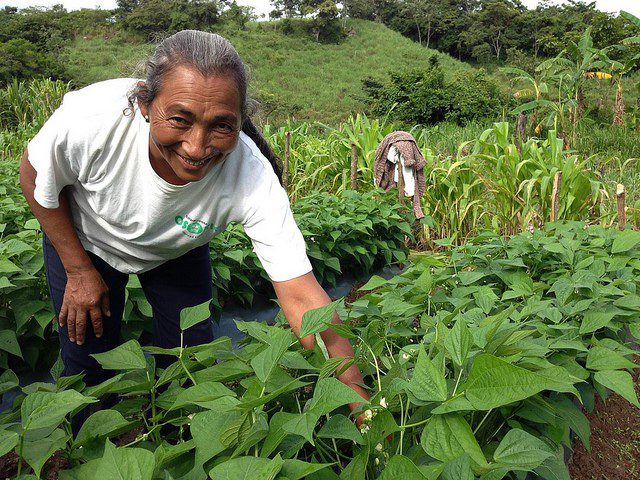
In Honduras, as in many places, gender conceptions influence national prosperity. Reimagining the ways that men and women can contribute to their communities and economies and learning how to share the societal load can stimulate poverty alleviation.

More than 1.7 million people in Honduras live in poverty, and many live on less than $1.25 per day. Many impoverished people live in rural areas. In fact, 46 percent of all Hondurans live in rural areas, where the primary occupation is farming. About 38 percent of all Honduran employment is in agriculture, and many farmers are struggling to make ends meet.

USAID and Feed the Future have made significant strides in assisting the Honduran farming community by improving technologies and management practices to help farmers increase the value of their agricultural products. However, there is still a long way to go, particularly in regard to supporting female farmers.

Income gaps and marginal political representation have crippled Honduran women’s leadership in the agricultural sector, despite the fact that in western Honduras alone, more than 40 percent of farming households are headed by women.

For three years, USAID and Feed the Future have partnered with Lutheran World Relief (LWR) in a project called Gender in Agriculture: From Policy to Practice (GAPP). Aiming to stimulate women’s leadership in Honduran agricultural communities, the program is training female farmers in leadership, public speaking and investing. Its hope is that as female farmers become more involved in local political processes, they will gain access to public funding and loans that tend only to benefit male farmers.

One recent GAPP success is a municipal agreement that part of the civic budget reserved for gender activities be specifically applied to women-led agricultural enterprises.

In addition to empowering female farmers in Honduras to demand their own rights, GAPP also funds programs to educate male leaders about the importance of gender equity in agriculture.

Using the concept of “new masculinities,” GAPP teaches male community members to appreciate women’s crucial role in the agricultural sector. According to one male GAPP advocacy training participant, Maximo Mejía, “Being a man isn’t, as they say, being a big shot, but understanding and seeking equality with your partner.”

While the provision of funding and new technologies does alleviate the difficulties faced by female farmers in Honduras, helping people rethink gender roles and stereotypes will help ensure that economic stagnation dissipates.

Feed the Future continues to train women to grow home gardens, farm fish and utilize the latest farming technologies, while GAPP teaches female farmers in Honduras how to use their voices to gain the civic support they need.

At the same time, Honduran men are relearning not only women’s roles in their economy, but also their own roles in caregiving and family health. This mutual empowerment of men and women will help break the poverty cycle in Honduras.

– Robin Lee

Photo: Flickr

November 30, 2016
https://borgenproject.org/wp-content/uploads/borgen-project-logo.svg 0 0 Borgen Project https://borgenproject.org/wp-content/uploads/borgen-project-logo.svg Borgen Project2016-11-30 01:30:282024-12-13 17:56:10Gender in Agriculture: From Policy to Practice (GAPP)
Developing Countries, Global Poverty, Health, Women and Female Empowerment

Low-Income Communities Deserve Sanitary Menstrual Products

Low-Income Communities Deserve Sanitary Menstrual Products
In 2015, 18 percent of Rwandan females didn’t go to school or work because they couldn’t purchase sanity menstrual products.

Sustainable Health Enterprises (SHE) recycles trunk fiber from banana farmers to be cut, carded, washed, fluffed and solar dried for menstrual pads. The company supplies farmers with the necessary equipment and training services for production. They offer health and hygiene education to the community through schools.

SHE believes it’s a personal injustice that menstrual hygiene is seen as a luxury item. In Rwanda each year, the country has roughly a gross domestic product (GDP) loss of $115 million for women needing to take sick leave due to their periods. The company is fighting for the removal of value-added taxes on menstrual pads.

“We’re creating a blueprint to franchise globally. It’s a sustainable system that can be rolled out anywhere. We think it’s straight up common sense,” SHE outlined on the company’s website.

Most U.S. food stamp programs do not define sanitary menstrual products as an essential item. In India, people believe menstruation makes women impure. Most of the time females who are on their period are banished from completing their household obligations such as cooking, or even from inhabiting their homes at all.

In the largest slum, Mukuru, in Nairobi, Kenya, a study found that girls 10 to 19 years old were having sex with older men to gain access to sanitary menstrual products, according to Dignity Period.

In Burkina Faso, 83 percent of girls don’t have a sanitary menstrual changing area, and more than half of schools in the poorest countries lack private toilets, according to UNICEF.

Diana Sierra, a founder of Be Girl Inc., created a pair of underwear with a menstrual, mesh pocket that females can fill with any type of recyclable materials, such as cotton, grass or fabric, depending on the materials readily available in their geographic location.

After Sierra finished a master’s program in sustainability management at Columbia University, she traveled to Uganda for her internship. While conducting research on a coffee farm and cultural arts, she was working on the side to create a prototype for the most effective sanitary pad.

“So I said okay I’m going to hack this material with what I have handy. I took an umbrella for the layer on the bottom, I took like a mosquito net and cut it in pieces and stick it all together and created a kind of a universal pocket, a mix-proof pocket for a certain material,” said Sierra.

Sierra took her product to a school and the children found it successful, but they didn’t like the color black because they found it boring. In Tanzania and Malawi, the stigma associated with menstruation is more than a negative connotation. It is considered a curse.

“When we were asking them, they were talking about how they can’t touch an animal because the animal would just drop dead, and they cannot touch a baby because the baby can die. They cannot go through the crops because the crops will die,” said Sierra.

Sierra realized that she spent years working for global companies, designing for about 10 percent of the population with their extra TVs and face steamers, but she wondered about the other 90 percent of the world who feel that they aren’t deserving of a sanitary product.

Be Girl was launched in the U.S. to fiercely distinguish between and within genders. Sierra is mining a conversation of equality worldwide. It’s a product not exclusive to any socioeconomic status. She wants women to educate themselves about their options and teach others in every country so that generations that follow will spread the knowledge.

“They have the same value as a human being, but they’re completely overlooked. So that was the very first thing that I said I have to go and see this for myself and experience firsthand what it is that a designer can do for this type of scenarios,” said Sierra.

– Rachel Williams

Photo: Flickr

November 15, 2016
https://borgenproject.org/wp-content/uploads/borgen-project-logo.svg 0 0 Borgen Project https://borgenproject.org/wp-content/uploads/borgen-project-logo.svg Borgen Project2016-11-15 01:30:432024-12-13 17:56:01Low-Income Communities Deserve Sanitary Menstrual Products
Gender Equality, Women and Female Empowerment

UN Women: Internship Program for Women in Afghanistan

UN Women Provides Internship Program for Women in Afghanistan
Afghanistan is a country where the population largely consists of people under 24 years old, and about 400,000 people are entering the workforce every year. It is hard enough finding a job as a young college graduate, but it’s even more difficult for the women in Afghanistan. Women in Afghanistan who seek education or employment still face backlash from a patriarchal society.

Although 64 percent of Afghans believe women should be allowed to work, many men still feel that women should be forbidden from pursuing an education. Girls who attempt to pursue education face great danger. Schools for girls have been burned down, teachers have been threatened and killed, and girls have been injured walking to and from school. The women who manage to complete their education often have forces working against them, preventing them from getting a job.

In December 2015, U.N. Women developed an internship program to help college-educated women acquire skills and develop a work ethic to better prepare them for the working world in Afghanistan. As of now, 48 women have completed the U.N. Women’s internship program in Afghanistan. The six-month program consists of two months spent training the women in different professional skills, and four months spent interning with an organization in the woman’s chosen field. The women receive a stipend from U.N. Women for the duration of their internship period.

The internship program has helped participants make vital social and professional connections with different programs around the world, some of which have offered these women jobs after completing their internships. The U.N. Women internship opportunity is helping women in Afghanistan look more suitable and appealing to job recruiters, giving them a competitive edge against young men looking for jobs.

As drastic and detrimental as things are for women in Afghanistan, the country is making progress for women and girls in education, political participation and economic roles. The National Unity Government is committed to the empowerment of women, and recognizes that equal opportunity for women is necessary for stabilizing Afghanistan and developing the country in a sustainable way.

There are more women in power than ever before. For example, 27.7 percent of parliament consists of women and three serve as ambassadors as well as the leaders of the Afghanistan Independent Human Rights Commission and four ministries. Also, Afghanistan has in place a National Action Plan to implement a resolution for the peace and security of women. These measures of progress show that there have been efforts in promoting and upholding a peaceful society with equal opportunity for women.

Women in Afghanistan continue to be disproportionately affected by poverty, discrimination and exploitation. There is still a substantial amount of resistance and discrimination in the workforce, but Afghanistan is making progress. With the help from U.N. Women, the working and educated women in Afghanistan can be progressive role models and leaders to all other women and girls.

Although Afghanistan has established ambitious goals, these actions are necessary to ensure that progress is not reversed and to preserve the great gains the country has made.

– Kayla Mehl

Photo: Flickr

November 13, 2016
https://borgenproject.org/wp-content/uploads/borgen-project-logo.svg 0 0 Borgen Project https://borgenproject.org/wp-content/uploads/borgen-project-logo.svg Borgen Project2016-11-13 01:30:422024-12-13 17:55:48UN Women: Internship Program for Women in Afghanistan
Gender Equality, Women and Female Empowerment

Women-Only Villages of Kenya Defy Patriarchal Laws

Women-Only Villages of Kenya Defy Patriarchal Laws
In some countries, structural change fights systemic oppression. Historically disenfranchised groups will organize and work their way through the existing power structure in order to undermine the ruling class.

The women-only villages in the foothills of Kenya have a different approach. In order to fight the patriarchal laws of the Samburu region, they’ve formed gender-exclusive villages where their peers support the women and provide resources to raise their children without husbands or other family members.

Umoja, which means “unity” in Swahili, is the most prominent of the women-only villages in the southeastern region of Kenya. It is home to about 50 permanent residents who support themselves by opening up their village to tourists and selling handmade jewelry.

Chairlady Rebecca Lolosoli established Umoja 25 years ago with 15 other women. They had all experienced rape and abuse by British soldiers and felt unsupported by their communities. In Samburu tradition, women are considered men’s property and therefore not legally protected in cases of rape and abuse. A group of men brutally beat Lolosoli for speaking out against the patriarchal standards of Samburu culture; she was recovering in the hospital when she got the idea for Umoja.

Today, the women of Umoja share in the day-to-day responsibilities of maintaining the village and protecting it from angry neighbors. They build homes, operate a school for their children, conduct jewelry sales and sleep in shifts in case men from nearby villages come to claim their wives. Many of the current residents consider themselves refugees, coming to Umoja after escaping abusive marriages.

Another reason women come to Umoja is to escape the culturally-ingrained practice of female genital mutilation (FGM). Historically, FGM is used as a mechanism to disempower women and enforce strict patriarchy.

Once “circumcised,” girls as young as eight can be given away to older men. Despite its reputation in traditional cultures for being safe and healthy, FGM frequently results in long-term health consequences, like urinary problems, menstrual problems, life-threatening infections and psychological trauma. The World Health Organization considers FGM a human rights violation and strongly advises against its practice worldwide.

Umoja provides a type of mobility that women of the Samburu tribe don’t have in a traditional setting. The opportunity to earn and save her own money liberates a woman from relying on her husband or family.

On top of that, living in Umoja allows women to raise their daughters beyond the confines of traditional Samburu culture, protecting them from FGM and forced early marriage. For single women who don’t wish to marry or have children, Umoja offers a safe environment in which they can work and live.

There are several other women-only villages in Kenya, including Nachimi and Supalake. In contrast to Umoja, men in Nachimi are allowed in the community, but they must respect the women’s authority.

In Supalake, gender rules still exist, but reversed; men complete chores like house maintenance and water retrieval, while women make the laws and conduct business. Each village serves as a place of refuge for women who have faced oppression or victimization of harsh Samburu traditions.

The women-only villages of Kenya are important to understanding the obstacles women face in traditional tribal cultures. Seeing how women live beyond the confines of patriarchal laws can help people understand the kind of institutional changes needed for gender equality. Places like Umoja, Nachimi and Supalake show us that economic independence is a requisite for social mobility.

– Jessica Levitan

Photo: Flickr

November 9, 2016
https://borgenproject.org/wp-content/uploads/borgen-project-logo.svg 0 0 Borgen Project https://borgenproject.org/wp-content/uploads/borgen-project-logo.svg Borgen Project2016-11-09 07:32:022024-12-13 17:55:48Women-Only Villages of Kenya Defy Patriarchal Laws
Global Poverty, Women

Business Opportunities for Ethiopian Women

Business Opportunities for Ethiopian Women
On May 24, 2012, the World Bank approved the Women’s Entrepreneurship Development Project (WEDP) to provide business opportunities for Ethiopian women. This simple project has provided over 3,000 women with business loans and an additional 5,000 women with business training.

The project’s objective is to “increase earnings and employment of micro and small enterprises (MSEs) owned or partly owned by participating female entrepreneurs in targeted cities.” The $53 million project will close at the end of 2017.

WEDP aims to minimize the financing gap in Ethiopia. In developing countries, 70 percent of small and medium businesses owned by women cannot obtain the financing needed for them to grow. The project tackles this issue by providing loans to female business owners.

The loans are offered through the Development Bank of Ethiopia and microfinance institutions. WEDP receives additional financing from the international development agencies of the United Kingdom and Canada.

More than assisting with access to microfinance, the program also provides women with skill development, technology and product development. By the end of 2017, the project aims to provide loans to 17,500 Ethiopian women entrepreneurs as well as to improve access to and increase the capacity of existing microfinance institutions.

The investment in women entrepreneurs yields high return opportunities in emerging markets. Historically, women in developing countries played minute roles in entrepreneurship. Expanding their participation through microfinance drastically improves economic output. Because women entrepreneurs tend to hire other women, they are also key drivers of unemployment reduction.

WEDP has had far-reaching impacts, benefiting well over 3,000 women through a line of credit backed by the World Bank’s fund for the poorest countries with a repayment rate of 99.4 percent. The average loan size for the project is $11,000, nearly double the amount that women entrepreneurs were able to receive prior to the project’s implementation.

Recognizing the impacts of women entrepreneurship in Ethiopia and the importance of microfinance, the World Bank adopted the Small and Medium Enterprises (SMEs) Finance Project to complement the WEDP. With a similar objective, the SME Finance Project also provides loans to entrepreneurs.

Financing constraints of Ethiopian SMEs are one of the key obstacles to job creation, growth and new business opportunities for Ethiopian women, according to a recent World Bank study.

Further, small enterprises are more financially constrained than micro or medium/large enterprises. The development of microfinancing projects to target small enterprises will further build upon the success of WEDP, promoting economic prosperity throughout Ethiopia.

– Anna O’Toole

Photo: Flickr

November 5, 2016
https://borgenproject.org/wp-content/uploads/borgen-project-logo.svg 0 0 Borgen Project https://borgenproject.org/wp-content/uploads/borgen-project-logo.svg Borgen Project2016-11-05 01:30:082020-05-22 16:42:07Business Opportunities for Ethiopian Women
Page 55 of 82«‹5354555657›»

Get Smarter

  • Global Poverty 101
  • Global Poverty… The Good News
  • Global Poverty & U.S. Jobs
  • Global Poverty and National Security
  • Innovative Solutions to Poverty
  • Global Poverty & Aid FAQ’s
Search Search

Take Action

  • Call Congress
  • Email Congress
  • Donate
  • 30 Ways to Help
  • Volunteer Ops
  • Internships
  • Courses & Certificates
  • The Podcast
Borgen Project

“The Borgen Project is an incredible nonprofit organization that is addressing poverty and hunger and working towards ending them.”

-The Huffington Post

Inside The Borgen Project

  • Contact
  • About
  • Financials
  • President
  • Board of Directors
  • Board of Advisors

International Links

  • UK Email Parliament
  • UK Donate
  • Canada Email Parliament

Get Smarter

  • Global Poverty 101
  • Global Poverty… The Good News
  • Global Poverty & U.S. Jobs
  • Global Poverty and National Security
  • Innovative Solutions to Poverty
  • Global Poverty & Aid FAQ’s

Ways to Help

  • Call Congress
  • Email Congress
  • Donate
  • 30 Ways to Help
  • Volunteer Ops
  • Internships
  • Courses & Certificates
  • The Podcast
Scroll to top Scroll to top Scroll to top
