• Link to X
  • Link to Facebook
  • Link to Instagram
  • Link to TikTok
  • Link to Youtube
  • About
    • About Us
      • President
      • Board of Directors
      • Board of Advisors
      • Financials
      • Our Methodology
      • Success Tracker
      • Contact
  • Act Now
    • 30 Ways to Help
      • Email Congress
      • Call Congress
      • Volunteer
      • Courses & Certificates
      • Be a Donor
    • Internships
      • In-Office Internships
      • Remote Internships
    • Legislation
      • Politics 101
  • The Blog
  • The Podcast
  • Magazine
  • Donate
  • Click to open the search input field Click to open the search input field Search
  • Menu Menu

Archive for category: Women and Female Empowerment

information and Stories about woman and female empowerment.

Gender Equality, Global Poverty, Women and Female Empowerment, Women's Rights

Conflict in Myanmar and Gender Equality

Conflict in MyanmarSince winning independence from colonial rule in 1948, ethnic conflict in Myanmar has plagued the country. Myanmar endured the world’s longest ongoing civil war, in which the ethnic Bamar Buddhist majority living in the central valley has tried to control other groups living in the mountainous outskirts of the country.

An impressively free election in 2015 gave power to Daw Aung San Suu Kyi of the National League for Democracy (NLD). The foremost goal of the administration is to end the decades of ethnic conflict, but the complexity of these issues does not allow for easy solutions.

The Alliance for Gender Inclusion in the Peace Process works to promote women’s rights and gender equality as a method to end Myanmar’s ethnic conflict.

Obstacles to women entering decision-making roles include the prevalence of gender violence and entrenched societal expectations that women must play supporting roles in society. Myanmar’s constitution condones discrimination, with section 352 stating “nothing…shall prevent the appointment of men to the positions that are suitable for men only.” Women are frequently characterized as “decorative.”

The conflict affects women, men and children differently since they occupy different roles in society. Men are susceptible to combat-related injuries, while women bear the burden of sexual violence, damage to property, and mental trauma. Despite these obstacles, women take an active role in mitigating the damage done by the conflict in Myanmar.

Women have convinced conflicting groups to fight in locations farther from villages. They have also protected men and children by sending them away or hiding them and stepped up to keep the village functioning as their men fled for safety. Excluding women from the peace process prevents the perspective and experiences of 52 percent of the population.

Women better understand the impact of conflict on women, children, the disabled and the elderly. The role of men in these conflicts effectively prevents them from being able to effectively represent large portions of society in negotiating solutions.

International research has shown that women tend to best represent marginalized groups. According to a study by the United Nations, women participating in the decision-making process is a crucial element for achieving sustainable peace.

Involving women in political processes is also an effective strategy for countering extremism. Extreme religions tend to restrict women’s rights, but funding and supporting women weakens the influence of extremists.

In Myanmar, women have crucial roles in dealing with and responding to conflict, and the efforts supported by the Alliance for Gender Inclusion in the Peace Process are a promising step in the right direction to ending decades of conflict in Myanmar.

– Kristen Nixon

Photo: Google

September 26, 2017
https://borgenproject.org/wp-content/uploads/borgen-project-logo.svg 0 0 Kim Thelwell https://borgenproject.org/wp-content/uploads/borgen-project-logo.svg Kim Thelwell2017-09-26 07:30:012024-05-29 22:26:50Conflict in Myanmar and Gender Equality
Human Rights, War and Violence, Women and Female Empowerment

The Female Experience of War

Female Experience of War

Contrary to the title of this article, there is no singular female experience of war. The very statement illuminates one of the issues in historical and contemporary engagement in understanding and analyzing women during wartime. Too often, the intellectual and political community groups women from different countries, ethnicities and religions together to presume they suffer the same wartime experiences. The world sees war through a gendered lens which colors women as victims who idly wait for their husbands, sons and fathers to return home. War is as immediate and tolling for women as it is for men in ways that vary drastically across the board.

Take World War II as an example of the diversity of the female experience of war. The white American woman gained access to the workforce during WWII and momentum in furthering her cause in the feminist movement. Meanwhile, her black counterpart experienced barriers and institutionalized racism. These consequences did not decline until over a decade later. When employed, African-Americans were forced to use separate bathrooms and often worked the lowest-paying jobs despite having high qualifications or manual and cognitive skills. Black men and women accounted for only 6 percent of employees in the American aircraft industry while white women accounted for approximately 40 percent. Despite the pushback, black women used WWII as a platform to herald the inequalities back at home with campaigns such as “Victory Over Racism at Home” and “Victory Over Fascism Abroad”.

Across the Pacific Ocean, the Korean female experience differed significantly from that of women in the U.S. Thousands of Korean (and other southeast Asian) women under Japan’s imperial rule were forced into sexual slavery and served as “comfort women” for Imperial soldiers during WWII. Gross violations of human rights included female genital mutilation, forced abortions and even murder. Under colonization, many women turned to prostitution as a means of survival, adopting the fetishized symbols of orientalism that their oppressors projected upon them. In the eyes of the public, many of these survivors of sexual slavery lost their virtue and thereby their value to their community following liberation from Japan. Their communities ostracized them, forcing them to live isolated lives. In this way, it not only becomes a question of women’s experiences during the war but also their experiences after the war.

In her book, “Bananas, Beaches and Bases,” international relations theorist and author Cynthia Enloe illustrates how women in Jaffna, Sri Lanka played a role as ethnic minorities during the armed conflict between Tamil guerrillas, the government’s military and the Indian army. These women describe how their experiences as women compared to their oppression as Tamils in the Singhalese-dominated nation, penetrating what had been a male-dominated intellectual space. Eventually, these women played a crucial role in the reconciliation period, finding allies in Singhalese feminists and voicing their concerns about the militarized state and lack of female rights. Enloe further notes that these women, who played an essential part in stabilization, were repressed by their husbands who believed their outspoken critique to be outside the parameters of their female duties.

These examples neither serve to pit woman against woman nor seek to rank their experiences, but rather illustrate the diversity of women and the female experience of war. These women as individuals and as participants in a wider community have their own narratives and experiences. Giving them the due diligence they deserve begins with recognizing the diversity of 50 percent of the world’s population and their nuanced participation as both victims, perpetrators and protestors of war.

How do societies break out of masculinized power structures of international politics to acknowledge women as a priority during conflict and post-conflict discussions? It is critical to recognize the many different and extremely nuanced versions of war that women around the world experience. The idealized projection of the ‘female’ is so deeply entrenched that society often glosses over the experiences of women from ethnic, religious and sexual minorities. The female experience of war is extremely diverse, and it is critical that existing international and domestic power structures acknowledge and embrace it.

– Sydney Nam

Photo: Google

September 23, 2017
https://borgenproject.org/wp-content/uploads/borgen-project-logo.svg 0 0 Kim Thelwell https://borgenproject.org/wp-content/uploads/borgen-project-logo.svg Kim Thelwell2017-09-23 01:30:422020-07-11 18:26:26The Female Experience of War
Education, Global Poverty, Women and Female Empowerment

KOICA Project “Better Life for Girls” to Fund Girls Education

Girls Education

In order to initiate better girls education around the world, the Korean International Cooperation Agency (KOICA) has worked in several countries to improve access to education. In its most recent effort, it granted $6 million to UNICEF in August 2017. The aim of this grant is to assure better health, protection and widespread education for Jordanian children, as well as Syrian refugee children who have found a new home in Jordan.

The funding will be put to a variety of beneficial uses, such as health education, reliable water sanitation, psychological counseling and amplified education for children with disabilities. In addition, specific psychological help will be given to women and girls who may be victims of gender-based violence, discrimination or child marriage.

The funding comes as part of KOICA’s five-year-long, $200 million program, “Better Life for Girls,” which aims to increase the amount of girls in schools in developing countries, better the quality of the education they receive and ensure that no girl is victim to being treated unfairly or receiving a lesser education on account of her gender.

In July of 2016, KOICA brought the “Better Life for Girls” program to Uganda, pledging $5 million to adolescent girls’ education over the course of two and a half years. They promised an emphasis on technology, educating parents as well as children on the harm of early pregnancy and child marriage and encouraging men and boys to join the efforts in reducing abuse and mistreatment of women.

As KOICA points out, almost 62 million girls cannot go to school. Poor families in third-world countries often prioritize boys’ education over girls, who are forced to drop out of school or forgo attending altogether. Many girls are needed at home, are subjected to child marriage, or become pregnant at a young age, restricting their ability to get an education. The Uganda Demographic and Health Survey states that one in four girls from ages 15 to 19 is pregnant or has a child, meaning that she often cannot go to school.

But it is education that will empower women to be able to make decisions about their own health, to start a lucrative career that will allow her independence, and to contribute to her own future and her society’s future with her intellectual prowess. Not only does KOICA wish to encourage this, the agency wants to spread awareness about the unfair treatment of girls at schools in developing countries and explore their untapped potential.

Another effort from the “Better Life for Girls” program was made in the Gaza strip in February of 2016. KOICA pledged $500,000 to the United Nations Relief and Works Agency for Palestine Refugees in the Near East. The UNRWA’s technical and vocational education and training program helps highlight job opportunities and provides training in those areas to Palestinian refugees in Gaza, particularly women. KOICA’s contribution enabled the UNRWA to reevaluate its program and ensure that it would guide bright and innovative refugees to employment.

The “Better Life for Girls” program serves to remind that there is no limit to the new heights that may be reached with more women at the helm, with more girls learning how to make society a better place, with more female minds behind the world’s newest inventions, political advancements, medical discoveries and more.

Expanding girls education will improve the community and open the world to millions more people who have the potential to lead, create, heal and discover. It will change the world for the better.

– Charlotte Armstrong

Photo: Flickr

[hr]

Learn about the Protecting Girls Access to Education in Vulnerable Settings Act.

[hr]

September 21, 2017
https://borgenproject.org/wp-content/uploads/borgen-project-logo.svg 0 0 Borgen Project https://borgenproject.org/wp-content/uploads/borgen-project-logo.svg Borgen Project2017-09-21 01:30:432024-06-04 01:17:47KOICA Project “Better Life for Girls” to Fund Girls Education
Global Poverty, Human Rights, Women

Human Rights in Timor-Leste: Where Do Women Stand?

Human Rights in Timor-Leste
Most nations balance violations and successes in achieving justice for females. Human rights in Timor-Leste are no exception to this.

For the country’s 2016/2017 report, Amnesty International highlighted a few key issues which are being dealt with by Timor-Leste. Among these brief descriptions, the topic of gender-based violence was very relevant.

The nongovernmental organization cited a statistic for the category that found that approximately 60 percent of women who had experience with a relationship (aged 15 to 49) reported violence—sexual or otherwise.

A 2016 human rights report included the same statistic and expanded upon this issue, emphasizing that slightly less than 15 percent of females experienced rape perpetrated by individuals who were not their significant others.

Furthermore, rates of domestic violence in the nation reportedly only fell behind assault for “commonly charged crimes in the criminal justice system.”

Issues for women in the country involve matters such as:

  • A lack of prosecutions and investigations regarding sexual-based violence.
  • Difficulties in the enforcement of legislation regarding domestic violence due to “cultural and institutional obstacles.”
  • Questionable classification for the level of the crime.
  • Poor acknowledgment of victims’ needs relating to their protection.

In spite of these hurdles, improvements are consistently made for the sake of women and their human rights in Timor-Leste.

The country’s legislation to combat domestic violence (mentioned above) receives praise despite impediments to its usage—seen as a method that enables individuals to feel comfortable going to law enforcement and reporting their experiences.

Amnesty International noted that the nation joined other countries in southeast Asia by taking on a National Action Plan for Women, Peace and Security, spanning from 2016 to 2020.

Other successes for women in the country (according to the 2016 report) include:

  • More abuse-related cases being examined in the justice network.
  • Greater instances of incarceration for individuals guilty of domestic violence from the beginning of the year until August (about nine).
  • The Ministry of Social Solidarity’s operation in districts, each of which involved a “gender-based violence focal point to coordinate a referral network, a coordinator for the Bolsa de Mae (Mother’s Purse) support fund, and two additional staff who focused on children’s issues.”
  • Coordination with other organizations—in the face of shortages in personnel—enabled individuals to access nutrition, places to reside, funding and other forms of protection during times of need.

Although Timor-Leste must still address many issues relating to the disproportionate difficulties females face in its country, it continues to make improvements to the lives of those subjected to brutalities and violence.

– Maleeha Syed

Photo: Flickr

September 20, 2017
https://borgenproject.org/wp-content/uploads/borgen-project-logo.svg 0 0 Borgen Project https://borgenproject.org/wp-content/uploads/borgen-project-logo.svg Borgen Project2017-09-20 07:30:112024-05-29 22:26:38Human Rights in Timor-Leste: Where Do Women Stand?
Education, Gender Equality, Women and Female Empowerment

Menstrual Hygiene and Girls’ Education in Uganda

Education in UgandaEducation, especially for girls, is one of the best ways to increase a developing country’s welfare. A nation’s GDP can rise by three percent when the number of girls in school increases by 10 percent. On an individual level, every year a girl stays in school, her potential income increases by about 15 to 25 percent. These numbers show that education in Uganda is, just like everywhere else, an ever-important issue.
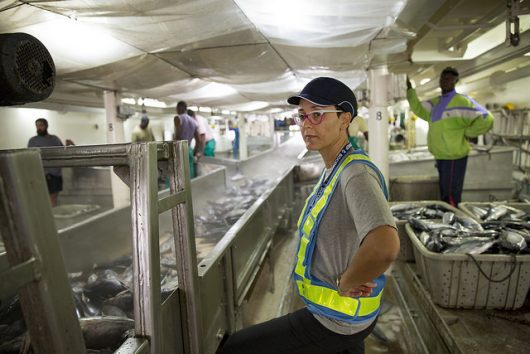
In Uganda, girls have a low track record of completing their education. Studies show that only 22 percent of Ugandan girls are enrolled in secondary school, contrasting the 91 percent enrolled in in primary school.

Analysts have often pointed out that early marriages and social stigmas keep girls from receiving a complete education in Uganda. But there’s a simpler, more intimate reason behind those causes: menstruation.

This topic remains uncomfortable and awkward in developed countries, but Ugandan girls face this problem on an entirely different level. Many developed countries, including Uganda, have myths and stigmas surrounding periods that shame girls when they menstruate. As a result, most girls have no understanding of what is happening to their bodies or how to take care of themselves.

Adding to this difficulty is the lack of availability of feminine hygiene products. Drugstores that carry disposable pads, tampons and other products can be more than 40 minutes away. Even then, these products are usually imported and are too expensive for most Ugandan women to afford.

Desperate to stop the monthly flow, Ugandan women often resort to using pieces of cloth, shreds of foam mattresses, toilet paper, newspapers, banana plant fibers and even leaves. Not only are these options ineffective and uncomfortable, but are also extremely unhygienic, putting girls at risk for diseases.

About half of Ugandan girls skip three days of school every month because they do not have any feminine hygiene products and do not want to stain their clothes. As the absences stack up, many girls find it too hard to continue their education and eventually drop out. Social stigmas also place pressure on girls to marry once they get their periods and not remain in school.

However, despite the struggle, many girls want to stay in school and complete their education in Uganda, and they’re getting help from several international organizations to do so. Wateraid, a nongovernmental organization that seeks to provide clean water and sanitation efforts to developing countries around the world, started hygiene clubs in Ugandan schools. At these clubs, girls learn about menstruation and how to make their own pads and products.

One of these clubs, located at St. Mary’s School in northeastern Uganda, has taken things a step further. This hygiene club travels to other skills singing, dancing, and even rapping about their periods. This group of girls wants to raise awareness about the stigmas surrounding menstruation and promote education in Uganda.

Despite the work of Wateraid and other groups, many girls in Uganda are still skipping school because they don’t have feminine hygiene products. Wateraid ambitiously plans to supply the necessary sanitation products, from tampons to toilets, for every child and every school in every part of the world by 2030.

On an entrepreneurial level, start-up AFRIpads donates reusable pads to women in Uganda and other areas where women do not have easy access to menstrual products. These organizations hope that soon every girl in Uganda will be able to attend school every day of the school year, whether she has her period or not—and no one will shame her if she does.

– Sydney Cooney

Photo: Google

[hr]

Learn about the Protecting Girls Access to Education in Vulnerable Settings Act.

[hr]

September 13, 2017
https://borgenproject.org/wp-content/uploads/borgen-project-logo.svg 0 0 Kim Thelwell https://borgenproject.org/wp-content/uploads/borgen-project-logo.svg Kim Thelwell2017-09-13 07:30:102024-05-24 23:40:59Menstrual Hygiene and Girls’ Education in Uganda
Education, Global Poverty, Women and Female Empowerment

How Women’s Rights Drive Economic Development

Women's Rights Drives Economic DevelopmentWhen it comes to discussions of economic development, women’s rights are often treated as a happy consequence of development: something that should be fostered and encouraged, but not necessary for a country’s success. However, this mindset drastically undervalues how women’s rights drive economic development.

One of the most important economic impacts of women’s rights is increased labor force participation. Women remain a largely underutilized source of talent and labor. Women currently comprise more than 40 percent of the world’s labor force, but are paid less than men and spend more of their time doing housework and caring for children than men do. Within the developing world, women are often relegated to work on small farms and are more likely to be employed in informal and low-paid jobs than men are.

When legal and social restrictions against working women are dismantled and pay is more equally distributed, participation of women in the workforce increases. As more women enter the workforce, they work more productively, since unpaid labor like childcare and housework is split more evenly between sexes. Women’s participation is also an essential part of economic expansion, which leads to greater investment and job creation. Closing the labor force gap between men and women by just 25 percent would result in 100 million new jobs for women by 2025. In some nations, removing legal obstacles for women entering the workforce would raise economic output by 25 percent.

Programs that focus on women’s education also have high returns on development. For starters, closing the gender gap in early childhood has been shown to be an important step toward closing the gender gap later in life. Educated women are more likely to have fewer children, experience a lower rate of child mortality and provide their children with better nutrition and education. Educational reforms for women ensure that it isn’t just women who benefit but their children as well.

Expanding the role of women in societies also expands the diversity of skills and viewpoints in both economic and political sectors. When women enter the workforce and compete on an even plane with men, there is a greater potential to see creativity and innovation from women. Greater gender diversity in workplace leadership has also been shown to increase organizational effectiveness. In the political realm, international trends have shown that female voters and policymakers are more likely to support policies aimed at closing the gender gap. Reforms to give equal voting rights to women in developing countries can help continue economic development spurred by expanding the rights of women.

The more one looks at the data, the more it becomes self evident that women’s rights drive economic development. The McKinsey Global Institute found that if every country advanced towards gender parity at an equal rate as its greatest-improving neighbor, the worldwide GDP would rise by $12 trillion. It’s an extremely ambitious goal but one that demonstrates the untapped potential of women in fighting global poverty. It should be no surprise that Nobel-prize winning economist Amartya Sen believes focusing on women is key to economic development. If the world continues to fight for gender equity in education, the workforce and government, we will not only see one of the world’s greatest injustices finally corrected for but the erosion of global poverty as well.

– Carson Hughes

Photo: Flickr

September 13, 2017
https://borgenproject.org/wp-content/uploads/borgen-project-logo.svg 0 0 Kim Thelwell https://borgenproject.org/wp-content/uploads/borgen-project-logo.svg Kim Thelwell2017-09-13 07:30:092024-12-13 17:51:56How Women’s Rights Drive Economic Development
Children, Education, Global Poverty, Women and Female Empowerment

Providing Bicycles to Families in Africa Improves Education

Providing Bicycles to Families in AfricaFor many children living in rural villages in Africa, the most valuable educational tool is not a pencil or a notebook: it is a bicycle. Several organizations are providing bicycles to families in Africa as a means of bringing education, health services and economic stability to entire communities.

In Zambia, children often have to walk miles to get to school. They might arrive late, miss early classes and face an embarrassing punishment from the teacher. This is a particular problem for girls, who are expected to complete household chores before even starting on their journey.

In 2014, World Bicycle Relief donated 100 bikes to students and faculty at a primary school in Zambia. Now that she rides her bike to school, one girl said she can put all of her energy into concentrating in class, and she has time to study in the evenings.

Providing bicycles to families in Africa also allows them to improve their economic situations. Steel workers and chicken farmers can carry larger and heavier loads to the market. In Zambia, dairy farmers have increased their deliveries by up to 25 percent. Mine workers and door-to-door salesmen use bicycles to shorten their commutes. They save time and energy and are able to afford necessities like food and school supplies.

Women in Sierra Leone and Ghana are responsible for the vast majority of the household chores. As with the men, women use the bicycles to balance heavy materials and travel long distances. For women and girls, however, owning a bike is a form of protection–against sexual assault. Put simply, no man can outrun them anymore.

Despite this, it is far more unlikely for a woman to have access to a bicycle. In places like Sierra Leone, women are discouraged from riding bikes in the belief that it causes them to lose their virginity. Boys and men commandeer the household bicycle, claiming that the women don’t have time to learn how to ride it. However, many organizations are working against this idea: for example, the Village Bicycle Project operates a month-long Learn to Ride program for women and girls in Ghana and Sierra Leone.

Presenting one woman with a bike can improve life for an entire community. In villages in Zambia where HIV is prevalent, taking care of the sick often falls to Community Healthcare Volunteers (CHVs). They care for elderly men and women, orphaned children and those suffering from AIDS. After receiving a bicycle, one female healthcare worker was able to increase the number of patients she visited per day from four to 18.

Providing bicycles to families in Africa not only empowers rural villagers, but it also has positive implications for the environment. The organization Ghana Bamboo Bikes constructs bicycles out of bamboo, an eco-friendly material that, unlike wood, will not result in damage to Ghana’s rainforests.
The bicycles are built to be light, yet stable–good for navigating the roads of rural Ghana. The organization also teaches young men and women with little education how to build the bikes, offering them a job skill that will prove valuable as the demand for bicycles in Africa continues to grow.

– Emilia Otte

September 12, 2017
https://borgenproject.org/wp-content/uploads/borgen-project-logo.svg 0 0 Kim Thelwell https://borgenproject.org/wp-content/uploads/borgen-project-logo.svg Kim Thelwell2017-09-12 07:30:302024-05-28 00:16:13Providing Bicycles to Families in Africa Improves Education
Global Poverty, Women and Female Empowerment

Five Global Feminist Companies to Know About

Global Feminist CompaniesFrom government initiatives to individual campaigns, a wide range of efforts exist to remove obstacles and create opportunities for women and girls in developing countries. Countless global feminist companies have formed in recent decades, offering goods and employment to women and girls in an effort to shift the economic climate in poorer areas of the world.

Below are five global feminist companies helping women and girls in developing countries to pursue education, advance their careers and gain autonomy in their communities.

L.
After working for the Red Cross and the United Nations as a photojournalist and witnessing firsthand the obstacles that plague women’s lives around the world, Talia Frenkel founded L., a one-for-one feminine hygiene company on a mission to provide supplies to women and girls in developing countries. L. distributes donations via female entrepreneurs around the world in order to foster financial independence among women and multiply the company’s global impact. L. employs more than 2,800 women, positioning them to efficiently support their families and achieve agency within their communities.

The majority of donated goods go to girls in countries like Sierra Leone, Nepal and Afghanistan, where many miss school during their periods due to lack of supplies. With an increasing customer following, L. estimates it will donate 50 million products by the end of this year.

Thinx
Thinx, a company specializing in period panties, uses profits to fund the Global Girls Club (GGC). This six-month program hosts girls from ages 12 to 18 to train them on the finer points of human rights, reproductive health and financial independence. Using this multi-pronged educational model, the GGC experience provides young women with practical skills while building self esteem and combating the stigma around menstruation. Attendees also receive donations funded by customers’ purchases, allowing them to stay in school all month long.

The company includes environmentalism as a critical component of its mission, as the reusable nature of the product helps to cut down on waste from disposable goods. In addition, Thinx actively seeks partnerships with health education organizations and plans to continue growing the GGC program with the support of grassroots movements and concerned individuals.

Rallier
Rallier is another company determined to keep girls in school. Every purchase from the New York-based clothing line warrants a donation to Shining Hope for Communities, an organization which uses funds to provide girls in developing countries with locally sourced school uniforms. With this method, humanitarians all around the world can contribute to girls’ successes and simultaneously stimulate developing economies.

Access to uniforms is a major stumbling block when it comes to girls’ education in developing countries. Studies show that providing uniforms to needy students has increased enrollment by 64 percent—and with efforts like Rallier’s, numbers could shift even more dramatically.

Sseko
Uganda-based fashion brand Sseko bolsters women’s higher education by selling sandals, handbags and other accessories crafted by East African artisans. The company has used profits to send 87 promising Ugandan women to university and will send 15 this year alone. Participating scholars spend nine months working for the company to save money before attending school, and Sseko matches each woman’s savings with a scholarship.

Dedicated to breaking the cycle of poverty altogether, Sseko’s business model is designed to bolster rather than undermine economies in developing countries. With a keen eye on the future, the company aims to prepare women for leadership roles in order to create widespread gender equality.

Same Sky
Same Sky, a jewelry trade initiative working between Rwanda and the United States, focuses on awarding ethical employment to women in developing countries. In the aftermath of the Rwandan genocide of 1994, where nearly one million people were murdered, systematic sexual violence against women triggered an epidemic of HIV/AIDS while society crumbled. Same Sky set out to repair the landscape of women’s lives in Rwanda by creating opportunities for them to learn a trade in order to support themselves and their families.

Women who work for Same Sky make 15 to 20 times the average wage in sub-Saharan Africa—and they get the opportunity to express themselves while they do it, as attention to “the talents and the passions of the artisans” is a central tenet of the company’s mission. These women do not just benefit from working for Same Sky; they actively contribute to the global growth and creative evolution of the company.

Poverty creates complex obstacles in the lives of women, but global feminist companies like these fight to open doors. With the continued worldwide support of women and girls in need, developing countries are sure to see progress.

– Madeline Forwerck

Photo: Google

September 7, 2017
https://borgenproject.org/wp-content/uploads/borgen-project-logo.svg 0 0 Borgen Project https://borgenproject.org/wp-content/uploads/borgen-project-logo.svg Borgen Project2017-09-07 01:30:222024-05-28 00:15:59Five Global Feminist Companies to Know About
Global Poverty, Violence Against Women, Women and Female Empowerment

A Sensor to Detect and Prevent Rape

Manisha Mohan, a research scientist at MIT Lab, has developed a sticker-like wearable sensor that can detect sexual assault in real time and quickly alert nearby people, as well as send distress signals to the victim’s family and friends. This sensor to detect and prevent rape sticks to clothing just like a sticker would, and can be trained to learn the difference between when a person is undressing themselves and when they are being forcefully disrobed.

If the device detects forceful disrobing, it sends a message to the wearer’s smartphone to confirm if the act was consensual. If the wearer does not respond in 30 seconds, the phone emits a loud noise to alert nearby people. This alarm can only be stopped by the user with a predefined password used within 20 seconds. If the alarm is not stopped, the app automatically sends distress signals to family and friends, along with the victim’s location.

The sensor learns from the environment and is trained to differentiate between normal undressing and forceful disrobing, which allows it to detect signs of an assault even when the victim is unconscious or not in a position to fight against the attacker. This can act as a life-saver, particularly for victims that are minors, bed-ridden patients or intoxicated people. This sensor to detect and prevent rape works in two modes. In passive mode, the wearer is assumed to be conscious and can set off distress calls on their own by touching a button in case of an impending danger or threat. In active mode, the sensor tries to detect signals from the external environment.

From heart rate monitors to fitness watches, wearable technology is becoming a norm in today’s society. In a world where an estimated 35 percent of women worldwide have experienced some kind of physical or sexual violence, Mohan’s sensor to detect and prevent rape comes as an immediate and effective solution. In Mohan’s own words, “We don’t need bodyguards, I think we should have the ability to protect ourselves.”

In 1993, the United Nations General Assembly signed a Declaration on the Elimination of Violence against Women. More than 20 years later, one in three women still suffer from physical or sexual violence. It is estimated that 35 percent of women worldwide have experienced either physical or sexual violence some point in their lives. However, some national studies show this number to be as high as 70 percent. In 2012, a study conducted in New Delhi, India found that 92 percent of women reported having experienced some form of sexual violence in public spaces. Adult women account for almost half of all human trafficking victims detected globally and women and girls together account for about 70 percent, with girls representing two out of three child trafficking victims.

– Jagriti Misra

Photo: Flickr

September 7, 2017
https://borgenproject.org/wp-content/uploads/borgen-project-logo.svg 0 0 Kim Thelwell https://borgenproject.org/wp-content/uploads/borgen-project-logo.svg Kim Thelwell2017-09-07 01:30:192020-07-07 08:46:58A Sensor to Detect and Prevent Rape
Aid, Global Poverty, Women

SafePad: Revolutionizing Menstruation and Hygiene

SafePad
When thinking of the extremely poor, one’s mind may not immediately go to the inherent struggles that come with menstruation. This is not just cramping, bloating and irritability, but the associated sanitation issues that may arise without access to proper hygiene, not to mention the stigmatic buzz around womanhood and her period.

Real Relief, a small organization committed to supplying common life sustaining supplies, is devoted to making a difference and has developed a tool for menstruation hygiene for the extremely poor: SafePad, a period game changer in the sanitation industry. While sanitary napkins are nothing new to the women’s hygiene repertoire, SafePad exemplifies what certain basic life necessities encompass and how something so simple can impact the lives of millions of women and their younger counterparts.

The extremely poor cross many cultures as well as economic strains over a variety of different ages, races and religions. There are several different ways in which women have traditionally dealt with their menses. In some cases, these methods may be simply impractical. Rags may be used to deal with menses, but they often take time and privacy to wash and dry. Where menstruation cups may be available, some cultures may not accept this means or view it as reasonable.

Inadequate access to proper sanitation such as soap and clean water can also cause yeast infections, other serious illness or in extreme cases, infertility. When all else fails, women may choose to “free bleed,” which may not seem particularly harmful unless in the context of young girls attending schools in which they may take five or more days of leave, eventually leading to a poorer performance in their classes or even drop out.

Real Relief’s mission led to the production and distribution of SafePad through NGOs, religious communities and relief aid organizations of SafePad. SafePad has been specifically designed to combat bacteria by utilizing silica, nitrogen and carbon treatment agents, provide comfort, discretion and practical solutions to women where access to hygienic means of caring for the menses is difficult or impossible.

SafePad is also reusable and recyclable for women that do not experience reliable waste management in their communities and can withstand up to 100 washes, which translates to four years of use.

Menstruation is a part of most every woman’s life but if not taken care of properly, has the potential to have serious, life-long side effects. Menstrual health, education and supplies, however, can lead to so much more relief. Period.

– Casey Hess

Photo: Flickr

September 2, 2017
https://borgenproject.org/wp-content/uploads/borgen-project-logo.svg 0 0 Borgen Project https://borgenproject.org/wp-content/uploads/borgen-project-logo.svg Borgen Project2017-09-02 01:30:452024-05-28 00:16:11SafePad: Revolutionizing Menstruation and Hygiene
Page 50 of 82«‹4849505152›»

Get Smarter

  • Global Poverty 101
  • Global Poverty… The Good News
  • Global Poverty & U.S. Jobs
  • Global Poverty and National Security
  • Innovative Solutions to Poverty
  • Global Poverty & Aid FAQ’s
Search Search

Take Action

  • Call Congress
  • Email Congress
  • Donate
  • 30 Ways to Help
  • Volunteer Ops
  • Internships
  • Courses & Certificates
  • The Podcast
Borgen Project

“The Borgen Project is an incredible nonprofit organization that is addressing poverty and hunger and working towards ending them.”

-The Huffington Post

Inside The Borgen Project

  • Contact
  • About
  • Financials
  • President
  • Board of Directors
  • Board of Advisors

International Links

  • UK Email Parliament
  • UK Donate
  • Canada Email Parliament

Get Smarter

  • Global Poverty 101
  • Global Poverty… The Good News
  • Global Poverty & U.S. Jobs
  • Global Poverty and National Security
  • Innovative Solutions to Poverty
  • Global Poverty & Aid FAQ’s

Ways to Help

  • Call Congress
  • Email Congress
  • Donate
  • 30 Ways to Help
  • Volunteer Ops
  • Internships
  • Courses & Certificates
  • The Podcast
Scroll to top Scroll to top Scroll to top