• Link to X
  • Link to Facebook
  • Link to Instagram
  • Link to TikTok
  • Link to Youtube
  • About
    • About Us
      • President
      • Board of Directors
      • Board of Advisors
      • Financials
      • Our Methodology
      • Success Tracker
      • Contact
  • Act Now
    • 30 Ways to Help
      • Email Congress
      • Call Congress
      • Volunteer
      • Courses & Certificates
      • Be a Donor
    • Internships
      • In-Office Internships
      • Remote Internships
    • Legislation
      • Politics 101
  • The Blog
  • The Podcast
  • Magazine
  • Donate
  • Click to open the search input field Click to open the search input field Search
  • Menu Menu

Archive for category: Women and Female Empowerment

information and Stories about woman and female empowerment.

Global Poverty, Human Rights, Women

US Support for Las Damas de Blanco in Cuba

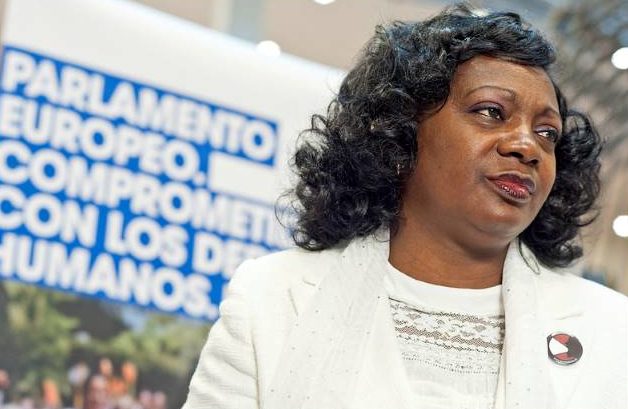
Las Damas de BlancoLas Damas de Blanco (The Ladies in White) is a peaceful civic movement of wives and female relatives advocating for the release of jailed political protestors in Cuba. The group has been active since 2003 and is internationally acclaimed for its dedication to human rights advocacy, having won the Sakharov Prize for Freedom of Thought in 2005. Currently, the movement is the subject of a resolution on the Senate calendar.

History of Las Damas de Blanco

Las Damas de Blanco formed in 2003 following an event known as the Black Spring. The Black Spring was a mass arrest of 75 journalists and political protestors in Cuba. Each of the arrested had either spoken out against the Castro regime or advocated for democracy in some way. The people arrested ranged from librarians to human rights activists who were all peaceful in the dissent and yet were arrested for threatening Cuban national security. In response to the arrests, the wives and sisters of the protestors decided to band together and form a countermovement. Every Sunday, the women gather and attend mass wearing white, and then, march silently through the streets. The white clothing symbolizes peace and the message is centered on family and freedom.

Overcoming Barriers

As a women-led movement, Las Damas de Blanco faces many challenges in its advocacy efforts. The movement is agitated by other citizens and particularly by Cuban authorities. The Cato Institute reports that the women “are routinely harassed, threatened, beaten and arrested” for the peaceful protest. Despite this, the movement has never weakened. The Ladies in White continue to march every Sunday and the members have brought global awareness to the issue. All 75 of the protestors arrested in the Black Spring were freed by 2011, in large part due to the efforts of the Ladies in White. The women-led movement still protests consistently and will not cease until all Cuban political prisoners are freed.

US Recognition

In March 2021, Sen. Mark Rubio introduced a resolution honoring Las Damas de Blanco and adding the Senate’s voice to the call for the release of all political prisoners in Cuba. The resolution acknowledges the efforts of the women-led movement and the Cuban regime’s consistent attacks on the movement. It particularly honors the legacy of the movement’s founder, Laura Ines Pollán Toledo, on human rights advocacy.

A more recent event highlighted in the resolution is the second arrest of Las Damas de Blanco member, Xiomara de las Mercedes Cruz Miranda, which took place in 2018 and resulted in Miranda developing a rare skin disease in prison. Miranda’s health deteriorated and she was hospitalized in Cuba for more than six months. In 2020, the U.S. government granted Miranda a humanitarian visa and transferred her to a hospital in Miami.

The resolution’s direct calls for the Cuban government to release all political prisoners and allow Las Damas de Blanco to attend mass in peace are vital actions of solidarity. If it is agreed to in the Senate, the resolution will further amplify the voices of Las Damas de Blanco and all peaceful Cuban dissidents hoping for liberty.

– Samantha Silveira
Photo: Flickr

May 13, 2021
https://borgenproject.org/wp-content/uploads/borgen-project-logo.svg 0 0 Kim Thelwell https://borgenproject.org/wp-content/uploads/borgen-project-logo.svg Kim Thelwell2021-05-13 05:44:052021-05-13 05:44:05US Support for Las Damas de Blanco in Cuba
Global Poverty, Poverty Reduction, Women

A Craft Association Alleviates Poverty in Nepal

Craft AssociationThe incidence of poverty in Nepal had been dropping before the COVID-19 pandemic. However, the pandemic could increase Nepal’s poverty rate to the levels of more than a decade ago due to a loss of jobs and income. A UNICEF-sponsored survey indicates that, in October 2020, a shocking 42% of families in Nepal had no income at all. Furthermore, in the same month, 45% of people reported job losses. In addition, one in five households surveyed reported being unable to secure adequate food to feed their families. Even people who still have jobs are earning less than before the pandemic. The tourism sector has also been severely hurt by the pandemic and more than half of all households are at risk of returning to poverty. The Association for Craft Producers (ACP) is helping combat poverty in Nepal.

The Association for Craft Producers

Helping to counter the effects of poverty in Nepal is the Association for Craft Producers. The organization founded in 1984 is a not-for-profit, fair trade organization that helps low-income Nepalese craft producers with design, marketing and management services for their craft products. Due to its success, it has grown to roughly 1,000 artisans, 90% of whom are women. The artisans produce beautiful crafts such as ceramic teapots, woven rugs and wooden tables. Nepali Craft Trading Ltd. exports the artisans’ products to 18 different countries. Since 2003, ACP has been certified as a Fair Trade organization. The group abides by the principles of fair trade as outlined by the World Fair Trade Organization to ensure artisans are provided with adequate compensation and benefits for their work.

Benefits for Nepali Artisans

The ACP artisans have access to a number of benefits to help lift them out of poverty and progress. For instance, artisans are provided a clothing stipend, 90 days of paid maternity leave and an allowance for emergencies. The ACP also provides information to the artisans on matters such as health, education and other important development topics. Since many of the women have never earned enough to be able to save money for the future, producers are encouraged to deposit 10% of their pay into an interest-producing account.

To encourage the education and empowerment of girls, ACP provides a monthly allowance for up to three years to producers who ensure their daughters are enrolled and participating in school for a minimum of four consecutive years. Furthermore, the ACP rewards the three best students with support for an additional year. In addition, the ACP provides the producers with funds for retirement. In these ways, ACP encourages financial security while providing outlets for the artisans to sell products.

Environmental Awareness

The ACP also takes specific actions to preserve its local environment at the foot of the Himalayan mountains. The practices include using recycled paper, installing a rainwater treatment plant and a wastewater treatment plant and discouraging the use of plastic bags. The artisans use an environmentally friendly acid for dyeing and water-based pigments for printing instead of oil-based paints. Finally, the artisans have switched to electric firing methods for ceramic products rather than kerosene-based firing. The women artisans remain environmentally conscious while helping to support families and reduce the devastating effects of poverty in Nepal.

Overall, the ACP craft association is supporting artisans in Nepal in several ways in order to ensure that they are able to rise out of poverty and secure better futures.

– Sarah Betuel
Photo: Flickr

April 30, 2021
https://borgenproject.org/wp-content/uploads/borgen-project-logo.svg 0 0 Kim Thelwell https://borgenproject.org/wp-content/uploads/borgen-project-logo.svg Kim Thelwell2021-04-30 06:09:512024-05-30 22:23:35A Craft Association Alleviates Poverty in Nepal
Food Security, Global Poverty, Women and Female Empowerment, Women's Empowerment

The Aisyiyah Women’s Movement in Indonesia

Women’s Movement in Indonesia In Central Java province, Indonesia, a group of Aisyiyah volunteers planted mahogany, sengon and teak trees. Aisyiyah is the oldest Islamic women’s movement in Indonesia, founded in 1917. Aisyiyah has four million members dispersed throughout the country. In March 2021, Aisyiyah pledged to plant five million fruit trees in Indonesian homes and gardens, which will contribute to fighting food insecurity during COVID-19.

The Impact of COVID-19

In the last few decades, Indonesia has reduced poverty significantly. The poverty rate has been reduced by more than 50% since 1999, with a poverty rate of 9.78% in 2020. Unfortunately, the pandemic has disrupted the country’s poverty progress. Between March and September 2020, the national poverty rate increased from 9.78% to 10.19%. Approximately one million more people fell below the poverty line due to the pandemic, reversing three years of progress. The Indonesian Government has taken swift action by implementing emergency monetary aid to support households and companies, ensuring a sufficient vaccine supply and improving social benefits and healthcare systems. In addition, the government promised to reduce emissions by 29% in nine years. Most of Indonesia’s emissions come from land conversion so the government intends on implementing reform to protect land and forests.

Aisyiyah has a quest to plant millions of fruit trees, which will help reduce the pressure on forests and feed families. The group cooperates with the national government and other organizations, enabling Aisyiyah to extend its outreach. The women’s movement in Indonesia has strategically multiplied its impact, becoming a powerful force for change.

Aisyiyah’s Environmental Wing

In 2015, the organization created its environmental wing known as the LLHPB to help women respond to natural disasters and climate-related issues. The sector has since expanded its horizons, helping the country reach its emission goals and fight against natural disasters. In the Kalimantan area of Indonesia, volunteers help prevent wildfires. In rural areas of Indonesia, reforestation efforts have faced numerous roadblocks, including weak seedlings and failure to maintain trees after the seeds were planted. Since the close of 2020, Aisyiyah volunteers have planted 4,700 tree seedlings.

Addressing the drought in the Sukoharjo area of Indonesia, members of Aisyiyah purchased gallons of water for affected families. The LLHPB plans to collaborate with the Peatland and Mangrove Restoration Agency to rehabilitate destroyed forests and land in the province of Riau. Together, the organizations and others will replant 600,000 hectares of mangrove forests by 2024.

Aisyiyah’s Connection to the Muslim Faith

Indonesia’s population is predominantly Muslim so Aisyiyah caters its environmental activism to the Muslim audience. The organization uses teachings of the Muslim faith to explain to people why environmentalism is important. According to the Muslim faith, humans are guardians of nature. Aisyiyah promotes this teaching through “Green Ramadan,” a nightly informational session about plastic waste reduction that lasts through the month of Ramadan. Muslims do good deeds during this month so Aisyiyah promotes environmental consciousness as an easy good deed. LLHPB members consider environmental work as elemental to their faith, which corresponds to a message that spreads to the “Green Ramadan” audience.

History of Aisyiyah

Aisyiyah was founded in 1917 as a female education movement in response to the lack of formal schooling for girls. Today, it operates thousands of schools, supports healthcare centers and runs social programs to promote breastfeeding and improve child and maternal health. The organization encourages its international members to advocate for reproductive rights and discourage child marriage. As a non-governmental organization, donations and fundraising activities fund Aisyiyah’s work.

The Aisyiyah women’s movement in Indonesia now works in 33 provinces and more than 7,500 rural Indonesian villages. As of 2016, it has supported more than 1,000 family business ventures to improve household poverty. Through its Empowering Indonesian Women for Poverty Reduction Program (MAMPU), Aisyiyah reached almost 9,000 women and provided training to more than 1,000 local leaders.

Aisyiyah is addressing issues of poverty and the environment in Indonesia by planting trees and dedicating efforts to education, women’s empowerment and child and maternal health, among other issues. Aisyiyah is an inspiring example of a local organization making a significant impact.

– Rebecca Pomerantz
Photo: Flickr

April 30, 2021
https://borgenproject.org/wp-content/uploads/borgen-project-logo.svg 0 0 Kim Thelwell https://borgenproject.org/wp-content/uploads/borgen-project-logo.svg Kim Thelwell2021-04-30 04:15:502021-06-09 04:16:08The Aisyiyah Women’s Movement in Indonesia
Gender Equality, Global Poverty, Women, Women and Female Empowerment, Women's Empowerment, Women's Rights

The Benefits of Investing in Women

The Benefits of Investing in Women
Gender equality, or rather a lack of gender equality, is not simply a historical problem. To this day, women all around the world face inequality. One of the most notable issues pertaining to gender inequality is the gender wage gap. Its impacts affect not only women but society as a whole. To end the gender wage gap and other inequalities, society must start to recognize the benefits of investing in women.

The Gender Wage Gap Explained

There are two types of gender wage gaps. The controlled wage gap refers to when a man and a woman have the same exact job in the same exact industry with the same exact qualifications. In this situation, as of 2021, women earn 98 cents per $1 that men earn. This seemingly small upfront difference builds up over time, and the pay discrepancy leads to very dissimilar outcomes for these two genders.

An uncontrolled wage gap is the second type. The uncontrolled wage gap refers to the overall difference between men’s and women’s wages. It does not matter what job it is, what industry one works in or if one works full- or part-time. The measurement takes into account how much each worker makes on average per hour each year. This gap is much more prominent—a woman makes 82 cents to a man’s $1 as of 2021.

Companies provide several “justifications” for why women receive less pay than men within the organizations, but actual reasons include employers’ implicit biases, a wage penalty that accompanies motherhood and a higher likelihood of women working part-time. This is based on if women have the opportunity to obtain higher-wage jobs within such companies. Often, women are unable to attend school to receive the qualifications necessary for high-skilled work.

These inequalities in labor compensation become more glaringly obvious when it comes to unpaid labor. Women are more than twice as likely as men to participate in unpaid work. Notably, the most frequent unpaid jobs women take on are domestic work and child care. In impoverished communities, women must sacrifice their education to fulfill the expectation to manage the household and raise children.

The Importance of Investing in Women

Beyond equality, investing in women provides a multitude of economic benefits. The unpaid labor women often take on can actually hinder the economy. Economists estimate that unpaid domestic workers—if paid—could constitute approximately 40% of a nation’s GDP. A lack of education for women also plays a role in stunting economies. When women receive education, economies tap into a whole new sector of individuals that bring new, innovative ideas to the table, which help economies grow. Further, studies show that for every 10% of girls enrolled in school in a developing country, the GDP increases long-term by 3%.

In addition to paying women for labor and educating women, it is imperative to give women advancement opportunities. Women make up approximately half of the agricultural labor force but less than 13% of landholders globally. If women obtain the same amount of land, technology and capital as men, there could be an estimated 30% increase in food production. In this way, empowering women could help to substantially reduce world hunger. On the more industrial side, studies show that both efficiency and organization significantly increase when three or more women enter senior positions at companies.

A Better Society For All

Decreasing the wage gap begins in three main areas: women’s unpaid work, education and health. When women in developing countries receive aid and money, the aid does not stop at just the direct beneficiary. Women are likely to extend the benefits to those around them; women tend to invest their earned money into their children’s education and health as well as their own. Giving women financial tools has economic gain for all and promotes economic justice.

The best way to ensure a fair economy is to invest in women, particularly in developing countries. Women should have the opportunity to work the same jobs, receive the same qualifications and have the same economic opportunities as men. Society’s way forward is through taking advantage of the benefits of investing in women.

– Becca Blanke
Photo: Flickr

April 29, 2021
https://borgenproject.org/wp-content/uploads/borgen-project-logo.svg 0 0 Kim Thelwell https://borgenproject.org/wp-content/uploads/borgen-project-logo.svg Kim Thelwell2021-04-29 07:30:252024-05-30 22:23:26The Benefits of Investing in Women
Foreign Aid, Foreign Policy, Global Poverty, Women and Female Empowerment

How Global Affairs Will Be Impacted by Biden’s “Feminist Foreign Policy”

Biden’s “Feminist Foreign Policy”The Biden administration has made gender equity a cornerstone of its domestic and foreign policy. About 61% of White House employees are women. Furthermore, the administration’s intention is to “protect and empower women around the world.” The government aims to do this by making women’s rights a key component of foreign policy. Biden’s “feminist foreign policy” would redirect national attention from military dominance to global equality by instituting new changes to systems of defense, foreign aid, immigration, trade and diplomacy.

Studies on global gender and security suggest that if the United States increases its effort to improve women’s rights abroad, countries with a greater emphasis on gender equity will be less likely to experience instability and civil war. As such, the Biden administration has the power to advocate for a more just, inclusive and peaceful world.

Feminist Foreign Policy in Other Countries

Canada and Mexico have adopted a women-friendly stance on foreign policy. Thus, Canada began a “feminist international assistance policy” that focuses on supporting the global health of women, children and adolescents in 2017. The Canadian government pledged an annual $1.4 billion to foreign governments and international organizations. This money will be used to increase access to education, healthcare and nutrition in developing countries. Approximately $700 million will go to ending gender-based violence and promoting sexual health. Furthermore, $10 million will be allocated for UNICEF to reduce female genital mutilation.

In January 2020, Mexico became the first Latin American country to adopt a feminist foreign policy. The government aims to increase global gender equity, combat gender-based violence and end inequality in social and environmental justice. In addition, Mexico plans to increase the foreign ministry staff to have at least 50% women by 2024. Moreover, the nation wants to ensure equal workplace conditions.

Additionally, France, Norway and Sweden have adopted an official feminist foreign policy overseas. Now, the U.S. will join a growing list of nations committed to promoting gender equality.

Feminist Foreign Policy in the United States

The departments of Defense, State, Homeland Security and the U.S. Agency for International Development have each announced a plan to advance women empowerment in 2020. This plan promotes women’s participation in foreign diplomacy, advocates for women’s rights and ensures access to humanitarian assistance. Furthermore, Biden’s feminist foreign policy aims to establish a cohesive foundation across trade, aid, defense, diplomacy and immigration that prioritizes equality for women. The strategy would emphasize peace and security as methods of conflict resolution. It will also increase the representation of women across all branches of government.

One of President Biden’s first actions in office was to eliminate the “global gag rule.” This global gag rule limits the type of healthcare services organizations receiving U.S. foreign aid are allowed to perform. The funding restrictions limited access to all types of healthcare in low-to-middle-income countries. Moreover, this restriction exposed women to a greater risk of disease and forced them to seek unsafe health services. A major goal of the Biden administration is to reallocate financial resources in a way that levels the playing field for women. Furthermore, the administration aims to provide greater support and opportunities for women. Additionally, the U.S. government plans to use foreign aid to increase support for women in the areas of healthcare, education, workplace protections and conflict zones.

The United States is unlikely to replace a focus on military strategy with a strictly feminist foreign policy. However, promoting gender equity at home and abroad can set the stage for an increased global emphasis on women’s rights. The U.S. can reallocate more financial resources to women’s access to education, healthcare and human rights and increase women’s participation in government and diplomacy. This dual strategy aims to combat existing inequality and create a more peaceful and equitable global future.

– Eliza Browning
Photo: Flickr

April 28, 2021
https://borgenproject.org/wp-content/uploads/borgen-project-logo.svg 0 0 Kim Thelwell https://borgenproject.org/wp-content/uploads/borgen-project-logo.svg Kim Thelwell2021-04-28 07:30:012021-04-27 17:50:45How Global Affairs Will Be Impacted by Biden’s “Feminist Foreign Policy”
Global Poverty, Women

Bolt Launches Women-Only Ride Service

Women-Only Ride Service
In South Africa, many stories have emerged from women experiencing sexual assault while being in a taxi. Reports determined that there were more than 53,000 sexual assaults in March 2020, though the number might be far higher according to women’s rights groups. Luckily, Bolt has launched a women-only ride service to provide women safe transit in South Africa.

Women-Only Ride Service

With technology constantly progressing, safer transportation for women has become very vital. As recently as January 2021, Bolt has launched a women-only ride service. This service allows women passengers to request female drivers only; this also prohibits male drivers from viewing this request. This is possible through the registration process for drivers with Bolt; verifying if they are female or male, and their identity, makes it possible that only female drivers can access the Bolt Women Only category.

In November 2020, Bolt’s women-only ride service entered a pilot phase in East London and Rustenburg. Made possible through Bolt’s partnership with national safety platform Namola, an app-integrated SOS emergency button protects drivers and passengers. The functions this button offers enables the passengers and drivers to private armed response teams, private emergency medical services and roadside assistance if they are involved in any medical or security emergency while on a Bolt ride.

Bolt App

Bolt is a transportation app that women can use to request affordable and fast conveyance. Reviews for the app are mostly positive, and the new service is now available in various locations, such as Johannesburg, Cape Town, Durban, Pietermaritzburg, Port Elizabeth, Mthatha, Polokwane, Thohoyandou, Mbombela and Emalahleni.

Throughout the COVID-19 pandemic, Bolt had taken into consideration the dwindling economic activity and rising poverty. To benefit those with low income, bolt introduced a new low-cost category called “Bolt Go” for its South African customers. The new affordable service trialed successfully in the Eastern Cape cities of East London and Port Elizabeth. In South Africa, the 35 cities and towns where Bolt is active started utilizing the service.

Increased Safety for Women

The woman-only ride service was a long time coming, but highly necessary. Just like anywhere else, women are in danger of being targets for assault or harassment, including in transit environments. This new service emerged out of a series of complaints and petitions from users who have experienced sexual harassment from male drivers. Both women and e-hailing drivers have the right to feel safe and protected while driving around and working. In sub-Saharan Africa, unsuitable transportation—”transport poverty”—inordinately impacts women and young girls due to abuse and sexual assault.

Less than 5% of female drivers using Bolt are women. In fact, around 64% of women have mentioned “security” as the reason that they are not lining up to be e-hailing drivers. The woman-only ride service will exclusively be available during 6 a.m. and 7 p.m., though the small number of female drivers might impact the waiting time for potential passengers. Even though the lack of female drivers might bring a setback, the woman-only ride service is much more beneficial if it comes out sooner rather than later.

– Thomas Williams
Photo: Wikimedia Commons

April 28, 2021
https://borgenproject.org/wp-content/uploads/borgen-project-logo.svg 0 0 Kim Thelwell https://borgenproject.org/wp-content/uploads/borgen-project-logo.svg Kim Thelwell2021-04-28 01:30:082021-04-26 09:10:53Bolt Launches Women-Only Ride Service
Developing Countries, Global Poverty, Women and Female Empowerment, Women's Rights

4 Books Bringing Awareness About Honor Killings

Awareness About Honor KillingsHonor killings and honor violence are still common practices in patriarchal societies. The practice involves an act of violence, usually murder, perpetrated against a woman by a male family member as punishment for bringing “dishonor” to the family. Behaviors that bring dishonor almost always relate to the woman’s sexual activity or relationship: sex outside of marriage, seeking a divorce, refusing an arranged marriage and being a victim of rape. These are all actions that supposedly justify honor killings because of the shame they bring to the family. Though archaic and cruel, honor killings happen all the time. The United Nations Office on Drugs and Crime (UNODC) estimates that, in 2017, intimate partners or family members killed roughly 50,000 women, many of them victims of honor killings. Several books hope to raise awareness about honor killings in order to reduce the occurrence and bring about change.

“I Should Have Honor: A Memoir of Hope and Pride in Pakistan”

This memoir by Khalida Brohi reflects on honor violence and related systems Brohi witnessed growing up in Pakistan. Her mother was an arranged marriage child bride. Brohi was nearly subject to a similar fate. Brohi was part of an arranged marriage before she was even born. Her father refused to let her become a child bride because he believed in education. The honor killing of her cousin by her uncle prompted her journey to helping women become empowered. Brohi’s uncle murdered her cousin for being in love with a man she was not married to. Brohi tells this story in her memoir and the story of her subsequent activism: empowering women and educating men on how and why these systems must undergo dismantling.

“Honor and Violence against Women in Iraqi Kurdistan”

Unlike Brohi’s deeply personal memoir, this book by Minoo Alinia focuses on applying an intersectional perspective to research concerning honor violence in Kurdistan. Alinia analyzes cultural notions of masculinity and the individual actions that stem from it. This text offers a socio-political perspective and participates in a larger conversation about global gender studies and how colonial history, religion and poverty have an influence. Though less personal, the researched approach to a subject as urgent as honor violence is vital to change advocacy. Alinia attempts to understand the origin of the practice in this region in order to create a cultural conversation about eliminating the practice.

“Inside an Honor Killing: A Father and a Daughter Tell Their Story”

In this book, Lene Wold brings a journalist’s perspective to the subject of honor killings, particularly in Jordan. Wold chose to immerse herself: she spent years in Jordan documenting as many stories as she could. While she witnessed the gender and socioeconomic dynamics of daily life firsthand, she interviewed young women, village elders and men who had murdered a female family member in the name of honor. This book uniquely presents not only the victim’s perspective but the perpetrator’s. It is central to the advocacy surrounding honor violence because it tries to share every side of the story, allowing for the most holistic education and understanding.

“Bliss”

This novel by O.Z. Livaneli is unique because, unlike the others, it is fictional. Livaneli tells the story of a character who experiences rape by her uncle before his son arranges for her death as her rape has dishonored the family. The fictional story set in Turkey hopes to reflect the experiences of Turkish women and families. The most important aspect of this story is the overwhelming hopefulness it conveys. Education and understanding are essential to advocacy but so is hope. Livaneli’s novel brings hope as well as awareness to the issue of honor killings.

By bringing awareness to the issue of honor killings, these writers hope to reduce its occurrence and inspire advocacy and change.

– Samantha Silveira
Photo: Flickr

April 24, 2021
https://borgenproject.org/wp-content/uploads/borgen-project-logo.svg 0 0 Kim Thelwell https://borgenproject.org/wp-content/uploads/borgen-project-logo.svg Kim Thelwell2021-04-24 07:31:132021-04-22 19:46:544 Books Bringing Awareness About Honor Killings
Global Poverty, Women and Female Empowerment, Women's Empowerment, Women's Rights

The Sophia Society Empowers Women in Kurdistan

The Sophia SocietyIn an area of the world fraught with conflict and tension, Kurdish women continue to fight for equality and rights. Achieving this requires a united commitment to changing the perspective and understanding of culture and the role women hold in society. As a historically conservative society, change sometimes poses a challenge for Kurdistan. The Sophia Society fights for the protection and empowerment of women in Kurdistan.
Women in Kurdistan

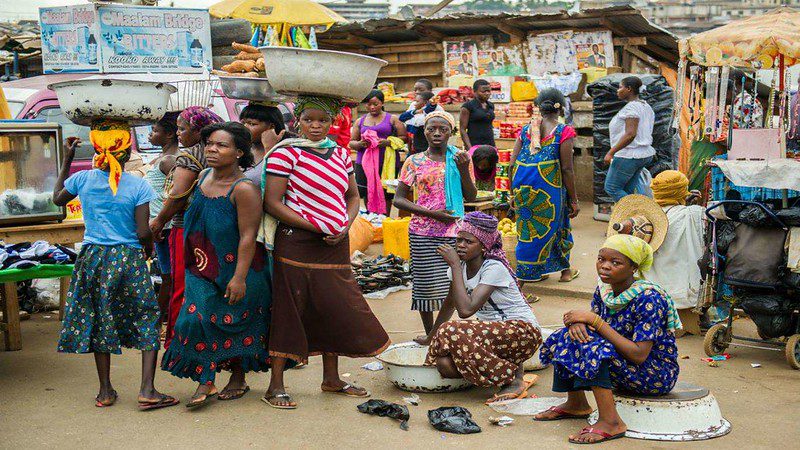
Incidents of violence against women are rampant in Kurdistan. Many advocates and women’s rights activists continue to speak out against gender-based violence to lobby for change. Many of the protests and advocation for expanding women’s rights stem from a series of honor killings, domestic violence and human trafficking. Much of the violence thus begins at the family level and the law shrouds it. In a nation where forced marriage is a common practice, a woman’s refusal can thus lead to her death.

Honor killings are justified as a way to quiet a rebellious woman who refuses the will of the man who controls her life. Additionally, these women end up in unmarked graves as a symbol of shame. The Sophia Society aims to put an end to honor killings and other injustices experienced by women, including sexual violence.

Women in Government

The Kurdish government continues to work toward the expansion of rights and the integration of women into leading roles. With a 30% quota of women in parliament and a complete High Council of Women’s Affairs, it appears that the Kurdish government is well advanced on integration. However, critics argue that many of these women serve only as a token and their roles hold no substantial political power.

Political inclusion is a great success for Kurdish women, yet there continue to be cultural aspects that need improvement. From an outsider’s perspective, the number of women in political positions tells a tale of growth and modernization but the lack of domestic safety also makes this questionable.

The Sophia Society

Lanje Khawe established the Sophia Society in 2016, primarily to increase the literacy of Kurdish girls. Since then, the scope of this organization has expanded because it looks to address the multidimensional struggles of women. The members of this Society travel to remote villages via bicycle to deliver books to young girls and women so that they can become literate, educated and empowered in a country that oppresses them. Furthermore, the Society aims to raise awareness about sexual violence against women.

In a patriarchal society, others often deny girls access to books and education because of the misguided fear that they might rebel against patriarchal expectations. However, in many cases, it is this patriarchal society that threatens the security and safety of these girls, as one can see through honor killings.

Impact of the Sophia Society

The Sophia Society continues to use its voice to highlight the horror of honor killings and challenge the status quo within the Kurdish region. The Society, therefore, pushes for acknowledging women’s voices both politically and socially.

The challenge these women face in organizing this group is that if they do anything to bring shame to their families, death becomes a potential outcome.

What Needs to Change?

The most challenging aspect of change in these Kurdish regions is the transformation of societal normalities and cultural expectations. This will therefore require progressive laws and policies as well as public gender equality campaigns. Women learn to be passive and submissive. Because of this, the Sophia Society, therefore, wants to uplift and educate women as the feminine voices of the nation.

The national growth is slow-moving yet hope exists for the future of women’s rights as the Sophia Society commits to change. This group creates an organization of role models for other women who no longer want gender norms to define them. The Sophia Society stands alongside Kurdish women to prepare for a changed future.

– Kate Lucht
Photo: Flickr

April 24, 2021
https://borgenproject.org/wp-content/uploads/borgen-project-logo.svg 0 0 Kim Thelwell https://borgenproject.org/wp-content/uploads/borgen-project-logo.svg Kim Thelwell2021-04-24 07:30:112021-04-22 19:19:39The Sophia Society Empowers Women in Kurdistan
Global Poverty, Women

Income Alternatives For Female Farmers In Ghana

Female Farmers In Ghana
Ghana has endured volatile floods and droughts over the last decade. Detrimental weather is especially harmful to countries like Ghana as many of its citizens depend on farming to make a living. Only 10% of the northern half of the country is able to sustain itself without agriculture. Estimates have determined that up to $200 million has disappeared annually from the country’s earning potential. This is due to frequent floods and droughts in the last few years. These unstable swings in weather greatly compromise farmers’ ability to grow crops. This instability often hits female farmers in Ghana the hardest. It is often difficult for them to find other avenues of income during periods of erratic weather.

As a result, an international relief fund called the Adaptation Fund has channeled a portion of its money to teach female farmers in Ghana how to turn crops into finished goods. Finished goods allow the women to have an array of products to sell when floods and droughts occur.

Milling Machines

The milling machine is perhaps the most useful piece of machinery that the Adaptation Fund introduced. Milling machines make popular products like flour, cereal and granulated sugar. In Ghana, many women use milling machines to make shea butter, soy milk and kebabs.

When weather conditions prohibit the harvesting of crops, women can work at milling machines to minimize wasted time and maximize income. Milling machines make it possible for women to earn higher margins on their products. A bottle of shea butter will sell for more than raw shea since it is a finished good. All of the labor and cost of the machinery factor into the final price.  Thus, women actually have the potential to earn a little more when selling finished goods.

The Progress

More than 7,000 women have gained access to milling facilities with the Adaptation Fund’s contribution. Women are able to earn more money and diversify their diets. A lot of the women choose to bring some of the products home so that their families can experience a wider range of food than was available to them before the milling facilities. Moreover, white rice and corn are popular milled goods in Ghana.

The Adaptation Fund has also introduced farmers to other special skills and techniques for when the weather is not ideal. For example, volunteers offer courses on how to process honey and farm fish. By opening up new opportunities, women become more confident that they will be able to provide for their families.

The Importance of These Projects

As weather patterns continue to change, projects like the Adaptation Fund are crucial in ensuring a smooth transition into a new world. Traditional methods of making a living, such as farming, are no longer sufficient for people to earn an adequate wage. As the name suggests, it is critical to teach workers across the globe how to adapt to a constantly changing planet.

The Adaptation Fund has pledged almost $800 million to projects just like this since 2010. Fortunately, more than 100 projects are currently aiding people. Overcoming the challenges ahead will not be easy, but like female farmers in Ghana, every human is capable of adopting and implementing new solutions.

– Jake Hill
Photo: Flickr

April 18, 2021
https://borgenproject.org/wp-content/uploads/borgen-project-logo.svg 0 0 Kim Thelwell https://borgenproject.org/wp-content/uploads/borgen-project-logo.svg Kim Thelwell2021-04-18 07:31:132021-04-14 13:38:06Income Alternatives For Female Farmers In Ghana
Global Poverty, Women

Poverty and Gender-Based Violence

Poverty and Gender-Based Violence
The Inter-Agency Standing Committee defines gender-based violence as any harmful act that a person perpetrates against another’s will and that occurs due to socially ascribed differences between females and males. This includes acts that inflict physical, sexual or mental harm or suffering, threats of such acts, coercion and other deprivations of liberty inflicted both in private and publicly. More than 700 million underage marriages occurred in 2020. Furthermore, approximately 137 women die at the hands of a partner or member of their family each day. Moreover, poverty and gender-based violence intertwine.

Poverty and Gender-Based Violence

Poverty exacerbates gender-based violence in many ways. This violence interrupts opportunities for education and employment. In addition, women and girls are more prone to experiencing poverty and exploitation. Children who are a product of child marriages are less likely to receive an education. Also, these children have a higher chance of living in extreme poverty. Moreover, women and girls living in poverty are more vulnerable to trafficking and sexual exploitation.

According to the World Health Organization (WHO), cultural and social norms are highly influential in shaping individual behavior, including the use of violence. Norms can protect against violence, but they can also support and encourage the use of it. Research that the World Bank Group and Sexual Violence Research Initiative conducted suggests that interventions targeting gender norms are some of the most effective in addressing gender-based violence.

Social and Gender Norms

Many social norms exist that perpetuate gender-based violence. These norms often vary by region, religion and other factors. Thus, the norms are very difficult to influence.

Families emphasize the sexual purity of women. As a result, female genital mutilation is prevalent. The value of family honor is above the safety of women. This can lead to honor killings. Domestic violence can stem from the disproportionate authority of men in disciplining women and children.

Gender-Based Violence Scale

A collaborative team from Johns Hopkins School of Nursing, UNICEF and other organizations developed a scale for analyzing changes in beliefs and social norms. Researchers wanted to provide a way to measure the impacts of primary prevention programs in humanitarian settings. About 30 items exist across three categories. Researchers administer this scale to communities to help them understand attitudes towards acts of sexual violence, the importance of family honor and the authority men employ.

Addressing Child Marriage

A collaborative team from Queen’s University and the ABAAD Resource Center for Gender Equality found benefits in enforcing interventions focused on precipitators to child marriage, such as poverty and a lack of legal protections. The researchers proposed the tailoring of interventions to the varying attitudes and beliefs within a community. This team learned that men attributed an increase in rates of child marriage to poverty. However, women attributed it to an increase in a lack of security through laws and social services. This research contradicts a one-size-fits-all program design that suggests adaptive interventions to be the most impactful.

Gender-Based Violence Interventions in Peru

Community engagement and gender-based violence interventions are an invaluable aspect of humanitarian development. Peruvian community health workers employed participatory methods to gather community insights and found seven key aspects of engagement: community leaders’ support, conversations with community members, bystander intervention data for gender-based violence, shared ownership among health workers and leaders, connections with broader stakeholders such as government officials, understanding of what encourages and causes gender-based violence and support from trusted and influential people outside the community.

Protection, Dignity and Security of Women Against Violence Bill in Iran

The Iranian government passed the Protection, Dignity and Security of Women Against Violence bill to provide support for survivors of gender-based violence. This bill includes provisions for educational programs on vulnerability detection, expanding mental health support for victims of gender-based violence, an evidence-based plan for advancing gender equity and offers an important acknowledgment of this step on behalf of Iranian women.

Poverty undeniably intertwines with gender-based violence. Its connection can be complex and difficult to influence, but research and programs such as these demonstrate successful approaches and the invaluable nature of their effects.

– Amy Perkins
Photo: Flickr

April 15, 2021
https://borgenproject.org/wp-content/uploads/borgen-project-logo.svg 0 0 Kim Thelwell https://borgenproject.org/wp-content/uploads/borgen-project-logo.svg Kim Thelwell2021-04-15 07:31:092024-05-30 22:23:04Poverty and Gender-Based Violence
Page 22 of 82«‹2021222324›»

Get Smarter

  • Global Poverty 101
  • Global Poverty… The Good News
  • Global Poverty & U.S. Jobs
  • Global Poverty and National Security
  • Innovative Solutions to Poverty
  • Global Poverty & Aid FAQ’s
Search Search

Take Action

  • Call Congress
  • Email Congress
  • Donate
  • 30 Ways to Help
  • Volunteer Ops
  • Internships
  • Courses & Certificates
  • The Podcast
Borgen Project

“The Borgen Project is an incredible nonprofit organization that is addressing poverty and hunger and working towards ending them.”

-The Huffington Post

Inside The Borgen Project

  • Contact
  • About
  • Financials
  • President
  • Board of Directors
  • Board of Advisors

International Links

  • UK Email Parliament
  • UK Donate
  • Canada Email Parliament

Get Smarter

  • Global Poverty 101
  • Global Poverty… The Good News
  • Global Poverty & U.S. Jobs
  • Global Poverty and National Security
  • Innovative Solutions to Poverty
  • Global Poverty & Aid FAQ’s

Ways to Help

  • Call Congress
  • Email Congress
  • Donate
  • 30 Ways to Help
  • Volunteer Ops
  • Internships
  • Courses & Certificates
  • The Podcast
Scroll to top Scroll to top Scroll to top