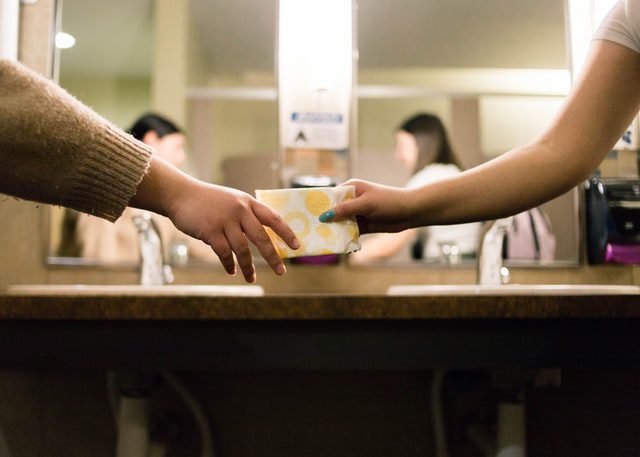
 Period poverty in developing countries, such as Afghanistan, is a public health crisis and global poverty exacerbates the issue since it leads to individuals being unable to afford menstrual hygiene products. The American Medical Women’s Association explains period poverty as “inadequate access to menstrual hygiene tools and educations, including but not limited to sanitary products, washing facilities and waste management.”
Lack of Menstrual Education and School Absenteeism
Period poverty negatively impacts female education due to menstrual-related absenteeism. The Child Deprivation Analysis of 2020 indicates that “30% of girl students in Afghanistan are absent during menstruation because schools do not have adequate water, sanitation and hygiene facilities.” Explaining the severity of girls’ school absenteeism, UNICEF says that “This, in turn, translates to significant economic losses later in life for themselves — and their nation that is deprived of their talents and productivity.” For this reason, addressing period poverty in Afghanistan essentially means “safeguarding the dignity, education and overall life opportunities of girls and women.”
With support from the Finnish government, the Ministries of Education and Rural Rehabilitation and Development and UNICEF provided menstrual education training to more than 500 female Afghan teachers. UNICEF also distributed more than 100,000 menstrual hygiene management (MHM) educational booklets to teachers and girls. In 2021, UNICEF aims to train more than “550 male and female teachers in 130 schools across Afghanistan.”
Menstrual Stigma and Health Consequences
The cultural stigma surrounding menstruation worsens period poverty in Afghanistan. The conservative culture of Afghanistan is a prevailing reason for the taboo surrounding menstruation. Whilst menstruating, women and girls are regarded as unclean and as a result, they are prohibited from engaging in certain daily activities, eating certain foods and participating in religious practices. The stigma surrounding menstruation continues to exclude and discriminate against women and girls. As a result, women and girls feel persistent shame and their daily lives are disrupted due to a natural biological function.
Period poverty also poses negative health consequences. Without access to menstrual-related information and sanitary products to properly manage menstruation, girls and women are at more risk of infection as they resort to using “potentially harmful domestic alternatives such as wood shavings, dried leaves, hay, old socks filled with sand” and more.
There are additional risks when there is limited access to clean water. The lack of clean water has the potential to lead to urinary tract infections and yeast infections, which is why some organizations are providing developing countries with menstrual hygiene management facilities to encourage better menstrual hygiene practices.
Organizations Fighting to End Period Poverty
Multiple organizations aim to alleviate the negative impacts of period poverty. For instance, Safepad hopes to empower Afghan women and schoolgirls through work opportunities and access to reusable menstrual products. Located in Kabul, Safepad provides professional training and employs Afghan women to sew, make and pack Safepad products. Safepad not only empowers Afghan women through adequate access to menstrual products but women also benefit from a reliable source of income.
UNICEF works to keep Afghan girls in school by focusing on water, sanitation and hygiene (WASH) facilities. This includes ensuring access to water, constructing gender-segregated bathrooms, including “washrooms in girls’ toilets” and adding menstrual education to the school curriculum.
The Menstrual Equity for All Act
In a March 6, 2021, press release, U.S. Rep. Grace Meng urged President “Biden to take action to end period poverty.” The Menstrual Equity for All Act, reintroduced by Rep. Meng in March 2019, aims to ensure U.S. foreign assistance incorporates principles of menstrual equity. Although the Menstrual Equity for All Act did not progress any further, it conveys an important message that “Menstrual equity is the issue of ensuring equitable access to menstrual products. One’s ability to access and afford these products is a basic need and a health care right; it is a human right.”
Looking Ahead
Poverty and humanitarian crises can limit women’s and girls’ access to culturally appropriate, high-quality menstrual supplies and safe, private washing facilities. Period poverty in Afghanistan widens the gender gap, which is a result of extreme poverty and stigma. This can harm those who menstruate due to a lack of education, adequate facilities and clean water.
Access to menstrual education and products to properly manage menstruation empowers Afghan girls and women. In turn, girls and women are able to rise out of poverty as they continue their daily lives without disruption and pursue education and employment.
– Grace Watson
Photo: Flickr
 Founded in 1970, Sephora is an international makeup retailer providing cosmetic products to people around the world. These cosmetic products range from perfumes and lotions to makeup and hair care products. As a beauty empire, Sephora currently employs people in 35 countries and makes upwards of $4 billion in revenue every year. Considering

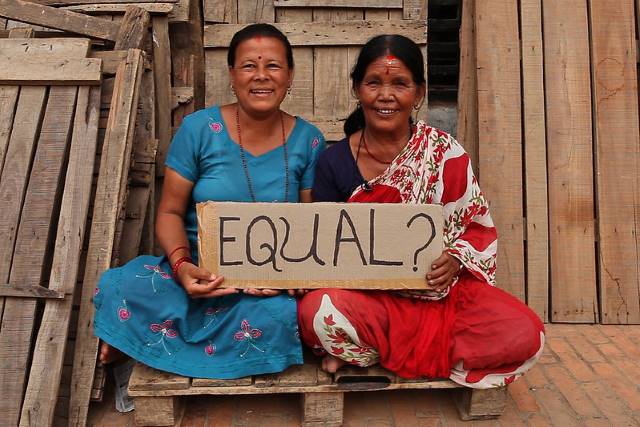 Patriarchal values have long dominated Nepali culture. Prevailing attitudes have led to the belief that women in Nepal are inferior to men. As a result, Nepal has long suffered from high gender inequality, which has hampered the country’s overall development. Deeply entrenched views regarding the role of women in society have held back government initiatives, causing progress to be slow. Nari Bikash Sangh, a Nepali NGO, hopes to address gender inequality by directly aiding women in Nepal.
 With the rise of women’s rights movements in recent years, French citizens have mobilized to address gender issues, especially the prevalence of femicide and domestic violence. France has made much progress in the realm of gender equality, including the establishment of policies and programs promoting women’s rights in France under the Macron administration. However, there is still much to be done to reach true equality and to end gender-based violence.
 Indonesian women made significant gains in recent years but there is still more to be accomplished. Women in Indonesia are often well educated but cultural expectations and economic and legal structures still prevent them from entering the workforce. The employment rate for