• Link to X
  • Link to Facebook
  • Link to Instagram
  • Link to TikTok
  • Link to Youtube
  • About
    • About Us
      • President
      • Board of Directors
      • Board of Advisors
      • Financials
      • Our Methodology
      • Success Tracker
      • Contact
  • Act Now
    • 30 Ways to Help
      • Email Congress
      • Call Congress
      • Volunteer
      • Courses & Certificates
      • Be a Donor
    • Internships
      • In-Office Internships
      • Remote Internships
    • Legislation
      • Politics 101
  • The Blog
  • The Podcast
  • Magazine
  • Donate
  • Click to open the search input field Click to open the search input field Search
  • Menu Menu

Archive for category: Women & Children

Advocacy, Global Poverty, Refugees, Women & Children

Shay Mitchell Empowers Women and Children

Shay Mitchell Empowers Women and Children
Award-winning Pretty Little Liars Actress Shay Mitchell has been very active outside of her role as Emily Fields, continuing to do much more with her travel experiences than simply finding new foods or relaxing by the beach.

Mitchell empowers women and children who live in oppressive and poverty-ridden countries by interacting with them and learning what it is that these people face every day in order to survive.

One company that Mitchell supports is an ethical fashion and lifestyle brand called Raven + Lily. In her channel’s official YouTube video about her 2015 trip to India, Mitchell explains how Raven + Lily helps fight poverty by giving women a sustainable income.

Mitchell endorses the company by showing her viewers each product that Raven + Lily produces, how the employed women make them and how purchasing from these women will help give them a life that they deserve.

“Women in this Muslim community are not allowed to work outside their home,” Mitchell explains. She continues to state that Raven + Lily allows these women to work from inside their homes, respecting their culture yet giving them a stable and secure income.

Mitchell ended her trip by attending a festival of love and color, which is a local tradition where the citizens covered her in organic colors as they all danced together. This is one of the many ways that Shay Mitchell empowers women and children by participating in events that allow her to relate to everyday citizens on a fundamental level.

Mitchell told In Style magazine that the most difficult part of the trip for her was seeing the extreme poverty in India. She goes on to say that while it is overwhelming, the most important thing to do is to focus on helping these people one person at a time because every struggling citizen matters.

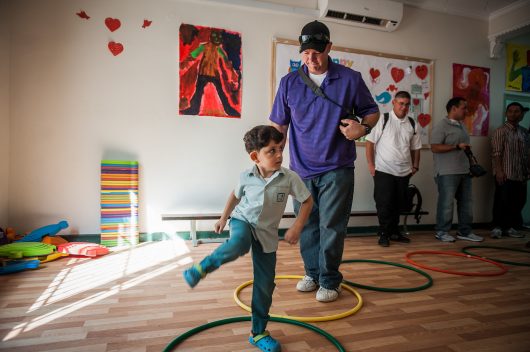
In July of this year, Mitchell posted a photo with children she met while in Syria in the Azraq Syrian Refugee Camp. “Kids should be kids,” she said in a recent Facebook post, talking about how resilient the children are and talking about how much that she missed them already.

During this time, Care.org posted a photo of Mitchell visiting with Syrian children whose dreams are to attend film school. This is in support of CARE’s refugee film school at the Azraq camp.

With Snapchat stories filled with smiling kids, a personal YouTube video showing support for Raven + Lily and verbal support for women and children living in oppression and poverty, Shay Mitchell empowers women and children by being an active advocate for better treatment of struggling citizens around the world.

– Noel McDavid
Photo: Flickr

August 9, 2017
https://borgenproject.org/wp-content/uploads/borgen-project-logo.svg 0 0 Kim Thelwell https://borgenproject.org/wp-content/uploads/borgen-project-logo.svg Kim Thelwell2017-08-09 07:30:112024-12-13 17:58:25Shay Mitchell Empowers Women and Children
Developing Countries, Global Poverty, Human Rights, Women & Children, Women and Female Empowerment

The Facts on Breast Ironing

The Practice of Breast Ironing
The practice of breast ironing occurs when the breasts of young girls are pounded with heated objects such as spatulas, hammers and rocks. The aim of the tradition is to halt breast growth in order to slow puberty, and sometimes the practice is done in order to postpone girls’ first sexual relationships. The ritual is mainly carried out by female relatives of the victim. Approximately 3.8 million teenagers are affected by breast ironing worldwide, according to the U.N.

Breast ironing is very popular in the nation of Cameroon. Carole, a victim of the practice there, explains how her mother told her that it was necessary. She claimed it was to keep away men because “‘men mean pregnancy.'” The routine would consist of her mother pressing a hot rock onto each of her breasts several times. It has left Carole with the permanent disfigurement of her breasts, which she describes as “flabby.”

Physical defects are common consequences of this practice. Many maturing girls also face the possibility of breast cancer or difficulty breastfeeding. Mental trauma occurs as well, such as low-self esteem and feelings of betrayal or resentment.

Breast ironing affects about one in four girls in Cameroon, but it is by no means limited to this country in particular. The practice also occurs in the nations of Nigeria, Benin and Chad, according to Newsweek.

Recently, reports revealed that the practice was taking place in some African communities within the U.K. as well. The CAME Women and Girls Development Organisation, a charity campaigning on behalf of breast ironing victims, has claimed that over 1,000 girls in Britain have dealt with the practice.

Fortunately, a number of global charities have increased volunteer work within Cameroon. Sex education is now being stressed as a better means to ending the pregnancies of young girls. By spreading awareness and offering educational services, the practice of breast ironing is already on its way to being stopped.

– Gigi DeLorenzo

Photo: Flickr

June 19, 2017
https://borgenproject.org/wp-content/uploads/borgen-project-logo.svg 0 0 Borgen Project https://borgenproject.org/wp-content/uploads/borgen-project-logo.svg Borgen Project2017-06-19 01:30:002024-12-13 17:58:05The Facts on Breast Ironing
Global Poverty, Women & Children

The Success of Midwives in Sri Lanka


Public health midwives have been a part of Sri Lankan culture for nearly a century, but their role has recently evolved into a prominent one in the community. Midwives in Sri Lanka not only attend births, but now they also cover preventive health community services. Since approximately 72 percent of Sri Lankans live in rural areas, over 90 percent of public health midwives serve in rural communities, ensuring that typically neglected areas prone to high poverty rates still receive adequate health coverage.

Sri Lanka has committed itself to promoting gender equality. Absolute poverty rates, typically affecting females and children more than males, have been on the decline. As of 2013, 90 percent of Sri Lankan adult females are literate. One of the most impressive efforts to both alleviate poverty and promote the role of women in the community is the central role of midwives in Sri Lanka. The free provision of healthcare at all stages of life, coupled with the usage of traditional cultural practices, has allowed midwives to become respected, sought-after figures in communities. Midwives are viewed as trusted healthcare providers and provide medical guidance to both men and women. Midwives in Sri Lanka have also played a huge role in the high rate of attended births (98 percent) and the incredibly low maternal mortality rate (32 per 100,000 live births).

Improving maternal health has far-reaching effects due to the improvement of the quality of life for women. Access to education is improved. Girls now make up 50 percent of students in secondary education and have the opportunity to attend higher levels of education. Additionally, the focus on rural health by midwives in Sri Lanka is coupled with rural development efforts that have resulted in absolute poverty rates of less than 10 percent and improved access to safe drinking water and electricity.

New challenges are arising, such as a rise in noncommunicable diseases and low midwife recruitment numbers. However, adaptations are being made. Providing more educational opportunities for midwives, increasing their role in addressing public health issues like domestic violence, and offering more public sector employment incentives will be important moving forward. Midwives in Sri Lanka are not only an integral part of the healthcare system but also play an important part in promoting gender equality and opportunities for women.

– Nicole Toomey

Photo: Flickr

April 20, 2017
https://borgenproject.org/wp-content/uploads/borgen-project-logo.svg 0 0 Borgen Project https://borgenproject.org/wp-content/uploads/borgen-project-logo.svg Borgen Project2017-04-20 01:30:362024-12-13 17:57:53The Success of Midwives in Sri Lanka
Global Poverty, Women & Children

Forced Marriage In Burkina Faso: When Laws Are Not Enough

Burkina Faso_Merriage
In Burkina Faso, forced marriage is a frequent occurrence, especially for girls of a very young age. Over 52 percent of women in the country are married before the age of 18 and 10 percent are married before the age of 15. Forced marriage often puts girls in jeopardy of increasing health resources and losing access to education.

Child marriage rates vary throughout the country but can be as high as 86 percent in some regions. The practice is connected to both poverty and tradition. There are also tangible links to lack of education, with girls being more at risk for child marriage if they are less educated.

Forced marriage in Burkina Faso is technically illegal, but the law is rarely enforced. It does not prevent traditional or religious marriages, which creates a loophole in the law, causing many girls to be forced into marriage. The law also defines a lower legal marriage age for girls than boys. Girls can legally marry at age 17 and boys at age 20. Many girls are married before age 17, despite the current laws in place to prevent the practice.

Girls as young as 11 can be forced into marriage. This equates to a huge age difference between a young girl and her male spouse. The gap can vary from 30 to 50 years. In many cases, these men are engaging in polygamy and already have one or more wives.

Forced marriage is usually motivated by economic or social incentives. Sometimes marriage is promised at birth or during early childhood, often including a dowry from the husband’s family that consists of money or land.

Risks Associated with Forced Marriage

There are numerous health risks for young girls that are forced into marriage. Women are expected to bear children at the husband’s discretion, which can be extremely unsafe at such a young age. Complications during pregnancy may cause injury or even death to the young mother. Physical and sexual violence is also common among forced marriages.

Marrying early endangers girls’ futures as well. Wives are expected to perform all household chores and are often denied access to education or economic opportunity. The level of female access to education in Burkina Faso is already low, at only 64.2 percent, but girls that are forced into marriage are more likely to give up school.

Joint Efforts Toward Prevention

Burkina Faso created a “National Strategy to End Child Marriage” in 2015. The goal of the project is to reduce the occurrence of child marriage by 2025. The strategy is supported by U.N. agencies as well as political and religious leaders throughout the country. Objectives include preventing child marriage and supporting victims of child marriage.

This is a step in the right direction, but the country still has a long way to go to comply with international human rights standards.

– Lindsay Harris

Photo: Flickr

March 30, 2017
https://borgenproject.org/wp-content/uploads/borgen-project-logo.svg 0 0 Borgen Project https://borgenproject.org/wp-content/uploads/borgen-project-logo.svg Borgen Project2017-03-30 01:30:282024-05-24 23:42:53Forced Marriage In Burkina Faso: When Laws Are Not Enough
Global Poverty, Women & Children

Paid Maternity Leave in India Doubles

India Doubles
The Indian Parliament has recently passed a bill that more than doubles the nationally mandated paid maternity leave from 12 weeks to 26 weeks. The policy change makes India the country with the third-longest paid leave for mothers in the world, trailing behind only Norway and Canada. The new requirements for paid maternity leave in India will expand opportunities for many women.

The bill requires implementation in businesses with more than 10 employees. In a country that has been previously criticized for its lack of gender equality, the bill is revolutionary to the growing economy. The new legislation also requires businesses with more than 50 employees to provide nurseries for childcare in close proximity to their offices.

The months following the birth of a child often call for a reassessment of finances and economic security. Families in developing communities can be hit especially hard by new expenses.

In the U.S., no federal law requires employers to provide paid leave for new parents. Only a few U.S. states have legislation that addresses the issue. This lack of legislation is often harmful, and the Census Bureau reported in 2011 that more than 40 percent of new mothers are forced to take unpaid leave. Human Rights Watch has also conducted studies on the impact of a lack of paid leave for new parents in the U.S. After conducting in-depth interviews with 64 American couples, the organization found that just over a third of the families had gone into debt in the months following the birth of a child.

Positive Social Impacts of the Bill

Activists have stated that the extension of paid maternity leave in India will encourage women to more deeply explore potential economic opportunities. A survey that was released last year by the Associated Chambers of Commerce and Industry of India brought to light the fact that a quarter of Indian women in urban areas quit their jobs after having their first child. Hopefully, the new bill will help lower this number.

The Indian Prime Minister, Narendra Modi, expressed on social media that the new bill is a “landmark moment in our efforts towards women-led development.” The Minister of Women and Child Development, Maneka Gandhi, says that the law will “help thousands of women and produce much healthier children.”

In terms of social norms and gender stereotypes, India has a long way to go before women are on the same playing field as men. The extension of paid maternity leave in India has the potential to encourage economic participation from women across the country, and hopefully, it will do just that.

Not only will the law help women in India, many are optimistic that it will inspire other countries to follow suit.

– Peyton Jacobsen

Photo: Flickr

March 27, 2017
https://borgenproject.org/wp-content/uploads/borgen-project-logo.svg 0 0 Borgen Project https://borgenproject.org/wp-content/uploads/borgen-project-logo.svg Borgen Project2017-03-27 14:36:582020-04-24 12:11:47Paid Maternity Leave in India Doubles
Education, Global Poverty, Women & Children

10 Facts About Education in Bahrain

Education in Bahrain
The island country of Bahrain, officially the Kingdom of Bahrain, is known primarily for its small size and successful finance industry. However, Bahrain also has a progressive and highly valued education system. Here at 10 facts about education in Bahrain:

  1. Bahrain’s public school system was founded in 1932 and is the oldest in the Arabian Peninsula. The average person in Bahrain will receive 6.1 years of education.
  2. While Bahrain has a number of private schools, public education in Bahrain is free until secondary school for both boys and girls. Education is also compulsory for kids aged 6-14.
  3. The majority of the country, 95.7 percent, is literate. Bahrain also has the highest female literacy rate, 93.5 percent, in the Arabian Peninsula.
  4. Bahrain does not spend much on education relative to other countries. Approximately 2.6 percent of the country’s GDP goes toward education costs, meaning Bahrain ranks 153 out of 173 countries on education spending.
  5. Prior to the 20th century, Quranic schools, which were dedicated primarily to Qur’an studies, were the only type of school in Bahrain.
  6. Education in Bahrain is changing in order to better prepare students for careers. The country is splitting secondary education into two tracks, unified and vocational. The unified track is aimed more at university preparation while the vocational track is meant to prepare students for technical careers directly after finishing school.
  7. In Bahrain, girls are educated at roughly the same rate as boys. Approximately 97 percent of girls and 98 percent of boys are enrolled in primary school, while 91 percent of girls and 87 percent of boys attend secondary school.
  8. Approximately 25.2 percent of Bahrainis will go on to post-secondary education. Of these students, the majority are women, as Bahrain has one of the highest university gender parity indexes at 2.52.
  9. Despite women receiving roughly equal education to men in Bahrain, the number of women in the workforce is low. Only 32 percent of women aged 15 and above are in the workforce, compared to 85 percent of men. This is significantly lower than the rest of the world, as globally 52 percent of women are active in the workforce.
  10. Many Bahraini students participate in exchange programs, such as the U.S. government’s Student Leaders Program, a summer program where Bahraini university students study at U.S. universities.

Despite Bahrain’s small size, high literacy rates, mandatory schooling and a push for higher education reveal how education in Bahrain is continuing to strengthen and grow.

– Alexi Worley

Photo: Flickr

March 20, 2017
https://borgenproject.org/wp-content/uploads/borgen-project-logo.svg 0 0 Borgen Project https://borgenproject.org/wp-content/uploads/borgen-project-logo.svg Borgen Project2017-03-20 01:30:402024-12-13 17:57:3510 Facts About Education in Bahrain
Global Poverty, Women & Children

Eight Facts About Poverty in Barbados

Poverty in Barbados

Barbados is known as a beautiful tourist destination in the Caribbean, but poverty in Barbados is still an issue that is being addressed.

  1. Poverty levels have been experiencing an overall rise since 1996. Household poverty rates increased from 8.7 percent to 15 percent and individual poverty rates increased from 13.9 percent to 19.3 percent.
  2. A Caribbean Development Bank report notes that the conditions of those living below the poverty threshold is favorable compared to other countries in the Caribbean.
  3. Because Barbados is relatively small and still in development, it is susceptible to external economic shocks, meaning that external variables outside of Barbados can have a notable impact on its economy.
  4. Household structure carries a major correlation to household poverty. Poor households often exhibit overcrowding.
  5. About 60 percent of poor households are female headed. Additionally, a gender gap seems to exist in the workforce, with women earning about 0.75 of what men make for similar services, while also experiencing segregation from certain jobs. The ratio of non-earners to earners is also highest in female-headed households.
  6. Overcrowding in poor households has actually declined from 17.0 percent to 11.0 percent, and the unemployment rate in poor households declined from 30.8 percent to 25.9 percent.
  7. Barbados was ranked among the top 50 countries in terms of its human development status. Of note, 99.7 percent of the population is literate.
  8. Last year, Barbados agreed to a $10 million loan from the Inter-American Development Bank (IDB) that will be used to combat poverty. Some of the goals include funding daycare services and school supplies as well as providing counseling for those seeking jobs.

While poverty in Barbados is still an issue, efforts are underway to change the status quo and improve the lives of future generations.

– Edmond Kim

Photo: Flickr

October 9, 2016
https://borgenproject.org/wp-content/uploads/borgen-project-logo.svg 0 0 Borgen Project https://borgenproject.org/wp-content/uploads/borgen-project-logo.svg Borgen Project2016-10-09 01:30:002024-05-27 23:53:44Eight Facts About Poverty in Barbados
Advocacy, Global Poverty, Women & Children

Why We Need a Breastfeeding Advocacy Initiative

Breastfeeding Advocacy Initiative
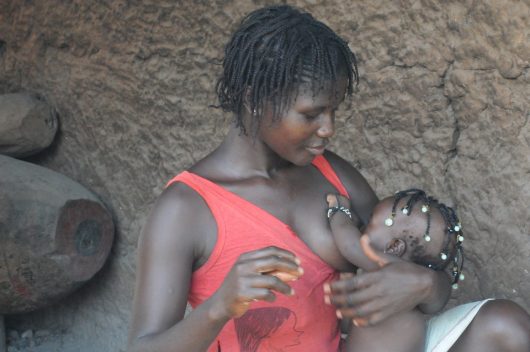
Only 38% of infants are exclusively breastfed for their first six months of life. Improper and insufficient breastfeeding contributes to nearly 800,000 preventable child fatalities every year. A breastfeeding advocacy initiative would not only challenge the social pariah of the practice but also contribute to the improvement of mothers’ and children’s health worldwide.

Breast milk contains all of the nutrients that babies need in their first six months and has the ability to strengthen a child’s immune system to protect against illness. Breast milk has also increased children’s physical and cognitive development.

The benefits of breastfeeding extend beyond a baby’s health. Mothers who breastfeed reduce their risk of suffering from postpartum hemorrhage, which is a leading cause of death among new mothers. Mothers also find themselves at reduced risk for diabetes and breast cancer.

Why Breastfeeding is No Longer the Norm

So why then are such a small percentage of babies exclusively breastfed? One reason for low breastfeeding rates is the issue’s generally low prioritization by political leaders and policymakers.

Women also feel that breastfeeding is looked down upon in the workplace and the public sphere. For instance, if women cannot find a comfortable place to breastfeed at work, then their child is less likely to receive his or her’s natural source of nutrients. Additionally, there are many companies that sell formula and aggressively market the concoction as being a better alternative to breastfeeding.

To improve breastfeeding statistics, there is a global breastfeeding advocacy initiative underway with support from organizations such as UNICEF and the World Health Organization. Initiatives focus on educating mothers and communities about the benefits of breastfeeding and supporting policies and programs that spread this message.

In the West African nation of Guinea-Bissau, one in 10 children will die before they reach five years of age. Organizations such as UNICEF and the non-governmental organization CARITAS work tirelessly to improve this statistic, and a fruit of their labor has been the nutrition bungalows that now exist in Guinea-Bissau.

Nutrition Bungalows

At these bungalows, mothers of children under five years old are invited to gather monthly for information sessions. The sessions are often interactive and they focus on promoting health for mothers and children. Mothers can also have their children measured and weighed to ensure that they are meeting developmental milestones.

These nutrition bungalows and all other projects incorporating a global breastfeeding advocacy initiative aim to spread awareness and increase support for exclusive breastfeeding in both the political and social spheres. In doing so, the lives of mothers and children can be saved and their quality of life improved.

– Nathaniel Siegel

Photo: Pixabay

October 2, 2016
https://borgenproject.org/wp-content/uploads/borgen-project-logo.svg 0 0 Borgen Project https://borgenproject.org/wp-content/uploads/borgen-project-logo.svg Borgen Project2016-10-02 01:30:162024-05-27 09:35:04Why We Need a Breastfeeding Advocacy Initiative
Global Poverty, Women & Children

Healthcare in Bihar is Improving for Women and Children

Healthcare in Bihar
Bihar is one of the poorest states in India as approximately 55 percent of the population lives below the poverty line. There is an overwhelming need for quality health care facilities and workers in this region. In the past ten years, the World Bank Group and the Bill and Melinda Gates Foundation have made great strides toward the improvement of healthcare in Bihar.

The World Bank’s collaboration with the Bihar Government led to an increase in the accountability and accessibility of healthcare from 2005 to 2008. By 2008, the number of outpatients visiting a government hospital grew from 39 per month to almost 4,500. The number of babies delivered in healthcare facilities also increased from some 100,000 to 780,000.

Bihar’s infant and maternal mortality rates are higher than India’s national average. According to the Sample Registration Survey in India conducted in 2013, 208 women per 100,000 died during childbirth. Furthermore, 28 out of every 1,000 newborns die within their first month of life.

Most of these deaths are preventable if basic care is provided to women and newborns during and immediately following childbirth. Unfortunately, the infrastructure of healthcare in Bihar falls short in nearly all required categories, including the number of health assistants and nurses.

According to the Huffington Post, there are not enough nurses in Bihar to allow for lengthy off-site training to prepare nurses for treatment of postpartum hemorrhage or premature births while also keeping health facilities adequately staffed.

In order to improve maternal health and newborn care, the Bill and Melinda Gates Foundation along with the Bihar Government launched a Mobile Nurse Mentoring Program called AMANAT.

Through AMANAT, nurses in public health facilities are mentored on-site by mobile nurse mentors, who ensure that basic standards of care are provided for pregnant women and newborns.

The program has greatly improved healthcare in Bihar for women and children before and after deliveries since its implementation in 2012. A few of these improvements include:

  • The administration of the correct use of oxytocin to induce labor has increased from 9 percent to 59 percent.
  • The use of sterile instruments by nurses during deliveries has increased from 13 percent to 43 percent.
  • The implementation of mothers breastfeeding has increased from 49 percent to 72 percent.

The number of stillbirths declined from 19 to 12 per 1,000 live births due to improvements in basic care practices. AMANAT was implemented in 160 public health facilities across Bihar and is expected to be administered in 240 over the course of this year.

There is a long way to go in creating a stable system of healthcare in Bihar. However, these crucial improvements made by the World Bank, the Bill and Melinda Gates Foundation and Bihar’s Government have saved and will continue to save countless maternal and newborn lives.

– Kristyn Rohrer

Photo: World Bank

August 31, 2016
https://borgenproject.org/wp-content/uploads/borgen-project-logo.svg 0 0 Borgen Project https://borgenproject.org/wp-content/uploads/borgen-project-logo.svg Borgen Project2016-08-31 01:30:262024-06-04 01:03:15Healthcare in Bihar is Improving for Women and Children
Gender Equality, Global Poverty, United Nations, Women & Children, Women and Female Empowerment

Plan International’s Goals for Gender Equality

Plan International

Plan International recently announced a multi-organizational partnership to help track the U.N.’s global goals for gender equality.

The goals for gender equality stem from the United Nation’s Sustainable Development Goals (SDGs). These goals, adopted in 2015, aim to vastly improve the living conditions around the world.

The central focus of this project is gender inequality. Plan International decided to collect relevant data and use it as a benchmark to determine the amount of progress.

Partner Organizations for Gender Equality

To do so, they partnered with several organizations. These include the International Women’s Health Coalition and KPGM. In addition, Plan International chose the ONE Campaign and Women Deliver.

Plan International chose these organizations because their previous work and values align with those of Plan. However, some organizations bring additional value to the table.

For instance, KPMG has a history of partnership building in the private sector. They also have a strong data tracking history with their Change Readiness Index. That index will be especially important in the project’s next few months.

The project’s first step is to sift through the data that already exists. They can then determine what is relevant to their goals for gender equality and what is not.

In an exclusive interview with Mary Bridger, the Engagement Manager for Plan’s SDG tracking initiative, she said, “We don’t feel that you can truly comprehend the realities for girls and women until you look beyond the quantitative data and find out what the lived realities for these individuals are (i.e. you can measure the geographic proximity of a school to girls, but until you ask them whether they feel safe on public transportation, you don’t know the true barriers).”

Prioritizing Gender Equality

For now, the project’s next goal is to work with their partners to push the scope of their research and develop the tools necessary to allow them to best capture those lived realities.

Bridger underscored the importance of this campaign when she said, “Plan International’s purpose is to work towards all children fulfilling their rights, focusing on excluded and vulnerable groups so that no-one is left behind. However, we have recognized the urgent need to prioritize girls as the most marginalized group whose rights are violated most.”

Plan International and their partner organizations all believe that meeting goals for gender equality will have a ripple effect within local communities and even worldwide.

– Sabrina Santos

Photo: Talent Culture

August 4, 2016
https://borgenproject.org/wp-content/uploads/borgen-project-logo.svg 0 0 Borgen Project https://borgenproject.org/wp-content/uploads/borgen-project-logo.svg Borgen Project2016-08-04 01:30:262024-12-13 17:54:41Plan International’s Goals for Gender Equality
Page 7 of 16«‹56789›»

Get Smarter

  • Global Poverty 101
  • Global Poverty… The Good News
  • Global Poverty & U.S. Jobs
  • Global Poverty and National Security
  • Innovative Solutions to Poverty
  • Global Poverty & Aid FAQ’s
Search Search

Take Action

  • Call Congress
  • Email Congress
  • Donate
  • 30 Ways to Help
  • Volunteer Ops
  • Internships
  • Courses & Certificates
  • The Podcast
Borgen Project

“The Borgen Project is an incredible nonprofit organization that is addressing poverty and hunger and working towards ending them.”

-The Huffington Post

Inside The Borgen Project

  • Contact
  • About
  • Financials
  • President
  • Board of Directors
  • Board of Advisors

International Links

  • UK Email Parliament
  • UK Donate
  • Canada Email Parliament

Get Smarter

  • Global Poverty 101
  • Global Poverty… The Good News
  • Global Poverty & U.S. Jobs
  • Global Poverty and National Security
  • Innovative Solutions to Poverty
  • Global Poverty & Aid FAQ’s

Ways to Help

  • Call Congress
  • Email Congress
  • Donate
  • 30 Ways to Help
  • Volunteer Ops
  • Internships
  • Courses & Certificates
  • The Podcast
Scroll to top Scroll to top Scroll to top