• Link to X
  • Link to Facebook
  • Link to Instagram
  • Link to TikTok
  • Link to Youtube
  • About
    • About Us
      • President
      • Board of Directors
      • Board of Advisors
      • Financials
      • Our Methodology
      • Success Tracker
      • Contact
  • Act Now
    • 30 Ways to Help
      • Email Congress
      • Call Congress
      • Volunteer
      • Courses & Certificates
      • Be a Donor
    • Internships
      • In-Office Internships
      • Remote Internships
    • Legislation
      • Politics 101
  • The Blog
  • The Podcast
  • Magazine
  • Donate
  • Click to open the search input field Click to open the search input field Search
  • Menu Menu

Archive for category: Women & Children

Gender Equality, Women & Children, Women's Empowerment

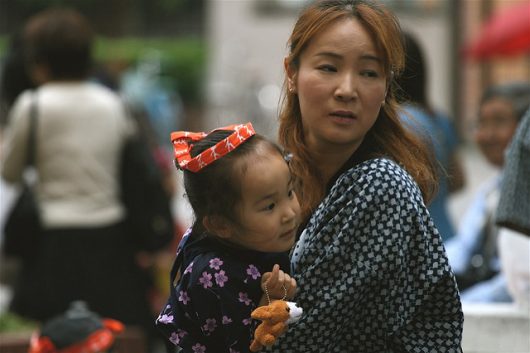
Turning Tides for Single Mothers in Japan

Single Mothers in Japan
Despite the stigma against single parents, single mothers in Japan are moving forward with the help of the Tokyo-based organization Single Mother by Choice and the new government-provided Child-Rearing Allowance.

Single Mothers in Japan

Since World War II, Japan has grown to be one of the wealthiest countries in the world. It boasts modern buildings, clean streets and is home to some of the richest people on earth. Yet, Japan’s poverty rate has consistently risen for the past 30 years, reaching 16.3 percent in 2017. However, the country still appears to be healthy and thriving. This dissonance between facts and appearances is due to the stigma surrounding poverty in Japan. Rather than admit to being poor, many people in Japan mask their financial needs hoping not to draw attention to themselves.

This problem is even worse for single mothers in Japan, who not only face greater cultural shame more consistently, but also have a harder time providing enough for their families. A whopping 56 percent of single-parent homes in which the parent is working live in poverty. As women have children, they often can no longer work the long, rigorous hours expected of Japanese employees. This time restriction then forces them to assume lower paid jobs with worse benefits — working women in Japan make 30 percent less on average than men doing the same job.

Cultural and Societal Norms

Japanese culture also dismisses female higher education, men often feeling “uncomfortable” to share the classroom with women; girls are pushed into two-year vocational schools instead. This setup is also seen as a benefit to women as they will then, allegedly, have more time to find a husband and start rearing children in the societally accepted timeframe. Such a collective attitude makes it more difficult for women to access education to higher paying jobs, and dismisses women who might pursue relationships and children outside of marriage.

The organization Single Mother by Choice was founded in Tokyo in 2014 to empower women and fight the taboo surrounding being a single mother in Japan. The group provides a community for women who desire to lead lives outside of Japan’s norms, and supplies information on prenatal care.

Single Mother By Choice

The organization focuses specifically on women who have chosen before becoming pregnant to have a child and raise them on their own. This decision can be especially difficult as the only legal use in Japan for sperm banks are for married couples, so many women become pregnant with a partner they do not intend to marry. Members of the group desire to end the myth that children of single parents cannot be happy and that women must be lifelong wives to be mothers.

The Japanese government has also begun to implement changes to help the growing numbers of single parents. Incentive programs have been put in place to bring single-parent families into smaller towns in the country, which helps grow local communities and provides the parent with a job, car and covers moving cost.

Moreover, many cities have implemented child-rearing allowances for single parents. This welfare system supplies families in need with residual income so that they will be able to effectively care for their children. As social stigmas begins to change, single mothers in Japan will continue to fight to live in a country that respects all tracks to motherhood — married or not.

– Sarah Dean
Photo: Flickr

July 19, 2018
https://borgenproject.org/wp-content/uploads/borgen-project-logo.svg 0 0 Borgen Project https://borgenproject.org/wp-content/uploads/borgen-project-logo.svg Borgen Project2018-07-19 01:30:542024-06-06 00:08:01Turning Tides for Single Mothers in Japan
Global Health, Women & Children

The Importance of Treating Obstetric Fistula in Developing Countries

treating obstetric fistula
Obstetric fistula is a condition in which there is an abnormal opening in a woman’s birth canal due to prolonged, obstructed labor. When left untreated, obstetric fistula leads to skin infections, kidney disorders, incontinence and death of the child, and is responsible for around 6 percent of all maternal deaths.

This ailment is highly preventable and treatable, yet there are an estimated two million women living with it untreated in Asia and sub-Saharan Africa. An additional 50,000 to 100,000 women are diagnosed each year. These women are predominately underprivileged, poor and young.

Operation Fistula Raises Awareness of the Necessity of Treating Obstetric Fistula

Operation Fistula is one of the few organizations that has collected data on the condition. It has measured the burden on life that not treating obstetric fistula has had and compared that weight to that of other debilitating diseases. The organization found that living with obstetric fistula is ranked just below terminal cancer.

In developed countries, obstetric fistula is practically non-existent because women have access to the education and medical services that assure a healthy pregnancy. Unfortunately, these care services are not readily available to women in poverty-stricken areas.

Even with the establishment of care centers in the most prominently affected areas, the lack of attention that obstetric fistula receives is incredible. Because the condition is nearly unheard of in Europe and the U.S., there is limited global awareness and therefore very little capitalization. In fact, treating obstetric fistula receives less than1 percent of annual global health funding even though it is relatively inexpensive to care for.

Global Efforts Bring Treatments to Women in Need

To counter the mass neglect, Operation Fistula works to provide women with timely and high-quality treatment. It also plans to eliminate fistula altogether by 2045. The organization’s approach is data-centric and focuses on performance-based funding to surgeons who have successfully treated patients. This simple solution yielded four times the target amount of patient treatments between 2012 and 2014.

In addition, USAID’s Health Service Delivery project is working to make the proper medical services available by establishing treatment centers at multiple hospitals in Guinea, where obstetric fistula is extremely prevalent. The treatment centers allow women to undergo the reconstructive surgeries necessary for recovery.

Operation Fistula’s most recent effort in continuing its 2045 eradication plan is working with the government of Madagascar and the United Nations Population Fund to wipe out fistula in every region of the country.

Operation Fistula concentrates on the patient first and foremost. With its performance-based funding, Operation Fistula makes sure that each patient gets the best possible treatment rather than focusing solely on the number of patients treated. Through their endeavors, every woman that Operation Fistula has treated so far has gained back, on average, almost 11 years of healthy life.

While advancements in the global treatment of women with obstetric fistula have been made, there is still a need for prevention. Health professionals in affected areas are being trained continuously and efficiently in order to prevent and manage obstetric fistula, but the most basic method of prevention is through awareness.

– Samantha Harward
Photo: Flickr

July 16, 2018
https://borgenproject.org/wp-content/uploads/borgen-project-logo.svg 0 0 Borgen Project https://borgenproject.org/wp-content/uploads/borgen-project-logo.svg Borgen Project2018-07-16 01:30:092024-05-29 22:43:06The Importance of Treating Obstetric Fistula in Developing Countries
Children, Global Poverty, Women, Women & Children

Sindhutai Sapkal, the Mother of Orphans Who Made History

Mother of Orphans
Some life stories have the strength to change our outlook towards the world. They reveal the power of empathetic gestures and prove that even one person can bring about a huge transformation in the society irrespective of their position in life.

While we often hear about the works done by the government, world organizations and celebrities towards uplifting the poor, we rarely hear about the lesser-known superheroes who lack a paparazzi trail. One such human being is Sindhutai Sapkal, who devoted her entire life towards the welfare of the poor orphans in India.

Sindhutai Sapkal

Affectionately known as mai which means ‘mother’ in Marathi, Sapkal is a born fighter with strong levels of determination and willpower. She did not attend school and does not know much about feminism or politics, but her thinking and understanding of social issues has always been well beyond the realms of any modern educated person’s understanding. She personifies what “selfless love” stands for and has come to be known as the ‘Mother of Orphans.’

Early Life

Sapkal’s story might be unbelievable to many. She was born on November 14, 1948 in Pimpri Meghe village in the Wardha district of Maharashtra, India. She wanted to pursue an education and although her father was very supportive of it, the village tradition and patriarchy shattered her dreams. She was married off at the age of 12 to a 30-year-old man with whom she had an abusive relationship; by the time she was 20, she was already a mother to three children.

Over the years, she struggled to battle the abject poverty in her life. She was fearless and voiced her opinions against the corrupt practices of a local strongman who sold dried cow dungs, which are used as fuel in India, without providing profit to the villagers. This action created a huge uproar in the village and the district collector had to intervene and put an end to the illegal practice.

Out of strong contempt for the woman, the strongman urged her husband to leave her. Since patriarchy is deep-rooted in the society, Sapkal’s husband did exactly that. Little did she know then that this ending was actually the beginning of her calling to become the ‘Mother of Orphans.’

Journey towards becoming the Mother of Orphans

Sapkal started her journey as a social activist in her early twenties when she was abandoned by her husband and thrown out into the streets. She was nine months pregnant when the world rejected her and left her to die. But, without the help of a single person, this indomitable woman survived despite all odds and gave birth to a baby girl in a cow shelter and cut the umbilical cord using a sharp stone.

She then walked several kilometres to her mother’s house but was unwelcomed there. Setting aside the thoughts of suicide, this woman started begging on the streets of Maharashtra to feed herself and her newly born child.

While struggling to survive on the streets, Sapkal was pained to see the plight of poor orphan children who lived their life begging sans any touch of care or warmth. Having lost her own childhood to patriarchy, this young mother took it upon herself to embrace these young people and provide them with whatever little she could.

Sapkal then started begging in earnest for these kids by singing in the local trains of Mumbai as she was determined to bring about a change in their lives. She slowly realized that taking care of them gave her a purpose and satisfaction in life, and thus decided to become the ‘Mother of Orphans’ by being a mother to every child in need of love and care.

Recognition

After years of effort and struggle, Sapkal’s work slowly caught public attention and people started recognizing her efforts. In the year 2016, the D.Y. Patil College of Technology and Research, Mumbai conferred upon her the degree of Doctorate in Literature. So far, she has been honoured with more than 750 awards for her relentless and selfless social work. On March 8, 2018, International Women’s Day, she was awarded the Nari Shakti Award 2017 by the President of India.

Sapkal spends all the money from the awards towards uplifting those in need. She not only helps poverty-stricken children, but also offers her care to abandoned women. She now has a huge family of 36 daughter-in-laws, 207 son-in-laws and over 1000 grand kids. Many of her children went on to become lawyers and doctors and others run their own orphanages to help the poor and assist her in her noble goals.

Impact Through Film: Mee Sindhutai Sapkal

Sapkal’s life became an inspiration to many, and to celebrate this ‘Mother of Orphans,’ a Marathi filmmaker decided to make a film on her life. The film, Mee Sindhutai Sapkal, was released in the year 2010, won several national awards and was selected for world premiere at the 54th London Film Festival.

This warrior woman who started her life’s journey with nothing at all has proved that one does not have to be rich or in a higher political position to bring about a change in society. She has made possible the impossible, created history and won her personal battle against poverty. Sapkal’s actions made her a hero in regard to her own life, and also for the thousands of lives she changed with pure love and affection.

– Shruthi Nair
Photo: Flickr

July 10, 2018
https://borgenproject.org/wp-content/uploads/borgen-project-logo.svg 0 0 Borgen Project https://borgenproject.org/wp-content/uploads/borgen-project-logo.svg Borgen Project2018-07-10 01:30:532024-05-29 22:43:02Sindhutai Sapkal, the Mother of Orphans Who Made History
Global Health, Women & Children

Key Improvements in Maternal Health in Sierra Leone

Improvements in Maternal Health in Sierra Leone
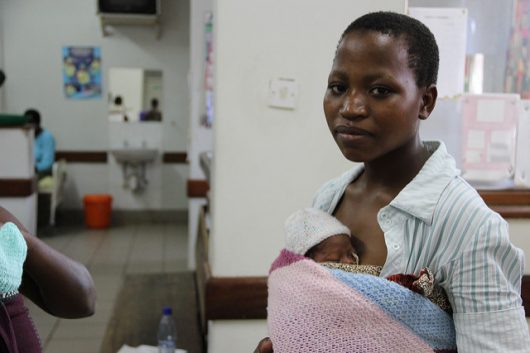
The life expectancy of women in Sierra Leone is just 61 years old. The country leads in the world in maternal mortality ratio, ranking in 1,360 deaths per 100,000 live births — nearly 500 more than the next nation and three times higher than the average for sub-Saharan Africa. Lack of clean water and well equipped sanitary equipment has unsurprisingly come with generally high maternal health risks. Maternal health in Sierra Leone is improving (albeit with further necessary upgrades) despite its numerous impediments.

Sierra Leone’s Economic and Political State

In 2010, the government in Sierra Leone announced an ambitious program — the Free Health Care Initiative — to provide free care in public facilities for pregnant and lactating women and young children. Still, mothers felt care to be inadequate as little transportation assistance, sociocultural barriers and poor quality still remain difficult years later.

In addition, a devastating 2014 outbreak of Ebola further stunted improvements in health conditions in the nation. In fact, according to a 2015 paper, the reduced number of health personal after the epidemic may have forced maternal mortality to increase by 74 percent in Sierra Leone. But workers are on the ground making progress — individuals from as close as neighboring communities, to as far as a dozen time zones away in Asia, are dedicated to creating improvements in maternal health in Sierra Leone.

Impact of Aid Organizations

A UNICEF partner, Sierra Leone Social Aid Volunteers, built modern toilets, a laundromat, incinerator, placenta pit, water well and water supply system in the nation. And that’s not all — UNICEF and other humanitarian aid organizations have offered aid to over 150 facilities across Sierra Leone.

Fatmata Conteh, midwife at the Konta Line Community Health Center, stated that as a result of these efforts, people in Sierra Leone “can easily clean the health facility and wash all our equipment here. Mothers have access to convenient toilets and water in the bathroom to have a bath after delivery.”

The health center where Conteh is employed provides service to over 7,000 individuals across nearly 30 cities in which nearly one half of patients are under the age of five. In December 2015, UNICEF, funded by the European Union, oversaw 16 separate construction and rehabilitation projects started across the country. All theses projects aimed to improve basic health infrastructure, including maternal facilities.

In November 2017, the World Health Organization (WHO) launched a new five-year strategy for Reproductive, Maternal, Newborn, Child and Adolescent Health in Sierra Leone. The strategy highlights several focus areas, including emergency obstetric and neonatal care, management of newborn and childhood illnesses and prevention of teenage pregnancy. This strategy will hope to launch off the recent progress of late — the females’ increased attendance (at least four checkups) during pregnancy and malaria treatment.

“WHO is proud to have supported the country in developing this strategy together with our partners, but we are also aware that this is just the beginning,” said Alexander Chimbaru, Officer-in-Charge of WHO Sierra Leone.

External Influencers

China has also been an influential partner in the region through its support of aid programs in Sierra Leone. In early June, a group of Chinese health workers touched down in Freetown and joined other medical technicians at the Jui China Sierra Leone Friendship hospital. The hospital provides medical care to children, pregnant and mothers free of charge.

To accompany such dutiful care, the first lady of Sierra Leone, Fatima Bio, officially launched the China-Sierra Leone Maternal and Child Health Care Innovation Project. At a launch event, Bio highlighted the importance of a strong education system and health network, as well as the negative effects of teenage pregnancy.

Closer to home, individuals make substantial sacrifices to assist mothers in giving healthy births. Health Poverty Action has featured Mary Turoy, a successful Maternal Health Promoter in the Kamalo village in the Northern Bombali District of the country. To mitigate the difficulties women face in just traveling to medical centers, Turoy and others in her community offer housing, pregnancy information and much-needed advice.

Maternal Health in Sierra Leone

One of the Sustainable Development Goal health targets is to decrease from 216 maternal deaths per 100,000 in 2015, to less than 70 maternal deaths. The United Nations (U.N.) holds that maternal deaths can be largely prevented if programs bolster the level of care during delivery. And improvements around the globe are, in fact, being made — infectious diseases and adolescent childbearing are down worldwide.

However, conditions remain the most concerning in sub-Saharan Africa. Improvements in maternal health in Sierra Leone are happening, but change is still necessary. Healthcare and maternal conditions in this coastal, west African nation are still an area of concern that could do with continued care today and in the future.

– Isabel Bysiewicz
Photo: Flickr
June 27, 2018
https://borgenproject.org/wp-content/uploads/borgen-project-logo.svg 0 0 Borgen Project https://borgenproject.org/wp-content/uploads/borgen-project-logo.svg Borgen Project2018-06-27 01:30:002024-12-13 17:58:50Key Improvements in Maternal Health in Sierra Leone
Refugees, Women & Children

Pianoterra Puts Refugee Mothers and Children First

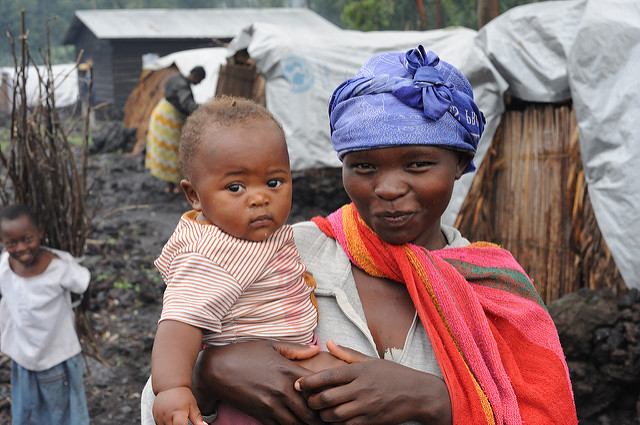
PianoterraIn Italian, “pianoterra” translates to “ground floor.” Pianoterra is also an organization based in Italy that is working to keep refugee mothers and children safe.
The Mission of Pianoterra

Pianoterra was founded by Alessia Bulgari, Flaminia Trapani and Ciro Nesci. According to the group’s website, “[the founders’] stories are intertwined by personal ties: Alessia and Flaminia are cousins, Flaminia and Ciro are husband and wife.”

The organization was founded in 2008 with the main goal of helping immigrant women get the necessary things to be able to prosper in Italy. When the organization began, 58 percent of the women seeking help from the organization was Italian while the other 50 percent was foreign. Today, 98 percent are foreign women.

Pianoterra’s Past Initiatives

Pianoterra has led several initiatives to improve the lives of refugee women and children. Two of these important projects include “Right to Feed – Support of Breastfeeding” and “From Mom to Mom.”

The project “Right to Feed – Support of Breastfeeding” began in January 2009. The project was aimed at mothers who were unable to breastfeed and did not have a sufficient amount of money to be able to feed their children. Pianoterra worked to “distribute free formula milk, according to pediatric prescriptions, and other basic necessities.”

With the “From Mom to Mom” initiative, Pianoterra helped mothers by collecting and distributing second-hand items for children. By collecting second-hand articles and connecting the women who donate with the women in need, mothers are “directly linked to a solidarity network of other women and mothers willing to support,” according to the organization’s website.

The Immigration Situation in Italy

Currently, immigration to Italy is occurring in large numbers. In 2018 alone, approximately 33,000 refugees have fled to Italy. However, the nation’s new interior minister has stated that “the country will no longer be ‘Europe’s refugee camp,’” according to TeleSur.

With the new government leaders in Italy, many refugees cannot count on staying in Italy. TeleSur reports that Italy’s “right-wing League stated that the vast majority of migrants in Italy have no right to refugee status, Italy cannot help them and by accepting low pay they worsen the working conditions of Italians.”

Although the Italian government is changing, there are still organizations working to help women and refugees prosper in the country. Pianoterra will continue to assist mothers in caring for their children and bettering their futures.

– Valeria Flores
Photo: Flickr

June 17, 2018
https://borgenproject.org/wp-content/uploads/borgen-project-logo.svg 0 0 Borgen Project https://borgenproject.org/wp-content/uploads/borgen-project-logo.svg Borgen Project2018-06-17 08:00:232024-05-29 22:42:47Pianoterra Puts Refugee Mothers and Children First
Women & Children

Government Initiatives Improve Maternal Health in Eritrea

Maternal Health in Eritrea
The United Nations’ Millennium Development Goal (MDG) Five, improving maternal health, has two components: First, reduce maternal mortality by two-thirds between 1990 and 2015, and second, achieve universal access to reproductive healthcare by 2015.  Eritrea is one of the few countries in which these goals were fully achieved.

The maternal mortality ratio—which the U.N. defines as “the ratio of the number of maternal deaths to the number of pregnancies,” calling it “an indicator of the risk of dying that a woman faces for each pregnancy she undergoes”— was 1,700 deaths per 100,000 births in Eritrea in 1990. The goal for 2015 was to cut that number to 425 deaths per 100,000 births. In 2013, Eritrea not only met but surpassed this goal, with a maternal mortality rate of just 380 deaths per 100,000 births.

Eritrea saw almost as much success in its efforts to achieve universal access to reproductive healthcare. In 1991, just 19 percent of women had any prenatal care. By 2013, that number had risen to 93 percent, a nearly fivefold increase.

What Has Worked

From 1990 to 2015, maternal mortality declined 45 percent globally and 49 percent in Sub-Saharan Africa. Although this is a marked improvement, it is still considerably less than the MDG goal of a two-thirds decrease. As such, many are wondering what contributed to Eritrea’s huge successes.

Since the establishment of the MDGs, the government of Eritrea has been committed to engaging all people with its new development programs. It strove (and continues to strive) to build a national healthcare system that offers universal coverage that truly does reach everyone, no matter how poor or remote.

Efforts by the government, the U.N. and NGOs working to improve maternal health in Eritrea have reflected this emphasis on the universal and the importance of reaching all Eritrean women. Clinics that are mobile and transitory pop up in a community temporarily, and, after a period of time, move on to the next town. This allows more women to receive healthcare without necessitating more resources or medical personnel.

Empowering Women

Likewise, there has been a strong focus on improving gender equality in Eritrea. The government has outlawed both child marriage and female genital mutilation and is continually working to promote gender equality in education and in the labor force. Today, it is estimated that women in Eritrea make up between 35 and 45 percent of the workforce. This means that women are more visible, more engaged in society politically and socially and better able to advocate for their rights.

Despite Eritrea’s considerable successes, challenges remain for the East African nation. Eritrea has a long history of violence. After 30 years of brutal civil war, it gained independence from Ethiopia in 1993. Conflict with Ethiopia resumed between 1998 and 2000 and, even during times of peace, Eritreans live until a strict authoritarian government. Continued improvements in maternal health in Eritrea will be predicated upon future peace and stability in the region.

The Future of Maternal Health in Eritrea

Access continues to be the main challenge. Women who lack money often struggle to find affordable healthcare. Despite the efforts of mobile health clinics, antiquated infrastructure, old roads and limited public transportation opportunities mean that traveling to a clinic still proves difficult for many women.

Furthermore, although 93 percent of women received at least some prenatal care in 2013, only 55 percent of women had a trained medical professional at their child’s birth. That is a huge improvement from 1991, when only 6 percent of babies were born under the care of a medical professional, but room for improvement remains.

Eritrea’s success in reaching and surpassing MDG Five ought to be applauded. Other countries should follow its example and commit to focusing on universal access to maternal and prenatal care. Despite considerable success regarding lowering the maternal mortality rate and achieving near-universal access to reproductive healthcare, Eritrea should continue to strive to increase the accessibility of healthcare. Eritrea, and the global community supporting women’s health and equity there, can continue to improve the availability of and access to affordable maternal and prenatal healthcare.

– Abigail Dunn
Photo: Flickr

June 16, 2018
https://borgenproject.org/wp-content/uploads/borgen-project-logo.svg 0 0 Borgen Project https://borgenproject.org/wp-content/uploads/borgen-project-logo.svg Borgen Project2018-06-16 07:30:062024-05-29 22:42:44Government Initiatives Improve Maternal Health in Eritrea
Global Poverty, Human Trafficking, Women & Children

Sudara Helps Women and Girls Escape Sex Trafficking in India

sex trafficking in India
The trafficking of women and children for sexual exploitation is the fastest growing criminal enterprise in the world. This profitable industry generates an estimated $99 billion each year. Unsurprisingly, women and girls make up 96 percent of victims of sex trafficking. The action of sexual exploitation is a human rights violation. This exploitation robs these women and girls of integrity, dignity, health, security and equality.

Sex Trafficking in India an Ongoing Issue Despite New Laws

Sex trafficking in India continues to be lucrative and persistent, and poverty is a major factor. Many vulnerable women and girls are lured into the industry because of the promise of employment. When these women and girls are faced with the harsh reality of poverty, hunger and homelessness, many of them see this as the only option. Matters of poverty are sometimes so severe that parents will sell their own daughters into the trade. These women and children have no other options because they do not possess an education or the skills or the resources to escape sex slavery.

Although India’s Parliament passed a bill amending laws concerning sexual violence and making sex trafficking a criminal offense in 2013, this law will only be so successful. Trafficking is profitable, and corruption is widespread. Traffickers can easily pay off police officers to avoid the deserved charges, which leaves women and children still very much at risk and unprotected.

Sudara Provides Employment Opportunities for Sex Trafficking Victims

A mission-driven company exists on behalf of these women and children to not only empower them, but to provide them with dignified employment opportunities. Sudara is an online store that sells items such as clothing, bags, jewelry and children’s toys, yet there is so much story behind each of these items.

Sudara started in 2006 by partnering with a sewing center in India and taught six women how to sew a pattern for loungewear pants that have been named Punjammies. The previous year, founder Shannon Keith had just returned from a trip to India, where she heard many stories of women who were sold into sex slavery and women who were being picked up off the streets by local pimps.

From the beginning, Sudara’s focus and goal has remained the same: to empower women to live in freedom from sex slavery through safe, sustainable living-wage employment. Every pair of Punjammies robes and slouch pants are made in India, and every style is named after a woman at one of the centers.

Fifteen years later, Sudara has multiple sewing center partnerships with people from all over India and the United States. One of these center partners, Ivana, provides women who are at high risk of trafficking with valuable skills training on computers and tailoring. In addition, the center also offers counseling services for every woman as well as on-site childcare for their children.

Sudara’s mission also emphasizes providing a level of care that allows a woman who has been a victim of sex trafficking in India to heal from her past and facilitate training that leads to a self-sufficient future. Because of this, Sudara pays the sewing center partners a premium that goes towards medical care and counseling. This premium also goes towards job placement services and micro-loans for women who would like to start a business of their own.

Sudara’s Nonprofit Arm Helps the Most Vulnerable in India

Sudara also created a nonprofit organization, the Sudara Freedom Fund, to further its social impact goals. The donations made during checkout at sudara.org go towards the Sudara Freedom Fund and have helped fund safe housing for women escaping sex trafficking in India, equipment for new or growing sewing centers and back-to-school programs.

With the continuous support of donations to the Sudara Freedom Fund, one of their most recent successes is the Sunetha Home, which opened in 2017. The Sunetha Home is providing safe housing, meals and an education for 10 girls living in a red light district of India.

Although companies such as Sudara and its nonprofit, the Sudara Freedom Fund, are putting their efforts towards creating freedom for hundreds of women and girls who are at high risk of sex trafficking in India, it is not enough to end sex slavery once and for all. To do that, it is necessary to break the cycle of slavery for the next generation and the generations after that. By supporting Sudara and other philanthropic organization, many people are doing their part to combat the sexual exploitation that millions of women and children face.

– Angelina Gillespie
Photo: Flickr

June 8, 2018
https://borgenproject.org/wp-content/uploads/borgen-project-logo.svg 0 0 Borgen Project https://borgenproject.org/wp-content/uploads/borgen-project-logo.svg Borgen Project2018-06-08 07:30:442024-05-29 22:42:40Sudara Helps Women and Girls Escape Sex Trafficking in India
Global Poverty, Violence Against Women, Women & Children, Women's Rights

Women’s Rights in Tunisia On a Steady Incline of Improvement

Improving Women’s Rights in Tunisia
While Tunisia has the most progressive laws on women’s rights in relation to other parts of the Arab world, patriarchal values still persist. In 2010, a study from the Tunisian government revealed that many of the country’s women are sexually, verbally and physically abused. However, improving women’s rights in Tunisia has become an initiative for many organizations.

The U.N.’s Work to Represent Women in Politics

In June 2016, Tunisia’s parliament approved an amendment to ensure a greater representation of women in local politics. Applying to regional and municipal elections, the amendment included a proposal for “horizontal and vertical” gender parity in Article 49 of Tunisia’s electoral law. This also marked the first time that 73 Tunisian female parliamentarians (from different backgrounds, parties and political ideologies) conducted their own lobbying in favor of the horizontal and vertical parity.

“Besides being a first in our region, the adoption of horizontal and vertical parity in electoral law is a timely achievement because it will guarantee effective participation of women in the upcoming decentralization process in Tunisia,” said Leila Rhiwi, the U.N. Women Representative from Maghreb. In March 2016, U.N. Women also began a project with Tunisia’s parliamentarians that would support the implementation of the women’s caucus. This will work toward improving women’s rights in Tunisia by increasing their representation in local and national politics.

Aswat Nissa Training Tunisia’s Women For Political Lives

Many Tunisian women find ways to exercise the power given to them by the country’s progressive laws. Some of these ways include Tunisian women attending political academies that began after the country’s Arab Spring revolution in 2011. In October 2016, the political academy Aswat Nissa was revealed to hold monthly training sessions for Tunisian women who enter political roles.

Aswat Nissa teaches Tunisian women many necessary political skills, including how to debate effectively and draft gender-sensitive budgets. Aswat Nissa enrolled forty Tunisian women in 2016.

“I have visited parliament before, but when you’re an assembly member, it’s something else. You are part of this world,” said Aswat Nissa graduate Karima Tagaz.

Tunisia’s New Law Against Gender-Based Violence

In October 2016, Tunisia’s parliament debated a bill to strengthen legislation on violence against women. The bill would be incorporated into Tunisia’s legislative and government policies, defining gender-based violence, outlawing marital rape and increasing penalties for sexual harassment in the workplace. The bill was approved on July 26, 2017, and served as a landmark step toward improving women’s rights in Tunisia.

“By enacting this new law, the Tunisian authorities have shown a commitment to the rights of women and are setting a standard that many others would do well to follow,” said Amna Guellali, Tunisia’s office director at Human Rights Watch. The new law included requirements to assist Tunisia’s victims of domestic violence, providing them with legal and medical support. Tunisia’s authorities intend to ensure adequate funding and political will to fully place the new law into effect.

A Proposal For Tunisian Women to Share in Inheritance

In January 2018, the Committee on Individual Freedoms and Equality (CIFE) planned a proposal for Tunisia’s women to share in men’s inheritance and pass their family name onto their children.

“Tunisia is once again pioneering and irreversibly moving toward advancement,” Bochra Bel Haj Hmida, CIFE’s chairwoman, told the Thomson Reuters Foundation. “All discriminatory laws in the family space and public space are included in the commission’s tasks.”

CIFE’s proposed bill will also ban dowries, allowing Tunisia’s men and women to share their roles as head of the household. CIFE planned to present its recommendations to Tunisia’s president on Feb. 20, 2018, but requested a postponement until after municipal elections on May 6. The news site ANSAmed said that CIFE did not want its proposal to become an issue of electoral tension.

Tunisia’s parliament, the U.N. and CIFE have made much progress in strengthening the representation of Tunisia’s women in politics and protecting their freedom. Many groups will continue working toward improving women’s rights in Tunisia.

– Rhondjé Singh Tanwar

Photo: Flickr

March 30, 2018
https://borgenproject.org/wp-content/uploads/borgen-project-logo.svg 0 0 Borgen Project https://borgenproject.org/wp-content/uploads/borgen-project-logo.svg Borgen Project2018-03-30 01:30:212024-05-29 22:40:00Women’s Rights in Tunisia On a Steady Incline of Improvement
Global Health, Global Poverty, Women & Children

The Most Effective Drug for Preventing Maternal Death

most effective drug for preventing maternal death
Each year, more than 300,000 women die in childbirth. The top three causes of global maternal deaths are severe bleeding, infections and high blood pressure at the time of birth. Often, pregnant women in developing countries are faced with an impossible decision: seek affordable care from untrained/unlicensed midwives or enter hospitals without being able to pay for modern treatment. It is extremely unlikely that women in this situation will receive the most effective drug for preventing maternal death.

Deaths from infections can easily be prevented through good hygiene practices by the patient and the medical staff attending to her. As for high blood pressure, the most fundamental precautionary measure is to educate the public on adolescent pregnancies, as this is often associated with maternal mortality from high blood pressure. Severe bleeding in childbirth can kill a healthy woman within several hours if proper attention and care are not given to her by her caretakers.

Often there are complications, such as bleeding, that require costly surgical operations or blood transfusions. If the mother is unable to afford the operation, she may not survive the excessive bleeding. In Sierra Leone, many people know at least one woman who has either died in childbirth or lost a fetus due to complications. Maternal care is the comprehensive indicator of the overall development of a country; the healthcare system for maternal health reflects the level of education, infrastructure and transparency of a nation.

Well educated nations with high literacy rates can still experience a shortage of qualified medical workers. Why? They are not properly paid or paid at all. The few qualified or highly educated emigrate for better opportunities and salaries. This resulting brain drain further exacerbates the crisis of maternal mortality. Prior to childbirth, there is also a delay in pregnant women seeking proper treatment. This delay can be attributed to a lack of confidence in the competence of the local healthcare facilities.

Thanks to U.N. funding, clinics in every nation are sponsored to employ local medical staff, which not only provides them with a salary, but with training as well. In addition to improved services, many patients benefit the from donation and careful administration of drugs. Among the most notable is tranexamic acid. Also known as TXA, this drug helps to control bleeding for trauma patients. It helps to stabilize a clot at the site of bleeding by preventing it from dissolving during formation. It has proven to be the most effective drug for preventing maternal death.

TXA works by preventing the conversion of plasminogen to plasmin; this promotes the accumulation of fibrin to form a complex known as the fibrin degradation products. It should be noted that TXA is not an alternative for blood transfusion; it is merely an important addition to this treatment. In addition to trauma patients, TXA has also proven effective in treating combat casualties. It has also been proven to be safe for patients.

In April 2017, the WHO launched a clinical trial dubbed the World Maternal Antifibrinolytic Trial. It consisted of 20,000 women from 21 countries who were diagnosed with postpartum hemorrhage (PPH). It was a randomized, double-blind trial with placebos for some of the participants. The organization wanted to see if bleeding persisted 30 minutes after the first dosage, and if it restarted within 24 hours. If bleeding did persist, it determined if a second dose was necessary.

What they found was that TXA reduced deaths in the trial, and it was evident that early treatment maximized the benefit. It was the most effective drug for preventing maternal death. In their words, “safe, effective and affordable PPH treatments are critical to saving the lives of pregnant women globally, and the findings of this trial have important implications for the delivery of high-quality maternity care.”

– Awad Bin-Jawed

Photo: Flickr

March 28, 2018
https://borgenproject.org/wp-content/uploads/borgen-project-logo.svg 0 0 Borgen Project https://borgenproject.org/wp-content/uploads/borgen-project-logo.svg Borgen Project2018-03-28 07:30:492024-06-11 23:17:14The Most Effective Drug for Preventing Maternal Death
Global Poverty, Women & Children, Women's Empowerment, Women's Rights

Nine Ways Poverty Is Sexist

10 Ways Poverty is SexistProminent figures in the world of advocacy, including Bono and Melinda Gates, claim that poverty is sexist in nature. This is also referred to as the feminization of poverty. Global poverty disproportionately affects women in several ways. Women and girls are more likely to be impoverished, less likely to have access to educational opportunities and more likely to struggle with health issues.

How Poverty is Sexist

  1. Girls have less access to education over their lifetime, one of the major ways poverty is sexist. Education helps girls defy traditional gender roles and encourages them to pursue job opportunities.
  2. Attacks on girls’ schools and education discourage parents from sending their daughters to school, fearing for their safety. In countries engrossed in domestic armed conflict, girls’ education often faces targeted attacks using threats, acid, explosives, gunfire, kidnappings or school closings.
  3. Women spend twice as much time as men doing unpaid work such as cooking, cleaning and caring for children. This kind of domestic labor restricts the time women can spend working for wages, finishing their education, learning new skills or opening new businesses. The traditional gender roles are more prominent in developing nations, so this gap is even larger.
  4. Child marriage, which is often driven by poverty, traps girls in a cycle of poverty. Child brides are less likely to finish their education, making them less likely to earn a safe and adequate income. In communities where child marriage is common, girls’ education is often not valued over their roles as wives and mothers.
  5. Women are more prone to poor nutrition over the course of their life, which makes them more susceptible to diseases. Poor maternal health and nutrition feed down from mother to child, resulting in a vicious cycle of lack of nutrition and provisions against diseases.
  6. Land is a crucially valuable asset in rural areas of the world, yet almost 70 percent of the world’s population does not have access to land registration systems. Women are disproportionally affected by land title ambiguity, making them more likely to suffer from poverty and economic insecurity.
  7. Women face significantly greater challenges in gaining access to financial services than men. In developing countries, women are 20 percent less likely to hold accounts at a formal financial institution than men and often face restrictions that require a male family member’s permission to open a bank account.
  8. A lack of access to sexual and reproductive health services and reproductive rights is a form of sexual discrimination that puts women and girls at a higher risk of poverty and limits their economic empowerment. Approximately 225 million women do not use safe and effective family planning methods, most of whom live in 69 of the world’s poorest countries.
  9. Data about global poverty in some of the poorest countries in the world is incomplete and lacking in gender-disaggregated data. There is a major need for gender-disaggregated data in order to understand how poverty is sexist, where and how women and girls are being left behind and how to fix it.

These are only a handful of the many ways in which poverty is sexist. The need for further study of the relationship between poverty and sexism is vital to level the playing field between men and women in the progression of economic and social opportunities.

– Sydney Lacey

Photo: Flickr

March 10, 2018
https://borgenproject.org/wp-content/uploads/borgen-project-logo.svg 0 0 Borgen Project https://borgenproject.org/wp-content/uploads/borgen-project-logo.svg Borgen Project2018-03-10 07:30:592019-11-05 01:33:28Nine Ways Poverty Is Sexist
Page 5 of 16«‹34567›»

Get Smarter

  • Global Poverty 101
  • Global Poverty… The Good News
  • Global Poverty & U.S. Jobs
  • Global Poverty and National Security
  • Innovative Solutions to Poverty
  • Global Poverty & Aid FAQ’s
Search Search

Take Action

  • Call Congress
  • Email Congress
  • Donate
  • 30 Ways to Help
  • Volunteer Ops
  • Internships
  • Courses & Certificates
  • The Podcast
Borgen Project

“The Borgen Project is an incredible nonprofit organization that is addressing poverty and hunger and working towards ending them.”

-The Huffington Post

Inside The Borgen Project

  • Contact
  • About
  • Financials
  • President
  • Board of Directors
  • Board of Advisors

International Links

  • UK Email Parliament
  • UK Donate
  • Canada Email Parliament

Get Smarter

  • Global Poverty 101
  • Global Poverty… The Good News
  • Global Poverty & U.S. Jobs
  • Global Poverty and National Security
  • Innovative Solutions to Poverty
  • Global Poverty & Aid FAQ’s

Ways to Help

  • Call Congress
  • Email Congress
  • Donate
  • 30 Ways to Help
  • Volunteer Ops
  • Internships
  • Courses & Certificates
  • The Podcast
Scroll to top Scroll to top Scroll to top