• Link to X
  • Link to Facebook
  • Link to Instagram
  • Link to TikTok
  • Link to Youtube
  • About
    • About Us
      • President
      • Board of Directors
      • Board of Advisors
      • Financials
      • Our Methodology
      • Success Tracker
      • Contact
  • Act Now
    • 30 Ways to Help
      • Email Congress
      • Call Congress
      • Volunteer
      • Courses & Certificates
      • Be a Donor
    • Internships
      • In-Office Internships
      • Remote Internships
    • Legislation
      • Politics 101
  • The Blog
  • The Podcast
  • Magazine
  • Donate
  • Click to open the search input field Click to open the search input field Search
  • Menu Menu

Archive for category: Women & Children

Children, Global Poverty, Women & Children

Maternal Instinct: Indian Women Take on a Corrupt Medical System


A group of 40 volunteers is cracking down on the corrupt medical system in India and taking a stand against the country’s soaring rate of maternal deaths.

Prenatal care at government-run medical facilities is supposed to be free of charge, but as Monika Singh discovered, not every woman is aware of this, and some doctors are more than willing to exploit their ignorance.

“Why are you charging for medicine? It’s supposed to be free for pregnant women in a government hospital,” challenged Singh when a doctor tried to make an ill mother-to-be pay for her medicine.

Armed with Nokia phones and a list of codes, Singh and fellow volunteers routinely visit a number of villages, interviewing expecting and new mothers and families. Using simple numeric codes, interviewees can text the volunteer’s details of their pregnancy and related care. For example, texting the number 25 means no ambulance was available when needed.

Cases of women being turned away from hospitals, women being extorted and forced to bribe their way to treatment, and even cases of women dying on the way to the hospital after being denied treatment at multiple clinics are just a few of the examples of the rampant corruption of the Indian medical system.

An estimated 50,000 women in India die each year from pregnancy-related causes, accounting for 17 percent of global maternal deaths each year. While there are countries with much higher rates of maternal death, the sheer volume of annual maternal deaths is unprecedented.

Aside from malnutrition and a lack of enforcement of laws meant to protect expecting mothers, many women say they are too afraid to pursue their rights, even when they know them. “They don’t have the courage to pursue their rights proactively. That’s the challenge,” said Singh. But the presence of volunteers is encouraging more women to speak out about the injustices they have faced.

Improvements have been seen, however, since Singh and her fellow volunteers took to the streets. Working with the End Maternal Mortality Now (EndMMNow) scheme, the volunteers say it is now the doctors who are afraid of them, not the other way around.

“The workers fear these volunteers. They’re afraid they will report a case about them, so now they do their jobs properly,” said Arpana Choudhury, who follows up on reported cases.

The EndMMNow program compiles the reports that they receive to create an interactive map, clearly showing areas needing the most urgent attention, hoping that a clear depiction of the need for reform will prompt much-needed government attention.

– Gina Lehner

Sources: The Guardian, WHO
Photo: Flickr

September 6, 2015
https://borgenproject.org/wp-content/uploads/borgen-project-logo.svg 0 0 Borgen Project https://borgenproject.org/wp-content/uploads/borgen-project-logo.svg Borgen Project2015-09-06 09:17:532024-05-27 09:27:41Maternal Instinct: Indian Women Take on a Corrupt Medical System
Women & Children

Korea and UNICEF Support Maternal Health in Uganda

Korea and UNICEF Support Maternal Health in Uganda
The United Nations Children’s Fund (UNICEF) recently announced its partnership with the Korean International Cooperation Agency (KOICA) to support a public health program in Uganda targeting child and maternal health. The much-needed project calls attention to the poor state of public health in Uganda for women and children, as well as the viability of South Korea as an international health aid donor.

Uganda’s UNICEF representative Aida Girma notes that while Uganda’s healthcare system is sound, a chronic lack of resources contributes to spotty coverage, especially in the rural Karamoja and Acholi regions in the north of the country. She hopes that this new program “will solve some of those challenges and that the number of women dying while giving birth and children who die before they are five will reduce especially in [the] Karamoja region.”

In a country where almost 90 percent of the population lives in the countryside, health services tend to be spread thinly. In 2010, public spending accounted for only 15 percent of total health spending, while spending from international aid was almost twice that. Thus, the burden of paying for health care tends to fall squarely on the shoulders of Ugandan citizens who must suffer through high out-of-pocket expenses if they want to enjoy adequate coverage. A 2014 World Health Organization report on the country said that to achieve good coverage, “efficiency in resource allocation and utilization, especially of donor funds needs to be improved.”

The partnership is worth about $8.5 million dollars and is expected to reach about 200,000 women and infants. Janet Museveni, Ugandan Minister of Karamoja Affairs, notes that there are geographic disparities in maternal and neonatal health, and the partnership should help smooth those out. Uganda’s national rate of maternal mortality estimates to be about .44 percent, while Karamoja and Acholi have mortality rates of .75 percent and .56 percent, respectively. Malnutrition is also a significant contributor to under-five child mortality in those regions.

This particular public health project is a small indication of Korea’s transformation from aid recipient to aid donor. From 1945 until the mid-90s, Korea received almost $13 billion in aid, mostly from the U.S. Over several decades, the country went from receiving international aid grants, to loans, to project-based loans, finally graduating from World Bank lending list in 1995.

Today, Korea is an economic powerhouse and is coming into its own as an international aid contributor. In 2010 it became the only former international aid recipient to join the OECD Development Assistance Committee, an elite group of nations that contribute the most foreign aid.

In 2014, then Prime Minister Jung Hong-won pledged two billion dollars in official development assistance, which was an 11 percent increase from the previous year. By the end of 2015, the country hopes to set aside .25 percent of its budget for foreign aid. In comparison, the U.S. typically donates about .2 percent of its budget.

This partnership with UNICEF also displays Korea’s willingness to use innovative financing to achieve their aid goals. In 2007, the Korean government started levying a fee of $1 for outbound flights from the country. The revenue from this levy was set aside for Korea’s “Innovative Maternal and Child Health Initiative Fund.” Portions of this fund went to supporting health projects in Uganda such as the UNICEF partnership, which will be implemented through the Ugandan government as well as non-governmental organizations.

In the long run, Uganda will ideally be able to take a country-led approach to developing its health care sector. Donor funds probably don’t represent the best long-term solution to a lack of medical resources and Uganda will have to increase its spending on medical training and infrastructure in order to reach its most remote citizens. However, partnerships between international donors like Korea and UNICEF can help stimulate an expansion of health care coverage while strengthening Uganda’s governance over public health issues.

– Derek Marion

Sources: East African Business Week, USAID, Economic Development Cooperation Fund, Devex, WHO
Photo: Flickr

August 9, 2015
https://borgenproject.org/wp-content/uploads/borgen-project-logo.svg 0 0 Borgen Project https://borgenproject.org/wp-content/uploads/borgen-project-logo.svg Borgen Project2015-08-09 01:30:492024-12-13 17:52:17Korea and UNICEF Support Maternal Health in Uganda
Global Poverty, Malnourishment, Women & Children

Health Experts Call for Public Breastfeeding Areas in India

public_breastfeeding_areas_in_india
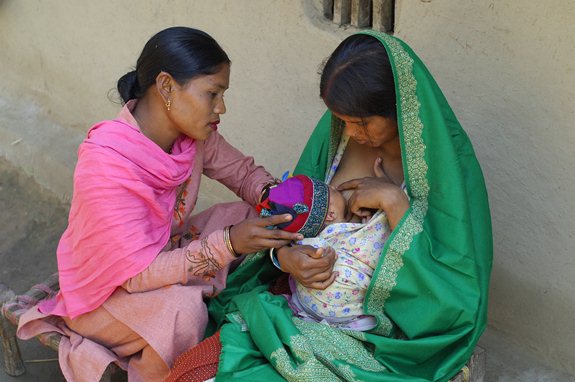
Health experts and activists are calling for the government in the Indian state of Assam to create public breastfeeding areas in India.

Assam, a state in northeast India, has a bad record when it comes to maternal and infant mortality rates.

With Aug. 1-7 being World Breastfeeding Week, the spotlight has shifted to Assam, where there are no public facilities available for women to breastfeed. As a result, mothers who are lactating often have a difficult time comfortably attending to their infants.

The difficulty is greater for mothers in rural areas, where malnutrition rates in infants are higher. Additionally, mothers who are working do not have the ability to meet their babies’ needs in a timely matter.

To avoid malnutrition, the need for public breastfeeding areas in India, specifically Assam, is high. Creating designated areas, such as in buses and railway stations, would help avoid malnutrition.

Those engaged in World Breastfeeding Week are also asking for uniformity when it comes to maternity leave. Organizations such as the Association of Promotion of Child Nutrition (APCN) and Breastfeeding Promotion Network of India (BPNI) are calling on the state government to implement consistent leave in both the public and private sectors for working mothers.

Currently, women working in the public sector are granted a leave of six months, but most are unaware they can take a leave to care for their babies, as the parameter is not implemented uniformly in the sector.

While women are granted a leave of between three and four and a half months in the private sector, most workplaces in the public and private sectors lack the proper facilities to allow women to breastfeed, leading to problems for mothers.

– Matt Wotus

Sources: Encyclopedia Britannica, The Times of India, World Breastfeeding Week
Photo: Healthy Newborn Network

August 6, 2015
https://borgenproject.org/wp-content/uploads/borgen-project-logo.svg 0 0 Borgen Project https://borgenproject.org/wp-content/uploads/borgen-project-logo.svg Borgen Project2015-08-06 01:30:202020-07-10 08:32:34Health Experts Call for Public Breastfeeding Areas in India
Development, Global Poverty, Women & Children, Women and Female Empowerment

Vital Voices: Projecting the Voices of Notable Women

vital voices

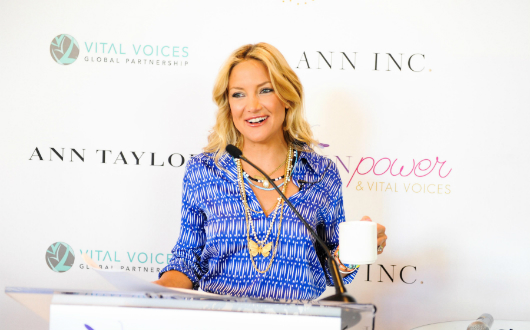
Vital Voices aims to foster growth in the developing world. How? They partner with prominent women leaders in places such as Latin America, the Middle East and Africa. According to the organization, women leaders have helped and educated more than 500,000 other women and girls in their communities with the knowledge that they gained during their partnership.

A Unique Approach

Vital Voices invests in leaders. These women know what they need and what their communities need. The organization encourages their fellows to help their communities and other women leaders in their communities.

The organization focuses on three key aspects: human rights, economic development and political participation. Through these areas of focus, women can obtain fellowships, education and influence.

Human Rights

According to UNICEF, there were 3.7 million victims of human trafficking in Africa in 2014. Vital Voices wants to improve the justice system’s responses and victim protection responses. Partnering with legal and criminal justice experts in Cameroon and Uganda, the organization desires to combat this issue.

In Uganda, Voices partners with AEquitas and Law and Advocacy for Women in Uganda. In Cameroon, Vital Voices partners with AEquitas and Vital Voices network members.

Economic Development

Women business owners face disadvantages that male business owners do not. Voices provides fellowships in Latin America, the Middle East and Africa. Women can learn how to grow their businesses and help their communities.

The fellowships allow businesswomen to learn more about leadership, finances and networking. This not only helps the businesswoman, but it also helps foster economic growth in her community.

Political Participation

According to Vital Voices, women only hold 19% of government positions internationally.

The organization is trying to strengthen women’s representation in the Pacific Islands. Partnering with New Zealand Ministry of Foreign Affairs and Trade and AusAID PLP, Voices empowers women to influence policy change that would increase women’s presence in the workforce.

The Impact

According to U.N. Women, an increase in women in the labor force increases overall economic growth. Vital Voices wants to help women help themselves. In addition, the organization realizes that women have a great impact on the growth of developing countries. Women’s empowerment is now recognized as a way to decrease global poverty.

– Ella Cady

Sources: UNICEF, UN Women, Vital Voices
Photo: Pop Sugar

August 2, 2015
https://borgenproject.org/wp-content/uploads/borgen-project-logo.svg 0 0 Borgen Project https://borgenproject.org/wp-content/uploads/borgen-project-logo.svg Borgen Project2015-08-02 11:43:532024-06-04 01:17:41Vital Voices: Projecting the Voices of Notable Women
Refugees and Displaced Persons, Women & Children

Protecting Displaced Mothers-to-Be

Displaced-Mothers-to-be

For mothers-to-be, few things are scarier than not knowing where they will have their baby. During wars and conflicts like those in Yemen, Sudan and Nigeria, people flee and become refugees. Some of those leaving are pregnant women. Despite being displaced persons, they still need the same care during their pregnancies and deliveries; however, many times refugee camps are unsanitary and have few medical staff with limited supplies. The United Nations Population Fund (UNFPA) and USAID work together to bring proper medical care to pregnant refugee women in Nigeria who have fled from Boko Haram.

The goal is to provide safe, clean, dignifying births to mothers. USAID sent UNFPA birth kits from Deluxe Childbirth Services to be handed out to mothers and potential mothers. This ensures that no matter where a woman ends up giving birth, she will have with her the items necessary for safe delivery. Included in the kit are a delivery mat, three infant diapers, antibacterial soap, methylated spirits, five pieces of gauze, cotton wool, an infant cord clamp, a scalpel and mucus extractor. USAID is also providing funding for training skilled delivery nurses in refugee camps and areas. Upon delivery, mothers receive baby packs with clothes and items that newborns need.

The goal of the packs is to provide the tools for doctors and nurses to deliver a baby in resource-limited areas as well as necessary sanitation items to prevent infection. Infections and lack of proper tools are the leading cause of maternal deaths in developing countries.

It is expected that there will be 60,000 births by displaced women in Nigeria alone this year. That means already limited resources will be taxed. The birth kits are a welcomed item in refugee camps because it means more women can have a safe and healthy delivery.

– Katherine Hewitt

Sources: Premium Times, news24
Photo: Premium Times

July 28, 2015
https://borgenproject.org/wp-content/uploads/borgen-project-logo.svg 0 0 Borgen Project https://borgenproject.org/wp-content/uploads/borgen-project-logo.svg Borgen Project2015-07-28 12:22:392024-05-27 09:26:15Protecting Displaced Mothers-to-Be
Global Poverty, Health, Women & Children

Maternal Mortality in Zambia

Maternal_Mortality
Zambia is a landlocked country in southern Africa with a population of about 15 million. It borders Angola and the Democratic Republic of The Congo. One of the main health problems that Zambia faces is maternal mortality. However, in recent years the maternal mortality rate (MMR) in Zambia has declined.

In 1996, the MMR in Zambia was 649 per 100,000 live births. Although this number rose throughout the years, to a total of 729 per 100,000 births in 2002, by 2011, the MMR in Zambia had fallen to 591 per 100,000.

Hemorrhaging, or extensive bleeding, is one of the main causes of maternal mortality. Many women who give birth at home do not have the blood transfusions available to help them recover from the loss of blood, and some hospitals also do not have enough blood available to provide those transfusions. According to the United Nations Population Fund (NFPA), hemorrhaging accounts for 34 percent of maternal deaths.

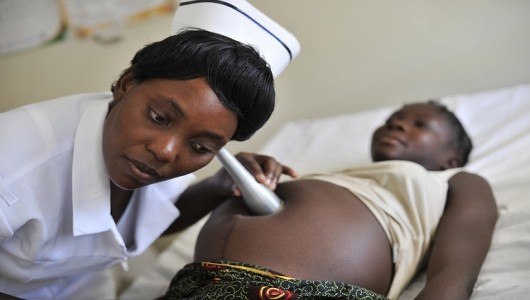
The Population Reference Bureau reports that another main cause of maternal mortality in Zambia is obstructed labor, which is when the infant is not able to exit its mother due to its position or the size of its head. Obstructed labor can be solved by giving birth via C-section, but many people give birth at home and some hospital attendants are not able to perform the C-section needed for a safe delivery. 8 percent of the maternal deaths in Zambia are due to obstructed labor.

Infections due to unsanitary conditions during delivery also account for some of the maternal deaths which occur in Zambia. 13 percent of mothers die because of poor hygienic conditions during their delivery. Other causes of maternal mortality include complications from unsafe abortions and underlying causes such as malaria, anemia, HIV or cardiovascular disease, diseases that are aggravated during delivery.

Another problem is that many women are not able to go to a hospital and receive the help that they need. Only 47 percent of births in Zambia are attended by a skilled health worker. Urban women are more likely to have access to a hospital at the time of birthing. Women also choose to not go to a hospital because of traditional beliefs and customs, which promote home births and the use of traditional healing — such as the drinking of certain herbs that are supposed to help women deliver quickly. These herbs can cause vomiting and diarrhea and sometimes complicate the delivery.

Groups such as UNICEF and Saving Mothers; Giving Life (SMGL) are working to help lower the number of maternal deaths in Zambia. Saving Mothers; Giving Life is a group that works with the Zambian government and has a six-step plan they use to helping decrease the MMR. Firstly, they equip facilitates so that they are prepared to help women with complications receive care within two hours. They also work to increase the availability of drugs and equipment, train and mentor health professionals, promote better transportation to health facilities, improve data collection and help mobilize communities to increase demand for hospital births. Since 2011, they have been working in four districts in Zambia and have decreased the MMR in those districts by 35 percent.

UNICEF, according to their website, funds programs and interventions aimed at improving care for mothers and children. The government of the Republic of Zambia is also playing a large part in improving the MMR, as they have abolished user fees for maternal and child health services in order to grant larger access to such services.

All of these efforts have paid off, as shown by the dramatic success of Saving Mothers; Giving Life. However, in order to help continue to reduce MMR, programs such as those implemented by SMGL should be established throughout the entire country.

– Ashrita Rau

Sources: UNICEF, Saving Mothers, PRB, The CIA World Factbook
Photo: Flickr

July 24, 2015
https://borgenproject.org/wp-content/uploads/borgen-project-logo.svg 0 0 Borgen Project https://borgenproject.org/wp-content/uploads/borgen-project-logo.svg Borgen Project2015-07-24 19:37:372024-05-27 09:26:07Maternal Mortality in Zambia
Advocacy, Global Poverty, Women & Children

Kat Johnson Discusses the Institute of Global Homelessness

global_homelessness
Homelessness is a problem waiting to be solved everywhere around the globe. The Institute of Global Homelessness was launched in 2014 to be a resource to solve this problem and believes that the cause is not hopeless. DePaul University and Depaul International partnered to establish the IGH.

It is located at DePaul University in Chicago and is the brainchild of Depaul International, a charity based in London. The university is the largest Catholic University in the U.S. The charity is the parent organization of a group of charities that supports the homeless and marginalized people around the world. Both organizations were founded by the Vincentians, a congregation of priests and brothers, who follow the values of St. Vincent de Paul, a 17th century French priest. Throughout his life, St. Vincent dedicated himself to serving the poor.

IGH focuses its efforts to solve global homelessness on research, leadership and responding to need. On June 1-2, 2015, less than a year after its opening, IGH hosted its first bi-annual research conference, Homelessness in a Global Landscape, at DePaul. Kat Johnson, the Director of IGH, has previously worked for nine years around the globe on issues related to housing and homelessness in various support and leadership roles.

What were the reasons for establishing the Institute of Global Homelessness at DePaul University?

The idea for IGH came from the realization that there was nothing operating at the international level that could act as a resource and consulting hub for leaders around the world who are working to end homelessness.

Mark McGreevy, group chief executive of Depaul International in the U.K., often fielded requests for advice and expertise about ending homelessness by policymakers, service providers and nonprofits and realized there was nowhere to refer them. McGreevy contacted DePaul University in Chicago knowing that aiding the poor is central to the university’s Vincentian mission. DePaul University’s belief in coordinated, effective public service informed the institute’s aim to provide research, leadership, consultancy and shared resources to those working to end homelessness.

Why is DePaul interested in global homelessness instead of focusing on homelessness in Chicago (since it is one of the top 25 cities in the country with a large homeless issue)?

The idea behind IGH is that by connecting effective practice and tenacious leaders across regions, we can accelerate an end to homelessness everywhere. It is DePaul University’s hope that the institute’s work will directly contribute to ending homelessness here in the city. In fact, the day following the conference, we worked with five Chicago-based homelessness organizations to host tours and exchanges with the international attendees.

Since assuming the director role for the institute, I’ve met many professors and students who work closely with the Steans Center for Community-Based Learning, University Ministry and academic programs at DePaul University that look at homelessness from various angles or volunteer with programs addressing homelessness around the city. The decision to lead the IGH has only strengthened DePaul’s drive to contribute to and support the efforts of Chicago’s homelessness advocacy organizations.

How did DePaul come to host the Homelessness in a Global Landscape Conference?

We wanted to gather the best and brightest minds working in the homelessness field in a room and to begin building a global movement to end homelessness. We also used the opportunity to get feedback on our global framework on homelessness, which attempts to set out a common vocabulary and broad definition of homelessness to enable collaboration.

What is your overall reaction to the conference?
The conference convinced me that a global movement to end homelessness is possible. Although we had a back-to-back schedule, people approached us between sessions with the desire to discuss concrete steps toward building a global movement. As a result of those informal conversations, we rearranged the second day’s agenda to include facilitated discussions.

It was one of the most heartening things I’ve seen—delegates from places as varied as India, Canada, Chile and Kenya raising their hands, saying, “I’m ready to see an end to this problem. What will we do to make sure that happens?”

Did the conference fulfill its purpose?

The conference was a success. We saw a robust exchange of ideas, knowledge and sharing of best practices among leaders from almost 30 countries. Our proposed definition and framework of homelessness was largely accepted by attendees, and a willingness to join a global movement emerged.

Could you give some examples of what homelessness means across the globe including an example from a developed country and a developing country?

Soon, we will be sharing widely the final framework, which captures variations of what homelessness can mean. We break homelessness into categories and sub-categories. Any given country will see some of these categories as homeless and others not. Our first category identifies people without accommodation. If you went to Delhi you might hear people talking about “pavement dwellers,” who stay on the pavement in a consistent location. In the U.S., you would more likely hear the term “street homelessness” or “unsheltered homelessness” to describe pavement dwellers. In a third category, there is considerable variation across countries for people defined as living in severely inadequate housing. Some places might consider someone staying on a relative’s couch homeless, others not. I was recently in Pretoria, South Africa, where we saw an informal settlement with structures that consisted of a few boards of wood as walls and a piece of corrugated metal along the top. The structure provided very little protection from weather and no sanitation services. Some people you ask would absolutely consider that homelessness; others would say it isn’t.

When we set out to write a framework of homelessness that would resonate globally, it was important for us to capture all the complexities in naming and defining homelessness in order to offer common language to discuss the various circumstances that can be described as homelessness. So it’s not that any one country would consider everything in our framework as homelessness, and we aren’t pushing anyone to do that. But for the first time, we have a menu with language that will make it possible to compare apples to apples.

Finally, I’d like to note that within this broader set of categories, IGH drew a very clear line around our own focus populations, which are people without accommodation as well as some forms of people living in crisis or temporary accommodation (for example, homelessness shelters or women and children living in refuges for those fleeing domestic violence).

Did you come any closer to a universal definition of homelessness?

We presented our proposal for a global framework of homelessness and received feedback during and following the conference. We are now in the process of refining the definition and expect to publish the final version soon.

Measuring homelessness was a goal of the conference. Is homelessness measured by the reasons people are homeless? Is there any way to tell the numbers of homeless based on the reason for homelessness, such as extreme poverty, natural disasters, runaway youth or LGBT issues?

We begin by looking at a person’s living situation. For example, “people sleeping in the streets or LBGT in other open spaces” will measure exactly that. In most of the world this basic level of measurement is not happening; getting those basic numbers will be paramount at a high level in assessing trends and determining how policy affects the issue. But, of course, to solve the problem we need to know why people experience homelessness and, ideally, also know the individual people experiencing homelessness in a particular place by name and housing need. We see basic measurement as necessary but not sufficient to end homelessness outright. So we will be working on causes—and even more importantly, solutions—alongside the measurement work.

What are your plans for future conferences?

We plan to hold a conference every other year, so look for the next one in 2017. We anticipate narrowing the focus to a specific topic within homelessness. Of course, between now and the next conference, we will continue to run small convenings to support and connect regional networks and gather people.

– Janet Quinn

Sources: Institute of Global Homelessness, DePaul University
Photo: DePaul University
July 24, 2015
https://borgenproject.org/wp-content/uploads/borgen-project-logo.svg 0 0 Borgen Project https://borgenproject.org/wp-content/uploads/borgen-project-logo.svg Borgen Project2015-07-24 18:18:012024-05-27 09:25:45Kat Johnson Discusses the Institute of Global Homelessness
Global Poverty, Malnourishment, Women & Children

How Malnutrition Affects Pregnant Women in Developing Countries

Malnutrition-and-Pregnancy-Global-Poverty

Malnutrition is a significant problem in developing countries. Without substantial resources, many men, women and children go to bed hungry. Tackling malnutrition should be a priority for everyone, especially pregnant women.

A woman’s nutritional intake impacts both her health during pregnancy and the health of her baby. Without proper care, she is susceptible to illnesses and her baby’s health is at risk. Malnutrition during pregnancy can cause devastating results.

In many countries, tradition forces women to be the last to eat at meals, which may result in them receiving smaller portions. This notion severely impacts pregnant women.

A woman that is undernourished at the time of conception is at risk of serious health issues for both herself and her baby. Not only is it unlikely that her nutritional status will improve throughout the pregnancy, but her body also experiences additional demands due to the growing baby. Without enough food, she will most likely lose weight, which increases the risk of maternal mortality.

When her body is unable to obtain or store enough nutrients required to support embryo growth, the cells may not divide properly, resulting in a chance that the fetus’ development will be impaired. The placental cells, which support the fetus’ growth during pregnancy, are more likely to surround the fetus in large numbers, forcing the fetus to become smaller than it should be. This leads to the baby being born at a low birth weight, which in turn often leads to severe cognitive and developmental deficits.

A baby’s organs develop during the first five weeks of pregnancy. In order for the organs to grow properly, it is imperative for women to be healthy and have food supplies readily available.

A woman’s caloric needs increase with pregnancy. An additional 150 calories per day is needed to support the baby in the first three months of the pregnancy. In month four, the additional calories needed increase to 300 per day.

In addition, women must have the proper nutrients in their diet, such as foods with folic acid, iron calcium, protein, vitamin B12, vitamin D and vitamin A. According to the World Food Programme, half of all pregnant women in developing countries are anaemic (having an iron deficiency), which causes around 110,000 deaths during childbirth per year.

Without enough nutrients, a baby is at higher risk of neural tube defects, brain damage, premature birth, underdevelopment of organs, death and more. If a child becomes malnourished in the womb, the damage can be permanent.

Improving nutrition is an investment that could save the lives of women around the world; it will also decrease the number of birth defects and disabilities seen in newborns and young children. In many developing countries, nutrition is essential to promoting a happy and healthy lifestyle where no person goes to bed hungry.

– Kelsey Parrotte

Sources: Livestrong, Mother and Child Nutrition, Virtual Medical Center, World Food Programme
Photo: The Visible Embryo

July 24, 2015
https://borgenproject.org/wp-content/uploads/borgen-project-logo.svg 0 0 Borgen Project https://borgenproject.org/wp-content/uploads/borgen-project-logo.svg Borgen Project2015-07-24 08:56:002024-06-05 03:46:38How Malnutrition Affects Pregnant Women in Developing Countries
Children, Global Poverty, Health, Women & Children

Save Lives At Birth Challenge Encourages Innovation

Save_Lives_At_Birth

The Save Lives At Birth Challenge seeks to improve the chances of survival for mothers and newborns in developing nations. Their aim is to leapfrog existing products and conventional approaches to find the best possible solution to a difficult problem.

In Sub-Saharan Africa, women are 136 times more likely to die in childbirth than in developed countries. From the beginning of labor through the following 48 hours, the mother and newborn are at the highest risk of infection and complications, and the Save Lives At Birth Challenge seeks to change these unfavorable odds.

The Save Lives At Birth Challenge takes on the leapfrogging mentality: skip intermediary steps and get right to the fastest, smartest and cheapest solution. Each year, Save Lives At Birth offers grant money to innovators with big ideas that will help women and children.

One remarkable innovation that received this grant money was the Gene-Radar, created in Cambridge, Massachusetts. It’s an iPad-sized device that accurately tests for diseases such as HIV in less than an hour. In the developing world, it can take up to two weeks to get blood tests and cost up to $200. The Gene-Radar is still in production, however, by the time it is on the market it will be 10 to 100 times cheaper than the current option.

Using the Gene-Radar, health workers would simply have to take a prick of blood, place it on a nano chip, then place the chip in the device and have results within the hour. This would allow the health worker to easily identify the problem, and for the patient to quickly receive treatment.

Another innovation that received grant money was thought up by a car mechanic, Jorge Odón, who got the idea after watching a video on how to remove the lost cork from a wine bottle. He realized the same trick could be used to save a baby stuck in the birth canal. Odón’s invention is shockingly simple: an attendant would slip a lubricated plastic bag around the baby’s head, inflate to grip and then pull the bag until the baby emerges.

Doctors say this invention has enormous potential in the developing world. Odón has created a solution to a problem that has been around for years. It is innovation like this that the Save Lives At Birth Challenge seeks and promotes.

– Hannah Resnick

Sources: Save Lives At Birth 1, Save Lives At Birth 2, Saving Life at Birth 3, USAID
Photo: Save Lives At Birth

July 23, 2015
https://borgenproject.org/wp-content/uploads/borgen-project-logo.svg 0 0 Borgen Project https://borgenproject.org/wp-content/uploads/borgen-project-logo.svg Borgen Project2015-07-23 09:40:102020-07-07 14:37:13Save Lives At Birth Challenge Encourages Innovation
Global Poverty, Health, Women, Women & Children, Women and Female Empowerment

Ketamine Enables Life-Saving C-sections for Women in Developing Regions

ketamine

“Every minute of every day, a woman dies somewhere as a result of pregnancy or childbirth,” says Thomas Burke, chief of Massachusetts General Hospital’s Division of Global Health and Human Rights.

Ketamine, an inexpensive anesthetic, is a solution to the global crisis of maternal death due to pregnancy, enabling women to undergo C-sections rather than facing death or serious injury.

Each day, 1,400 women die from causes relating to pregnancy. Pregnancy is the second largest killer of women, behind only HIV/AIDS. And for each woman that dies from pregnancy, 50 to 100 are disabled or suffer from disease. Pregnancy related death affects around 15 to 20 million women every year.

A major cause of death and injury during pregnancy is obstructed labor and a lack of availability of a cesarean section. When labor is obstructed and no C-section is available, women frequently die, suffer from postpartum hemorrhage (which can also cause death), or suffer from fistula (where the bladder and rectum walls erode and are permanently connected to the vagina).

Many clinics and hospitals in developing countries lack the ability to perform C-sections because no anesthesia or anesthesiologists are present, which are necessary for this intensive surgery. This lack of anesthesia services presents a global problem, as anesthesia can potentially save countless lives of women.

Massachusetts General Hospital is addressing this crisis. They created an innovative way to provide anesthesia services to remote, extremely impoverished regions. Their initiative is called The Every Second Matters for Mothers and Babies—Ketamine for Painful Procedures and Emergency Cesarean Section (ESM-Ketamine). Ketamine is an extremely inexpensive anesthetic; it has been used without any formal procedure around the world for over 40 years, and has a near perfect safety record even with little equipment.

C-sections are the most common worldwide operation. One study of 49 countries estimates that if there was an increase in C-sections (by 2.8 million), 59,100 cases of obstetric fistula and 16,800 maternal deaths would be prevented.

The ESM-Ketamine initiative’s goal is to train clinicians that have no background in anesthesia. The Ketamine initiative offers four days of training for mid-level and above healthcare providers for C-sections and emergency surgeries, using Ketamine as an anesthetic, when no professional anesthetist is available.

Most anesthesia training programs require around four years of training, which is simply not feasible in these developing communities, nor an immediate solution to a crisis that is happening now.

The World Health Organization estimates that 10-15% of births require a C-section. Kenya Demographic Health Survey recently reported that C-section rates in many parts of Kenya are lower than one percent of births. A 2011 Kenya Ministry of Health study also found that only 18 anesthetists exist in the Nyanza region, which has a population of 5.8 million.

Since May 29, 2015, ESM-Ketamine initiative has trained healthcare providers in various hospitals across Kenya, resulting in 231 safe, life-improving surgeries. The program’s initial success demonstrates the powerful potential that Ketamine has for making previously impossible surgeries accessible to women in developing nations, women that provide deeply-rooted social and economic stability to their communities.

When a mother dies or is disabled, her entire community is impacted, and quality of life diminishe—child death rate increases, child education decreases, and both families and communities become more economically unstable.

The maternal mortality rate (MMR), or the ratio of the number of women that die per 10,000 births, was 11.7 in the United States in 2005. In 2014, there are still places on earth where one in six women die from pregnancy related causes; in South Sudan, Afghanistan, and Sierra Leone, the MMR is as high as 2,054.8.

The ESM-Ketamine program provides an inexpensive solution that allows women to undergo cesarean sections, rather than dying or becoming seriously disabled. Healthy women enable a healthy, stable community.

– Margaret Anderson

Sources: Massachusetts General Hospital, World Journal of Surgery, Harvard H Policy Review
Photo: Massachusetts General Hospital

July 23, 2015
https://borgenproject.org/wp-content/uploads/borgen-project-logo.svg 0 0 Borgen Project https://borgenproject.org/wp-content/uploads/borgen-project-logo.svg Borgen Project2015-07-23 08:42:042020-07-07 14:44:59Ketamine Enables Life-Saving C-sections for Women in Developing Regions
Page 9 of 16«‹7891011›»

Get Smarter

  • Global Poverty 101
  • Global Poverty… The Good News
  • Global Poverty & U.S. Jobs
  • Global Poverty and National Security
  • Innovative Solutions to Poverty
  • Global Poverty & Aid FAQ’s
Search Search

Take Action

  • Call Congress
  • Email Congress
  • Donate
  • 30 Ways to Help
  • Volunteer Ops
  • Internships
  • Courses & Certificates
  • The Podcast
Borgen Project

“The Borgen Project is an incredible nonprofit organization that is addressing poverty and hunger and working towards ending them.”

-The Huffington Post

Inside The Borgen Project

  • Contact
  • About
  • Financials
  • President
  • Board of Directors
  • Board of Advisors

International Links

  • UK Email Parliament
  • UK Donate
  • Canada Email Parliament

Get Smarter

  • Global Poverty 101
  • Global Poverty… The Good News
  • Global Poverty & U.S. Jobs
  • Global Poverty and National Security
  • Innovative Solutions to Poverty
  • Global Poverty & Aid FAQ’s

Ways to Help

  • Call Congress
  • Email Congress
  • Donate
  • 30 Ways to Help
  • Volunteer Ops
  • Internships
  • Courses & Certificates
  • The Podcast
Scroll to top Scroll to top Scroll to top