• Link to X
  • Link to Facebook
  • Link to Instagram
  • Link to TikTok
  • Link to Youtube
  • About
    • About Us
      • President
      • Board of Directors
      • Board of Advisors
      • Financials
      • Our Methodology
      • Success Tracker
      • Contact
  • Act Now
    • 30 Ways to Help
      • Email Congress
      • Call Congress
      • Volunteer
      • Courses & Certificates
      • Be a Donor
    • Internships
      • In-Office Internships
      • Remote Internships
    • Legislation
      • Politics 101
  • The Blog
  • The Podcast
  • Magazine
  • Donate
  • Click to open the search input field Click to open the search input field Search
  • Menu Menu

Archive for category: Women & Children

Aid, Global Poverty, Women & Children

CPAP Machine to Save Lives of Newborns

CPAP-Machine-for-Newborns

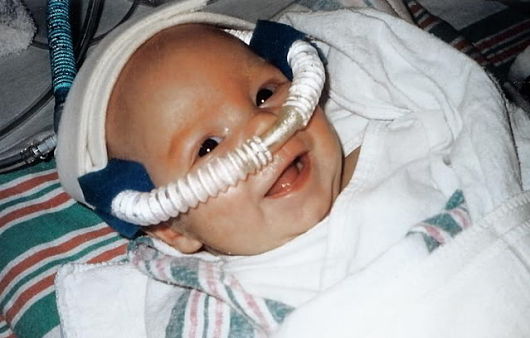
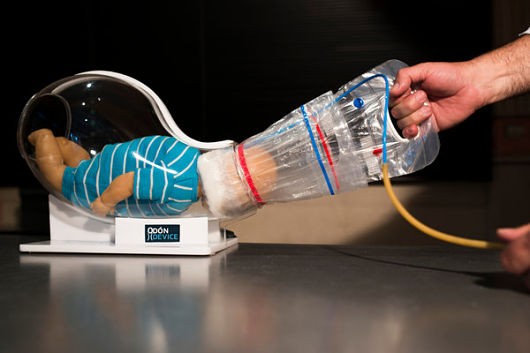
The neonatal continuous positive airway pressure machine, or CPAP, can be used to save the lives of newborns in developing countries who struggle to breathe after birth. PATH named the neonatal bubble CPAP machine a top breakthrough innovation of 2015 that can help save women and children.

The CPAP machine is used for newborns with breathing difficulties, a leading cause of death in premature babies. The machine contains three main parts: the mask that fits over the nose (or nose and mouth) with straps to keep it in place, the tube that connects to the machine’s motor and the motor that blows air into the tube.

It works using a positive pressure system to help a newborn experiencing respiratory distress syndrome (RDS). RDS is more common in newborns because they have not yet produced enough surfactant, a liquid that coats the lungs to help the baby breathe in air. Without enough surfactant, the infant’s lungs collapse.

The problem is that the neonatal CPAP machine costs up to $6,000, a price tag far too high for most developing countries. Because of this, a group of Rice University faculty, students, clinicians and public and private sector partners dedicated to health technology initiatives sprung into action.

Partnering with Queen Elizabeth Central Hospital, Baylor College of Medicine and 3rd Stone Design, this group, called Rice 360°, created the bubble CPAP to treat infants with RDS in the developing world. Using an aquarium pump to deliver air and a water bottle to relieve pressure, the machine costs as low as $800 instead of $6,000.

With this more reasonable price range and help from the Saving Lives at Birth grant, Rice 360° and its partners are looking to implement the device where it is needed, starting in Malawi, Zambia, Tanzania and South Africa. In areas where premature babies have a low chance of survival, the bubble CPAP machine will change the odds and decrease infant mortality.

– Hannah Resnick

Sources: NIH 1, NIH 2, PATH, Rice 360°
Photo: Tracheostomy

July 22, 2015
https://borgenproject.org/wp-content/uploads/borgen-project-logo.svg 0 0 Borgen Project https://borgenproject.org/wp-content/uploads/borgen-project-logo.svg Borgen Project2015-07-22 09:47:502024-05-27 09:25:47CPAP Machine to Save Lives of Newborns
Global Poverty, Women & Children

Contraceptive Vaginal Ring Helps Mothers Around the World

vaginal_ringThe World Health Organization has included the progesterone contraceptive vaginal ring (CVR) on its 2015 Essential Medicines List.
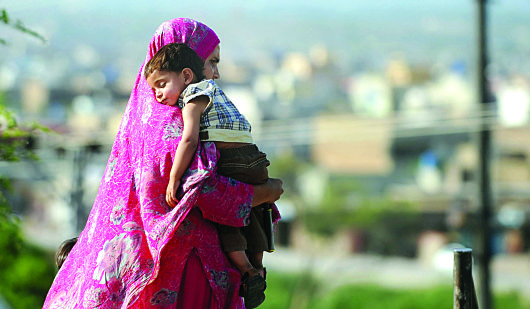
Developed by the Population Council, this contraception method is unique because it is safe and effective for lactating women after they have given birth. It can be used as early as four weeks after childbirth for up to one year in order to space out potential future births.

Birth spacing is important for the health of mother and child. Maternal death and other health complications are more likely to arise with short intervals between births. In addition, family planning can help parents to plan finances related to family expansion. Family planning is critical to poverty reduction. When families do not have the knowledge or ability to space births, particularly in developing countries, they may also lack the resources to support these children.

The vaginal ring is 98.5 percent effective in preventing pregnancy with proper use. The ring can be inserted and removed by the mother. This translates to less doctor visits, which are known to strain family resources, such as time and money, in developing countries.

The ring releases progesterone, but does not interfere with breast milk production. In this way, it is unlike oral contraceptives, which contain estrogen and cannot be used by lactating women.

This method is currently used in Bolivia, Chile, Dominican Republic, Ecuador, El Salvador, Guatemala, Panama, and Peru. Currently, studies in India and Sub-Saharan Africa are underway in order to determine if it could be effective in these regions as well.

The inclusion of this method on the list from the World Health Organization’s list suggests that it is likely to be more accessible to communities in the near future. The CVR is effective, safe, and inexpensive. Medical services can be difficult to reach in developing countries, but the CVR places very few demands on doctors.

The Population Council is currently developing another vaginal ring that will not have to be replaced every 3 months. It would last for one year. This would make this contraceptive method even more appropriate for the developing world.

In the future, we may even see vaginal rings that can protect against HIV and other sexually transmitted diseases, in addition to its contraceptive function. This exciting new technology has the potential to address many of the global health problems our world faces today.

– Iliana Lang

Sources: WHO, Population Council, Impatient Optimists
Photo: Impatient Optimists

July 11, 2015
https://borgenproject.org/wp-content/uploads/borgen-project-logo.svg 0 0 Borgen Project https://borgenproject.org/wp-content/uploads/borgen-project-logo.svg Borgen Project2015-07-11 14:11:192024-05-27 09:25:51Contraceptive Vaginal Ring Helps Mothers Around the World
Global Poverty, Health, Women & Children

How Malawi’s Male Champion Model Program is Fighting HIV

Male Champion Model
Worldwide, 34 million people are living with HIV, including 3.3 million children. In the African nation of Malawi, 910,000 citizens out of a population of 15.9 million have HIV. Around 170,000 are children, and children account for 16,000 new infections annually. It is the leading cause of death among adults in Malawi and contributes to the country’s low life expectancy of 54.8 years.

Each year, thousands of babies in Malawi contract HIV through mother-child transmission. This can occur during pregnancy, labor, delivery or breastfeeding. Children with HIV get sick more often and more severely than children without HIV, and they struggle to fight common pediatric infections. In developing countries, they have a higher risk for tuberculosis, diarrhea and respiratory illnesses, all of which can be a death sentence if they lack access to effective healthcare.

A baby born to a mother who is HIV positive has a 15% to 45% chance of contracting HIV if there is no medical intervention. However, this rate drops to 5% with intervention. Malawi’s Ministry of Health must encourage expecting parents to get tested before the mother gives birth in order to provide appropriate care and prevent the baby from contracting HIV.

In 2012, the Ministry of Health worked with UNICEF to launch the Male Champion Model (MCM) program. Before the MCM, it was incredibly rare for men to be involved in their wives’ healthcare, even if she was pregnant. Furthermore, many women avoided being tested for HIV out of fear of being abandoned by their husbands or discriminated against in society if the results were positive. The MCM trains “male motivators” to reach out to other men in their communities to encourage them to accompany their wives to get tested.

So far, the program has trained 3,400 “motivators” in six districts of Malawi. They visit households in their villages each day to discuss the importance of HIV testing with couples. Now it is increasingly common for couples to get tested together, and in one year, the country has seen a huge jump, from 0% to 86%, in men participating in antenatal services. When women know their status, their healthcare providers can give them anti-retroviral drugs to reduce the risk of transmitting HIV to their child.

Over the past decade, Malawi’s government has focused on decreasing the nation’s HIV rates, and the MCM is just one part of these efforts. They have expanded voluntary HIV testing and counseling, promoted condom use, increased the distribution of condoms, started a mass media campaign to raise awareness about prevention and educating young people about HIV.

These initiatives have led to some progress. In 2003, 14% of the population had HIV, and by 2011 that number had dropped to 10%. Also in 2003, 100,000 new infections were occurring annually, but that number had dropped to 46,000 new infections by 2010. Clearly, there is still a long way to go toward stamping out HIV in Malawi, but the MCM program has spared many children from the struggles of surviving with HIV.

– Jane Harkness

Sources: Avert, Elizabeth Glaser Pediatrics Foundation, Huffington Post, NAM, UNICEF, WHO
Photo: UNICEF

July 9, 2015
https://borgenproject.org/wp-content/uploads/borgen-project-logo.svg 0 0 Borgen Project https://borgenproject.org/wp-content/uploads/borgen-project-logo.svg Borgen Project2015-07-09 08:26:432024-12-13 17:51:39How Malawi’s Male Champion Model Program is Fighting HIV
Children, Global Poverty, Women, Women & Children

10 Breakthroughs That Will Help Women and Children

10 Breakthroughs That Will Help Women and Children
Since the Millennium Development Goals were adopted in 2000, global poverty has nearly halved. There have been huge advancements in medicine and more people than before having access to clean drinking water.

However, despite these advancements, women and children are still the most at risk. Because of the uneven progress in reducing global poverty for women and children, the Every Woman Every Child movement was started. Policymakers, donors, healthcare professionals and many others come together to find a solution to the uneven progress in reducing global poverty for women and children.

PATH released a list of Top 10 Technologies in 2015 for Women and Children that will help achieve the Millennium Development Goals. Here is a summary of each:

For Women:
1. Nonpneumatic AntiShock Garment is used to prevent postpartum hemorrhaging. It compresses the body and circulates blood to the vital organs after the mother has given birth.

2. Magnesium Sulfate is a low-cost, effective drug in treating life-threatening convulsions, preeclampsia and eclampsia, all pregnancy-related conditions.

3. Sayana Press is a new form of injectable contraceptive that is packaged in a one-time use, simple to administer needle. This increases women’s access to contraceptives and eliminates the risk of transmitting disease through sharing needles.

For Newborns:
4. Helping Babies Breathe is a program and simulator created to train 1 million birth attendants to make sure the baby takes it’s first breath, regardless of where it is born.

5. Chlorhexidine is a low-cost antiseptic that prevents the disease from entering the baby’s system through the newly-cut umbilical cord.

6. Continuous Positive Airway Pressure Device is designed to help premature babies breathe. It is an air and water pump system that gently flows pressurized air into the baby’s lungs.

For Children:
7. Kit Yamoyo is a bundled package of zinc and oral rehydration solution, which are affordable diarrhea treatment. Cola Life created the Kit Yamoyo to pack with Coca-Cola bottles that are delivered to Africa to spread the cure to diarrhea.

8. Phone Oximeter is a low-cost mobile health platform that allows people to test their blood oxygen levels using a sensor on the phone to test for pneumonia. The device then tells them the diagnosis and treatment options without needing access to a doctor.

9. Rotavac is an effective vaccine to cure rotavirus, the cause of deadly diarrhea. It costs $1 per dose and has already become widely available in India, changing the lives of thousands.

10. Backpack PLUS Project is a toolkit made to empower health workers in areas where the patients may never be within proximity to a doctor. The prototype includes medicines, diagnostics and supplies to increase the number of lives saved.

– Hannah Resnick

Sources: PATH, Every Woman Every Child
Photo: African Union

July 2, 2015
https://borgenproject.org/wp-content/uploads/borgen-project-logo.svg 0 0 Borgen Project https://borgenproject.org/wp-content/uploads/borgen-project-logo.svg Borgen Project2015-07-02 09:34:292024-06-04 03:53:0410 Breakthroughs That Will Help Women and Children
Global Poverty, Women & Children

Maternal Mortality in Pakistan

maternal_mortality_pakistan
In Pakistan, one in 89 women die because of pregnancy and childbirth-related complications, and Pakistan’s Maternal Mortality Rate (MMR) is 299 per 100,000 live births.

Twenty percent of the deaths of women of childbearing age are caused by maternal complications. The majority of these deaths are caused by postpartum hemorrhaging. Hemorrhages can be extremely problematic, especially if hospitals do not have enough blood for transfusions to replace the blood loss. Maternal mortality is also high due to puerperal sepsis and eclampsia. Sepsis is when infections during pregnancy, even those not directly related to the pregnancy, trigger the body’s inflammatory response to infection. Sepsis is also called blood poisoning, and it can only be cured with the prompt treatment of antibiotics.

Eclampsia, the third leading cause of maternal deaths in Pakistan, is convulsions in a pregnant woman resulting from high blood pressure. Eclampsia is often followed by a coma.

Rural women are less likely to have access to a hospital. The rate of maternal mortality is consequently higher in rural areas than urban areas—23 percent rather than 14 percent. Home births are extremely common in rural areas. A total of 74 percent of women in rural areas give birth at home, compared to 43 percent of women in urban areas.

If women have an education, they are more likely to seek out prenatal care. Ninety-six percent of women with education had prenatal care visits with a doctor, rather than 50 percent of women who were not educated. One-third of pregnant women in Pakistan do not get prenatal care at all, due to feeling it is unnecessary or that it costs too much money. Prenatal care can help prevent complications and decrease the maternal mortality rate. While prenatal care visits have increased, as of 2007, only 28 percent of Pakistani women went to the recommended four prenatal care visits.

Another reason why Pakistan has a high maternal mortality rate is due to the fact that contraceptive use has not increased much in recent years. In 1984, the Total Fertility Rate (TFR) was six children per woman in Pakistan. By 2008, this number declined to about four children per mother, with a rate of about three children per mother for women in urban areas. However, contraceptive use has remained steady, and only about 30 percent of married women of childbearing age use contraceptives. Contraceptive use is still stigmatized by religious members of the community, such as Mohammed Zakaria, the mufti of Jamia Islamia, an Islamic religious school. Zakaria argues that “family planning is wrong and un-Islamic if practiced routinely.” Educated mothers are more likely to use contraceptives, but many women in Pakistan are uneducated. NPR argues that an increase in education would lead to an increase in contraceptive use and a corresponding decrease in maternal mortality, citing Sri Lanka as an example. In Sri Lanka, the literacy rate is 91 percent (compared to 62 percent in Pakistan).

Maternal mortality is also a problem in Pakistan due to a shortage of doctors, nurses and beds at government hospitals. Many of the regular staff members are postgraduate trainees who are not able to handle pregnancy-related complications.

Pakistan currently only spends less than 1 percent of its GDP on healthcare. In order for maternal mortality rates to decrease, more money has to be devoted to improving hospital care and making hospitals more accessible. The stigma around contraceptive use also has to end, and an increase in education would also lead to a lower MMR.

– Ashrita Rau

Sources: NPR, UNICEF, NIH, The Express Tribune, USAID The DHS Program
Photo: Pakistan Today

July 2, 2015
https://borgenproject.org/wp-content/uploads/borgen-project-logo.svg 0 0 Borgen Project https://borgenproject.org/wp-content/uploads/borgen-project-logo.svg Borgen Project2015-07-02 09:15:022024-05-27 09:25:34Maternal Mortality in Pakistan
Development, Health, Women & Children

World Bank Funding Lao PDR to Improve Women’s Health and Nutrition

World Bank Funding
In an effort to improve conditions for the Lao governments’ maternal and health services, The World Bank Funding has gone to Lao People’s Democratic Republic’s (PDR) Health Governance and Nutrition Development Project on June 23. The International Development Association gave $26.4 million to Lao PDR with the approval of the World Bank’s Board of Executive Directors. The World Bank expects the fund to affect 1 million women and children in the next 5 years.

Free maternal health was initiated in Lao PDR to open financial gateways. Around 60% of women are not inclined to have more children. Now, with the project’s increase in funding, the number of women receiving family planning, care visits, and birth attendants is likely to increase.

Women need to be educated and consult healthcare workers in order to protect their bodies from disease and diminish the probability of birth mortality or miscarriages. With Lao PDR’s Health Governance and Nutrition Development Project funded by World Bank, health care services will be made more available and survival rates are expected to excel.

A report by Lancet Commission on Women and Health has tracked the consequences of women’s low socioeconomic status. With the input of social science professionals, program managers, policy innovators and advocates, connections between the role of women in systems, homes and communities have been founded to be most beneficial when they are given value and proper compensation. Women create sustainable nations when they are inclined to contribute to the well-being of all.

Additionally, the development of nutritional strategies is underway. Almost half of the children in the country, under the age of 5, are underweight. The Health Governance and Nutrition Development Project is determined to utilize its funding in services to children under the age of 14 by providing adequate nutrition and target infant feeding practices to improve behaviors in regards to nutritional intake.

The country’s economy has experienced vast progress thanks to foreign aid. In addition to $26.4 million, $11.6 million was also implemented into Lao PDR’s Poverty Reduction Fund (PRF) on June 23.

In financing PRF, a program started by Lao PDR in 2002, about 200 particular plans are in place to enhance education and health. The additional funding approved by The Word Bank helps prolong nutritional pilot projects and governmental sanitation programs.

PRF’s overall goal is to improve mobility and the use of public services among poverty-stricken populations in Lao PDR. The further development of roads and water resources is also a focus.

The poverty rates for Lao PDR fell from 46% in 1992 to 27.6% in 2008. This is a drastic feat towards satisfying the millennium goal of halving poverty by 2015. Life expectancy has also increased by 19 years. Since October 2011, PRF has improved conditions for 450 thousand Lao PDR residents. PRF has also improved the use of healthcare and safe water systems.

Following the millennium goals according to the 8th draft of the National Socio-Economic Development Plan (NSEDP) will hopefully result in the improvement of the country’s status by 2020.

– Katie Groe

Sources: World Bank 1, World Bank 2 WHO, UNDP Impatient Optimist
Photo: Swiss Cooperation

June 29, 2015
https://borgenproject.org/wp-content/uploads/borgen-project-logo.svg 0 0 Borgen Project https://borgenproject.org/wp-content/uploads/borgen-project-logo.svg Borgen Project2015-06-29 08:57:242024-05-27 09:25:24World Bank Funding Lao PDR to Improve Women’s Health and Nutrition
Human Trafficking, Women & Children

5 Things You Didn’t Know About the Sex Trafficking Industry

Things you didn’t know about the Sex Trafficking Industry
Below are the top five things you didn’t know about the sex trafficking industry.

1. Trafficked children are treated and tried as criminals even though federal law defines anyone under the age of 18 as a victim.

U.S. Federal law states that no one under the age of 18 is able to give consent to any sexual acts. However, children under the age of 18 are tried as prostitutes and criminals every day. There is an inherent flaw in the U.S. judicial system, which seems to allow survivors to be treated as criminals. Most of these children were forced into the industry and have no means of escaping except through the law, but when law enforcement officials are after them as well, it is no wonder that so many children feel trapped.

2. Many children in the trafficking industry do not believe they are victims.

When children are first recruited into the sex industry they are brainwashed. The younger the child the more they are convinced that working in the sex industry is the only job for them. Most survivors believe that they owe their “pimps” something, that there is no life for them outside of the trafficking industry because they have seen so many horrible things. For this reason, many sex trafficking survivors do not immediately seek assistance.

One survivor explained her thought process to the Girls Educational and Mentoring Services (GEMS), stating that the reason many “victims” dislike the term victim is because they are truly survivors. These men and women have survived horrible conditions and have seen things that no one could ever imagine, yet they persevere and survive through it all.

3. Boys make up 50 percent of the children trafficked in the U.S.

While the typical image of a trafficking victim is a young girl, clueless about the situation and finding herself having to tough it out on the rough streets, this excludes half of the trafficked population. Many young boys are taken and sold as workers or sex workers. These young men are especially susceptible to suicide and drug abuse because society does not accept them. The most dangerous areas for trafficking are New York City, Florida and California.

4. There are an estimated 27 million adults and 13 million children around the world who are victims of human trafficking.

There are more slaves in the world at this moment than there have ever been at any point in history.

5. Pregnant women are some of the most trafficked individuals.

Surprisingly, many pregnant women are at higher risk to be trafficked. Women who get pregnant while in the trafficking industry will often profit off of the pregnancy. Traffickers sell newborn babies to black market industries and split the profits between the doctors, lawyers, shippers and caretakers, leaving the mother with a small sum of money in place of a child.

Many organizations are working to crack down on the sex-trafficking industry and hopefully, with better surveillance and harsher laws, a new beginning can be found.

– Sumita Tellakat

Sources: Alternet, Facts, Polaris Project
Photo: All Girls Allowed

June 24, 2015
https://borgenproject.org/wp-content/uploads/borgen-project-logo.svg 0 0 Borgen Project https://borgenproject.org/wp-content/uploads/borgen-project-logo.svg Borgen Project2015-06-24 01:53:352024-05-27 09:25:165 Things You Didn’t Know About the Sex Trafficking Industry
Global Poverty, Women & Children

Maternal Mortality in the Philippines

maternal mortalityIn 2000, the U.N. agreed on eight Millennium Development Goals that it hoped to reach by 2015. Included among these goals: promoting gender equality and empowering women, reducing child mortality and improving maternal health. For the Philippines, improving maternal health is an extremely important goal since the maternal mortality rate of the Philippines was high—209 deaths per 100,000 live births as of 1993. The target for the Philippines is the reduction of the MMR to 52 deaths per 100,000 live births by 2015. However, while maternal mortality has been decreasing in the Philippines, it has not been falling at a fast enough rate.

Maternal deaths are still a huge concern for the Philippines. By 2006, the maternal mortality rate decreased to a rate of 162 per 100,000 live births and currently, the MMR is 120 deaths per 100,000 live births—still nowhere near the target that the MDGs established.

Various factors are responsible for the high rate of maternal mortality that the Philippines face. According to the IRIN, some of the main causes of maternal deaths are hemorrhages, sepsis, obstructed labor, hypertensive disorders during pregnancy and complications associated with unsafe abortions. Having a physician, nurse or midwife who has had formal training present during the birth can decrease the maternal mortality rate, but currently, these skilled birthing attendants supervise only 60 percent of births in the Philippines. Others rely on traditional birthing attendants who do not have formal training and therefore are often unable to deal with complications.

Poor women and women in rural areas are at a disadvantage. Around 75 percent of the poorest quintile do not have a skilled birth attendant to help them through their pregnancy. Rural areas also have higher maternal mortality rates because many women in rural areas begin having children at a young age. Since adolescent women are normally not developed enough for childbirth, these young mothers face many complications during and after pregnancy and contribute to the high maternal mortality rate.

Another problem that adds to the high maternal mortality rate in the Philippines is the low level of contraceptive use. The Philippines is 80 percent Catholic, so birth control pills, condoms and other forms are contraceptive use are considered to be similar to abortion. This has led to limited access to contraceptives, since contraceptives were previously not widely available at health care clinics.

This limited access to contraceptives has negative effects. In 2006, there were three million pregnancies in the Philippines. Half of those pregnancies were unplanned, and one third of the unplanned pregnancies resulted in abortions. A higher rate of contraceptive use will prevent this from happening and will consequently decrease the maternal mortality rate.

While rates of contraceptive use have not risen much from 2006 to 2014, there is hope that contraceptive use will now increase dramatically due to a birth control law that the Philippine Supreme court approved in April 2014. The law requires the government’s health centers to have free condoms and contraceptive pills. It may be too soon to tell whether that law has a significant effect on maternal mortality. However, the law will hopefully help the Philippines to reach its MDG by the end of 2015. Other ways to help reduce maternal mortality are providing more antenatal care and more widespread access to health facilities.

– Ashrita Rau

Sources: UNDP, IRIN News, Philstar, WHO, Huffington Post, United Nations, BBC
Photo: Flickr

June 18, 2015
https://borgenproject.org/wp-content/uploads/borgen-project-logo.svg 0 0 Borgen Project https://borgenproject.org/wp-content/uploads/borgen-project-logo.svg Borgen Project2015-06-18 16:00:042020-07-15 17:40:25Maternal Mortality in the Philippines
Aid Effectiveness & Reform, Development, Global Poverty, Women & Children

Poverty in Ahmedabad, India

Ahmedabad
With a population of around 8 million, the city of Ahmedabad is the largest in India’s western region of Gujarat. While India has long held a reputation for being one of the world’s least developed countries, it has steadily been shifting and is now one of the fastest growing developing countries. Poverty in India is starting to disappear; industry is thriving, literacy rates are increasing and the world community is beginning to see it as a real front-runner. There is no better example of this new shift in development than Ahmedabad.

Census information gathered in 2001 showed a literacy rate of around 79 percent. The next census, gathered in 2011, revealed a great increase, showing that around 85 percent of the population was literate. The first step in decreasing poverty is increasing education. For many years, India has faced issues with its large impoverished communities not allowing their children to attend school because they needed them to work in order to support the family. Now, with increased aid from various NGO’s and family structure organizations, Ahmedabad’s youth have been, for the most part, educated at least to an 8th grade level. This six percent gain is not the only leap that Ahmedabad has made.

When one imagines India, they might picture crowded streets, pollution, over-population, grand temples and the Taj Mahal, which would all suffice to describe it. However, recent census information has shown a 1.55 percent decrease in birthrates. While to some this may seem sad, it is quite the opposite. Many poor families will have upwards of 8 children in an attempt to have as many people working in order to support the family. Often, women are overwhelmed by the pressure to have kids, and with no safe methods of birth control available, many have more than ten in their lifetimes. While supporting 10 kids is hard enough, this amount of children can also be very detrimental to a woman’s health. Many women to die during childbirth. In the past few years, many women’s health organizations have gone to the slums of India to introduce birth control packs and condoms to the people. This decrease in birthrate is also accompanied by a 6 percent decrease in death rates of women during childbirth, as the amount of institutionalized deliveries has increased by 13 percent. While this may seem small, it marks a big change for the city of Ahmedabad and India as a whole.

As India continues to grow, poverty rates in Ahmedabad are decreasing. Occupying a large strip of the coastline, Gujarat is one of the best areas for businesses seeking to work overseas to take root. The business models in Gujarat and Ahmedabad have been described by UNICEF as “being a highly effective growth and private sector-driven model. In fact, the average growth rate of GDP in Gujarat over the past two decades has been higher than the national average, and more balanced than the other high growth-rate states.” This positive increase in GDP is primarily due to the agricultural and business sectors.

For now it looks like poverty is out and development is in for the great city of Ahmedabad, and this is a trend that the global community hopes to see a lot more of in the future.

— Sumita Tellakat

Sources: UNICEF India, Journal of Health Population and Nutrition, Ahmedabad Census 2011
Photo: Flickr

June 18, 2015
https://borgenproject.org/wp-content/uploads/borgen-project-logo.svg 0 0 Borgen Project https://borgenproject.org/wp-content/uploads/borgen-project-logo.svg Borgen Project2015-06-18 02:16:212024-05-27 09:24:15Poverty in Ahmedabad, India
Children, Women & Children

How Guatemala is Trying to Decrease Child Marriage

Guatemala-Trying-to-Decrease-Child-Marriage
Guatemala has one of the highest rates of child marriages, with over 30 percent of girls getting married by age 18 and 7 percent of girls getting married by age 15. It is also one of the only countries in which the rate of childbirths to girls under the age of 15 rose from 1990 to 2011.

In Guatemala, it is legal for girls to marry at age 14 as long as they have parental consent. However, many girls younger than 14 are forced to marry, resulting in early childbirth. In the village of Almolonga, a 13 year old’s childbirth caused a national scandal because her wedding—which took place when she was only 12—had been officiated by the mayor of the village.

Marriage at such a young age results in many complications because the girls’ bodies are not ready for childbirth. As the Council on Foreign Relations states, one of the most common problems girls face is an obstetric fistula, which can lead to chronic incontinence. Maternal mortality is also extremely prevalent, and childbirth is the leading cause of death for girls between the ages of 15 to 19 in low to middle income countries. In addition, babies born to younger mothers are more likely to die at a young age because they tend to have higher risks of malnutrition and weaker immune systems.

Child marriage is also problematic because many girls are forced to rely on their spouses economically. Therefore, even if they are trapped in an abusive relationship, many girls are not able to leave their husbands. Also, many of those who enter into child marriages drop out of school once they are married, and therefore do not have the education to get a job, which would allow them to support themselves.

Child marriage has been prevalent for a long time, and in Guatemala it is rooted in indigenous cultures and a patriarchal idea that states that women are normally confined to housekeeping and childbirth. However, this idea is slowly changing. At Wings, a nonprofit that works for family planning and reporductive health in Guatemala, director Shilpa Kothari states that ‘at the local level, parents, teachers, and even young women are saying that 14 is a bit too young to become pregnant’.

There is also a societal movement for child marriages to be counted and no longer regarded as normal. Organizations like The Reproductive Health Observatory in Guatemala (OSAR) have helped to enforce that the government trains state employees to identify child mothers. In 2014, there were 5,119 documented cases of mothers under the age of 15.

This identification of child mothers has led to more criminal complaints being filed, since child mothers are rape victims in the eyes of the law. In 2013, 608 formal criminal complaints were filed, and in 2014, 921 were filed.

There is still a stigma surrounding rape, which has led to few of these criminal complaints resulting in convictions. Moreover, many girls are scared to testify because they rely on their husbands for economic dependence.

The Guatemalan congress is sitting on a bill that will change the legal marriage age to 16, but whether this bill will pass is debatable.

Guatemala is making strides regarding child marriage, but it still has a ways to go. Luckily, there is work being done through the UN that will help Guatemala reduce its rate of child marriage. In 2013, the HRC adopted its first resolution on child, early and forced marriage, recognizing them as human rights violations. This resolution was co-sponsored by over 100 countries, including Guatemala, and aims to help define the development agenda for after 2015, when the Millennium Development Goals expire.

There are steps being taken to help reduce child marriages—changing patriarchal ideas on the local level, helping to encourage the reporting of childbirths and enforcing that child, early and forced marriages are human rights violations—but there is still room for improvement. As Dr. Montenegro of OSAR states, even if the law changes regarding child marriages, this change in law has to be accompanied by public policies that will empower girls and help them have a plan for their lives.

There are many organizations one can donate to which work to empower girls and reduce child marriages. Some of the organizations that work directly with residents of Guatemala are the Population Council, which works to connect girls with mentors and support, and the Fundación Nueva Esperanza, which gives girls scholarships to attend school.

— Ashrita Rau

Sources: The New York Times, Council on Foreign Relations, Girls Not Brides, Girls Not Brides, MSN, UN Popluation Fund,
PBS
Photo: Girls Not Brides

June 16, 2015
https://borgenproject.org/wp-content/uploads/borgen-project-logo.svg 0 0 Borgen Project https://borgenproject.org/wp-content/uploads/borgen-project-logo.svg Borgen Project2015-06-16 14:17:512020-07-15 23:17:51How Guatemala is Trying to Decrease Child Marriage
Page 10 of 16«‹89101112›»

Get Smarter

  • Global Poverty 101
  • Global Poverty… The Good News
  • Global Poverty & U.S. Jobs
  • Global Poverty and National Security
  • Innovative Solutions to Poverty
  • Global Poverty & Aid FAQ’s
Search Search

Take Action

  • Call Congress
  • Email Congress
  • Donate
  • 30 Ways to Help
  • Volunteer Ops
  • Internships
  • Courses & Certificates
  • The Podcast
Borgen Project

“The Borgen Project is an incredible nonprofit organization that is addressing poverty and hunger and working towards ending them.”

-The Huffington Post

Inside The Borgen Project

  • Contact
  • About
  • Financials
  • President
  • Board of Directors
  • Board of Advisors

International Links

  • UK Email Parliament
  • UK Donate
  • Canada Email Parliament

Get Smarter

  • Global Poverty 101
  • Global Poverty… The Good News
  • Global Poverty & U.S. Jobs
  • Global Poverty and National Security
  • Innovative Solutions to Poverty
  • Global Poverty & Aid FAQ’s

Ways to Help

  • Call Congress
  • Email Congress
  • Donate
  • 30 Ways to Help
  • Volunteer Ops
  • Internships
  • Courses & Certificates
  • The Podcast
Scroll to top Scroll to top Scroll to top