• Link to X
  • Link to Facebook
  • Link to Instagram
  • Link to TikTok
  • Link to Youtube
  • About
    • About Us
      • President
      • Board of Directors
      • Board of Advisors
      • Financials
      • Our Methodology
      • Success Tracker
      • Contact
  • Act Now
    • 30 Ways to Help
      • Email Congress
      • Call Congress
      • Volunteer
      • Courses & Certificates
      • Be a Donor
    • Internships
      • In-Office Internships
      • Remote Internships
    • Legislation
      • Politics 101
  • The Blog
  • The Podcast
  • Magazine
  • Donate
  • Click to open the search input field Click to open the search input field Search
  • Menu Menu

Archive for category: Water

Global Poverty, Natural Disaster, Water

Dreamwater Providing Drinking Water in Bangladesh

DreamwaterDreamwater Enterprises LTD is a venture under Footsteps Bangladesh that provides Bangladeshi civilians with quality drinking water at an affordable price. Through the construction of water plants, portable water filters and low-cost household filters, Dreamwater has converted more than 4,50,000 liters of flood water into drinking water.

Bangladesh’s Water Crisis

Bangladesh, with a population of 171 million, faces a severe water crisis. More than 18% of its population lives below the poverty line and more than 40% lack access to safe water. This lack of access to clean water sources contributes to the prevalence of water-borne diseases such as diarrhea, dengue fever and tuberculosis. One of the most pressing issues is water contamination. Bangladesh has the highest rate of arsenic-contaminated water in the world, primarily due to natural geological sources polluting groundwater. The presence of arsenic in drinking water poses serious health risks, including skin lesions, cancer, cardiovascular diseases and developmental effects.

Furthermore, the country faces significant challenges due to high salinity levels in its water. This problem is exacerbated by a decrease in the Ganges River’s upstream flow, which has led to increased salinity intrusion from the Bay of Bengal. High salinity not only makes drinking water unsafe but also affects agriculture, as saline water can damage crops and reduce agricultural productivity. This, in turn, threatens food security and the livelihoods of farmers, who make up a significant portion of the population.

Bangladesh’s frequent and severe flooding compounds the water crisis. Flooding can contaminate freshwater sources with pollutants and pathogens, further reducing the availability of safe drinking water. During the monsoon season, the risk of water-borne diseases increases as floodwaters spread contaminants over large areas.

Dreamwater’s Work

Dreamwater’s innovations in water filtration have enabled it to take water from floods and convert it into safe drinking water. The filters take flood water and eliminate odor, enhance taste and remove potential toxins. Its portable water filters can be carried anywhere to convert any water into drinking water. The hand-powered version of the filter allows those in areas without electricity to have access to clean drinking water.

Dreamwater has created centralized water plants that can filter water for entire houses, apartment buildings, factories and other large-scale facilities. This creates safe tap water for drinking and bathing, helping eliminate the spread of waterborne disease in highly populated areas.

Dreamwater filters can convert more than 75 liters of water an hour and last more than 15,000 liters before needing replacement. They are priced at 20,000 BDT, which is around $170, making them affordable for low-income communities throughout the country.

Final Remark

With Dreamwater’s filters, areas in Bangladesh that have been ravished by flooding have an ensured source of clean drinking water at an affordable price. These filters help communities throughout Bangladesh save money and avoid disease, helping fight the country’s poverty and illness issues.

– Nicolas Mezzaucella

Nicolas is based in New Rochelle, NY, USA and focuses on Good News and Global Health for The Borgen Project.

Photo: Flickr

July 22, 2024
https://borgenproject.org/wp-content/uploads/borgen-project-logo.svg 0 0 Hemant Gupta https://borgenproject.org/wp-content/uploads/borgen-project-logo.svg Hemant Gupta2024-07-22 07:30:122024-07-22 00:50:36Dreamwater Providing Drinking Water in Bangladesh
Global Poverty, NGOs, Water

3 NGOs Providing Clean Water in Laos

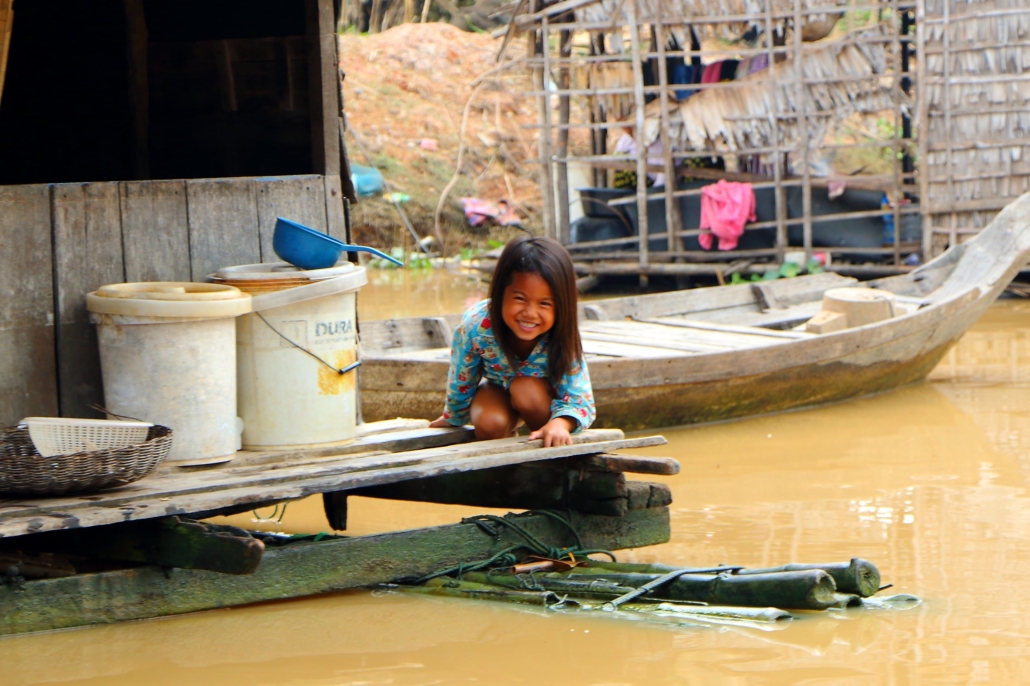
Clean Water in LaosThe issue of water in Laos is not one of abundance but cleanliness. The Southeast Asian nation is home to heavy rainfall, the Mekong River and plenty of other smaller bodies. However, according to the United States Agency for International Development (USAID), only 17.87% of people in Laos have access to an improved water source that is safely managed. This means that of the 7.5 million Lao people, only 1.5 million can obtain properly treated clean water that comes from reliable delivery systems such as pipes, wells and protected springs. In terms of rankings, this puts Laos second to last in the region and 110th out of the 120 countries that USAID has calculated this statistic.

Furthermore, a significant portion of the predominantly rural Lao population lacks access to proper sanitation facilities, forcing them to defecate in open areas. This practice leads to runoff, contaminating the drinking water supply with fecal matter. The scarcity of clean water in Laos has severe public health implications. Contaminated water is a major contributor to diarrheal diseases, which are the 8th leading cause of death in the country. According to a 2019 World Health Organization (WHO) estimate, 21.6 people per 100,000 in Laos died from diarrhea.

Joint Partnerships

Even though much needs to be accomplished, improvements have been made. In 2023, the United Nations Children’s Fund (UNICEF) and the Government of Laos celebrated the 50th anniversary of their partnership. When they started working together, less than 300,000 people had access to clean water. As of 2023, the capital province of Vientiane was officially declared Open Defecation-Free (ODF). Additionally, “three more provinces are nearing ODF status and nearly 86% of villages nationally achieved this benchmark.” A lot of this success can be attributed to intergovernmental organizations like UNICEF, the WHO and USAID. However, several smaller organizations have done and continue to do vital work in providing water to the people of Lao. Here are three nonprofits providing access to clean water in Laos.

Abundant Water

Founded in 2008 by Australian Engineer Sunny Forsyth, Abundant Water makes clay pottery water filters. It has been operating in Laos since 2011. After an initial 12-village survey that involved recording water use data, sample testing and trainee hiring, the organization built its production and training center in Vientiane. So far, it has “distributed 11,670 handmade ceramic water filters reaching 103,881 beneficiaries throughout the country.”

Through its work, Abundant Water also promotes sustainability. Beyond manufacturing the clay filters, it also trains local potters on how to make the filters themselves. During the first year of operation, it trained five ceramicists from remote rural villages to produce the filters on their own. By the end of the training, all of them were able to make a filter that produced clean enough water to meet the national standard.

After 12 years, more than 192 Lao people have been trained, leading to a significant impact on the ground. Abundant Water’s flagship project in Xaisomboun province targeted 33 villages, installed 794 filters and provided clean water to 3,864 people. Of all 3864 people, 98% of the households reported improved health, 86% saved time from not having to boil water, 81% reduced firewood consumption and “65% of families saved” between $0.23 to $0.90 (5,000-20,000 KIP) a week.”

Planet Water

Mark Steele established the Planet Water Foundation in 2009. Since then, it has provided clean water to more than 4 million people in 28 different countries in the Asia-Pacific region and Latin America. Planet Water has been operating in Laos since 2010. The primary method by which it produces clean water is through its AquaTower community water filtration system. Mostly implemented in rural schools, the AquaTower uses gravity to remove dangerous pathogens, producing drinking water for up to 1,800 people. There are also handwashing stations attached. This is particularly important because 44% of schools do not have a basic water supply and 68% lack basic sanitation. Most kids in these schools have to “rely on bottled water for drinking. Students who cannot afford this luxury have no option but to bring unfiltered water from their home.”

East Meets West

East Meets West, also known as Thrive Networks, was founded in 1988 by Le Ly Hayslip, the author of “When Heaven and Earth Changed Places.” This memoir, about her peaceful childhood and war-torn early adulthood, later served as the inspiration for Oliver Stone’s “Heaven & Earth,” starring Tommy Lee Jones. Initially, East Meets West operations provided clean water, health and education to communities in Vietnam. However, since 2010, East Meets West expanded into Cambodia and Laos. This was possible with help from the Australian Department of Foreign Affairs, the World Bank and the Bill & Melinda Gates Foundation. 

Since 2014, East Meets West has supplied water to nearly 90,000 people in Laos, including more than 12,000 schoolchildren. It has also built more than 5,000 toilet facilities in rural areas. Working in Luang Prabang, Sayyabouly and Champasak provinces, the organization uses a Women-led Output Based Aid (WOBA) solution, creating “meaningful gender empowerment outcomes by systematically engaging women as change agents in the sector and decision-makers in the household.” In the future, East Meets West is looking to expand into more provinces in order to continue providing clean water in Laos.

– Mason Borden

Mason is based in New York, NY, USA and focuses on Technology and Global Health for The Borgen Project.

Photo: Flickr

July 18, 2024
https://borgenproject.org/wp-content/uploads/borgen-project-logo.svg 0 0 Hemant Gupta https://borgenproject.org/wp-content/uploads/borgen-project-logo.svg Hemant Gupta2024-07-18 07:30:052024-12-13 18:03:143 NGOs Providing Clean Water in Laos
Global Poverty, Technology, Water

Using Technology to Combat Drought in Kenya

How Kenya Uses Technology to Combat DroughtIn Kenya, only 27 weather stations are operational and they are spread over vast distances. This scarcity leaves many farmers without accurate weather forecasts, particularly rainfall, crucial for their agriculture. Farming in Kenya, a region prone to droughts, depends heavily on timing. The absence of reliable rainfall predictions forces farmers to risk planting seeds that may fail if expected rains do not materialize. This ongoing challenge is compounded by the region’s climate, which is not only prone to erratic rainfall and frequent droughts but is also expected to experience worsening conditions over the next decade.

The Impact of Drought in Kenya

Droughts in Kenya pose severe threats to the livelihoods of the poorest populations, who are predominantly smallholder farmers and pastoralists. These groups rely heavily on rainfall for irrigation and extended droughts often deplete alternative water sources like boreholes and rivers. The primary impact of drought is the destruction of agricultural assets. Without adequate water, crops fail prematurely, leaving farmers without food or income from harvests. Additionally, the loss of crops prevents future planting due to the loss of seeds. Livestock farmers face similar challenges, with water scarcity leading to the death of essential forage and, subsequently, their animals. Recent reports have highlighted extreme conditions, with visuals of even camels perishing from dehydration, symbolizing the dire situation in the region.  

Recurring and intensifying droughts in Kenya have left more than 4.35 million residents of arid and semi-arid regions facing severe food shortages and limited access to clean water, leading to widespread malnutrition. These droughts not only pose immediate threats but also perpetuate chronic poverty. A study from the Technical University of Berlin reveals that households impacted by drought often experience deteriorating living conditions and reduced educational spending up to 10 years later. Moreover, early exposure to malnutrition significantly impairs cognitive development in children, affecting their abilities into adolescence and adulthood.

The Bridge Between Bird Songs and Weather Stations

Information Technology and Indigenous Knowledge with Intelligence (ITIKI), is a groundbreaking drought forecasting tool. This system integrates conventional meteorological data, inputs from locally stationed wireless sensors and indigenous weather indicators, processing all this information through artificial intelligence to deliver highly accurate weather forecasts.

ITIKI stands out among forecasting tools because it uniquely incorporates local indigenous knowledge into its predictions. This allows for highly specific, micro-level forecasts that the Kenyan National Meteorological Services cannot provide. Indigenous knowledge includes local signs that correlate with weather patterns, such as specific bird calls or the behavior of dragonflies, which are traditionally recognized as indicators of imminent rainfall. Residents report these signs through communication channels and the ITIKI system processes this data with artificial intelligence. Professor Masinde, a user of ITIKI, recounts, “My sister and I would hear that bird, we’d have to run home because it would rain precisely three hours later. It’s so precise.”

Kenya’s youth often dismiss indigenous knowledge as outdated, viewing it as a primitive forecasting method. Yet, from a data analysis perspective, indigenous knowledge represents a long-standing correlation between natural phenomena and meteorological patterns, as recognized by local observations. Although these traditional indicators may be too general to serve as the sole method for predicting droughts, when integrated with modern forecasting technologies, they significantly enhance accuracy at the local level by contributing specific meteorological insights.

ITIKI Combatting Drought in Kenya

With a remarkable micro-level precision of 500 meters, ITIKI boasts a 98% accuracy rate for forecasts up to 18 months and 70% for those extending to four years. This precision enables smallholder farmers to receive specific rainfall predictions for their villages, enhancing their agricultural planning. Professor Muthoni Masinde explains the practical applications: farmers can save seeds and funds by not planting ahead of anticipated dry spells, investing in drought-resistant crops if only limited rainfall is expected or even relocating if long-term forecasts predict insufficient rainfall.

The 2019 USAID performance report on ITIKI highlighted its impact on agricultural practices, with 74% of users reporting improved crop yields due to the system’s accurate forecasts. Additionally, all interviewed users expressed their endorsement of ITIKI to other farmers. The adoption of drought-resilient crop varieties increased among ITIKI users, who, leveraging precise weather predictions, often planted before anticipated rainfall, enhancing crop survival rates.

ITIKI’s Future

The ITIKI project, currently operational in Kenya, Mozambique and South Africa, assists smallholder farmers in managing drought in Kenya. According to a USAID report, while ITIKI has been beneficial, farmers have shown reluctance to pay for subscriptions themselves. In response, Professor Masinde has pivoted to a business-to-business model, partnering with government institutions keen on enhancing self-sufficiency among these farmers. Furthermore, Professor Masinde plans to broaden ITIKI’s user base across Africa, refine forecast accuracy and incorporate predictions for other environmental threats like locust invasions. This project offers a promising avenue for enhancing drought resilience and addressing poverty in innovative ways.

Looking Ahead

ITIKI’s integration of traditional knowledge with modern technology offers precise weather forecasting, vital for smallholder farmers in managing drought in Kenya. By providing accurate, village-specific rainfall predictions, ITIKI helps farmers make informed decisions, improving crop yields and reducing losses. As the system expands across Africa and incorporates additional environmental threats, it promises to enhance agricultural resilience and combat poverty in the region.

– Siwon Kim

Siwon is based in Boston, MA, USA and focuses on Technology and Solutions for The Borgen Project.

Photo: Flickr

July 9, 2024
https://borgenproject.org/wp-content/uploads/borgen-project-logo.svg 0 0 Precious Sheidu https://borgenproject.org/wp-content/uploads/borgen-project-logo.svg Precious Sheidu2024-07-09 07:30:392024-12-13 18:03:13Using Technology to Combat Drought in Kenya
Global Poverty, NGOs, Water

How NGOs in India Are Fighting against the Water Crisis

NGOs in India India is currently going through a severe water crisis amid the record-breaking heat wave. In New Delhi, the temperature spiked to 121.8 degrees Fahrenheit in late May, resulting in 40,000 heat strokes and 110 deaths in the past three months. The majority of victims were low-income outdoor workers who spent most of their time outside in the sweltering weather. A contributing factor to the worsening weather crisis is the severe water shortage in India. Drinking water prevents heat strokes as water lowers the body temperature and replenishes the fluid lost from sweat. However, water has always been scarce in India due to agriculture. Agriculture alone takes up 80% of India’s water, but inefficient agricultural practices, such as the lack of irrigation and infrastructure, exacerbate the shortage. The low rainfall impacted by varying climatic conditions also contributes.

The Indian Government’s Response to the Water Crisis

The Delhi Jal Board is responsible for distributing potable water in New Delhi by providing municipal water tankers to the people. However, not everyone can access it. With New Delhi being an overly populous city, 30%- 40% of the people don’t have access to municipal water. With supply outweighing demand, this gave rise to the water mafias. These private water tank owners sell water to locals at expensive prices and often smuggle water illegally. However, people have no choice but to buy it because it is their only option. Bengaluru is one of the cities facing a severe water shortage. During election seasons, politicians promise to resolve the water crisis, knowing that all the voters want is water. However, that promise has yet to be implemented. In combating the water shortage in India, nongovernmental organizations (NGOs) are offering additional help to augment drinking water, enhance water quality and create a more effective agriculture system.

The Response of NGOs in India

Two NGOs, Sehgal Foundation and Save Indian Farmers, have been instrumental in combating India’s water crisis.

  • Sehgal Foundation: This NGO focuses on rural development and water management is one of its five main programs. The foundation has been constructing dams, ponds and tanks to augment water resources and Jalkap biosand water filters to enhance water quality. These stainless steel water filters are cost-effective as there is no need for electric power to filter and they are also effective against bacteria and parasites. Rooftop rainwater harvesting to conserve rainwater in underground school buildings is also one of its efforts. Since its inception in 1999, the organization has reached approximately five million people across 12 states in India.
  • Save Indian Farmers: This NGO strives to increase awareness of the high suicide rates among Indian farmers and help the farmer’s families and their agricultural practices. And creating a better water use system for agriculture is one of its goals. For example, in the village of Choriya Khata, there is extreme water scarcity as the village relies on agriculture and cattle rearing. To meet their agriculture and personal needs, the residents rely on insufficient groundwater. As a result, girls and mothers spend countless hours in search of water. In response, Save Indian Farmers has constructed rainwater harvesting systems to help recharge groundwater and augment drinking water, in addition to piped irrigation systems to reduce water use.

Technology for Better Water Management

The role of technology is crucial in better water management. Thus, adopting enhanced technology is inevitable to alleviate the water crisis in India. Technology enables a more effective use of water by analyzing accurate empirical data. Through data, water distribution and conservation can be improved, which can discover where water gets leaked and wasted. These technologies can have a tremendous impact in reducing water waste, which can then be used as drinking water instead. Technology also increases the public’s attention and fosters support. Donations and volunteering can be taken at a much larger scale through websites and social media.

– Eunsung Koh

Eunsung is based in Seoul, South Korea and focuses on Technology and Global Health for The Borgen Project.

Photo: Wikimedia Commons

July 7, 2024
https://borgenproject.org/wp-content/uploads/borgen-project-logo.svg 0 0 Hemant Gupta https://borgenproject.org/wp-content/uploads/borgen-project-logo.svg Hemant Gupta2024-07-07 03:00:112024-07-07 00:17:07How NGOs in India Are Fighting against the Water Crisis
Global Poverty, Refugees, Water

Clean Drinking Water for the Rohingya

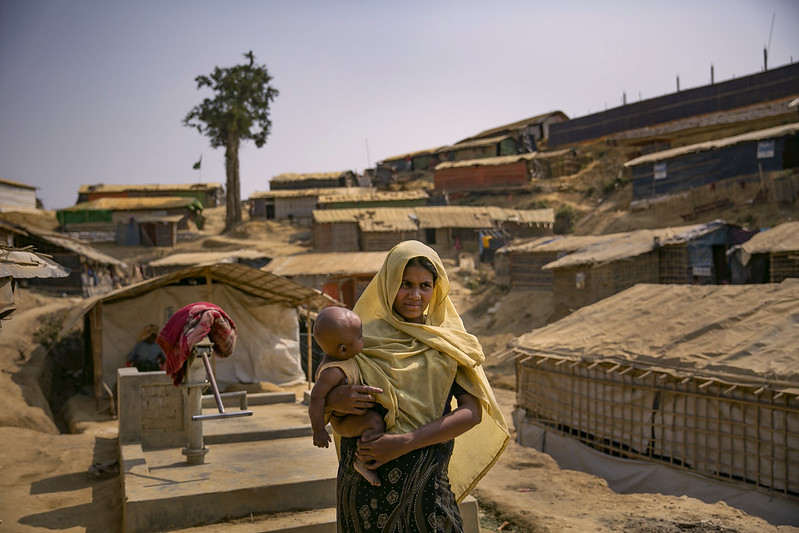
Water for the RohingyaAmid the Rohingya refugee crisis, clean drinking water remains a critical and elusive lifeline, with Cox’s Bazar’s limited infrastructure leaving countless at risk from waterborne diseases. In the early days of the crisis, humanitarian agencies focused on providing water, sanitation and hygiene (WASH) services.

For various reasons, Cox’s Bazar’s land cannot maintain clean water and much of the water tested at the beginning of the crisis showed high levels of Escherichia coli. The issue of contaminated water persisted due to limited capacity for water treatment centers, limited supplies and geographical constraints.

The WHO’s Efforts

The World Health Organisation (WHO) took action quickly. In 2018, it distributed 2,150 water filters and community filters and “conducted training for health partners on installing and maintenance of the filters,” which, in hopes, would provide five years of clean water. However, conditions remained challenging. In 2019, cholera, typhoid, diarrhea and Acute Watery Diarrhea were reported to be widespread among the refugees.

Amid the pandemic, conditions only worsened, with a virus requiring frequent handwashing; the Rohingya faced challenges combating this. Additionally, due to unsanitary water, many in the camps tested positive for hepatitis A and pregnant women posed a particular threat of contracting hepatitis E from the infected water.

The Human Relief Foundation

Access to clean water for the Rohingya has become a focus of many charitable organizations. The Human Relief Foundation (HRF) has worked toward providing more clean water for Rohingya refugees in Bangladesh. For example, HRF has built a well in Rankut, in Cox’s Bazar, where 172 school students and 35 households dwell, limiting the distance residents have to travel to collect water. This, in turn, limits the possibility of infections in the water and allows for time focused on activities like schooling and volunteering.

World Water Day 2024 Initiatives in Cox’s Bazar

In March 2024, World Water Day was celebrated in Cox’s Bazar and the surrounding host countries. Community Partners International is a nonprofit that empowers vulnerable communities in Asia. It has distributed more than 100,000 water purification tablets, 2,500 hygiene kits and around 50,000 soap packets. Additionally, it provided the Rohingya with 43,000 “household education sessions” to help address the clean water crisis.

Final Remark

Despite efforts, Rohingya refugees in Cox’s Bazar still struggle with clean water access. Continued global support and investment in WASH infrastructure and education are vital to combat waterborne diseases and improve well-being, ensuring safe water remains a priority for these vulnerable communities.

– Lydia Young

Lydia is based in Glasgow, Scotland and focuses on Good News and Global Health for The Borgen Project.

Photo: Flickr

June 28, 2024
https://borgenproject.org/wp-content/uploads/borgen-project-logo.svg 0 0 Hemant Gupta https://borgenproject.org/wp-content/uploads/borgen-project-logo.svg Hemant Gupta2024-06-28 07:30:542024-06-28 05:02:56Clean Drinking Water for the Rohingya
Developing Countries, Global Poverty, Water

Aquapreneurs Address Water Scarcity

AquapreneursAccess to clean water is a critical issue worldwide, especially in low-income countries located in the Horn of Africa and the Sahel region, such as Kenya, Ethiopia and Somalia. The state of global freshwater is under threat due to the changing climate and anthropogenic activities. Globally, the world’s largest freshwater withdrawals come from agriculture (70%), industry (just less than 20%) and domestic use (approximately 12%). However, aquapreneurs are addressing water scarcity by creating innovative solutions to manage and distribute water resources efficiently.

The surge in demand for freshwater stems primarily from a combination of socioeconomic development, industrial growth and consumption patterns. The high demand stems from cities, urban areas and regions experiencing fast economic growth. The consequences of this high demand and withdrawal of water leave approximately 50% of the global population with water scarcity for at least one month a year. This can put areas under water stress, which creates a decrease in social stability, an increase in migration and a decrease in work, as 80% of jobs in low-income countries are water-dependent. More than 33% of African countries are considered to be “water-insecure” as the changing climate increases temperatures and precipitation.

The United Nations (U.N.) warns that a global water crisis is imminent and poses severe risks to food security, diseases and livelihoods. Global warming exacerbates the water crisis by amplifying the water cycle, resulting in higher amounts of water vapor. This directly impacts Earth’s weather patterns, heating (temperature) and precipitation levels (creates excessive flooding and droughts). In response to these challenges, Aquapreneurs are creating innovative solutions to conserve and manage water resources.

Aquapreneurs and the Global Freshwater Challenge

The World Economic Forum collaborated with UpLink to help solve some of the world’s most difficult challenges, such as water scarcity. The Global Freshwater Challenge was launched in 2022. It is a five-year Innovation Initiative that seeks to make freshwater ecosystems healthier and more resilient. This challenge was the first of five parts and out of 198 submissions, 10 winners were chosen. Here are three of the winning innovations for the Horn of Africa and the Sahel Region:

Wateroam Pte Ltd

The company Wateroam created a portable (weighing about five kg) filtration pump to bring safe drinking water to disaster zones and rural communities. The manual pump has an ultrafiltration chamber that can remove 99.99% of bacteria and viruses, including E. Coli and salmonella microbes. The water is ready to drink immediately after filtering and is cheap and easy to use. It is currently used in more than 40 countries, including South Africa. It is helping more than 200,000 people worldwide.

Openversum

Openversum has developed a water filtration system that is currently being used in Somalia and Uganda. The filter can be locally manufactured. It is capable of removing contaminants such as pathogens, heavy metals, pesticides and micropollutants from water. This is an important development, as poor sanitation and inadequate wastewater treatment can increase the risk of diarrheal disease. The manufacturing costs of the filter are low and create job opportunities in affected areas.

Majik Water Technologies

Majik Water is a women-led organization that uses technology to produce water from the air in arid and semi-arid regions in Kenya. Extraction of fresh water from the air is safer than groundwater extraction because groundwater contains high levels of arsenic and fluoride. The technology acts as a dehumidifier. It draws air into the machine through an electrostatic filter, passes over refrigerated coils and then builds moisture on the coils.

Finally, the water is deposited into a holding tank. Currently, 90% of Kenya’s water sources are depleted, which increases malnutrition and the risk of disease. Yet, with this technology, more than 200,000 liters of clean drinking water is being produced each month cost-effectively and efficiently using solar thermal energy.

Conclusion

Water is an essential part of sustaining life. The Global Freshwater Challenge empowers Aquapreneurs to address water scarcity by developing innovative solutions to help ensure access to clean drinking water. UpLink continues to feature innovation challenges to provide Aquapreneurs the opportunity to showcase their work for increased exposure and the potential for financial rewards. 

– Gabrielle Schwartz

Gabrielle is based in Tallahassee, FL, USA and focuses on Technology and Solutions and Global Health for The Borgen Project.

Photo: Flickr

April 22, 2024
https://borgenproject.org/wp-content/uploads/borgen-project-logo.svg 0 0 Hemant Gupta https://borgenproject.org/wp-content/uploads/borgen-project-logo.svg Hemant Gupta2024-04-22 01:30:212024-04-22 01:08:27Aquapreneurs Address Water Scarcity
Global Poverty, Technology, Water

Private Sector Is Driving Water Solutions in Sub-Saharan Africa

Water in Sub-Saharan AfricaThe continent of Africa boasts extensive geographical and biological diversity. With this heterogeneity, it is critical to tackle poverty from a multidimensional lens. This article focuses on using solar technology in Sub-Saharan Africa to provide clean water and access to water for farming and health facilities, addressing resource poverty.

The Sub-Saharan countries alone have 1.2 billion citizens and projections by the World Bank indicate that this number will increase to 2.7 billion by 2060. The International Institute for Applied Systems Analysis states that an unpredictable and erratic rainfall pattern is a major contributor to low productivity and food insecurity in Africa. This is further compounded by a low degree of mechanization, which reinforces a persistent poverty trap. Cyclical famines triggered by these factors pose a significant threat to local development opportunities.

Startups and established solar tech companies in the region are using solar energy-powered systems to tackle water scarcity. By doing so, they are setting an example for the future of farming development. This approach produces positive economic outcomes that have a ripple effect on the health and well-being of citizens and the global economy as a whole.

Blazing the Trail for Progress

Although the continent receives “60% of the world’s solar resources, Africa has only 1% of solar generation capacity.” This is largely due to economic constraints caused by reverberations from the global pandemic and the war in Ukraine. Filling in the gaps, partnerships between governments and the private sector are increasingly opening up opportunities for citizens to harness solar energy to power irrigation systems.

SunCulture is one example of the many companies and startups funding development projects in countries experiencing the highest levels of water scarcity, including but not limited to Ethiopia, Kenya, Morocco, Namibia, Nigeria, Rwanda, Senegal, South Africa, Tanzania and Uganda. SunCulture alone has raised more than “40 million to equip rural farmers with solar-powered irrigation systems.” Rural farmers previously relied on rainfall or oil power to produce the water necessary for production.

Now, with help from SunCulture, they have access to cheap and renewable energy to run irrigation systems that require “minimal maintenance.” Put simply by SunCulture’s chief of staff, Mikayla Czajkowski, solar energy offers “positive environmental impact, job creation potential and economic development potential.”

The potential for harnessing solar power is extensive. One foreign company leading the charge is Business Finland, which introduced the SolarRO 1500 desalination system in the village of Tseikuru, Kenya. Many communities living rurally or in city “slums” in Kenya have historically relied on contaminated water as the only available resource.

SolarRO utilizes solar energy to operate reverse osmosis systems. This empowers communities to clean the existing water resources without the costs that come with drilling and building irrigation systems. While irrigation systems are best for farming development, reverse osmosis offers a simpler solution to the prevalence of contaminated water, with the reliance on solar (renewable) energy being a key aspect of a cost-efficient implementation.

High Hopes and High Rewards

A SunCulture impact survey found that “89% of smallholder farmers experienced a boost in their quality of life, 90% increased their production and 87% enhanced their earnings.” The success of these projects revolves around the sustainable and efficient nature of implementation. With roughly 36.7% of the population of sub-Saharan countries living on $2.15 a day, costs present a slight challenge.

While many companies have developed solutions based on grants and funds raised, the future and sustainability of these water solutions require a structured water industry all over Sub-Saharan Africa. As communities are given access to water, impact analyses show that production capacities increase and, with it, the quality of life. By investing in solar energy solutions now, the economic and health sectors will see positive, sustainable change in the future.

As the world strives to achieve the Sustainable Development Goals, initiatives like the solar-powered water project serve as beacons of hope. They demonstrate that sustainable solutions to poverty are within reach. By leveraging renewable energy and community-driven approaches, there is the potential for clean water to catalyze positive change and create a brighter future for generations to come in rural Africa and beyond.

– Kiera Gorman

Kiera is based in Santa Cruz, CA, USA and focuses on Good News for The Borgen Project.

Photo: Pexels

April 19, 2024
https://borgenproject.org/wp-content/uploads/borgen-project-logo.svg 0 0 Hemant Gupta https://borgenproject.org/wp-content/uploads/borgen-project-logo.svg Hemant Gupta2024-04-19 07:30:522024-04-18 05:45:03Private Sector Is Driving Water Solutions in Sub-Saharan Africa
Global Poverty, Sanitation, Water

Transformative Gains in Water and Sanitation Across Asia

Water and Sanitation Across AsiaIn recent years, Asia has been making commendable strides in the realm of water and sanitation. There has been a wave of positive change that promises a brighter, healthier future for millions. The unfolding narrative explores the vibrant tapestry of initiatives and innovations that define this transformative era for those in Asia.

WASH Initiatives Taking Root

Water, Sanitation, and Hygiene (WASH) initiatives have become catalysts for change across the continent. Countries like India, with its Swachh Bharat Abhiyan (Clean India Mission), have set ambitious goals to enhance sanitation infrastructure and promote hygiene practices. This concerted effort has yielded visible improvements in rural and urban areas alike.

WASH initiatives go beyond infrastructure development; they emphasize education and awareness. Programs across countries like Indonesia are not only building toilets but also educating communities about the importance of hygiene. These initiatives instill sustainable practices, ensuring that the impact endures for generations.

Innovative Technologies Making a Splash

The adoption of innovative technologies is revolutionizing water and sanitation solutions. In countries such as Singapore, advanced water treatment technologies, including recycled water for domestic use, are not just addressing scarcity concerns but also setting a benchmark for sustainable practices.

Community-Led Sanitation Programs

Community engagement has emerged as a linchpin in the journey towards better sanitation. Community-led Total Sanitation (CLTS) programs, as seen in Bangladesh, empower local communities to take charge of their sanitation needs. The result is open defecation-free villages and improved health outcomes.

Cross-Border Collaboration for Clean Water

The importance of cross-border collaboration cannot be overstated The Mekong River Commission (MRC) stands as a testament to regional collaboration. Established to promote sustainable development and management of water resources, the MRC facilitates dialogue and joint decision-making among member countries. By sharing data, coordinating infrastructure projects, and fostering cooperation, the MRC contributes to equitable water use and addresses issues of water quality and quantity. The Mekong River Commission, involving countries like Cambodia, Laos, Thailand and Vietnam, exemplifies regional cooperation for sustainable water resource management, ensuring access to clean water for millions. 

Private Sector Partnerships Flowing In

Partnerships with the private sector are proving instrumental in addressing water and sanitation challenges. Organizations like the Bill & Melinda Gates Foundation are investing in innovative sanitation technologies and solutions, aiming to provide access to safe sanitation facilities for underserved communities.

The progress in water and sanitation across Asia is undeniably heartening. The collaborative efforts of governments, communities, and innovative thinkers are creating a ripple effect that goes beyond infrastructure improvements, touching the lives of millions. As the wave of positive change continues to swell, the future looks promising for a region where access to clean water and sanitation is no longer a luxury but a fundamental right.

– Diana Vu
Photo: Flickr

March 28, 2024
https://borgenproject.org/wp-content/uploads/borgen-project-logo.svg 0 0 Jennifer Philipp https://borgenproject.org/wp-content/uploads/borgen-project-logo.svg Jennifer Philipp2024-03-28 01:30:292024-05-30 22:32:53Transformative Gains in Water and Sanitation Across Asia
Africa, Global Poverty, Water

“Water Life” in Ethiopia

Water LifeAida Muluneh is an Ethiopian photographer and cultural entrepreneur. Born in Addis Ababa, Ethiopia, she works as an educator “developing projects with local and international institutions in Ethiopia and Côte d’Ivoire.”

Shining Light on Water Poverty

In 2018, alongside WaterAid and the H&M Foundation, Aida created a series of works focusing on the scarcity of safe water. WaterAid is an NGO established in 1981 to provide clean water and sanitation to people around the world. Its mission is to “transform the lives of the poorest and most marginalized people by improving access to safe water, sanitation and hygiene.”

Founded in 2013, the H&M Foundation is an NGO based in Stockholm, Sweden that uses “philanthropic resources to find, fund and facilitate disruptive innovations, initiatives and research that enable a socially inclusive and planet positive textile industry.” Its website states “We believe that change is best achieved when a diverse group of people join forces and commit to a common agenda to solve complex challenges.”

WaterAid gave Aida “complete artistic freedom” and provided her with “information about the issues around water security, especially in Ethiopia.” The Water Life exhibition developed from a conversation about the pairing of art and advocacy, the issues of access to safe water and the impact that water scarcity had on women and children in Africa.

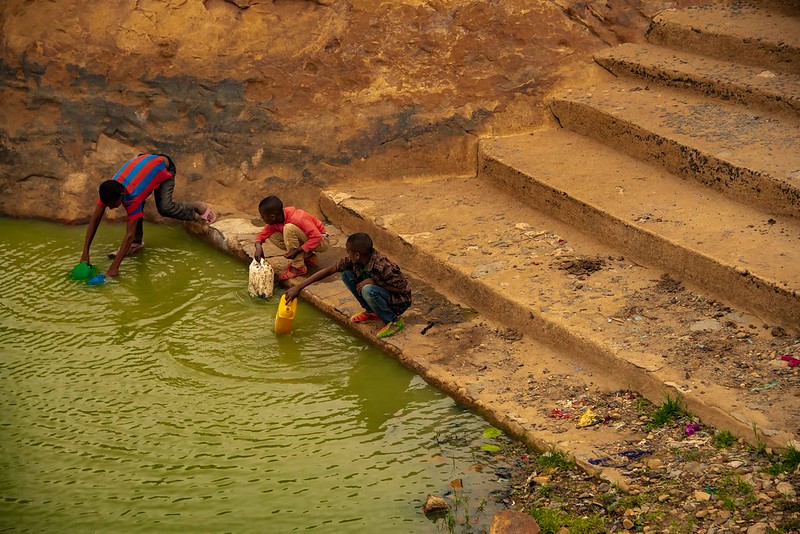
For the Water Life exhibition, Aida photographed the women in the Afar region in Northern Ethiopia, “one of the hottest and driest places on Earth.” Her goal was to address the issue of water scarcity without the clichés that mainstream media and aid organizations often represent, stating that she realized that “art can be a form of advocacy,” Canon reports.

Water Scarcity

Water scarcity is the lack of sufficient clean water to meet daily demands. Access to fresh drinking water dwindles due to both human factors and extreme weather conditions. Globally, 785 million people do not have access to clean drinking water. Each day more than 800 children die from preventable diseases that poor water causes in many communities around the world. The scarcity of safe water supplies can cause families and their communities to become locked in poverty for generations.

In the past 20 years, “Ethiopia has made remarkable strides in ensuring access to safe drinking water,” USAID reports. However, it continues to “face challenges in overall water, sanitation and hygiene and WASH coverage.” According to USAID, “in Ethiopia, diarrheal disease is the second cause of hospital admission and death among children under 5 years of age.”

Water scarcity affects women and children the most. According to World Vision, children are “more vulnerable to diseases of dirty water” and women and girls ” often bear the burden of carrying water for their families for an estimated 200 million hours each day.”

In Conclusion

Access to safe water and sanitation is a precondition to life and a declared human right. Water is vitally important to sustainable development – from health and nutrition to gender equity and economics. The artistic perspective of Aida Muluneh transitioned from a conversation into a vibrant artistic advocacy addressing the global issue of water scarcity.

Aida intended to create images that showed the challenges of water scarcity and emphasize the strength and resilience of the women who face these daily difficulties framed by the beauty, heritage and culture of the continent. “I could not stop thinking about the time it takes to collect water. Today, and every day, girls and women will spend more than 200 hours walking for water. If a young girl must spend three hours transporting water, whether for cooking feeding, bathing or drinking, that is three hours she could have been in school, getting an education,” Aida wrote for WaterAid.

– Pamela Fenton
Photo: Flickr

March 11, 2024
https://borgenproject.org/wp-content/uploads/borgen-project-logo.svg 0 0 Jennifer Philipp https://borgenproject.org/wp-content/uploads/borgen-project-logo.svg Jennifer Philipp2024-03-11 15:00:012024-12-13 18:03:07“Water Life” in Ethiopia
Global Poverty, NGOs, Water

The Impact of Surge for Water on Indonesian Communities

Surge for WaterSurge for Water, a nonprofit organization dedicated to addressing water scarcity issues, has made significant strides in helping Indonesian communities. In a country where water scarcity is a pressing concern, Surge for Water’s mission and innovative approach have brought about tangible improvements in the lives of many. By understanding the water crisis in Indonesia and implementing sustainable solutions, the organization has become a beacon of hope for communities facing water-related challenges. Surge for Water has improved access to clean and safe drinking water in Indonesia.

How Did Surge for Water Come To Be?

The inspiration for launching Surge for Water originated during a childhood visit to India, where founder Shilpa Alva observed children her age deprived of the opportunity to play, forced instead to fetch water. As a child, she recognized the injustice of children bearing such responsibilities for their families’ survival.

At 21, Alva undertook a teaching assignment in the remote Indian village of Rajgarh. She encountered students frequently absent from school due to water-related illnesses or limitations. The establishment of Surge in 2008 was a direct response to this fundamental need. It was also a personal calling to address the water crisis affecting communities like those Alva had witnessed in India.

What Brought Surge for Water to Indonesia?

The Southeast Asian country of Indonesia, is facing a pressing issue threatening the well-being of its people and the environment – water scarcity. The water crisis in Indonesia is multifaceted, with several contributing factors exacerbating the situation.

  • Deforestation: Indonesia ranks among the top countries with high deforestation rates. The main causes include illegal logging, agriculture and pulp and paper production. The rampant deforestation in the country has led to erosion, causing the clogging of rivers with silt and agricultural pollutants. This has resulted in a drastic decline in downstream water quality and availability.
  • Urbanization: As more people migrate to urban areas, the demand for water rises, putting a strain on existing water supplies. In fact, Java Island has the highest water stress compared to other regions. It accommodates more than half of the overall population but only has access to 4% of the surface water supply.
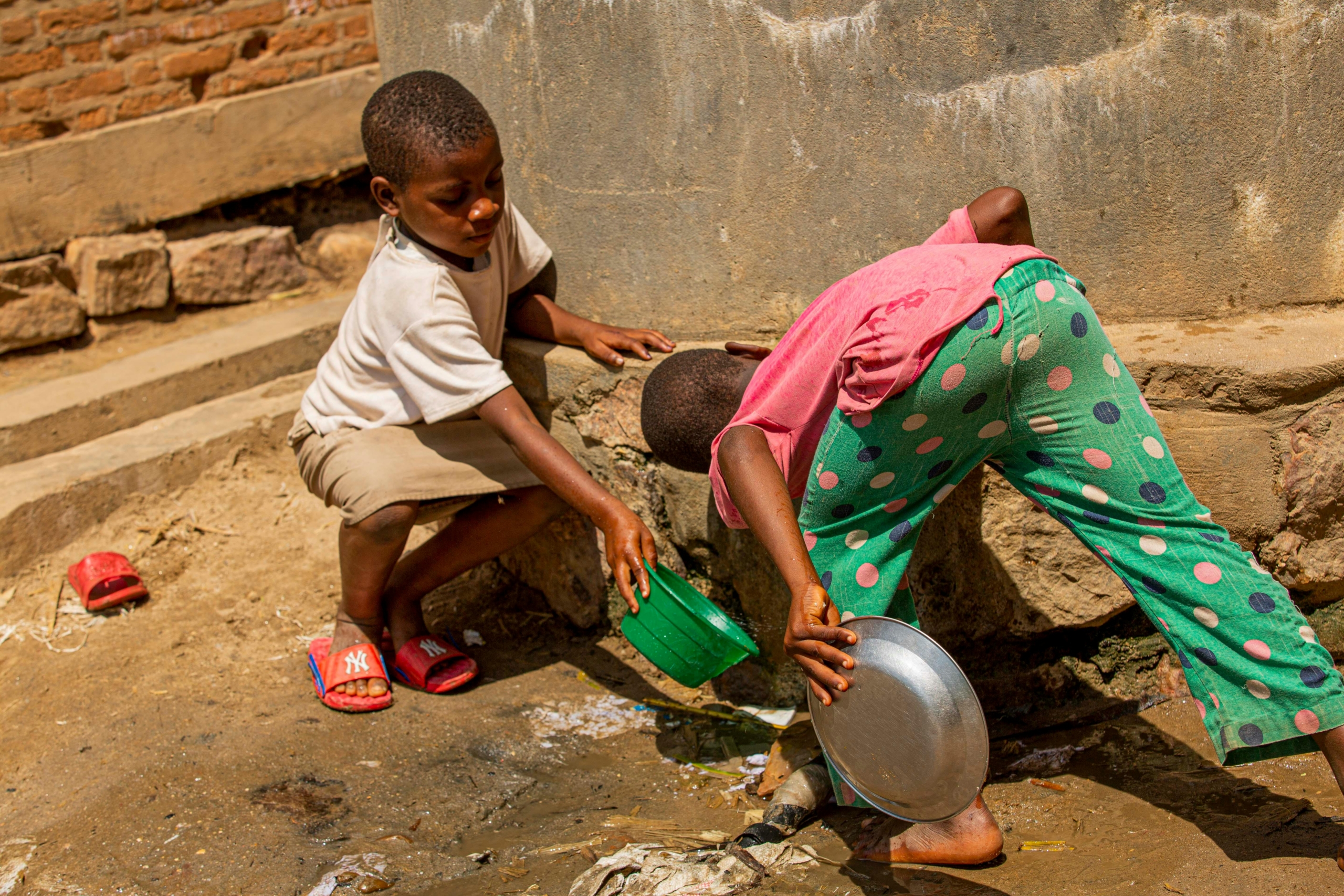
  • Pollution: While industrial and agricultural activities contribute to the water crisis in Indonesia, poor sanitation and mismanagement of waste are causing the most pollution. Approximately 25 million Indonesians do not have access to proper sanitation facilities. This results in widespread open defecation in many outdoor locations. This practice contributes to water contamination and the spreading of diarrheal diseases, including cholera. In fact, a quarter of children under the age of 5 in Indonesia are affected by diarrhea. This makes diarrhea the leading cause of child mortality in the country.

How Surge for Water Is Making a Difference in Indonesia

Surge for Water takes a holistic approach to addressing the water crisis in Indonesia. It works closely with local communities to assess their specific needs and develop sustainable solutions that will have a lasting impact. This includes implementing water filtration systems, conducting hygiene education programs and empowering community members to take ownership of their water sources.

For example, at SD Pari Deta, an elementary school, the previous reliance on distant springs and rainfall for water hurt students and teachers due to inadequate toilet facilities. After an assessment, it was discovered that the school faced challenges such as a contaminated rainwater collection tank and a deteriorating well. Open defecation was also prevalent among students. It was determined that constructing a rainwater tank and improving toilet facilities were necessary.

Through collaboration with the local community and school leadership, a rainwater harvesting tank was installed to store 10,400 liters of water. A new toilet with separate stalls for boys and girls was also constructed. Yuliana Boko Kaka, a teacher for second-grade students, stated that the availability of clean water and secure restroom facilities has significantly influenced her students’ behavior. This has led to reduced consumption of contaminated water, the practice of open defecation and the neglect of handwashing practices.

Conclusion

Thanks to Surge for Water’s efforts, thousands of people in Indonesia now have access to clean and safe drinking water. This has not only improved the health and well-being of these individuals but has also empowered communities to thrive and grow. By providing necessities like clean water, the nonprofit is laying the foundation for a brighter future for the people of Indonesia.

– Sara Hatab
Photo: Unsplash

March 11, 2024
https://borgenproject.org/wp-content/uploads/borgen-project-logo.svg 0 0 Hemant Gupta https://borgenproject.org/wp-content/uploads/borgen-project-logo.svg Hemant Gupta2024-03-11 03:00:172024-03-11 01:22:29The Impact of Surge for Water on Indonesian Communities
Page 5 of 57«‹34567›»

Get Smarter

  • Global Poverty 101
  • Global Poverty… The Good News
  • Global Poverty & U.S. Jobs
  • Global Poverty and National Security
  • Innovative Solutions to Poverty
  • Global Poverty & Aid FAQ’s
Search Search

Take Action

  • Call Congress
  • Email Congress
  • Donate
  • 30 Ways to Help
  • Volunteer Ops
  • Internships
  • Courses & Certificates
  • The Podcast
Borgen Project

“The Borgen Project is an incredible nonprofit organization that is addressing poverty and hunger and working towards ending them.”

-The Huffington Post

Inside The Borgen Project

  • Contact
  • About
  • Financials
  • President
  • Board of Directors
  • Board of Advisors

International Links

  • UK Email Parliament
  • UK Donate
  • Canada Email Parliament

Get Smarter

  • Global Poverty 101
  • Global Poverty… The Good News
  • Global Poverty & U.S. Jobs
  • Global Poverty and National Security
  • Innovative Solutions to Poverty
  • Global Poverty & Aid FAQ’s

Ways to Help

  • Call Congress
  • Email Congress
  • Donate
  • 30 Ways to Help
  • Volunteer Ops
  • Internships
  • Courses & Certificates
  • The Podcast
Scroll to top Scroll to top Scroll to top