• Link to X
  • Link to Facebook
  • Link to Instagram
  • Link to TikTok
  • Link to Youtube
  • About
    • About Us
      • President
      • Board of Directors
      • Board of Advisors
      • Financials
      • Our Methodology
      • Success Tracker
      • Contact
  • Act Now
    • 30 Ways to Help
      • Email Congress
      • Call Congress
      • Volunteer
      • Courses & Certificates
      • Be a Donor
    • Internships
      • In-Office Internships
      • Remote Internships
    • Legislation
      • Politics 101
  • The Blog
  • The Podcast
  • Magazine
  • Donate
  • Click to open the search input field Click to open the search input field Search
  • Menu Menu

Archive for category: Water

Global Poverty, Nonprofit Organizations and NGOs, Water

3 Innovative Ways NGOs Reduce Water Scarcity in Rural Africa

Water Scarcity in Rural AfricaA lack of clean, sustainable and accessible water resources has plagued rural Africa for a long time. More than half of the population in rural Africa lacks access to safe drinking water. Beyond the immediate concerns, water scarcity creates numerous other problems. Collecting water can become a timely cost and the burden usually falls on the women in the house.

This reduces the economic stability of families across the continent and contributes to poverty rates. Additionally, it creates a dependence on contaminated water, which leads to increased rates of cholera and dysentery internationally. The rural community in Africa is suffering under the threat of scarce water supply. However, various organizations are getting creative in reducing water scarcity in rural Africa. They dream that one day, clean water will be the standard.

Fog Nets: Harvesting Water From the Air

Fog Nets are essentially, multilayered nets that harvest moisture from the air where fog is present but water is not. Popular especially in mountain ranges, it provides a consistent flow of clean water for nearby inhabitants. While the nets alone cannot sustain a population, they contribute significantly.

These fog nets provide 1,000 liters of water daily to arid sections of Africa. Originating in the Atacama Desert in Chile, this fabric creates a sustainable and clean alternative to disease-infested waters. This creative technology is reducing water scarcity in rural Africa every day and several NGOs hope to install it as a long-term solution for citizens across Africa.

Water ATMs: Creating Access To Clean Water

The concept of a Water-ATM is being tested across two African villages. Essentially, these ATMs are access points at which surrounding villages can purchase verified clean water through a metered system. It would simultaneously reduce the distance necessary to attain water and ensure its cleanliness.

Vendors seem extremely eager to enter the business, charging customers through a metered system that would remain affordable. These machines are accessible by pre-paid cards, allowing individuals to pour the water into their basins and transport it a few kilometers back to their homes, instead of taking hours. This solution is slowly helping to reduce water scarcity in rural Africa. However, with the necessary financial support, it has the potential to save lives and transform communities across rural Africa.

Play-Powered Water Access

In 2009, two companies, NOV Mono and Water For All, began working to reduce water scarcity in rural Africa by launching an initiative in Johannesburg, South Africa. Together, they introduced the “Fun Pump,” a water system that combines a solar-powered electric pump with a merry-go-round structure for children to play on.

Not only is this structure bringing clean water to these rural communities, but it’s also bringing joy. Modern play structures like these are few and far between, so kids are enthused to play on them, powering the water initiative for the surrounding villages.

Looking Forward

It’s no secret that water scarcity is a growing problem in Africa. People spend hours every day trekking to bring contaminated water to their homes. However, initiatives like the fun pump, water ATM and fog nets create clean, accessible and sustainable water sources across rural Africa.

– Caroline May

Caroline is based in Denver, CO, USA and focuses on Good News and Technology for The Borgen Project.

Photo: Flickr

August 6, 2025
https://borgenproject.org/wp-content/uploads/borgen-project-logo.svg 0 0 Hemant Gupta https://borgenproject.org/wp-content/uploads/borgen-project-logo.svg Hemant Gupta2025-08-06 01:30:312025-08-05 09:44:433 Innovative Ways NGOs Reduce Water Scarcity in Rural Africa
Global Poverty, Water, Water Quality

The Work Expanding Clean Water Access

clean water accessIn July 2025, the Saqani village in Fiji gained clean water access. The 150 residents no longer have to boil water before drinking it, and the Fijian government is aiming to provide clean water to the entire country. This is just one example of expanded clean water access in developing countries. Around the world, 703 million people, almost 9% of the global population, do not have access to clean water. In developing countries, 80% of diseases are associated with poor sanitation. Governments and non-government organizations have partnered to address this critical issue. Here are some of their recent successes in bringing clean water to people in need.

Water Sanitation and Collection in Kiribati and Tonga

The Kiribati government collaborated with the Church of Jesus Christ of Latter-day Saints and Suez Group to install 10 solar-powered water plants in five of the country’s islands. Between August 2024 and April 2025, the collective built plants on the islands of Aranuka, Onotoa, Beru, Abatiku and Arorae. This brought clean water to more than 5,800 people, 4% of Kiribati’s population. The initiative plans to build plants on four more islands, including two on the island of Marakei.

The plants focus on desalination, the process of removing salt and minerals from water. Desalination allows communities to create drinkable water from more sources, such as seawater, particularly beneficial for an island nation.

In Kiribati, drought and rising sea levels had contaminated well water, and six to eight children had died every week from illnesses associated with contaminated water. Following the construction, the Church also replaced a broken water pump and built a second water tank in the Fahefa village in Tonga, an island nation south of Kiribati.

Funding for the Water Sector in Cambodia

Cambodia’s Ministry of Industry, Science, Technology, and Innovation (MISTI) and the French Development Agency (AFD) partnered in June 2025 to finance clean water access in the country. The organizations, along with the European Union, are considering a fund of €275 million for Cambodia’s water sector between 2025 and 2027.

The organizations established a new borrowing limit to a bank to support private water supply companies. They also discussed creating programs to train water sector professionals in Cambodia.

Almost 4 million people in Cambodia lack access to a safe toilet. Of the poorest rural Cambodians, 80% defecate in open spaces, which can lead to water contamination. One in three people in the country does not separate contaminants from water, increasing the risk of contracting disease.

New Water Infrastructure in India

In June 2025, engineers inspected locations in Khowai, India, to determine which could house new water infrastructure. The town plans to install overhead water tanks at these sites, one of which is near a high school. The Khowai Municipal Council expects to allocate $5.8 million for the projects.

In Manipur, east of Khowai, the Indian government’s JalJeevan Mission (JJM) has provided rural households with tap water capabilities since August 2019. As of June 2025, the project has implemented 286 water supply schemes.

– Tyler Payne

Tyler is based in Allentown, PA, USA and focuses on Global Health and Politics for The Borgen Project.

Photo: Flickr

June 28, 2025
https://borgenproject.org/wp-content/uploads/borgen-project-logo.svg 0 0 Naida Jahic https://borgenproject.org/wp-content/uploads/borgen-project-logo.svg Naida Jahic2025-06-28 01:30:212025-06-27 14:24:35The Work Expanding Clean Water Access
environment, Global Poverty, Water

Success in Zambian river restoration

Zambian river restorationRivers are critical to the Zambian economy and way of life, providing food, energy and jobs. However, environmental degradation from failed dam projects, pollution and mismanagement have threatened the sustainability of these crucial waterways, having a devastating impact on local communities. Major rivers like the Zambezi, Kafue and Nsongwe rivers, among others, have all suffered reductions. However, progress is being made in Zambian river restoration. Through private actors like the World Wildlife Fund (WWF) and the International Institute for Sustainable Development, local Zambian communities have begun to help solve poverty by healing their rivers.

Background

Rivers like the lower Kafue are incredibly important to nearly all aspects of life, supporting 900,000 Zambians. Nearly 20% of cattle in the area rely on the wetlands from the Kafue River and 90% of all electricity in Zambia comes from dams on rivers like the Kafue.

According to the 2017 report, “Water resources, and the essential services they provide, are critical to achieving poverty reduction, inclusive growth, public health, food security, human dignity for all.” In fact, the Kafue River is not unique, as the Zambezi River supports an additional 250,000 people along the Barotse floodplains alone.

The WWF in Zambia explained in its 2017 report that pollution and overuse have threatened the ability of large cities to have adequate water. In fact, 47% of Zambians have no access to clean water due to these issues.

Environmental Disasters

Large environmental disasters have exacerbated this systemic issue. On February 18, 2025, a tailings dam holding back toxic waste from a copper mine broke down, allowing more than 50 million liters of acid waste into the Kafue River. Local resident Sean Cornelius told AP News that, “Prior to the February 18, this was a vibrant and alive river. Now everything is dead, it is like a totally dead river. Unbelievable. Overnight, this river died.” Due to Zambia’s heavy reliance on hydropower, it makes potential dam disasters all the more likely.

Stepping into this crisis is a coalition of climate investors, the WWF and local river communities to assist with Zambian river restoration. The Climate Investment Fund (CIF) has begun working with eight counties along the Zambezi River basin to help implement nature-based solutions.

Evans Kaseke, program manager for the Zambezi Strategic Plan, explained that, “The program aims to promote, protect and restore natural environments through landscape approaches by investing in agriculture, food production, forest and land use, and coastal system management.”

Climate Adaptation for Protected Areas (CAPA)

Additionally, the WWF has been helping communities along the Nsongwe River to help build smaller check dams through its Climate Adaptation for Protected Areas (CAPA) Initiative. These dams help end erosion from overuse. Mervis Sibbuku, local resident, thanked WWF, “For years, we watched the river degrade. These check dams have given us hope, allowing us to see water flow evenly and greenery return along the banks.”

In partnership with WWF Zambia, the Nsongwe communities have started to remove silt and replant critical foliage, restoring parts of the river to both wildlife and community residents. Though much work needs to be done, international finance, NGOs and governmental aid can go a long way to empowering local impoverished communities to improve their environmental conditions. Zambian river restoration shows that critical funds and innovative practices can help undo environmental poverty.

– Joseph Laughon

Joseph is based in Sacramento, CA, USA and focuses on Good News and Technology for The Borgen Project.

Photo: Flickr
June 15, 2025
https://borgenproject.org/wp-content/uploads/borgen-project-logo.svg 0 0 Naida Jahic https://borgenproject.org/wp-content/uploads/borgen-project-logo.svg Naida Jahic2025-06-15 07:30:442026-04-16 10:10:37Success in Zambian river restoration
Global Poverty, Water, Water Crisis

Mongolia Recycling Wastewater to Ease Water Crisis

Mongolia Recycles Industrial Wastewater to Ease Water CrisisMongolia, a country in East Asia rich in history and culture, has long viewed water as a precious resource. However, the nation continues to face major water access challenges. According to UNICEF, 30% of the population lacks access to safe drinking water and only 56% of water cleansing facilities are operational, leaving certain districts especially vulnerable. In response to increasing water scarcity, Mongolia is implementing innovative solutions by recycling industrial wastewater from Coca-Cola’s bottling operations. The Mongolian government, MCS Coca-Cola and the Millennium Challenge Corporation (MCC) have backed the initiative as part of a broader national effort to promote sustainable water practices and reduce pressure on limited groundwater reserves.

A Creative Response to Growing Water Demand

Over the past two decades, Mongolia’s population has increased by 70%, which has driven significantly higher water usage. Much of the country relies on groundwater and around 500 factories discharge 44,000 cubic meters of wastewater daily, which has intensified the challenge of securing safe and sustainable water sources. In response, MCS Coca-Cola treats more than 500 cubic meters of wastewater per day and plans to supply the Amgalan Thermal Power Plant in Ulaanbaatar. The city plans to use the treated water as a cooling resource during the heating season—a cost-effective, climate-friendly alternative to freshwater.

Investments in Infrastructure and Water Security

The wastewater reuse initiative supports Mongolia’s broader effort to build resilient water infrastructure. The government has committed $111.8 million to support sustainable water systems as part of the $462 million Mongolia Water Compact, jointly funded with the United States (U.S.) Millennium Challenge Corporation.

A major component of the compact is the construction of a new Wastewater Recycling Plant, which will treat up to 50,000 cubic meters of effluent daily. The recycled water is expected to reduce freshwater demand by more than 50 million cubic meters annually, benefiting combined heat and power plants and easing stress on urban water sources. In addition, infrastructure upgrades—including pipelines from factories to treatment plants—are in development to ensure efficient transfer and monitoring of treated water. These improvements are designed to uphold high water quality standards while encouraging other industries to adopt similar recycling practices.

The effort also reflects a shift toward climate-adaptive public works, where water reuse systems support both environmental sustainability and future-ready urban infrastructure in rapidly growing areas like Ulaanbaatar.

Toward a More Water-Secure Future

Recycling wastewater from industrial operations like Coca-Cola’s not only addresses immediate shortages but also establishes a precedent for circular water economy models in Mongolia. It removes the need to rely on unsafe alternatives—some of which may contain contaminants such as lead, arsenic or copper—and enhances public health. By reducing dependence on fragile freshwater sources and investing in recycling systems, Mongolia is taking critical steps toward achieving water security for future generations. With the support of the government, private companies and international partners, this initiative could serve as a blueprint for water-stressed countries around the world.

– Anastasia Flerchinger

Anastasia is based in Richland, WA, USA and focuses on Good News and Politics for The Borgen Project.

Photo: Unsplash

May 13, 2025
https://borgenproject.org/wp-content/uploads/borgen-project-logo.svg 0 0 Precious Sheidu https://borgenproject.org/wp-content/uploads/borgen-project-logo.svg Precious Sheidu2025-05-13 07:30:362025-05-13 00:02:35Mongolia Recycling Wastewater to Ease Water Crisis
Africa, Global Poverty, Water

How Development Workshop is making a difference in Angola

development workshopAngola is located in Southern Africa and borders Namibia, the Democratic Republic of Congo and Zambia. It became an independent state in 1975 and has since garnered a population of 36.75 million. Angola has a high poverty rate of 51.1%. Many of its citizens are also plagued with a lack of food supply. Studies show that approximately 37.6% of children aged less than 5 years suffer from suppressed growth. Fortunately, many NGOs have stepped forward to take the initiative. The first of its kind is Development Workshop.

Development Workshop

Founded in 1981, Development Workshop was “the only NGO in the country’ for many years. On its website, the organization states: “We have continuously worked with our partners to build and empower local capacities and search for sustainable solutions throughout and post, the emergency environment.”

Development Workshop has significantly contributed to water sanitation in Angola. From 1995 to 1998, it provided advice on the country’s water system expansion project. This project was a part of the Luanda Infrastructure Program; it gathered insights into community water needs and their willingness to pay for these services. This data helped inform the expansion of the city’s main water supply network, benefiting over a million residents to this day.

Aside from this massive endeavor, Development Workshop also helped in the restoration of the Huambo Water supply system and its damaged infrastructure, providing even more access to safe drinking water. These improvements affected around 130,000 people.

Helping the Society

To provide a voice for the community, Development Workshop also founded the paper Ondaka. This is a local newspaper that states the ideas and opinions of groups in Angola.

Recently, the organization launched the “Espaco Muhler” project, focusing on providing training and resources to enhance women’s participation in the community. Through this program, women learn the skills to take on leadership roles within their communities. The project also offers workshops on entrepreneurship and small business management. Furthermore, women also learn about the rights they possess such as land ownership, inheritance and protection against gender-based violence, which is prevalent in Angola. According to UNICEF, “almost 34% of women have been survivors of violence throughout their lives.”

Digital Workshop also established KixiCredito, a microfinance agency that aims to provide small loans to entrepreneurs who could not get them from traditional banks. Since then, KixiCredito now operates in 17 Angolian provinces and serves more than 25,000 active clients.

Development Workshop has been extremely successful since its founding. It has partnered with numerous equally successful organizations such as the Bill and Melinda Gates Foundation, UNICEF, USAID and Homeless International. It has made a huge impact on the lives of Angolans and will hopefully continue to do so.

– Mustafa Tareen

Mustafa is based in Lahore, Punjab, Pakistan and focuses on Global Health and Celebs for The Borgen Project.

Photo: Flickr

March 30, 2025
https://borgenproject.org/wp-content/uploads/borgen-project-logo.svg 0 0 Naida Jahic https://borgenproject.org/wp-content/uploads/borgen-project-logo.svg Naida Jahic2025-03-30 01:30:242025-03-29 04:43:47How Development Workshop is making a difference in Angola
Global Poverty, Natural Disaster, Water

Natural Disasters and Disease in the Philippines

disease in the PhilippinesThe Philippines is highly susceptible to natural disasters such as droughts, earthquakes, flooding, cyclones and tsunamis. Natural disasters have a significant impact by displacing people from their homes and destroying agriculture, property and livelihoods. The political and socioeconomic climate of the Philippines exacerbates the damage as natural disasters significantly affect people in vulnerable situations due to lack of resources, income and access to social services and medical treatment. This further aggravates poverty and increases the spread of disease.
There is a correlation between natural disasters and disease in the Philippines. With disaster comes destruction and instability. People flee their homes as disasters decimate infrastructure, entire agricultural fields disappear and those from low incomes are unable to access medical care. Similarly, the disasters alone have direct links to negative health effects such as dengue, diarrheal syndrome, measles, cholera, meningococcal disease and acute respiratory syndrome.

Natural disasters cause disease in the Philippines, particularly impacting the lives of low-income people as they are less likely to obtain access to the resources necessary to rebuild their lives after a disaster or treat diseases caused by these events

Disaster, Disease and Poverty

Research has shown that infectious diseases occur following natural disasters as these circumstances hamper the foundations of many citizens’ lives and the health care system is not stable enough to cope with this. A deficit of clean water, stable housing and health care results in poor living conditions and higher rates of communicable disease.

A study on water-related diseases in the Philippines highlights that unless water availability is imperilled and people are displaced, the spread and risk of water-related diseases are low. Comparatively, following flooding, there is a significantly increased risk of such diseases because contaminated water is dominant – meaning that infections such as dermatitis and conjunctivitis are common. Similarly, following flooding, there is a higher risk of faecal-oral diseases such as paratyphoid fever, poliomyelitis and chlorea.

For those living in poverty in the Philippines, disasters such as flooding heighten the risk of communicable diseases, therefore pushing people into extreme poverty as they do not have the resources to treat such diseases. As a result, this worsens their quality of life.

The Work of Planet Water Foundation

Planet Water Foundation focuses on tackling a lack of clean water in the Philippines. Since 2010, the foundation has installed approximately 430 clean water schemes across the Philippines. This scheme involves the implementation of around 360 AquaTower water filter apparatuses in primary schools, ensuring students and staff can access clean drinking water

The foundation has also provided resources to aid communities during and following natural disasters by ensuring they have the resources to stay healthy and prevent disease. Through the placement of AquaBlock Emergency Water Systems following natural disasters such as flooding and cyclones, locals can secure clean water even amidst natural hazards. The Planet Water Foundation’s disaster responses include the Taal Volcanic eruption, Typhoon Odette and Typhoon Goni.

The implementation of systems that ensure there is sanitary water acts as a preventive measure for communicable diseases that arise from contaminated water that manifests from natural disasters. Correspondingly, this addresses the sanitation gap that low-income people and locals experience which helps them maintain basic hygiene even if they lose shelter because of natural disasters.

– Ella Dorman

Ella is based in Worcestershire, UK and focuses on Global Health for The Borgen Project.

Photo: Flickr

March 5, 2025
https://borgenproject.org/wp-content/uploads/borgen-project-logo.svg 0 0 Naida Jahic https://borgenproject.org/wp-content/uploads/borgen-project-logo.svg Naida Jahic2025-03-05 01:30:282025-03-05 01:38:27Natural Disasters and Disease in the Philippines
Global Poverty, Water, Water Crisis

Initiatives Ensuring Access to Clean Water in Ethiopia

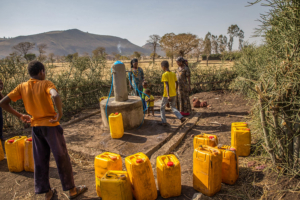
Clean Water in EthiopiaEthiopia faces a significant water crisis, with roughly 60 million of its 126 million citizens lacking access to safe drinking water. This issue is compounded by surface water pollution, resulting from the country’s rapid population growth, urbanization and inadequate waste management. However, several nongovernmental organizations (NGOs) and government agencies have implemented initiatives to ensure access to clean water in Ethiopia.

WaterAid’s Deliver Life Project

WaterAid works from a bottom-up approach to alleviate water contamination in Ethiopia through the “Deliver Life” project. WaterAid has shared this project with 128,259 people from 177 communities to help relieve water contamination and related illnesses. This initiative focuses on tackling dirty water, creating sanitary toilets and teaching good hygiene practices.

WaterAid’s project successfully provided 10 Ethiopian schools access and resources to address water contamination. This was achieved through the distribution of water points, water supply systems, gender-separated toilets and teachings on hygiene and menstrual hygiene. WaterAid also taught eight small businesses how to manage liquid and solid waste. Furthermore, they provided waste vehicles to help reduce the likelihood of water contamination from poor sanitation.

UNICEF and ONEWASH

The United Nations Children’s Fund (UNICEF) works with the Ethiopian government on the ONEWASH National Programme, a widespread national appeal to follow water, sanitation and hygiene (WASH). This collaboration targets water contamination by producing specific fecal and chemical contamination standards, sharing resources on hygiene practices and building water systems that prioritize cleanliness.

UNICEF and ONEWASH help prevent water contamination by improving hygiene standards and water cleanliness, reducing water-related disease and infection.

Water4Ethiopia

Water4Ethiopia fundraises to supply clean water sites in Ethiopia. Following funding, volunteers work with nonprofit organizations to find a clean-water site. The nonprofit organizations oversee the building and construction of springs or wells and ensure that local people are involved in the process from start to finish.

The wells and springs ensure that the local community has continuous access to clean water despite infectious diseases in the area. Water4Ethiopia has benefited more than 5,000 people to date.

City-Wide Inclusive Sanitation

The City-Wide Inclusive Sanitation (CWIS) project in Ethiopia strives to address water contamination and improve sanitation in four towns in Ethiopia: Sheno, Welenchiti, Maksegnit and Kebridehar. This approach ensures that all locals, even those from low-income backgrounds within these towns, can get clean water.

This is achieved through initiatives that tailor solutions to specific areas, such as analyzing which technologies will improve certain areas. For example, in smaller, rural settlements, CWIS implements on-site sanitation, whereas in cities, CWIS provides sewers. This program ensures that clean water is accessible for everyone, regardless of background, helping to reduce water contamination by improving access to a clean, fresh supply.

Rainwater Harvesting

The Ethiopian Ministry of Water and Energy has developed a method for collecting clean water using rainwater. Ethiopia’s lack of sanitary water sources means many people turn to ponds or rivers. These sources are often contaminated and cause illness. The rainwater harvesting approach is active nationally, reaching nearly 70% of the population.

It utilizes roof water, which is generally of decent to good quality, making it potable and much less likely to cause disease or illness than water from rift valleys. Approximately 4 million people now have access to clean water through rainwater harvesting. This brings the total number of Ethiopians with access to clean drinking water to just less than 75 million.

Conclusion

Ethiopia’s ongoing battle against water contamination is being addressed through various initiatives that improve access to clean water, sanitation, and hygiene education. Indeed, projects like WaterAid’s Deliver Life, UNICEF’s ONEWASH, and rainwater harvesting have benefited millions. Sustained efforts and collaboration will be essential in expanding these successes and ensuring safe water for all Ethiopians.

– Ella Dorman

Ella is based in Worcestershire, UK and focuses on Global Health for The Borgen Project.

Photo: Flickr

February 11, 2025
https://borgenproject.org/wp-content/uploads/borgen-project-logo.svg 0 0 Hemant Gupta https://borgenproject.org/wp-content/uploads/borgen-project-logo.svg Hemant Gupta2025-02-11 01:30:292025-02-10 23:21:48Initiatives Ensuring Access to Clean Water in Ethiopia
Global Poverty, Water, Water Crisis

Uruguay’s Water Crisis

Uruguay's Water CrisisDespite championing itself as the first country to enshrine the right to clean drinking water in its constitution, Uruguay has had a tumultuous relationship with water in the last few years. Uruguay’s water crisis, which began in 2018 and was triggered by severe droughts and a lack of rainfall, combined with poor government management and crisis response, reached a dangerous peak in the winter of 2023. Given Uruguay’s reliance on agricultural exports, this threatened the availability of safe drinking water, public health and economic productivity.

Thankfully, Uruguay’s water crisis ended in August 2023, with heavy rainfall and efforts by the government and international organizations to help replenish depleted supplies. However, this does not mean that policymakers in Montevideo can sit back and relax. On the contrary, efforts to improve infrastructure and protect water sources must be continued so that the country does not find itself in the same situation soon.

Why Was There a Water Crisis in Uruguay?

Many blame climate instability for Uruguay’s water crisis. The “La Niña” weather phenomenon contributed to rising temperatures and worsening droughts, persisting much longer than in the past. However, many argue that the climate emergency alone cannot be blamed. Poor government planning in the wake of these meteorological changes greatly worsened the effects of global warming.

It meant that Uruguay quickly found itself in a very vulnerable position. Water resource exploitation is very high in Uruguay; around 80% of freshwater is dedicated to farming and agriculture, limiting the amount of water for personal use. The government’s priority has been using water for “productive activities- agriculture, irrigation and big industry” and sufficient measures were not taken to prevent Uruguay’s water crisis.

Additionally, there was a historic lack of progress regarding water infrastructure projects. Before the crisis, the most recent reform to the waterways took place in 1987, as there has been a clear lack of political incentives to pursue projects to improve water infrastructure until now. For example, ex-president José Mujica proposed the Casupá Project in 2013, “which would have been able to fulfill 70% of Montevideo’s demand.” However, this program never came to fruition, as successive administrations made no moves to make it a reality.

What Were the Impacts of the Water Crisis?

Uruguay’s water crisis spelled trouble for its citizens, specifically for those living in Montevideo (home to around one-third of the total population). The Paso Severino Reservoir, the capital city’s main water source, reached around 1.7% of its total capacity in July 2023. In response to this scarcity, the State Sanitary Works Administration took water from sources near the River Plate, much more brackish than water from the reservoirs.

Although it was deemed safe, sick people and pregnant women were advised not to drink it. The sodium and chloride levels of the water pumped through the taps “exceeded what the World Health Organization considers safe for human consumption.” Bottled water was available and made exempt from taxes, but these quickly became scarce, partly due to panic-buying. The government provided free bottles to the most impoverished communities in affected areas.

Uruguay’s water crisis also had a significant impact on agricultural production. This sector accounts for around 7% of the nation’s gross domestic product (GDP) and 70% of total exports. The lack of water greatly affects agricultural output, especially between the end of 2022 and the beginning of 2023, “when it declined by 25% on a year-on-year basis.” The lack of water hit soybean production and cattle farming the hardest.

Another significant consequence of Uruguay’s water crisis was the growing political unrest due to poor drinking water quality and negative public perceptions of President Lacalle’s emergency response. Around 60% of the population was affected by the government’s decision to reroute water from rivers for public consumption, with the most vulnerable groups being especially affected. Around 63% of the population condemned the government’s response to the drought, with organized protests and campaigners shouting, “¡No es sequia, es saqueo! — It’s not drought, it’s pillage!”

What Was the Government’s Response?

Short-term solutions were enacted at the height of the drought to address immediate needs. Similarly, the government embarked on a long-term strategy to manage the current emergency and prevent future occurrences. Vowing it is “committed to improving the country’s water infrastructure and resilience to drought,” the government invested $500 million into plans to improve Uruguay’s waterways.

These included renovating sanitation systems, constructing another potable water source for the capital city and more reservoirs and desalination plants. There are also plans to repair damaged pipes to reduce water losses, with reports indicating that around 50% of the state-owned water company’s potable water supplies were lost due to leaks. The company has proposed a plan to reduce this by 25% in the next two decades.

What Role Have International Organizations Played?

During the crisis, the government also called on the Uruguayan Red Cross to help deal with demand and support plans to mitigate the consequences of shortages. The Inter-American Development Bank (IDB) also approved a $200 million loan “to support a program in Uruguay to boost water security and environmental sustainability.”

This loan aimed to improve water resource management and solid waste management to minimize contamination of potential future drinking water sources. Also, the IDB investment helped to improve Uruguay’s crisis responses, boosting resilience to changing weather dynamics alongside government refurbishments of its water systems.

Final Note

President Luis Lacalle Pou announced the end of the water crisis in August 2023 after three years of shortages and drinking water scarcity. This was mostly due to heavy rainfall in the region, which helped to refill water sources that were gravely depleted. However, the repairs to the water systems and programs to improve water security and management will hopefully pay dividends in the future, protecting Uruguay from the same situation.

– Ciara Howard

Ciara is based in Brighton, UK and focuses on Good News and Global Health for The Borgen Project.

Photo: Pxhere

January 17, 2025
https://borgenproject.org/wp-content/uploads/borgen-project-logo.svg 0 0 Hemant Gupta https://borgenproject.org/wp-content/uploads/borgen-project-logo.svg Hemant Gupta2025-01-17 01:30:382025-01-16 22:51:05Uruguay’s Water Crisis
Developing Countries, Global Poverty, Water, Water Crisis

UNICEF and Partners Address Water Crisis in Afghanistan

Water Crisis in AfghanistanAccess to safe water is vital for ensuring good hygiene practices and protection from disease. However, in Afghanistan, water is far from accessible. Afghanistan’s political climate has rendered access to vital resources, such as water, limited across many regions. After years of economic challenge, poor management and political instability, water crisis remains an urgent issue in Afghanistan.

This situation has only worsened with the Taliban’s power resurgence in 2021. However, as of 2024, the United Nations Children’s Fund (UNICEF) has partnered with the Afghanistan Humanitarian Trust Fund (AHTF). This collaboration has reduced the water crisis in Afghanistan by supplying sustainable water systems.

Water Crisis in Afghanistan

Clean water is vital; it ensures children are less vulnerable to diseases like diarrhea, which exacerbate malnutrition. However, this resource is difficult to find in remote areas of Afghanistan with very little rainfall. Due to agricultural demands, an over-extraction of groundwater has significantly reduced the water supply from underground aquifers.

Furthermore, changing climatic conditions have depleted available water sources. Afghanistan has held record-breaking droughts for more than two decades. Consequently, only about 42% of Afghans can access safe drinking water.

UNICEF’s Work to Supply Sustainable Water Sources

UNICEF has been working to support Afghanistan for more than 70 years, with increased efforts directed toward water supply in the past few years. It is Afghanistan’s lead provider of water, sanitation and hygiene (WASH) services. By installing solar-powered pumps, UNICEF has ensured that the power to access clean water is returned to local communities.

One hundred percent of the facilities are small-scale and solar-powered, meaning the communities can run them. UNICEF has collaborated with 30,000 community-elected councils, ensuring management and decisions regarding the resource remain at the local level.

Partnership With the AHTF

UNICEF has partnered with the AHTF to complete the installation of “Climate-Resilient and Sustainable Water Supply Services in Remote Rural Communities.” This has given more than 30,000 people in 18 remote communities with sustainable water supply systems. The community-elected councils led the construction of these systems.

Community mobilizers supported by UNICEF worked to help the locals on essential parts of the water supply projects. Additionally, local mechanics have been equipped and trained to maintain these systems.

Real Life Application – Fauzia

Each day, 10-year-old Fauzia would walk half an hour to the water tap in the Charkh district, a remote part of the Logar province. She would push a wheelbarrow full of jerry cans to fetch water for her family and wait in a queue for more than an hour. The journey back would mean pushing a heavy wheelbarrow full of water. Only after this does she reach for her school backpack.

As a result of UNICEF’s collaboration with the AHTF, Fauzia doesn’t need to miss any more school time. Now, her family has a new water tap. Safe water is available right in their home from a piped system installed in their village. Fauzia states, “The engineers installed the tap in our house, so now we have water all the time. We can cook whenever we want and I am happy.”

In the coming year, the AFTH, in partnership with UNICEF, will set up water supply systems in 32 remote communities in Faryab, Helmand and Farah provinces. This will support more than 64,000 people, resulting in fewer and fewer people having to make the journey, like Fauzia.

– Amelia Short

Amelia is based in Bradford, UK and focuses on Good News for The Borgen Project.

Photo: Flickr

December 21, 2024
https://borgenproject.org/wp-content/uploads/borgen-project-logo.svg 0 0 Hemant Gupta https://borgenproject.org/wp-content/uploads/borgen-project-logo.svg Hemant Gupta2024-12-21 07:30:472024-12-20 02:15:25UNICEF and Partners Address Water Crisis in Afghanistan
Global Poverty, Water, Water Sanitation

Water and Sanitation in Indonesia

water and sanitation in indonesiaIndonesia is renowned for its stunning landscapes, vibrant culture and warm hospitality, which draws millions of visitors annually. However, beyond its scenic allure lies a pressing challenge: inadequate access to clean water and sanitation. This issue severely impacts public health and disproportionately affects impoverished communities, where limited resources hinder access to essential health care services. Tackling this crisis is critical to breaking Indonesia’s cycle of poverty and fostering sustainable development.

Poverty and Indonesia’s Water and Sanitation Crisis

In Indonesia, where 9.4% of the population lives below the poverty line, approximately 192 million people lack access to safe water and 14 million do not have access to safe toilets. UNICEF report reveals that nearly 25 million Indonesians practice open defecation and 89% of water sources are contaminated by faecal bacteria. Shockingly, only 7% of wastewater is treated.

This improper disposal and untreated sewage worsen water pollution, leading to unsafe water consumption. Exacerbated by poverty, these factors create a breeding ground for waterborne diseases like diarrhoea and cholera. For children, unsafe water and poor sanitation lead to chronic illnesses and stunt growth. Regarding this, 21 out of every 1,000 children in Indonesia die before their fifth birthday, according to the Asian Development Bank (ADB).

The water and sanitation crisis in Indonesia is not only a public health issue but also an environmental one. Improper waste disposal leads to severe pollution of rivers and lakes, many of which serve as primary water sources for local communities. Regarding this, four of Indonesia’s rivers, Brantas, Ciliwung, Citarum and Progo, rank among the 20 most polluted rivers in the world. This widespread pollution undermines biodiversity and poses a significant threat to agricultural productivity, further exacerbating the challenges faced by local communities.

International Help

Addressing these issues requires investment in infrastructure such as wastewater treatment facilities and clean water distribution systems. Several NGOs are working to address the root causes of poor sanitation and improve access to clean water in Indonesia.

Since 2014, Water.org has empowered more than 5.1 million Indonesians access to safe water and sanitation through innovative partnerships and financing solutions, according to its website. Its WaterCredit initiative collaborates with local financial institutions and community organizations to expand water and sanitation infrastructure. Water.org also strengthens local water utilities, offering technical assistance and cost-efficient solutions to expand sustainable services. These initiatives not only improve health and hygiene but also support Indonesia’s broader economic and developmental goals.

Indonesia and the UAE have partnered to address the pollution in Indonesia rivers, formalizing the agreement through Clean Rivers and the United Nations Development Programme (UNDP). Over the next three years, the initiative aims to clean up 5,000 tons of waste from five river areas, this project aims to prevent waste leaks into the ocean and promote sustainable water management practices. It also supports Indonesia’s goals to reduce marine waste by 70% by 2025 through collaboration with local governments and environmental organizations.

Additionally, the U.N. has facilitated $1.7 billion in financing for the Sustainable Development Goals (SDGs), including Goal 6, which ensures access to clean water and sanitation in Indonesia. This support plays a crucial role in advancing water and sanitation efforts across the country.

A Call to Action

Addressing water and sanitation in Indonesia is not just a public health issue, it is a path to breaking the cycle of poverty and unlocking the country’s full potential. Expanding wastewater treatment facilities, improving access to clean water and addressing open defecation are critical steps.

“We must ensure the U.N.’s collaboration with Indonesia continually promotes responsive and resilient policies and initiatives in the face of global crises,” says Suharso Monoarfa, Minister of National Development Planning and Head of Bappenas. Therefore, supporting organizations that improve water quality and sanitation infrastructure in Indonesia can ensure a healthier and safer future for its people.

– Nour Mostafa

Nour is based in Gloucester, UK and focuses on Good Newsand Global Health for The Borgen Project.

Photo: Flickr

December 7, 2024
https://borgenproject.org/wp-content/uploads/borgen-project-logo.svg 0 0 Naida Jahic https://borgenproject.org/wp-content/uploads/borgen-project-logo.svg Naida Jahic2024-12-07 01:30:482024-12-07 01:16:51Water and Sanitation in Indonesia
Page 3 of 57‹12345›»

Get Smarter

  • Global Poverty 101
  • Global Poverty… The Good News
  • Global Poverty & U.S. Jobs
  • Global Poverty and National Security
  • Innovative Solutions to Poverty
  • Global Poverty & Aid FAQ’s
Search Search

Take Action

  • Call Congress
  • Email Congress
  • Donate
  • 30 Ways to Help
  • Volunteer Ops
  • Internships
  • Courses & Certificates
  • The Podcast
Borgen Project

“The Borgen Project is an incredible nonprofit organization that is addressing poverty and hunger and working towards ending them.”

-The Huffington Post

Inside The Borgen Project

  • Contact
  • About
  • Financials
  • President
  • Board of Directors
  • Board of Advisors

International Links

  • UK Email Parliament
  • UK Donate
  • Canada Email Parliament

Get Smarter

  • Global Poverty 101
  • Global Poverty… The Good News
  • Global Poverty & U.S. Jobs
  • Global Poverty and National Security
  • Innovative Solutions to Poverty
  • Global Poverty & Aid FAQ’s

Ways to Help

  • Call Congress
  • Email Congress
  • Donate
  • 30 Ways to Help
  • Volunteer Ops
  • Internships
  • Courses & Certificates
  • The Podcast
Scroll to top Scroll to top Scroll to top