• Link to X
  • Link to Facebook
  • Link to Instagram
  • Link to TikTok
  • Link to Youtube
  • About
    • About Us
      • President
      • Board of Directors
      • Board of Advisors
      • Financials
      • Our Methodology
      • Success Tracker
      • Contact
  • Act Now
    • 30 Ways to Help
      • Email Congress
      • Call Congress
      • Volunteer
      • Courses & Certificates
      • Be a Donor
    • Internships
      • In-Office Internships
      • Remote Internships
    • Legislation
      • Politics 101
  • The Blog
  • The Podcast
  • Magazine
  • Donate
  • Click to open the search input field Click to open the search input field Search
  • Menu Menu

Archive for category: Water

Africa, Child Poverty, Children, Water

LWML: Mission Grants for the Children of Kenya

Mission Grants for the Children of Kenya Children in Kenya are struggling. In places like Kisumu, many are living on the streets, “begging and stealing to survive.” They sleep in unsafe and unsanitary places such as parks or the sewer. There is a lack of clean drinking water for those who attend school, especially in rural areas where children must walk long distances to retrieve water that may not even be safe for them to drink. Water-borne illness is a common cause of low school attendance and children falling behind in schoolwork. Fortunately, these problems have caught the attention of an organization that now provides mission grants for the children of Kenya. These organizations take action to improve the conditions for Kenyan children with the financial help of missionaries and auxiliaries.

Lutheran Women’s Missionary League (LWML)

Founded in 1942, the Lutheran Women’s Missionary League (LWML) is an official auxiliary of the Lutheran Church. Its purpose is to encourage and equip Christian women to live in active ministry and support global missions. Each year, the members of LWML vote on a list of missions to support and establish a financial goal to reach for them. A few missions working on improving the lives of Kenyan children have made the list. Here are two of LWML’s mission grants for the children of Kenya.

Water and the Word for Rural Schools in Kenya

This is one of the mission grants for the children of Kenya that started in 2008 when a man from Nebraska was traveling around East Africa and saw the need for clean drinking water in rural areas and took action. Through help from social workers and educators in Nakuru, he developed a system of water harvesting equipment. The team installed water storage, filters, hand-washing systems, rain gutters and tanks in schools across Kenya.

In 2016, the Lutheran Church Missouri Synod took over the project. It became an organization that continues to bring clean water resources and religious teachings to schools in Kenya. In 2019, LWLM members approved the mission grant to continue supporting this project.

Capstone Ministries

Capstone Ministries is another project on the list of mission grants for the children of Kenya that LWML supports. Founded in 2005, the organization focuses on bringing street children in Kenya, especially the areas in and around Kisumu, back to their families. There are many challenges that this process includes such as children who feel shame, hopelessness or poverty burden and do not want to go back home. By 2016, Capstone Ministries reconciled 678 children with their families, according to its website. The project’s members frequently visit these children and their families to ensure all is going well.

In Kenya, high school education is not free. The average yearly price is $650 and many cannot afford it. Capstone Ministries started a scholarship fund to provide affordable opportunities for kids to continue school. In 2016, the organization sponsored 42 boys in secondary school, according to its website.

LWML Involvement

In addition to providing mission grants for the children of Kenya, members of LWML become personally involved with the missions themselves. Shurie Scheel was one of these hands-on people in 2022 when she visited Kenya to see the progress of the Water and the Word project. Scheel is the grant administrator for Water and the Word and is an active member of LWML at her local Lutheran church in Wyoming.

While visiting the schools, Scheel and her group brought the children soccer balls, books, school supplies, as well as sanitary supplies for the schoolgirls to keep them going to school. Representing the LWML, she established groundwork and connections with the people working on the mission. She was able to bring back information and visual evidence that the money LWML was giving to the project was having a positive impact on the lives of the schoolchildren therefore encouraging more donations.

Missionary groups like the LWML are helping to provide financial support for projects like Water and the Word and Capstone Ministries. This process relieves the time-consuming fundraising efforts so the missions can work on important things like improving the lives of impoverished children.

– Heather Gisi
Photo: Unsplash

March 6, 2024
https://borgenproject.org/wp-content/uploads/borgen-project-logo.svg 0 0 Naida Jahic https://borgenproject.org/wp-content/uploads/borgen-project-logo.svg Naida Jahic2024-03-06 01:30:152024-03-05 03:53:26LWML: Mission Grants for the Children of Kenya
Global Poverty, Water, Water Crisis

Ceramic Filtration: A Possible Solution To Water Stress

Ceramic FiltrationAccording to UNESCO’s U.N. Water, “Globally, two billion people do not have safe drinking water and 3.6 billion lack access to safely managed sanitation.” Ceramic filtration is a helpful creation that can reduce contaminated water in various developing countries at a low price.

What Is Ceramic Filtration?

Ceramic filtration uses clay to create a case to remove impurities from water sources, such as water-borne bacteria, microplastics, heavy metals and toxic chemicals. The process of creating ceramic filtrations is quite simple. In a bucket, shifted powdered clays will be mixed gradually with water and combustible burn-out material (natural materials that can be burned), such as coffee grounds, crushed charcoal, sawdust, or ground rice husks. Mixing these materials will create a soft, moldable paste. Then, the clay will be pressed into the bucket to mold around the bucket’s shape and eliminate excess water.

With the clay is in its desired shape, the crafter will leave it to air dry properly for 30 days on a dry shelf. After air drying, the clay is placed in the kiln at 877 to 1006 degrees Celsius. Once the ceramic pot is assembled and adequately dried, ridding water of bacteria and chemicals is simple. Pouring water into the clay pot with a bucket underneath allows water to permeate through but not sediments and bacteria into the bucket.

Why Is Ceramic a Possible Solution To Water Stress?

Ceramics is a viable option for developing countries as clay is an ample resource and can be found easily in different climates. The cost of water filtration systems is too expensive for most developing countries to afford, “[Industrial water] systems costs can range significantly due to these variables, with some simple, low-flow systems running as low as $45,000, to high-end, high-capacity systems with price tags exceeding tens of millions of dollars.”

According to the World Bank, “Low-income economies have 2021 GNI per capita of up to $1,085.” This indicates that leaders in these countries may struggle to afford essential goods for their populations, let alone invest in filtration systems. Ceramic filtration is a possible solution to address water stress, offering an easily accessible and cost-effective resource. The creation of a ceramic filter typically costs around $50.

As stated by John Howarter, an assistant professor of materials engineering and environmental and ecological engineering at Purdue University, “A filter in Kenya costs about $50 in materials, with labor and transportation as additional costs, but that filter will last five to 10 years, so the overall cost is very low.”

Conclusion

Ceramic filtration is a possible solution to water stress, allowing billions of people to have clean, accessible water at an affordable cost. The dissemination of knowledge about inexpensive and easily deployable filtration methods is crucial in empowering individuals in underdeveloped countries, offering them a fair chance at a healthier life.

– Jessica Jean-Baptiste
Photo: Pixabay

February 22, 2024
https://borgenproject.org/wp-content/uploads/borgen-project-logo.svg 0 0 Hemant Gupta https://borgenproject.org/wp-content/uploads/borgen-project-logo.svg Hemant Gupta2024-02-22 15:00:332024-02-21 03:49:23Ceramic Filtration: A Possible Solution To Water Stress
Global Poverty, Water

Poly-Fluorinated Alkyl Substances: PFAS in India

PFASTypically, when people think of pollution, we imagine tangible contaminants such as plastics that may take more than 500 years to degrade. However, recently, with the rise of global industrialization, more and more countries have introduced a new chemical that takes thousands of years to break down, known as PFAS (per- or polyfluorinated alkyl substances).

What Are PFAS?

These chemicals, commonly referred to as “forever chemicals,” belong to the fluorine-based group. They find widespread use in various household items like paint, fire extinguishers, cookware and more. PFAS has been shown to have many negative health impacts, including higher rates of cancer, decreased vaccine effectiveness and increased blood pressure and cholesterol.

The everlasting nature of this chemical means that once it comes into contact with humans, it leaves a lasting impact and accumulates over time. While many countries race to find solutions and create preventive pieces of legislation, India has remained quiet on the matter. With various risks to human and environmental health, the question arises: “How has the government been addressing the impact of per- or polyfluorinated alkyl substances in India?”

The Problem of PFAS in India

A major difference between PFAS in India and several other countries is the culture behind the burning of waste. However, when waste containing PFAS is burned, these chemicals are released into the air, posing a higher risk of exposure to individuals through inhalation. The limited research conducted on pollution levels in different locations across India reveals a significant correlation between population density and the levels of PFAS in both the air and dust. Additionally, these studies show that younger generations tend to have higher levels of PFAS in their body, indicating recent exposures.

PFAS is disproportionately affecting low-income neighborhoods, where residents often depend more on drinking water from nearby rivers, streams and wells, making them susceptible to contamination with these substances. Additionally, these areas are typically closer to large factories and plants that tend to use PFAS, further contributing to increased levels of exposure. With most of the people living in these communities also working in the plants, their exposure levels are exponentially higher than those who can afford to move away and work in less labor-intensive and less hazardous jobs.

What Is India Doing?

In 2006, India took a significant step in environmental protection by joining the Stockholm Convention in 2006. In 2009, the convention established a list of various PFAS substances considered harmful and recommended restrictions on them for member countries. However, India has not accepted this amendment to the convention and thus does not show any initiative towards regulating PFAS within the country.

With the nation focusing on industrialization and boosting the economy, there has been limited research on alternatives to PFAS in India and methods to combat pollution. PFAS remains the most convenient yet harmful substance that can create water, oil and stain-resistant materials. The lack of extensive research inhibits the formulation of concrete legislation and hinders the development of innovative solutions. To move forward, India could consider slowly implementing a blank ban across PFAS substances, taking cues from other countries that have successfully reduced pollution in bodies of water.

– Aman Chaudhary
Photo: Wikimedia Commons

February 14, 2024
https://borgenproject.org/wp-content/uploads/borgen-project-logo.svg 0 0 Hemant Gupta https://borgenproject.org/wp-content/uploads/borgen-project-logo.svg Hemant Gupta2024-02-14 15:00:202024-02-12 04:34:48Poly-Fluorinated Alkyl Substances: PFAS in India
Global Poverty, Water

6 Organizations Bringing Clean Water to Burundi

6 Organizations Bringing Clean Water to BurundiThe United Nations International Children’s Emergency Fund (UNICEF) budget analysis of Water, Sanitation and Hygiene in Burundi for 2022-2023 reports that access to clean drinking water in Burundi is improving, with a national average of 86% of Burundian households having access to an improved water source. In countries such as Burundi, where the average citizen lives on less than $1.90 a day, access to clean water has a noteworthy positive impact on mortality, equity, wellbeing and access to education. Here are six organizations bringing clean water to Burundi.

Water for Development 

Water for Development is a nonprofit led by Burundian youth, employing point-of-water chlorine dispensers to reduce the prevalence of diarrhea to less than 10% in operational areas. The dispenser design alleviates the need to build fires for water boiling, a responsibility that falls primarily on women and children. This task, along with water collection, can consume between 3-10 hours a day for populations located more than 30 minutes away from a water source. The nonprofit is based in the Cibitoke Province, where community-elected “promoters” refill the dispensers and teach others how to use them. This organization has been especially impactful for children in Burundi, a quarter of whom suffer from illnesses related to dirty water.

The Gazelle Foundation

The Gazelle Foundation is a nonprofit organization formed in response to the story of Gilbert Tuhbonye, a retired professional Burundi runner and a survivor of the Hutu/Tutsi civil upheaval in the ’80s and ’90s. The organization is dedicated to constructing clean water systems across Burundi using tanks and PVC pipelines. It also invests in the local economy by sourcing supplies locally and providing employment opportunities to residents in the communities where systems have been installed. Thanks to local Burundian programs and fundraising from “water runs” held in Austin, Texas – where the Foundation is headquartered – 125,000 more people in Burundi now have access to clean water.

Sanitation and Water for All

Sanitation and Water for All (SWA) is a multi-government-stakeholder partnership hosted by the United Nations (U.N.). It works with organizations from across the public and private sectors to garner political support for clean water and sanitation. Burundi joined the partnership in 2010 and with the support of SWA partners, the government developed National Water (PNEau) and National Sanitation Policies (NAP). These programs and policies led to a substantial increase in funding for water and sanitation in the country. Through this partnership, the Burundian Government established the objective of achieving universal access to safe drinking water by 2030.

Amazi Water

Amazi Water, founded by John Peake in 2015, is a Christ-centered organization headquartered in Burundi. The organization installs solar-powered, fully submersible pump systems with higher yields and lower labor costs when compared to hand-pump systems. The organization has installed more than 900 systems nationwide, providing clean drinking water to an estimated 2.5 million people. The organization also offers employment opportunities to locals and is one of the most impactful water projects in Burundi.

Beygood4burundi

BeyGood4Burundi is a collaborative program involving Beyoncé’s philanthropy arm, BeyGOOD and UNICEF. The organizations joined forces in 2017 to give women and girls in Burundi access to safe drinking water. Globally, women and girls spend 200 million hours daily collecting water, leading to them missing out on education. To address this, BeyGood4Burundi has aided in building and rehabilitating 80 water points, bringing water to 30,000 Burundians.

Join for Water

Join For Water is a nonprofit based in Belgium, operating in nine countries across Africa, Latin America and Europe. The organization has been active in Burundi since 1997, focusing mainly on the provinces of Bubanza and Isare. It collaborates with numerous local institutions to build more robust water systems, coordinating resources to provide support and training on how to manage existing systems. Join For Water also works to improve sanitation in Burundi, focusing on sanitation facilities in rural areas.

These are but a handful of the many organizations working to improve health and wellbeing outcomes in Burundi through buoyed access to clean drinking water. For a country with a large percentage of its population below the poverty line, organizations that provide clean water and employment opportunities can save lives. 

– Ava Johnson
Photo: Pexels

January 29, 2024
https://borgenproject.org/wp-content/uploads/borgen-project-logo.svg 0 0 Yana Chukur https://borgenproject.org/wp-content/uploads/borgen-project-logo.svg Yana Chukur2024-01-29 01:30:572024-01-27 12:55:136 Organizations Bringing Clean Water to Burundi
Global Poverty, Water

Addressing Water Shortages in Punjab, India

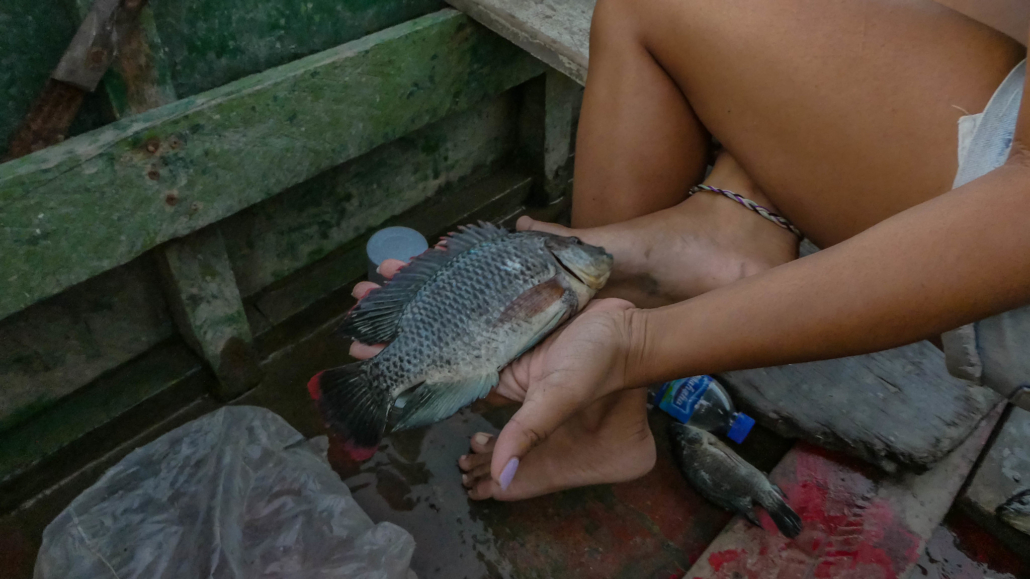
Water Shortages in PunjabPunjab is an Indian state located in the northern region of the country. Many know it for its rich culture, unique cuisine and geographical beauty. Recently, Punjabi farmers have been facing a challenge. This challenge is water shortages. Water shortages in Punjab have raised the importance of addressing the issue of water scarcity.
The Issue

Water scarcity is a harsh reality that Punjabi farmers have been facing recently. Punjab, known to many as India’s breadbasket, is home to many rice farmers who rely on water to grow their crops.

A dependency on groundwater is one of the root causes of this issue. Punjabi farmers do not have access to canal water, making groundwater their only option. According to some Punjabi farmers, groundwater was reachable at 4.5 meters deep around seven to eight years ago. As of now, it is only reachable at 21 meters. This change represents the declining groundwater level.

The country of India as a whole relies on the Punjab region for food, especially for wheat and rice. Currently, about 8% of the population lives below the poverty line. If the water scarcity issue continues to worsen, the possibility of a food shortage for the entire nation will arise.

Causes of Water Scarcity

One can attribute water shortages in Punjab to many contributing factors. One key factor is how Punjabi farmers are depleting the region’s aquifers. Water is one of the most important parts of rice and wheat cultivation, forcing farmers to find water wherever possible and acquire as much as they are able to.

The state also deals with inefficient water management systems. One issue with the water management systems is that half of the state’s canal water flows into Rajasthan, a neighboring state. Punjabi government has not been able to find a solution to this issue and farmers remain without access to canal water.

Another major issue contributing to water shortages in Punjab is the pollution of surface water. There are four main polluted stretches of Punjabi rivers. These four rivers are Ghaggar, Beas, Kali Bein and Satluj. Many industries have been emptying toxic waste into Punjabi rivers, resulting in water that is unfit for human consumption and agricultural practices. The industrialization and urbanization of the state is unfortunately accompanied by the harmful discharge of waste and sewage into Punjab’s rivers.

Addressing the Issue

One project that has emerged to assist Punjab’s crisis is a World Bank-supported plan named Hydrology II. This project introduced new technologies and opened reservoir managers’ eyes to the status of the water availability situation. New systems monitor important parts of the hydro-meteorological cycle and utilize digital gauges and sensors to measure water levels.

The Punjab government launched the Paani Bachao Paisa Kamao Scheme in 2018 to incentivize farmers to conserve water and energy. As of now, about 300 farmers are enrolled in this program. These farmers receive cash incentives to save electricity, creating 6-25% in water savings. The Punjab State Power Corporation Limited (PSPCL) runs the scheme which the state government has encouraged.

Another project working to eradicate water shortages in Punjab is the Punjab Municipal Services Improvement Project. This project, with funding approved in April 2021, is helping locals switch from using groundwater to surface water sources. The project focuses on two Punjabi cities, Amritsar and Ludhiana. It aims to finance water treatment plans, water pumping systems, transmission lines, etc. The predicted improvements in water supply should benefit more than 3 million people by 2026.

Looking Ahead

Solving water shortages in Punjab is essential to protect its economic stability, food security and the well-being of citizens. With agriculture as its backbone, this state’s future is dependent on water availability. Addressing this challenge will become increasingly urgent as groundwater levels continue to lower.

– Trisha Borde
Photo: Flickr

January 10, 2024
https://borgenproject.org/wp-content/uploads/borgen-project-logo.svg 0 0 Borgen Project https://borgenproject.org/wp-content/uploads/borgen-project-logo.svg Borgen Project2024-01-10 07:30:572024-01-07 08:59:06Addressing Water Shortages in Punjab, India
Global Poverty, Water

Water Access for Suriname’s Indigenous Wayana People

Wayana PeopleIn Suriname, 26% of the population lives under the poverty line, according to the World Bank. But out of all the groups who poverty has impacted, as a marginalized group, Suriname’s Indigenous Wayana people face disproportionate effects. The Wayana people are spread across the Northern Amazonian region of Brazil, French Guiana and Suriname. About 800 people of Wayana descent reside in Suriname, according to the Mulokot Foundation page. The Mulokot Foundation aims to support Suriname’s Wayana people and help the country move closer to achieving the UN Sustainable Development Goals (SDGs) through several community projects. One of the organization’s goals is to reduce poverty by improving access to water for Suriname’s Indigenous Wayana people.

The Mulokot Foundation

Paramount Chief of the Wayana community, Ipomadi Pelenapin established the Mulokot Foundation in April 2018. The foundation’s website highlights its goals: “…to bring sustainable development to the Wayana community by capacity building, developing management skills, managing projects in the community, providing training, and advocacy.” The Mulokot Foundation serves all of the nine Wayana villages in Suriname.

The Mulokot Foundation explains the situation regarding water on its website. “Villagers from Indigenous communities are mostly dependent on rainwater and the use of water from the nearby rivers. The use of river water is accompanied by serious health hazards. In Suriname, approximately 60,000 kilograms of mercury enters the environment every year. Mercury is a highly toxic metal that is used by thousands of gold miners who operate in large parts of the country.” The mercury and other toxic contaminants end up in the waters of creeks and rivers, posing extreme health risks to those who ingest the water.

Water Support

In Kawemhaken, an area at the border of Suriname and French Guiana, the Wayana people have to claim water from a nearby creek and often unprotected sources of water. During hot seasons, when the creek dries up, the Wayana end up having to take water from the river; another unprotected and unclean water source. The inaccessibility to clean, filtered water poses not only as a health risk by consumption but also by the utilization of it for sanitation purposes.

Furthermore, as illegal gold mining industries set up camp among these water sources, these sources become contaminated with mercury at an unprecedented rate. Mercury, which is tasteless and odorless, poses an extreme health risk among the Wayana population. When left potentially untreated, it has a deadly effect. In 2007, when American researchers came to test the adverse effects of the water source on the Wayana people, 58% of hair samples had mercury levels above the World Health Organization (WHO) safety limit.

Achievements

According to the WHO, every individual needs at least 50-100 liters per day for basic hygiene and sanitation needs. As water quality is declining in their region and the indigenous have to utilize untreated water for their use, the Mulokot Foundation, with support from the Caribbean Development Bank, started a project to increase clean water access for the Wayana people. The project targets all nine Wayana villages.

The project relies on a water purification system that uses Bio Active Carbon and solar pumps for water extraction and distribution. Once filtration is complete, the water travels to a “central water tower in order to gain a certain pressure so that the entire village can access the purified water.”

The running of the project is a collaboration between the Mulokot Foundation and the Basic Needs Trust Fund of the Surinamese Ministry of Finance and Planning. The introduction of the system in the first pilot village occurred at the close of 2022.

Mulokot’s Persistence

The Mulokot Foundation’s development in facilitating clean, filtered water directly to the households of the Wayana people is indeed a remarkable achievement. However, as Suriname has been plagued by illegal gold mining, mercury continues to permeate through the waters that the Wayana people use for consumption. The Mulokot Foundation’s resources are limited and untreated, the Wayana are still utilizing unfiltered water. However, as Mulokot has expanded its goals, so has the number of ongoing projects regarding capacity building. It is still safe to say that the impact of The Mulokot Foundation has indeed bettered the life of the Wayana.

– Aswath Jaiprakash
Photo: Flickr

January 10, 2024
https://borgenproject.org/wp-content/uploads/borgen-project-logo.svg 0 0 Kim Thelwell https://borgenproject.org/wp-content/uploads/borgen-project-logo.svg Kim Thelwell2024-01-10 01:30:362024-01-07 06:28:34Water Access for Suriname’s Indigenous Wayana People
Clean Water Access, Global Poverty, Water

Harnessing Wastewater: Achieving SDG Target 6.3


SDG Target 6.3The 2030 Agenda for Sustainable Development identifies 17 Sustainable Development Goals (SDGs), and SDG 6 focuses on universal access to water and sanitation services, emphasizing their long-term sustainability. SDG 6 divides into six specific target areas to accomplish this goal, each with its own defined objective. 

One of these targets, SDG Target 6.3, aims to address the issue of untreated wastewater while promoting recycling and safe reuse practices on a global scale by 2030.

SDG Target 6.3 Overview

SDG Target 6.3 comprises two indicators, 6.3.1 and 6.3.2, providing specific measurements to monitor progress. Indicator 6.3.1 assesses the proportion of domestic and industrial wastewater flows that undergo safe treatment. By monitoring this indicator, the UN can evaluate the effectiveness of the wastewater treatment process to protect public health and the environment. Indicator 6.3.2 measures the proportion of bodies of water that demonstrate good ambient water quality. This indicator helps the UN gauge water sources’ overall health and cleanliness, indicating progress in reducing pollution and preserving aquatic ecosystems. 

Botswana Case Study

Effective wastewater management plays a pivotal role in mitigating water scarcity issues in water-stressed countries. Botswana, renowned for being one of the most drought-prone countries globally, presents a compelling case study with its recurrent and extended periods of drought dating back to the 1950s. These droughts have severely affected food security, leaving more than 10% of the population grappling with chronic food insecurity. Moreover, the agricultural sector, upon which 70% of the rural population depends for their livelihoods, suffers greatly as irrigation and crop production primarily rely on rainfall. The adverse impact is exemplified by the staggering number of cattle deaths, with nearly 40,000 recorded during the 2018-2019 drought. 

To underscore the severity of the situation further, the World Bank’s calculations in 2020 revealed that Botswana’s freshwater withdrawal ratio stood at 2.31, indicating that the country consumes more freshwater than it has available.  

Recognizing the need to tackle these challenges and foster economic growth, the government of Botswana conducted a case study. The case study addresses how standards can be used for wastewater treatment and reuse, aligned with SDG Target 6.3, by improving water quality through pollution reduction. The government of Botswana developed national water standards based on international standards developed by the Water Quality Technical Committee through the Botswana Bureau of Standards. 

The government of Botswana involved its Department of Water Affairs in this case study by implementing these standards to treat wastewater discharged from its Headquarters through a constructed wetland system. The study then tested samples from this system for effluent quality in accordance with drinking standards, irrigation standards and wastewater discharge requirements. 

The results from the case study demonstrated that the constructed wetland system effectively treated wastewater for non-drinking purposes such as irrigation, construction and dust suppression. Emphasizing the potential impact of wastewater management, adequately treated wastewater can contribute 16% of Botswana’s available water resources. 

Implications for Developing Countries

The success of this case study demonstrates that other institutions in Botswana can replicate the use of constructed wetlands for on-site wastewater treatment and reuse for non-drinking purposes. However, the implications extend beyond Botswana. Globally, 80% of wastewater is released into the environment without adequate treatment. Jennifer Garner, Global Director of the World Bank Global Practice, emphasizes the crucial role of water treatment and reuse in addressing water scarcity and pollution issues, particularly considering that 36% of the global population resides in regions with limited water access. Properly treated wastewater can substitute fresh water in multiple applications, such as irrigation, industrial processes and recreational activities. Furthermore, it contributes to preserving natural ecosystems’ flow, while the by-products generated during the treatment process can be utilized to generate energy and nutrients. 

Access to water is essential for driving economic growth, supporting healthy ecosystems and sustaining life. Approximately 3.6 billion people worldwide lack safely managed sanitation services, disproportionately affecting developing countries. Developing countries can access clean water for irrigation, health and sustainable living by working towards SDG Target 6.3 and halving the proportion of untreated wastewater by 2030.

– Clara Swart
Photo: Flickr

November 25, 2023
https://borgenproject.org/wp-content/uploads/borgen-project-logo.svg 0 0 Yuki https://borgenproject.org/wp-content/uploads/borgen-project-logo.svg Yuki2023-11-25 01:30:142023-11-21 10:22:26Harnessing Wastewater: Achieving SDG Target 6.3
Global Poverty, Health, Sanitation, Water

Poverty Reduction in the Philippines

Poverty Reduction in the Philippines 
In a world where news too often reports problems rather than progress, it is essential always to have news that highlights the progress and accomplishments made to fix the problems. One piece of good news is the efforts and accomplishments aimed at poverty reduction in the Philippines. The Philippines has been making steady progress and gains towards poverty reduction as the country works towards its goal of eliminating poverty in the middle class entirely by 2040.

What Has the Philippines Accomplished?

The World Bank released a report on November 24, 2022, entitled “Overcoming Poverty and Inequality in the Philippines: Past, Present, and Prospects for the Future.” In this report, the World Bank highlighted how the Philippines have been making critical gains in their fight towards poverty reduction. One can attribute these gains to both high growth rates and the expansion of jobs primarily outside agriculture. According to the numbers, from 1985 to 2018, the poverty rate fell from 49.2% to 16.7%. 

Additionally, the population of the middle class had ballooned to 12 million people, and the amount of the population that had become economically secure had reached 44 million people. The report highlighted more accomplishments as well, including “the expansion of secondary education, mobility towards better-paying jobs, access to basic services and government social assistance have started to reduce inequality since the mid-2000s.”

Anti-Poverty Programs in the Philippines

The government of the Philippines has introduced anti-poverty programs, which, according to the Department of the Interior and Local Government (DILG), have benefited around 4.7 million Filipinos. According to DILG Secretary Benjamin Abalos Jr., there are more than 1,000 projects that benefit more than 1.69 million Filipinos and have received funding from the Conditional Matching Grant for Provinces and Financial Assistance to local government units (LGUs). The president of the Philippines, Ferdinand R. Marcos Jr., has made it his priority to achieve poverty reduction in the Philippines significantly. 

Recently, the Philippines has completed more than 2,778 farm-to-market roads, water and sanitation systems, health stations, school buildings, rural electrification and other infrastructure projects. These are specifically designed to benefit people who are both geographically isolated and disadvantaged under what is known as the Support to Barangay Development Program (SBDP). The current Filipino government has embraced poverty reduction initiatives, and the DILG chief reiterated a vow to fully support the current administration’s plans to “…improve the economy, increase employment, improve the ease of doing business, boost agricultural production, ensure food security, and continue social programs for the poor and the vulnerable.”

What Still Needs Improvement?

Despite the progress, more work is necessary. The COVID-19 pandemic has turned back progress in several areas across the globe, especially in the Philippines. Between 2018 and 2021, about 2.3 million people were pushed into poverty, according to the Filipino government. This increase is due to the economic downturn that COVID-19 has caused. In 2021, the number of people living in poverty rose to almost 20 million, which is a little more than 18% of the population. That is up from 16.7% in 2018. 

The current President, Ferdinand Marcos Jr., aims to tackle this problem to reduce the poverty rate in the Philippines by nine percentage points by the end of his term in 2028. This goal remains achievable even though the country is wrestling with soaring inflation. The president’s focus is on three specific aims: “fully reopening the economy, investing in human capital and social protection and transforming production sectors to generate more quality jobs and competitive products.”

Before the pandemic, the Philippines had succeeded in its goal of pulling 6 million Filipinos out of poverty four years ahead of the original target date of 2022. The pandemic has had negative and long-lasting impacts that the world must work to overcome.

Conclusion 

Great strides have been made to reduce poverty in the Philippines. There is a growing middle class, a long-term decrease from 1985 in the poverty rate and more people have started to achieve economic security. All of this, in addition to the expansion of secondary education and a reduction in income inequality due to government social assistance, has created good news for the fight against poverty.

The pandemic had a tremendous impact around the globe and has hurt essential progress worldwide in education and poverty. This is also true in the Philippines, which had made tremendous social and economic progress prior to the pandemic. Fortunately, the Philippines’ president is committed to slashing poverty by the end of his term and has set clear goals toward that end. With this mentality and attention to the problem, expect more good news in the fight to reduce poverty in the Philippines. 

– Gary Williams
Photo: Flickr

November 9, 2023
https://borgenproject.org/wp-content/uploads/borgen-project-logo.svg 0 0 Yuki https://borgenproject.org/wp-content/uploads/borgen-project-logo.svg Yuki2023-11-09 01:30:272023-11-06 11:29:00Poverty Reduction in the Philippines
Global Poverty, Water

How Aid is Improving Life in Informal Settlements in Morocco

Informal Settlements in Morocco
At the beginning of the 21st century, nearly 2.5 million Moroccan citizens, close to 10% of the total population, did not have access to water within their homes.
Most had to walk to a well to replenish water supplies and were less able to focus on caring for their families or generating income, fostering a distressing quality of life. 

Due to these conditions, many Moroccans immigrated from rural areas to cities, and these new populations formed settlements on the edges of urban areas. The state, however, considered these informal settlements in Morocco illegitimate and, as such, decreed them ineligible for essential services like clean water and sanitation. Output-based Aid (OBA) stepped in to remedy the situation and has been instrumental in improving access to fundamental rights in Morocco. 

The Success of a Combination of State Assistance and Output-Based Aid

The state developed affordable housing programs, yet the housing created by these programs was still too expensive for some of the inhabitants of the settlements. Programs to improve the quality of life in the informal settlements in Morocco were established as attempts to eradicate the settlements proved unsuccessful. The Global Partnership on Output-Based Aid (GPOBA) delegated a grant to the local governments of Casablanca and Tangiers, the cities that this phenomenon most affects. The grant helped contract different water provider companies to construct the necessary infrastructure to service the settlements. 

The Construction of Infrastructure

By eliminating the high fee to connect to a piped network, the OBA grant helped bridge the gap between what the households could afford and how much the water services cost, as they only had to pay the service fee. In 2007, a company called LYDEC constructed the necessary infrastructure for water distribution and waste management in Lamkensa, a settlement on the edge of Casablanca. 

The OBA grant also enabled another service provider, Amendis, to provide affordable access to water to those living in the settlements bordering Tangiers. The city of Meknès benefited from the aid program as well. Outside foreign aid was once again used to contract a service provider called RADEM that successfully provided water and waste management services to the city. 

The Positive Impact of the Partnership Between Local Government and International Aid

The Department for International Development and the International Finance Corporation of the World Bank mainly financed these OBA programs in Morocco. The OBA method improved the conditions of those living in Moroccan informal settlements. More than 62,000 residents benefitted from the aid project by its completion in 2012. Not being preoccupied with finding clean water opened up opportunities for residents to devote their attention to other activities such as employment, caring for their families and giving back to their communities. 

The Growing Probability of Extreme Weather Events

The Moroccan government’s progressive recognition of the existence of informal settlements in Morocco has improved the efforts to create the necessary infrastructure to improve the quality of life of their inhabitants, and there have been more efforts to rehouse these populations through affordable housing programs. In 2019, however, approximately 1.4 million individuals remained in informal settlements in poor urban and peri-urban areas, some without access to essential services. 

Additionally, droughts have been more frequent, resulting in limited water resources, an issue that could not be solved with the creation of infrastructure. In 2015 and 2016, rainfall was far lower than the norm and quasi-nonexistent in some regions of Morocco, resulting in scarce water resources. Some cities, such as Zagora, did not have water for days or only a few minutes daily. Predictions seem to indicate that this circumstance will only occur more frequently as the probability of extreme weather events increases. However, the success of the partnership between local government and international institutions shows the real impact this type of initiative can have on human rights in Morocco and elsewhere.   

– Tatiana Gnuva
Photo: Flickr

November 8, 2023
https://borgenproject.org/wp-content/uploads/borgen-project-logo.svg 0 0 Lynsey Alexander https://borgenproject.org/wp-content/uploads/borgen-project-logo.svg Lynsey Alexander2023-11-08 07:30:232026-04-16 10:06:48How Aid is Improving Life in Informal Settlements in Morocco
Global Poverty, Water

How Sustainable Development Lowers Poverty in India

Sustainable Development Lowers Poverty in India
Home to more than 1 billion people, India has recently been one of the big players on the global stage, both economically and diplomatically. Sustainable development lowers poverty in India and has shown how this practice can help lower poverty on a global scale.

India’s rapid sustainable development has turned many heads over the last few years. Environmentally sound, sustainable infrastructure development projects can help spur the economy and lower poverty in many ways, and India has exemplified several of these.

1. Swachh Bharat Abhiyan

Claimed to be the “most significant cleanliness campaign by the Government of India, the Clean India Act, known more commonly as the Swachh Bharat Abhiyan, is committed to reducing urban, suburban and rural waste to improve sanitation and overall cleanliness in the country.

Led by Prime Minister Shri Narendra Modi, the campaign has made significant strides against poverty. Since its establishment in 2014, India has reduced sanitation-based flaws. Open defecation, which led to disease, has been replaced by plentiful access to toilets. The country’s 603,175 villages have been fully open defecation–free since 2019. 

India has significantly reduced waste as well. In just 10 days, the Clean India Drive managed to collect more than 3 million kilograms of waste. Clearing waste significantly improves sanitation and creates cleaner environments where businesses can attract more customers.

2. Solar Power

Solar power can create employment opportunities for skilled and unskilled workers in India, and efforts in the nation have expanded the scope to a more global stage.

Started in Gurugram, India, the International Solar Alliance is a global organization dedicated to deploying solar power throughout the globe. Running programs from agricultural solar applications to solar parks, the ISA has created improved energy access like never before.

Not only does solar power create job opportunities and improve energy access for the poor, but it also reduces overall costs for energy use. This reduces the strain on households and businesses, allowing them to use funds for other needs.

3. Water Conservation

Water conservation measures, such as the Jal Shakti Abhiyan (JSA), which encouraged citizens to “catch the rain,” have been essential players in the battle against poverty. The JSA has completed more than 500,000 works in water conservation and rainwater harvesting and has renovated more than 89,000 traditional water bodies. 

What such initiatives achieve is not limited to the environmental issues they immediately solve. The JSA and other such organizations have improved livelihoods by enhancing water management practices. By promoting asset creation and awareness in the most stressed districts of the country, the JSA’s efforts to improve irrigation have meant enhanced agricultural productivity for farmers.

However, the JSA has a long way to go to fully solve the issue of water conservation. One major criticism of the campaign is that such short-term efforts fail to address the root cause of India’s water problem: groundwater depletion. More than 80% of groundwater in India is over-exploited, and the JSA has made no focused effort to solve this long-term issue, which would help farmers efficiently irrigate crops, considerably benefiting the economy and alleviating the nation’s poverty.

India’s efforts to develop sustainability have not only helped India’s poor, but it has also set an example for other countries in the world to follow. India has a lot of work to do in regard to poverty, and other means of development besides those in this article, such as reforestation efforts, may help create even more job opportunities for the nation’s massive population. India’s strong efforts to lower poverty are, therefore, a good start to fighting poverty on the world stage.

– Advait K. Mishra
Photo: Flickr

October 31, 2023
https://borgenproject.org/wp-content/uploads/borgen-project-logo.svg 0 0 Yuki https://borgenproject.org/wp-content/uploads/borgen-project-logo.svg Yuki2023-10-31 07:30:522024-05-30 22:32:32How Sustainable Development Lowers Poverty in India
Page 6 of 57«‹45678›»

Get Smarter

  • Global Poverty 101
  • Global Poverty… The Good News
  • Global Poverty & U.S. Jobs
  • Global Poverty and National Security
  • Innovative Solutions to Poverty
  • Global Poverty & Aid FAQ’s
Search Search

Take Action

  • Call Congress
  • Email Congress
  • Donate
  • 30 Ways to Help
  • Volunteer Ops
  • Internships
  • Courses & Certificates
  • The Podcast
Borgen Project

“The Borgen Project is an incredible nonprofit organization that is addressing poverty and hunger and working towards ending them.”

-The Huffington Post

Inside The Borgen Project

  • Contact
  • About
  • Financials
  • President
  • Board of Directors
  • Board of Advisors

International Links

  • UK Email Parliament
  • UK Donate
  • Canada Email Parliament

Get Smarter

  • Global Poverty 101
  • Global Poverty… The Good News
  • Global Poverty & U.S. Jobs
  • Global Poverty and National Security
  • Innovative Solutions to Poverty
  • Global Poverty & Aid FAQ’s

Ways to Help

  • Call Congress
  • Email Congress
  • Donate
  • 30 Ways to Help
  • Volunteer Ops
  • Internships
  • Courses & Certificates
  • The Podcast
Scroll to top Scroll to top Scroll to top