• Link to X
  • Link to Facebook
  • Link to Instagram
  • Link to TikTok
  • Link to Youtube
  • About
    • About Us
      • President
      • Board of Directors
      • Board of Advisors
      • Financials
      • Our Methodology
      • Success Tracker
      • Contact
  • Act Now
    • 30 Ways to Help
      • Email Congress
      • Call Congress
      • Volunteer
      • Courses & Certificates
      • Be a Donor
    • Internships
      • In-Office Internships
      • Remote Internships
    • Legislation
      • Politics 101
  • The Blog
  • The Podcast
  • Magazine
  • Donate
  • Click to open the search input field Click to open the search input field Search
  • Menu Menu

Archive for category: Technology

Information and stories about technology news.

Development, Technology

WASProject: 3D Printers

The company WASProject is pursuing an innovative idea: it will develop materials to build homes by using 3D printing technology.

WASProject – which stands for “World’s Advanced Saving Project” – is based in Italy and has already produced an impressive line of distinct and advanced 3D printers.

However, the team now has even bigger dreams focused on impacting lives. The money accumulated from selling the previous printers was used to finance a bigger printer – created with the noble goal of providing housing to those living in developing nations.

The company’s main objective is, “to produce a big Delta Robot, capable of printing huge objects and use this machine to produce housing structures or housing modules, using natural materials such as clay, soil, natural powders, mixed with resin, etc,” said WASProject team member Sebastiano.

The Big Delta 3D printer already made its debut in 2013 at the Rome Maker Faire, which considers itself the “World’s Largest Show Festival” and is sponsored by Intel, the reputable semiconductor chip maker.

The basic goal of the Big Delta is to produce building material for houses made of clay. The building material is created by inserting a mixture of soil, water and oil into the printer in order to print out the pieces of clay housing structure.

The Big Delta is incredibly versatile. It will not necessarily be confined to printing the same housing structures, and therefore, can prevent the creation of a monotonous and dull neighborhood of tract houses in these developing countries.

In developing areas, such as Latin America, Sub-Saharan Africa and Southeastern Asia, many families live in poor conditions, with little or no access to energy or sanitation. These areas are often also affected by floods and landslides.

With new technology and social inventions, devices like the Big Delta can be utilized to address these issues of sustainable housing that millions of people throughout the world face.

A properly established housing structure serves as a launching pad to address other pressing issues. For instance, after the problem of housing is dealt with, the issue of proper sanitary structure can be implemented, including access to latrines and clean water.

The Big Delta has the potential to improve the economy of a region by providing work to the citizens to boost the demand for labor. While the printer only prints structures, human hands are needed to piece them together to build the homes.

– Christina Cho

Sources: WASProject, 3DPrint
Photo: Wikipedia

July 22, 2014
https://borgenproject.org/wp-content/uploads/borgen-project-logo.svg 0 0 Borgen Project https://borgenproject.org/wp-content/uploads/borgen-project-logo.svg Borgen Project2014-07-22 12:18:542024-05-27 09:18:48WASProject: 3D Printers
Education, Technology

5 Ways Mobile Tech is Fighting Poverty

mobile tech
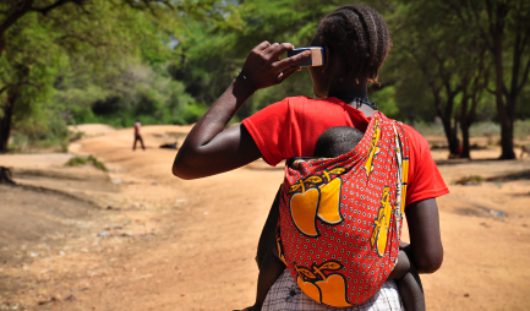
As mobile technology continues to rise and expand across our nation, it has also begun to play an important role in poorer, less fortunate countries as well. Mobile tech is becoming a crucial part in alleviating poverty, helping both the individual and the community of these areas in need. Here are five ways that mobile tech is improving lives.

Education

While mobile tech has been increasingly implemented into curriculums in the United States to increase efficiency, so it has been in poorer countries as well. One educational, nonprofit company named Eneza Education has been participating in this effort. The mobile platform has over 100,000 students in 400 schools all over Kenya, and aims to increase enrollment to over 200,000.

Banking

According to The World Bank, some 2.5 billion people — half of the adult population — do not have a bank account. As a result, it is harder for individuals to accumulate wealth or save for the future. However, mobile banking is allowing more and more people around the world to have access to an electronic money saving system. Individuals are now able to take out insurance policies, set up loans and transfer money to one another. By allowing poverty-stricken individuals to save, overseas markets are being strengthened.

Tracking

Tracking, by means of mobile technology, is something of a double-edged sword, but many analysts agree that the pros outweigh the cons. One major drawback is that mobile tech is a powerful tool in organizing human trafficking. Traffickers have the ability to streamline, organize and, yes, even advertise their exploits through this technology. Despite this unfortunate use of tracking, officials are becoming increasingly able to crack these codes to bust traffickers. In fact, The Polaris Project has been able to harness data analysis to ensure the safety of people who have been kidnapped.

Health care

Without access to health care, it is nearly impossible to alleviate poverty in some regions of the world. Mobile tech is helping improve the quality of health care at a rapid pace. “Malaria No More” is an example of one NGO using mobile tech to improve health care conditions. One of “Malaria No More’s” campaigns has soccer star Didier Drogba dispatch a text message to millions of Kenyans that asks, “Are you and your family sleeping under your nets tonight?” Safety sleeping nets are an incredible way to reduce the contraction of malaria. The NGO reports that this campaign has increased the number of individuals sleeping under tents by 12 percent.

Agriculture

Mobile tech is at it’s best when it is transferring small amounts of data quickly between individuals and groups. This is proving invaluable to farmers. Take the Kenyan mobile platform SokoniSMS64 for example. The program uses SMS text messages to unload details about the wholesale price of crops to farmers. In turn, farmers communicate among one another and with traders to negotiate fair pricing. There are also services such as “iCow from M-Farm” that assists farmers who have livestock. The app can set schedules, helps organize feeding routines and even has a built in weather app, so that farmers can adequately prepare for upcoming days

– Andrew Rywak

Sources: huffingtonpost.com, businesssolutiontopoverty.com, womendeliver.org
Photo: Scribe

July 17, 2014
https://borgenproject.org/wp-content/uploads/borgen-project-logo.svg 0 0 Borgen Project https://borgenproject.org/wp-content/uploads/borgen-project-logo.svg Borgen Project2014-07-17 16:29:082024-06-05 01:57:465 Ways Mobile Tech is Fighting Poverty
Development, Global Poverty, Technology, United Nations

SDGs: Future of Development

2015 will mark the target year for the United Nations Millennium Development Goals (MDGs,) a set of eight development objectives set by world leaders as a commitment to reduce extreme poverty worldwide. The current goals seek to:

  • Eradicate extreme poverty and hunger
  • Achieve universal primary education
  • Promote gender equality and empower women
  • Reduce child mortality
  • Improve maternal health
  • Combat HIV/AIDS, malaria, and other diseases
  • Ensure environmental sustainability
  • Develop a global partnership for development

The U.N. recently released the 2014 MDG Annual Report, in which it applauds progress toward the Millennium Development Goals, encourages continued effort for the initiative’s remaining year and lays the groundwork for a post-2015 development agenda. The new set of goals, referred to as the Sustainable Development Goals, ambitiously aims to “end poverty everywhere” by 2030. A zero draft was released on June 2, in which the Open Working Group laid out 17 post-2015 goals. Concerns have been raised over the length of the draft and the abstract nature of the objectives, which are listed as follows:

  • End poverty everywhere
  • End hunger, improve nutrition and promote sustainable agriculture
  • Attain healthy lives for all
  • Provide quality education and life-long learning opportunities for all
  • Attain gender equality, empower women and girls everywhere
  • Ensure availability and sustainable use of water and sanitation for all
  • Ensure sustainable energy for all
  • Promote sustained, inclusive and sustainable economic growth, full and productive employment and decent work for all
  • Promote sustainable infrastructure and industrialization and foster innovation
  • Reduce inequality within and between countries
  • Make cities and human settlements inclusive, safe and sustainable
  • Promote sustainable consumption and production patterns
  • Tackle climate change and its impacts
  • Conserve and promote sustainable use of oceans, seas and marine resources
  • Protect and promote sustainable use of terrestrial ecosystems, halt desertification, land degradation and biodiversity loss
  • Achieve peaceful and inclusive societies, access to justice for all and effective and capable institutions
  • Strengthen the means of implementation and the global partnership for sustainable development

One notable characteristic of the proposed list of SDGs is its emphasis on science and technology. The draft touches on issues of climate change, water sanitation, energy supply, biodiversity preservation and ocean conservation. Where the document falls short, according to voices in the scientific community, is in its implementation section, which fails to explicitly define the strengthening of science and technology in developing countries as a key focus. Yet, besides the arguments between scientific and political pundits, the trajectory of the SDG project is clear. As published in the SDG zero draft, “we recognize that poverty eradication, changing unsustainable and promoting sustainable patterns of consumption and production and protecting and managing the natural resource base of economic and social development are the overarching objectives of and essential requirements for sustainable development.” – Kayla Strickland Sources: United Nations 1, United Nations 2, SciDev.net 1, SciDev.net 2 Photo: Reegle

July 17, 2014
https://borgenproject.org/wp-content/uploads/borgen-project-logo.svg 0 0 Borgen Project https://borgenproject.org/wp-content/uploads/borgen-project-logo.svg Borgen Project2014-07-17 16:00:282024-05-27 09:18:32SDGs: Future of Development
Health, Technology, Women, Women & Children

Remote Control Contraceptive

remote control contraceptive
In less than four years, women could be receiving a remote control contraceptive. The implanted microchip provides a reliable dose of hormones every day for 16 years, which could make family planning and contraception much easier for women in the developing world.

The Bill & Melinda Gates Foundation-backed project is based off of research done in the 1990s by Professor Robert Langer of MIT. Langer leased his technology to MicroCHIPS, a company currently developing implants to release osteoporosis treatments into the body over regular intervals.

The microchip, roughly the size of a Scrabble tile at 20mm x 20mm x 7mm, has wells filled with the hormone levonorgestrel. When activated, a small electric charge triggers every day, melting the covering of the wells and releasing 30 micrograms of levonorgestrel into the body. The wells are covered with a mixture of titanium and platinum, which causes no harm to the body when melted.

The chip can be implanted in the abdomen, upper arm or buttocks. The process to inject the contraceptive is fairly simple, taking less than 30 minutes and using a local anesthetic.

Since many women may want to take a break from the birth control before the end of 16 years, the remote control allows them to switch their treatment on and off themselves. This puts power in the hands of women. There are security issues, such as the possibility for hacking, which could be a major problem if women do not realize their dosing has been tampered with. MicroCHIPS has promised that the control must be used right next to the skin, so no one can interfere with a women’s contraception without her knowledge.

Another issue is that injectable contraceptives do not protect against STDs, and some have even been shown to increase the chance of contracting HIV. Also, becoming fertile again after using hormones can take a while. These issues have not been addressed by the company.

This is not the first injectable contraceptive, but it lasts the longest. The most durable contraceptive on the market right now lasts only five years. This microchip could simplify women’s lives all across the developing world. Injectable contraceptives are already popular in these countries, so making the switch would be easy to do.

Burkina Faso will soon implement the contraceptive Sayana Press, as will Niger, Senegal and Uganda. Sayana Press only lasts three months, and while the countries will provide delivery services for women who cannot come to hospitals or clinics every few months, it is still difficult to reach every woman in need of an injection. Some women may also forget to get a new injection.

South Africa currently has a system for a three-year contraceptive. The device is similar, except it cannot be remotely controlled and it must be replaced sooner. It is a Silicone, matchstick-sized implant made by Merck and marketed as Implanon. The Stanger Hospital in South Africa actually ran out of the implants and is struggling to provide enough for the women who want the contraception.

There is a large desire for this kind of contraceptive in the developing world, and a controllable device could be the key to making family planning easier for women.

There are also further applications for implantable drug dispensers beyond female contraception. The technology could be applied to other treatments, like MicroCHIPS’ work with osteoporosis treatment. If trials prove successful, it is possible that many other drugs could be put in the wells and released periodically.

The contraceptive will be submitted for testing in 2015, and by 2018 the microchips could be on the market. The claim is that they will be “competitively priced,” making the technology a real possibility for women around the world to have a worry-free method of birth control.

– Monica Roth

Sources: Elite Daily, Extreme Tech, The Guardian, CNet, Africa Science News, Daily Maverick, MicroCHIPS
Photo: The Telegraph

July 16, 2014
https://borgenproject.org/wp-content/uploads/borgen-project-logo.svg 0 0 Borgen Project https://borgenproject.org/wp-content/uploads/borgen-project-logo.svg Borgen Project2014-07-16 12:00:232024-12-13 17:50:59Remote Control Contraceptive
Advocacy, Technology

Donate Your Digital Space

When the terms “donate” and “global poverty” are present in the same sentence, many people tend to think of money or supplies. For some, the idea of volunteering one’s time to help the poor may even be the first thought to come to mind. In an age of growing technology, however, donating digital space can be as effective as donating time, money or supplies.

A study conducted by the Pew Internet Project in September of 2013 found that 73 percent of adults using the Internet were using some form of online social networking. Since then, the statistic has increased. The number of Internet users with accounts on social media sites such as Facebook, Twitter, LinkedIn and Instagram is at an all-time high, meaning that personal digital space is viewed frequently.

Because users can post close to whatever they choose on their own pages of these social media sites, organizations and charitable foundations have begun to seek these personal pages as a stage for advocacy and awareness. Like a sign on a physical front lawn, a Facebook wall-post about an organization’s efforts to provide education to children in Africa generates awareness amongst viewers and other Facebook users.

On many of these sites, account users have the option of setting a photograph as a profile picture. This picture represents the user and becomes visible in many locations on the social media channel’s website. One way for social media users to donate digital space is to use a flyer, campaign poster or other visual as their profile pictures.

Heifer International is an organization that has caught on to this trend. On the Heifer International website, supporters can download Facebook, Twitter and Google Plus “Profile Packs” that include photos to use as profile pictures and cover photos. These photos promote Heifer International’s mission of ending global hunger and describe ways for people to get involved in the organization’s efforts. Anyone that views the particular social media user’s page can see that he or she supports Heifer International. Additionally, the photos could spark interest in the fight against global hunger.

The trend of donating digital space is becoming very popular. Local artists will change their profile pictures to promote performances, students running for school government positions will make their cover photos images of their campaign slogans and sororities and fraternities will advertise for philanthropic fundraisers by changing their profile pictures to flyers containing event details.

The power of the profile picture is not something to underestimate, which explains why donating digital space can have such a significant impact. By choosing to provide online space for charitable organizations like Heifer International to get the word out to the masses, anyone can help promote awareness of global poverty.

– Emily Walthouse

Sources: Heifer International, Pew Internet
Photo: Social Media Delivered

July 14, 2014
https://borgenproject.org/wp-content/uploads/borgen-project-logo.svg 0 0 Borgen Project https://borgenproject.org/wp-content/uploads/borgen-project-logo.svg Borgen Project2014-07-14 15:02:112024-05-27 09:18:30Donate Your Digital Space
Global Health, Global Poverty, Technology

Bangladesh Uses Mobiles to Protect Mothers

Bangladesh uses mobiles
“It’s time for the second tetanus toxoid vaccine. Just one more and your baby will be protected against tetanus. Go to your clinic now,” reads one mobile message from Mobile Alliance for Maternal Action (MAMA).

Bangladesh is hard at work trying to meet Millennium Goals 4 and 5. In partnership with MAMA, the country has implemented a project to reduce mother and child deaths. Over 500,000 women already subscribe to the service. Named Aponjon, meaning “dear one,” the project sends over 350 free text and voice messages to expectant and new parents. The messages contain information about a range of pregnancy and childcare-related subjects, such as nutrition, vaccinations and when to go to the doctor. They can even be selected by topic, so mothers can request messages about preventing HIV transmission to their children, or post-partum family planning, if they require it. The messages are not just for mothers, either. There are some tailored for fathers and mothers-in-law, as well.

The goal of Aponjon is to reach mothers who do not have as much access to medical care. This is particularly relevant in rural areas, where Bangladesh’s dropping maternal mortality rate has made a smaller impact. While Bangladesh has reduced its maternal mortality rate by 66 percent, this change has been strongest in urban areas, under private medical care.

Aponjon allows women who cannot make it to clinic or who are nervous to talk to doctors, to understand how to take care of themselves and their babies. Since the adult female literacy rate is only 57.7 percent, messages are sent vocally as well as through SMS text.

The mobile company Telenor is also trying to expand health services, now that Bangladesh uses mobiles, to other countries as well. It currently offers a service where physicians answer health questions by phone at any time of day. It is also working on using video conferencing for doctor-patient interactions.

Bangladesh is also working to increase mothers’ health in other ways. Female education is increasing in the country, and currently more girls are educated than boys. Increased education leads people to seek more healthcare, as well as to have fewer children. There is also more education in medical-related fields. Also, the Bangladesh government, WHO, and the UN Population Fund introduced a program to train 3,000 midwives by 2015. Since only a third of Bangladeshi women have a skilled physician with them as they give birth, the program is designed to increase maternal health. Over 1,000 people have already completed the first stage of training.

All of these goals put Bangladesh well on the way to meeting and exceeding the Millennium Goals, in addition to creating a happier and healthier population for the country.

– Monica Roth

Sources: IRIN, Daily Star, MAMA, WHO, The Hindu, Htxt
Photo: MAMA

July 10, 2014
https://borgenproject.org/wp-content/uploads/borgen-project-logo.svg 0 0 Borgen Project https://borgenproject.org/wp-content/uploads/borgen-project-logo.svg Borgen Project2014-07-10 12:00:582024-05-27 09:18:11Bangladesh Uses Mobiles to Protect Mothers
Global Poverty, Technology

A Look at Solar Cookers International

Solar Cookers International aims to provide thermal cooking technologies to those who most need them. Over three billion people eat food cooked over an open fire, and burning organic matter instead of returning it to the land causes soil erosion and a decline in crop production.

Solar Cookers International has already distributed 155,000 units worldwide.  They teach individuals how to cook during sunny weather, at night and during severe weather. They also educate the users on how to use a water pasteurization indicator so that they may produce safe water to drink.  Moreover, Solar Cookers International has recently made it their goal to provide 20 percent of families with access to solar cooking technology by 2030.

Projects to distribute the cookers in Chad, Haiti, Kenya and Madagascar have been successfully implemented.  Solar Cookers International provided cookers in four refugee camps in Chad where many of the women have been teaching each other how to use the technology. Cookers were distributed in Haiti after the 2010 earthquake in an attempt to help preserve more of the forests.

Cookers were also distributed to refugee camps in Kenya and now provide food for over 15,000 families.  Cookers were distributed in Madagascar, also to help preserve the forests, and as a region that averages 330 sunny days per year, the cookers have become an extremely common means of cooking. Over 50,000 cookers are in use; as a result, deforestation has been reduced by around 65  percent.

Solar Cookers International operates on four basic principles: visibility, technology, training and conferences.  The goals are to “increase awareness about the life and earth saving power of solar cooking, to improve solar cooking designs, to promote and provide training in how to use solar cookers, and to expand [their] role in regional and international conferences on solar cooking and other fuel efficient cooking methods.”

Solar Cookers International’s ultimate goal, however, is to “change and save lives with solar cooking thermal technology.”

– Jordyn Horowitz

Sources: Solar Cookers International, SCInet Wiki
Photo: EPA

July 10, 2014
https://borgenproject.org/wp-content/uploads/borgen-project-logo.svg 0 0 Borgen Project https://borgenproject.org/wp-content/uploads/borgen-project-logo.svg Borgen Project2014-07-10 04:00:582024-05-27 09:18:12A Look at Solar Cookers International
Global Poverty, Technology

How Mobile Banking is Changing Africa

More often than not, adopting a pre-existing idea is easier than creating a brand new one. The mobile phone is an example of this. In recent years, there has been an explosion in the adoption of mobile phones among people living throughout Africa. The impact of mobile phones includes paving a more secure form of mobile banking, and ultimately creating a shift in African culture.

Over the past decade, the use of mobile phones has increased in both developed and developing countries. According to the World Bank, mobile subscriptions have been increasing around the world every year – and African countries have made the biggest gains. In 2009, the US had 89 cellphones per 100 people, and 96 in 2013. Nigeria had 48 per 100 people in 2009, with 73 in 2013. South Africa had 91 cellphones per 100 people in 2009, and 147 in 2013. The greatest strides were made by African states.

According to The Economist, three phones exist for every four people, which describes the accessibility of these products. While mobile devices were initially created to function as telephones, Africans do not use them solely for communication. Just like people with iPhone’s in developed nation, Africans have access to a whole range of activities via their phones, including secure banking and e-payments.

According to Paul Edwards, the CEO of Emerging Markets Payments (EMP), only 15 to 20 percent of Africans have bank accounts. This number contrasts sharply with developed countries, where almost everyone has or is expected to manage a bank account as an adult.

Mobile banking has created a shift. Africa has a different banking culture than that of developed nations.

Furthermore, making e-payments and using mobile banking allows for less corruption. As all money transfers are electrically handled, transactions are instant and, therefore, significantly reduce the number of delays in payments.

Many Africans have used cash to fuel their informal sector jobs, but using less cash and more e-payments allows governments to track tax-able profits. Ultimately this creates a more regulated, tax-paying economy that will generate revenues for the state and further establish self-sufficiency.

The growing popularity of mobile phones displays a tangible shift in Africa’s culture. A public relations company named Portland conducted a survey of Twitter in Africa. They used devices that allowed for geo-location; by examining the hashtags in Tweets, they were able to look into the interests of Africans. Subjects ranged from Nelson Mandela’s death to football to public dissatisfaction with the government.

As Africans continue to use mobile phones for various purposes, the rest of the world will watch to see what this will mean for the development of Africa.

– Christina Cho

Sources: Foreign Policy, The Economist 1, The Economist 2, World Bank, Foreign Policy 2
Photo: CNN

July 9, 2014
https://borgenproject.org/wp-content/uploads/borgen-project-logo.svg 0 0 Borgen Project https://borgenproject.org/wp-content/uploads/borgen-project-logo.svg Borgen Project2014-07-09 20:10:182024-05-27 09:18:14How Mobile Banking is Changing Africa
Food & Hunger, Health, Technology

mDiabetes for a Healthy Ramadan

As many Senegalese begin celebrating Ramadan, those with diabetes must be particularly careful fasting and feasting because it can trigger complications, and put their health at risk.

Every year during Ramadan in Senegal, there is a spike in those needing urgent hospitalization due to uncontrolled diabetes. To help solve this problem is mDiabetes, a free service that sends text messages to mobile phones before, during and after the month of Ramadan to give those with diabetes tips and tricks to fasting safely.

Text messages include advice such as,

“Drink one liter of water every morning before you begin fasting.”

“Take care to not overeat and watch out for foods high in sugar such as dates.”

“Ask your doctor to adapt the dose and timing of your diabetes medication before you fast.”

Simple texts like these will help the thousands of people living in Senegal with diabetes, which has increased in the past decade due to rapid urbanization. Obesity in young people has escalated drastically, putting them at risk for type 2 diabetes. It is estimated that four to six percent of the Senegalese population are living with diabetes, at least 400,000 people, yet only 60,000 have been diagnosed.

Part of the difficulty lies in the fact that many are unaware that they even have diabetes since they do not know the causes or symptoms. This is particularly common in rural areas where access to health services is limited.

mDiabetes is part of a campaign by the World Health Organization (WHO) and the International Telecommunication Union (ITU) called, “Be He@lthy Be Mobile.” Through the use of technology such as text messages and apps, they can “control, prevent, and manage non-communicable diseases such as diabetes, cancer, and heart disease.”

Similar programs have been implemented in other countries such as the mCessation program in Costa Rica for tobacco, mCervical cancer program in Zambia and others like mHypoertension and mWellness have been planned for the future.

Eighty-three percent of the Senegalese population have mobile telephones, and 40 percent of those have smart phones, capable of receiving pictures and videos. Utilizing this technology that is becoming increasingly more prevalent in the daily lives of those around the world, is effective way to educate thousands, at no cost to the public.

Thanks to mDiabetes, this Ramadan thousands of Senegalese will be able to fully practice their faith without risking their health.

— Kim Tierney

Sources: World Health Organization, Diabetes and Ramadan International Alliance
Photo: Hong Kiat

July 5, 2014
https://borgenproject.org/wp-content/uploads/borgen-project-logo.svg 0 0 Borgen Project https://borgenproject.org/wp-content/uploads/borgen-project-logo.svg Borgen Project2014-07-05 04:00:572024-12-13 17:50:22mDiabetes for a Healthy Ramadan
Food & Hunger, Global Health, Hunger, Technology

Genetically Engineered Bananas Could Save Lives

Genetically Engineered Bananas
Deficiency in Vitamin A causes preventable blindness and an increased chance of disease and death for children across the globe in developing countries. Approximately 250 million preschool-aged children are deficient in Vitamin A. Between 250,000 and 500,000 children become blind every year due to Vitamin A deficiencies and around half of these children die within a year after becoming blind.

Recently, scientists at Queensland University of Technology have been working on genetically engineering a banana that will help prevent deficiencies in Vitamin A.

Genetically modified foods are foods that do not occur naturally but, instead, are created by scientists altering their genetic material. Genetically modified foods have been used to increase food production by making plants larger or making them more resistant to disease. Genetically modified foods could be used to increase the amount of nutrients in food — such as with Vitamin A-concentrated bananas — decreasing food allergies or making foods easier to grow.

While recognizing the advantages to global health that genetically modified organisms (GMOs) would offer, many are worried about the possible negative side effects. Critics have noted the lack of research about future health issues that may arise due to the consumption of genetically modified foods. More research over time would be necessary for scientists to weigh their advantages and disadvantages.

These genetically engineered bananas have an increased level of beta-carotene in them. Beta-carotene is then converted to Vitamin A by the body after being ingested.

In the past few years, similar research has been done to create “golden rice”— rice with increased levels of beta-carotene. Critics have also been skeptical about the risks involved with this project.

If the bananas are effective in increasing Vitamin A levels, the scientists will work to begin distributing these genetically engineered bananas in Uganda by 2020 to begin decreasing the rates of Vitamin A deficiency-related diseases, blindness and death.

– Lily Tyson

Sources: The Guardian, HealthLine, PHG Foundation, WHO
Photo: Carnarvon

June 30, 2014
https://borgenproject.org/wp-content/uploads/borgen-project-logo.svg 0 0 Borgen Project https://borgenproject.org/wp-content/uploads/borgen-project-logo.svg Borgen Project2014-06-30 20:28:382024-05-26 23:57:45Genetically Engineered Bananas Could Save Lives
Page 79 of 88«‹7778798081›»

Get Smarter

  • Global Poverty 101
  • Global Poverty… The Good News
  • Global Poverty & U.S. Jobs
  • Global Poverty and National Security
  • Innovative Solutions to Poverty
  • Global Poverty & Aid FAQ’s
Search Search

Take Action

  • Call Congress
  • Email Congress
  • Donate
  • 30 Ways to Help
  • Volunteer Ops
  • Internships
  • Courses & Certificates
  • The Podcast
Borgen Project

“The Borgen Project is an incredible nonprofit organization that is addressing poverty and hunger and working towards ending them.”

-The Huffington Post

Inside The Borgen Project

  • Contact
  • About
  • Financials
  • President
  • Board of Directors
  • Board of Advisors

International Links

  • UK Email Parliament
  • UK Donate
  • Canada Email Parliament

Get Smarter

  • Global Poverty 101
  • Global Poverty… The Good News
  • Global Poverty & U.S. Jobs
  • Global Poverty and National Security
  • Innovative Solutions to Poverty
  • Global Poverty & Aid FAQ’s

Ways to Help

  • Call Congress
  • Email Congress
  • Donate
  • 30 Ways to Help
  • Volunteer Ops
  • Internships
  • Courses & Certificates
  • The Podcast
Scroll to top Scroll to top Scroll to top