• Link to X
  • Link to Facebook
  • Link to Instagram
  • Link to TikTok
  • Link to Youtube
  • About
    • About Us
      • President
      • Board of Directors
      • Board of Advisors
      • Financials
      • Our Methodology
      • Success Tracker
      • Contact
  • Act Now
    • 30 Ways to Help
      • Email Congress
      • Call Congress
      • Volunteer
      • Courses & Certificates
      • Be a Donor
    • Internships
      • In-Office Internships
      • Remote Internships
    • Legislation
      • Politics 101
  • The Blog
  • The Podcast
  • Magazine
  • Donate
  • Click to open the search input field Click to open the search input field Search
  • Menu Menu

Archive for category: Technology

Information and stories about technology news.

Technology

Nafundi and Open Data Kit: Organizing the World

Open-Data-Kit-Nafundi

As Bill Gates discussed in his 2013 letter, data collection and maintenance is an important aspect in running nonprofit organizations in developing countries. This is especially important when it comes to using that data to help make better decisions and analyze trends and successes. Gates encourages a focus on training staff members, clinicians, and volunteers on how to meticulously keep such records.

Open Data Kits, or ODK, was started as a google.org project in 2008. ODK is an enormous mobile, web, and cloud based resource that simplifies and organizes data collection through various tools and applications. With interns and researchers from the University of Washington’s Department of Computer Science and Engineering, the project grew into a full scale organization with multiple members, companies, developers, and users.

Two of the interns, Yaw Anokwa and Carl Hartung, started their own company, Nafundi, that extends these services to individual clinics, companies, or other nonprofits that work in developing countries. Not only does Nafundi provide these services and the mobile devices to use them, they spend a significant time training users so that they can handle any issues and gain a deep understanding of what is going on with all their data.

For example, a health clinic in rural Kenya needs to record the number of patients, their illnesses, drugs prescribed, and follow-ups. After collecting all this information, there needs to be a safe way to store this information; safe from natural distress, purposeful destruction, or faulty handling from staff. Users can create forms and surveys, including images, audio recordings, videos, and most importantly mapping locations. This data is then aggregated and can be illustrated as graphs and maps, showing specific locations where there is a decline or increase in a disease.

While the initial cost of the technology to use ODK may be expensive, looking into the future cost-benefit analysis, detailed visuals of successes or failures of a clinic’s or organization’s efforts will better help them decide how to move forward. These final products could also greatly affect the willingness and understanding of donors to see how their money is being put to use.

– Deena Dulgerian

Source: opendatakit.org
Source: nafundi.com

April 8, 2013
https://borgenproject.org/wp-content/uploads/borgen-project-logo.svg 0 0 Borgen Project https://borgenproject.org/wp-content/uploads/borgen-project-logo.svg Borgen Project2013-04-08 09:51:092020-05-04 08:19:47Nafundi and Open Data Kit: Organizing the World
Technology

REwiRE Brings Electricity to 67 Million

REwiRE Brings Electricity to 67 Million
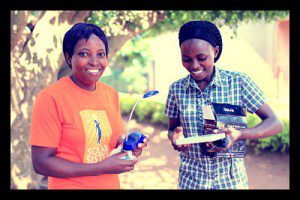
Rural Electrification with Renewable Energy (REwiRE) has taken the multi-level task of financing, developing and managing renewable and sustainable energy power grids in emerging markets. In this type of setting, once a company is on the ground in a foreign country, many unforeseen challenges present themselves.

REwiRE has chosen Indonesia, where 67 million people are without electricity, as the best country for the business. Indonesia presents almost the perfect situation for a startup such as REwiRE. The archipelago landscape has made fuel shipments to the country’s 18,000 islands very costly leaving some communities without power completely. However, this provides the perfect context for smaller scale power grids which can provide the communities of Indonesia with much needed and affordable electricity.

Faced with a new culture, diverse landscape, and unfamiliar legal system, REwiRE has teamed up with Ibeka, an NGO which has been helping REwiRE get accustomed to local culture and other challenges.

Providing electricity to impoverished communities is one of the most important building blocks to creating an infrastructure that can pull a developing country into the developed world. By contributing this tantamount element to Indonesia’s diverse landscape REwiRE sets the stage for more future development.

-Pete Grapentien
Source: Social Capital Markets
Photo: 

April 4, 2013
https://borgenproject.org/wp-content/uploads/borgen-project-logo.svg 0 0 Borgen Project https://borgenproject.org/wp-content/uploads/borgen-project-logo.svg Borgen Project2013-04-04 10:00:042024-05-24 23:46:34REwiRE Brings Electricity to 67 Million
Technology

How Cell Phones Are Reducing Child Mortality In Mozambique

UNICEF SMS Health Blog_opt
The problem of disseminating health-related information to impoverished communities is consistently at the forefront of humanitarian aid. On March 27,  Mcel, a mobile telecommunications provider in Mozambique, along with UNICEF and the Ministry of Health signed a partnership which enables all Mcel customers to receive educational text messages.

This project, dubbed “SMS for Life,” spreads information to all Mcel users free of charge. The topics addressed in the text messages go over disease prevention, injuries, violence against children, and the importance of using health facilities. The program is scheduled to last three years and contributes to the national effort to achieve Millennium Development Goals four and five established by the UN. These goals focus on reducing child mortality rates and improving maternal health.

While the use of mobile phones in Mozambique isn’t as common as in the United States, Mcel’s subscribers cover all social groups – this project alone is predicted to reach nearly five million people.

One of the interesting aspects of this partnership is the use of the private sector in contributing its resources and support to public health and national goals. This type of success includes low involvement from external countries and simply aids the nation’s own companies and people in addressing national problems.

-Pete Grapentien
Source: UNICEF

April 4, 2013
https://borgenproject.org/wp-content/uploads/borgen-project-logo.svg 0 0 Borgen Project https://borgenproject.org/wp-content/uploads/borgen-project-logo.svg Borgen Project2013-04-04 10:00:032024-06-04 02:43:50How Cell Phones Are Reducing Child Mortality In Mozambique
Technology

3 American Tech Companies and Africa

3 American Tech Companies and Africa

While Africa has its share of security issues, it has its share of economic growth as well. In fact, as a continent, it is growing at a faster rate than North America. This has spurred a big push in many African countries to modernize technologically which has given rise to many tech hubs and even a few tech cities. All of this begs the question: What are American tech companies doing to contribute to and capitalize on this type of growth? Here is a list of what three of the largest American tech companies have been up to in Africa.

IBM
IBM recently opened an office in Dakar, Senegal which the company believes will bring in roughly $20 billion by 2015. IBM is no stranger to the region as it sold supplies to South Africa in 1911. Recently, IBM has become more and more focused on Africa and has established a presence in 20 of Africa’s 54 countries. No doubt IBM is hoping to establish a bigger presence in many of the upstart tech hubs which have begun sprouting up all over the continent.

Microsoft
In an attempt to gain ground in the smartphone market as well as capitalize on Africa’s quickly growing tech industry, Microsoft has introduced its Microsoft 4Afrika initiative.  Microsoft 4Afrika will be producing a moderately price $150 smartphone. The phone will be marketed toward Africa’s middle-class which comprises one quarter of Africa’s billion people. Microsoft has plans with Nokia to release two more smartphones in the near future. This decision was likely influenced by Africa’s number one spot as the world’s fastest growing region for smartphones. The region has grown by 43% per year since 2000.

Google
Google chairman Eric Schmidt noted that Nairobi has become a remarkable tech hub and has the potential to become an African leader in innovation. However, Google seems to be losing ground in Africa as French based mobile operator Orange and Baidu, China’s answer to Google, have collaborated on a jointly branded smartphone. This comes as no surprise as China has been aggressive in its attempts to forge business partnerships all over the quickly changing continent.

Africa’s main draw to tech companies is that it continues to grow while larger economies have stalled. If this trend continues, those companies who are left behind investing in these developed markets may see their profits eclipsed by these fast growing economies.

-Pete Grapentien

Source The Economist

April 3, 2013
https://borgenproject.org/wp-content/uploads/borgen-project-logo.svg 0 0 Borgen Project https://borgenproject.org/wp-content/uploads/borgen-project-logo.svg Borgen Project2013-04-03 15:27:492024-05-24 23:43:393 American Tech Companies and Africa
Technology, Water

Get Water: A Game That Tackles Global Problems

Get Water: A Game That Tackles Global ProblemsGet Water is a touch-screen game with the objective of helping Maya collect clean water for her family. On the surface, players are swiping their fingers across the screen, shooting boomerangs at peacocks, and dodging turtles. But the true spirit of the game lies in its ability to literally put the discussion on these issues in your hands.

The main character is Maya, a young girl who wants to go to school but can’t because the need for clean water for her family is more urgent. Players collect clean water and avoid touching the dirty one, running through a village until a peacock, turtle or football breaks their pot. Rather than trade in coins or cash, players trade in pencils symbolizing education for abilities such as Hyper Hydration, Fancy Filter, and Purification Tablets. The game is not just a testament to the need for access to clean water; it also compels us to ask questions concerning human rights and social justice issues, education and gender rights. Through our phones and devices, we get a glimpse into the life of those who are without access to clean water.

This is the first game made by Decode Global, a Montreal based startup founded last year by Angelique Manella. Manealla’s goal with it was to develop a fun and engaging game that would spread awareness on social issues and prompt global change.

– Rafael Panlilio
Source: Forbes

March 28, 2013
https://borgenproject.org/wp-content/uploads/borgen-project-logo.svg 0 0 Borgen Project https://borgenproject.org/wp-content/uploads/borgen-project-logo.svg Borgen Project2013-03-28 09:00:092021-12-14 02:49:29Get Water: A Game That Tackles Global Problems
Technology

5 Reasons Africa May Be A Future Leader in Science and Technology

5 Reasons Africa May Be A Future Leader in Science and Technology
Despite the widespread struggle with governmental stability, Africa continues to make big contributions to global science and technology. Literacy and higher education development seem to be at the forefront of problems in Africa, but there are many positive developments as well which foretell an optimistic future for African scientific and technological development. Here are 5 reasons Africa may be a future leader in science and technology.

1. The Square Kilometre Array
The Square Kilometre Array is a current collaborative international radio telescope project that involves Australia as well as eight sub-Saharan African countries. Once completed in 2024, the telescope will be the largest and most sensitive on the planet allowing scientists to address the most pressing unanswered questions of the universe.

2. The Next Einstein Initiative 
Since its creation in 2008, the Next Einstein initiative, created by Neil Turok, has been establishing centers of excellence in African nations with the intent of providing a nurturing environment for budding scientific minds. The goal of the organization is to help create the world’s next great scientist.

3. Previous Contributions to HIV Research
Since the 1980s when Africa became a hub for research regarding HIV, Africa has further contributed to research and breakthroughs regarding the virus. Among these breakthroughs was the understanding of mother-to-child transmission.

4. The MeerKAT Radio Telescope
Predicted to be operational in 2016, the MeerKAT radio telescope will be the largest and most powerful radio telescope until the completion of the Square Kilometer Array in 2024. The possible areas for MeerKAT research will be cosmic magnetism, galactic evolution and dark matter research.

5. Silicon Savannah
Konza City, nicknamed Africa’s ‘Silicon Savannah,’ will be an entire city in Kenya dedicated to research and technological development. The city will be roughly 5,000 acres, 64 km south of Nairobi, and is projected to create 100,000 jobs by 2030.

While these developments foreshadow a positive progression of the African contribution to science and technology, one problem still exists. Many African communities still struggle with making higher education available to students. The previous developments have occurred despite this setback and, as a higher educational infrastructure begins to come to fruition, more progress is certain to be on the way.

– Pete Grapentien
Source BBC

March 26, 2013
https://borgenproject.org/wp-content/uploads/borgen-project-logo.svg 0 0 Borgen Project https://borgenproject.org/wp-content/uploads/borgen-project-logo.svg Borgen Project2013-03-26 12:00:262020-05-26 01:08:545 Reasons Africa May Be A Future Leader in Science and Technology
Development, Technology

The Wheelchair Foundation

wheels8
Maintaining mobility and independence can be challenging for millions of disabled people around the world. While a physical handicap may make life more difficult no matter where you live, many physically disabled people in the developing world aren’t able to purchase a wheelchair either for lack of funds or they simply because aren’t available. That’s where The Wheelchair Foundation comes in.

The Wheelchair Foundation, a branch of the Global Health and Education Foundation, works to provide wheelchairs to the people that need them throughout the developing world. The chairs are given at no cost to the families that receive them. An estimated 100 million people in the developing world are physically disabled and either wheelchair-bound or in need of a wheelchair to move around. The Wheelchair Foundation works with many non-governmental organizations (NGOs) that operate in the countries to which the wheelchairs are delivered and from there, the chairs are equipped and delivered in person. The organization also distributes chairs to Americans in need by working with Goodwill, Catholic Charities, and groups that work to help American veterans.

Organizations such as this one are great because of their specialization and their use of existing networks. Specialization without the great connections could lead to a less efficient organization but utilizing their relationships with other NGOs and government programs allows The Wheelchair Foundation to be a real success that addresses an important problem that many people in the developing world face each day.

– Kevin Sullivan

Source: The Wheelchair Foundation
Photo: Mental Floss

March 23, 2013
https://borgenproject.org/wp-content/uploads/borgen-project-logo.svg 0 0 Borgen Project https://borgenproject.org/wp-content/uploads/borgen-project-logo.svg Borgen Project2013-03-23 09:25:432024-06-04 02:43:50The Wheelchair Foundation
Developing Countries, Development, Education, Technology, USAID

USAID and Cisco Promote Development in Burma

Cisco_USAID_Burma
The U.S. Agency for International Development (USAID) has partnered with U.S. technology and communications giant, Cisco, to provide Burma with two new technical education centers. The two Cisco Networking Academies will provide valuable skills in information and communications technology to the developing nation, and provide citizens with job-ready abilities to bolster the country’s growing information and communications tech (ICT) industry.

The USAID Administrator, Dr. Rajiv Shah, has said that technology infrastructure can create stable and continued economic growth and development, and that “ICT can expand economic opportunities, transform public service delivery, and provide more opportunities for citizen engagement.”

Cisco has been a continual partner of USAID, having established networking education centers in over 165 countries, which have provided relevant skills for entry-level careers in ICT while also developing other valuable general career abilities including “problem-solving, collaboration, and critical thinking.”

In Burma, Cisco has agreed to donate the equipment needed to start the two Networking Academies and the training for 15 faculty members. Sandy Walsh, Director of Cisco’s Social Innovation Group, said that Cisco is dedicated to providing education to help continue technological development in “emerging economies,” and that the academies will aid Burmese citizens in gaining career skills needed in the 21st century.

Three additional American tech leaders, including Intel, Microsoft, and Hewlett-Packard, participated in a technology delegation to Burma, also led by USAID, in hopes of continued collaboration that will increase internet access and promote digital literacy and government openness. The partnership between USAID and Cisco hopes to create alliances with American tech companies, the local government, and the private sector to increase “social and economic development” using technological resources.

 – Christina Kindlon

Source: USAID
Photo: VOA

March 17, 2013
https://borgenproject.org/wp-content/uploads/borgen-project-logo.svg 0 0 Borgen Project https://borgenproject.org/wp-content/uploads/borgen-project-logo.svg Borgen Project2013-03-17 09:01:592020-05-01 20:05:56USAID and Cisco Promote Development in Burma
Food & Hunger, Food Security, Global Poverty, Health, Technology

Arab Spatial Tracks Food Security

Arab Spatial Tracks Food SecurityA new web-based tool called Arab Spatial has recently launched and will provide aid workers and researchers access to valuable data relating to food security and malnutrition information throughout the Middle East. Previously, aid workers and activists noticed a lack of data on resources including food and water – data that is typically used in important policy and resource distribution decisions. Even if a country did have relevant information on these issues, the data was not efficiently being shared between countries and regions.

Now, researchers and aid workers can turn to Arab Spatial, an online tool developed by the International Food Policy Research Institute (IFPRI) that should house all food security information for the Arab world in one easily-accessible location.

Food security is an enormous issue in the region, where many countries must import many of their basic food staples, and where war and fighting have exacerbated hunger and perpetuated poverty. Abeer Etafa, the representative of the World Food Program, said that “millions of families” throughout the region were having difficulties obtaining food, and with the events surrounding the Arab Spring and other civil unrest and upheaval, have had to face rising instability and lost wages as well.

Although the struggle of millions to obtain the food necessary to survive is known, it has been very difficult for researchers and aid organizations to quantify; IFPRI says that not many countries in the Middle East have poverty figures widely available, and even when they do, it is unclear how accurate said figures are.

To combat this issue, Arab Spatial will aggregate data on food based on national, regional, and local areas, and the data can be used to create maps showing “more than 150 food security and development-related indicators related to poverty, malnutrition, disease, production and prices, public finances, exports and imports.”

IFPRI also asserted that economic development and proper nutrition and food security are vital to each other, and one cannot be successful without the other. It is clear that eradicating the challenges to make food accessible will create sustained economic growth and development throughout the Middle East.

IFPRI hopes that Arab Spatial will be used by government officials, researchers, humanitarian aid workers, and journalists, and most importantly, decision-makers in addressing food security.

– Christina Kindlon

Source: IRIN

March 15, 2013
https://borgenproject.org/wp-content/uploads/borgen-project-logo.svg 0 0 Borgen Project https://borgenproject.org/wp-content/uploads/borgen-project-logo.svg Borgen Project2013-03-15 19:31:382024-05-24 23:44:55Arab Spatial Tracks Food Security
Technology

How Myanmar Will Avoid Being Earth’s Most Isolated Country

How Myanmar Will Avoid Being Earth's Most Isolated CountryHaving less cell phone usage than North Korea has made Myanmar one of the most isolated countries on the planet. Upon the United States’ decision to lift sanctions on the country, USAID was happy to sponsor a delegation of executives from Cisco, Google, Microsoft and other organizations to explore the possibility of establishing tech training centers in the newly open Myanmar market.

A little over two decades ago, the U.S. imposed sanctions on Myanmar when the military junta killed thousands of civilian protestors in one brutal onslaught. Currently, a new civilian government has been established and many of these sanctions have been lifted.

Companies like Google and Microsoft are offering Myanmar more than just tech services by establishing training centers in the country. The effect of these centers will be a reinforcement of Myanmar’s technological infrastructure.  The widespread availability of internet and cellular service allows a greater opportunity for online learning and social organizing via websites such as Twitter which can be used through either SMS messages or the internet.

Another avenue that becomes easier to access is international development and trade. By contributing to tech growth, Google, Cisco and Microsoft are also helping Myanmar contribute to the global economy. This in turn allows Myanmar to grow its own economy and strengthen foreign relations.

-Pete Grapentien
Source Yahoo News

March 12, 2013
https://borgenproject.org/wp-content/uploads/borgen-project-logo.svg 0 0 Borgen Project https://borgenproject.org/wp-content/uploads/borgen-project-logo.svg Borgen Project2013-03-12 11:04:192024-05-24 23:43:49How Myanmar Will Avoid Being Earth’s Most Isolated Country
Page 88 of 89«‹86878889›

Get Smarter

  • Global Poverty 101
  • Global Poverty… The Good News
  • Global Poverty & U.S. Jobs
  • Global Poverty and National Security
  • Innovative Solutions to Poverty
  • Global Poverty & Aid FAQ’s
Search Search

Take Action

  • Call Congress
  • Email Congress
  • Donate
  • 30 Ways to Help
  • Volunteer Ops
  • Internships
  • Courses & Certificates
  • The Podcast
Borgen Project

“The Borgen Project is an incredible nonprofit organization that is addressing poverty and hunger and working towards ending them.”

-The Huffington Post

Inside The Borgen Project

  • Contact
  • About
  • Financials
  • President
  • Board of Directors
  • Board of Advisors

International Links

  • UK Email Parliament
  • UK Donate
  • Canada Email Parliament

Get Smarter

  • Global Poverty 101
  • Global Poverty… The Good News
  • Global Poverty & U.S. Jobs
  • Global Poverty and National Security
  • Innovative Solutions to Poverty
  • Global Poverty & Aid FAQ’s

Ways to Help

  • Call Congress
  • Email Congress
  • Donate
  • 30 Ways to Help
  • Volunteer Ops
  • Internships
  • Courses & Certificates
  • The Podcast
Scroll to top Scroll to top Scroll to top