Bangladesh Uses Mobiles to Protect Mothers
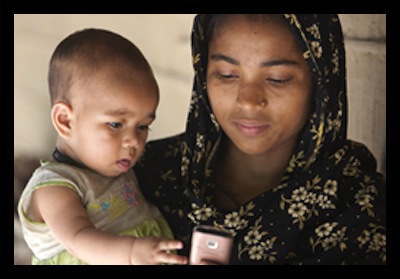
“It’s time for the second tetanus toxoid vaccine. Just one more and your baby will be protected against tetanus. Go to your clinic now,” reads one mobile message from Mobile Alliance for Maternal Action (MAMA).
Bangladesh is hard at work trying to meet Millennium Goals 4 and 5. In partnership with MAMA, the country has implemented a project to reduce mother and child deaths. Over 500,000 women already subscribe to the service. Named Aponjon, meaning “dear one,” the project sends over 350 free text and voice messages to expectant and new parents. The messages contain information about a range of pregnancy and childcare-related subjects, such as nutrition, vaccinations and when to go to the doctor. They can even be selected by topic, so mothers can request messages about preventing HIV transmission to their children, or post-partum family planning, if they require it. The messages are not just for mothers, either. There are some tailored for fathers and mothers-in-law, as well.
The goal of Aponjon is to reach mothers who do not have as much access to medical care. This is particularly relevant in rural areas, where Bangladesh’s dropping maternal mortality rate has made a smaller impact. While Bangladesh has reduced its maternal mortality rate by 66 percent, this change has been strongest in urban areas, under private medical care.
Aponjon allows women who cannot make it to clinic or who are nervous to talk to doctors, to understand how to take care of themselves and their babies. Since the adult female literacy rate is only 57.7 percent, messages are sent vocally as well as through SMS text.
The mobile company Telenor is also trying to expand health services, now that Bangladesh uses mobiles, to other countries as well. It currently offers a service where physicians answer health questions by phone at any time of day. It is also working on using video conferencing for doctor-patient interactions.
Bangladesh is also working to increase mothers’ health in other ways. Female education is increasing in the country, and currently more girls are educated than boys. Increased education leads people to seek more healthcare, as well as to have fewer children. There is also more education in medical-related fields. Also, the Bangladesh government, WHO, and the UN Population Fund introduced a program to train 3,000 midwives by 2015. Since only a third of Bangladeshi women have a skilled physician with them as they give birth, the program is designed to increase maternal health. Over 1,000 people have already completed the first stage of training.
All of these goals put Bangladesh well on the way to meeting and exceeding the Millennium Goals, in addition to creating a happier and healthier population for the country.
– Monica Roth
Sources: IRIN, Daily Star, MAMA, WHO, The Hindu, Htxt
Photo: MAMA
