• Link to X
  • Link to Facebook
  • Link to Instagram
  • Link to TikTok
  • Link to Youtube
  • About
    • About Us
      • President
      • Board of Directors
      • Board of Advisors
      • Financials
      • Our Methodology
      • Success Tracker
      • Contact
  • Act Now
    • 30 Ways to Help
      • Email Congress
      • Call Congress
      • Volunteer
      • Courses & Certificates
      • Be a Donor
    • Internships
      • In-Office Internships
      • Remote Internships
    • Legislation
      • Politics 101
  • The Blog
  • The Podcast
  • Magazine
  • Donate
  • Click to open the search input field Click to open the search input field Search
  • Menu Menu

Archive for category: Technology

Information and stories about technology news.

Technology

PowerGen’s Revolutionary Microgrid Empowers Kenya

On January 27, 2015, PowerGen, among three other innovative companies, won a global competition in which 30 total participants enter four categories: education, health, energy, and cities.

PowerGen Renewable Energy developed a microgrid that powers homes and businesses at a low cost. This environmentally sound and accessible energy source is making life easier for many residents of Kenya.

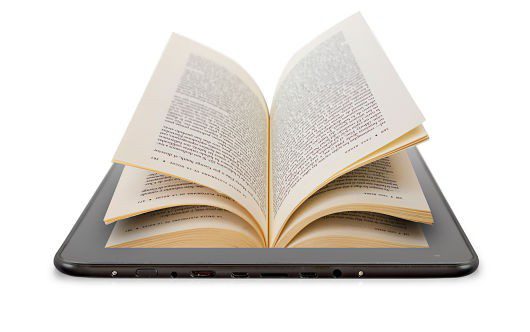
The competition was overseen by 1776, a U.S. tech incubator. Winning in equal status with PowerGen were Health E-Net, which connects patients to medical facilities, tasKwetu, a project management tracker and eKitabu, an online East African bookstore. Though, with a majority of Kenyans relying on diesel generators, kerosene lamps and charcoal as power sources, PowerGen is an important and extremely useful life-changing alternative.

Originally called WindGen Power, PowerGen is a micro-utility company working in East Africa. Their renewable energy products are dominantly solar-powered though wind is still utilized as a resource.

Solar-power products are cheap and simple to maintain. Powered by fuel cells and solar panels, micro representations of electricity grids are local. They have 1.4kW of solar panels, 9kWh of batteries and 3kW converters. These are known as a “PowerBoxes” to locals.

There are 600 million people without electricity in sub-Saharan Africa. PowerGen supplies micro-grids to people in Kenya, Uganda, Tanzania, Zambia, and Somalia. This system is utilized by lower income customers who run small businesses such as hair salons, restaurants, and guest houses. Rural villages and towns benefit the most from their micro-grids.

Take Lillian Muthoni, for example, and her transition to the micro-grid featured by TED Talks. She manages a “PowerBox” in Nkoilale, Kenya, which is 250 kilometers West of Nairobi. She replaced solar lights and a diesel generator with the “PowerBox.” She once paid $130 a month, but the “PowerBox” now only costs her $22 a month. She owns a restaurant and likes to entertain her customers with music and television. Since the switch to the cost-effective micro-grid, she has even managed to buy a refrigerator.

PowerGen’s objective is to connect customers with the outside world. Since Africans are becoming more familiar with mobile phones and online access, PowerGen has begun to train new users how to handle mobile devices powered by the micro-grid.

This further connects them to information and the outside world. Most Africans typically use their phones to access credit accounts and to prepay for their energy use online. People can keep track of payments more easily too.

In 2014, PowerGen partnered with KIVA in a seven-year-loan plan. They first tried to improve conditions in Oloolaimutia Village by installing a micro-grid. Lighting, television, refrigeration and a medical clinic were supported by its energy output. The company raised $9,780 within two days.

According to a January 2015 TED Talk, PowerGen makes $10,000 in revenue each month. To give some perspective, 10 micro-grids were powering Kenya in 2014.

Competition has sparked among other micro-grid marketers. Recently, a power connectivity project was initiated in Kenya, funded by the African Development Bank (AfDB) and the Kenyan government in order to benefit 314,200 households. An accumulation of $150 million funds this project.

The goal of the Last Mile Connectivity Project hopes to add 1.5 million Kenyans to the national grid and connect 70% of rural houses by 2017. The initiative, which begins in September 2015, would require each customer to pay $165.

SteamaCo joined grid-building innovators like PowerGen, supporting 30 grids—26 of which are in Kenya and 4 in Tanazania, Renin and Nepal—with even cheaper offers, but a similar operating system. Predicting that internet use will double in 5 years, they take pride in their over-the-phone online monitoring systems.

Though PowerGen is neck-in-neck with other competing systems, their goal remains the same. The increase in competition breaches the gap between unconnected customers and connected ones. With 1.2 billion still without energy, PowerGen and companies like it are connecting less fortunate families who can then experience a richer and easier life.

– Katie Groe

Sources: 1776, Disrupt Africa, PowerGen Renewable Energy, TED, GVEP International, African Review, The Guardian
Photo: Ted

July 15, 2015
https://borgenproject.org/wp-content/uploads/borgen-project-logo.svg 0 0 Borgen Project https://borgenproject.org/wp-content/uploads/borgen-project-logo.svg Borgen Project2015-07-15 11:20:492024-06-05 02:12:08PowerGen’s Revolutionary Microgrid Empowers Kenya
Education, Global Poverty, Technology

Schools in Nairobi are Getting Free Internet

schools_in_nairobiThe internet has been a major agent in combating global poverty. Connectivity gives access to a new world of information and has revolutionized sectors ranging from finance to health in the global community. However, the internet has had perhaps its greatest impact in education, in which it gives students and teachers access to previously unknown quantities of information.

That’s why it’s great news that over 2,000 schools in Nairobi will be getting free internet.

This innovative solution comes from a project called WazED, through a partnership of telecommunications company Wananchi Group, the Kenya Education Network and the County Government of Nairobi.

WazED will put a total of 2,715 schools across Nairobi county online.

The program is a natural step for the nation Wananchi Group non-executive chairman Richard Bell calls, “the fastest growing ICT hub in the region.” Kenya has continued to be one of the most innovative nations in terms of helping people with technology, with services ranging from mobile finance platform mPesa to mobile education projects such as Eneza Education.

WazED is connected to Kenya’s “Vision 2030” goals, which seek to build a more politically just, economically thriving, and socially equitable Kenya by 2030. The Vision 2030 goals recognize the importance of all sectors of life in their achievement and particularly embraces technology as an important means of social change. And because of the educational potential that improving internet access in schools brings, this makes sense.

Connecting people to the internet is one of the most effective ways of empowering them. Online, not only can one find the most extensive collection of data and news imaginable, but an incredibly wide spectrum of ideas are also present. Connecting Kenyan schools to the internet is an incredibly important step in empowering the next generation and fighting against digital resource inequality.

– Andrew Michaels

Sources: CIO, IT Web Africa, allAfrica, IT News Africa, Kenya Vision 2030
Photo: CIO

July 13, 2015
https://borgenproject.org/wp-content/uploads/borgen-project-logo.svg 0 0 Borgen Project https://borgenproject.org/wp-content/uploads/borgen-project-logo.svg Borgen Project2015-07-13 11:24:492024-06-04 03:53:06Schools in Nairobi are Getting Free Internet
Activism, Global Poverty, Technology, USAID

Global Development Lab Brings Silicon Valley to Washington

Global Development Lab Brings Silicon Valley to Washington-TBP

USAID’s mission to fight global poverty has just received significant support with the recent addition of the Global Development Lab. USAID has long been the leading government agency seeking to alleviate poverty, yet their mission has primarily been that of implementation. The agency is now not only committed to the physical deployment of aid, but also the development of future relief systems.

Founded in April of 2014, the new subdivision seeks to change the ways in which aid is delivered and developed. According to the official website, “The U.S. Global Development Lab is a new entity within USAID that brings together a diverse set of partners to discover, test, and scale breakthrough solutions to achieve what human progress has only now made possible—the end of extreme poverty by 2030.”

The Global Development Lab is bringing the fight against extreme poverty into the 21st century information age. Its aim is to use strategies that top technology companies have used, such as crowd sourcing, big data collection, and constant research and development to find the best solutions in terms of ending extreme poverty.

USAID has appointed Ann Mei Chang as Executive Director for the Global Development Lab. Chang worked for twenty years in Silicon Valley, spending eight of them working for Google as lead engineer of its mobile division. With both experience in the technology and nonprofit sectors, Chang brings a fresh outlook on new ways to implement global development.

The lab is revolutionary in its mission to use resources and partners from both the public and private sectors. The Global Development Lab is partnered with technology companies that are synonymous with innovation. Microsoft, Intel and Nike are listed as cornerstone sponsors. Many of the nation’s top universities, including the University of California, Duke and the Massachusetts Institute of Technology, have also partnered with the lab. USAID hopes that these partnerships will “leverage the combined skills, assets, technologies, and resources of the public, private, and nonprofit sectors to deliver sustainable development impact.”

USAID and its new Global Development Lab are not only attempting to alleviate extreme poverty through donations and other tried methods, but the agency is now attempting to end the suffering of millions around the globe by seeking cutting edge solutions through science, innovation, and collaboration.

– Joe Kitaj

Sources: USAID, The White House
Photo: USAID Blog

July 11, 2015
https://borgenproject.org/wp-content/uploads/borgen-project-logo.svg 0 0 Borgen Project https://borgenproject.org/wp-content/uploads/borgen-project-logo.svg Borgen Project2015-07-11 11:58:462024-12-13 17:51:41Global Development Lab Brings Silicon Valley to Washington
Global Poverty, Technology

Pollution-Sensing Technology a Game Changer

Pollution_sensing_technology

Malaria, HIV/AIDS, Tuberculosis. One of these must be the biggest cause of deaths in the developing world, right?

Wrong. It is pollution, not diseases, that causes the most deaths in developing countries. Around 8.4 million lives are claimed each year by various kinds of pollution. That is three times more deaths than those caused by malaria, and four times as many as caused by HIV/AIDS.

India and Africa are areas where there are particularly serious problems. India, not China, is home to the world’s most polluted city: Delhi. The number of PM 2.5 particles, the world’s most dangerous, capable of penetrating the lung and therefore entering straight into the bloodstreams of millions, reached 21 times the recommended limit recently.

These levels are twice as toxic as those in Beijing, the accepted pollution capital of the world. The pollution in India causes 1.3 million deaths a year. It also cuts 660 million lives short by three years. Three years off a life simply because of where a person is born or happens to live.

Pollution is also a danger in Africa, where malaria and HIV/AIDS often take the headlines as the leading killers on the continent. Gaborone, Botswana, ranks eighth in particulate pollution among cities that provided information about their pollution levels.

Besides outdoor pollution being an issue, there is also the problem of indoor pollution in both Africa and India. This is generated mostly from cooking with wood and other sooty fuels that clog up the air. Regulations are lax, toward both indoor pollutants and corporate ones.

Never fear, however. New wearable pollution-sensing technology is on the way to save the day, or at least improve the situation. TZOA is producing a small gadget capable of informing wearers about the air they breathe by using “internal sensors to measure your air quality, temperature, humidity, atmospheric pressure, ambient light and UV (sun) exposure all in one wearable device.”

The device can hook up to an app on a phone to give air readings. It is not alone in the small pollution-sensing gadget department. A device that doubles for a key-chain called Clarity can perform a similar task. Clarity tracks “personal exposure to air pollution via a smartphone app,” just like TZOA.

While these technologically advanced gizmos cannot reduce the drastic levels of pollution around the globe that are killing millions, what they can do is help provide data where it is lacking in areas where pollution is prevalent. Data is often not available or not provided in some of the areas with the worst pollution.

These gadgets also have the potential to raise awareness for the severity of the issue. Empowering those in the thick of the worst conditions has the potential to make the severity of the situation clearer to governments as well as ordinary people. Armed with this information, both could take action because of the data provided by devices like TZOA and Clarity.

– Greg Baker

Sources: Tech Times, Inter Press Service, Huffington Post, BBC, Wired, New York Times
Photo:Flickr

July 11, 2015
https://borgenproject.org/wp-content/uploads/borgen-project-logo.svg 0 0 Borgen Project https://borgenproject.org/wp-content/uploads/borgen-project-logo.svg Borgen Project2015-07-11 11:16:102024-06-04 01:08:12Pollution-Sensing Technology a Game Changer
Global Poverty, Technology, Water

Water Energy: Where We Are Heading

Water-Energy
Over the last 10 years, the quality of renewable energy has steadily increased. According to the European Commission, between 2003 and 2013, the quality increased by 83.4% – an average of 6.3% per year. Throughout 2013, the European Union (EU) produced 192 million tons of oil – about 24.3% of all energy used.

Biomass and renewable waste are the primary clean energy sources in the EU. Hydropower, which uses water as a renewable energy source, closely follows.

Hydropower is a clean energy source that has yet to be used to its full potential. It “captures electricity by using water that flows through a pipe to turn micro turbines in a line, or by harvesting energy from stream flows in irrigation canals and streams,” as explained in a CNBC report.

At Columbia University, researchers looked at water energy in a different way – they used evaporated water as the source. The researchers took bacterial spores that contract and expand based on the humidity of the environment and placed them in rows on tape that were then put together. This created a mass of rows that contracted and expanded together based on the environment. The bacterial spores had enough power from the air to move a toy car.

The technology is not yet powerful enough to work in a real life scenario and cannot compete with solar energy in efficiency. However, researchers believe it could harness enough energy to power a phone, even if it will not change the transportation industry.

Over in the Pacific Ocean, the U.S. Navy is sponsoring another way to use hydropower – using waves and ocean currents. This is exactly what the Azura Wave Energy Device is testing in Hawaii. Azura is a 63-foot-long, 10-foot-wide, 45-ton device that rotates as the incoming wave approach to extract energy.

CEO and co-founder Steve Koft explains, “the wave energy is much more predictable than solar or wind.” They are hoping this is the future of clean energy, but Azura is still a prototype. By harnessing the energy of waves, they have potentially found a way to capture predictable, consistent and clean energy to use.

Water energy is being explored more in depth everyday, and has huge potential to reduce the use of nonrenewable energy sources.

– Hannah Resnick

Sources: CNBC, European Commission, KITV, Quartz
Photo: Institution of Chemical Engineers

July 10, 2015
https://borgenproject.org/wp-content/uploads/borgen-project-logo.svg 0 0 Borgen Project https://borgenproject.org/wp-content/uploads/borgen-project-logo.svg Borgen Project2015-07-10 09:51:012020-07-10 12:40:55Water Energy: Where We Are Heading
Global Poverty, Technology, USAID

The Importance of Data Collection in Global Health

data_collection

Data collection is essential to address public health concerns in the developing world. If a nonprofit or government institution cannot identify risk factors, outbreaks, health trends and vulnerable populations, aid cannot be targeted effectively at the people who need it the most. As Margaret Chan, director-general of the World Health Organization puts it, “without these data, countries and their development partners are working in the dark – throwing money into a black hole.”

That is why the World Bank, the U.S. Agency for International Development (USAID) and the World Health Organization (WHO) recently announced the Roadmap for Health Measurement and Accountability and a Five-Point Call to Action. These initiatives are meant to encourage the governments of developing countries to strengthen their public health registration systems, with the goal of making health aid more effective while avoiding some of the data-collection pitfalls of the past.

While previous data-collection initiatives, many motivated by the Millennium Development Goals, led to dramatic improvements in public health knowledge gaps, they also had some negative consequences. These were mainly a result of the programs’ tendencies to fragment as well as detract from country-led approaches to data collection.

Jimmy Kolker, assistant secretary for global health in the U.S. Department of Health and Human Services, points out that data collection should not be an “end in itself.” To be effective, governments need to have the political capacity to support, and act on, the data that they collect. In contrast to previous initiatives, the Roadmap and Call to Action are intended to empower countries to develop their own integrated health systems, which should be more sustainable and robust in the long-term.

The Five-Point Call to Action includes some very specific public health monitoring goals. For example, the third point emphasizes a need for adequate civil registration systems, with the goal of registering all births by 2030, as well as registering 80% of deaths and their causes. The reasoning behind being so specific in establishing broad standards is that in the past, data collection efforts were hampered by a lack of coordination; a poor focus on specific health issues also failed to reveal broad trends and strengthen public health systems. Thus, these initiatives emphasize establishing accurate measurements of a few basic indicators, such as births and deaths, as well as having basic reporting and public access mechanisms in place.

The Call to Action calls for adequate data collection and interpretation through modern technology, not just traditional registration systems. Point four emphasizes that by 2020 all countries should have “real-time disease surveillance systems in place, including the capacity to analyze and link data using interoperable, interconnected electronic reporting systems within the country.”

As technology has developed, aid agencies and governments have an ever-growing list of resources that can help them monitor, collect, and interpret health-related data. Up to two-thirds of the world’s population in 100 countries is absent from public registration systems, a gap that must be filled by modern data-gathering and reporting solutions. Mobile technology is an enormous boon to governments trying to build data collection and dissemination systems.

For example, since 2008 Bangladesh, with relatively little funding and prior to the aforementioned initiatives, has managed to strengthen programs for establishing electronic medical records, centralized databases, accessible online resources for data-entry and reporting, and citizen feedback mechanisms. Bangladesh is a great example of how a low-income country can rapidly modernize its public health data resources cheaply and efficiently, a model from which other developing countries might learn, spurred on by the recent initiatives by USAID, the WHO, and the World Bank. Perhaps, with some financial and technical support from these institutions, developing nations can create their own path toward improved public health.

– Derek Marion

Sources: MA4Health, World Bank, Devex
Photo: Leaning Forward

July 10, 2015
https://borgenproject.org/wp-content/uploads/borgen-project-logo.svg 0 0 Borgen Project https://borgenproject.org/wp-content/uploads/borgen-project-logo.svg Borgen Project2015-07-10 08:13:362024-12-13 17:51:44The Importance of Data Collection in Global Health
Children, Technology

A Children’s Storybook App, Sir Roger Moore and UNICEF

A Children's Storybook App, Roger Moore and UNICEF- TBP

Sir Roger Moore is lending his voice to a worthy cause. The James Bond veteran partnered with GivingTales, a new app geared toward children, to raise funds for the United Nations Children’s Fund, more commonly known as UNICEF.

Released on June 18, 2015, GivingTales is a collection of Hans Christian Andersen fairy tales, narrated by Sir Moore, Dame Joan Collins, Ewan McGregor and Stephen Fry. The free children’s app is available on iOS, Android and Windows Phone.

“I’ve been a long time admirer of Hans Christian Andersen’s work, and I think it’s a wonderful collection of fairy stories for children and adults alike,” said Moore, a UNICEF goodwill ambassador since 1991.

Moore’s narration of “The Princess and the Pea” is included with download, but other stories narrated by Collins, McGregor and Fry are available as in-app purchases for $3.99 each. Thirty percent of the proceeds will be donated to UNICEF United Kingdom to help children and mothers in developing countries around the world.

The stories in GivingTales are presented in a contemporary yet timeless way, teaching important lessons with lively animation and modern language.

GivingTales CEO Jacob Moller explained that the app seeks to keep the essence of Andersen’s work, while simultaneously condensing the stories into 6 to 10 minute shorts. Through A-list narration and animated illustrations by Hungarian artists, GivingTales provides classic stories with a breath of fresh air and entertainment.

Developed by renowned illustrators and producers, GivingTales is confident that it will succeed in the tech market, having future plans to introduce a new story with a new narrator every six to eight weeks. According to Sir Moore, American celebrities will also eventually narrate. Currently, the app is only in English, but will be available in other languages in the near future.

Having a strong relationship with UNICEF, GivingTales hopes to positively change the lives of many children around the world with the profits that they earn. Additionally, the children downloading and listening to the books will benefit educationally, from reading along or learning a new lesson from the story.

Because GivingTales is new and young, it must fiercely market itself in order to successfully contribute to UNICEF. Tech savvy Sir Moore, however, is already busy promoting the app on his Twitter account, advocating for the children who need it most.

– Sarah Sheppard

Sources: The Guardian, Look to the Stars
Photo: iDigital Media

July 7, 2015
https://borgenproject.org/wp-content/uploads/borgen-project-logo.svg 0 0 Borgen Project https://borgenproject.org/wp-content/uploads/borgen-project-logo.svg Borgen Project2015-07-07 07:24:072024-12-13 17:51:37A Children’s Storybook App, Sir Roger Moore and UNICEF
Advocacy, Education, Global Poverty, Technology

Computer Game Educates Players About Global Issues

Computer_Game_Educates
Five years ago, a group of students from the Philippines created the computer game “Wildfire” to win the Microsoft Imagine Cup Game Design Competition, one of five major categories in the annual contest. The theme of the contest was, “Imagine a world where technology helps solve the toughest problems.”

The technology competition brings together students from all around the world with the goal of helping solve the globe’s biggest issues. Overall, the 2010 contest saw over 300,000 students from more than 100 countries go head-to-head.

The five creators of “Wildfire,” a mix of college students and graduates, call themselves By Implication. The group of friends decided to enter the contest after Typhoon Ketsana brought devastation to Manila, the capital of the Philippines, in 2009.

On its website, By Implication stresses that worldwide problems must be tackled head on, as they cannot be overcome by using magic or potions.

“Wildfire,” which is free and can be played an unlimited number of times, demonstrates just this. The computer game educates players about global health issues and how they can help solve them.

Designed and created with a virtually nonexistent budget, the game permits users to navigate their own city in an attempt to defeat the health issues, known as the “bad guys.”

Players are on their own until they collect “inspiration points,” which they can then use to obtain the assistance of volunteers around them. This teaches that a player is powerless if he or she is alone. Transition to the real world, and this idea illustrates that by working together, people have the ability to do something great.

In addition, the computer game educates players with informative buttons. A player can encounter the buttons, which contain short facts about crises including poverty and water quality, while navigating his or her own city. In the end, if players and volunteers can defeat not only the problems they encounter, but also the time limit, their city will thrive.

For the creators of “Wildfire,” they hope that by learning about certain issues, those who play the game will become motivated to help solve them.

– Matt Wotus

Sources: ABC News, Imagine Cup, Imagine Cup Wildfire by Implication
Photo:Neogaf

July 6, 2015
https://borgenproject.org/wp-content/uploads/borgen-project-logo.svg 0 0 Borgen Project https://borgenproject.org/wp-content/uploads/borgen-project-logo.svg Borgen Project2015-07-06 09:55:192020-07-11 11:53:29Computer Game Educates Players About Global Issues
Global Poverty, Technology

E-Libraries Bridge Digital Divide Across Sri Lanka

E-Libraries Bridge Digital Divide Across Sri Lanka-TBP
The Sri Lankan government installed e-library computer centers in hundreds of community centers and places of worship across Sri Lanka to combat the country’s digital divide, increase digital literacy and stimulate the economy in rural areas.

The Program, e-Library Nenasala (eLNP), is completely free to the public, no matter what background a person comes from. “The eLibray Nenasalas have literally opened the gateway to wisdom and knowledge in rural Sri Lanka,” explains Nenasala’s website.

The program originally began in an environment of despair and desparation— the tsunami in the Indian Ocean of December 26, 2004. A total of 35,000 Sri Lankans died that day. Family members and friends urgently needed access to communication and information, and both were facilitated by the e-library program.

The computer centers across Sri Lanka have increased the country’s computer usage and technological literacy rate from below 10 percent in 2004, to nearly 40 percent today.

Computers and internet access have given communities access to life-changing services and information. Children can stream videos on learning the English language; women can learn about nutrition, breast-feeding, sanitation and vaccinations. Farmers can learn how to increase their crop yields, and entrepreneurs have access to information on how to start a business. Migrant workers staying in Sri Lanka can also Skype with family members in far-away countries.

Community members, thanks to their access to computers, now have access to assistance with how to write a resume or conduct a job search. Adults can fill out important applications online such as passports or driver’s licenses; they can also take government examinations.

The Nenasala computer centers also bring the community together; teens are trained in computer skills, and then volunteer to teach older community members.

“Without a doubt, the e-Library Nenasala Program is making a real and lasting impact on the lives of poor rural residents throughout Sri Lanka. People are getting locally relevant information and hands-on experience in the subject areas that matter most to them. Community members have a real investment in these centers, which promotes their longevity and sustainability for many years to come,” explained Deborah Jacobs, who directs the global libraries initiative at the Gates Foundation.

So far, 283 e-Library computer centers have been built. When the program first began, the government “knew that the low-income, rural residents it was targeting wouldn’t necessarily flock to the Nenasalas, or ‘wisdom centers.’ Fear, distrust, or just plain unfamiliarity would likely keep them away” explained Impatient Optimists, The Gates Foundation’s website.

For this reason, the e-library computer centers are based in some of the most trustworthy places of all— places of worship. This unconventional cultural adaptation has been critical in the success of the E-Library Program. “These institutions are seen as community centers and places of learning. They are familiar, welcoming, and trusted,” said Impatient Optimists.

E-Libraries can be found in Muslim Mosques, Buddhist Temples, Christian churches and Hindu Kovils across Sri Lanka.

Temples have been an especially effective location for the e-libraries because of their traditional, ancient association with learning as well as their role as the center of the village. The temples of Sri Lanka are also open to all people, no matter the race, gender, age or even religion. Small donations from the community help to keep the e-libraries functioning and up-to-date.

The eLNP program has been so effective that it received the Gates Foundation’s Access to Learning Award, a one million dollar value. The award began 15 years ago to promote providing the world’s poor with access to technology.

The organization plans to use the money to upgrade hardware at various locations. eLNP also plans to begin a new program where community members can temporarily rent tablets and install education software for children where there is not ample access to schooling.

The Sri Lankan government hopes to increase computer literacy and usage rates through the Nenasala computer centers to 75 percent by 2016.

– Aaron Andree

Sources: Bill & Melinda Gates Foundation, Impatient Optimists, Philanthropy News Digest

July 6, 2015
https://borgenproject.org/wp-content/uploads/borgen-project-logo.svg 0 0 Borgen Project https://borgenproject.org/wp-content/uploads/borgen-project-logo.svg Borgen Project2015-07-06 09:50:112020-11-18 12:23:52E-Libraries Bridge Digital Divide Across Sri Lanka
Food & Hunger, Global Poverty, Philanthropy, Technology

How One Woman and Her Phone App Fed the Hungry

phone_app_feed_the_hungry
According to the US Environmental Protection Agency, ranking behind paper, food is the second largest source of waste.

Twenty-five-year-old Komal Ahmad, who graduated from the University of California at Berkley in 2012, is solving this problem by feeding millions of people with her phone app, Feeding Forward.

In 2011, Ahmad was approached by a homeless man who asked her for money. Instead of cash, Ahmad offered to take him to lunch. As they ate, she discovered he was a returned soldier who, after some bad luck, now made his living begging on the streets.

Ahmad was overwhelmed by his situation. Determined to help others like him, she started a program at UC Berkley where cafeterias donated excess food to homeless shelters. Soon after, the program expanded to 140 colleges across the United States.

But Ahmad didn’t stop with the food recovery program.

“Imagine a football stadium filled to its brim,” Ahmad says. “That’s how much food goes wasted every single day in America.”

In 2012, Ahmad collaborated with a developer and they launched the Feeding Forward mobile app in 2013. The app originally targeted restaurant owners and event planners in San Francisco who could use the app to donate leftover food to homeless shelters. By entering their location into the app, a Feeding Forward driver picks up the leftover food and delivers it to shelters in the area.

In addition to the app, Feeding Forward has its own website.

Since Feeding Forward launched, Ahmad has recovered more than 691,896 pounds of food, which fed more than 570,000 people.

Now the CEO of her nonprofit organization, Feeding Forward, Ahmad says, “We need to figure out how to establish sustainable solutions that can distribute the food we already have faster and get it to people who need it faster and safely.”

Ahmad’s mobile app is proof that quick and successful distribution can feed the hungry.

In early June 2015, Feeding Forward partnered with the Bite Silicon Food Valley food-tech conference in Santa Clara, California. Over the course of three days, celebrity chefs prepared a wide range of meals. After the event, Feeding Forward collected 5,135 pounds of food which fed more than 4,279 people in eight different homeless shelters.

Around the world, the Feeding Forward app is praised and desired.

“I didn’t expect it to blow up,” Ahmad says. “People as far as Nairobi, Bangalore and Hong Kong have wrote us asking us to expand Feeding Forward to their cities and countries. They’re like, ‘Tell me what I can do to get it here.’”

The mobile app is currently being revamped. It will be available again in August 2015. The website, however, is still up and running.

Feeding Forward offers hope for other countries struggling with hunger and food distribution.

Ahmad says, “These are huge cities that have absurd amounts of food thrown away every day. We are trying to make the Bay Area a case study to say ‘Hey, if it works here, it can work anywhere.’”

– Kelsey Parrotte

Sources: CNET, Daily News, Feeding Forward, News Everyday
Photo: Architect Africa

July 6, 2015
https://borgenproject.org/wp-content/uploads/borgen-project-logo.svg 0 0 Borgen Project https://borgenproject.org/wp-content/uploads/borgen-project-logo.svg Borgen Project2015-07-06 08:57:182020-06-29 14:41:28How One Woman and Her Phone App Fed the Hungry
Page 76 of 89«‹7475767778›»

Get Smarter

  • Global Poverty 101
  • Global Poverty… The Good News
  • Global Poverty & U.S. Jobs
  • Global Poverty and National Security
  • Innovative Solutions to Poverty
  • Global Poverty & Aid FAQ’s
Search Search

Take Action

  • Call Congress
  • Email Congress
  • Donate
  • 30 Ways to Help
  • Volunteer Ops
  • Internships
  • Courses & Certificates
  • The Podcast
Borgen Project

“The Borgen Project is an incredible nonprofit organization that is addressing poverty and hunger and working towards ending them.”

-The Huffington Post

Inside The Borgen Project

  • Contact
  • About
  • Financials
  • President
  • Board of Directors
  • Board of Advisors

International Links

  • UK Email Parliament
  • UK Donate
  • Canada Email Parliament

Get Smarter

  • Global Poverty 101
  • Global Poverty… The Good News
  • Global Poverty & U.S. Jobs
  • Global Poverty and National Security
  • Innovative Solutions to Poverty
  • Global Poverty & Aid FAQ’s

Ways to Help

  • Call Congress
  • Email Congress
  • Donate
  • 30 Ways to Help
  • Volunteer Ops
  • Internships
  • Courses & Certificates
  • The Podcast
Scroll to top Scroll to top Scroll to top