• Link to X
  • Link to Facebook
  • Link to Instagram
  • Link to TikTok
  • Link to Youtube
  • About
    • About Us
      • President
      • Board of Directors
      • Board of Advisors
      • Financials
      • Our Methodology
      • Success Tracker
      • Contact
  • Act Now
    • 30 Ways to Help
      • Email Congress
      • Call Congress
      • Volunteer
      • Courses & Certificates
      • Be a Donor
    • Internships
      • In-Office Internships
      • Remote Internships
    • Legislation
      • Politics 101
  • The Blog
  • The Podcast
  • Magazine
  • Donate
  • Click to open the search input field Click to open the search input field Search
  • Menu Menu

Archive for category: Technology

Information and stories about technology news.

Developing Countries, Global Poverty, Nonprofit Organizations and NGOs, Technology

Charity Puts Old Computers to Use in the Developing World

Old_Computers
Like The Borgen Project, Computer Aid International is a nonprofit that’s working to reduce and eliminate global poverty, but it goes about that task in a very different way. It’s what’s known as an ICT (Information Communications Technology) development charity, and it’s registered in the U.K.

Computer Aid International takes old computers, wipes their data, and cleans them up until they work like new. They then give those computers new jobs in the nonprofit sector of the developing world.

According to Optimist World, “Computer Aid International sends its PCs to schools, colleges, hospitals and charities in over 100 developing countries … [and] works with partner organizations in the countries it sends its PCs to, who provide the IT training and technical support.”

Meteorological offices depend on the computers sent by this organization, needing them in order to both inform agricultural workers when to sow and reap their crops and also let them know what kinds of seeds will produce maximum yield. Localized forecasts in Uganda, Mozambique and Zimbabwe have greatly assisted communities in protecting against extreme poverty and hunger.

Furthermore, the computers that Computer Aid International provides help children in developing countries with their educations.

“For these students, the opportunities provided through education and IT literacy offer a way out,” said an article in Optimist World. “In Nairobi, the job market is extremely competitive, and it is only with computer skills that young people can compete for professional or administrative jobs.”

By giving these younger generations the opportunity to compete in the job market, Computer Aid International also offers a better and more productive lifestyle for them and for their families. Also, this association gives schools the means to provide students with disabilities with specialized vocational training. Through their partnership with Sightsavers International, they are specially equipped to help the visually impaired through a uniquely adapted screen and synthesized speech output.

Computers and cameras as well as other technologies are also provided to doctors, and they bring new and improved healthcare to even the most remote areas. Since Computer Aid International has intervened, thousands of previously inconspicuous conditions have been accurately diagnosed and treated promptly.

To donate your unwanted computers to help a noble cause, go to https://www.computeraid.org/donate.html to learn more.

– Anna Brailow

Sources: Computer Aid, Optimist World
Photo: Book Aid

July 24, 2015
https://borgenproject.org/wp-content/uploads/borgen-project-logo.svg 0 0 Borgen Project https://borgenproject.org/wp-content/uploads/borgen-project-logo.svg Borgen Project2015-07-24 19:24:422020-07-06 12:39:07Charity Puts Old Computers to Use in the Developing World
Global Poverty, Human Rights, Technology

67 Minutes App Commemorates Nelson Mandela

Nelson_Mandela
Uber has been making waves in the transportation wave recently, bringing quick access to rides in cities across the globe. There is a new app that is being deemed the Uber for charity called 67 Minutes.

67 Minutes was released on what is Mandela Day in South Africa – July 18, the great leader’s birthday. The app “is dedicated to helping people do at least 67 minutes of charitable work per year.”

The United Nations (UN) made July 18 Mandela Day officially in November of 2009 after Mandela declared, “It is time for new hands to lift the burdens. It is in your hands now,” in a speech on his birthday in 2008. The UN stated that the day was to be commemorated to acknowledge his dedication to service and his values, as well as his contribution to the struggle toward democracy and a culture of peace around the world.

According to the Nelson Mandela Foundation, the day is a celebration aimed “to serve as a global call to action for people to ‘recognize their individual power to make an imprint and help change the world around them for the better.’” The day’s overall purpose is to cement and remember Mandela’s legacy in continued action towards his ideals, instead of statues and museums.

The idea of 67 Minutes is based on the 67 years Mandela spent striving to improve the human rights of all South Africans. Each minute spent volunteering is meant to remember each year Mandela spent striving towards his goal of equal human rights for all. The app’s goal is to connect those that want to do good with charities and other organizations that can help them do just that.

Ninety-one charities and other organizations have registered with the app, including Amnesty International SA, CHOC, Nkosi’s Haven and Blind SA, to name a few.

Charles Burman of MD Digital Publications, the company that developed and published 67 Minutes, explained it this way: “67Minutes has been developed in such a way, that should you have a type of event in mind, a specific budget, or if you’re simply searching for ideas of how you can help based on your location, you can quickly and easily discover them.”

The app is free to download and it is also free for NGOs and charities to advertise themselves on. There is no regulation on what kind of project that charities can post, although it is the preference of Burman that projects be based around people giving their time, services or goods as opposed to monetary contributions.

To participate, simply download the app and start looking for something to do, just as you would download Uber and look for a ride. Individuals can surf the projects on the app by category or location before choosing one by hitting ‘participate.’ All that is needed is the number and information of the people participating.

Time will tell if 67 Minutes is an effective way for charities to help spread Nelson Mandela’s ideals across the globe. As of now, most of the efforts are concentrated in South Africa. With the spread of the app around the world, it could be a true force for good.

– Gregory Baker

Sources: South Africa, Media Update
Photo: Flickr

July 24, 2015
https://borgenproject.org/wp-content/uploads/borgen-project-logo.svg 0 0 Borgen Project https://borgenproject.org/wp-content/uploads/borgen-project-logo.svg Borgen Project2015-07-24 19:21:332020-07-06 12:41:4667 Minutes App Commemorates Nelson Mandela
Charity, Global Poverty, Technology

YouTubers Supporting Charity

YouTubers
YouTube has allowed millions of people to create content that will possibly reach an audience. For some YouTubers, creating content leads to an enormous amount of success, creating a massive following and giving them celebrity status. As a result, the past 10 years have seen a great increase in the number of online celebrities.

What these celebrities reveal is the power in social media. If top YouTuber PewDiePie, who posts comedy skits along with “Let’s Play” videos of games such as Grand Theft Auto V and The Witcher III, can have over 38 million subscribers to his channel, is YouTube not also a platform on which one can spread ideas to others?

PewDiePie thinks so. In 2013, the vlogger posted a video titled “10 MILLION BROS UNITE!-Charity: Water” on YouTube. In it, he challenged his subscribers (who at the time numbered 10 million) to support the efforts of nonprofit organization Charity: Water to promote access to clean water in the developing world. Along with launching an online campaign, PewDiePie agreed to donate one dollar to Charity: Water per every 500 views earned by the video. PewDiePie’s studio “Maker Studios” also agreed to donate one dollar per every 500 views on the video.

The campaign raised $446,462 for Charity: Water, becoming a huge success for the YouTuber. Perhaps even more great is the fact that PewDiePie is not the first YouTuber to promote making a difference.

For Lewis Brindley and Simon Lane, who form comedic gaming channel Yogscast, charity is part of what being entertainers is about. In December of each year, the team holds fundraising initiatives, streaming play-throughs of games and challenges to promote charity. Their most recent effort, titled “Jingle Jam,” raised over 1 million dollars for a variety of charities, including Oxfam International, Doctors Without Borders and End Polio Now.

Along with PewDiePie and Yogscast, YouTuber Connor Franta has taken advantage of the platform to promote social justice. Franta raised over $230,000 for The Thirst Project through crowdfunding platform Prizeo. To do this, Franta encouraged fans to enter a contest in which they donated to the charity, and the winner was given the opportunity to get coffee with Franta in Los Angeles.

The power of social media is the speed with which it allows us to spread ideas. For YouTube celebrities, using the platform that allowed them to achieve celebrity status to promote giving is perhaps the ultimate way to give back.

– Andrew Michaels

Sources: PC Games N, Reason Digital, Huffington Post , Youtube 1, Youtube, Charity: Water
Photo: Youtube

July 24, 2015
https://borgenproject.org/wp-content/uploads/borgen-project-logo.svg 0 0 Borgen Project https://borgenproject.org/wp-content/uploads/borgen-project-logo.svg Borgen Project2015-07-24 19:12:592024-12-13 17:54:03YouTubers Supporting Charity
Global Poverty, Health, Technology

Off-Grid Vaccine Refrigerators Improve Immunization

Immunization
Most vaccines are heat-sensitive and must remain in a cool, controlled environment. However, this is easier said than done when the vaccines must be transported over a great distance, arriving at a remote location with frequent power outages or no electrical grid at all.

Introducing the direct-drive solar refrigerators: a solar-powered fridge that keeps vaccines cool for long periods of time without relying on gas or kerosene. Off-grid refrigerators were introduced in the 1980s in areas without electricity, but recent technological improvements have made them more efficient and accessible than ever before.

The new technology, sponsored by PATH and the World Health Organization, has “direct drive” technology that uses the sun’s energy to freeze water, creating an ice “bank” that the fridge can tap into during the nights and cloudy days.

A direct-drive solar refrigerator could prove to be invaluable to developing countries. Immunizations would be more stable and more accessible, meaning people would get treated faster.

But the fridges are not the simplest of innovations—any given country will need a long-term plan upon making the initial investment for semi-regular maintenance and repair. On top of that, an experienced professional would have to install the fridge to ensure it is done correctly, and then train local technicians to maintain and repair them.

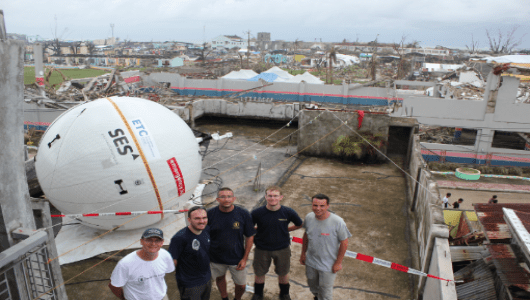
Despite the drawbacks, the direct-drive solar refrigerator is already working. In the Philippines, a solar refrigerator called the Sure Chill is storing vaccines for longer than previously possible, helping rebuild the cold chain infrastructure after the typhoon in 2014. The Sure Chill fridges uses solar and water power and can run without electricity for up to 10 days. These fridges have a big price tag, about $2,600 each, but are already proving to be extremely worthwhile.

– Hannah Resnick

Sources: Alternative Energy, Science Dev, WHO
Photo: Flickr

July 24, 2015
https://borgenproject.org/wp-content/uploads/borgen-project-logo.svg 0 0 Borgen Project https://borgenproject.org/wp-content/uploads/borgen-project-logo.svg Borgen Project2015-07-24 18:52:182024-12-13 17:52:01Off-Grid Vaccine Refrigerators Improve Immunization
Global Poverty, Technology

Could Mobile Phones End Global Poverty?

end_global_poverty
One of the greatest challenges facing developing nations in Africa is connectivity, connectivity to reliable sources of electricity, infrastructure and the world around them. But on the other hand, there are more people in Africa with cell phones than there are with toilets in their homes. And this fact, say some creative individuals, is the key to tackling poverty in Africa.

In 2009, the Grameen Foundation, an organization working to connect the world’s poor with vital knowledge resources, launched a program called the Community Knowledge Worker initiative. The initiative was designed to create a bridge between rural farmers and agricultural experts via a mobile phone connection. Oftentimes, these experts were other members of the local community who shared their knowledge with their peers.

Access to a mobile phone grants a rural farmer access to information resources beyond what they could find without. Not only can local farmers share tips and tricks, but even the most rural farmer can quickly Google pest treatments or look up the current market value of their crops.

Other people are utilizing programs like Mobile Midwife, a mobile-based program that helps connect midwives and patients. The program allows midwives to track appointments, access patient records and even schedule voicemail messages to be send out to patients each week.

Zoona, a social enterprise mobile banking company in Zambia, specializes in managing transactions for Africans without a bank account. In a country where roughly 85 percent of the population has never entered a bank, companies like Zoona stimulate greater money flow in a community by encouraging individuals to carry out transactions and by encouraging savings investments.

However, the boons of the smartphone revolution aren’t just material or economic. With more and more Africans utilizing smartphones, social networking sites are gaining ground quickly, connecting people from all across the continent. The growth in social media activity has been so rapid that social media giant Facebook has recently announced plans to open a headquarters in Johannesburg, South Africa.

Mobile phones open up a world of possibilities, even in the most rural and impoverished areas. Access to vast amounts of information, secure banking and social connectedness are changing the face of Africa and are giving poor nations a strong platform for growth.

– Gina Lehner

Sources: The Huffington Post, Grameen Foundation, AFK Insider
Photo: Flickr

July 24, 2015
https://borgenproject.org/wp-content/uploads/borgen-project-logo.svg 0 0 Borgen Project https://borgenproject.org/wp-content/uploads/borgen-project-logo.svg Borgen Project2015-07-24 18:24:052024-12-13 17:51:52Could Mobile Phones End Global Poverty?
Global Poverty, Technology, Water

UC Irvine’s ‘Solutions for Poverty Challenge’

global_aid
New technology and modern innovations have played an ever-increasing role in the fight against global poverty in the 21st century, but where do these new tools and practices come from? Most come from established technology and manufacturing firms like GE, IBM and Apple. Major universities are also hotbeds for invention. However, in the last five years there has been a surge in innovation coming from grassroots and non-traditional organizations with the help of social media and other sites, such as Kickstarter. Keeping with the changing tides, the University of California at Irvine launched a contest in May of this year encouraging students to propose original solutions for poverty relief.

The contest took development out of its traditional setting and encouraged all to participate. Undergraduates, graduate students, faculty and UCI alumni were all invited to come together and take part. The Blum Center for Global Engagement hosted the challenge. The goal of the challenge, as Blum Center Director Richard Mathew states, was “to bring the vast stock of ingenuity, creativity, knowledge and passion that exists across the campus to bear on alleviating poverty at home and abroad.” The Solutions Challenge presented an unorthodox approach to relief development as it aimed to bring minds of all backgrounds together in the hopes of producing greater results.

Participants were only required to submit a “feasible idea.” That is to say that the participants did not need to be engineers. All submissions had to meet three criteria, however. First, the proposals had to elaborate on the specific impact on poverty that the device or technology would address. Second, the proposal had to be reasonably realistic and achievable given limited time and resources. Finally, participants had to enumerate the scope their proposal would cover as long as their long-term goals. Three finalists were chosen and met with potential investors in a private venue.

First place was given to PhD student Katya Cherukumilli. Her proposal was to use certain minerals to remove toxic fluoride from drinking water in rural India. Erik Peterson, a resident of Irvine, won second place with his proposal for Lifesign, which would be a device given to homeless citizens as a register that would include data such as health information, hometown and needed services. Replacing handwritten signs, the device would show a code to be entered on the Lifesign website to donate to certain causes and services. Irene Beltran, an undergrad at UCI, took home third place with her “Lab on a Chip” proposal. The chip is tiny and only requires a drop of blood to test for tuberculosis. All three finalists are now consulting with industry leaders and investors.

UC Irvine’s challenge was inspired in part by another school in the University of California system. UC Berkeley’s Development Impact Lab runs a similar contest every year, encouraging engineers, computer scientists and IT specialists to develop technology-based ideas for global aid. UC Irvine’s contest encourages a more theoretical approach, prioritizing creativity in ideas ahead of a physical prototype.

– Joe Kitaj

Sources: Govtech, Blumcenter, Berkeley
Photo: UCI

July 24, 2015
https://borgenproject.org/wp-content/uploads/borgen-project-logo.svg 0 0 Borgen Project https://borgenproject.org/wp-content/uploads/borgen-project-logo.svg Borgen Project2015-07-24 18:21:062020-07-07 14:00:12UC Irvine’s ‘Solutions for Poverty Challenge’
Global Poverty, Health, Technology

Cancer Seeing Glasses Developed by Nigerian Scientist

cancer_seeing_glasses

Dr. Samuel Achilefu, a Nigerian born scientist, has developed glasses that can see cancer cells. For this new technology, Dr. Achilefu was awarded the 2014 St. Louis Award.

This award is given to a recipient who has made outstanding contributions to the profession of chemistry and has demonstrated potential to further the profession.

Dr. Achilefu, a professor of radiology and biomedical engineering, and his team developed glasses that contain imaging technology. The glasses are intended to help surgeons view cancer cells while operating, instead of operating “in the dark.”

The project began in 2012 when Dr. Achilefu and his team received a $2.8 million grant from the National Institutes of Health. Before the grant, the team received limited funding from the Department of Defense’s Breast Cancer Research Program.

The glasses were in the development stage for years, testing the technology on mice, rats and rabbits to confirm the effectiveness of the glasses.

In order to see the infected cells, two steps must be followed.

First, the surgeons must inject a small quantity of an infrared fluorescent marker into the patient’s bloodstream. The marker, also known as a tracer, contains peptides that are able to locate the cancer cells, and buries itself inside.

The tracer lasts about four hours. As it moves through the patient’s body, it will clear away from non-cancerous tissue.

By wearing the glasses, the surgeon can inspect the tumors under an infrared light that reacts with the dye. The combination of the tracer and infrared light causes the tumor to glow from within and allows the surgeon to see the infected cells.

This technology was first tested on humans at the Washington University School of Medicine in June 2015. Four patients with breast cancer and over two-dozen patients with melanoma or liver cancer have been operated on using the goggles.

Ryan Fields, a surgical oncologist who is collaborating with Dr. Achilefu says, “[the glasses] allow us to see the cells in real time, which is critical. Because the marker has not been FDA approved, doctors are currently using a different, somewhat inferior marker that also reacts with infrared light.”

Julie Margenthaler, a breast cancer surgeon, explains that many breast cancer patients must go back for second operations because the human eye cannot see the extent of the infected cells alone.

“Imagine what it would mean if these glasses eliminated the need for follow-up surgery and the associated pain, inconvenience, and anxiety”.

The Food and Drug Administration are still reviewing the cancer seeing glasses and the tracer developed by Dr. Achilefu and his co-researchers. But, if the glasses are approved, the removal of cancerous cells has been changed forever. And most importantly, patients will receive the care in order to treat their cancer.

– Kerri Szulak

Sources: IT News Africa, Premium Times, St. Louis Section of American Chemical Society
Photo: Pax Nigerian

July 24, 2015
https://borgenproject.org/wp-content/uploads/borgen-project-logo.svg 0 0 Borgen Project https://borgenproject.org/wp-content/uploads/borgen-project-logo.svg Borgen Project2015-07-24 08:46:412024-06-04 01:17:40Cancer Seeing Glasses Developed by Nigerian Scientist
Education, Technology

Visually Impaired Kenyan Students Receive a New Kind of Education

Visually Impaired Kenyan Students and Education - TBP
The initiative “Computer Labs for the Blind” aims to bring assistive learning technologies to 356 blind and visually impaired Kenyan students at the St. Oda Primary and Secondary School for the Blind in Gem District, Siaya County, Kenya.

This technology will be provided by partnerships between the organizations InAble, AccessKenya and the Rockefeller Foundation.

The program will not only train blind and visually impaired students, but also their teachers. The students will learn basic computer skills and how to access the Internet, and will also complete an online education program.

The goal of the organizations involved is to help these students develop skills that will make them employable, leading to a life that many visually impaired Kenyans could only have dreamed of in the past.

Over the years, the education of the blind and the visually impaired has faced many obstacles, including logistics, the availability of facilities and teaching resources. With these setbacks, the visually impaired have not been capable of participating in mainstream life.

Visually impaired students that reach the high school level are barred from participating in the sciences, such as chemistry and physics. Even if they were able to participate, most teachers are not properly trained in the appropriate methods for teaching blind and visually impaired people.

This leaves the students at a tremendous disadvantage.

“Braille textbooks happen to be bulky and expensive, requiring up to four or more students to share a single book, presenting a challenge in imparting knowledge to students,” said Irene Mbari Kirika, executive director of InAble Kenya. “For instance, whereas the costs of books required by a Form 4 student are KES 7,060, it would cost slightly over KES 61,000 [to get] braille [textbooks], which is way out of reach for very many Kenyans.”

However, it is not only the braille books that are more expensive: the notebook paper blind and visually students write on also costs more. Many schools are not equipped with the necessary funds for blind and visually impaired students, even though these students are expected to sit for the same tests and exams as other students.

AccessKenya Group will be investing KES 7.2 million over the next two years in the provision of technology resources and financial support. From the fund, KES 6 million will go towards the “Assistive Technology Labs” project, which will include broadband Internet.

Emily Kinuthia, Marketing Manager at AccessKenya, added, “We realize that there was a lot of focus on the provision of hardware but little emphasis on skilling both for the teachers and students. We are therefore making it easier to access the curriculum and other resources, such as digital books and applications, all of which will be available online in order to deliver value in technology studies.”

With these set goals, blind and visually impaired students in Kenya will be schooled in useful, everyday skills. And with these skills, these students will have the opportunity to enter the job market, something that many blind and visually impaired individuals have previously never thought possible.

– Kerri Szulak

Sources: IT News Africa, All Africa
Photo: Inable

July 22, 2015
https://borgenproject.org/wp-content/uploads/borgen-project-logo.svg 0 0 Borgen Project https://borgenproject.org/wp-content/uploads/borgen-project-logo.svg Borgen Project2015-07-22 09:04:422024-05-27 09:25:49Visually Impaired Kenyan Students Receive a New Kind of Education
Global Poverty, Poverty Reduction, Technology

China’s Modern Tactics to Address Domestic Poverty

internal_poverty

China, as the world’s most populous country with the second largest economy, faces a hushed issue on an epic scale. Nearly 70 million Chinese citizens live in severe poverty, most of them in the country’s expansive rural areas. Recently, President Xi Jinping has stressed the importance of poverty reduction within China as a means for economic and social growth.

China seeks to eradicate domestic poverty by 2020. Between 1978 and 2014, the country successfully lifted 730 million impoverished citizens above the poverty line. However, there is still much work to be done—a sentiment that is at the heart of President Jinping’s domestic policy. He called for “high precision” in governmental policy.

The government is implementing time-tested tactics to address the issue, such as subsidies and work programs, but President Jinping’s policy also calls for the use of information age strategies and tools. In 2014, an internal database was complied of all Chinese citizens who are considered impoverished. The data complied included income levels, employment status and location. The government then hired top data analysts to determine, in the most empirical way possible, the causes of poverty in certain areas and the best respective solutions.

Big data has long been used by technology firms, but this marks its first major wide-scale usage in terms of humanitarian causes. The data collected will lead to the swift and accurate remedies that President Jinping seeks. China’s experiment in using numbers and analysis in addition to money and support may prove to be revolutionary and help the country reach its goal before 2020.

– Joe Kitaj

Sources: Global Times 1, Global Times 2, The Economist
Photo: Al Jazeera America

July 20, 2015
https://borgenproject.org/wp-content/uploads/borgen-project-logo.svg 0 0 Borgen Project https://borgenproject.org/wp-content/uploads/borgen-project-logo.svg Borgen Project2015-07-20 11:49:022024-06-04 01:08:12China’s Modern Tactics to Address Domestic Poverty
Global Health, Global Poverty, Technology

Revolutionary Technology Advances Fight Against Tuberculosis

Tuberculosis (TB) is often forgotten as a global health threat, but recent advances in molecular technology have health officials optimistic about the future.

It is estimated that one-sixth of all annual deaths caused by infectious diseases result from TB. The second-largest killer behind HIV/AIDS, the disease kills an estimated 4,000 people a day. Sub-Saharan Africa experiences the worst of it, as the infectious disease is the most common cause of death among HIV-positive people. Estimates say that over 1,000 people with HIV die from TB every day.

One of the biggest problems when it comes to TB is detection. Currently, HIV-associated TB is being detected in only half of the estimated number of people who have it. Another issue that arises is weak healthcare coverage, which places an economic burden on poor people. Additionally, a lack of healthcare coverage has an effect on people’s vulnerability to TB and health outcomes from the disease.

However, progress in the fight against TB has been seen over the past two decades. The TB mortality rate fell between 1990 and 2013 by an estimated 45%. In that time, over 60 million people were cured from the disease and 37 million lives were saved. Most of the success has been attributed to a rise in new technology. In fact, such interventions are said to not only save lives, but to be cost-effective, because for every dollar spent there is an estimated $30-$43 return.

Cepheid Inc., a diagnostics company based in California, created one such revolutionary piece of technology. Dubbed GeneXpert, the automated molecular technology has been said to be one of the most significant achievements in decades in regards to TB research.

The device is more accurate and faster than traditional diagnosis methods, such as the out-of-date smear microscopy, which was created a century ago. GeneXpert works by allowing health workers to place gathered sputum samples in cartridges, which in turn are connected to a computer. As a result, the DNA of TB bacteria can be detected within two hours. The device can also identify multidrug-resistant forms of TB.

In addition to being endorsed by the World Health Organization, it attracted the attention of global donors. Many poured in donations to help distribute it around the world.

In May, a study conducted in India showed that by using GeneXpert, the number of bacteriologically confirmed cases increased by 39%.

The problem with the technology, however, is its expense.

Poor people in the developing world, those who are most likely to need GeneXpert, have trouble getting necessary access to the technology. While donors across the world are taking care of the $17,000 price tag associated with each machine, countries are struggling to pay for the cartridges. Each cartridge costs $10, meaning some countries cannot purchase them on a large scale because of a lack of funds. Additionally, GeneXpert requires access to electricity, computers and refrigeration, a difficulty for many TB-prevalent areas.

Even with some of these issues, health officials are still excited with the recent activity. The creation of GeneXpert, as well as rather large investments in the device, have led to more companies starting to develop diagnostic technologies. The hope is that some of these technologies will eliminate the downsides of GeneXpert. According to a report by UNITAID, a global health initiative, there are currently 81 manufacturers running tests with almost 200 potential new products having to do with TB diagnostics.

One such company is Alere Inc. The diagnostics company, based in Massachusetts, is working on a transportable test that would be powered by batteries, giving it the capability of being used portably for an entire day. With the test being portable, the company says that health workers would then have the ability to decide about treatments on the spot, the same place where the diagnosis was made.

The company, which received a $21.6 million grant from the Bill and Melinda Gates Foundation, is also working to make the costs of its machine and cartridges less expensive than GeneXpert.

While questions still remain, as Alere has yet to run any type of trials on its technology, those devoted to the fight against TB are still hopeful about the future. Through boosted investments and partnerships between public and private sectors, revolutionary technology has, and will continue to, aid the fight against tuberculosis.

– Matt Wotus

Sources: The Hill, New York Times
Photo: Dr. Dang’s Lab

July 19, 2015
https://borgenproject.org/wp-content/uploads/borgen-project-logo.svg 0 0 Borgen Project https://borgenproject.org/wp-content/uploads/borgen-project-logo.svg Borgen Project2015-07-19 09:06:112024-12-13 17:51:47Revolutionary Technology Advances Fight Against Tuberculosis
Page 75 of 89«‹7374757677›»

Get Smarter

  • Global Poverty 101
  • Global Poverty… The Good News
  • Global Poverty & U.S. Jobs
  • Global Poverty and National Security
  • Innovative Solutions to Poverty
  • Global Poverty & Aid FAQ’s
Search Search

Take Action

  • Call Congress
  • Email Congress
  • Donate
  • 30 Ways to Help
  • Volunteer Ops
  • Internships
  • Courses & Certificates
  • The Podcast
Borgen Project

“The Borgen Project is an incredible nonprofit organization that is addressing poverty and hunger and working towards ending them.”

-The Huffington Post

Inside The Borgen Project

  • Contact
  • About
  • Financials
  • President
  • Board of Directors
  • Board of Advisors

International Links

  • UK Email Parliament
  • UK Donate
  • Canada Email Parliament

Get Smarter

  • Global Poverty 101
  • Global Poverty… The Good News
  • Global Poverty & U.S. Jobs
  • Global Poverty and National Security
  • Innovative Solutions to Poverty
  • Global Poverty & Aid FAQ’s

Ways to Help

  • Call Congress
  • Email Congress
  • Donate
  • 30 Ways to Help
  • Volunteer Ops
  • Internships
  • Courses & Certificates
  • The Podcast
Scroll to top Scroll to top Scroll to top