• Link to X
  • Link to Facebook
  • Link to Instagram
  • Link to TikTok
  • Link to Youtube
  • About
    • About Us
      • President
      • Board of Directors
      • Board of Advisors
      • Financials
      • Our Methodology
      • Success Tracker
      • Contact
  • Act Now
    • 30 Ways to Help
      • Email Congress
      • Call Congress
      • Volunteer
      • Courses & Certificates
      • Be a Donor
    • Internships
      • In-Office Internships
      • Remote Internships
    • Legislation
      • Politics 101
  • The Blog
  • The Podcast
  • Magazine
  • Donate
  • Click to open the search input field Click to open the search input field Search
  • Menu Menu

Archive for category: Activism

Information and stories on social activism.

Activism, Education

YouTube Star Builds School in Africa

kevjumba
It started with a few funny homemade videos posted onto YouTube by a teenager in high school. However, overnight, YouTuber Kevin Wu’s videos shot up half a million views. From then, Wu, known by his YouTube name Kevjumba, would become one of YouTube’s leading cyber-celebrities. His comedy videos gathered millions of views. Today, 4 million people are subscribed to Kevjumba’s channel. His subscribers are roughly equal to the population of New Zealand.

Despite enormous success and fame, Wu has been using his influence for helping those in need, namely by helping to build a school in Kenya. Wu’s involvement in school’s construction began when a The Supply, a non-profit organization, posted a video of students in Nairobi challenging Kevjumba to teach one of their classes. Wu then received a flood of tweets urging him to go to Kenya. Soon enough, this American YouTube star was on his way to Africa.

According to Wu, his trip to Nairobi was life-changing because he learned from The Supply about the 1 billion people living in slums today and witnessed children living in the slums around Nairobi. Wu decided that he would partner with The Supply and commit to aiding the friends he made in Kenya. Wu had already created a charity YouTube channel called Jumbafund where views were generating ad revenue that Wu would donate to charities. Wu decided that he would direct all the funds from his charity channel to The Supply to help fund education for students in Kenya.

After uploading videos about his experience in Nairobi, which generated over 2 million views, Wu was able begin a project to raise funds for The Supply to build a school in Lenana, Kenya. When Wu turned 21, he and partners launched a campaign to urge people to donate 21 dollars to the construction of the school. With $50,000 raised, funding for the school’s construction is now complete. Kevjumba High School is the first secondary school in Lenana, Kenya. It now serves many of the students that Wu met while visiting Kenya.

Kevjumba has revolutionized  charity by using YouTube as a platform to truly aid those who need it. This is because Kevjumba’s viewers play a key part in generating the funds to build the school. Each click and each view plays a part in sustaining the school and providing opportunities for children in poverty to have an education. Furthermore, Kevjumba’s popular videos encourage viewers to donate directly. Kevjumba proves that with just a viral video and a compelling cause, anybody can make a difference in the world.

– Grace Zhao

Sources: The Huffington Post, Forbes, Kevjumba.com, PR Newser
Photo: KevJumba
August 6, 2013
https://borgenproject.org/wp-content/uploads/borgen-project-logo.svg 0 0 Borgen Project https://borgenproject.org/wp-content/uploads/borgen-project-logo.svg Borgen Project2013-08-06 04:18:202018-03-26 10:39:26YouTube Star Builds School in Africa
Activism, Advocacy, Aid Effectiveness & Reform, Foreign Aid

The Borgen Project Advocates for Foreign Aid

mcdermottmeeting
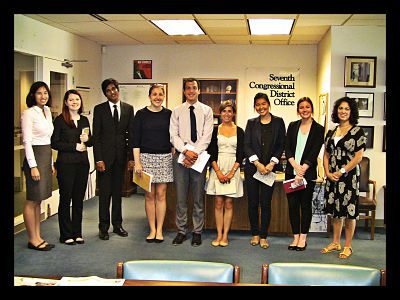
Today, The Borgen Project team paid a visit to Congressman McDermott’s district office in Seattle. They advocated for a stronger international affairs budget, passing the Food Aid Reform Act and the Electrify Africa Act, and other issues related to global poverty.

Laurie Goodman, a PR Intern, said, “This was my first time lobbying in a congressional office and it was a great experience. I definitely suggest that others to contact their local leaders.”

The Borgen Project encourages everyone to schedule a meeting with their local congressional offices and advocate for eradicating poverty.

– Abby Stewart 

August 5, 2013
https://borgenproject.org/wp-content/uploads/borgen-project-logo.svg 0 0 Borgen Project https://borgenproject.org/wp-content/uploads/borgen-project-logo.svg Borgen Project2013-08-05 15:00:352024-05-24 23:40:29The Borgen Project Advocates for Foreign Aid
Activism, Health

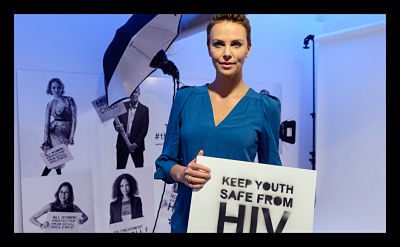
Charlize Theron on HIV/Aids Campaign in South Africa

Charlize-Theron-South-Africa-AIDS
On July 29, Academy Award-winning actress Charlize Theron urged the youth of South Africa to educate themselves about HIV/AIDS in order to stay healthy. The speech took place after her meeting with President Jacob Zuma, where they discussed South Africa’s response to HIV/AIDS and her role as a UNAIDS messenger of peace. UNAIDS is the joint United Nations program on HIV/AIDS.

The South African-born actress told reporters at the Union Building in Pretoria, “We are all here to support you. You are the future of this country and I am asking you to seize the opportunity to lead healthy and empowered lives.”

“It’s always very special for me to be able to come home and even more when I have a chance to lend my support to the youth of this country,” said Theron, speaking to the youth wearing a red AIDS ribbon.

Known for her glamorous red carpet photos, perfume advertisements, and movie roles, Theron said South Africa has come a long way in its response to the HIV epidemic, but too many girls and young women are still falling through the cracks and should not be forgotten. The social stigma associated with the virus in some areas of South Africa still needs to be addressed. Women should be empowered enough to protect themselves whether or not they chose to be sexually active, Theron said.

Theron went on to say she regarded a safe school environment, with teachers and counselors who were equipped to help, as key effort in the response to HIV/AIDS. In 2009 Theron was named the UN Messenger of Peace, tasked with promoting efforts to end violence against women. The Africa Outreach Project is one of her projects which, according to the UN, provides funding for a mobile health and computer clinic that visits high school and rural communities affected by HIV/AIDS.

Zuma proudly welcomed Theron back home. “We had a very good discussion, which we believe is going to give us a big push,” he stated to reporters. He applauded South Africa’s success in increasing life expectancy, praising Health Minister Aaron Motsoaledi. He said in his hometown of Nkandla, people could now talk about HIV/AIDS without fear.

After the briefing, photographers swarmed for one last photo of the glamorous movie star.

– Scarlet Shelton

Sources: All Africa
Photo: Firstpost

August 2, 2013
https://borgenproject.org/wp-content/uploads/borgen-project-logo.svg 0 0 Borgen Project https://borgenproject.org/wp-content/uploads/borgen-project-logo.svg Borgen Project2013-08-02 06:02:402024-05-25 00:14:19Charlize Theron on HIV/Aids Campaign in South Africa
Activism, Education, Global Poverty

Malala Wages War on Illiteracy, Poverty and Terror

malala_opt-2
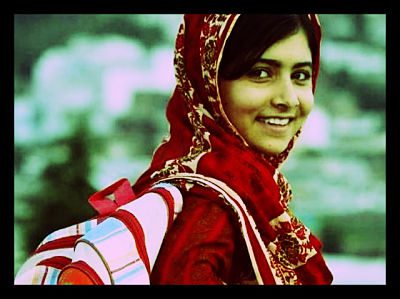
“They thought that the bullet would silence us. But they failed. And out of that silence came thousands of voices…Let us pick up our books and our pens. They are our most powerful weapons. One child, one teacher, one book, and one pen, can change the world. Education is the only solution.” These were the words spoken by Malala Yousafzai in her address to the UN Youth Assembly on July 12th, falling on her 16th birthday. In October, a Taliban gunman boarded Malala’s school bus in Pakistan’s northwestern Swat Valley and shot her in the head. The Taliban decided death was to be her consequence for campaigning on behalf of girls’ education. She survived, however, and in doing so has brought the issue of women’s education to the attention of the world.

After the shooting, Malala was flown from Pakistan to the U.K. for treatment and recovery, and now resides in Birmingham, England. Her appearance at the UN headquarters was her first public speech since October’s incident. She told the UN that the Taliban’s attack did not change her aims or stop her ambitions as they hoped, but has rather made her more determined. Malala called on politicians to take urgent action to ensure every child has the right to an education. “I want education for the sons and daughters of the Taliban and all the terrorists and extremists,” said Malala.

Aid agencies agree that girls’ access to education in Pakistan is a real concern. The country ranks among the lowest in terms of girls’ enrollment, government spending, and literacy. Malala explained she was fighting for the rights of women because “they are the ones who suffer the most”. Unesco and Save the Children released a report which found that 95% of the 28.5 million children who are not receiving a primary school education live in low and lower-middle income countries: 44% in sub-Saharan Africa, 19% in south and west Asia and 14% in the Arab states. Girls make up 55% of these children without education and are often the victims of rape and other sexual violence that comes with armed conflict.

Adnan Rasheed, a senior Pakistani Taliban leader, recently sent a letter to Malala in which he does not apologize, but says he wished the attack “had never happened”. Rasheed further suggests that all that the Taliban opposes is western education. Despite this claim, there are currently 1,000 closed schools in Pakistan and Afghanistan due to arson attacks and threats. The Taliban have long argued that only schools used as army bases are attacked, however schools have been shut down hundreds of miles from any Pakistani army presence.

According to Gordon Brown, a United Nations Special Envoy on Global Education, in just the last few weeks alone 14 young women were killed when the bus carrying them from college was firebombed, a school principal was shot dead and his colleagues maimed in broad daylight at a prize giving ceremony held in the playground of an all-girls school in Karachi, and a teacher was gunned down in front of her son while driving to teach at an all-female college.

Illiteracy, particularly among girls, will hold back Pakistan’s development efforts if current education trends continue. It is also known that young people denied an education fall prey to extremist propaganda. Following the attack, Malala set up the ‘Malala Fund’, and presented a petition which included more than three million signatures to the UN Secretary General Ban Ki-moon, demanding education for all. The Malala Fund launches in the fall of 2013, and will focus on helping girls go to school and raise their voices for the right to education. Donations to the Malala Fund can be made at https://www.stayclassy.org/checkout/donation?eid=25976.

Malala has shown millions of young girls that it is possible to stand up to the Taliban. Young people are insisting that education is a universal right. Malala has sparked a revolution and a modern civil rights struggle is now underway.

– Ali Warlich
Sources: BBC, CNN, The Malala Fund, BBC

August 2, 2013
https://borgenproject.org/wp-content/uploads/borgen-project-logo.svg 0 0 Borgen Project https://borgenproject.org/wp-content/uploads/borgen-project-logo.svg Borgen Project2013-08-02 05:43:102024-05-25 00:11:55Malala Wages War on Illiteracy, Poverty and Terror
Activism, Politics and Political Attention

5 Interesting Facts from Twiplomacy

twitter_opt
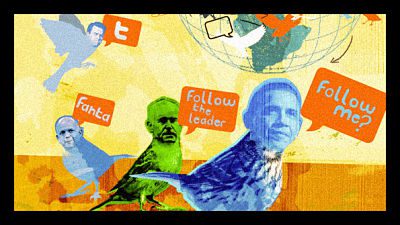
More than three-quarters of the 193 UN member countries are represented on Twitter, making the site a valuable communication tool with which leaders can succinctly speak to millions of citizens. Though it is clear that Twitter has become an increasingly important political medium, there has been little analysis of their Twitter activity. Twiplomacy is a global study of world leaders’ Twitter activity that seeks to examine how the site is utilized as a diplomatic tool. Listed below are five interesting facts from Twiplomacy that shed light on the Twitter usage of world leaders.

  1. Though a roughly 25% of world leaders and governments follow President Barack Obama and the White House, @BarackObama and the @WhiteHouse have only established mutual connections with four other world leaders, making them the least connected out of all world leaders.
  2. @CarlBildt, the Swedish Foreign Minister, has 44 mutual peer connections – the greatest number out of all world leaders. Next on the list is @eu_eeas, the European External Action Service, which has 36 mutual connections.
  3. @BarackObama is the most followed world leader on Twitter with 35,510,157 followers. The next most followed leader is Pope Francis with approximately 7.2 million followers.
  4. The most active world leader account on Twitter is @PresidencialVen, the Presidency of Venezuela, which averages 41.9 tweets per day. The most conversational leader is @AmamaMbabazi, the Prime Minister of Uganda, who replies to 96 percent of all tweets.
  5. 71 percent of African leaders are represented on Twitter, with ousted Egyptian President @MuhammadMorsi being the most followed leader on the continent. Morsi has 1.6 million followers.

Follow @Twiplomacy on Twitter to learn more about how world leaders connect on Twitter.

– Katie Bandera

Sources: Twiplomacy, Twitter
Photo: The Economist

August 2, 2013
https://borgenproject.org/wp-content/uploads/borgen-project-logo.svg 0 0 Borgen Project https://borgenproject.org/wp-content/uploads/borgen-project-logo.svg Borgen Project2013-08-02 04:50:412024-06-04 02:43:575 Interesting Facts from Twiplomacy
Activism, United Nations

Top 5 Malala Quotes

Malala_Yousafzai
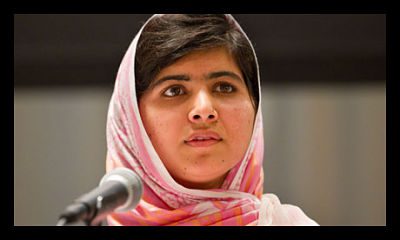
Malala Yousafzai, a Pakistani teenager shot by the Taliban after advocating for girls’ right to education, addressed the United Nations on her 16th birthday, speaking about the power of education to overcome extremism. The U.N. declared July 12 “Malala Day” to honor Yousafzai, who went back to school in March after recovering from the October attack.

According to a report released by UNESCO and Save the Children, 95 percent of the 28.5 million children who are not receiving a primary education live in low and lower-middle income countries, and girls make up 55 percent of those who are not in school. The report also stated that there were more than 3,600 documented attacks on education similar to that faced by Yousafzai. Listed below are five of her most inspiring “Malala quotes”, which highlight the influence and importance of education.

  1. “We realized the importance of pens and books when we saw the guns. The extremists are afraid of books and pens. The power of education frightens them.”
  2. “There was a time when women social activists asked men to stand up for women’s rights, but this time we will do it by ourselves.”
  3. “I raise up my voice – not so that I can shout, but so that those without a voice can be heard.””
  4. “We cannot succeed when half of us are held back.”
  5. “One child, one teacher, one book and one pen can change the world. Education is the only solution. Education first.”

– Katie Bandera

Sources: Huffington Post
Photo: The Guardian


Read Humanitarian Quotes.

July 27, 2013
https://borgenproject.org/wp-content/uploads/borgen-project-logo.svg 0 0 Borgen Project https://borgenproject.org/wp-content/uploads/borgen-project-logo.svg Borgen Project2013-07-27 03:00:552017-10-04 12:37:20Top 5 Malala Quotes
Activism

Khaled Hosseini Fights Poverty in Afghanistan

Khaled Hosseini Fights Poverty in Afghanistan
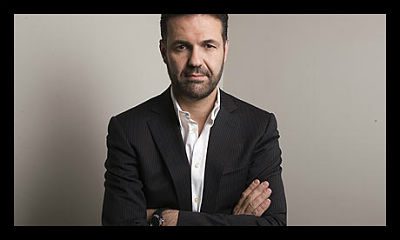
His novels have tugged at the heartstrings of millions around the world. Throughout his eight-year writing career, renowned author Khalid Hosseini has enchanted his readers with the moving, powerful stories of characters like Amir in The Kite Runner, Laila and Mariam in A Thousand Splendid Suns, and Abdullah in his latest novel, And the Mountains Echoed. But Hosseini’s successes do not end at the tip of his pen. Since 2006, he has extended his work to his native Afghanistan not as a novelist, but as a humanitarian.

Hosseini was born in Kabul, Afghanistan in 1965. After a communist coup brought bloodshed and anarchy to the country, Hosseini’s family sought political asylum in the US in 1980, where Hosseini has lived since. He practiced as a physician in California until he began his career as a writer with the release of The Kite Runner in 2005. In 2006, the United Nations High Commissioner for Refugees (UNHCR) named Hosseini a Goodwill Envoy, taking him back to Afghanistan to work with millions attempting to rebuild their lives. In 2007, inspired by his work with the UN, Hosseini started a foundation in his name dedicated to helping the people of Afghanistan.

The Khaled Hosseini Foundation (TKHF) is a nonprofit organization based in San Jose, CA that works with the UNHCR to create shelters as well as employment and educational opportunities for refugees, women and children in Afghanistan. To date, approximately 5.7 million Afghani refugees have returned to Afghanistan. Many of the homeless, these refugees have faced harsh summers and cold winters that have claimed the lives of thousands. And when looking for schooling or employment that could allow the population to rebuild, many Afghans have hit a dead-end.

TKHF came to help by focusing on building homes and infrastructure for those living without shelter, supporting the creation of jobs, and promoting and funding schools for girls and boys whose futures had seemed bleak. By 2012, TKHF provided over $650,000 to the UNHCR to build shelters for Afghanistan’s homeless. Through Trust in Education and the Afghan Friends Network, TKHF funded the education of hundreds of children. And through Markets for Afghan Artisans, TKHF is able to promote an array of jewelry, bookmarks, and purses handcrafted by Afghan women living as refugees in Pakistan, helping to keep these women employed.

Find out ways to get involved and join in Hosseini’s effort here.

– Lina Saud

Sources: Khaled Hosseini Foundation, UNHCR
Photo: The Guardian

July 24, 2013
https://borgenproject.org/wp-content/uploads/borgen-project-logo.svg 0 0 Borgen Project https://borgenproject.org/wp-content/uploads/borgen-project-logo.svg Borgen Project2013-07-24 11:00:122020-07-19 22:02:41Khaled Hosseini Fights Poverty in Afghanistan
Activism, Advocacy, Nonprofit Organizations and NGOs, Philanthropy

Top 5 Apps to Satisfy your Philanthropic Urges

1. Charity Miles

Often the biggest obstacles in overcoming the challenge of getting off the couch and going for a run is the question “why now and not later?” We all know the importance of exercise, but the inability to find motivation to work out is what keeps us on that couch. Similarly, we all know the importance of giving and helping those in most need of help. The issue we often face regarding charity is the fact that we are often without extra cash.

Charity Miles has the answer to both of these problems. Founded in April 2012, the folks at Charity Miles developed a charity app where, with each mile you bike, run, or walk, a percentage of a dollar will be donated to the charity of your choice. And the best part is that the app is entirely free.

With a limit of one million dollars, each user can garner 10 cents per mile and walkers and runners will earn 25 cents per mile. With this app, users can get themselves into shape and put food on another person’s table. Charity Miles provides users with more motivated than ever to hit the road and feeling great about about themselves in mind, body, and soul.

2. Donate a Photo

It doesn’t get much easier than this. The developers at Johnson & Johnson have unraveled an excellent app that allows users to fight for the world’s underprivileged. For each original photo donated to Johnson & Johnson (up to one a day), they will donate $1 to a service of your choice. The beauty of the app is that users can donate a photo every single day and raise $365 a year for their cause without any cost to them. So far, Johnson and Johnson have declared 25,730 photos donated.

3. Volunteer Match

Volunteer Match is a free service that allows users to connect with volunteer opportunities both in their area and beyond. Users just need to download the app, decide what area they want volunteer in and hit connect! The service provides users with reviews of different organizations and allows them to build a repertoire to share with friends.

4. One Today

Google has entered the charitable arena with their new One Today app. The idea behind the app is to allow users to “Do a little. Change a lot.” The app allows users to donate $1 at a time to a cause of their choice, whether it be saving cheetahs or providing clean water to a village. This app has no fee for nonprofits so 98.9% of all donations go to their intended cause. For the users, the app tracks each and every dollar donated and provides updates on how that dollar was spent and the impact it causes.

5. TabForACause.org

While this is a website and not an app, the premise is very effective at fundraising. This Google Chrome and Firefox extension signals the nonprofit’s sponsors to donate a fraction of a penny to a charity for each tab a user opens. Through conducting daily business, useres, with no cost to them, can help fund Water.org and provide developing countries with clean drinking water.

– Thomas van der List

Sources: Donate A Photo, Volunteer Match, Android Police, Tab For A Cause, Charity Miles
Photo: The Guardian

July 23, 2013
https://borgenproject.org/wp-content/uploads/borgen-project-logo.svg 0 0 Borgen Project https://borgenproject.org/wp-content/uploads/borgen-project-logo.svg Borgen Project2013-07-23 05:11:262018-01-30 13:13:06Top 5 Apps to Satisfy your Philanthropic Urges
Activism, Development

3 Outstanding Instances of Aid by AmeriCares

Every non-profit has an honorable start to their missions, but Robert C. Macauley, founder of AmeriCares, has a particular focus. On April 4, 1975, a United States jet carrying 243 Vietnamese orphans crashed in the jungle outside of Tan Son Nhut. The U.S. was unable to reach them within 10 days, and when Macauley heard this news, he did what any good-hearted American would dream of doing. He chartered a plane and brought them to the U.S. within 48 hours.

Macauley was a paper broker in Connecticut at the time, he and his wife took out a mortgage on their house to pay for the $10,000 down payment for the Boeing 747. His dislike of bureaucratic red tape cost him his home, but gave him a calling.

Macauley’s calling gave rise to one of the largest non-profits in the world, AmeriCares. Currently, the organization works in over 90 countries and has supplied over $10 billion in aid, both foreign and domestic. Here are just three examples of their impact:

1. Relief Aid in Poland – 1981

Before AmeriCares, official conception, Robert Macauley had donated his time and money to a number of causes, but his action in Vietnam brought good media. News spread quickly of Macauley’s actions and in 1981, Pope John Paul II asked for his assistance. At the time, Poland was under martial law and in desperate need of medical supplies. By 1982, Macauley had gently wrestled $1.5 million in medical supplies from over a dozen companies. March of that year, he was able to airlift the supplies to Poland. This was the first official act of AmeriCares and an impressive one at that.

2. The Darfur/Sudan Conflict – 2011

In 2004, AmeriCares began a long-term relief effort in Sudan by delivering medical aid in order to support health services for the survivors on the Sudan conflict. With South Sudan’s independence in 2011 came a rush of refugees and native South Sudanese returning to their homes. Most were in need of shelter and medical assistance.

AmeriCares began supporting the efforts of Relief International in their health outposts and camps. In Renk, funds were used to rehabilitate three health clinics and installations of emergency medical modules. This helped with treatment of diarrheal diseases, medical waste management, sanitation and health education. The health clinics also saw installations of exam tables and benches in waiting rooms. These clinics served 14,000 survivors at Renk and another 13,000 in the Gendrassa camp. AmeriCares replenished low stocks of first aid supplies in Gendrassa.

3. Hurricane Sandy Relief – 2012

The most recent natural disaster seen in the United States was Hurricane Sandy in October of 2012. More than 80,000 residences were damaged and 8.5 million people were left without shelter or power. AmeriCares has provided over $6 million in aid that has benefited more than 465,000 people. Skilled in crisis relief, AmeriCares has supplied medicine, insulin and vaccines, enough bottled water for $75,000 people, diapers for 17,000 and much more for those in need. $2.5 million went to fund programs that provide displaced citizens with emergency warmth, disaster clean up and mental health counseling in Staten Island, Brooklyn, and New Jersey.

Currently, AmeriCares is looking for grant proposals from groups who are starting projects to help with the health needs of Sandy survivors. On July 14, New Jersey was awarded $200,000 in grants to help the elderly, disabled and low-income residents recover.

– Jordan Bradley

Sources: AmeriCares, The NY Times, Darien News, Queens Chronicle
Photo: Forbes

July 22, 2013
https://borgenproject.org/wp-content/uploads/borgen-project-logo.svg 0 0 Borgen Project https://borgenproject.org/wp-content/uploads/borgen-project-logo.svg Borgen Project2013-07-22 14:08:342024-12-13 17:49:313 Outstanding Instances of Aid by AmeriCares
Activism, Development

Top Three Charities in the World

direct_relief_charity
Ever wonder how large charities can get and how much they can impact the world we live in? Charity Navigator has provided a glimpse into the top ten enormous charitable organizations that operate today. The ranking scale they use is out of 70. Here is a look at the top three.

  1. United Nations Foundation: UNF comes in at 69.04 on the overall charity scale. Working to connect citizens around the world to the United Nations, UNF provides fiscal services for the programs that the United Nations offers. It is also the main advocacy and support system for the United Nation’s ideas and beliefs. The total revenue of the charity comes in at $192,737,803.
  2. The Conservation Fund: The Conservation Fund comes in at 69.32 on the overall charity scale. Dedicated to protecting important pieces of American land, such as historical landmarks, parks, and reservations, CF has saved more than 7 million acres of land across the nation. The total revenue of the charity comes in at $242,376,138.
  3. Direct Relief: The highest rated charity on Charity Navigator comes in at 69.91, a nearly perfect score. Direct Relief works to improve health worldwide through programs, emergency preparations, disease awareness, and the improvement of health systems. The total revenue of the charity comes in at $405,035,176.

It is interesting to view just how large the top three charities are and the immense impact that these charities have. Without the amount of money they raise and the support they provide, it would be a very different world we live in today.

– William Norris

Sources: Charity Navigator United Nations Foundation The Conservation Fund Direct Relief
Photo: Direct Relief

July 22, 2013
https://borgenproject.org/wp-content/uploads/borgen-project-logo.svg 0 0 Borgen Project https://borgenproject.org/wp-content/uploads/borgen-project-logo.svg Borgen Project2013-07-22 12:11:142024-05-25 00:02:23Top Three Charities in the World
Page 54 of 56«‹5253545556›»

Get Smarter

  • Global Poverty 101
  • Global Poverty… The Good News
  • Global Poverty & U.S. Jobs
  • Global Poverty and National Security
  • Innovative Solutions to Poverty
  • Global Poverty & Aid FAQ’s
Search Search

Take Action

  • Call Congress
  • Email Congress
  • Donate
  • 30 Ways to Help
  • Volunteer Ops
  • Internships
  • Courses & Certificates
  • The Podcast
Borgen Project

“The Borgen Project is an incredible nonprofit organization that is addressing poverty and hunger and working towards ending them.”

-The Huffington Post

Inside The Borgen Project

  • Contact
  • About
  • Financials
  • President
  • Board of Directors
  • Board of Advisors

International Links

  • UK Email Parliament
  • UK Donate
  • Canada Email Parliament

Get Smarter

  • Global Poverty 101
  • Global Poverty… The Good News
  • Global Poverty & U.S. Jobs
  • Global Poverty and National Security
  • Innovative Solutions to Poverty
  • Global Poverty & Aid FAQ’s

Ways to Help

  • Call Congress
  • Email Congress
  • Donate
  • 30 Ways to Help
  • Volunteer Ops
  • Internships
  • Courses & Certificates
  • The Podcast
Scroll to top Scroll to top Scroll to top